Gyra Beach Lefkada: Windmills, Lagoon, Poet's Grave
Profile
Gyra Beach, Lefkada: The Sandy Spit Where Windmills Once Ground Russian Grain and a Famous Poet Lies Buried Beneath the Church Floor
Greece | Gyra | Lefkada Town, Ionian Islands
The windmills standing at Gyra were given Russian names. During the Russian occupation of Lefkada from 1800 to 1807, locals renamed several of the mills Orlof, Majikef, and Moskva — a direct reflection of the grain the mills were grinding at the time, imported from Russia and processed here until the early 20th century, a specific historical detail that connects this quiet sandy spit to a brief but real chapter of foreign rule on the island. The mills themselves date back further still, their construction beginning during the period of Venetian rule before that. Of the twelve that once stood along this stretch, only five survive today, scattered between the Gyra area and neighbouring Agios Ioannis beach near Lefkada Town.
Walking the lane toward the small fishing hamlet of Gyra itself — the settlement that still tends the lagoon’s fishery — leads to the Church of Panagia tis Gyras, consecrated in 1503 by the priests Stamatis and Athanasios Soundias. Inside, beneath the carpet covering the floor, lie the marble gravestones of several of Lefkada’s most distinguished sons, among them the poet Angelos Sikelianos — one of Greece’s most significant 20th-century literary figures, nominated multiple times for the Nobel Prize in Literature, whose former residence in Lefkada Town is now a museum. A small, modest parish church holding the resting place of a major national poet beneath its floor is the kind of detail easy to walk past entirely without knowing it’s there.
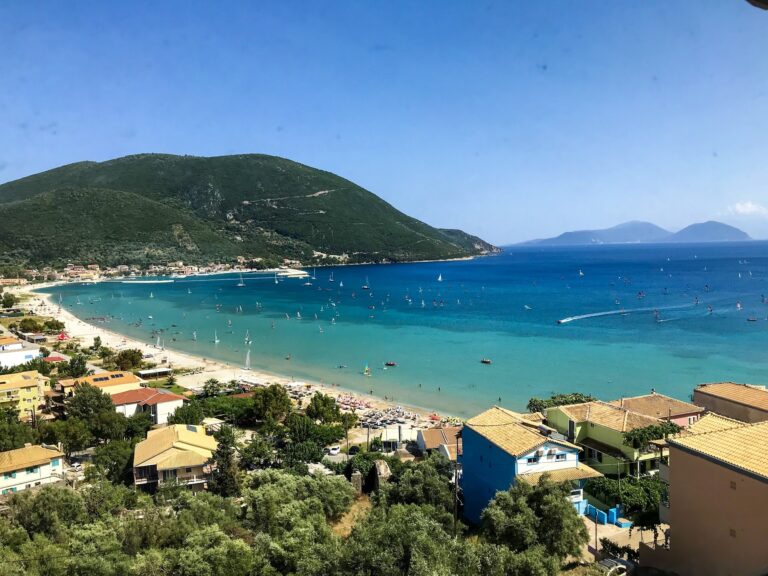
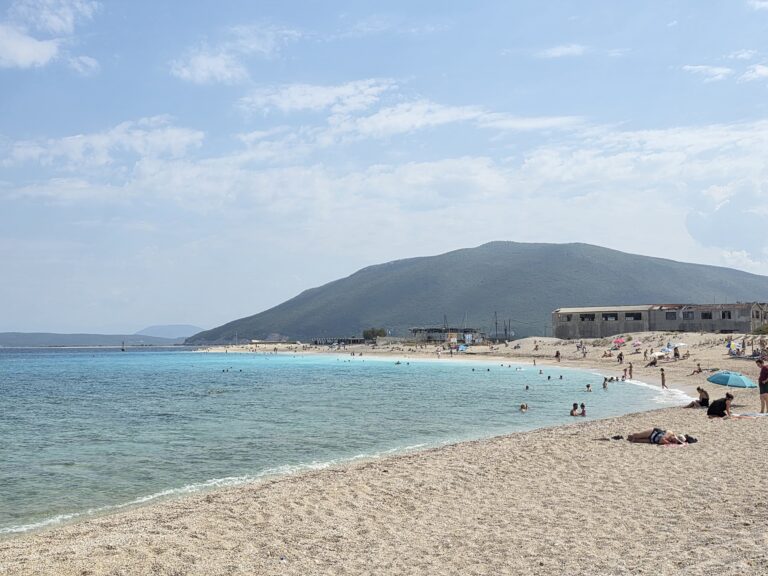
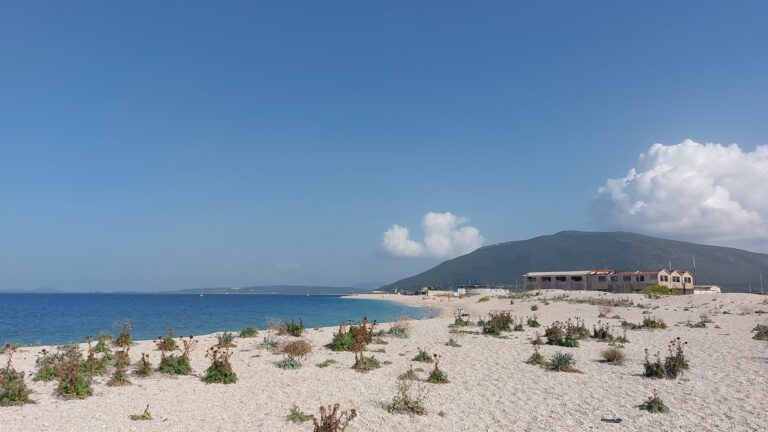
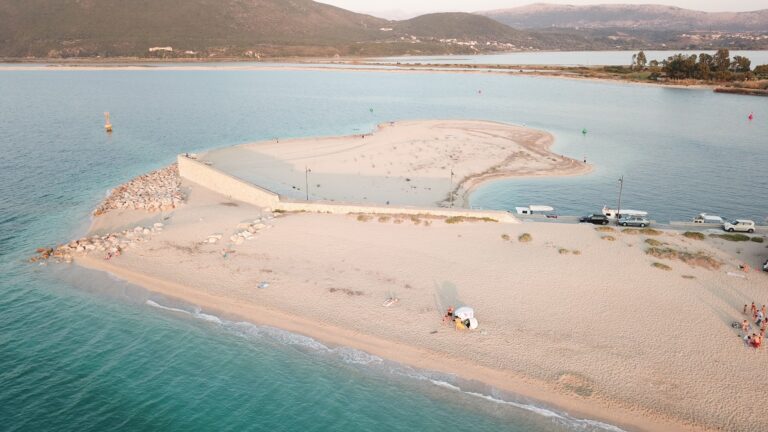
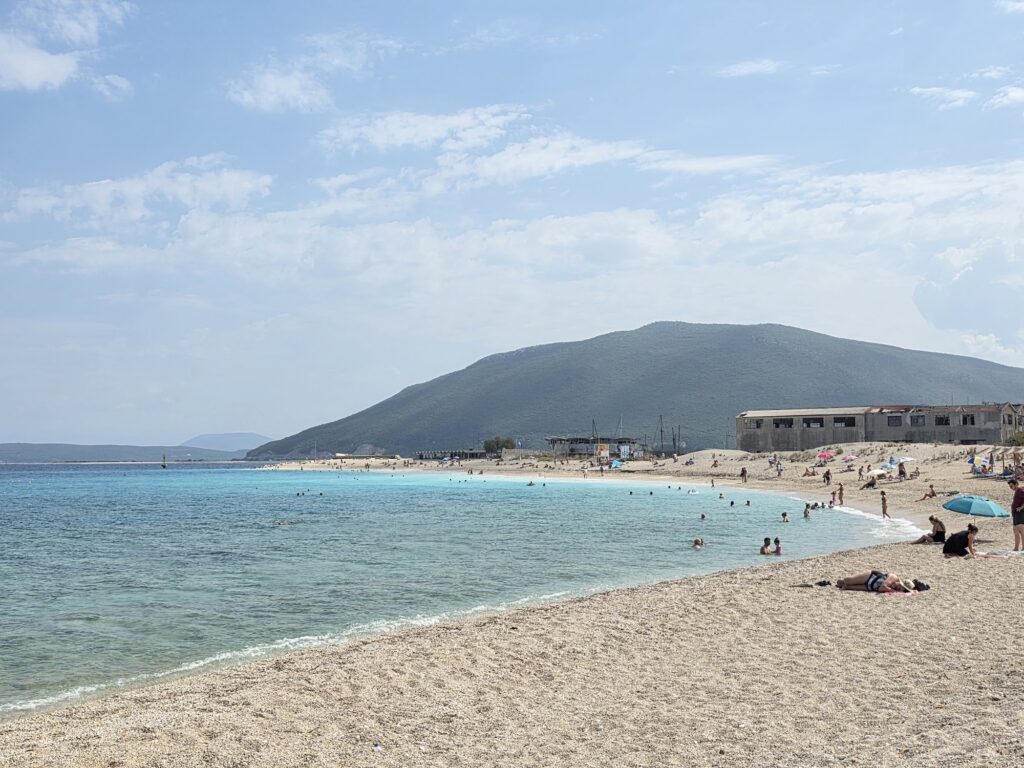
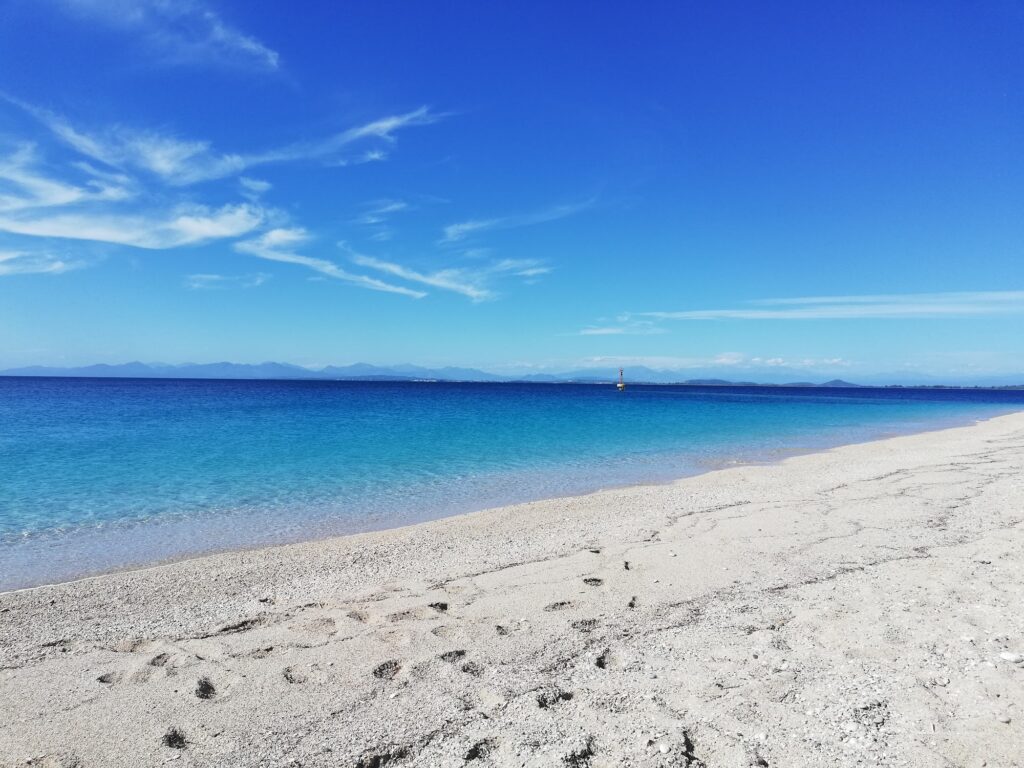
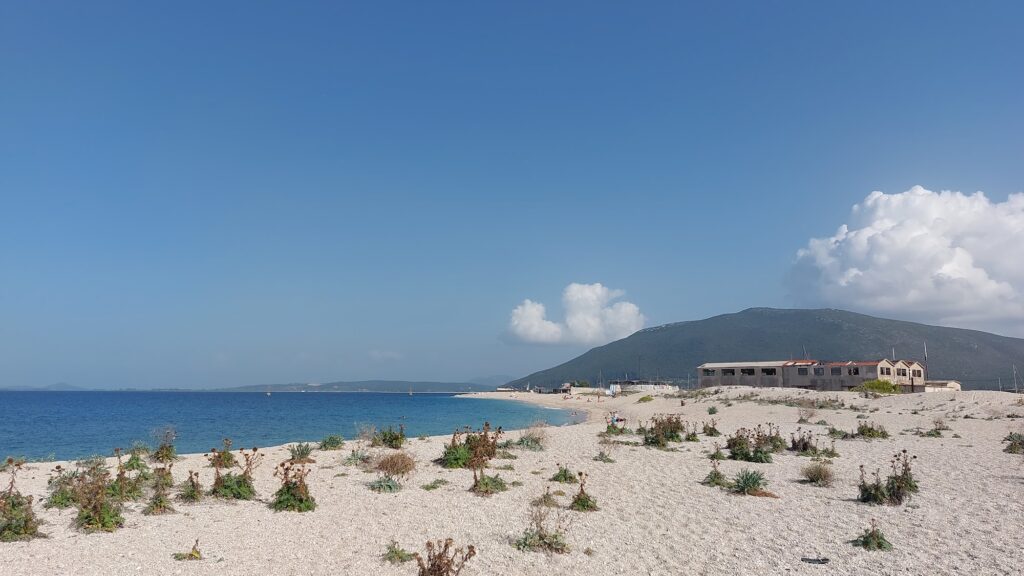
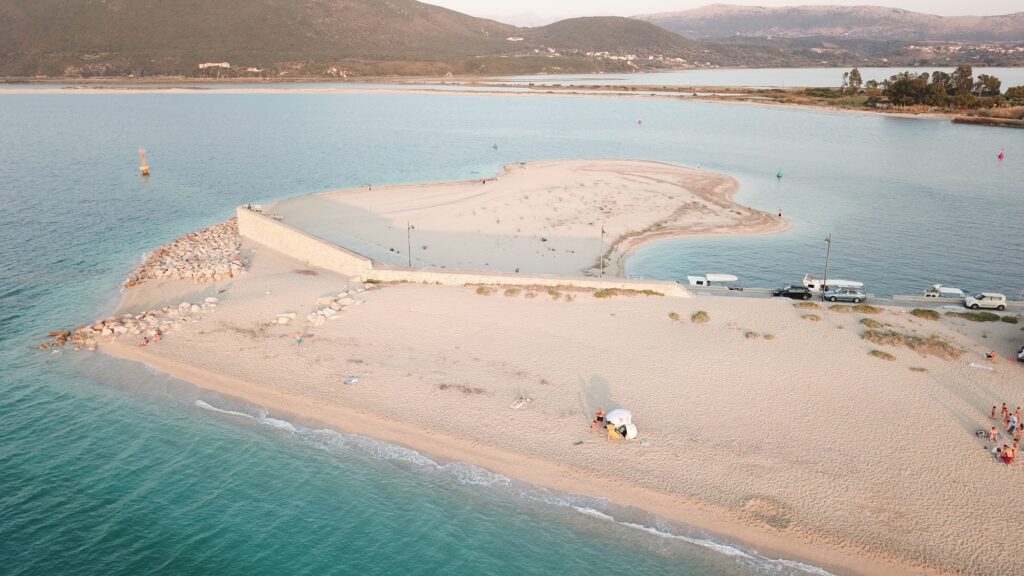
Gyra beach itself forms the long sandy barrier separating the open Ionian Sea from the calm, shallow waters of the lagoon behind it — a peninsula-like spit created by natural coastal processes rather than any human engineering, stretching roughly 2 kilometres along the island’s northernmost point.
Getting There: 2.5km From Lefkada Town (5 Minutes by Car, 15–20 Minute Walk or 5-Minute Bike Ride), Past the Floating Bridge of Agia Mavra
From Lefkada Town, Gyra sits approximately 2.5 kilometres away — a drive of under 5 minutes following the road that circles the lagoon, a flat and pleasant 15-to-20-minute walk, or a 5-minute cycle, all popular with local joggers and cyclists given the level terrain. The floating bridge of Agia Mavra, a notable local landmark in its own right, sits within a kilometre of the beach along the same route.
Free parking runs along the length of the beach road, generally allowing visitors to park directly in front of their chosen stretch of sand. Local buses occasionally include a “Gyra Circle” route during summer, though most visitors find walking, cycling, or driving more straightforward than waiting on bus timetables.
The Beach: 2km of Sand and Pebble, Blue Flag, Shallow in Places, Afternoon Wind for Kitesurfing, Continuation of Agios Ioannis
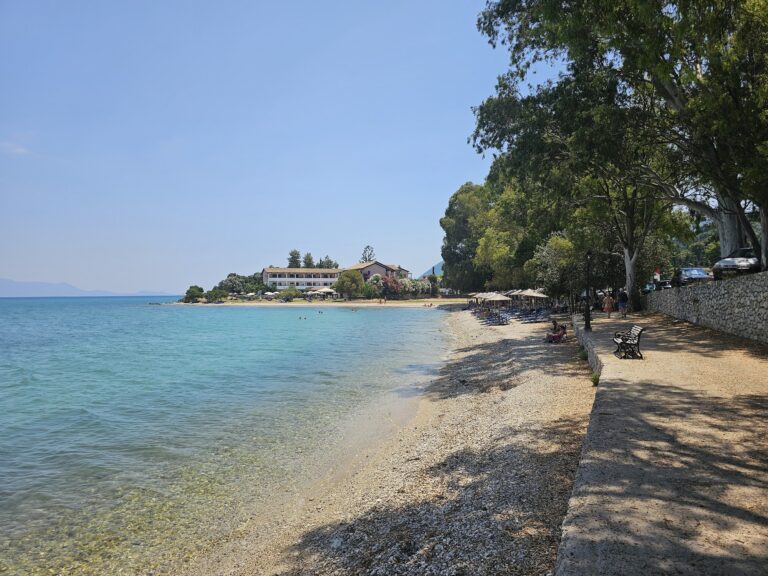
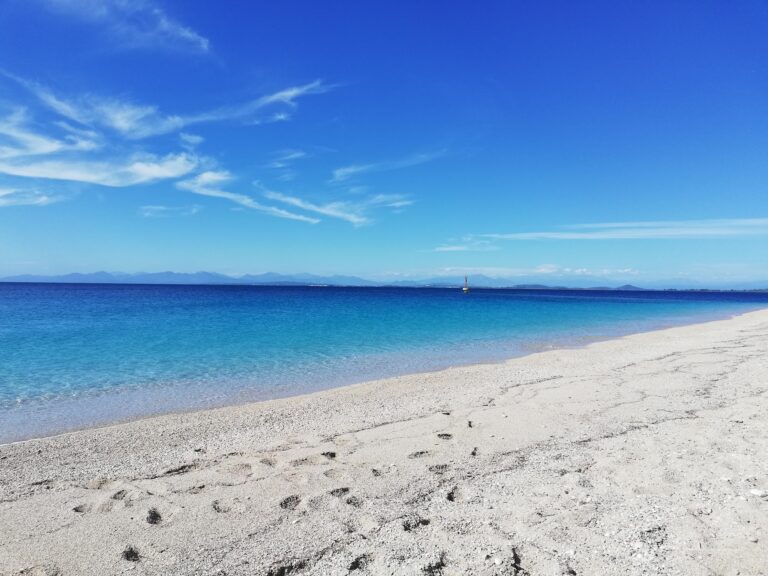
Gyra runs for approximately 2 kilometres, a continuation of neighbouring Agios Ioannis beach, both holding Blue Flag status for water quality. The shore mixes fine white sand with small smooth pebbles, the seabed shallow in many sections — generally safe for children when the wind stays calm, though afternoons regularly bring the building Meltemi that turns the open Ionian exposure into one of Europe’s recognised kitesurfing destinations, particularly in front of the windmills further along at Agios Ioannis.
Organised pockets of sunbeds and umbrellas, managed by local cantinas, sit at intervals along the otherwise largely open beach, with showers and changing facilities near the busier sections. Lifeguards patrol the most popular stretches during peak season, a reassuring presence specifically on the windier afternoons when the open-sea swell builds.
The Lagoon: Natura 2000, Ramsar Protected, Flamingos and Pelicans, the Annual Green Half Marathon
The lagoon behind Gyra is part of the largest wetland complex in western Greece, protected under both the Natura 2000 network and the Ramsar Convention on wetlands of international importance. Despite sitting practically within the town itself, the birdlife has adapted to the proximity of traffic and people, making the lagoon a genuinely rewarding stop for migratory bird species — flamingos, pelicans, and ducks among them, visible to anyone walking or cycling the perimeter path. The annual International Green Half Marathon uses the same lagoon-circling route, drawing runners from across Europe to a course that frames the wetland, the windmills, and the open sea together.
Gyra Beach at Lefkada Town is the 2km sandy spit separating the open Ionian from the Natura 2000 and Ramsar-protected lagoon — five surviving windmills (once renamed Orlof and Moskva by Russian occupiers grinding imported grain, 1800–1807), the Church of Panagia tis Gyras (consecrated 1503, poet Angelos Sikelianos buried beneath the floor), sand and pebble shore, Blue Flag, shallow in places for families, afternoon Meltemi wind drawing kitesurfers near Agios Ioannis, flamingos and pelicans in the lagoon, the annual Green Half Marathon, 2.5km from Lefkada Town (5 minutes by car, 15–20 minute walk, 5-minute cycle), the floating bridge of Agia Mavra nearby.
Walk or cycle the lagoon path from town. Watch for flamingos. Swim past the windmills. Check the church floor for the poet’s grave.
Map
Sorry, no records were found. Please adjust your search criteria and try again.
Sorry, unable to load the Maps API.
Near by places: