Priaruggia: Genoa's Beach of the Thousand
Profile
Priaruggia: The Red Stone Beach Where Garibaldi Spent His Last Night in Genoa
Italy | Liguria | Genoa | Ligurian Riviera
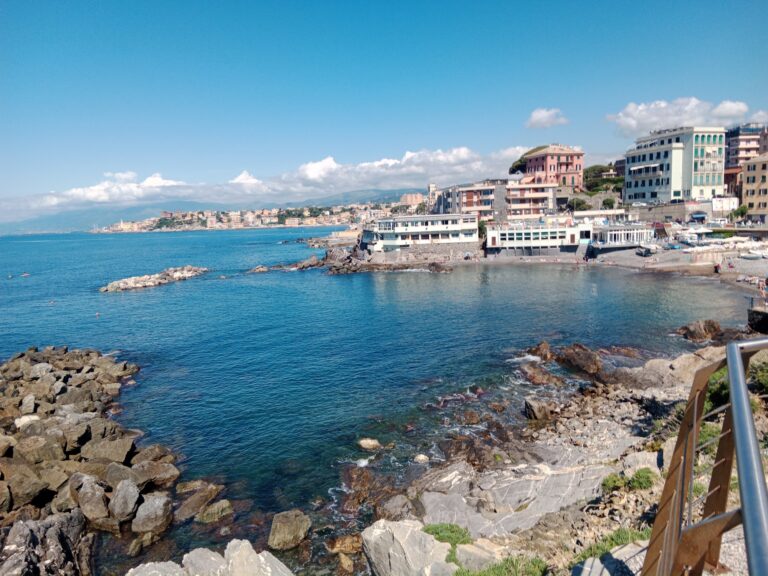
Unlike its neighbor Quinto al Mare, which has nothing to do with Garibaldi’s famous departure despite the frequent confusion, Priaruggia sits squarely in Quarto dei Mille, the district that genuinely earned its place in Italian history on the night of May 5, 1860. Garibaldi spent his final evening in Genoa at what’s now the Antica Osteria del Bai, a tavern built into a fifteenth-century anti-Saracen fortress overlooking the same rocks his expedition would depart from at dawn, a building old enough to have also hosted Pope Pius VII on an earlier occasion. I found the detail almost absurdly layered once I started tracing it: a pope and a revolutionary general, separated by decades, both resting at the same small fortified inn before continuing on to reshape their respective corners of history.
Priaruggia itself takes its name from something considerably more modest than any of that, a reddish rock, pria ruggia in Genoese dialect, that once protected the bay and served as its visual symbol until a violent libeccio storm shattered it in 2008.
A Narrow Pebble Cove Wedged Against the Coastal Road
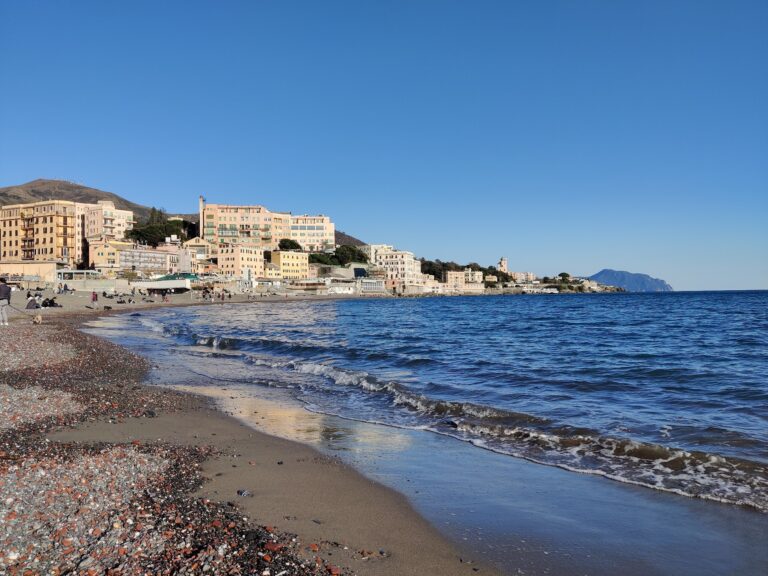
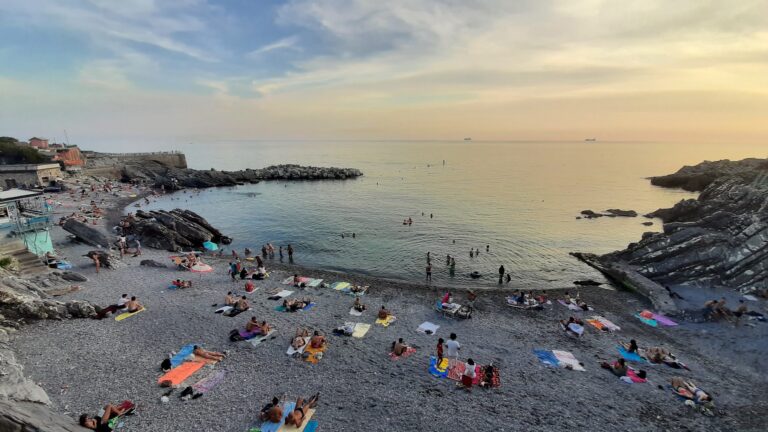
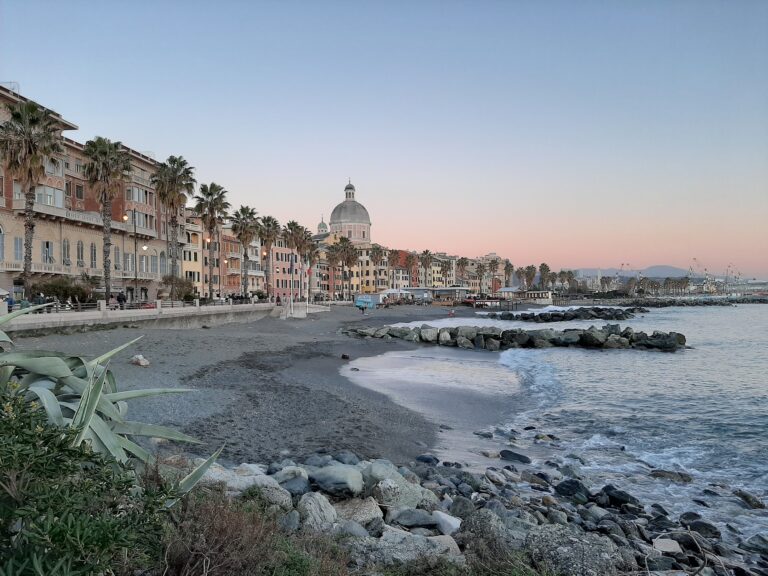
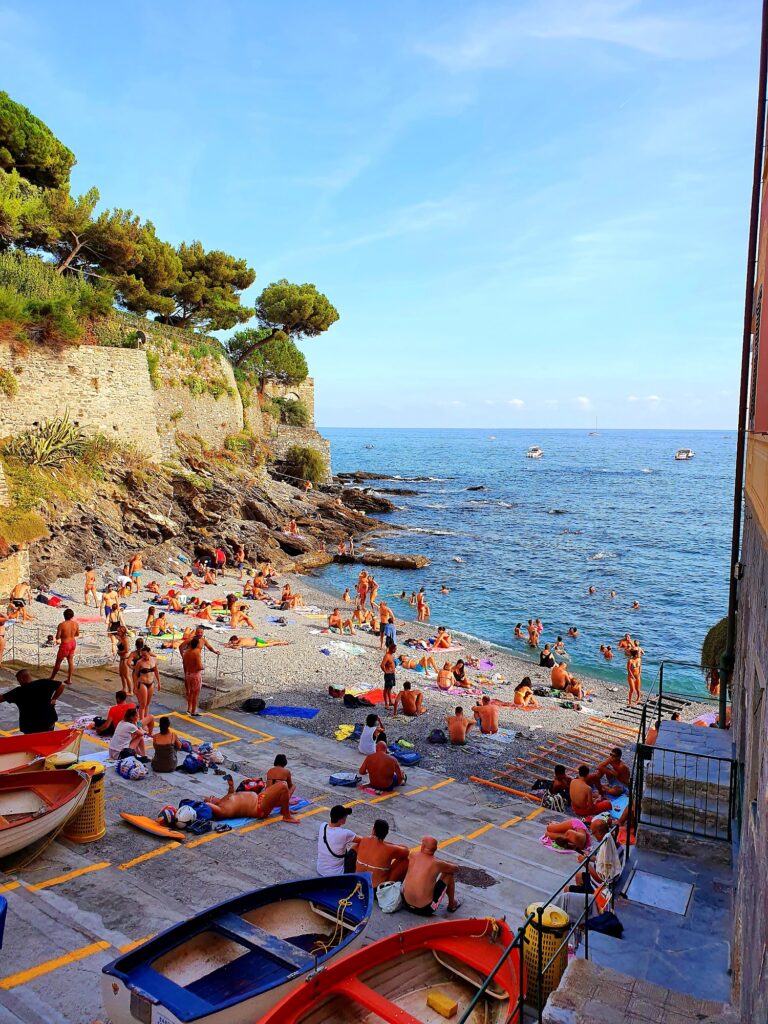
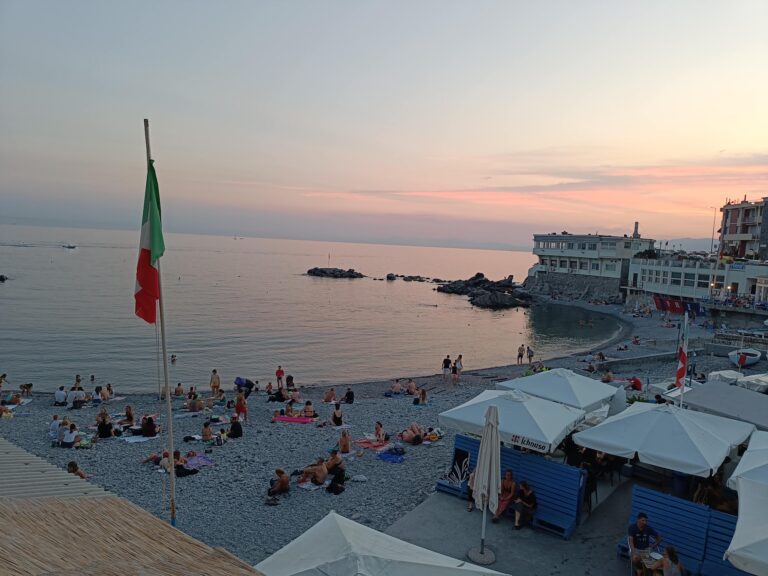
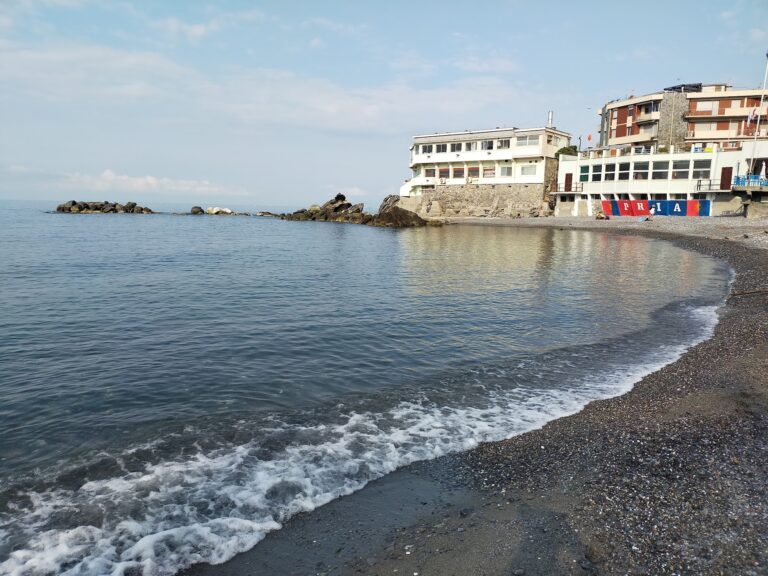
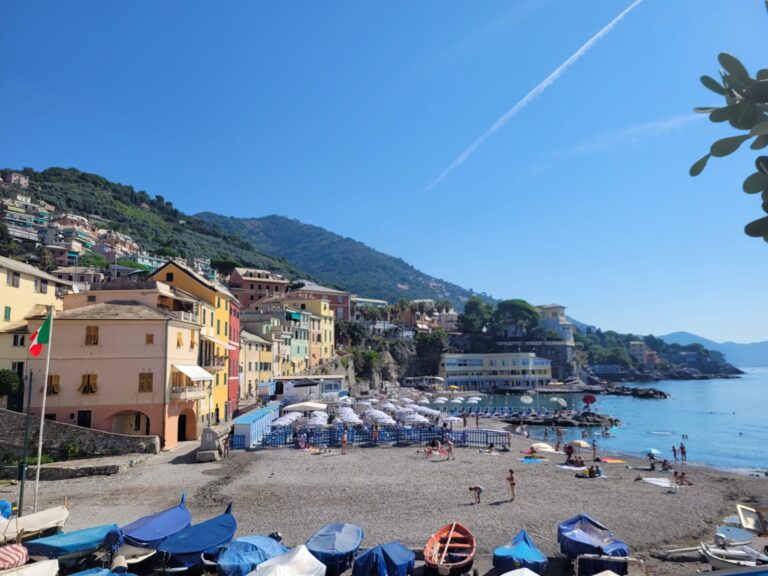
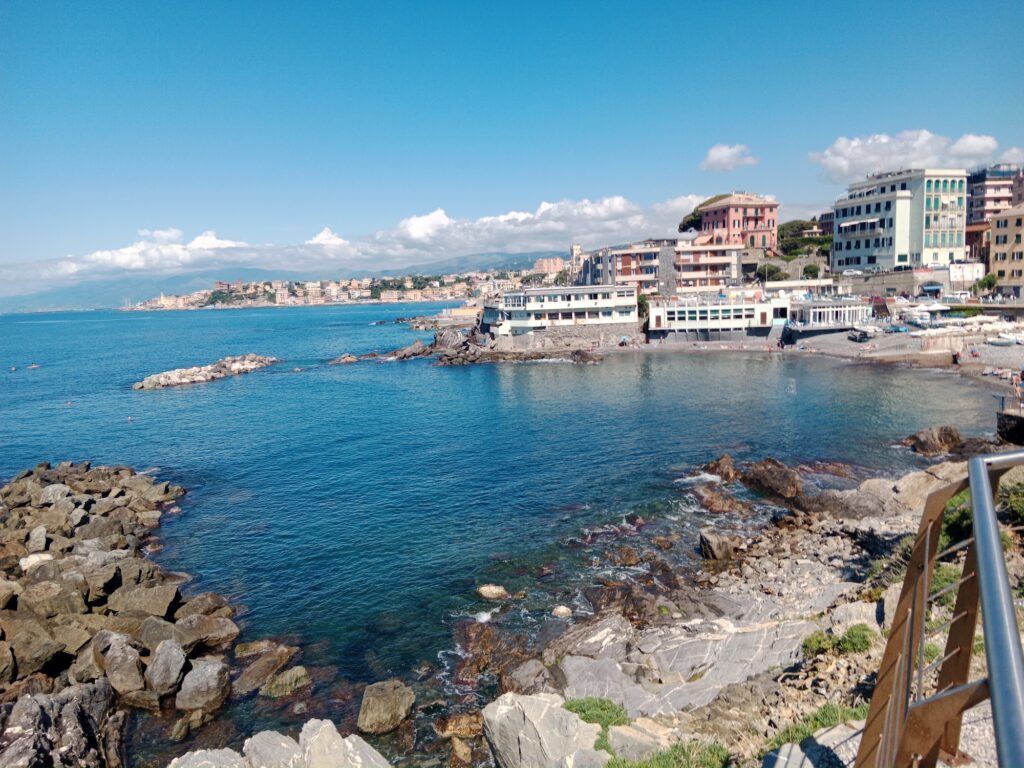
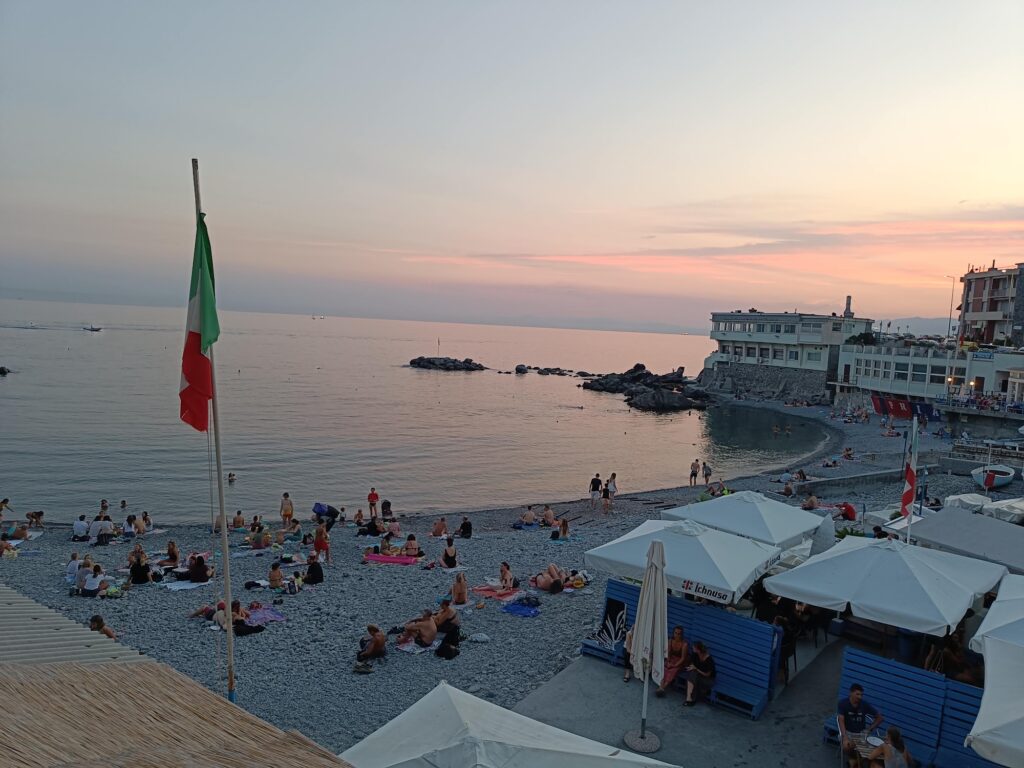
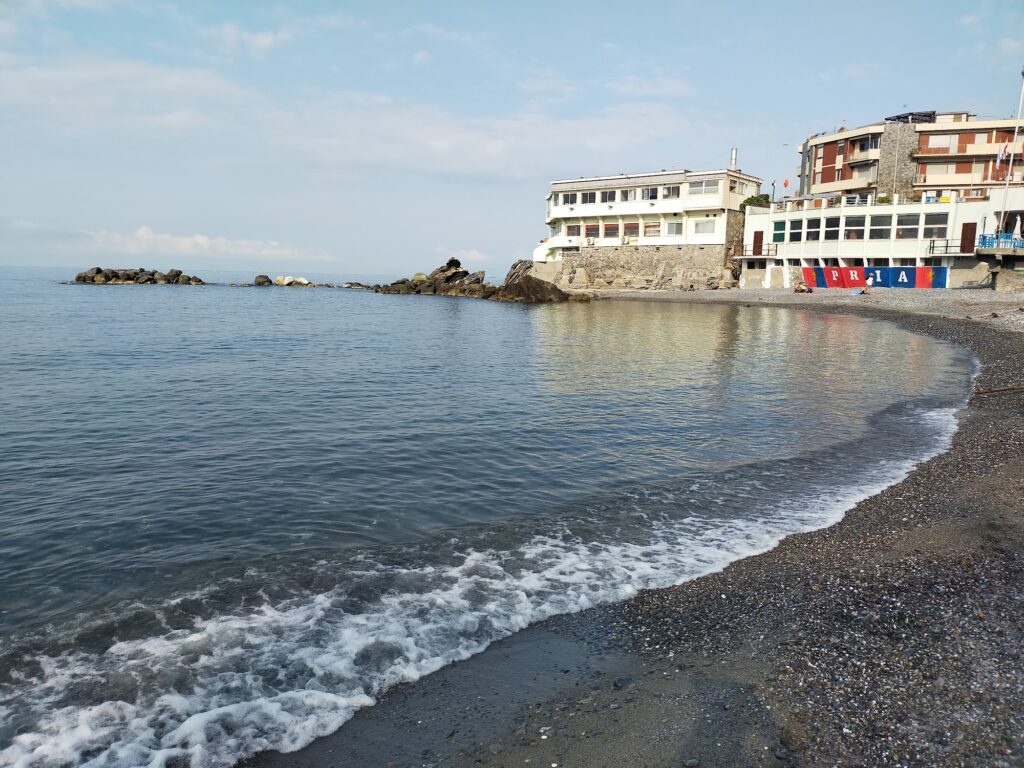
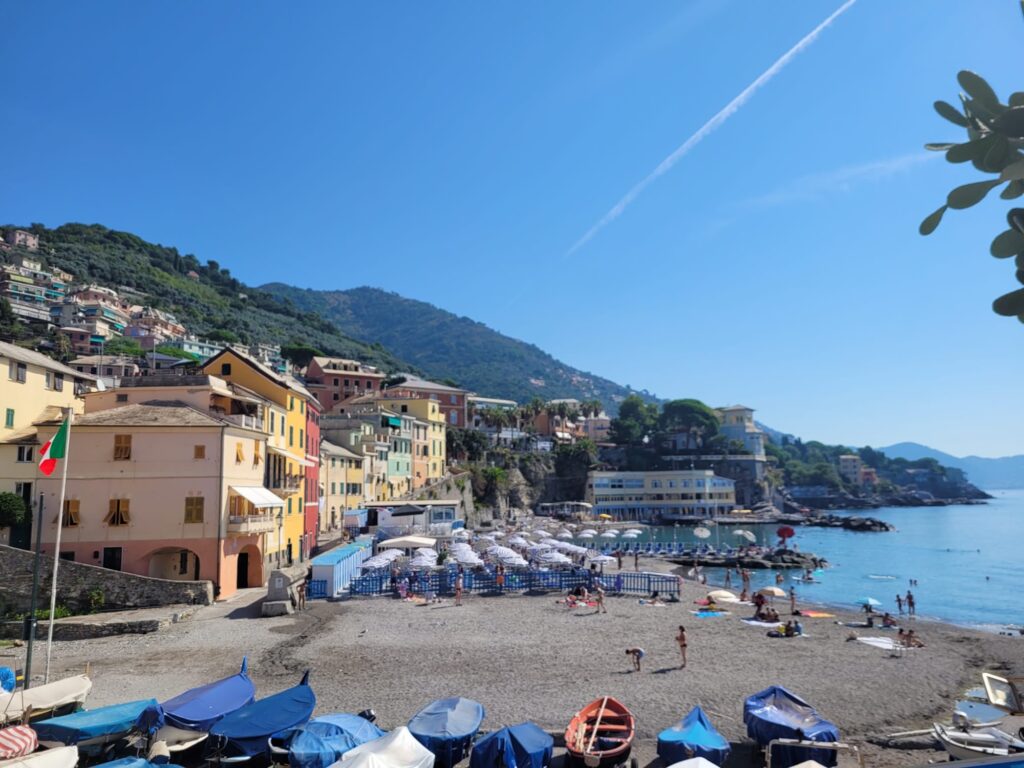
The beach itself runs short and narrow, entirely pebbled, squeezed between the Via Aurelia and the water in the way most genuinely urban Genoese beaches are. I found the water clean and clear despite the tight, built-up setting, the shoreline offering a gradual, practical entry rather than anything dramatic. What Priaruggia lacks in scale it makes up for in atmosphere, a steady flow of actual Genoese residents rather than passing tourists, the kind of unpretentious, functional beach day that comes without reservations or performance.
Fishermen’s Houses Lost to Wartime Bombing
Old postcards from the early twentieth century show houses built almost directly on Priaruggia’s sand, a working fishing settlement that used this sheltered inlet as a safe landing point for small boats long before anyone treated the area as a leisure destination. Allied bombing during the Second World War reduced those houses to rubble, and nothing of them survives today beyond those same fading postcards, a quiet reminder that this stretch of coast, now known mainly for a monument commemorating one nineteenth-century departure, absorbed considerably more recent damage than most visitors realize.
The Monument That Renamed an Entire District
A short walk from the beach, the bronze Monument to the Thousand, sculpted by Eugenio Baroni and unveiled in 1915, marks the rocky point from which Garibaldi’s volunteers actually embarked. The district itself was called Quarto al Mare until 1911, when it was formally renamed Quarto dei Mille in the expedition’s honor, a change Quinto never underwent, which is precisely why the two names get mixed up so often by visitors moving quickly along this stretch of coast.
Basic Facilities and a Beach Best Suited to Confident Swimmers
Given the pebbled shore and quick transition into deeper water, I’d point families with very young children toward gentler beaches elsewhere on this coast; Priaruggia suits older kids and adults more comfortably. Basic public facilities cover restrooms and showers, and given the beach’s role partly as informal boat storage for local fishermen, I’d expect dogs to be fine here on a leash following Italy’s standard rule for free public beaches, though the tight quarters make it worth checking the immediate area before settling in.
Stuffed Mussels Near Villa Paganini
The trattorias scattered through Quarto serve stuffed mussels as something of a local specialty, and I ate well at more than one table within a short walk of Villa Paganini, once owned by the composer Niccolò Paganini’s son and now sitting quietly among the neighborhood’s other historic residences. Osteria della Castagna, further inland, drew me back twice for its straightforward, unfussy approach to fresh fish.
Getting There Along the Same Corridor as Its Neighbors
Genova Quarto dei Mille station sits practically on the seafront, a genuinely short walk to Priaruggia itself, AMT buses 15 and 17 run the length of the Via Aurelia with dedicated stops along the way, and anyone driving in via the A12’s Genova Nervi exit will find the beach just under three kilometers from the tollbooth, blue-line parking running the length of the coastal road though genuinely limited on summer weekends. The beach effectively continues in both directions along this same stretch of coast, connecting west to Sturla Beach Genoa and east toward Quinto al Mare Genoa, making all three walkable in a single unhurried afternoon for anyone wanting to properly compare Genoa’s eastern coves.
Standing Where the Rock Used to Be
By the time I left Priaruggia on my last visit, I found myself looking for the red stone that no longer exists, the 2008 storm having taken with it the one physical landmark that gave this beach its name centuries before anyone here had heard of Garibaldi, a small, specific loss that locals still mention, oddly enough, in almost the same breath as the departure of a thousand volunteers who changed the shape of an entire country.
Map
Sorry, no records were found. Please adjust your search criteria and try again.
Sorry, unable to load the Maps API.
Near by places: