
Eleonas Beach Diakopto: Gulf Shore, Rack Railway, Gorge
Profile
Eleonas Beach, Diakopto: The 2km Gulf of Corinth Shore in the Village Named for Its Olive Groves, Where the Odontotos Rack Railway Departs From the Adjacent Town for the 1896 Journey Through the Vouraikos Gorge to Kalavryta
Greece | Eleonas | Diakopto, Achaia, Peloponnese
The name Eleonas means olive grove. The village takes its identity from the largest olive groves in the region — the cultivated hillsides between the Gulf of Corinth coast and the foothills of Mount Chelmos (2,355 metres, the highest mountain in the northern Peloponnese) that have shaped the landscape of this section of Achaia for centuries. The olive grove village and its waterfront beach are a functional combination: the agricultural land climbs away from the coast while the clear Corinthian Gulf water sits at the bottom of the slope.
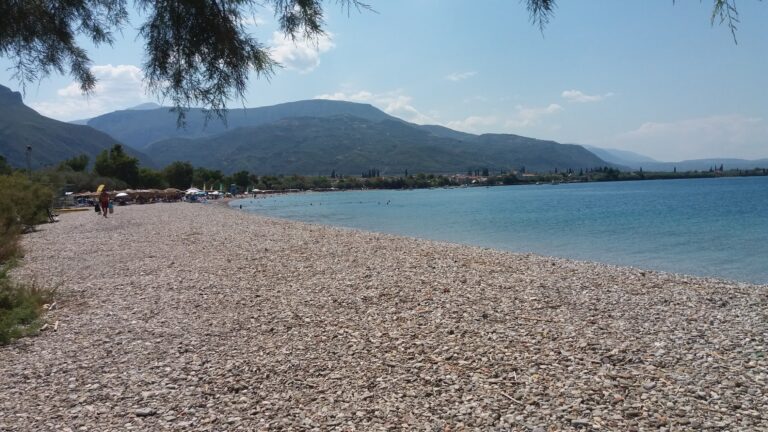
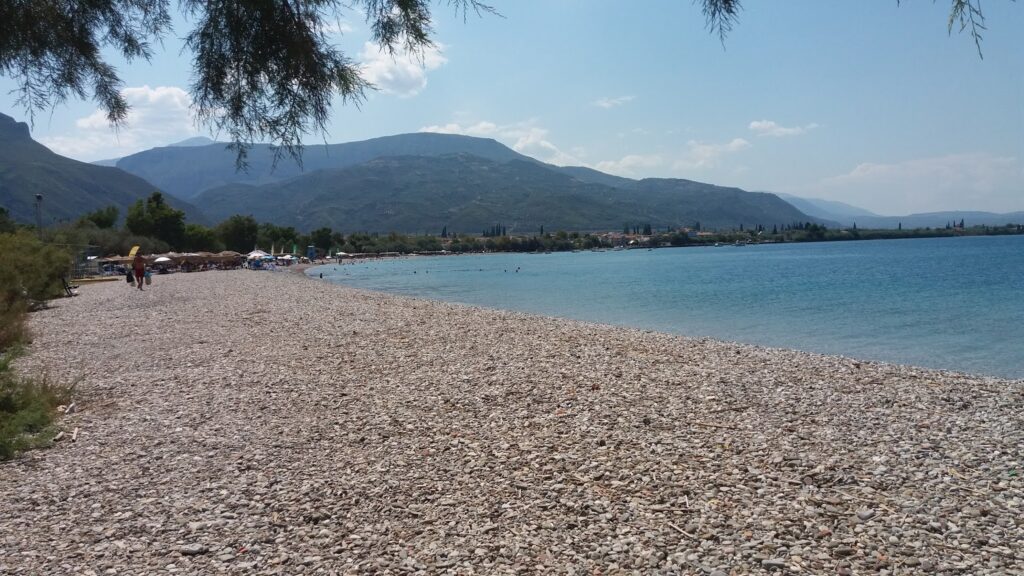
Eleonas is a seaside village on the foothills of Chelmos with the largest olive groves in the region, from which its name derives. The beach is one of the most famous coasts around the Peloponnese as well as one of the longest ones in the region — 2 kilometres from end to end. The water is crystal clear and the shore consists of small gravel.
The adjacent town of Diakopto, 1 to 2 kilometres east, is where the Odontotos rack railway has departed since 1896. The rack-and-pinion mechanism — which grips a central toothed rail to allow the train to ascend grades impossible for conventional friction — was the engineering solution that made the Vouraikos Gorge route to Kalavryta navigable by rail. The little train takes 60 minutes to travel 22 kilometres through the gorge, climbing from sea level to 756 metres at Kalavryta. It has been running for 128 years. The station at Diakopto is now part of the Athens Airport–Patras standard-gauge railway, which opened its extension to Aigio in June 2020 — meaning Diakopto is now accessible directly from Athens Airport by train, without changing at Corinth.
Getting There: Proastiakos/Hellenic Train From Athens Airport to Diakopto (Direct, 2 Hours), Then 1–2km Walk or Taxi to Eleonas Beach
The most scenic route from Athens to Eleonas beach is now also the most straightforward by rail. From Athens International Airport, take the train toward Patras — Diakopto station is on the line, approximately 2 hours from the airport. From Diakopto station, the beach at Eleonas is 1 to 2 kilometres west on foot (approximately 20 minutes) or a short taxi ride.
By car, take the A8 (Olympia Odos) motorway from Athens toward Patras. After passing Corinth, exit at the Diakopto/Kalavryta junction. The drive from Athens is approximately 160 kilometres and 1 hour 45 minutes.
Free parking is available along the coastal road.
The Beach: 2km Pebble and Sand, Clear Gulf Water, Organised With Sunbeds, Olive Grove Backdrop, Mountain Views
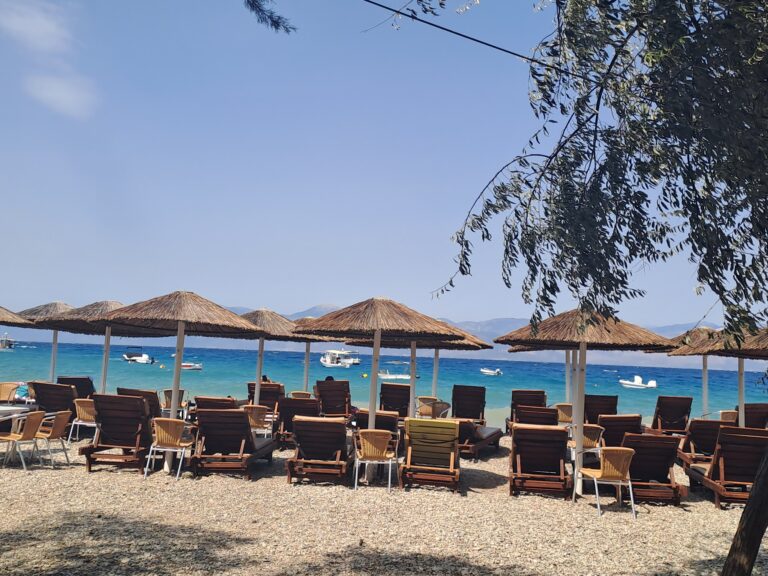
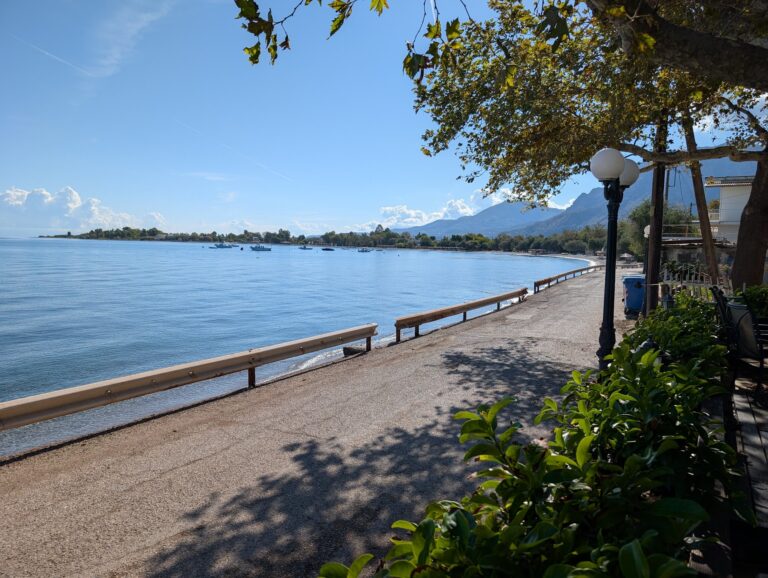
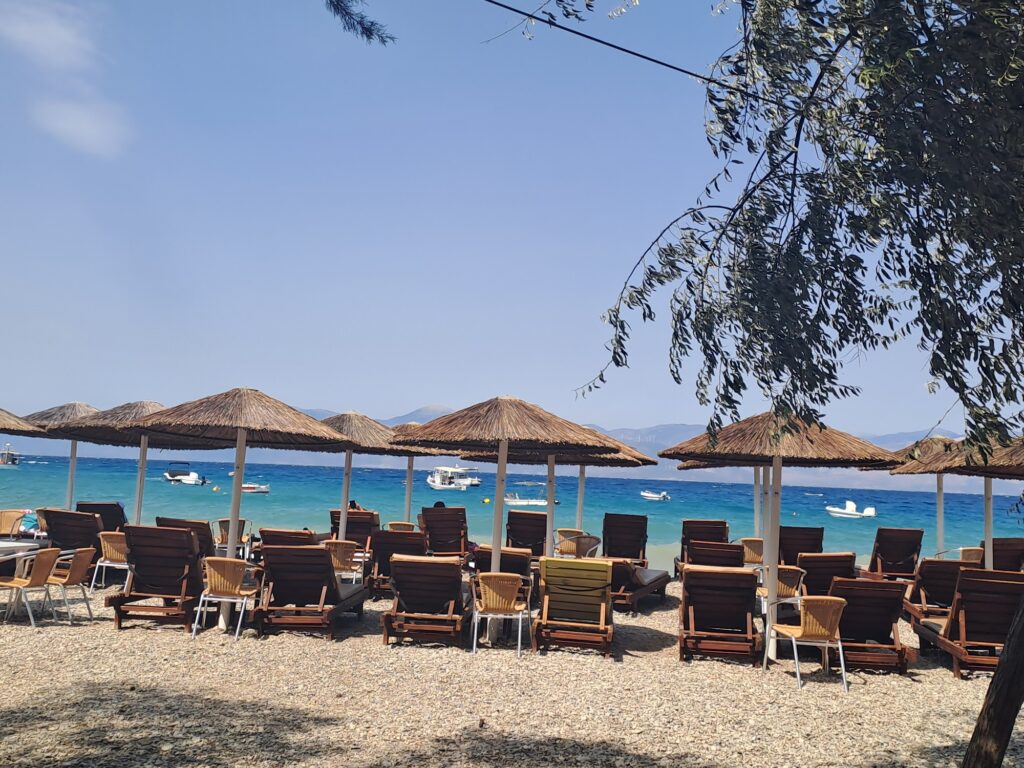
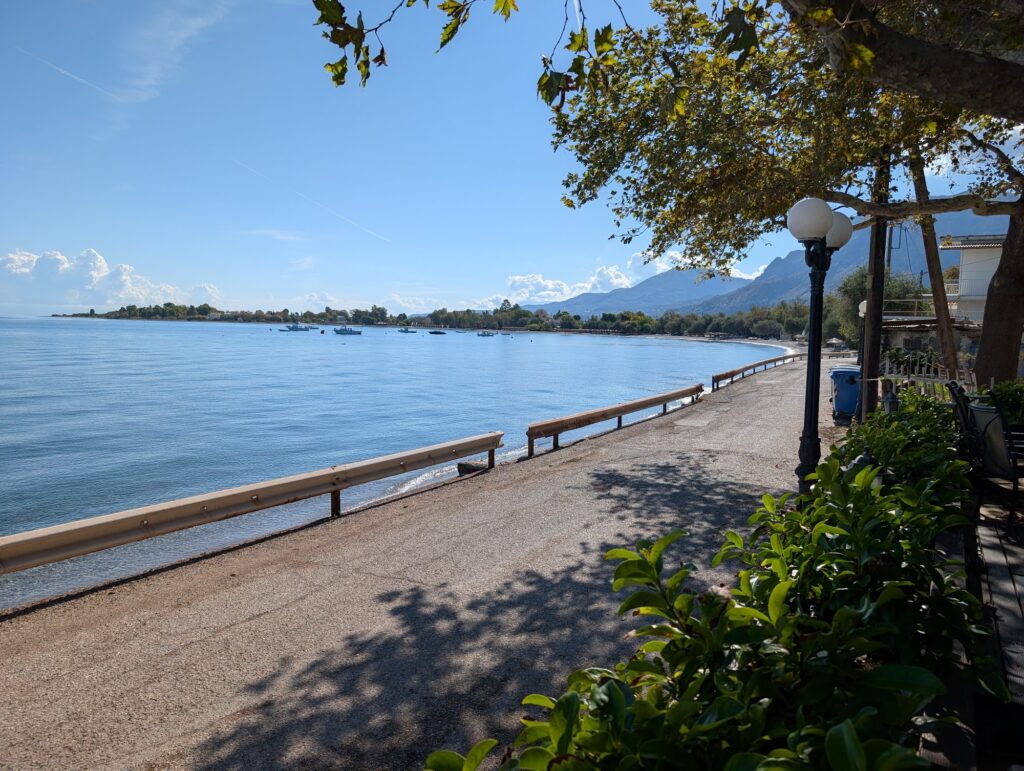
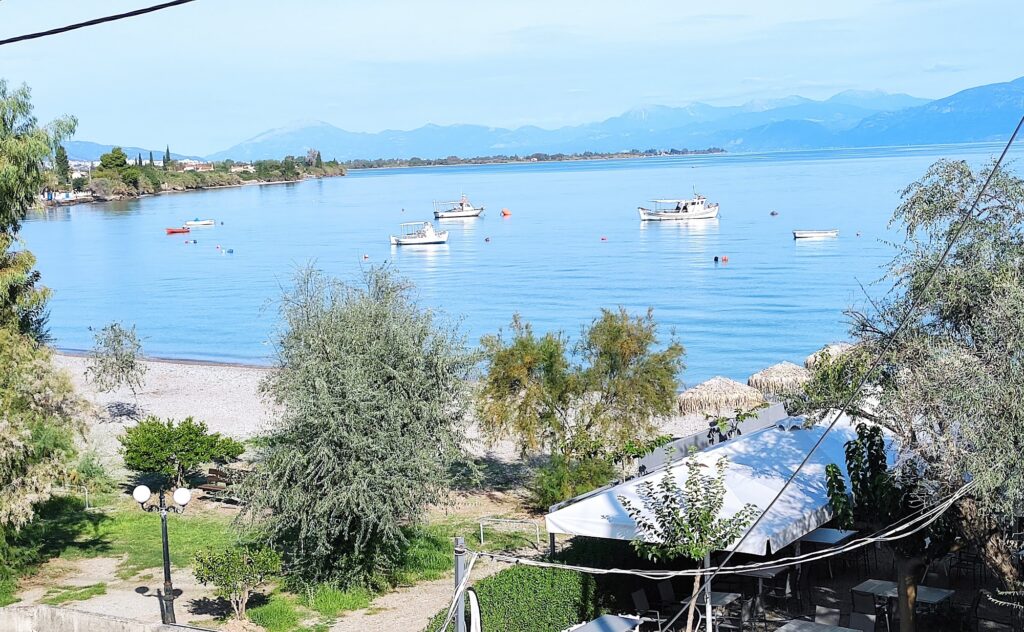
The beach runs for 2 kilometres along the northern Peloponnese coast, covered with a combination of pebbles and sand, with crystal clear water. The shore is organised with loungers, parasols, and water sports facilities. Cafes, beach bars, and restaurants line the coastal front.
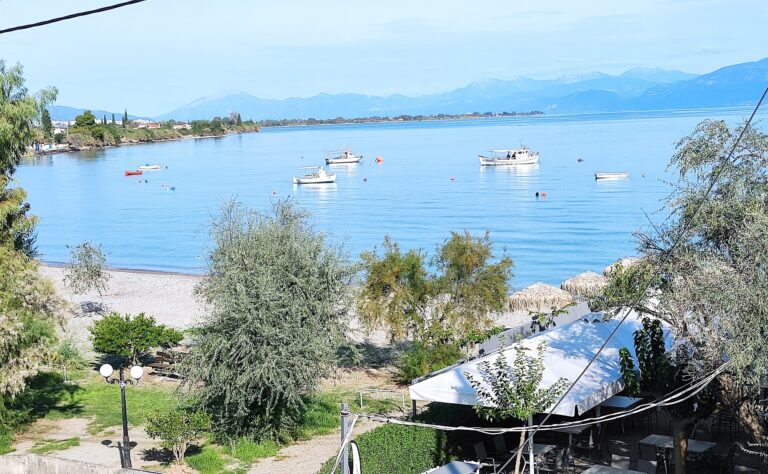
The view from the beach faces north across the Corinthian Gulf. Mount Parnassos and the mountains of central Greece are visible on the northern horizon in clear conditions. The Chelmos-Vouraikos National Park provides the southern backdrop — the mountain the railway ascends behind the town. The olive groves of Eleonas village are on the hillsides between the beach and the mountain.
The Odontotos Rack Railway: 1896, 22km, the Vouraikos Gorge, 60 Minutes to Kalavryta
The Odontotos (the name means “toothed” — referring to the rack mechanism) opened on 10 March 1896 and has operated the Diakopto-Kalavryta route continuously since. The 22-kilometre journey ascends through the Vouraikos Gorge — a narrow limestone gorge with the river below, sheer walls above, and the railway threading through tunnels and along cliff ledges — in approximately 60 minutes. The gradient is too steep for conventional rail (up to 12.5 percent); the rack mechanism engages to maintain traction.
The experience is the specific combination of Victorian-era engineering and spectacular natural scenery. The gorge walls narrow to near-claustrophobic width at several points. The river crosses and re-crosses the rail alignment. The rack mechanism is audible and visible at the steeper sections. Arriving in Kalavryta — the mountain town where the Nazis executed 696 male inhabitants in December 1943 in one of the worst World War II massacres in Greece — adds a historical weight to the arrival.
The Monastery of Mega Spilaio: Founded 362 AD, Built Into a Cave in the Gorge
The Monastery of Mega Spilaio — the Great Cave — is accessible from the rack railway at Zachlorou station and by road from Diakopto. It was founded in 362 AD and is built into a massive cave in the Vouraikos Gorge cliff face — eight storeys of monastic construction against a vertical rock face, with the cave forming the innermost chambers. It houses wall paintings from 1653, a carved wooden iconostasis, and the miraculous icon of the Virgin Mary attributed to Apostle Luke (the same attribution that appears at other significant Greek Orthodox icons). The monastery has been destroyed multiple times by fire and invasion; the current structure retains the historical continuity without the original fabric.
Chelmos-Vouraikos National Park and the Styx: The Waterfall of the Gods
Mount Chelmos (also Aroania) is the source of the Styx — the river of the underworld in Greek mythology. The Mavroneri waterfall, high on the mountain, is the specific location identified by ancient sources as the Styx’s origin: the water that Thetis dipped Achilles into, and by which the gods swore their most binding oaths. The waterfall is within the Chelmos-Vouraikos National Park and reachable by the mountain road from Kalavryta.
Aigio and the Achaean League: 15km West
Aigio — 15 kilometres west of Diakopto — was the meeting place of the Achaean League, the Greek federal confederation that resisted Macedonian and later Roman control. Pausanias records that the Greek generals gathered there to decide on the Trojan War expedition. The city’s ancient significance as the civic centre of Achaia predates the league by centuries.
For context on the broader Achaia beach circuit, Kastelokampos Beach Patras Greece is approximately 40 kilometres west on the same Gulf of Corinth coast — the Proastiakos connects both via Patras. Dafnes Beach Patras Greece and Agios Vasileios Beach Patras Greece are also on this same northern Peloponnese coastal strip.
Eleonas Beach at Diakopto in Achaia is the 2km pebble-and-sand Gulf of Corinth shore in the olive grove village (the name means exactly that) — organised with sunbeds and water sports, crystal clear water, Chelmos (2,355m) as the southern backdrop, the Odontotos rack railway departing from adjacent Diakopto since 1896 (22km through the Vouraikos Gorge to Kalavryta, 60 minutes), direct train from Athens Airport to Diakopto station (2 hours, Proastiakos/Hellenic Train extended 2020), the Monastery of Mega Spilaio (founded 362 AD, built into a cave in the gorge), the Styx waterfall on Chelmos above, the Tetramythos winery nearby, Aigio 15 minutes west.
Take the train from Athens Airport to Diakopto. Walk 20 minutes to Eleonas. Ride the rack railway the next morning.
Map
Sorry, no records were found. Please adjust your search criteria and try again.
Sorry, unable to load the Maps API.