Sv. Marek Sand Beach Krk Island: Rare Sandy Shore
Profile
Sv. Marek Sand Beach, Krk Island: The Rare Sandy Shore Near Risika With a Chapel in the Ruins
Croatia | Krk Island | Kvarner Gulf
Krk Island is a pebble island. This is not a complaint — the pale limestone pebbles and the clarity of the water above them produce the colour and the transparency that the island’s beaches are known for, and the rocky shore texture is inseparable from the character of the Kvarner Gulf coast that most visitors come for. But it does mean that when a sandy beach exists on Krk, it exists as a specific and deliberately chosen destination rather than as the default expectation of an island visit.
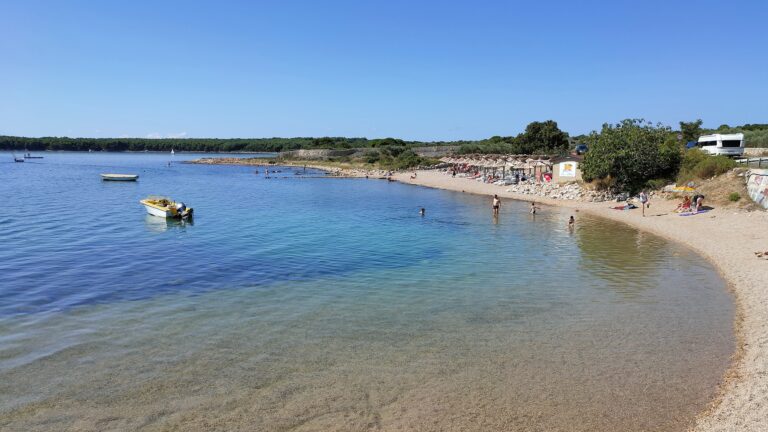
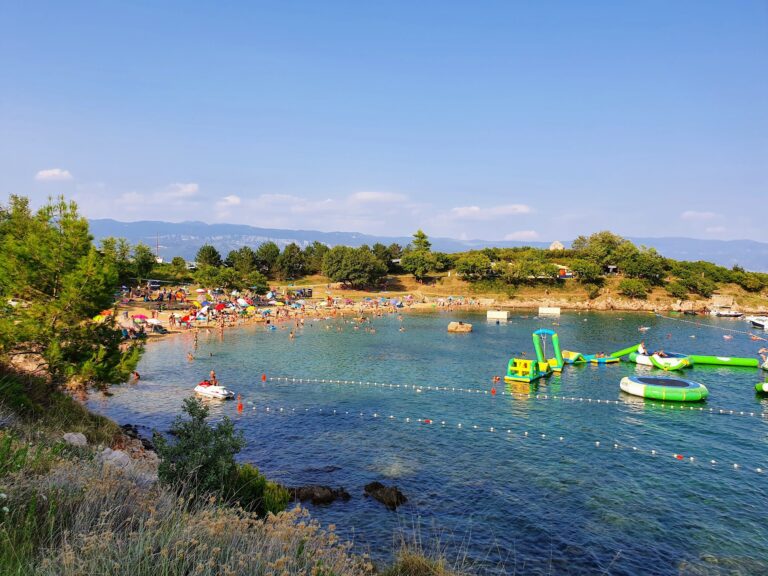
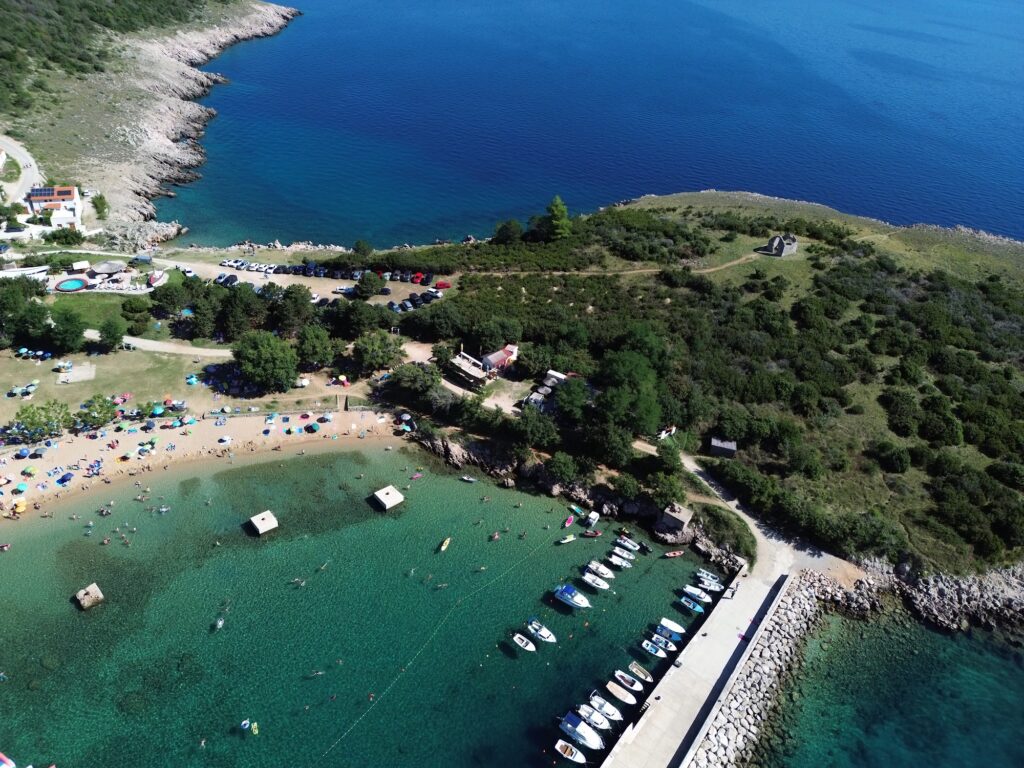
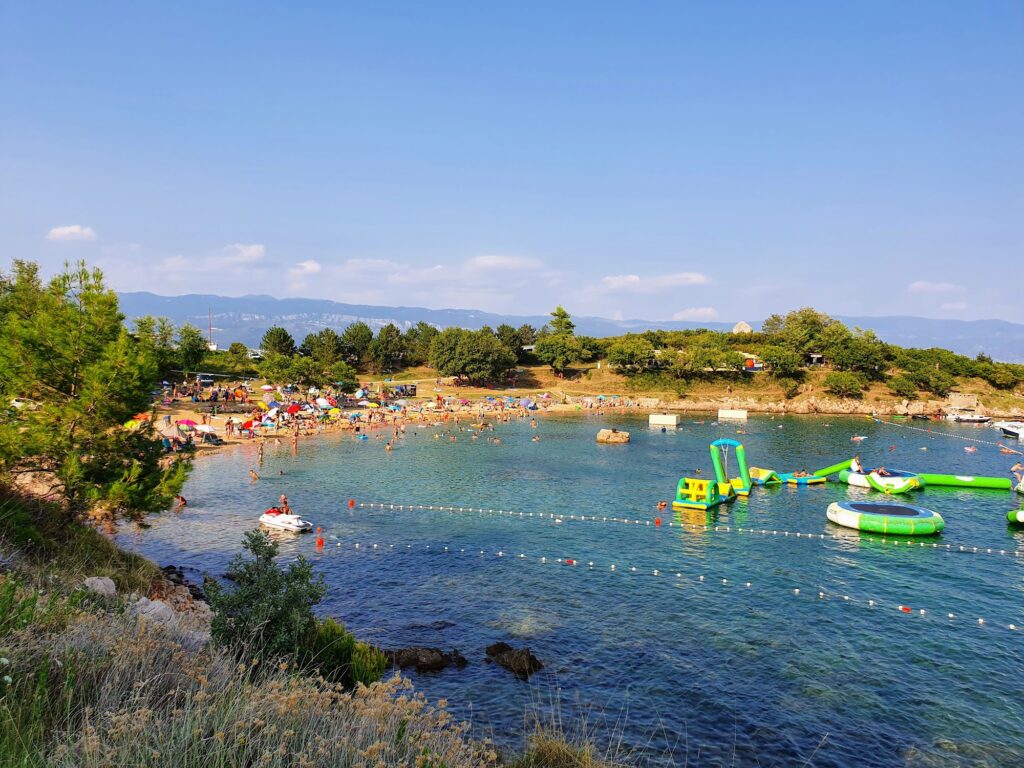
Sv. Marek Sand Beach near the village of Risika — situated on the island’s eastern coast between Vrbnik and Šilo — is one of those sandy exceptions, and it is the most complete one on the island in terms of what surrounds it. The sand extends from the beach directly into the sea, the seabed maintaining the soft sandy character that makes the shallow warm water safe and comfortable for very young children without the rocky-entry difficulty that the island’s pebble beaches present. Above the shore, the ruins of the St. Mark’s chapel — the beach’s namesake — sit in the landscape with the particular quality of abandoned religious architecture in the Kvarner scrubland, their presence giving the setting a historical dimension that purely natural sandy beaches do not have.
I arrived on a weekday morning in late June, following the clearly marked road from Risika village down to the organised parking area behind the beach. The sand was warm before I had taken my shoes off.
Getting There: The Road from Risika
How to get to Sv. Marek Sand Beach from Krk Town involves driving toward the village of Risika on the island’s eastern coast — situated approximately halfway between Vrbnik and Šilo — and following the clearly marked signs for Sv. Marek down a paved road to the coast.
From Krk Town, the drive to Risika takes approximately twenty minutes through the island’s interior. From Vrbnik — the clifftop wine town covered in the Potovošće Strand and Zgribnica Beach articles — Risika is a short drive south along the eastern coast road. The organised parking area directly behind the beach is large enough to accommodate the visitor numbers the beach attracts without the peak-season parking anxiety that some of the island’s more famous locations generate.
On foot from Risika village, the walk through the Mediterranean scrubland to the shore takes fifteen to twenty minutes — a short and pleasant route that is worth taking for visitors staying in the village and wanting to arrive at the beach without a car.
By small boat from the surrounding coastal towns, the sandy bay provides a natural anchorage — the approach from the sea delivering the chapel ruins visible on the hillside above the shore and the pale sandy beach below them in a single coastal composition.
The Setting: St. Mark’s Chapel and the Velebit Channel
The ruins of the St. Mark’s chapel above Sv. Marek Beach are the specific historical element that gives this otherwise straightforward sandy bay a quality that the island’s other beaches do not share. The chapel — the Sv. Marek from which the beach takes its name — sits in the scrubland above the shore in the incomplete and weathered state of a building that has been there for centuries and that the landscape has been gradually reclaiming. The ruins are visible from the beach and from the water, their stone outline clear against the Mediterranean macchia above.
The Velebit Channel — the body of water separating Krk Island from the Velebit mountain range on the mainland — is the view’s primary element on the eastern coast. The Velebit mountains visible across the channel from the beach are the same range visible from Potovošće Strand Krk Island further north on the eastern coast — a dramatic continental backdrop that the island’s western shores do not provide. The channel facing east means that the morning light illuminates the beach from above the mainland mountains before it has fully cleared the island’s interior ridge, producing a specific quality of early-morning light that western-facing beaches on the island do not experience.
The Shore and Water Quality
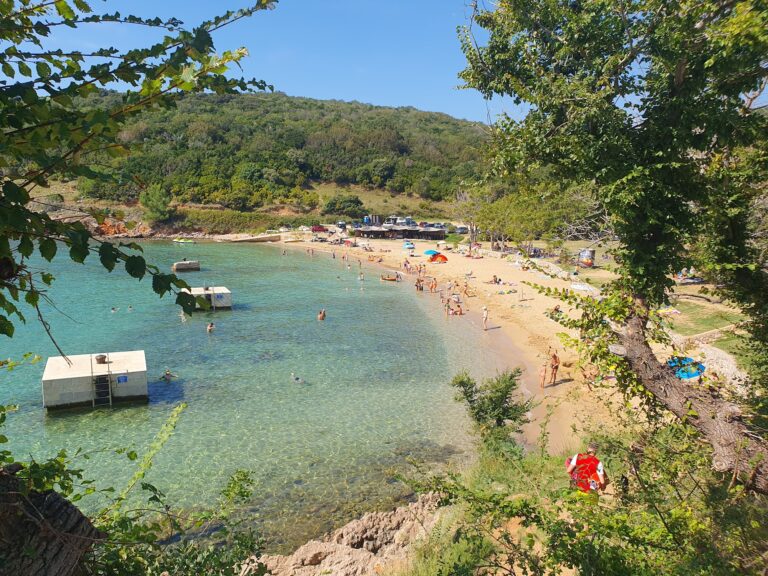
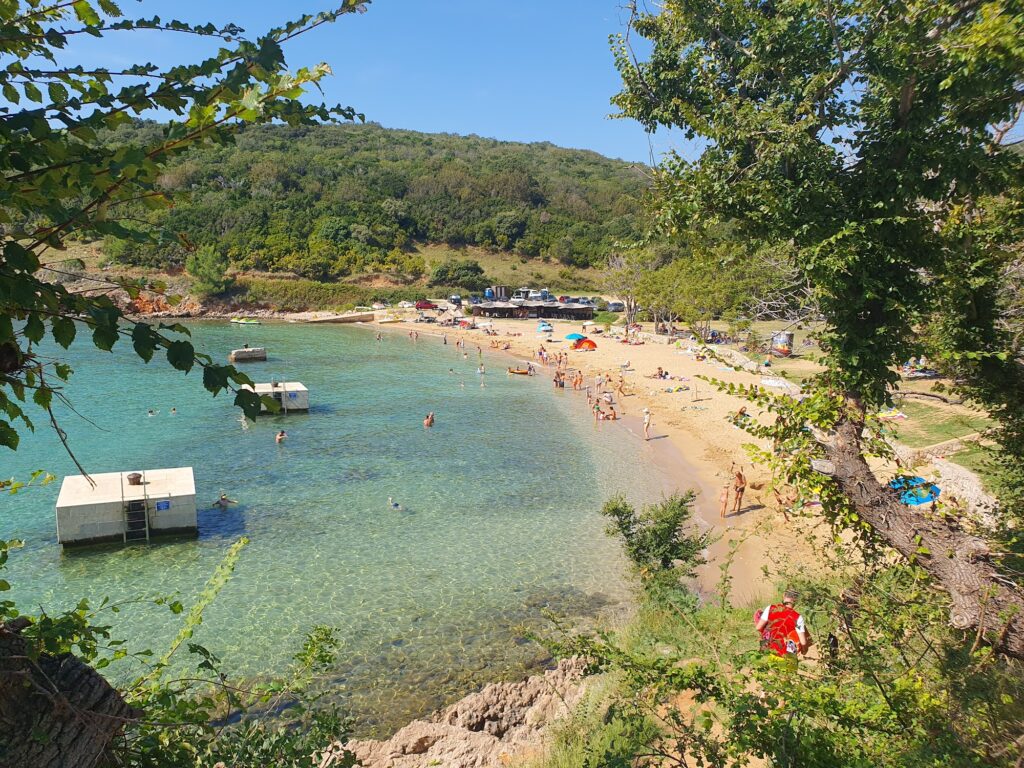
The sand at Sv. Marek is fine-grained and warm — genuine beach sand rather than the crushed limestone particles that some beaches described as sandy on the Croatian coast actually consist of. It extends from the beach directly into the sea, the sandy seabed maintaining the soft, comfortable underwater surface through the shallow zone and producing the pale turquoise colour visible in the photographs of the bay.
The water quality at Sv. Marek Sand Beach is consistently good — the open bay position on the eastern Krk coast providing the water circulation that keeps the sea clean and well-oxygenated. The transparency is characteristic of the eastern Kvarner at its clearest, the sandy bottom clearly visible from the surface, the colour the pale turquoise of shallow water over a reflective light seabed.
The depth increases gradually from the shore — the sandy seabed maintaining the shallow zone for a considerable distance from the waterline, making the beach one of the safest entries for young children on the island. The warm water temperature that shallow, sandy-bottomed bays accumulate through the summer is particularly pronounced here — the Sv. Marek bay water is consistently warmer than the deeper-floored pebble beaches on the island’s southern and western coasts, a quality that families with very young children find specifically valuable.
Sea kayak and pedalo rental provide the water-based activity for those who want to explore the adjacent rocky coves — the sandy bay sitting among the rockier sections of the eastern Krk coast that the island’s characteristic limestone geology produces on either side of this sandy exception.
Facilities
Sv. Marek Beach facilities are well-considered for a beach serving a day-tripper audience from the broader eastern Krk coast.
Modern freshwater showers and changing cabins are positioned near the main entrance. Sunbeds and umbrellas are available for hire. The organised parking area directly behind the beach provides the convenient access that makes visiting by car straightforward. There is no permanent lifeguard — the bay’s naturally calm and shallow character makes swimming conditions consistently safe through most summer conditions, but the unmonitored status requires the personal judgment appropriate to an unsupervised swimming environment.
The beach bars and casual eateries on the edge of the sand provide the on-site food and drink infrastructure that extends the practical independence of a full day at the beach without requiring the return to Risika village for supplies.
For Families
Sv. Marek Sand Beach with children is the strongest family beach on the eastern coast of Krk Island and — given the rarity of genuinely sandy beaches on the island — one of the most specifically valuable family destinations on Krk overall.
The soft sand eliminates the primary practical difficulty of a Kvarner beach day with very young children — the sharp pebble surface that requires water shoes and constant management at most of the island’s shores. Children can walk from the beach into the water without footwear, build sandcastles on the shore, and move freely between the sand and the sea in the way that a pebble beach does not permit.
The extended shallow zone — the sandy seabed maintaining knee-depth water for a meaningful distance from the shoreline — provides the safe, warm paddling environment for toddlers that the island’s deeper-floored pebble beaches do not. The warm bay temperature adds the further advantage of water that does not require gradual acclimatisation for young children.
For families who have spent time at the island’s pebble beaches — Baška Beach Krk Island with its two-kilometre crescent, Punta Di Galetto Krk Town with its pine shade and diving school — Sv. Marek provides the sandy alternative that those beaches cannot offer, and the specific practical advantages it carries for families with very young children make it a genuinely different and complementary choice rather than simply a less dramatic version of the same experience.
Food and Drink: Risika Village and the Krk Cheese
The beach bars on the sand edge handle coffee and cold drinks through the day with the relaxed competence of small seasonal establishments serving a regular flow of family day-trippers and local visitors.
For a more substantial meal, the village of Risika provides the option that the beach itself does not develop into a full restaurant offer. Krk Island produces cheese and honey with a specific local character — the cheese from the island’s sheep, the honey from the aromatic scrubland plants that cover the limestone terrain between the coast and the interior — and both are available in the village with the directness of produce sold close to its source. This is not the handmade pasta and island lamb of the Vrbnik wine town, but it is the specific and honest product of the agricultural landscape immediately above the beach, and worth the short walk to the village to find.
The view of the St. Mark’s chapel ruins from a position on the beach as the afternoon sun moves west and the Velebit mountains across the channel catch the shifting light — with the specific and unhurried quality that a sandy beach day tends to produce compared to the more active pebble beach experience — is the conclusion to the day that the setting at Sv. Marek provides without requiring any particular effort beyond remaining at the beach long enough to receive it.
Sv. Marek in the Context of Krk Island Beaches
Krk Island has an unusually complete range of beach types for a single island of its size — the two-kilometre resort crescent of Baška Beach Krk Island, the boat-only golden cliff cove of Golden Bay Beach Krk Island, the steep path descent of Zaljev Oprna Krk Island, the Blue Flag town beaches of Punta Di Galetto Krk Town and Porporela Beach Krk Town, the eastern coast wine-country beaches of Potovošće Strand and Zgribnica Beach Vrbnik.
Sv. Marek occupies the specific and otherwise unfilled position of the island’s sandy beach — the one destination on Krk where the absence of pebbles and the presence of sand make a categorically different kind of beach day available. For visitors to the island with young children, that position is not a minor distinction but the specific reason to make the drive to Risika.
Sv. Marek Sand Beach near Risika on Krk Island is the sandy exception that the island’s limestone geology makes genuinely rare and that families with very young children make a specific point of finding. The soft sand, the warm shallow water, the gradual entry, the chapel ruins above the shore, the Velebit mountains across the channel — it is a beach that earns its specific position on the island’s coastal map through the combination of the rarity of its surface and the completeness of its setting.
Drive to Risika. Follow the signs. Remove your shoes before reaching the shore.
The sand will be there. It is the only beach on Krk Island where that sentence applies.
Map
Sorry, no records were found. Please adjust your search criteria and try again.
Sorry, unable to load the Maps API.
Near by places: