Papikinou Beach Milos: The Only Blue Flag on the Island
Profile
Papikinou Beach, Adamas, Milos: The Only Blue Flag Beach on the Entire Island, 500m Beside the Main Port, Where Visitors Wait for Ferries to Athens and the Mining Museum Is a 5-Minute Walk Away
Greece | Adamas | Milos, Cyclades
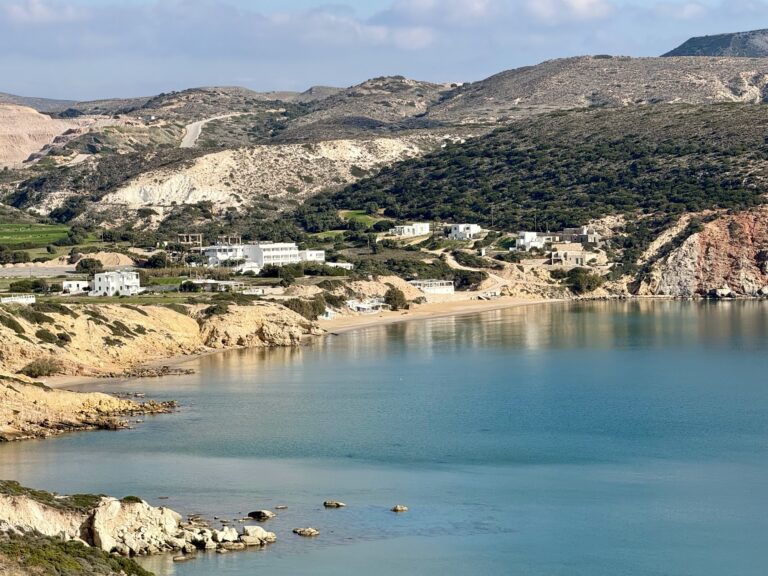
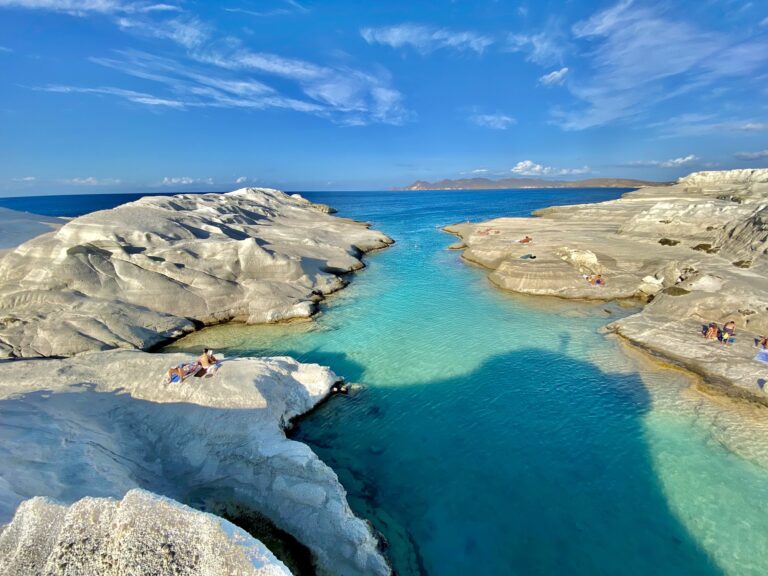
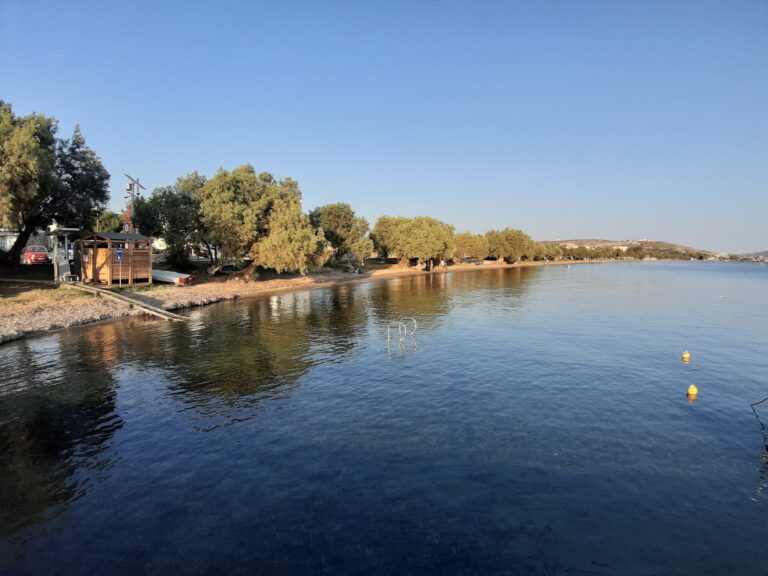
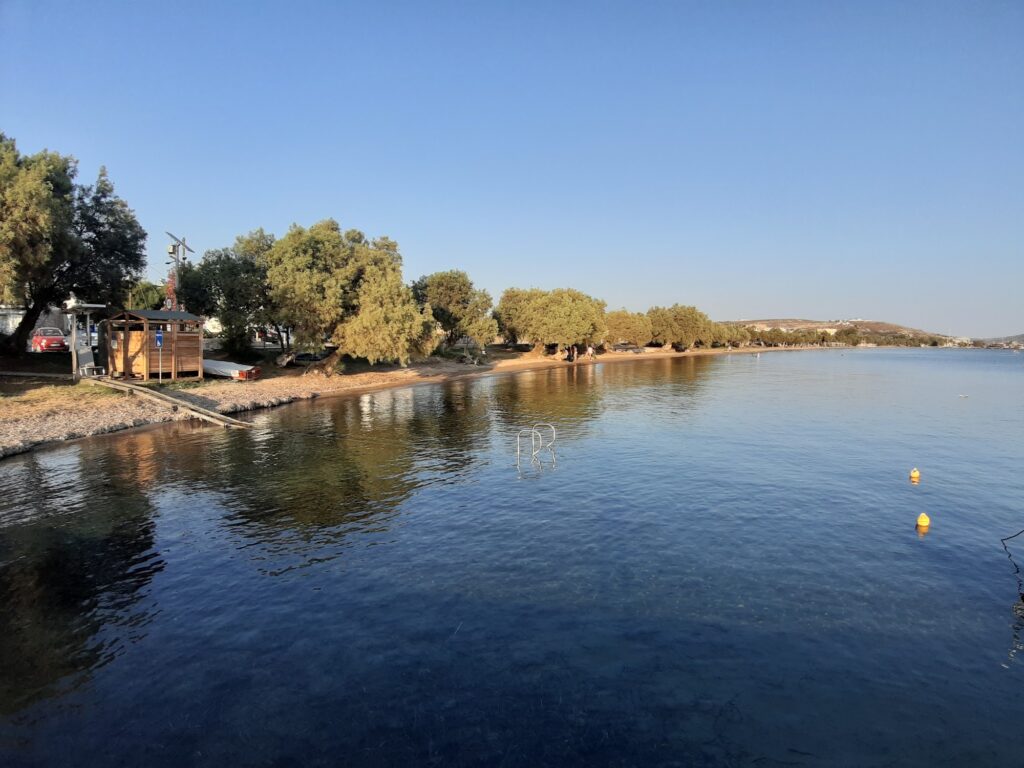
Milos has one Blue Flag beach. It is not Sarakiniko, the volcanic white landscape that appears in every photograph of the island. It is not Provatas, the golden-red volcanic sand south coast bay. It is not Firiplaka, the snow-grey sand with the sea caves. It is Papikinou — the 500-metre strip of sand and pebbles beside the main coast road, 1 kilometre east of the ferry port of Adamas, backed by a row of tamarisk trees that separate the beach from the traffic.
The Blue Flag distinction is the honest starting point for Papikinou because it captures both the beach’s primary quality and its context. The water quality in Adamas Bay is consistently excellent — the bay is sheltered, shallow, and well-monitored. The beach is not the most scenically dramatic on Milos. It is the most accessible, the most reliably clean by environmental certification, and the most convenient for visitors arriving or departing by ferry. Visitors who sleep in Adamas and leave the next morning frequently spend the afternoon at Papikinou waiting for their boat, which is its own specific category of beach visit.
The correct local name is Papikinos. The alternative spelling Papikinou (genitive form) appears in most international travel sources — both refer to the same place.
Getting There: 1km East of Adamas Port, 15-Minute Walk, Free Parking, All Bus Routes Pass Through
From the centre of Adamas, the coastal road heading east reaches Papikinou after approximately 1 kilometre — a 15-minute flat walk. The beach runs along the right side of the road with no turn or descent required. Free parking is in the dedicated lot behind the beach. Every bus route leaving Adamas passes the beach entrance; the stop is at the beach.
By bicycle, the flat road from the port makes Papikinou a 5-minute ride. By car, the drive takes 2 minutes. Papikinou is the most straightforwardly accessible beach on Milos by every transport mode.
Milos Airport — which has domestic connections to Athens — is 5 kilometres from Adamas, making Papikinou accessible from the airport in approximately 10 minutes.
The Beach: 500m Narrow Strip, Tamarisk Shade, Sand and Pebbles, No Big Waves, Road Along It
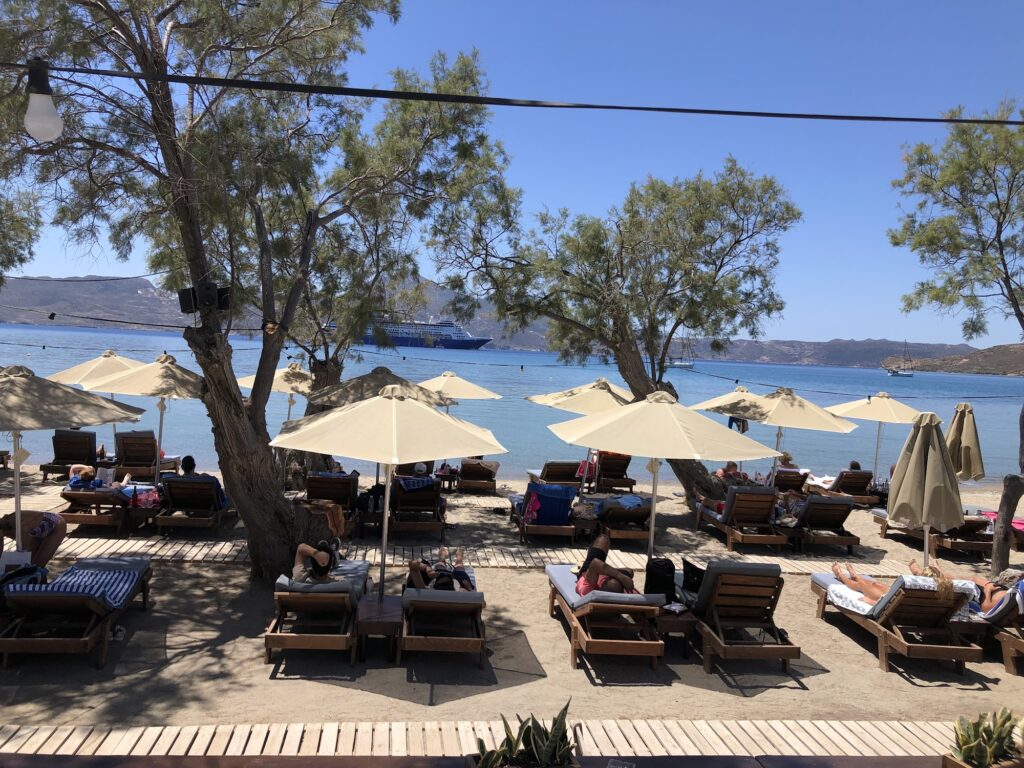
The beach is narrow — the tamarisk trees run close to the water, and the road is behind the trees. The road is a real drawback that multiple independent sources note honestly: traffic noise and the proximity of passing cars diminish the experience compared to more isolated beaches. The tamarisks filter this partially, but the road is a constant presence.
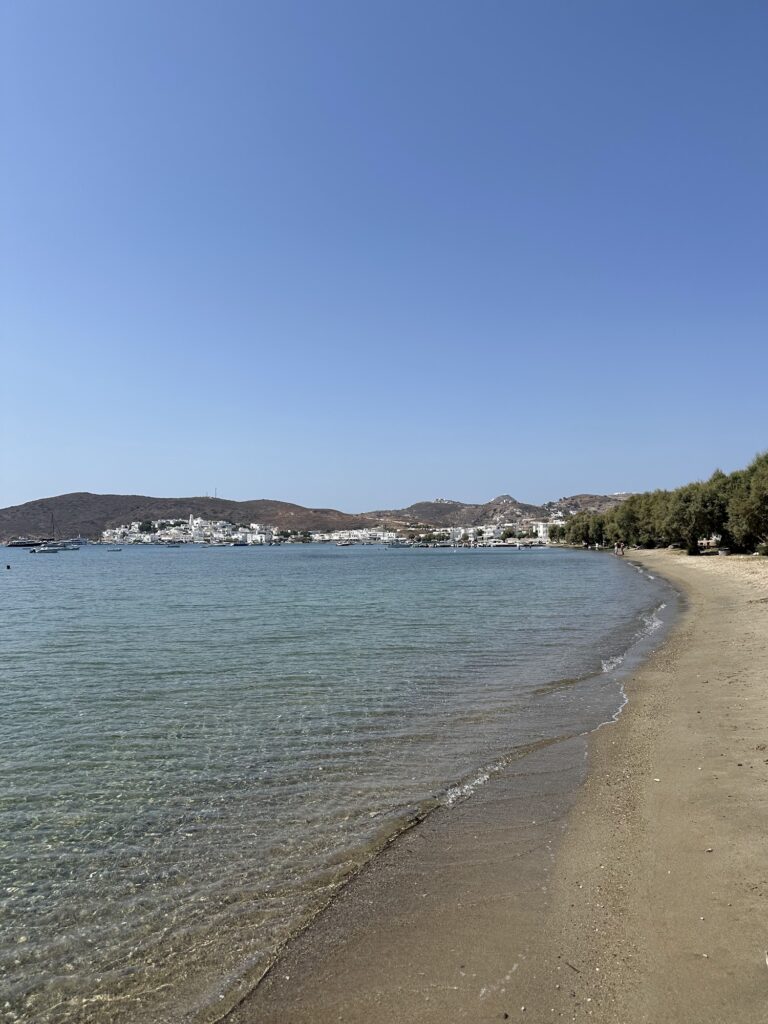
The sand has pebbles mixed throughout, including in the sea — the entry requires some care and water shoes are sensible. The seabed is shallow and calm throughout; the position inside Adamas Bay eliminates waves and large swell. Families with toddlers use it specifically for the calm shallow water.
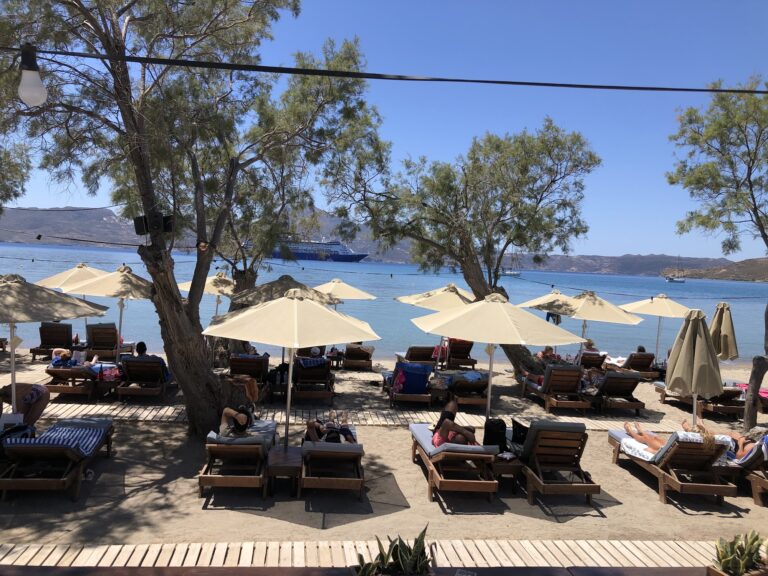
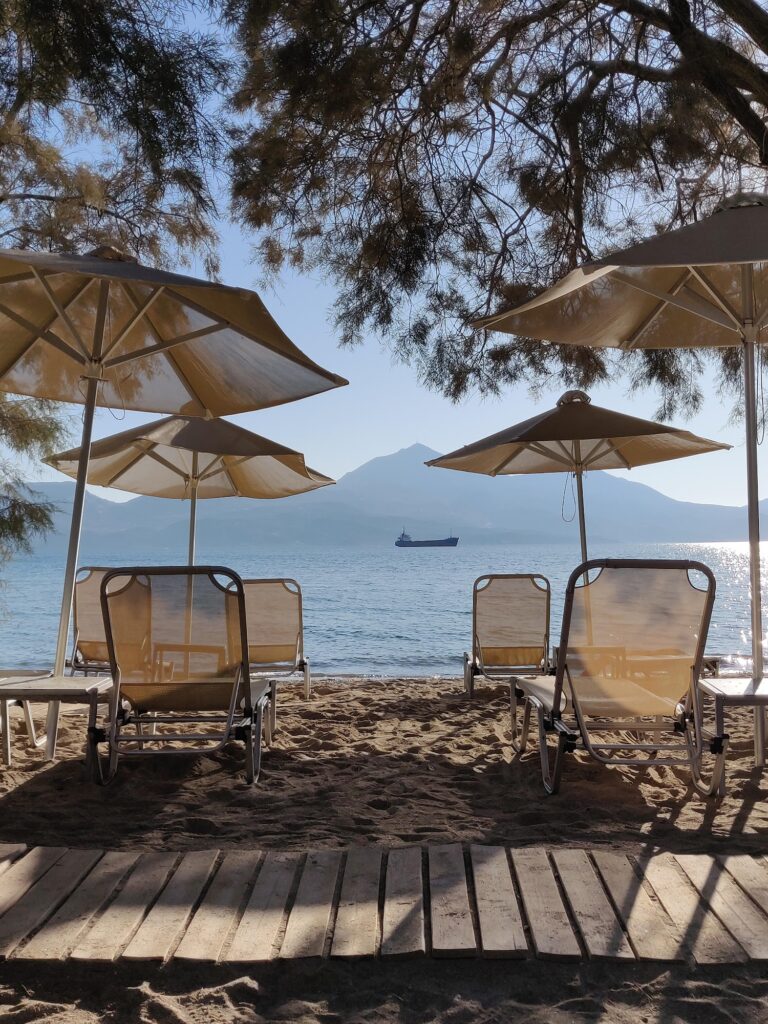
Sunbeds are available from the taverna operators at the beach — reported prices range from €4 per set of two (Lydia taverna, mentioned by name by a visitor who walked the length of the beach) to €10 to €12 per individual sunbed depending on the operator. The tamarisk trees provide free shade in most sections for visitors who bring their own towels.
A lifeguard is present in season.
The Milos Mining Museum: 5 Minutes Walk From the Beach, the Best Context for Understanding the Island
The Milos Mining Museum in Adamas is 5 minutes’ walk from Papikinou beach and is one of the most genuinely informative small museums in the Cyclades. Milos has an extraordinary mining heritage: the island is the largest bentonite producer in the European Union, produces kaolin, perlite, and other industrial minerals, and was the source of obsidian — the volcanic glass used as cutting tools — that travelled across the Mediterranean and central Europe during the Neolithic and Bronze Age. Milos obsidian has been found in Thessaloniki, in Crete, and on the coast of Israel. Before metal tools existed, Milos was a strategic resource that people sailed to specifically to obtain.
The Venus de Milo was not the first remarkable thing found on Milos. The island’s obsidian deposits were being exploited at least 9,000 years ago.
The museum also covers the Milos story of barite, kaolin, and bentonite extraction — the industrial minerals that the island still produces at significant scale. The abandoned mines visible on the south coast are part of this history; the museum contextualises them.
Lagada Beach: The Other Adamas Beach, on the North Side of the Port
Lagada is the beach on the opposite (north) side of Adamas port — smaller, less organised than Papikinou, and also calm due to the bay position. Visitors who find Papikinou too close to the road sometimes prefer the Lagada side for a quieter experience, though Lagada has less infrastructure.
The two beaches flank the port on either side, making Adamas a town where swimming is immediately accessible without a car — which is the specific quality that makes Adamas a viable base rather than merely a transit point.
Adamas Town: Restaurants, Supermarkets, Boat Trips, All Island Bus Connections
Adamas is the commercial hub of Milos — the most developed town on the island with the widest range of restaurants, shops, supermarkets, scooter hire, boat tour operators, and accommodation. All island bus routes originate here. All island boat excursions depart from here. The Milos Mining Museum is here. The ferry to Piraeus departs from here.
For visitors who want a single base from which to access all of Milos — including the south coast volcanic beaches, the north coast sirmata villages, the Sarakiniko pumice landscape, and the Kleftiko sea caves — Adamas is the practical choice. Papikinou is the beach outside the front door.
The restaurants in Adamas cater to the full visitor range — from the harbour cafes serving Greek yoghurt and honey at breakfast to the seafood restaurants at the port for dinner. The pitarakia (local cheese pies) available from the beach tavernas at Papikinou are specifically mentioned as tasty and inexpensive.
Comparing Papikinou to the Other Milos Beaches
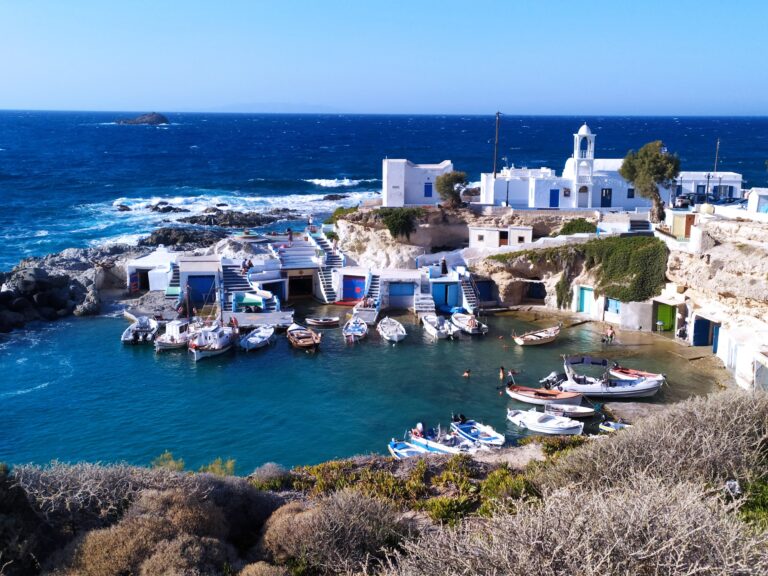
The honest comparison puts Papikinou clearly in its category. It is not the scenic beach — that is Sarakiniko, Mandrakia Beach Milos Greece, or Kleftiko. It is not the volcanic sand beach — that is Provatas Beach Milos Greece or Paliochori. It is the convenient, certified-clean, always-calm beach that requires no car, no advance planning, and no more than 15 minutes’ walk from anywhere in Adamas. Its Blue Flag award is the thing that makes it genuinely exceptional rather than merely accessible.
Papikinou Beach at Adamas, Milos is the only Blue Flag beach on the entire island — 500 metres of narrow sand and pebble strip 1 kilometre east of the ferry port, tamarisk shade, always calm (no waves at any point), shallow sandy-pebble seabed, lifeguard in season, sunbeds from €4, road running along it (honest drawback), the Milos Mining Museum 5 minutes’ walk (the best context for understanding the island’s 9,000-year resource history), Lagada beach on the north side of the port, all bus routes passing the entrance, and free parking.
Walk east from the port. The beach starts when the tamarisk trees start.
Map
Sorry, no records were found. Please adjust your search criteria and try again.
Sorry, unable to load the Maps API.
Near by places: