Tsigrado Beach Milos: Descend at Your Own Risk
Profile
Tsigrado Beach, Milos, Greece: Two Ladders, a Narrow Rocky Passage, and a Sign Saying You Descend at Your Own Risk — But the Water Is Worth It
Greece | Fyriplaka | Milos, Cyclades
The sign at the top of the cliff says it plainly: the descent is done at your own risk. It’s a red metal rod coming out of the ground with a rope around it, and when you find it you’ll know you’ve found the right place. The entrance to the beach is easy to miss.
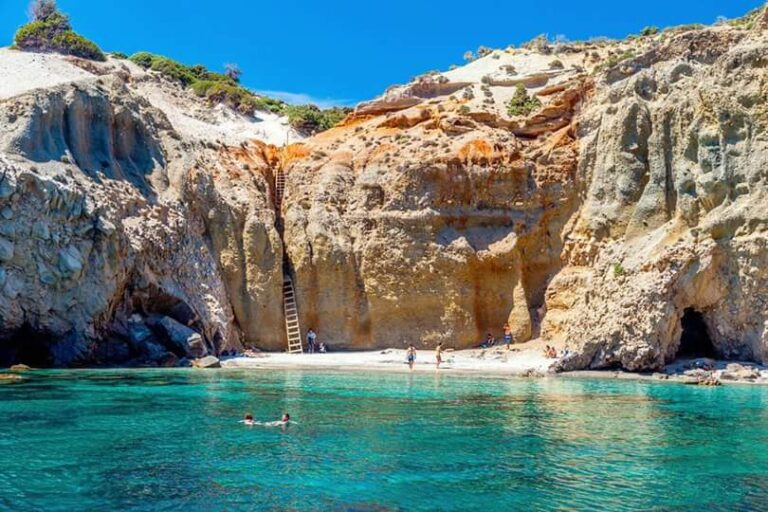
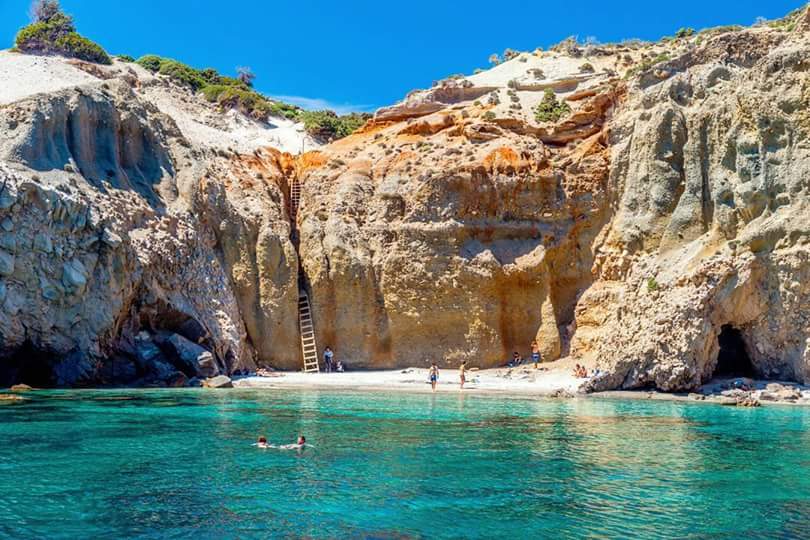
The descent itself takes about 10 to 15 minutes and involves two wooden ladders — the first approximately 4 metres, a narrow canyon walk of about 10 metres, and a final ladder of around 6 metres. The ground is uneven, the passageway is slanted and narrow, and anything you take down you’ll carry back up. The standard advice is consistent across every account: sturdy shoes, not flip-flops; no large bags; take your time; don’t attempt it if you have mobility difficulties or if you’re travelling with very young children.
It honestly isn’t as hard as it sounds, and most fit visitors complete it without incident. But the sign means what it says.
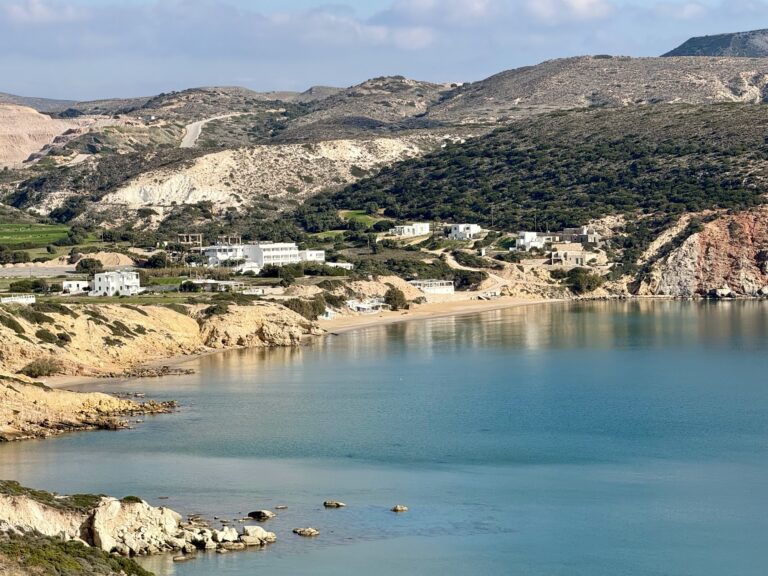
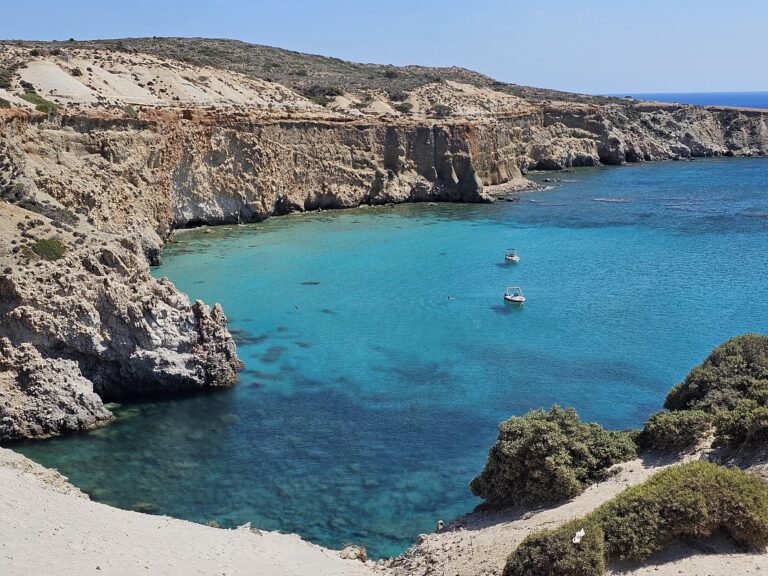
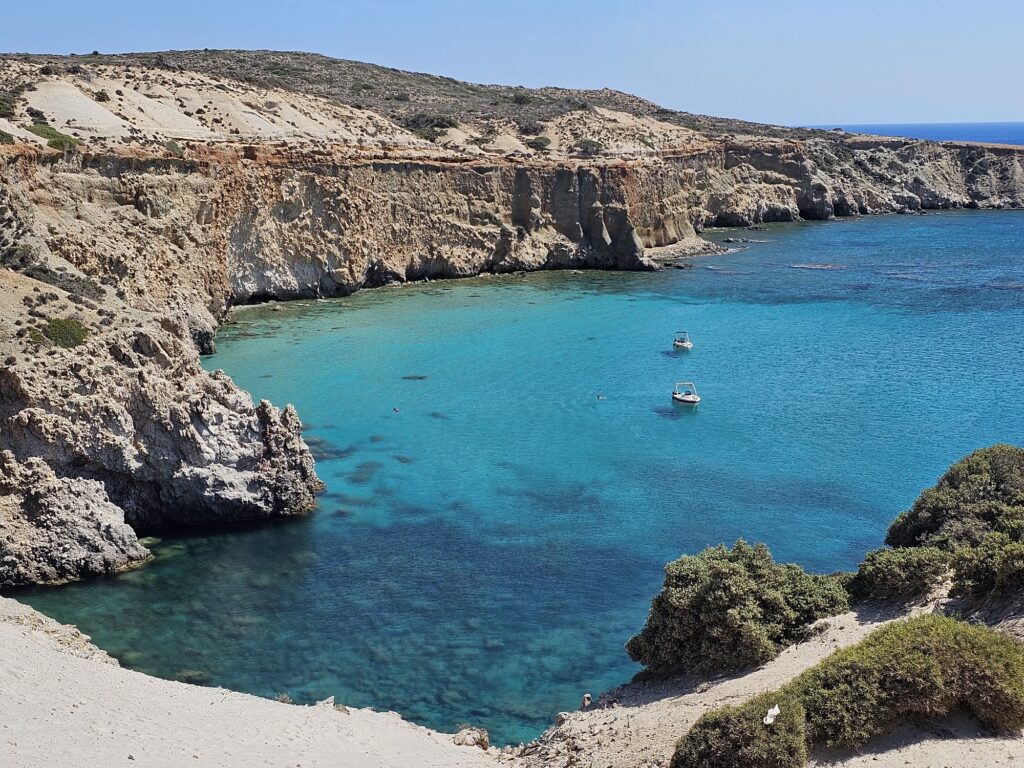
Tsigrado lies on the south coast of Milos, 11.7 kilometres from the main port of Adamas and 1 kilometre from Fyriplaka Beach. The beach is a small sandy cove, crystal water, surrounded by high volcanic cliffs and caves — no canteen, no beach bar, no umbrellas, no sunbeds.
Getting There: Car or Scooter to the Dirt Parking Lot, Then the Descent — or by Boat or Kayak from Fyriplaka
The best way to reach Tsigrado is to rent a scooter, ATV, or car for the day and make your way to the southern coast. From Adamas, follow the road toward Fyriplaka. Just before you reach it, follow the sign left onto the dirt road. Watch for deep holes in the road. The parking lot is at the cliff edge — the descent begins there.
The local Milos bus stops at Tsigrado and Fyriplaka three to four times a day between July 1 and September 24, each trip costing €2. The first bus arrives around 11:30am, which is already past the optimal arrival time.
Aim to get there before 9:30 to 11:30am — the beach is visible from above during busy months and attracts spectators, which means the small cove fills earlier in the day than you’d expect for a beach this hard to access.
For anyone who doesn’t want to descend: the alternative is a kayak or SUP from Fyriplaka beach, just 800 metres east. Milos Watersports runs guided kayak tours from Fyriplaka that reach Tsigrado through the sea — a legitimate alternative that delivers the same water without the ladder.
The Beach: Small, Sandy, No Facilities, Natural Shade After 16:00, Sheltered When the Meltemi Blows
The cove is small and protected by high volcanic cliffs. Because it faces south and is not exposed to the northern winds, Tsigrado is specifically the beach to go to when the Meltemi is making the northern and eastern coasts of Milos uncomfortable. The sheltered geometry that makes the ladder necessary also makes the conditions inside the cove reliable in conditions that close other beaches.
The sand has diminished over the years. A large part has been swept away by winter surf, which is why the ladder exists — years ago a steep sand dune used to lead all the way down to the water, making the descent easy. The remaining beach is still white volcanic sand, but it’s smaller than photographs from a decade ago show.
After 16:00 the sun drops behind the cliffs and natural shade takes over. If you arrive in the morning and stay until the shade arrives, the full sequence of the cove in direct sunlight is the experience. Some visitors use the late afternoon shade as the cue to walk the 800 metres to Fyriplaka and extend the beach day in full sun there.
Bring everything: snacks, water, sunscreen, your own shade if you want it. Nothing is available on the beach.
The Sea Caves and the Snorkelling
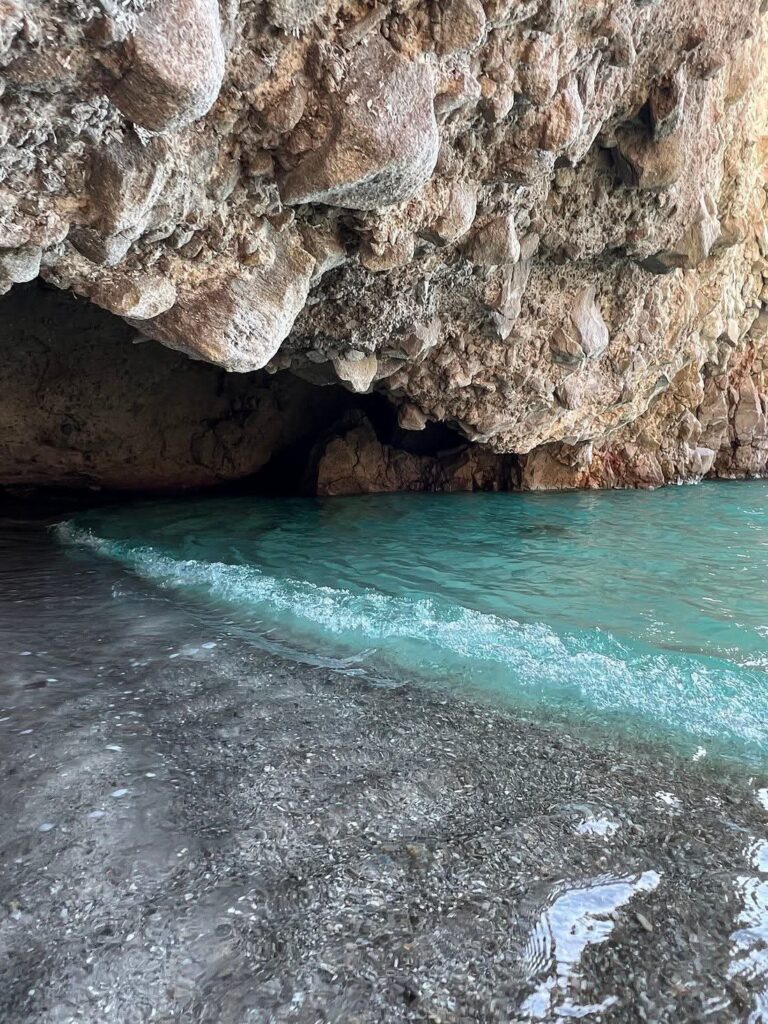
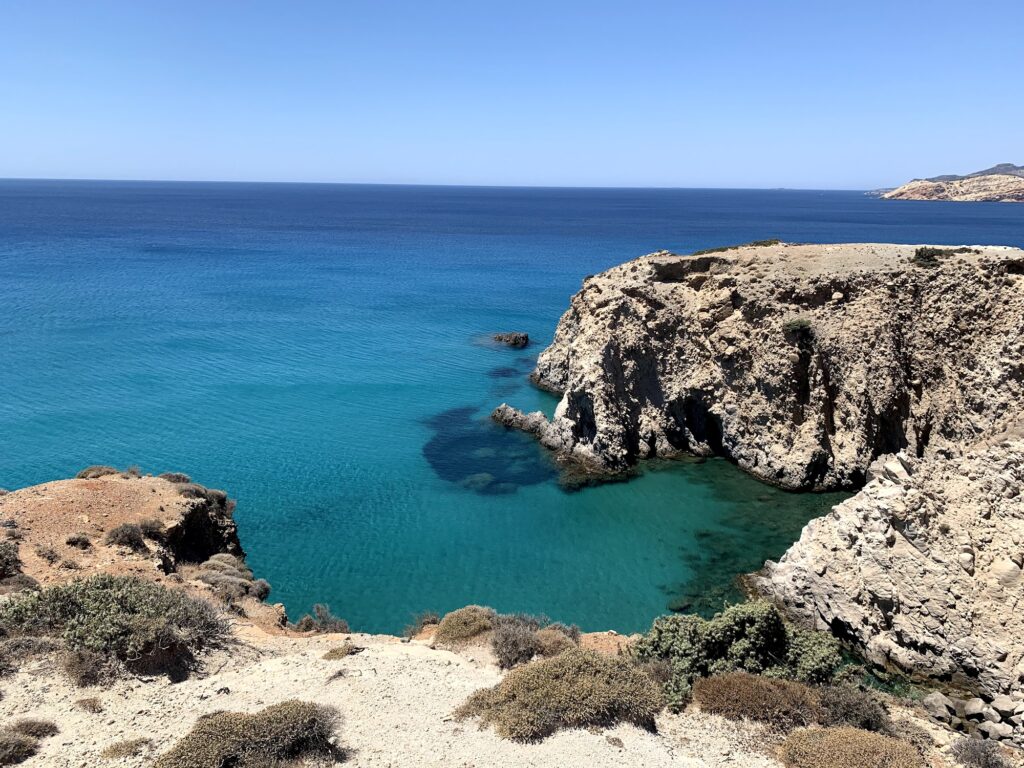
Around the cliffs flanking the cove there are many small caves you can explore. The interesting geological structures of the bottom — the volcanic rock, the natural arches, the secluded inlets — make Tsigrado specifically good for snorkelling. The clear water and the cave openings at the base of the cliff are the primary underwater attractions.
Cliff jumping from the lower accessible points is practised by some visitors. Check the bottom carefully before jumping from any new spot.
Milos: The Island of Colors, the Venus de Milo, and Sarakiniko
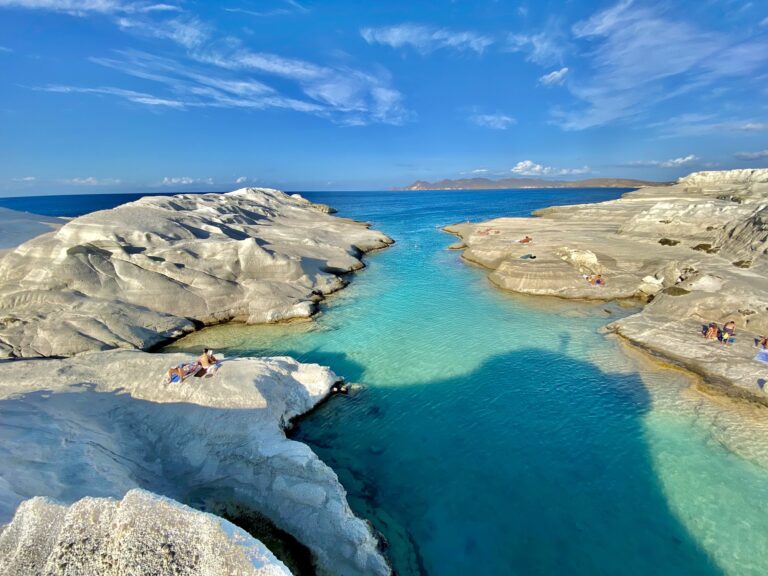
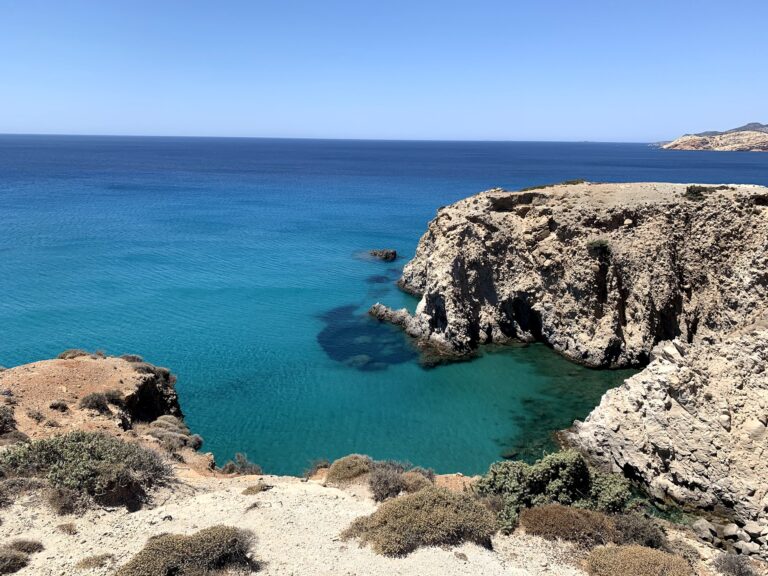
Milos is less well-known than Mykonos or Santorini but arguably more visually varied. In 1820 an unsuspecting farmer uncovered the Venus de Milo — a six-foot marble statue now one of the three must-see works in the Louvre. The volcanic terrain produces violet, crimson, and ochre tones in the rock faces across the south coast. Sarakiniko — the lunar landscape of white rock formations on the north coast — and Kleftiko — the sea cave complex accessible only by boat — are the other flagship Milos experiences.
Tsigrado Beach on Milos is the small south-coast volcanic cove reached by two wooden ladders and a narrow rocky passage — descend at your own risk, sturdy shoes not flip-flops, no large bags, not suitable for families with young children or anyone with mobility difficulties, no facilities of any kind (bring everything), sheltered from the Meltemi, natural shade after 16:00, 800 metres from Fyriplaka by kayak or foot, and the alternative by boat or kayak from Fyriplaka for anyone who won’t do the descent.
Find the red metal rod. Follow the rope. Take your time.
Map
Sorry, no records were found. Please adjust your search criteria and try again.
Sorry, unable to load the Maps API.
Near by places: