Provatas Beach Milos: Volcanic Sand, Hot Springs, Quieter
Profile
Provatas Beach, Milos: The 700m Golden-Red Volcanic Sand Bay Less Crowded Than Its Famous Neighbour Paliochori, Where Hot Sulphurous Springs Also Rise From the Seabed and Agios Sostis Cove Is Connected by Swimming
Greece | Provatas | Milos, Cyclades
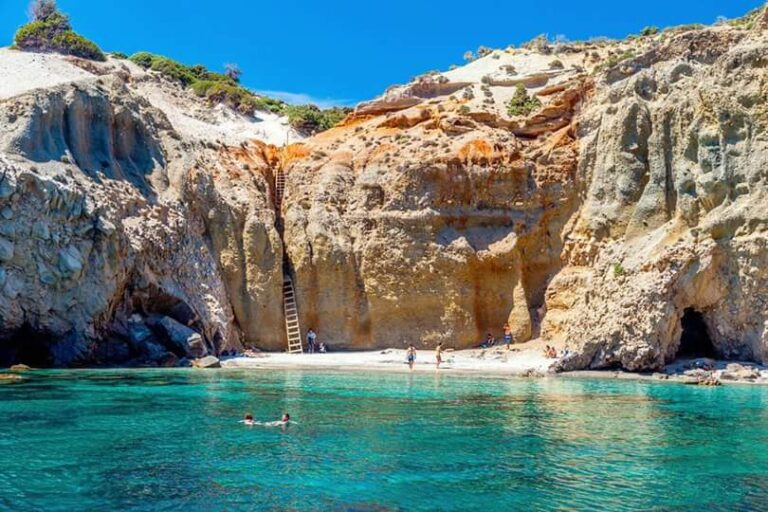
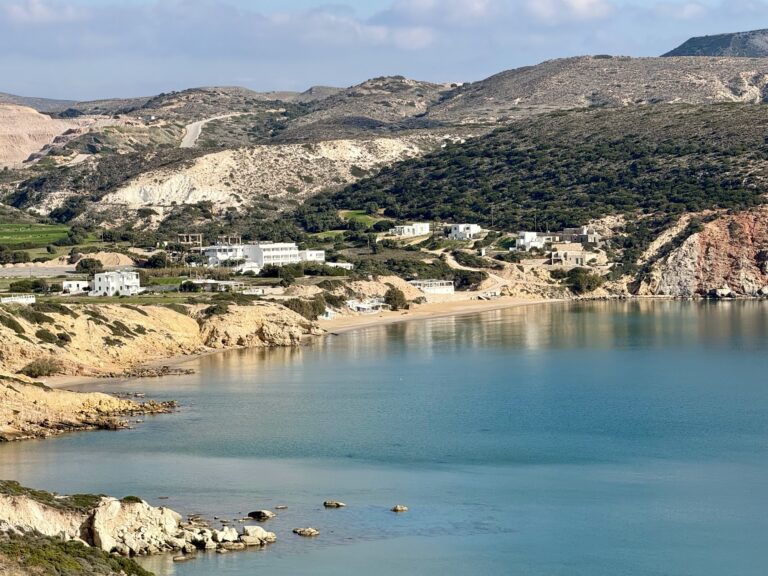
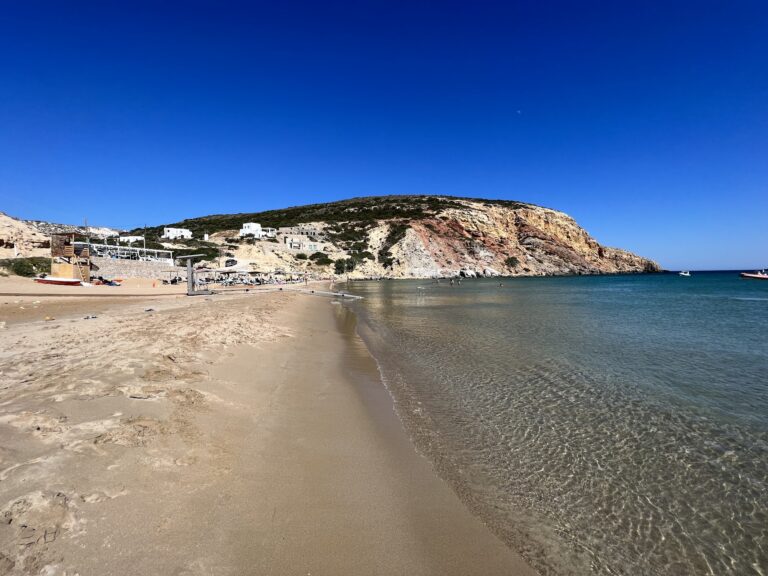
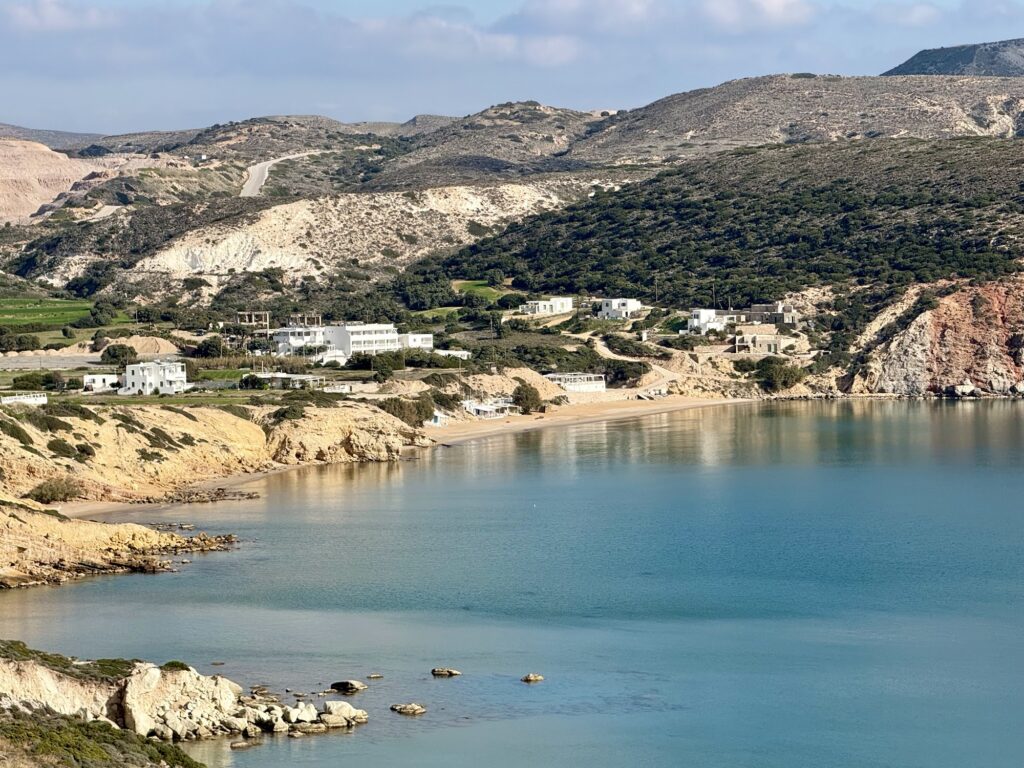
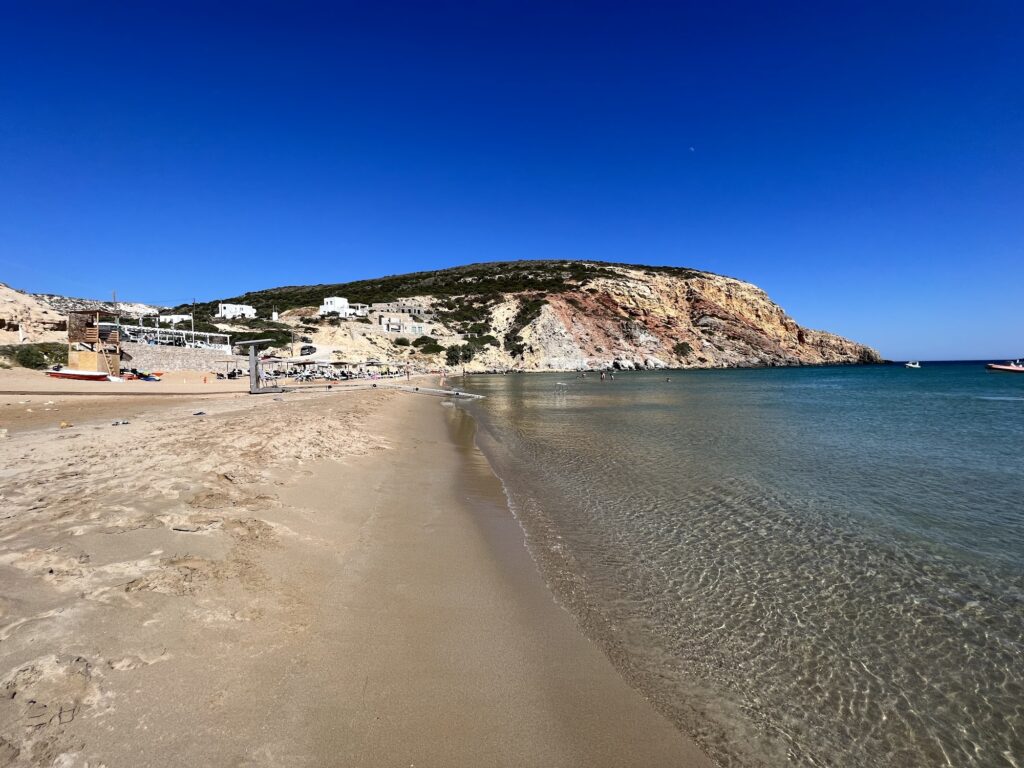
The sand at Provatas is not one colour. It ranges from golden to orange-red to ochre depending on where you stand and how the light falls. The multicoloured volcanic cliffs behind the beach are the source — the same geology that produced the white pumice at Sarakiniko, the blue-grey volcanic stone at Kleftiko, and the deep reddish iron at Paliochori produces the golden-red gradations at Provatas. Each of the south coast beaches on Milos is a different volcanic expression.
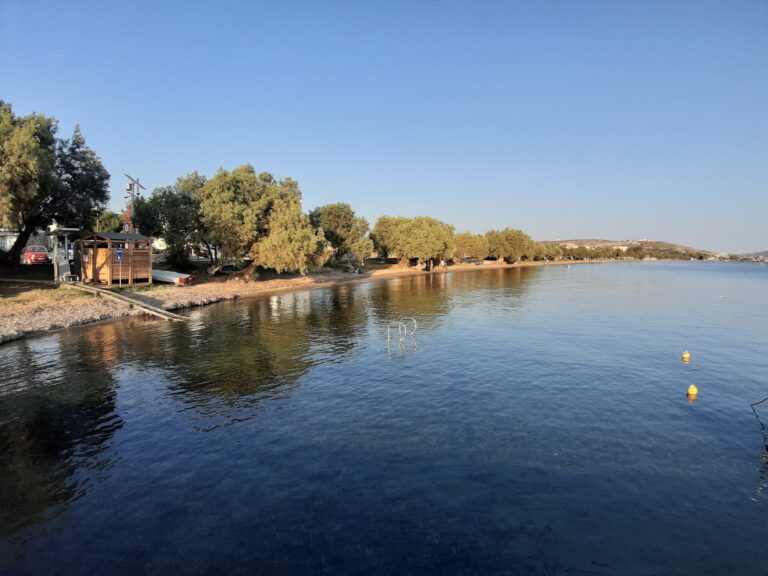
Provatas is 700 metres long and approximately 7 kilometres southeast of Adamas, the main port of Milos. The south-facing orientation and the enclosing volcanic headlands provide shelter from the Meltemi — the bay is consistently calm when the northern coast is rough. The water is extremely shallow and gradual: one of the sandy-bottomed south coast beaches where you walk further than seems physically reasonable before the depth reaches your waist.
Hot springs rise from the seabed here. Swimmers notice them — a patch of warm water within the cool Aegean, the temperature differential clear on the skin. This is the same geothermal activity that makes Paliochori famous, but Provatas is less often mentioned in the geothermal context. The sulphurous mineral springs at Provatas have been attracting attention since antiquity — the ancient Romans used the Milos thermal waters for their therapeutic properties.
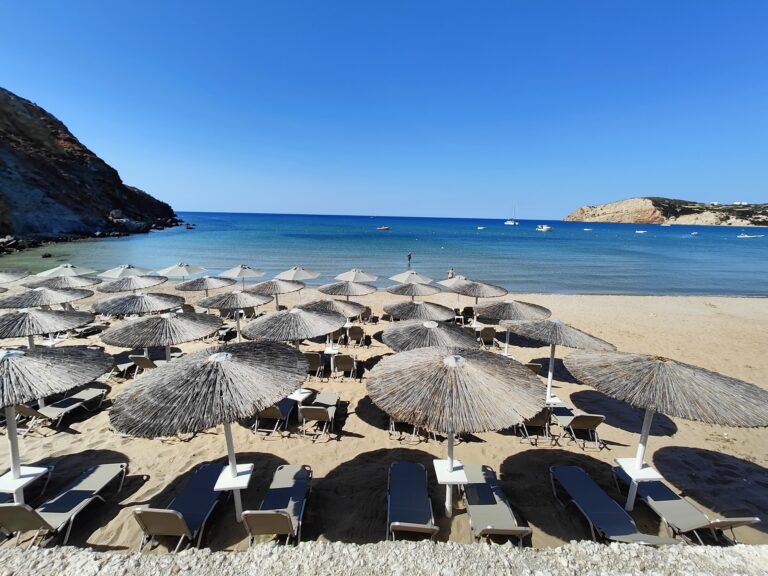
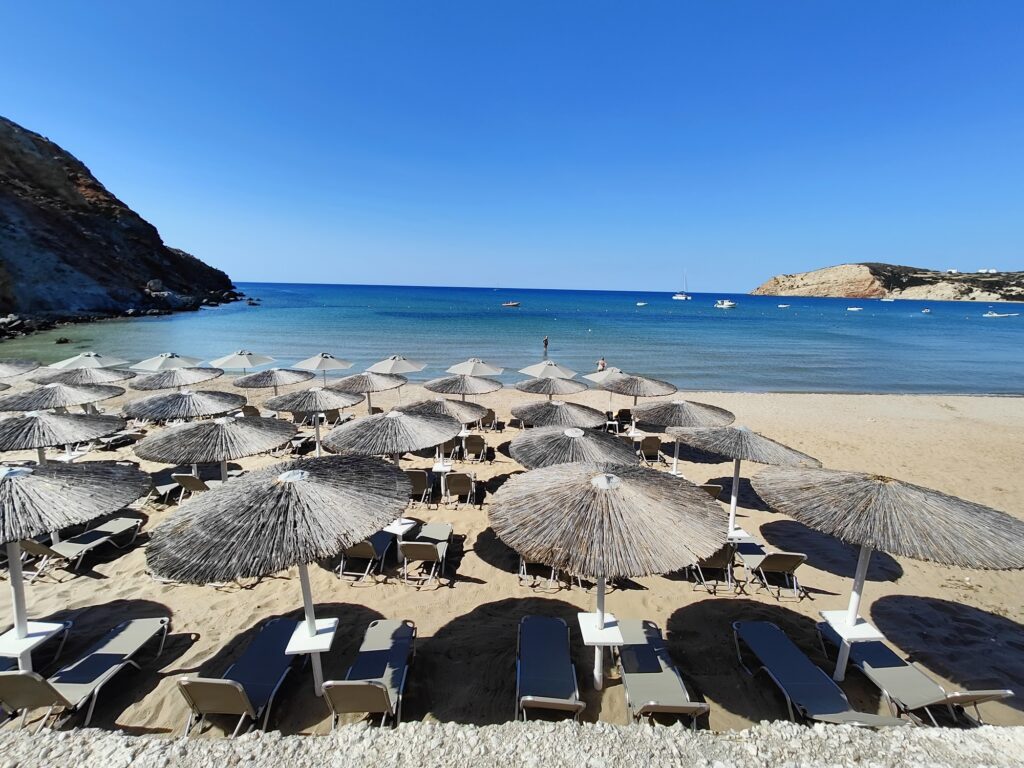
The beach is organised in parts — sunbeds and umbrellas in the central section at approximately €6 per set — and free at the edges. The cliffs provide some natural shade. A lifeguard is present in season. Parking is free at the road’s end.
Getting There: 9km From Adamas, 7–8 Bus Services Daily in High Season, Free Parking
Adamas (also called Adamantas) is the main port of Milos, where ferries from Piraeus arrive. The journey from Piraeus takes 3.5 to 5 hours depending on the service. From Adamas, Provatas is 9 kilometres southeast on a paved road. By car or scooter, the drive takes approximately 15 minutes.
In high season, the bus from Adamas to Provatas runs 7 to 8 times daily — one of the more frequent bus services on the south coast, reflecting the beach’s popularity. Free parking is at the end of the road.
The Volcanic Sand: Golden-Red, Ochre, Multi-Hued — A Different Expression of the Same Milos Geology
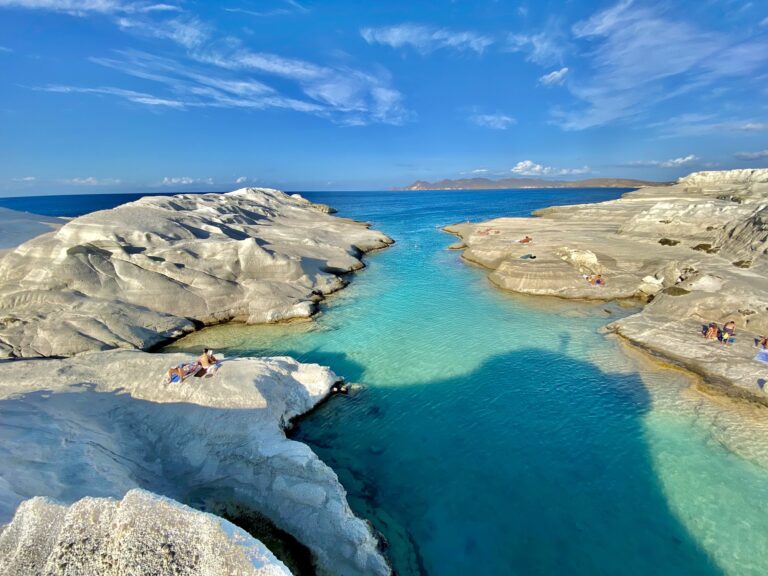
Milos is one of the most geologically diverse islands in Greece — a volcanic island whose multiple eruptions have produced an extraordinary variety of surface materials. The white pumice landscape of Sarakiniko and the multicoloured cliffs of the south coast come from the same volcanic origin expressed differently across the island’s surface.
At Provatas, the beach sand is a mix of golden, orange, and red — the iron content in the volcanic rock gives the colouring. The cliffs behind the beach add their own colour palette to the scene: white, red, ochre, and dark volcanic grey in bands. This is the geological landscape that makes beach photography at Provatas different from photography at the standard white-sand Cycladic beach.
The Hot Springs From the Seabed: The Geothermal Feature Most Visitors Don’t Know About
Paliochori — the beach east of Provatas — is the most publicised geothermal beach on Milos, with the Sirocco restaurant that cooks using geothermal energy directly from the volcanic heat below the sand. What is less publicised is that Provatas has its own hot springs from the seabed. Patches of warm mineral-rich water rising through the sandy seabed are noticeable to swimmers who cross them. The temperature differential with the surrounding Aegean is clear and unmistakable.
The springs are not marked or managed — they are simply there, part of the volcanic character of this section of coastline. Knowing to look for them changes the experience of swimming at Provatas from a straightforward Cycladic beach swim into a specific encounter with the geology below.
Paliochori: 2km East, The Famous Geothermal Beach, Busier Than Provatas
Paliochori is the most famous beach on the south coast of Milos — more widely written about, more visited, and more commercially developed than Provatas. The specific draw is the Sirocco restaurant, which cooks fish and meat in the volcanic steam rising directly from the earth beneath the terrace. The beach at Paliochori has similar multicoloured sand and volcanic cliffs but more visitor density. The comparative note — that Provatas is less crowded than Paliochori — is the specific reason some visitors choose to stop at Provatas rather than continuing east. Both beaches are worth visiting; Provatas simply gives more space on equivalent days.
Agios Sostis Cove: Connected by Swimming, Wild, No Facilities
To the west of Provatas, the Agios Sostis cove is accessible via the sea — swimming around the headland that divides the two areas. It is a wild, sheltered cove with pale sand, no facilities, and the small Church of Agios Sostis on the hillside above it, which gives the cove its name. The swim around the headland is straightforward in calm conditions and provides the specific coastal exploration that Provatas makes possible.
The Sirmata: The Traditional Fishing Boat Garages, Visible at the Beach
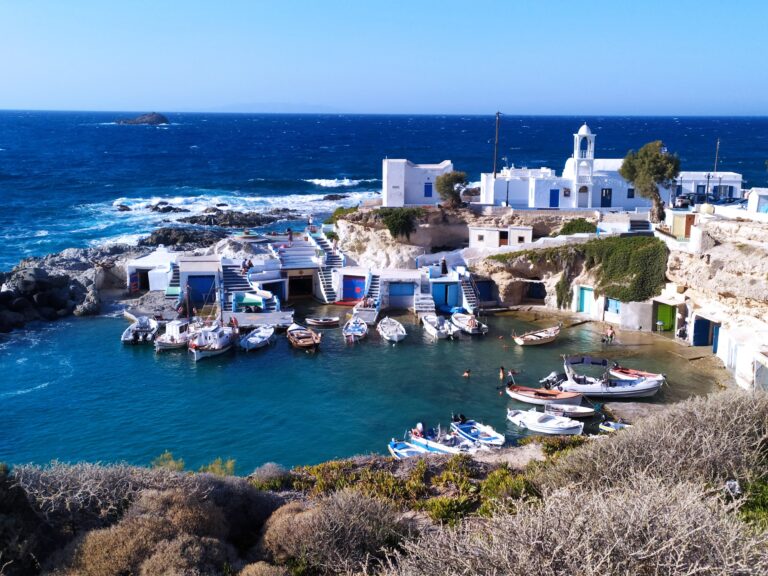
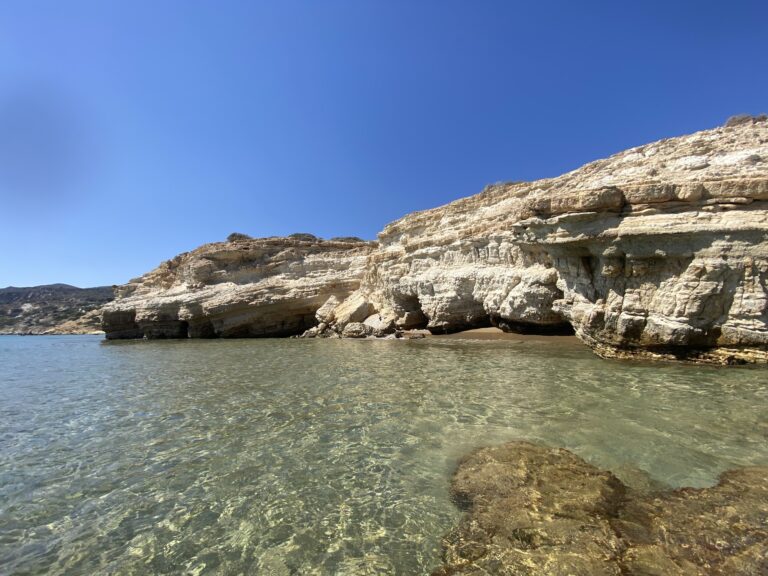
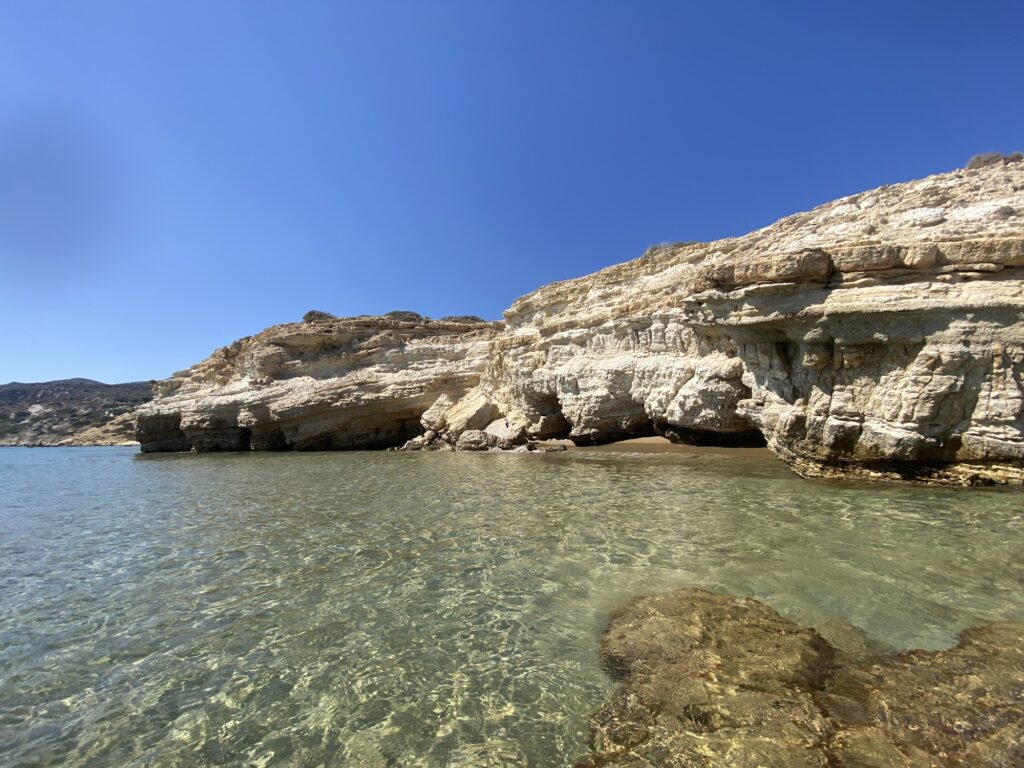
Sirmata are the traditional carved or built fishing boat garages specific to Milos — stone or plastered structures cut into the cliff base, where the fishing boats were stored. They are the distinctive coloured-door cave structures that appear in every photograph of Klima village on the north coast of Milos, but smaller examples exist at Provatas and other south coast coves. They are a visible piece of the island’s working heritage, embedded in the cliff faces that frame the beach.
Firiplaka: The Beach East of Paliochori, Snow-Grey Sand and Caves
Firiplaka is further east on the same south coast road, beyond Paliochori — a beach with snow-grey volcanic fine sand, white pebbles, shallow turquoise water, and a large rock with a cave that juts into the sea. It is one of the most photogenic on the island. The south coast sequence — Provatas, Paliochori, Firiplaka — is the specific circuit that a hire car or scooter makes manageable in a single day.
Milos in the Broader Cyclades Context: The Venus de Milo, the Catacombs, the Geology
Milos is the island where the Venus de Milo was discovered in 1820 — the Aphrodite of Milos, now in the Louvre in Paris. The local archaeology museum in Plaka has a plaster cast of the statue and the actual display case it was found in. The Catacombs of Milos — early Christian catacombs from the 1st to 5th centuries AD, carved into the volcanic rock — are one of only three known Christian catacombs in the world (the others are in Rome and Alexandria). The geological diversity — the white pumice at Sarakiniko, the sea caves at Kleftiko, the volcanic tube columns at Papafragas, and the geothermal beach at Paliochori — makes Milos the most geologically interesting island in the Cyclades.
Provatas Beach on Milos is the 700-metre golden-red volcanic sand bay 9 kilometres from Adamas — less crowded than Paliochori to the east, hot sulphurous springs from the seabed (fewer visitors know about this than at Paliochori), multicoloured volcanic cliffs, extremely shallow gradual water entry, organised central section (sunbeds and umbrellas €6), free sections at the edges, lifeguard in season, Agios Sostis wild cove connected by swimming to the west, sirmata visible in the cliff faces, 7 to 8 buses daily in high season from Adamas, free parking.
Drive or take the bus from Adamas. Swim at Provatas first. Drive east to Paliochori for lunch at Sirocco.
Map
Sorry, no records were found. Please adjust your search criteria and try again.
Sorry, unable to load the Maps API.
Near by places: