Psani Beach Nafpaktos: 1km Pebble Shore, Bridge at Night
Profile
Psani Beach, Nafpaktos: The 1km Pebble Shore West of the Venetian Harbour Where the Plane Trees Were Planted in the 1950s, the North Wind Blows From Behind Making It the Calmer Choice, and the Rio-Antirrio Bridge Lights Up Directly Ahead at Night
Greece | Nafpaktos | Aetolia-Acarnania, Western Greece
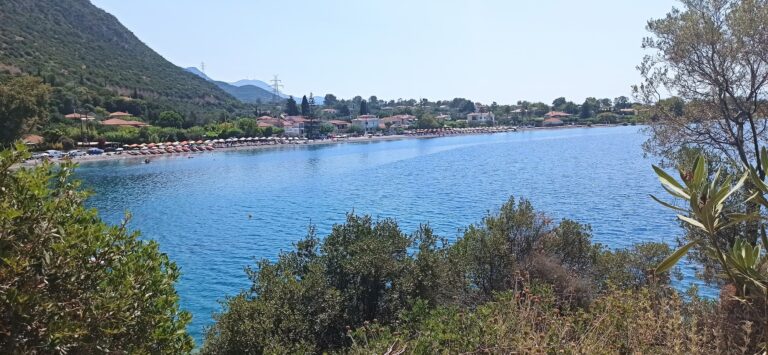
The two beaches of Nafpaktos flank the Venetian harbour on either side — Gribovo to the east with its centenarian plane trees and the Slavic name meaning “place of water”, and Psani to the west with its own Blue Flag, its own plane trees, and a different relationship with the wind. Both are pedestrianised in summer, both hold consistent Blue Flag awards, both are defined by plane tree shade. The difference between them is specific and practical: Psani faces west, which means the north wind comes from behind rather than from the front, and the water tends to be calmer when the Corinthian Gulf gets its characteristic afternoon northerly. The Lepanto Hotel describes it directly: when the north wind blows, Psani is the better choice.
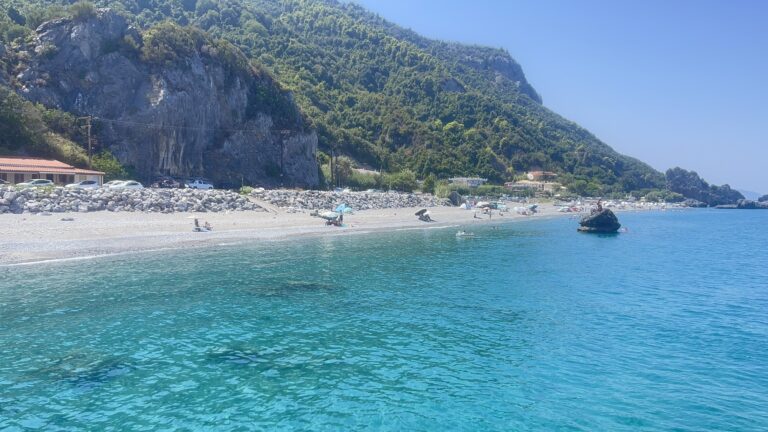
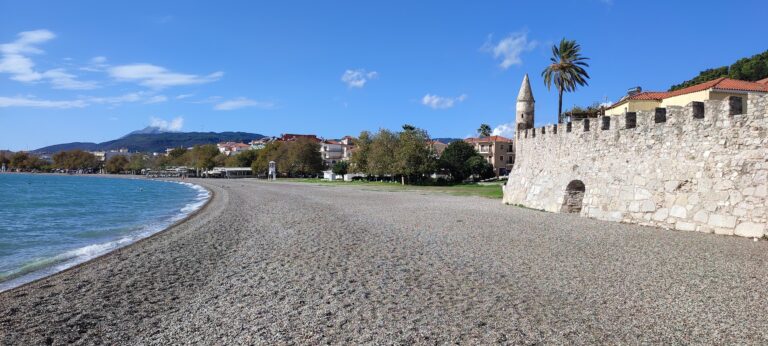
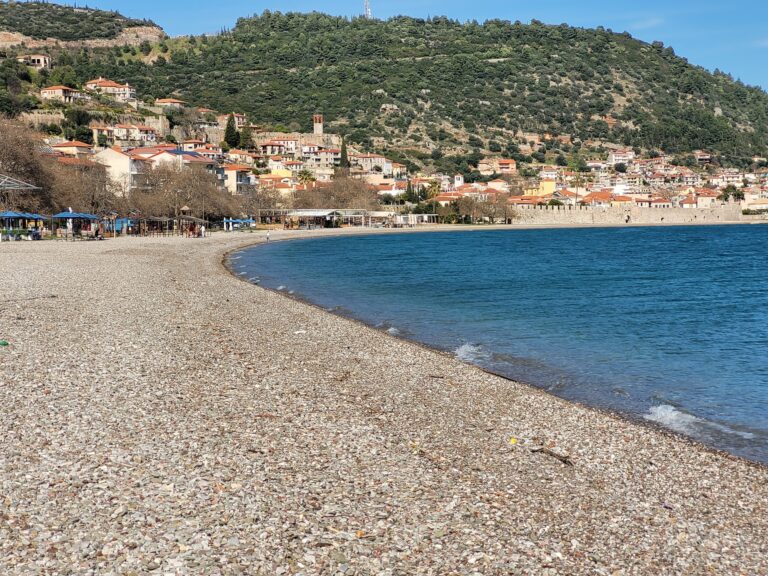
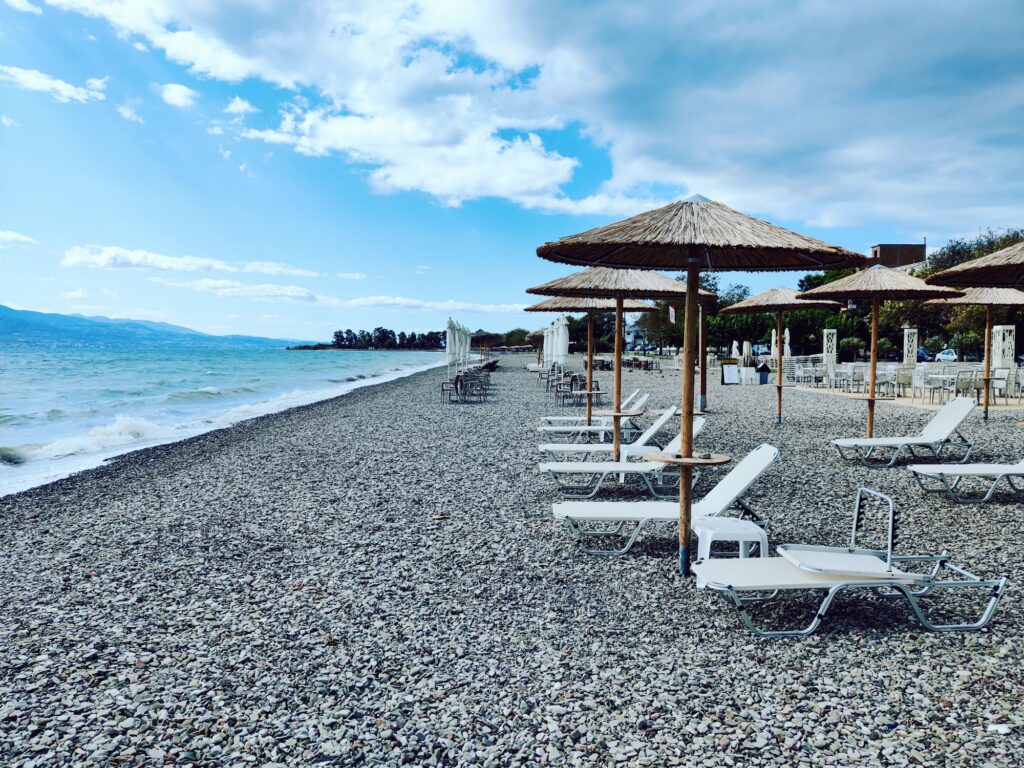
Psani is also the beach with larger pebbles. The specific description from the Lepanto Hotel — “a feature of the beach is its large pebbles” — is the honest navigational note. Water shoes are not optional at Psani; they are the specific practical item that distinguishes a comfortable visit from an uncomfortable one. The pebble size at Psani is consistently noted as larger than at Gribovo, where the composition is finer.
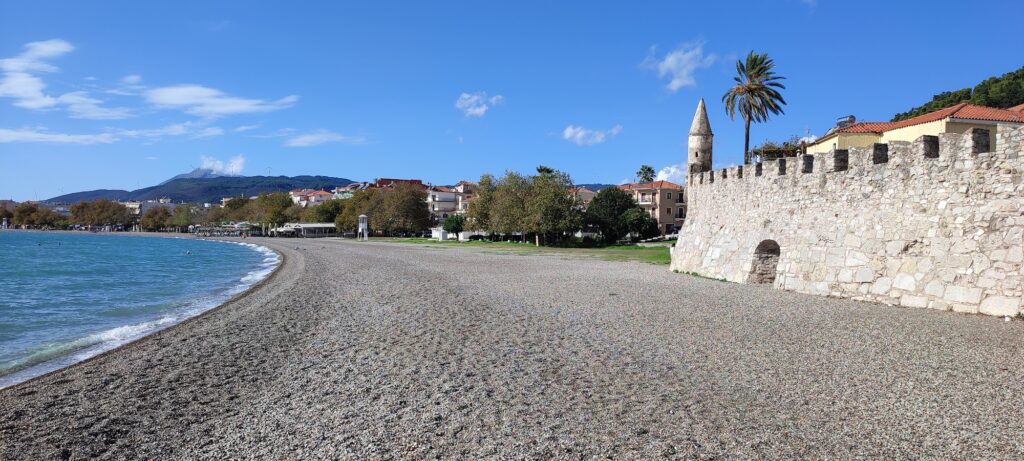
The plane trees at Psani are from the 1950s — planted after the Second World War as part of the waterfront’s post-war restoration. They are not the century-old specimens of Gribovo on the other side of the harbour, but after 70 years they are substantial enough that their canopy provides real shade rather than gesture. The beach road is closed to cars in summer and the promenade beneath the trees is where Nafpaktos does its evening socialising — cafes, tavernas, and bars opening onto the pedestrian strip.
Getting There: 5-Minute Walk West From the Venetian Harbour, 2.5 Hours From Athens, KTEL From Patras or Athens, Street Parking Near Hotels
From the Venetian harbour, walk west along the coastal promenade for 5 minutes. The beach begins where the harbour wall ends and continues for 1 kilometre to the western end of the town.
From Athens, take the national road toward Patras, cross the Rio-Antirrio Bridge (2,252m, the longest cable-stayed bridge in Europe, visible from the beach), and follow signs for Nafpaktos. The total journey is approximately 2.5 hours and 220 kilometres. Nafpaktos is 15 minutes from the bridge.
By bus, KTEL services run from Athens (Kifissos station) and from Patras. The Nafpaktos bus station is within walking distance of both beaches.
Street parking and hotel car parks are available near the western end of the beach.
The Beach: 1km Pebble Shore, Large Pebbles (Water Shoes Essential), Deep Water, Blue Flag, Plane Trees From the 1950s, Calmer in North Wind
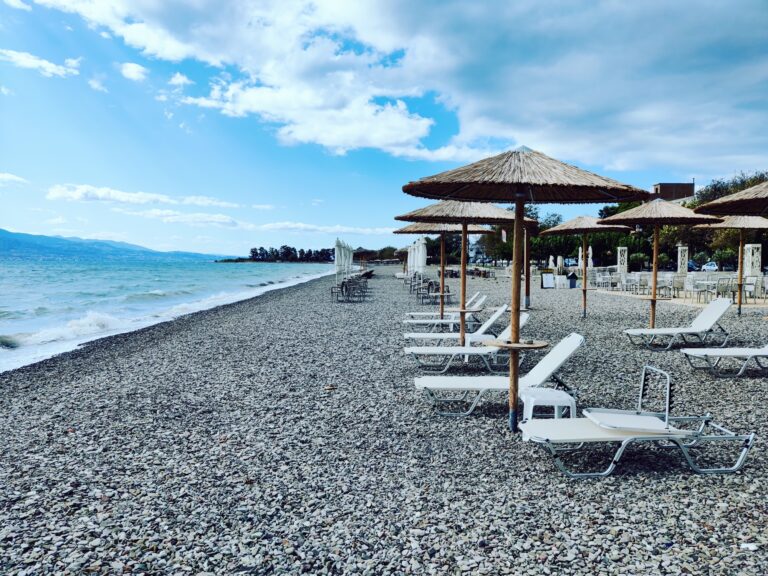
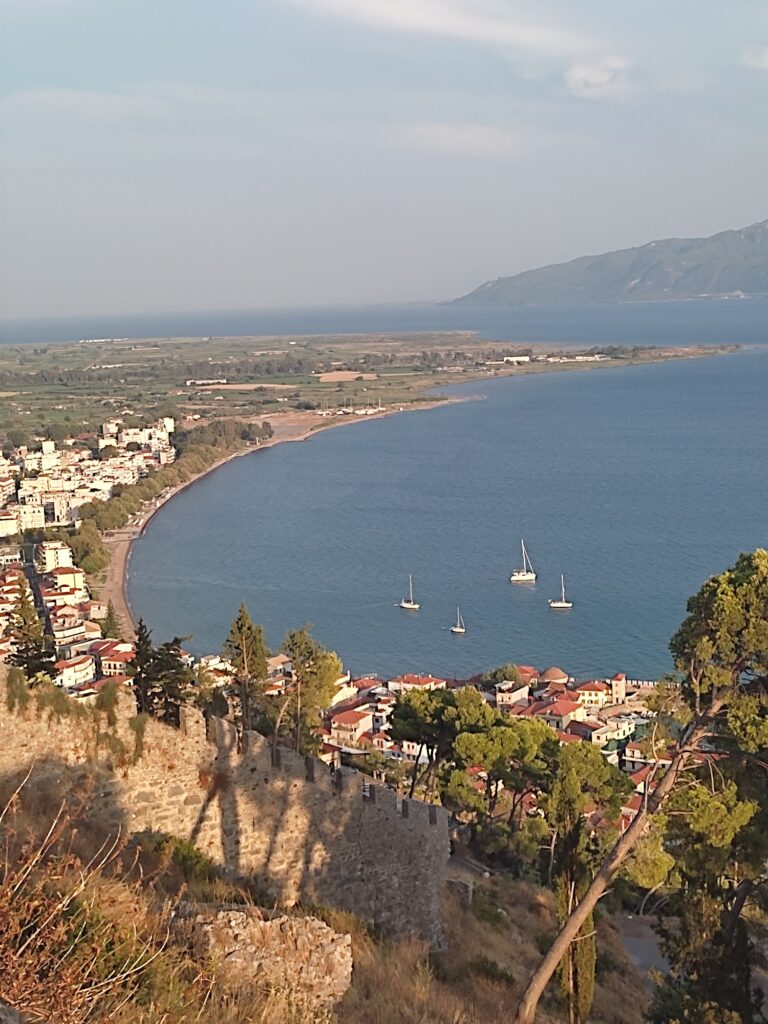
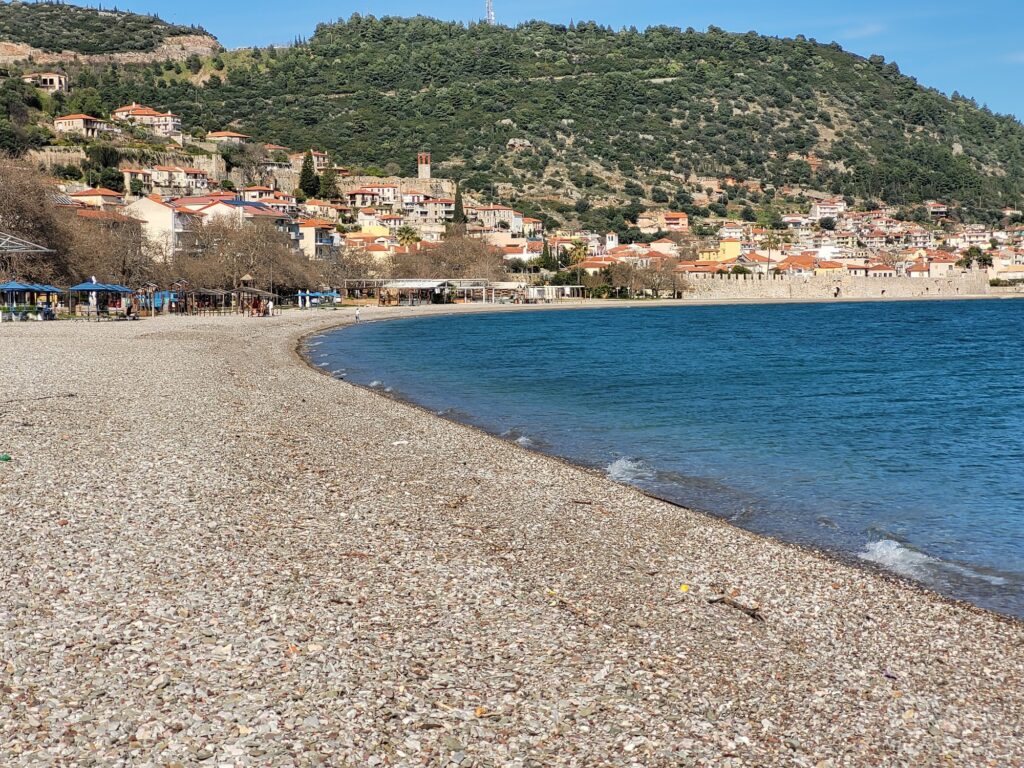
Psani is 1 kilometre long — longer than Gribovo to the east. The pebbles are substantial, the water deepens from the entry at a steady rate, and the open westward orientation means the beach faces directly toward the Corinthian Gulf and the Peloponnese shore on the other side. The Rio-Antirrio Bridge is visible from the beach: during the day as four orange cable-stayed pylons on the eastern horizon, at night as an illuminated cable structure directly ahead from any point on the promenade.
The beach is organised with sunbeds and umbrellas from the beachfront hotels and cafes — most operate on the consumption model, providing chairs with a coffee or food order. The road is pedestrianised in summer. Showers, changing rooms, and public toilets are available along the length. Lifeguards are on duty in peak season.
The water is clear and consistently Blue Flag standard. The depth increase is described as moderate rather than gradual — it is not the ultra-shallow family beach of Tolo Beach Nafplio Greece in the Argolid or the sandy entry of Monolithi. Water shoes are the specific practical recommendation for anyone who will be wading rather than diving in directly.
The Plane Trees: Planted in the 1950s, Grown Into Real Shade, A Different Character From Gribovo’s Century-Old Trees
Both Nafpaktos beaches are identified by their plane trees, but the trees are not the same age. The Gribovo plane trees are genuinely centenarian — a hundred years old — and their canopy is correspondingly massive. The Psani trees were planted in the 1950s as part of the town’s post-war restoration of the western seafront. At 70 years old they are substantial, but the difference in canopy scale is visible when you walk from one beach to the other through the harbour.
The character the trees give Psani is still distinct from most Greek beaches. The specific combination of pebble shore, blue water, plane tree canopy, and the Venetian architecture of the town behind creates an atmosphere that is urban and historical in a way that the purely natural beaches do not have.
The Venetian Harbour and the Classic Circuit Walk
The walk from Psani through the Venetian harbour to Gribovo and back is one of the classic evening circuits in western Greece — approximately 3 kilometres round trip along a fully pedestrianised waterfront. Starting from the Psani western end, the route passes the plane trees and cafes, reaches the harbour entrance, passes inside the circular harbour walls, passes the Cervantes statue, crosses the harbour, and continues east under the Gribovo plane trees to the far end.
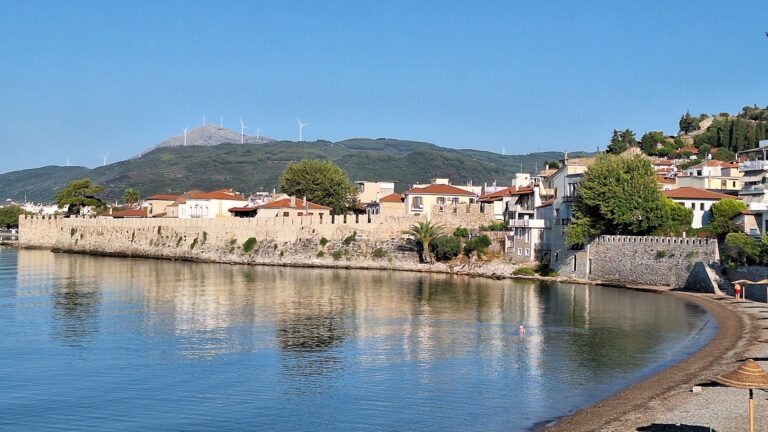
The Venetian harbour — a small circular harbour enclosed by medieval stone walls, with a lighthouse at the entrance — is the visual centre of Nafpaktos and the starting point for the town’s historical layers. The harbour was built by the Venetians in the 15th century on a site that had been a harbour since antiquity. Nafpaktos was a significant Athenian naval base during the Peloponnesian War; it was where the Athenians stationed the Messenian refugees from Pylos in the 5th century BC.
The Fetihe Tzami: The Victory Mosque From 1499, Now a Cultural Space
The Fetihe Tzami — the Victory Mosque — was built by Sultan Bayezid II in 1499 after his naval victory over the Venetians and his capture of Nafpaktos. It is a short walk from the beach into the old town, now functioning as a cultural exhibition space. The sequence of religious and civic buildings in the old town above Psani beach — the mosque, the Venetian walls, the Byzantine churches — layers the successive occupations of the city in a way that is specific to the Ottoman–Venetian frontier towns of western Greece.
The Tower of Botsaris museum dedicated to the Battle of Lepanto (1571) is also within the old town, with reproductions and exhibits covering the battle that was fought in the gulf directly visible from the beach.
The Stenopazaro: The Covered Market Street, The Urban Shopping Core Adjacent to the Beach
Stenopazaro — the narrow covered market street of Nafpaktos — is immediately behind the beach promenade, the commercial heart of the town. Small shops, cafes, and the street character of a functioning market that serves residents rather than only tourists are accessible on foot from the beach in 2 minutes. The urban dimension of Nafpaktos — a town of 20,000 with its own civic and commercial life — is one of the qualities that distinguishes it from the purely seasonal beach resorts.
The combination of Psani beach access with the town’s restaurants, cafes, and the classic harbour walk makes Nafpaktos a beach destination that works across multiple days without exhausting itself. The Vathiavali Beach Palairos Greece beach to the northwest — the most beautiful beach in Aetolia-Acarnania — is approximately 90 minutes by car for a day trip from a Nafpaktos base.
Psani Beach at Nafpaktos is the 1-kilometre pebble shore west of the Venetian harbour — Blue Flag consistently, plane trees from the 1950s (substantial but younger than Gribovo’s centenarian trees on the other side of the harbour), large pebbles throughout (water shoes essential), deep water from entry (not a shallow family wading beach), calmer than Gribovo when the north wind blows, the Rio-Antirrio Bridge lit directly ahead at night, the classic circuit walk to Gribovo through the harbour, the Fetihe Tzami Victory Mosque and the Cervantes statue within walking distance, and the Stenopazaro market behind the promenade.
Walk west from the harbour. Bring water shoes. Stay for the bridge lights at night.
Map
Sorry, no records were found. Please adjust your search criteria and try again.
Sorry, unable to load the Maps API.
Near by places: