Nea Krini Beach: Sunset, Seafood, and History
Profile
Nea Krini Beach: The Fishing Colony Named for a Lost Aegean Town
Greece | Thessaloniki | Kalamaria | Thermaikos Gulf
Nea Krini takes its name directly from Krini, a town on the Asia Minor coast now called Çeşme, in modern Turkey, home to the refugees who founded this Thessaloniki district after being forced from their homeland in 1922. Most who settled here worked as fishermen, and for decades this stretch of the Thermaikos Gulf functioned as Thessaloniki’s primary fish market, boats coming in daily to unload catch that fed the entire city. A monument to those refugees was finally inaugurated here in 2022, exactly a century after the first arrivals, a quiet acknowledgment of a founding story that shaped not just this neighborhood but roughly ten districts across the wider Kalamaria area, each one named for a lost hometown its refugees never saw again.
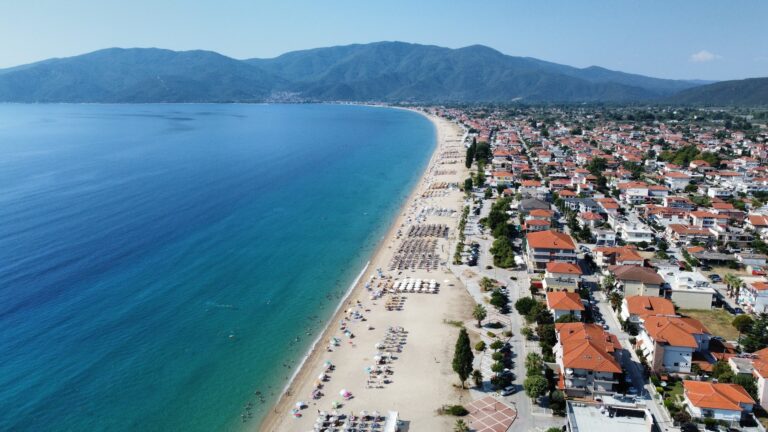
Nea Krini today functions as one of Thessaloniki’s most polished waterfront districts, and the fishing heritage that built it sits just beneath a considerably more upscale surface of marina life and seafood restaurants.
A Coastline Built for Strolling More Than Serious Swimming
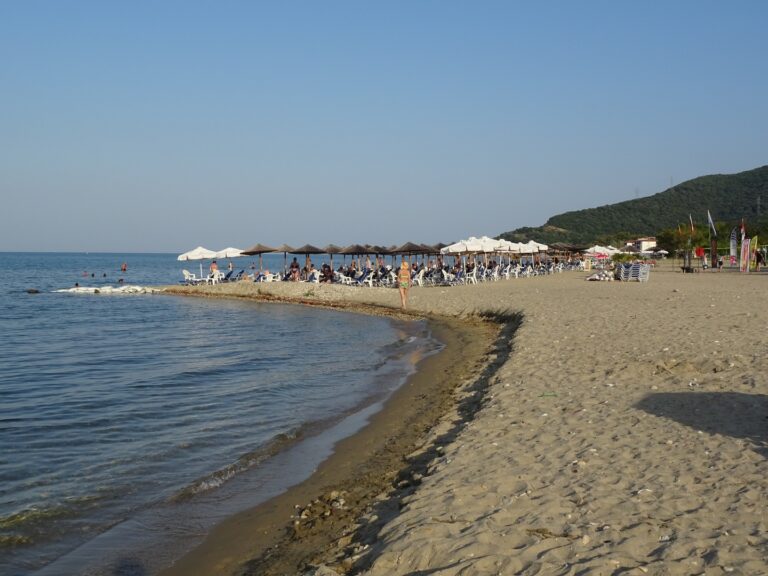
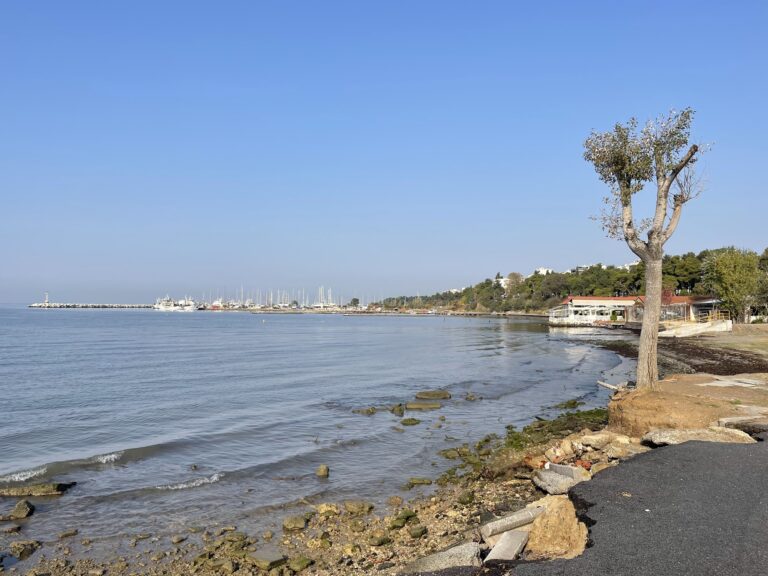
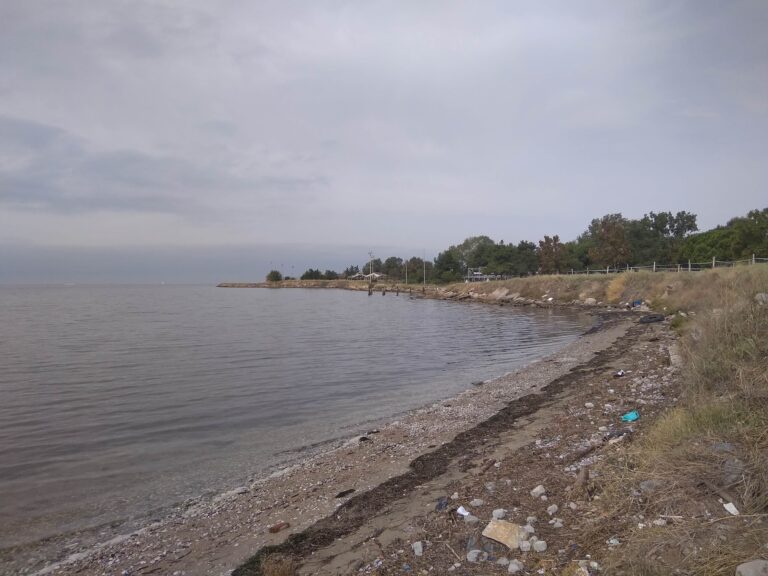
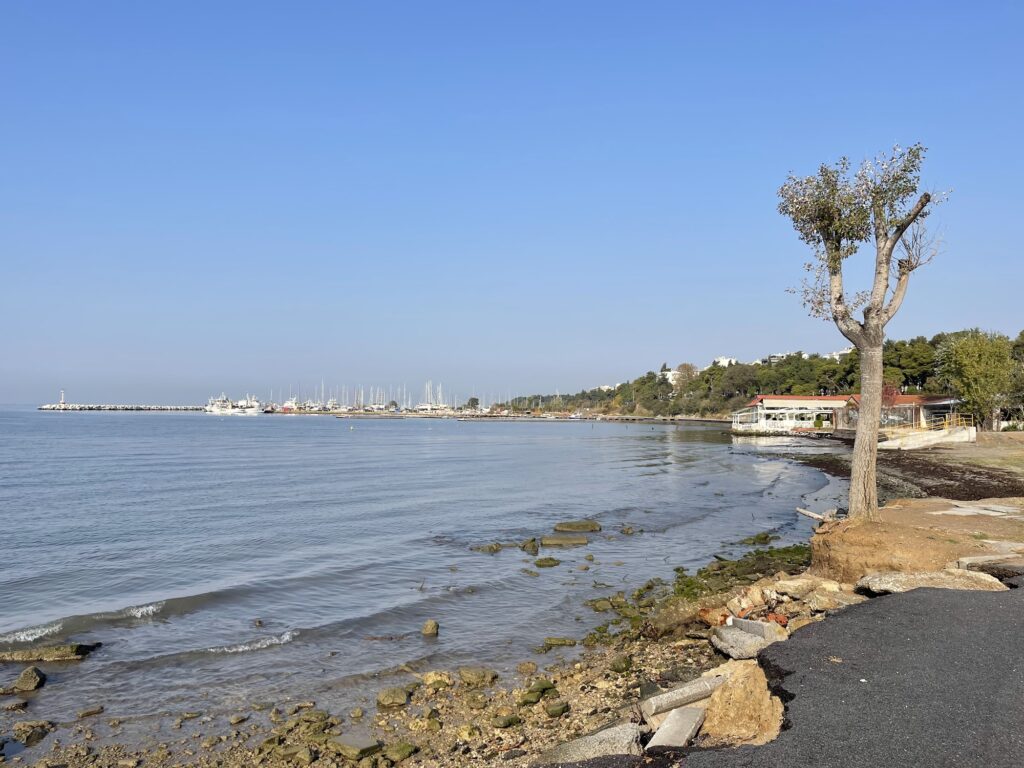
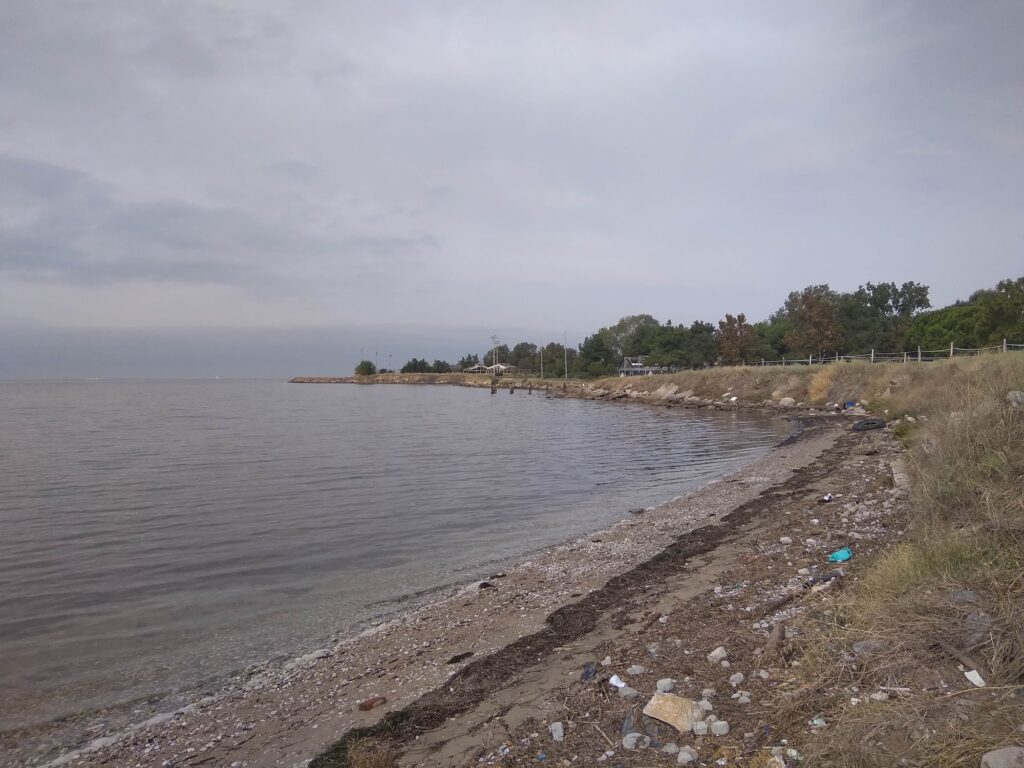
The shoreline here mixes sandy stretches with organized embankments, and while local swimmers do use the water regularly, I’d describe this honestly as a beach built primarily for walking, jogging, and sitting by the sea rather than a destination swim spot in the way a proper Aegean island beach might be. The Thermaikos Gulf went through a genuinely difficult period of pollution that ended casual summer swimming here for much of the late twentieth century, and while water quality has recovered enough that current guides list Aretsou and Nea Krini among Thessaloniki’s swimmable beaches, I’d treat it as a pleasant option rather than the main draw, particularly for families who might prefer the more consistently clear water further along the coast.
The Best Sunset View in Thessaloniki, Facing Mount Olympus
What Nea Krini does exceptionally well is sunset. Because the coastline faces west, the sun drops directly behind the silhouette of Mount Olympus across the gulf, and I found myself returning to the same stretch of promenade multiple evenings specifically for this view, photographers and couples gathering along the water’s edge as the light shifted through its final colors.
Aretsou Marina and a Working Fishing Harbor Side by Side
The nearby Aretsou Marina gives this stretch of coast a genuinely cosmopolitan feel, yachts moving in and out of the harbor alongside a small working fishing port where boats still bring in fresh catch on something closer to the old daily rhythm. A park and summer open-air cinema sit within the marina complex, and I spent one warm evening watching a film outdoors with the boats visible just beyond the screen, a detail that summed up Nea Krini’s particular blend of working heritage and modern leisure fairly well.
Fish Tavernas That Anchor Thessaloniki’s Culinary Identity
The row of fish tavernas overlooking the water here carries real weight in Thessaloniki’s food culture, and I found the standard consistently excellent across several visits, fresh North Aegean catch served with the kind of confident, unfussy preparation that comes from generations of practice rather than a menu designed for tourists. Given how commercially organized this stretch of coast is, with dining and café culture as the primary draw, I’d expect dogs to be welcome on leash along the public promenade itself, though individual tavernas and beach clubs would set their own policies.
The Nikolaou Plastira Promenade and Its Café Culture
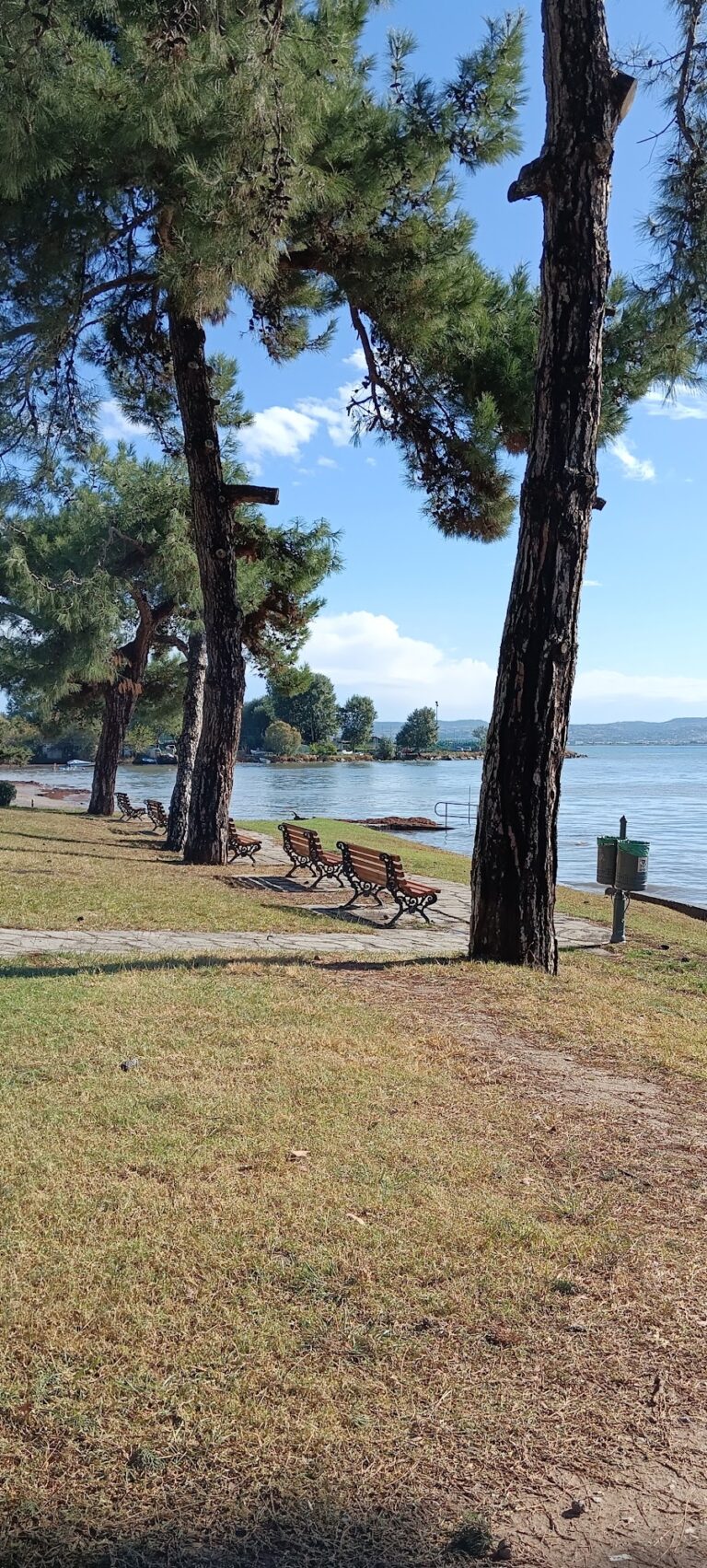
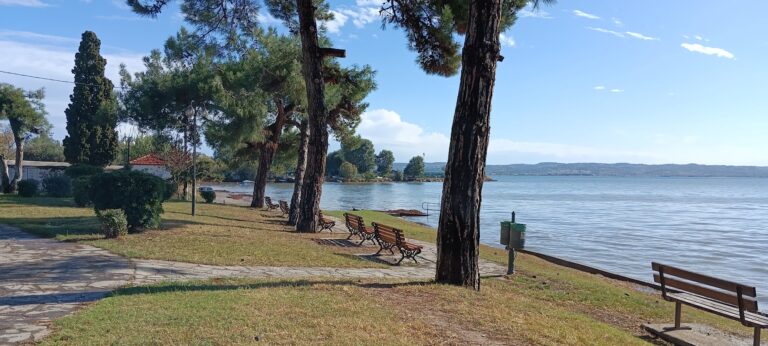
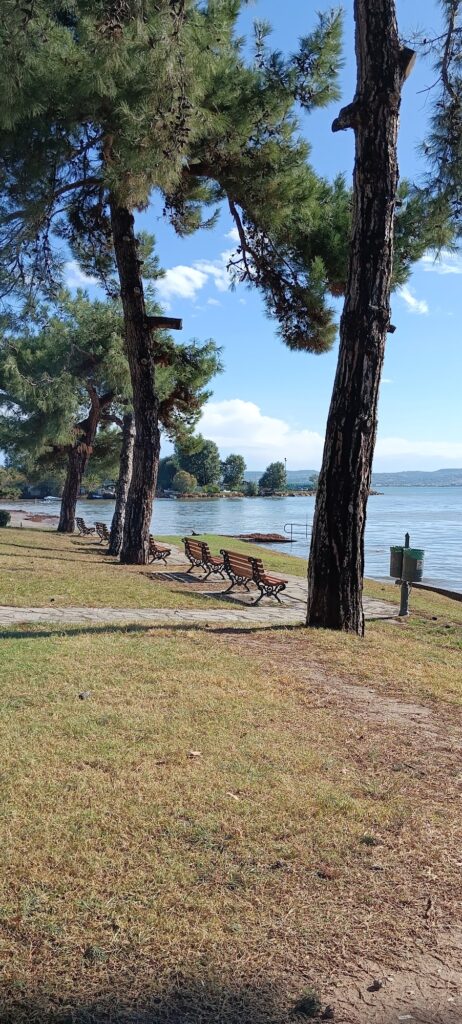
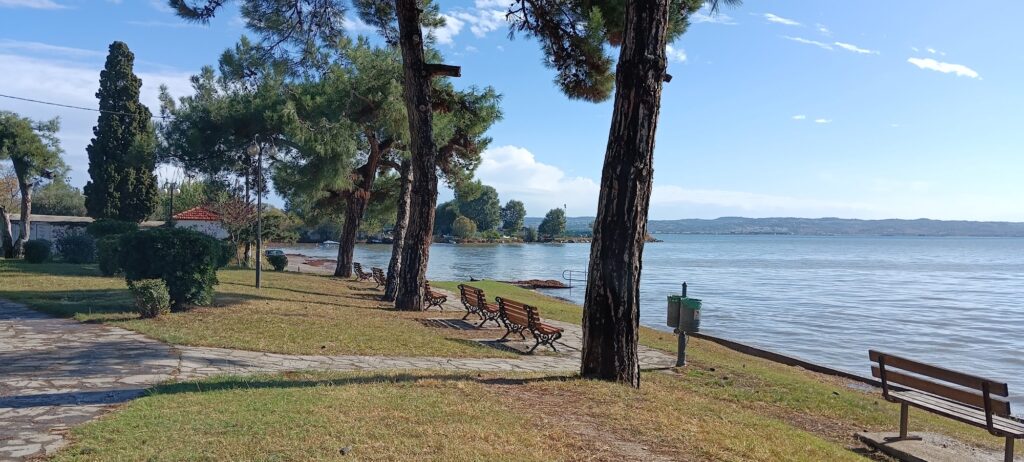
Above the beach, the Nikolaou Plastira promenade runs the length of Nea Krini, lined with stylish cafés and bars that shift from morning coffee to evening cocktails without missing a beat. Wide paved paths for cycling and walking, outdoor exercise equipment, and quiet benches make the whole stretch feel genuinely well used by locals rather than built purely for visitors.
Getting There: Twenty Minutes From Aristotelous Square
Nea Krini sits along the coastal Vasileos Georgiou road, roughly fifteen to twenty minutes from central Thessaloniki depending on traffic, following the route from Aristotelous Square directly toward Kalamaria.
OASTH Buses From the City Center
Bus lines 5 and 6 both serve the area from Thessaloniki’s center, dropping passengers within a short walk of the main promenade. I used the bus more than once and found the connection reliable, a genuinely easy way to reach the waterfront without needing a car in a city where parking downtown can be its own challenge.
Taxis and the Coming Metro Connection
Given how close Nea Krini sits to the city center, a taxi remains a fast, affordable option, and I used one on evenings when I didn’t want to plan around a bus schedule. A dedicated Nea Krini metro station is set to open as part of Thessaloniki’s metro extension, which should make the area even more straightforward to reach without a car once it’s running.
Parking Along the Promenade and Near the Marina
Street parking runs along the promenade, supplemented by public lots near Aretsou Marina, and I found space generally available even during busy summer evenings, a genuine advantage over some of the more parking-constrained beaches further along this coast.
Comparing Nea Krini to Other Thermaikos Gulf Beaches
For a more conventional swimming beach along this same stretch of coast, Perea Beach Thessaloniki offers a considerably more straightforward sand-and-sea experience without Nea Krini’s urban marina backdrop. Nea Michaniona Beach Thessaloniki, further south, shares a similar refugee-founding history but retains more of a working fishing-village character than Nea Krini’s now considerably more polished waterfront.
Watching the Boats Come In as Olympus Catches the Last Light
By the time I left on my last evening, the sunset crowd along the promenade had thinned, and I stood a while longer watching a single fishing boat make its way back into the small harbor, Olympus fading into silhouette across the water, the same view that must have greeted the first refugees who named this stretch of coast after a town they’d never see again.
Map
Sorry, no records were found. Please adjust your search criteria and try again.
Sorry, unable to load the Maps API.
Near by places: