Valdanos Beach Ulcinj: Pirate Harbour and Ancient Olives
Profile
Valdanos Beach, Ulcinj: The Pirate Harbour, the 2,000-Year-Old Olive Trees, and the Fairy Spring
Montenegro | Ulcinj | South Montenegro
In 1978, the Federal Secretariat for National Defense of Yugoslavia attempted to clear the Valdanos olive grove to build a military base. The 200 families who had lived among the trees for generations were told to leave. One hundred and eighty-four accepted the terms. The sixteen who refused sued the state — and won, receiving three times the original amount offered. The military, faced with the legal defeat and the public outcry that the destruction of the oldest living olive monument in Montenegro had generated, settled for a smaller portion of the land. They built a resort for military personnel instead. The resort’s abandoned buildings now stand in the grove, taken over by vegetation, horses, chickens, and cows that graze between the stone structures.
This is the specific human history that the Valdanos grove carries in addition to its older pirate and merchant history — the story of 200 families displaced, 16 who refused, and the olive trees that are still standing.
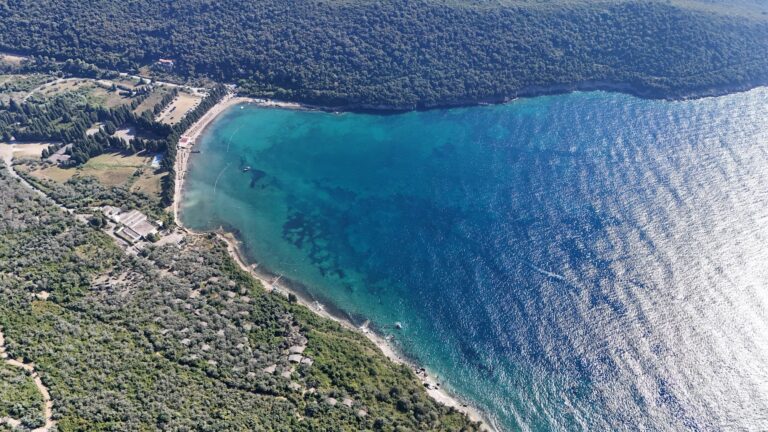
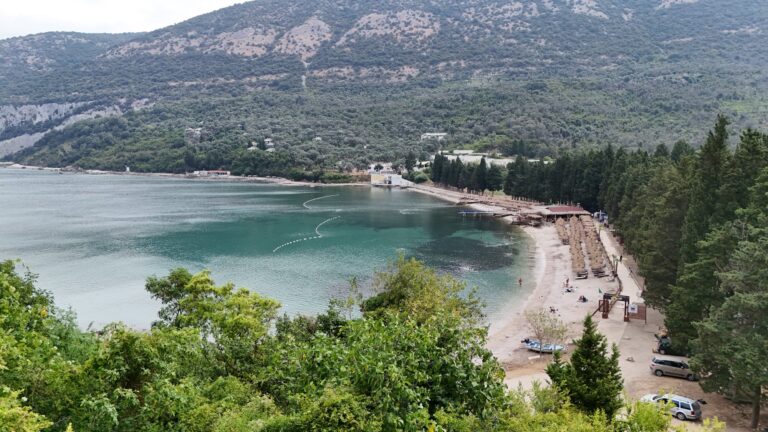
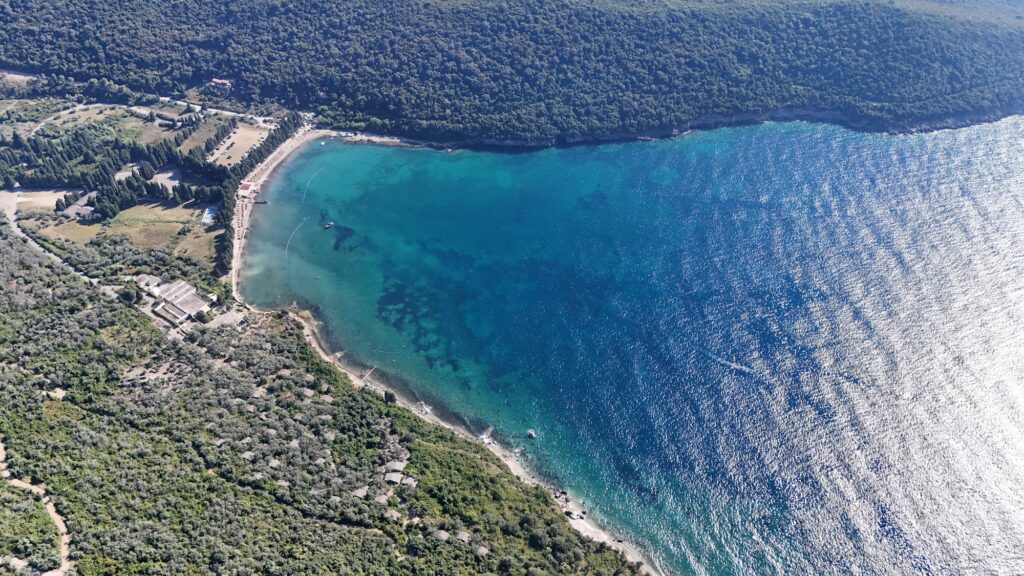
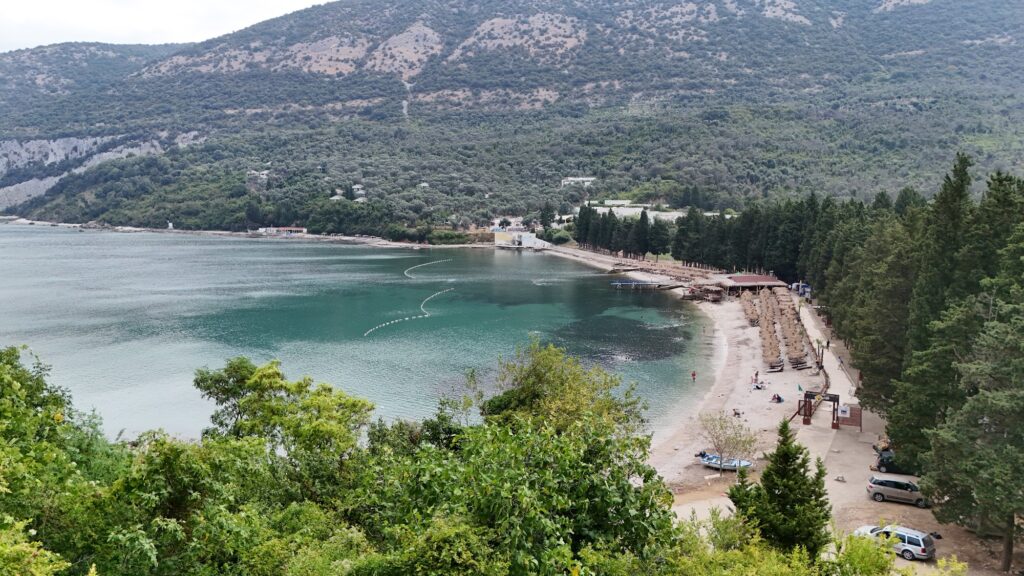
Valdanos Bay is a natural monument, 5 kilometres northwest of Ulcinj between the hills of Mavrijan and Mendre, in the shape of a narrow horseshoe. There are approximately 18,000 olive trees in the grove, some up to 2,000 years old — the largest living olive monument in Montenegro. The beach consists of large smooth pebbles. It used to be a main harbour of the Ulcinj pirates and the place of many sea battles. Those with knowledge of the area say that the cove hides the remains of sunken ships from the Greek, Roman, and medieval periods.
Getting There: 5km Northwest of Ulcinj, Car or Taxi Required, Panoramic Viewpoint on the Approach
Valdanos Bay is 5 kilometres northwest of Ulcinj — a 10-minute drive from the town centre, following the road toward Bar and taking the signposted turn for Valdanos. The road descends through the olive grove from the highway approach to the parking area behind the bay.
A car or taxi is the practical requirement — there is no regular bus service to the bay. A taxi from Ulcinj Small Beach or the Old Town costs approximately €6 to €8. On foot, the walk from Ulcinj takes approximately one hour on the coastal path, with the Valdanos Viewpoint above the bay providing the elevated panorama of the horseshoe cove and the olive-covered slopes before the descent to the beach.
The parking area is free, described in visitor accounts as large enough for the number of visitors the bay typically receives — the remote character of the location limits the crowd to those who specifically seek it rather than those who stopped because parking was available.
The Olive Grove: 18,000 Trees, Some 2,000 Years Old, the Largest Living Olive Monument in Montenegro
The olive grove that surrounds Valdanos Bay on three sides is the natural feature that makes the location unlike any other beach in Montenegro. Some olive trees in Valdanos originate from the time of Ancient Greece and are up to 2,000 years old, while the majority of the trees are thought to be around 300 years old. The olives have always represented goods equal to gold in this region — olive oil from Ulcinj was shipped in amphorae and jugs via trading canals to Venice, Rome, Cairo, Skadar, Skopje, Duklja, and Prizren.
The olive grove’s protected status as a natural monument means the trees cannot be developed against, which is the specific legal protection that prevented the 1978 military base construction and that continues to maintain the grove’s character. Walking through the trees before descending to the beach — the silvery light that the olive canopy filters in summer, the gnarled trunks that the oldest trees produce, the smell of the grove in the heat — is the specific sensory experience that visitor accounts consistently describe as the most memorable part of the Valdanos visit.
The Beach: Large Pebbles and Rounded Stones, Crystal Green Water, Minimal Facilities
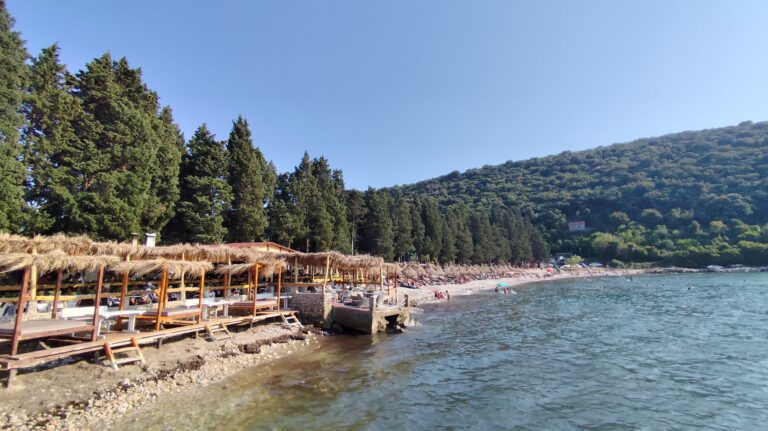
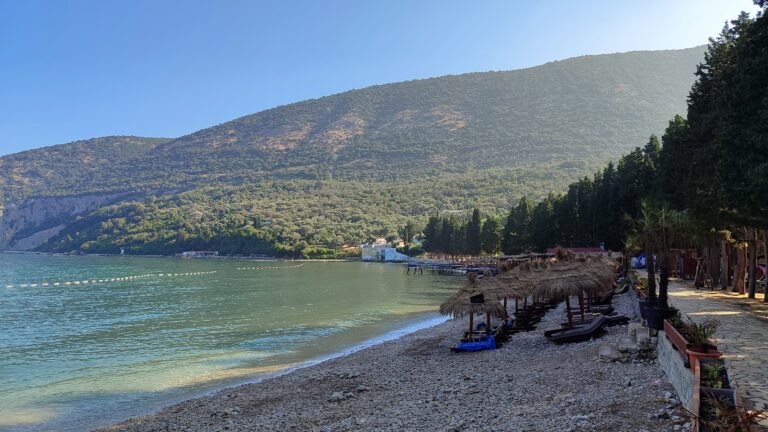
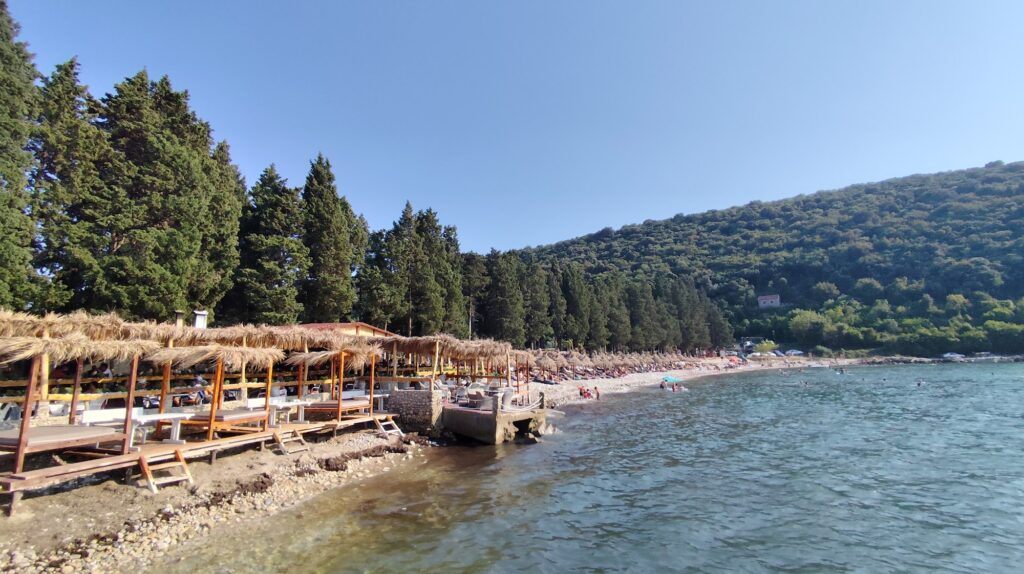
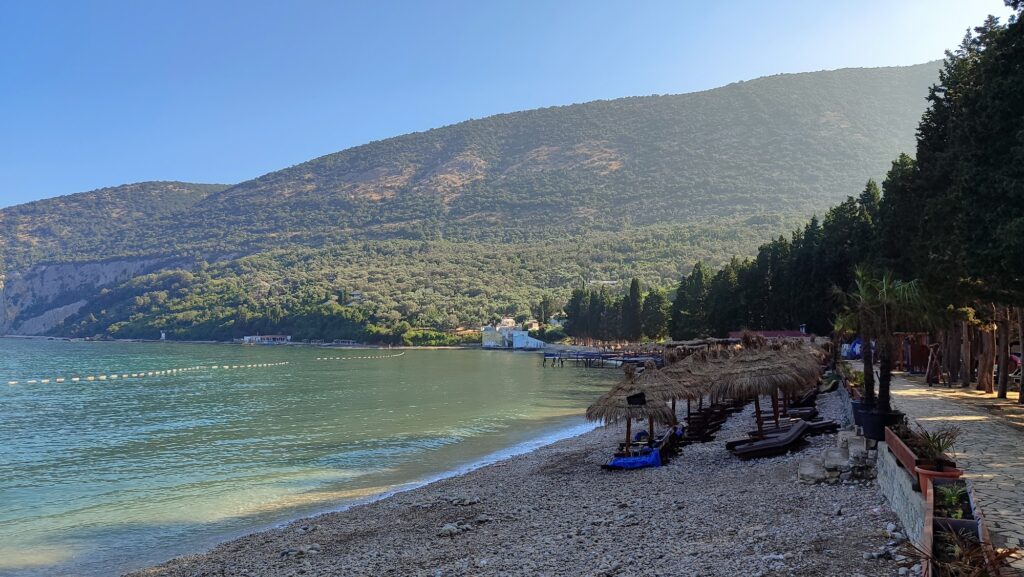
The beach at Valdanos is composed of large smooth pebbles — the garden-descend-abruptly character of the grove continuing to the waterline and below. The pebbles range from 1 to 20 centimetres in radius; water shoes are necessary throughout, from the access path to the sea entry. The water is described consistently as crystal clear and dark green — the pebble base, the absence of sand suspension, and the depth profile of the horseshoe bay producing the specific bottle-green clarity that the bay’s photographs consistently show.
Minimal facilities: a single bar at the beach, no sunbeds in the traditional beach club sense, large pebble rocks at the shoreline that function as natural sunbathing platforms for those who arrive without a beach mat. The bar can serve visitors, and the parking area has basic infrastructure — changing facilities and toilets are available but basic.
The water deepens moderately from the edge — not the rapid deepening of a cliff cove, but enough that this is a beach for confident swimmers rather than for toddler paddling. Snorkelling at the rocky edges of the bay, searching the underwater site that is a registered archaeological location for potential shipwreck remains, is the specific active water use that the bay’s history and water clarity make productive.
The Pirate Harbour History and the Submerged Archaeology
Valdanos served as the primary pirate harbour for the Ulcinj corsair fleet — the sheltered horseshoe geometry, the protection from both north and south winds, and the hidden position behind the headland making it the natural shelter that the Adriatic raiding ships used for centuries. The cove also served as the quarantine station for ships arriving from distant ports: in 1833, one of the Ulcinj ships, a brigantin, sailed in from Alexandria with its crew infected — the port authority ordered a 40-day quarantine period, a public health measure that the bay’s isolated position made practicable.
The registered underwater archaeological site at Valdanos makes it one of the few beaches in Montenegro where snorkelling carries the specific possibility of encountering historical artefacts. The shipwreck remains from Greek, Roman, and medieval periods that the historical accounts describe have not been fully excavated — the bay is a potential site for significant underwater discoveries, and the registered status reflects the official acknowledgement of that potential.
Vilina Česma and Vilina Pećina: The Fairy Spring and the Fairy Cave
In the olive grove surrounding Valdanos are two sites associated with local legend: Vilina Česma (Fairy Spring) and Vilina Pećina (Fairy Cave). Sailors reportedly visited both sites under cover of night to hear fairies sing. Ulcinj midwives were famous for bringing women who had trouble conceiving water from Vilina Česma. Young girls leave old belongings at the spring and toss coins into the sea for luck. The legend holds that part of the gold of Illyrian Queen Teuta is hidden in the cave — the remaining portion said to be in Risan in the Bay of Kotor, where the queen’s throne was located.
Queen Teuta was the Illyrian queen who ruled the Adriatic coast in the 3rd century BC, whose conflict with Rome led to the First Illyrian War (229–228 BC) and whose legacy as the greatest female ruler of the ancient Adriatic is reflected in the number of locations along the Montenegrin coast that carry her name or her buried treasure in local tradition.
Cape Mendre Lighthouse: The Oldest in Montenegro
Above the bay on Cape Mendre stands the oldest lighthouse in Montenegro — a working navigational light on the headland that marks the approach to the Valdanos cove from the sea. The lighthouse keeper’s small house, built 20 years ago, is inhabited; visitor accounts note that the lighthouse keeper will, on occasion, share the history of the light and of the sea approaches with visitors who make the short walk up from the bay.
The hike from the beach to the lighthouse and the viewpoint above the bay is the specific land extension of the Valdanos beach day — the elevated position providing the panoramic view of the horseshoe cove, the olive grove, and the open Adriatic that the beach itself cannot offer.
Valdanos Beach near Ulcinj is the horseshoe pebble cove 5 kilometres northwest of town — 18,000 olive trees surrounding it on three sides, some 2,000 years old, the largest living olive monument in Montenegro; the pirate harbour with Greek and Roman shipwrecks on the seabed; the Fairy Spring and Fairy Cave in the grove; the oldest lighthouse in Montenegro on Cape Mendre above; and the 1978 story of 200 displaced families, 16 of whom refused and won.
Drive northwest from Ulcinj. Stop at the viewpoint above before descending.
Bring water shoes. The pebbles are large.
Map
Sorry, no records were found. Please adjust your search criteria and try again.
Sorry, unable to load the Maps API.
Near by places: