Small Beach Ulcinj: Dark Sand Below the Fortress Walls
Profile
Small Beach (Mala Plaža), Ulcinj: The 350-Metre Dark Sand Crescent Below the Fortress of Cervantes
Montenegro | Ulcinj | South Montenegro
Miguel de Cervantes spent approximately five years in Ulcinj as a slave. The story is documented in historical accounts of Mediterranean piracy: Cervantes was captured by corsairs in 1575, held captive in Algiers initially, and subsequently — depending on the source — sold to pirates in Ulcinj, the fortress town on the Montenegrin coast that was a known centre of maritime raiding. He was eventually ransomed and returned to Madrid, where he wrote Don Quixote. The identity of Dulcinea — the idealised love of Don Quixote — is believed by local tradition to have been inspired by a girl from Ulcinj, a theory that the name Dulcinea supports etymologically. A bust monument to Cervantes stands within the old town walls above the beach.
The ancient walled town overlooking Mala Plaža is largely residential and somewhat dilapidated, a legacy of the 1979 earthquake. This is part of its charm — the Old Town really does feel old, with its uneven cobblestones and paucity of street lighting. Whatever else you find, spectacular views of Ulcinj and the beach below are guaranteed. Just inside the walls there is a small museum containing Roman and Ottoman artefacts. On the site is a 1510 church that was converted to a mosque in 1693.
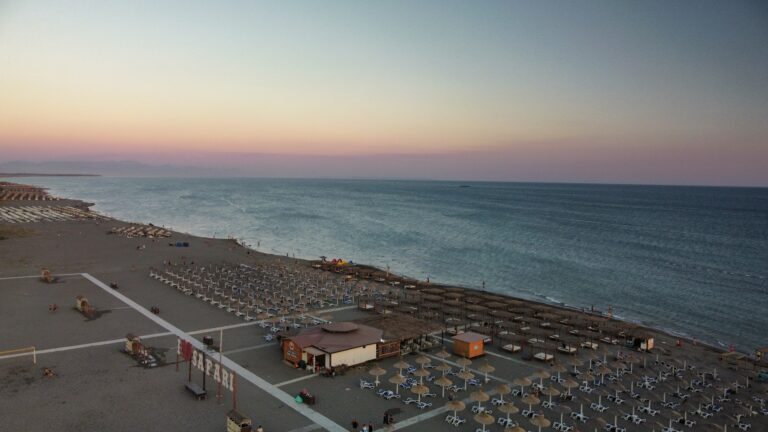
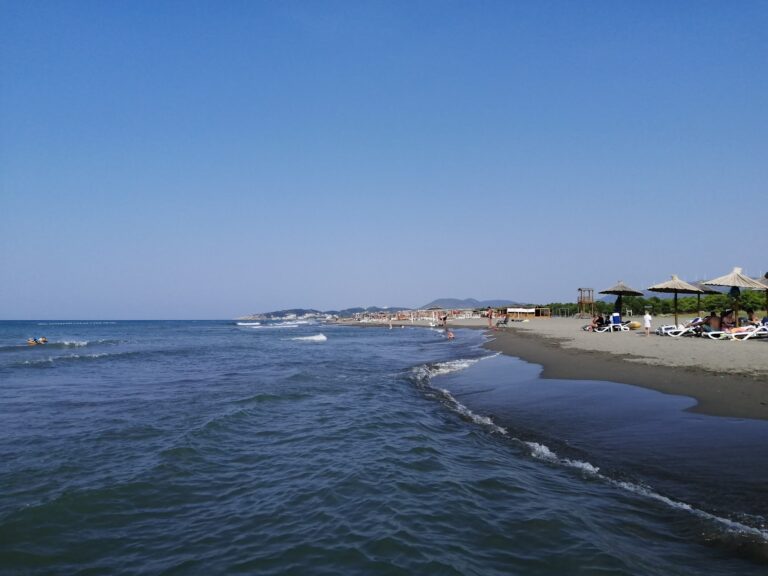
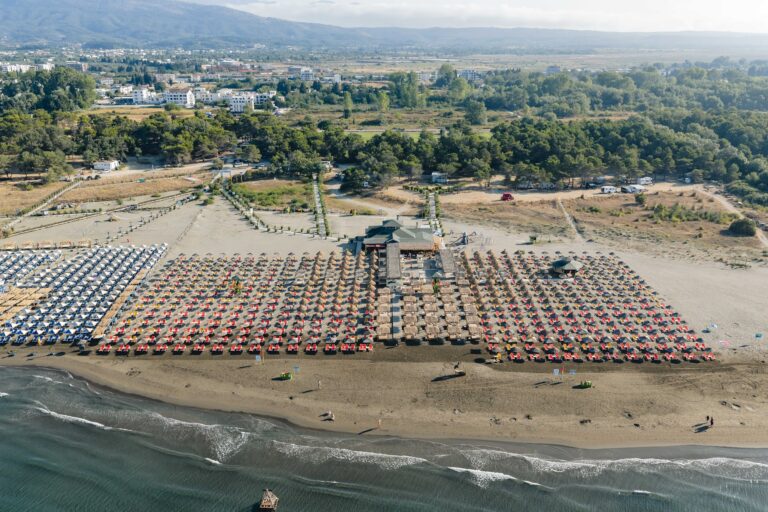
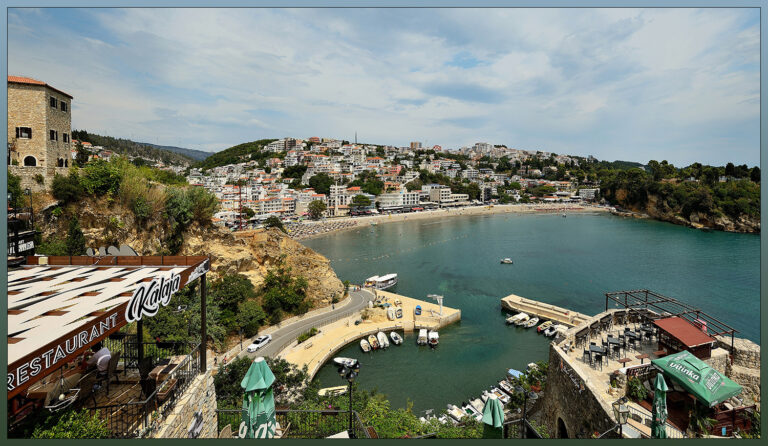
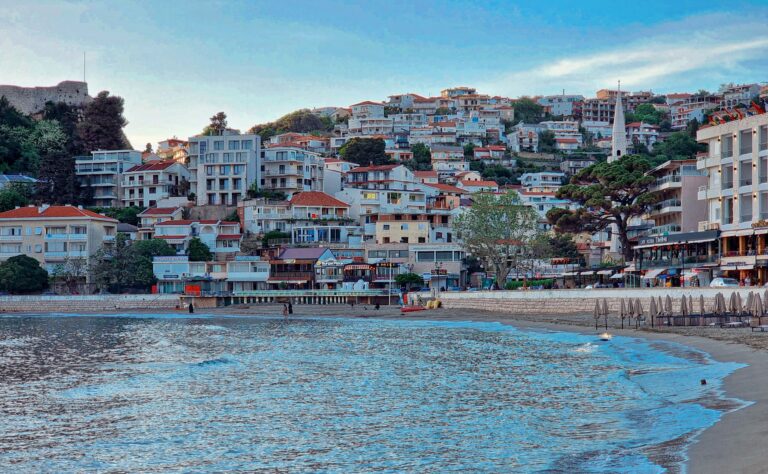
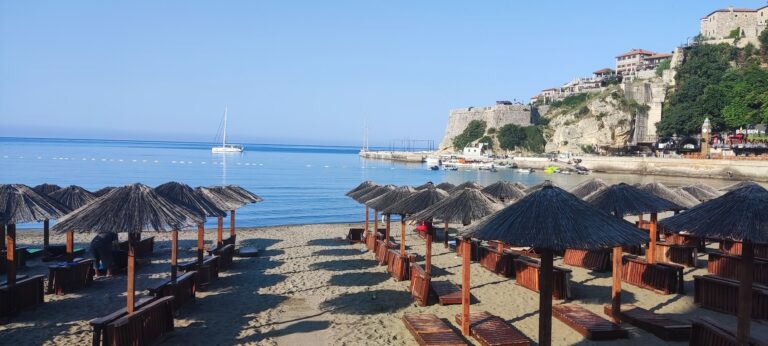
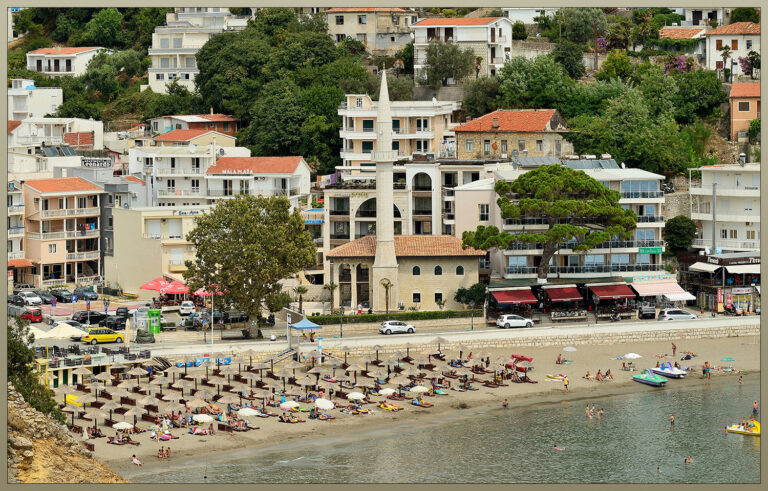
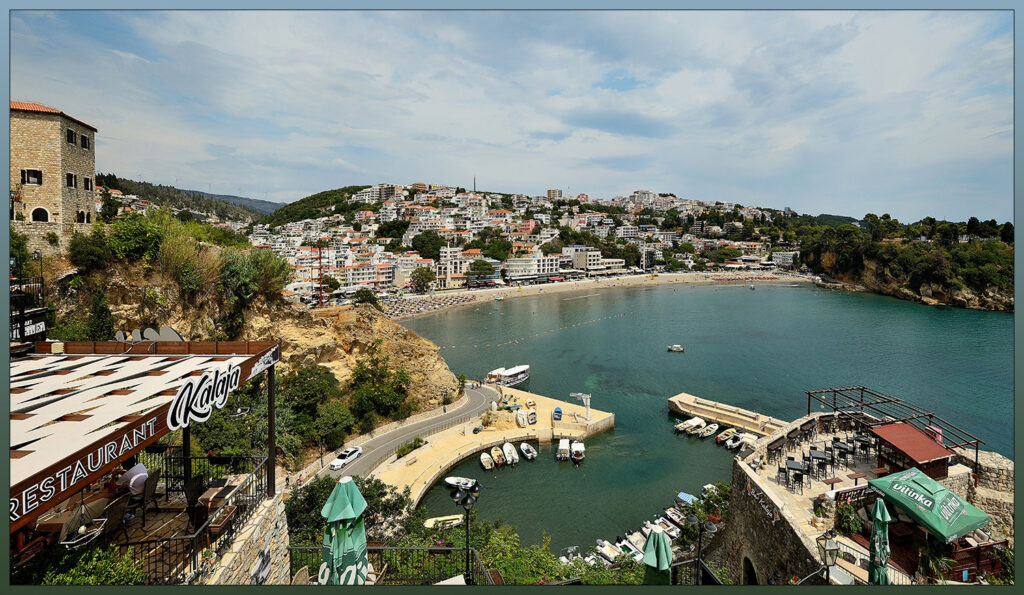
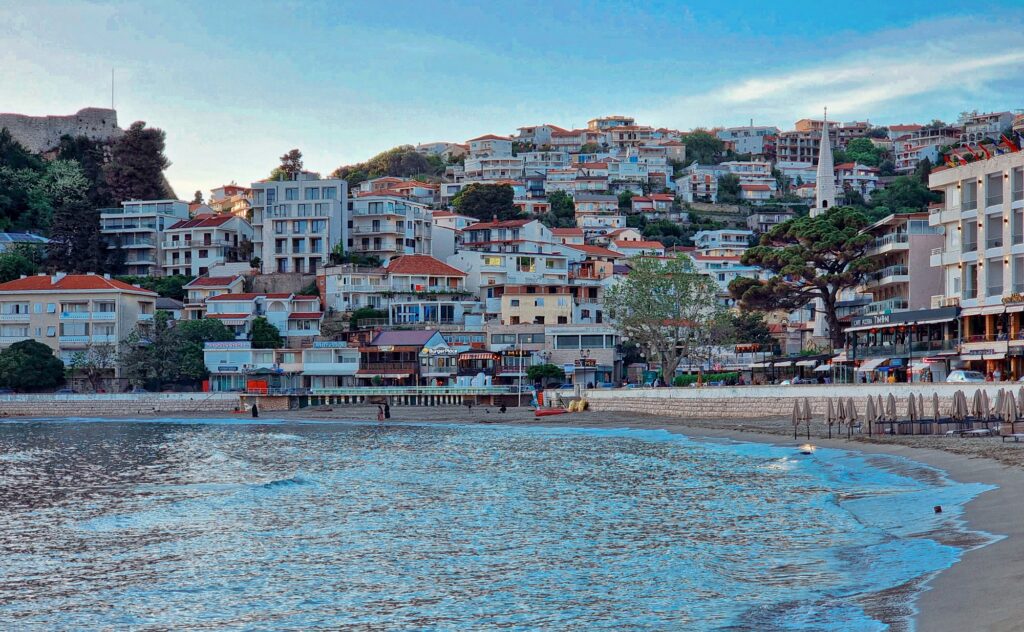
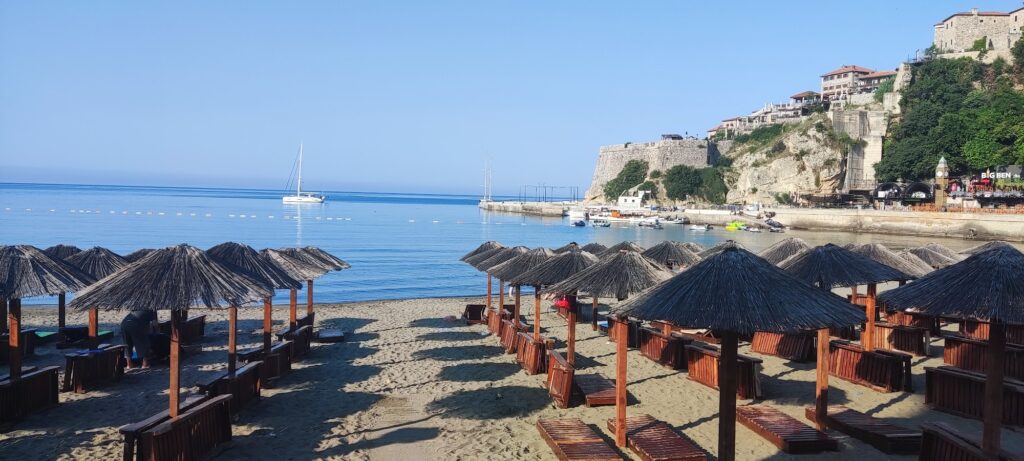
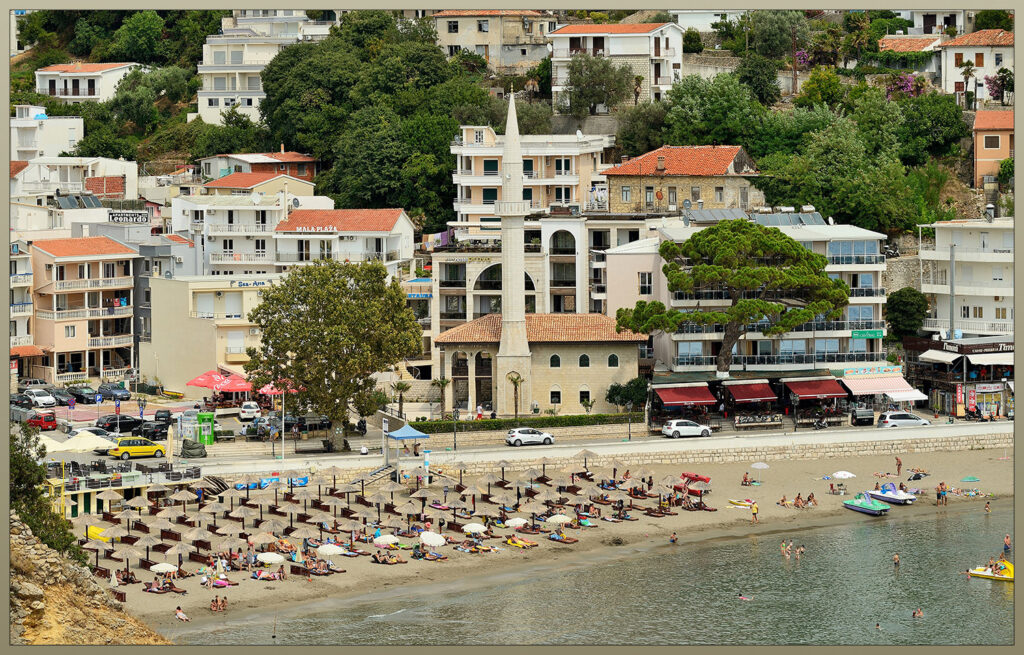
Small Beach (Mala Plaža) is the 350-metre sandy city beach directly below the old town. It is famed for its fine dark sand and shallow, calm waters and is a favourite for tourists staying in central Ulcinj. Flanked by a lively promenade with seafood restaurants, traditional grills, and cafés, it offers a classic Balkan city beach experience. It is convenient and central but not as clean as nearby options. It is best enjoyed in the off-season, when the golden sands are almost to yourself.
Getting There: 5 Minutes on Foot from the Old Town, by Car with Paid Parking, or by Taxi
From the Ulcinj Old Town — the fortress settlement on the peninsula immediately above — the descent to Small Beach takes approximately 5 minutes on the stairs that link the citadel zone to the beach level. The beach is the first thing most visitors see when they approach Ulcinj from the sea or from the coastal road, positioned as it is in the crescent bay below the most prominent visual landmark of the town.
By car, parking is available along the road approaching the marina and in the designated lots near the beach promenade — approximately €1 per hour. By taxi from the Ulcinj main bus station, the ride takes around 5 minutes and costs €2 to €4.
The Ulcinj Long Beach Walk coastal path begins at the southern end of Small Beach, running southeast along the shore toward Velika Plaža — the marked path through the pine forest that connects the city beach to the beginning of the 12-kilometre Long Beach strip.
The Beach: 350 Metres, Dark Sand, Shallow Entry, Crowded in Summer, Best in Shoulder Season
Small Beach is the standard reference point for Ulcinj’s central beach: crescent-shaped, 350 metres, dark fine sand that is characteristic of the Ulcinj coast’s volcanic mineral geology, shallow and warm water that remains calm even in moderate wind conditions due to the bay’s enclosure. The beach faces southwest into the open Adriatic bay, which gives it the sunset orientation and the specific light quality that makes the old town citadel photographs from the beach — the fortress walls above the water at the end of the day — the most reproduced single image of Ulcinj.
The honesty that every comprehensive guide to Small Beach requires: in July and August, the 350-metre beach is crowded enough to make finding a free space on the sand difficult by mid-morning. It is described as not particularly clean during peak season — the volume of visitors on a small urban beach producing the litter and water quality reduction that visitor accounts consistently note. In May, late September, and October, the beach is a genuinely pleasant and calm city beach that the specific quality of the Ulcinj setting makes memorable.
Sunbeds cost approximately €10 to €15 per set. Free zones are available for towel-only visitors. Showers and changing cabins are at the back of the beach near the promenade.
The Ulcinj Old Town: Illyrian Walls, Venetian Gates, Ottoman Conversion, and the Slave Square
The old town above the beach is the most historically layered settlement in Montenegro — 2,500 years of continuous occupation, with the Illyrian and Greek walls overlaid by Roman, Byzantine, Serbian, Venetian, and Ottoman successive constructions. The Balšić Tower (Kula Balsića) in the northwestern corner was built at the end of the 14th century and subsequently modified by the Ottomans, and once served as the residence of the Turkish Jewish mystic Sabbatai Zevi.
Within the castle walls of the old town, the market square where the slave trade took place in the Middle Ages is now known as Slave Square. It is also the entrance to the History Museum of Ulcinj, which houses collections of archaeology, ethnology, and other historical objects, including a building that was once a church and was later converted into a mosque — part of the minaret still standing. The museum houses a bust of Miguel de Cervantes.
The Sailors’ Mosque — one of the oldest mosques in the Balkans, which at one time also served as a lighthouse — is within the old town and visible from the beach below. The 17th-century fountain with its Arabic inscription, crescent moon, and floral carving near the museum entrance is the kind of incidental detail that the uneven cobblestoned lanes of the old town produce: layers of architecture and culture compressed into a small peninsula above the sea.
The Promenade: Turkish Coffee, Seafood, the Evening Crowd
The promenade flanking Mala Plaža — the Rana walkway that runs along the beach front — is the social spine of central Ulcinj in the same way that the Budva and Kotor riviera promenades define their own respective beach zones. The cafés serving Turkish coffee (black, thick, in small cups, the Albanian and Montenegrin south’s coffee tradition rather than the espresso bar culture of the northern Montenegrin coast), the seafood restaurants with their fresh catch displayed at the entrance, and the ice cream stands that line the promenade provide the food and drink infrastructure for the beach day’s transitions.
The Hotel Mediteran — 4-star beachfront, outdoor pool, spa, within walking distance of the beach and town centre — is the accommodation immediately adjacent to Small Beach for visitors who want the old town proximity without staying within the fortress walls themselves.
The Women’s Beach: Ulcinj’s Most Unusual Provision
Less than 100 metres from Mala Plaža, on the opposite side of the old town peninsula, is Ženska Plaža (Women’s Beach) — one of the most unusual beaches in Montenegro. As the name indicates, it is reserved exclusively for women. The tradition, dating from the Ottoman period, has survived as a practical provision for Muslim women who wish to swim without male presence. Men are strictly prohibited. The beach is smaller than Mala Plaža and receives less visitor attention in the tourism literature, but its existence as an exclusively female space reflects the specific cultural character of Ulcinj — the only majority-Albanian, majority-Muslim coastal town in Montenegro.
Ulcinj Beyond the Beach: Valdanos Olive Grove and Lake Skadar
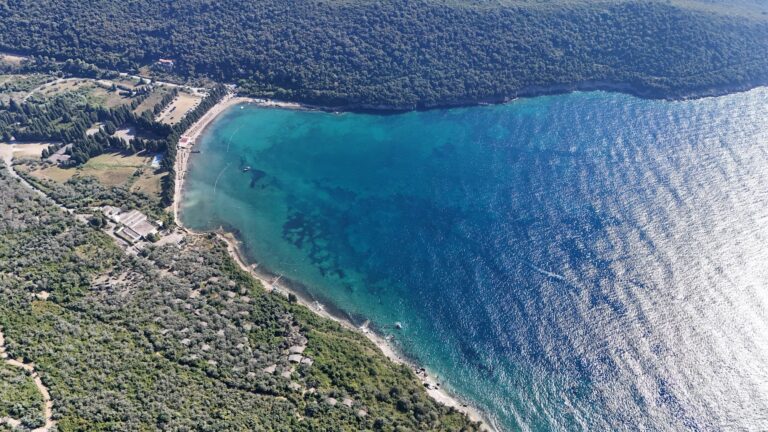
Valdanos Bay, northwest of Ulcinj, offers a serene pebble beach with crystal-clear water surrounded by ancient olive groves — some over 2,000 years old — covering more than 18,000 trees. It is one of the oldest olive groves in the Mediterranean.
Lake Skadar — the largest lake in the Balkans, shared between Montenegro and Albania — is accessible from Ulcinj by car in approximately 30 minutes, with boat tours from Virpazar providing the specific wetland and bird-watching experience that the lake’s ecological significance supports.
Small Beach (Mala Plaža) in Ulcinj is the 350-metre dark sand crescent below the Illyrian–Venetian–Ottoman fortress that holds a bust of Cervantes, the Slave Square where the medieval trade took place, the oldest mosque in the Balkans, and the 1979 earthquake legacy in every uneven cobblestone. The beach is crowded in July and August and not at its cleanest. In May and September it is quiet, warm, and the specific Ulcinj combination of dark sand, Ottoman architecture, and Adriatic light is what the beach photographs for.
Come in September. Climb to the old town for sunset. Have Turkish coffee on the promenade.
Map
Sorry, no records were found. Please adjust your search criteria and try again.
Sorry, unable to load the Maps API.
Near by places: