Spiaggia dei Maronti Ischia: Beach and Thermal Guide
Profile
Spiaggia dei Maronti, Ischia: Three Kilometres of Volcanic Sand Below Barano
Italy | Campania | Gulf of Naples | Ischia Island | Barano d’Ischia | South Coast
The longest beach on Ischia nearly disappeared in December 1999, when a violent storm surge stripped the shore and damaged the cliff behind it. Spiaggia dei Maronti was rebuilt with sand drawn from a submarine quarry found more than twenty metres down off the coast, and the cliffs and the winter weather continue to reshape it each year. That history matters to a visitor because the beach is not a fixed object. It is a long strip of volcanic sand on the south coast, in the municipality of Barano, and it changes with the seasons.
How Spiaggia dei Maronti Got Its Name and Its Rights
The name is traditionally traced to a Greek word, rendered in Latin as quatior, a term taken to mean a quiet beach. The shore also carries a legal curiosity. The Aragonese king Ferdinand took refuge on Ischia when the cities of his kingdom turned against him, and in gratitude he granted the islanders privileges over the coast, including its beaches and the sea for a distance offshore. Local accounts say the pirates of earlier centuries used the beach too, digging round pits with a wide base and a narrow mouth, fitted with a ladder.
Three Kilometres of Dark Sand Between Barano and Sant’Angelo
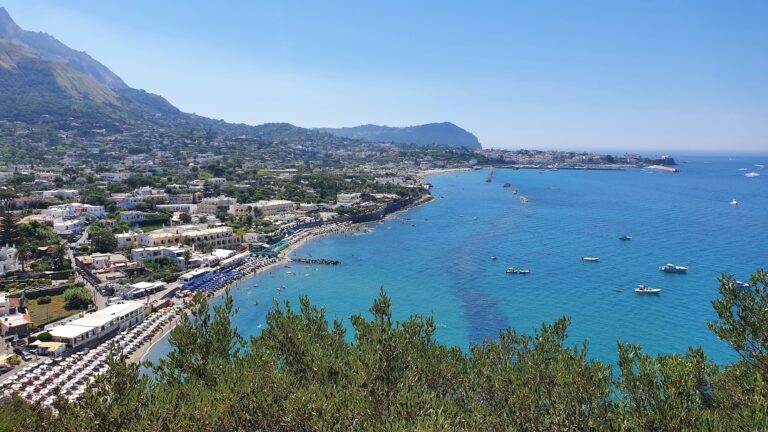
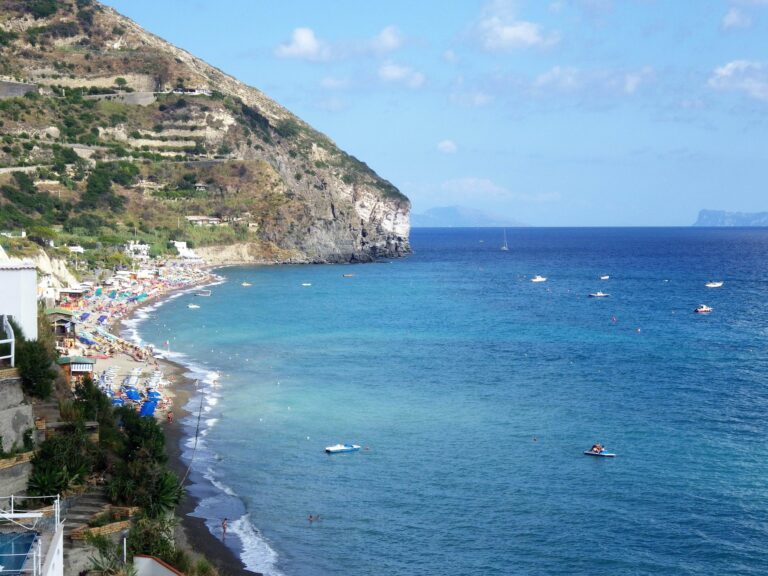
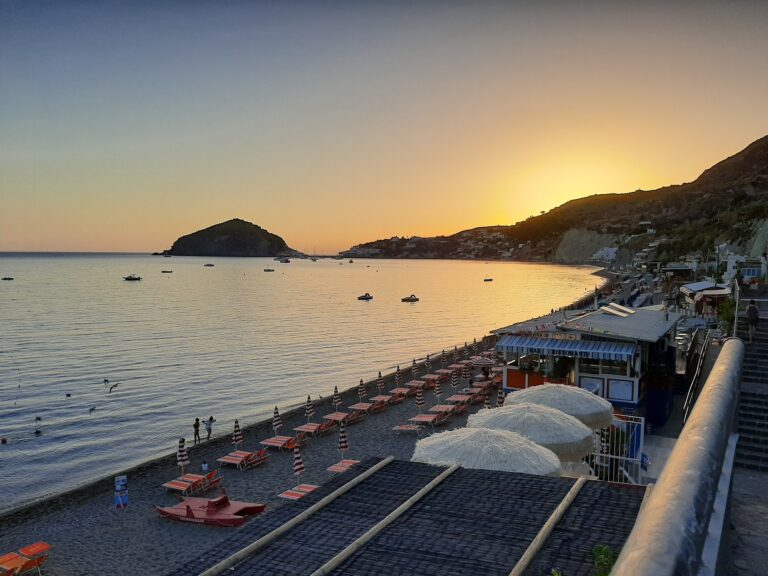
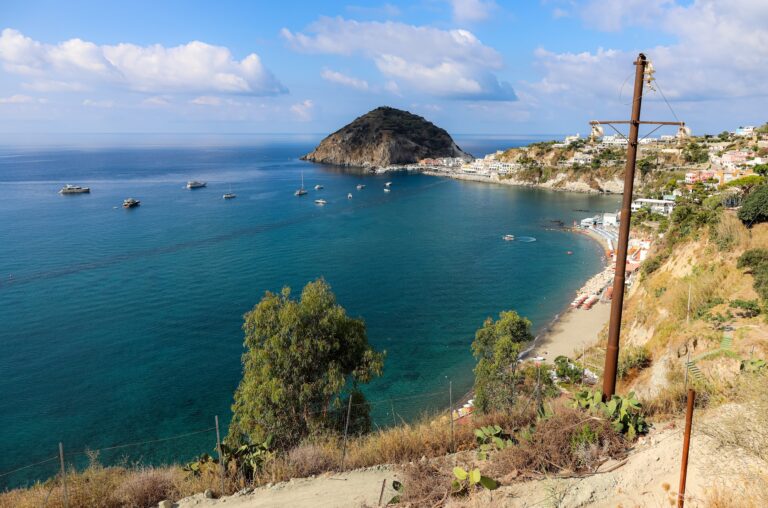
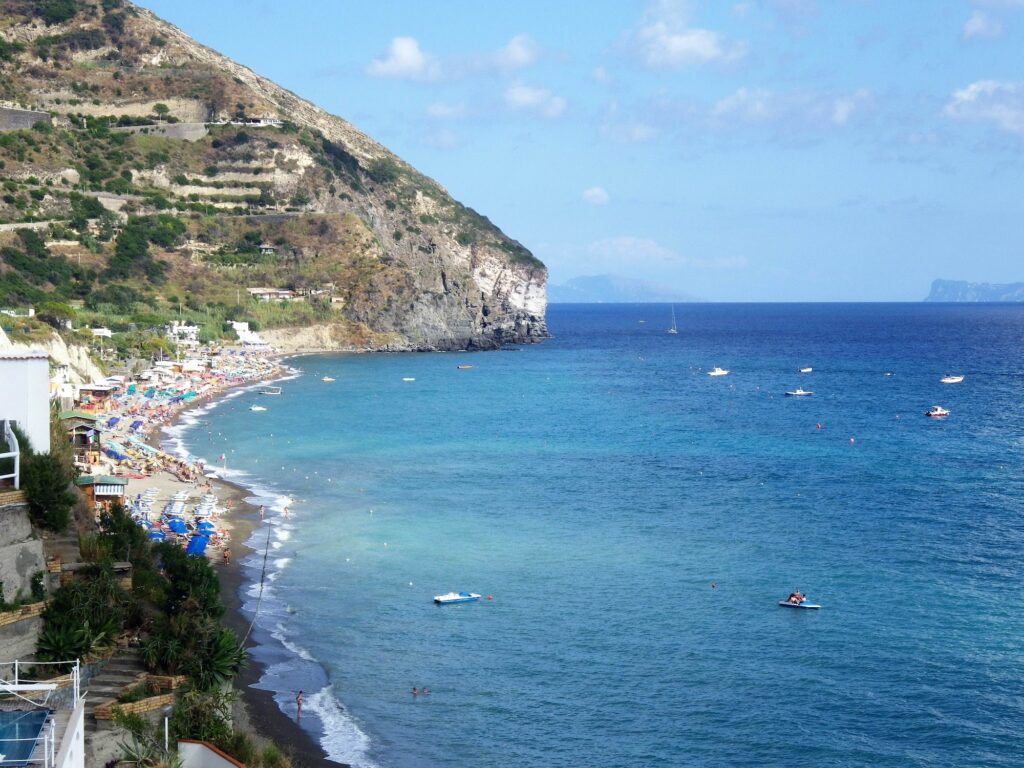
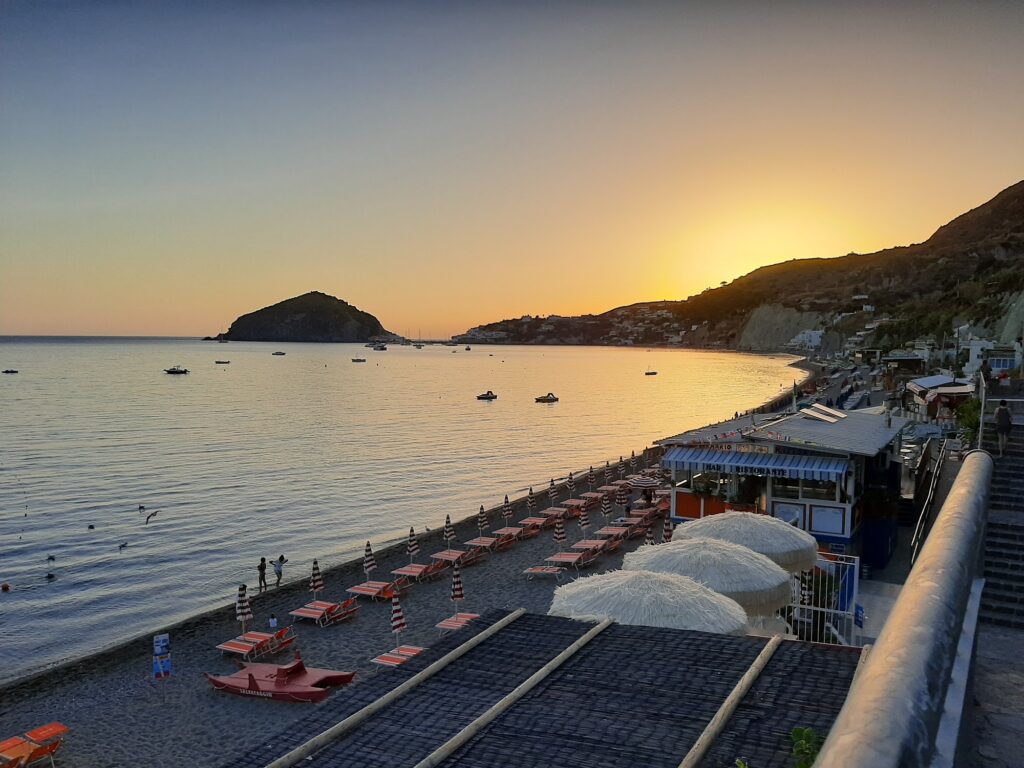
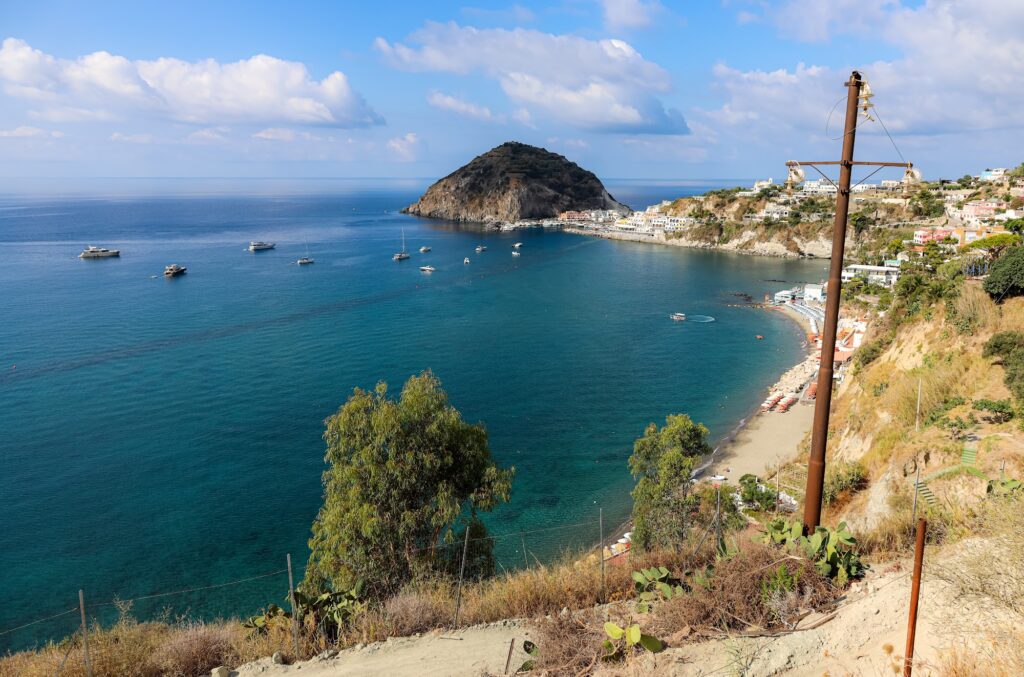
Guides give the length as nearly three kilometres, though some give a shorter figure of around two. It is the longest beach on the island and the only one in Barano’s territory. The sand is dark and volcanic, and the water ranges from turquoise to deep blue in changing light. Hills fall steeply to the shore behind it. The beach faces south, which gives it sun through the day and a mild climate for much of the year.
The shoreline mixes equipped lidos with free sand, so the length is divided between organised sections and wilder stretches. At the eastern end lies the village of Sant’Angelo, an old fishing settlement. A footpath connects the two.
The Fumarole, Cava Scura and the Hot Sand at the Sant’Angelo End
The last stretch of the beach toward Sant’Angelo is the Fumarole, where steam rises from the ground and the sand is hot enough to burn. Digging with the hands can reveal geothermal heat, and gas bubbles at high temperature rise in the sea close to the shore. Italian tourism guides note that the ancient Romans buried themselves in this hot sand for therapy.
Behind the beach, narrow valleys called cave hide thermal springs, among them the powerful spring of Cava Scura, which is reached from the beach. A paid thermal park in Sant’Angelo, Aphrodite Apollon, provides organised treatments for those who want them.
The heat has a practical consequence for families. Children should stay away from the marked hot vents and the steaming ground, and everyone should wear sandals on the sand near the Fumarole, which can burn bare feet. Away from that stretch the sand behaves normally.
Water Depth, Swimming Room and Space for Children
The seabed slopes gently, and the length of the beach allows long swims parallel to the shore. The sea here is open and not sheltered like the bays on the north coast, so conditions depend on the weather and swimmers should watch the sea state. The beach is wide and long, with a choice between lidos and free sand, which family guides cite as an advantage because parents can choose a level of service. For a bay that is more enclosed and shallower, Spiaggia di San Montano is the usual comparison on the opposite coast.
Lidos, Free Sand, Lifeguards and Dogs
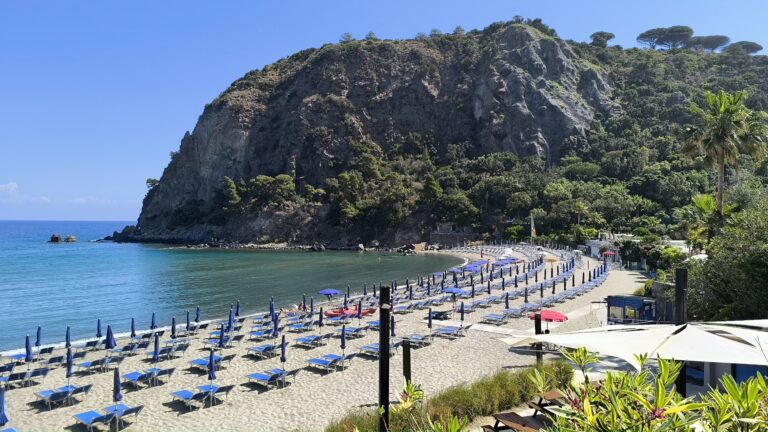
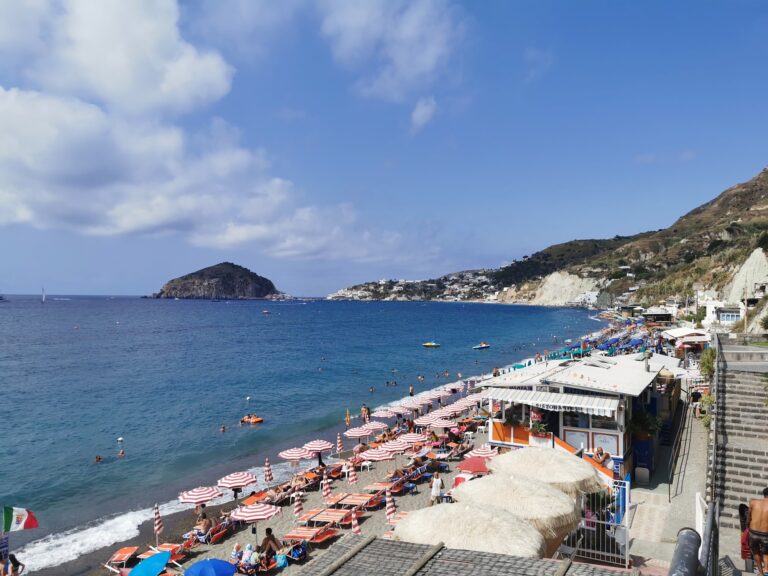
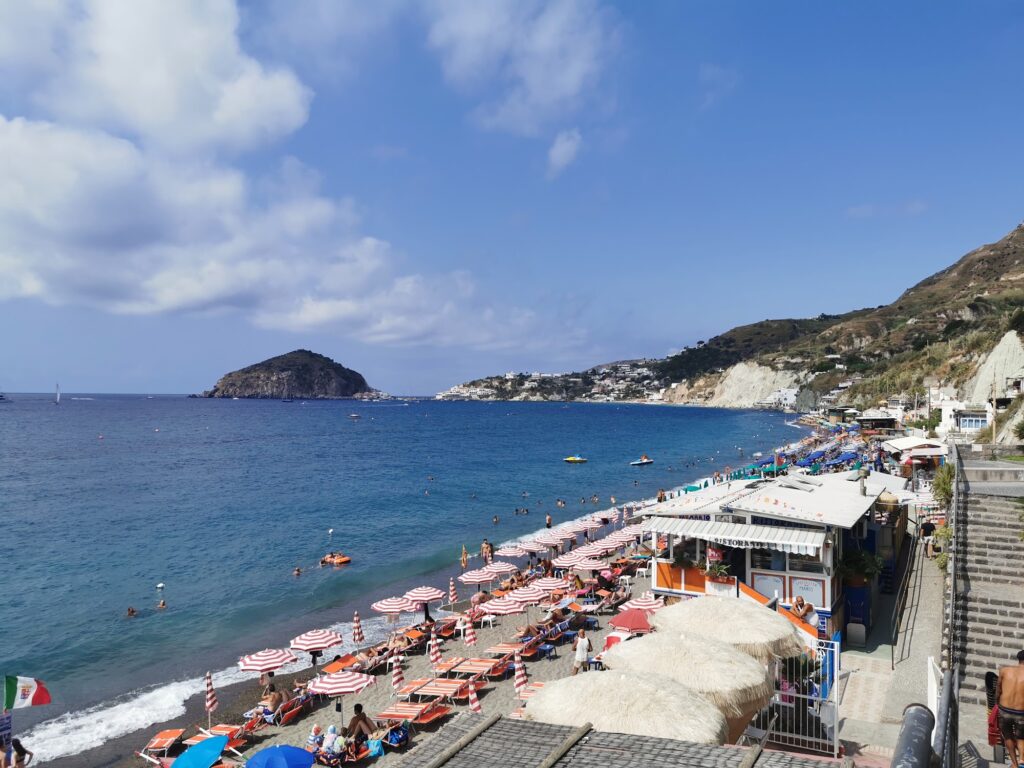
Many lidos along the beach rent sunbeds, deckchairs and umbrellas, and they provide showers, changing cabins and restrooms. Water sports such as stand-up paddleboarding, kayaking and pedal boats are rented in season. Lifeguard cover is normal at lidos in the season, though I could not confirm the hours along each sector.
I could not find a rule on dogs published for Spiaggia dei Maronti specifically. Italy has no national ban on dogs at beaches. Access is set by municipal and regional ordinances, and the notices at the entrance to the public sand decide the matter. In a lido, the operator chooses, so ask before paying for a place. Dogs should also be kept away from the hot sand of the Fumarole.
Taxi Boat From Sant’Angelo, the Footpath, Bus and the Road From Serrara Fontana
The beach can be reached from three directions. A taxi boat runs from the harbour of Sant’Angelo, with stops at Olmitello, Cava Scura and the Fumarole, and the crossing takes only a few minutes. A footpath links Sant’Angelo with the Fumarole end of the beach in about ten minutes, and small electric cars also serve the route. By road, a panoramic descent leads down from Serrara Fontana to the shore, and public buses run from Ischia Porto through Barano. Drivers should expect to pay for parking near the entrance. Visitors who want a beach to watch the sun set should note that Maronti faces south, and the west-facing Spiaggia di San Francesco Forio on the other side of the island suits the evening better.
Eating by the Sea and Dinner in Sant’Angelo
Restaurants, bars and kiosks line the boardwalk and the beach, and serve the island’s seafood and its rabbit dish alongside pizza and cold drinks. Italian guides suggest visiting early in the morning or around sunset, and ending the day with dinner in one of the restaurants at Sant’Angelo, which can also be reached by sea.
Dig a few centimetres into the sand near the Fumarole and feel the ground warm before you leave.
Map
Sorry, no records were found. Please adjust your search criteria and try again.
Sorry, unable to load the Maps API.
Near by places: