Spiaggia Libera Attrezzata Finale Ligure
Profile
Spiaggia Libera Attrezzata Finale Ligure: The Equipped Free Beach Below the Limestone
Italy | Finalmarina | Finale Ligure, Savona, Liguria
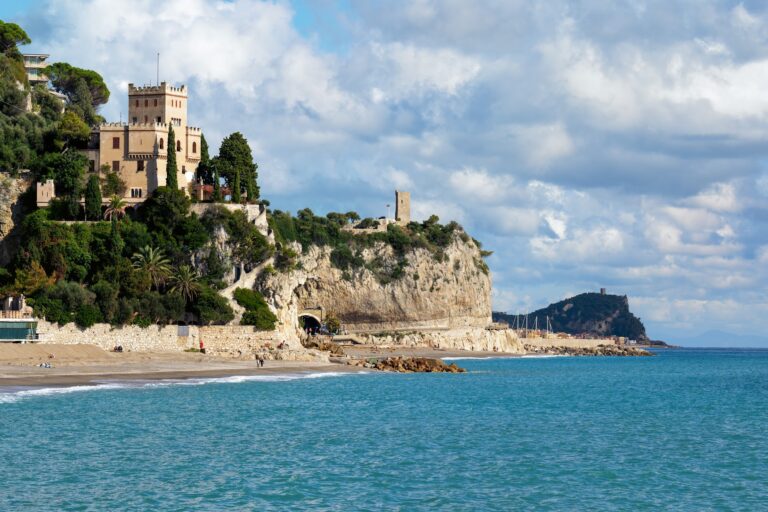
The Romans named this place Ad Fines — at the boundary — because it marked the territorial edge between two Ligurian tribes, the Sabatii and the Ingauni. The name compressed into Finario during the medieval period, became Finalborgo when the Del Carretto marquises founded their walled capital here in the late 12th century, and eventually settled into the modern Finale Ligure familiar today. That the place was always defined by where it sat between things carries forward in ways that are easy to overlook on a summer beach day: between the open Gulf of Genoa and the limestone cliffs rising directly behind the town, between an entirely public coast and an optional comfort system available to those who want it, between a thoroughly modern seafront and a medieval walled town two kilometres inland that carries a different density of history altogether.
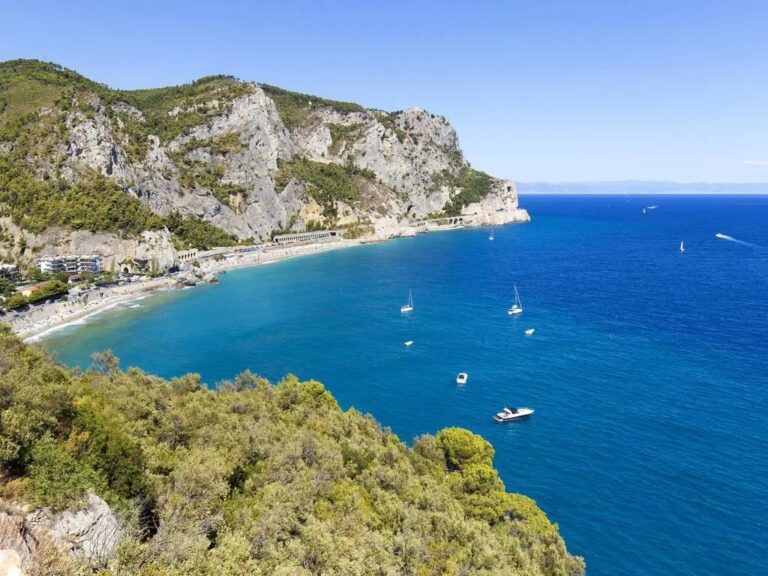
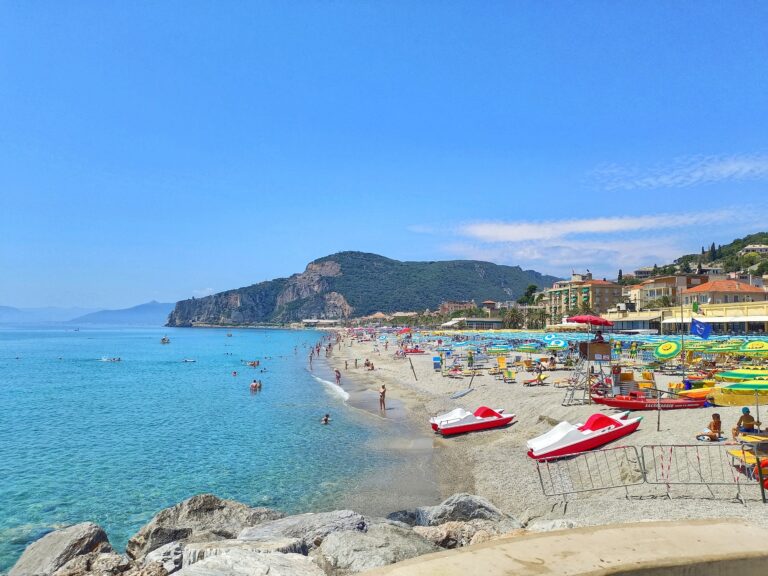
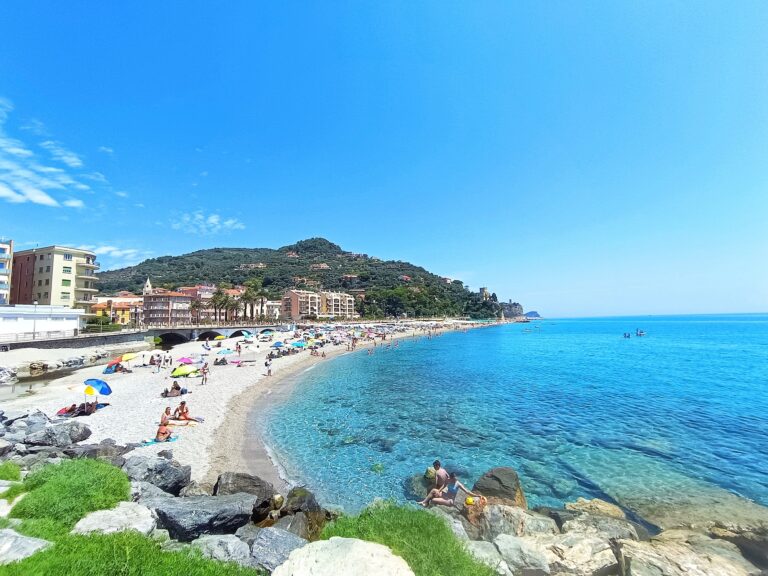
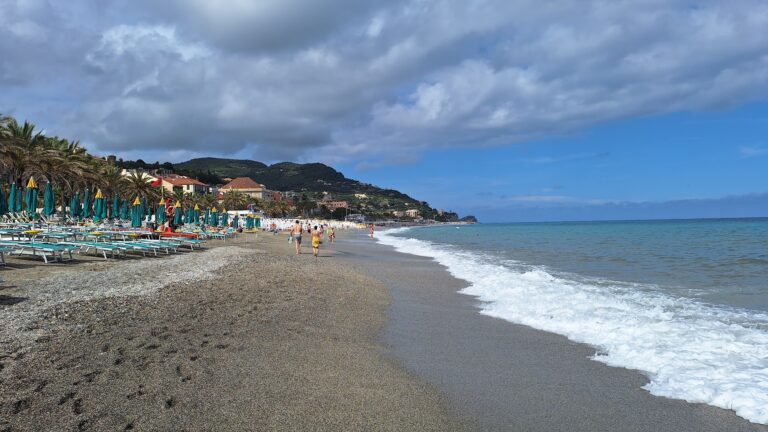
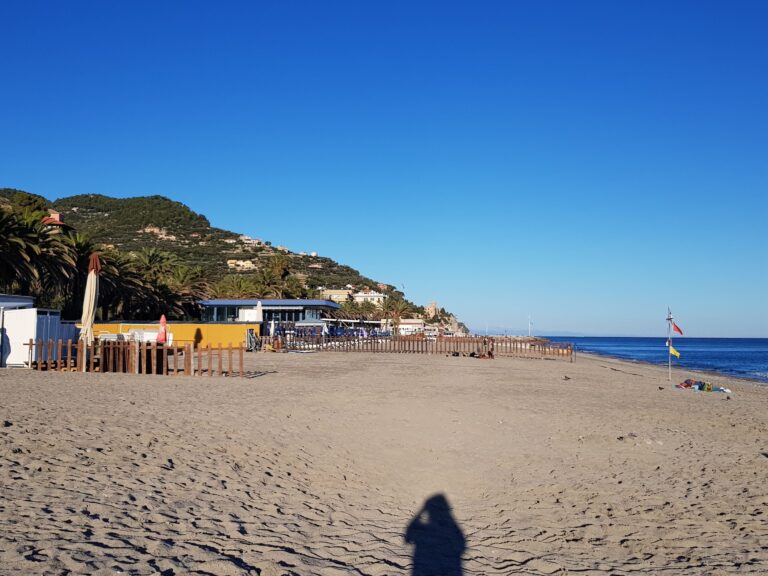
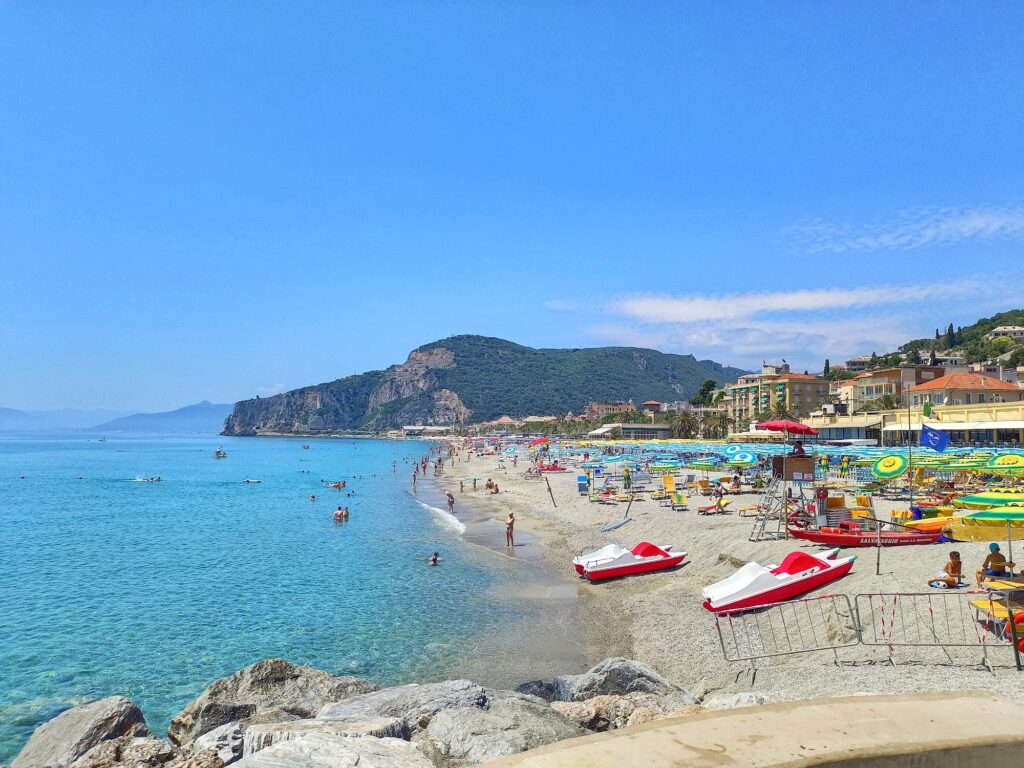
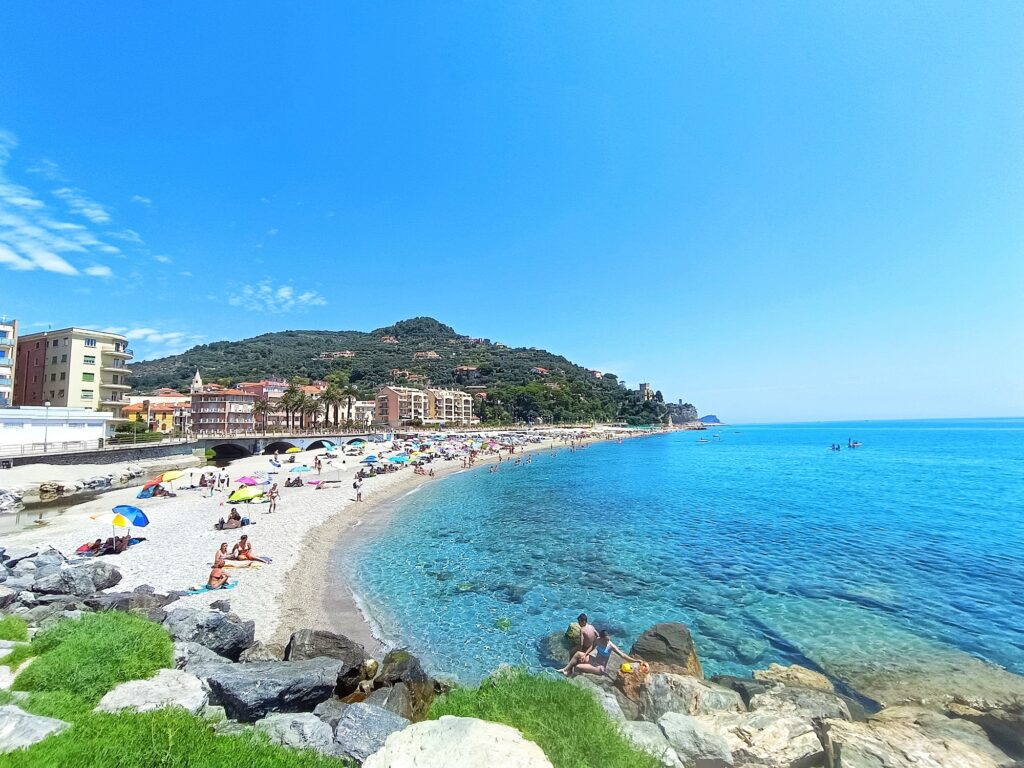
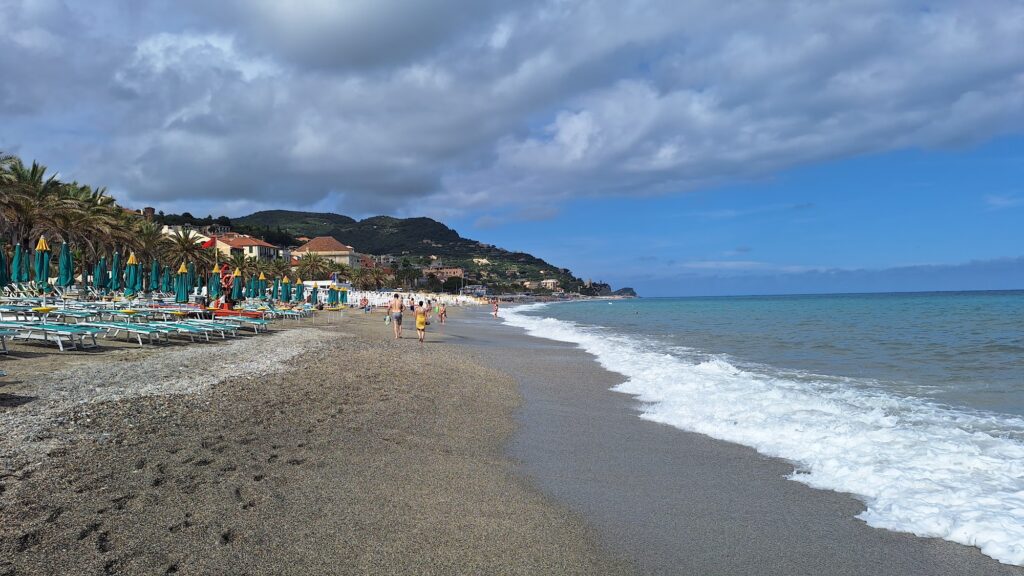
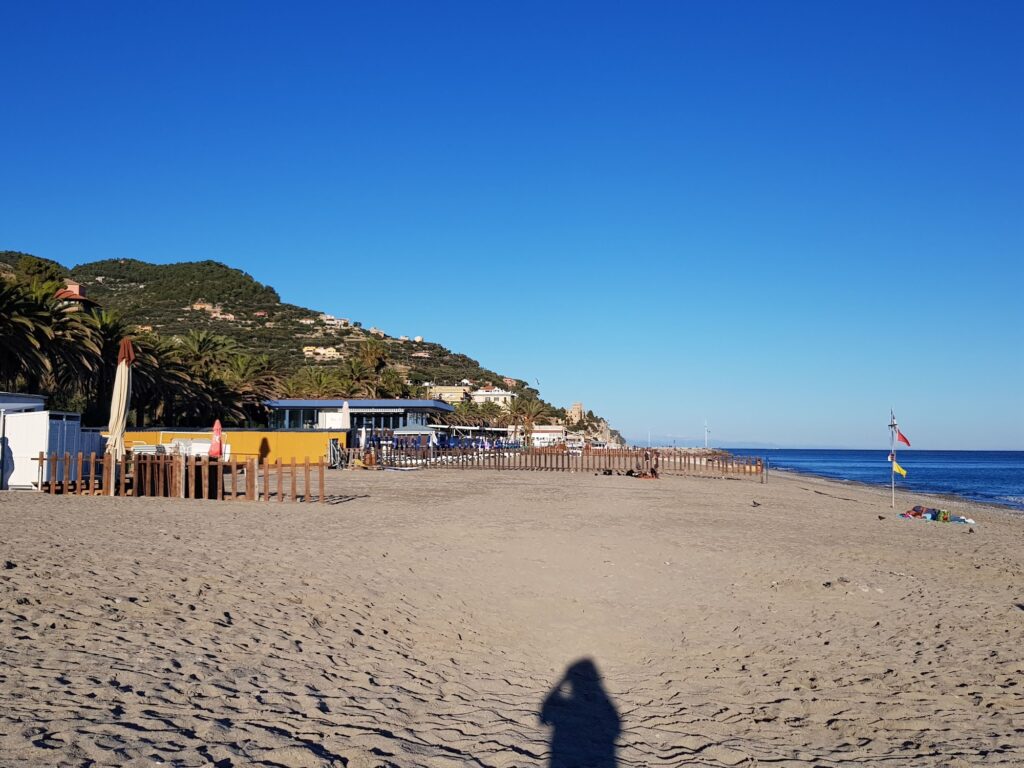
The Spiaggia Libera Attrezzata Finale Ligure sits on Lungomare Augusto Migliorini, the palm-lined promenade running through the Finalmarina district. The beach is sandy rather than the predominantly pebble shore that defines much of the western Ligurian coast — grey rather than golden, with a short rocky fringe at the waterline in certain sections that makes water shoes a sensible precaution, but otherwise a wide, open, accessible shore. Heading west along this same coast toward Vittoria Beach Arma di Taggia Italy and Maoma Beach Bordighera Italy, the beach character shifts progressively from sandy to pebbly to the narrow coves and rock platforms that dominate the western end of the Riviera di Ponente, which makes Finale Ligure something of an anomaly in this series for providing actual sand underfoot.
What the Spiaggia Libera Attrezzata System Actually Provides
The term spiaggia libera attrezzata describes a specific legal arrangement under Italian coastal law, not a marketing label, and understanding what it means in practice changes how to plan a day here. An operator is granted use of a stretch of beach on the condition that at least half the total surface area remains entirely free to the public, and that a defined set of services — showers, toilets, lifeguard coverage, and basic cleaning — are available to everyone without charge. The other half may be equipped with sunbeds and umbrellas for reasonable rental fees. The operator may also sell food and drink. The public-access requirement is enforceable, not optional.
At Finale Ligure, this plays out well on the ground. The free zone is substantial rather than a narrow strip of unclaimed sand squeezed against a fence, and the shared infrastructure — the freshwater rinse stations, the changing cabins, the toilet blocks, the elevated lifeguard positions — genuinely serves both sides of the beach rather than prioritising the paying section. The sunbed and umbrella rental runs at an affordable daily or half-day rate for anyone who wants shade without having to carry their own equipment down from wherever they’re staying.
The accessibility provision here goes considerably further than the baseline legal requirement. Wooden walkways run from the promenade directly to the waterline, wide and stable enough for wheelchair access. Specialised high-clearance loungers and adapted water-entry chairs are available for visitors with limited mobility. Finale Ligure holds the Bandiera Lilla designation — Italy’s national accessibility recognition for coastal municipalities — and the beach on Lungomare Migliorini is specifically listed in the municipality’s accessible services documentation as reachable from the seafront with a moderate gradient.
Getting to Spiaggia Libera Attrezzata Finale Ligure: Train, Car, or Coastal Bus
The Genoa–Ventimiglia regional rail line stops at Finale Ligure Marina station, which sits within Finalmarina and is a few minutes’ flat walk from the seafront. The journey from Genoa Principe or Brignole takes between one hour ten and one hour twenty minutes by regional train, with roughly hourly departures; a ticket costs around seven or eight euros. From the station exit, the route to the beach is direct and entirely level.
By car, the A10 motorway has a dedicated Finale Ligure exit, from which the descent to the lungomare takes a few minutes by the signposted coast road. Street parking runs along the promenade and in the streets immediately behind the seafront. The promenade fills early on summer weekends, and finding a space within reasonable walking distance of the beach without circling for long typically means arriving before ten in the morning. The TPL Linea bus network operates continuously along the Via Aurelia coastal highway, with stops behind the beach access points that make the service genuinely practical for anyone coming from nearby towns like Borgio Verezzi or Pietra Ligure.
The Shore, the Water, and the Limestone Overhead
The seabed at Spiaggia Libera Attrezzata Finale Ligure slopes at a gradual, progressive angle, remaining shallow for a useful distance and without sudden changes in depth that might surprise less confident swimmers or parents watching young children. The water quality is consistently rated high in seasonal environmental monitoring, and the Gulf of Genoa exposure that keeps the sea well-circulated also means conditions vary more than at the enclosed coves further west. On calm summer days the swimming here is excellent; on days when the northwesterly picks up, the surface turns choppy enough that the Baia dei Saraceni or the protected coves at Varigotti, six kilometres east along the coast road, offer shelter without requiring a long detour.
The limestone above the town is what draws a different category of visitor entirely. The Pietra di Finale — the specific geological formation of the plateau and cliffs rising directly behind Finalmarina — was discovered by European sport climbers in the 1980s and is now considered one of the most significant climbing destinations in continental Europe, with over 2,500 documented routes across walls of varying grades and orientations. Climbers come for weeks at a time, using Finalborgo as a base and the Lungomare as an evening destination, which gives the town’s cafe and restaurant culture a specific character during the climbing season that distinguishes it from purely resort-season activity.
Those same limestone formations hold caves of palaeontological significance. The Grotta delle Arene Candide, on the Manie plateau above the town, contained one of the most studied Neolithic burials in Italy: a young man interred with shell pendants and coated in ochre, dated to roughly 23,000 years ago and known to specialists as the Young Prince of Arene Candide. The cave is accessible by guided visit and sits within an afternoon’s reach of the beach, though the route requires a car rather than a walk from the seafront.
Finalborgo, the Del Carretto Marquises, and the Tower of Diamonds
Two kilometres inland from the beach, the medieval walled town of Finalborgo appears on the Borghi più belli d’Italia list for specific reasons. The Del Carretto family held the Marquisate of Finale from the 11th century until 1598, when misgovernment under Alfonso II del Carretto created enough instability for the Spanish governor of Milan to step in, and the town passed through Spanish, then Genoese, then Piedmontese, and finally Italian rule before the three separate municipalities of Finalborgo, Finalmarina, and Finalpia were merged into a single comune only in 1927.
The Tower of Diamonds at Castel Gavone, the Del Carretto residence, is the architectural feature that architectural historians single out: a cylindrical 15th-century tower faced entirely in diamond-point rustication — a grid of projecting stone cut to form pointed pyramids across the entire surface — described consistently as unique in Liguria. The Basilica of San Biagio in the same walled precinct combines a 14th-century Gothic octagonal bell tower with a 17th-century Baroque nave, and the archaeological museum housed in the former convent of Santa Caterina holds material excavated from sites across the wider Finale territory.
On the Finalmarina seafront itself, the Arco di Margherita di Spagna on Via Roma was erected in 1666 to mark the passage of Margherita of Spain through the town and stands a short walk from the beach access points, easy to pass without registering its specific date or purpose unless you’re looking for it.
The train is the right way to arrive. Walk out of the station, cross the road, and the beach is directly in front of you on the other side of the palm-lined promenade. If it’s a weekday morning before the sunbeds are fully occupied, the combination of open sandy shore, a working climbing community in the cafes, limestone walls visible above the roofline, and a medieval walled town reachable on foot within forty minutes makes this one of the more layered beach stops on this stretch of coast — without requiring any particular effort to access that depth.
Map
Sorry, no records were found. Please adjust your search criteria and try again.
Sorry, unable to load the Maps API.
Near by places: