Paralia Saranti Beach Boeotia: Calm Bay, High Rocks
Profile
Paralia Saranti Beach Boeotia Greece: Four Cliff Spots Above a Bay That Looks Nothing Like the Mainland
Greece | Saranti | Thisvi, Boeotia, Central Greece
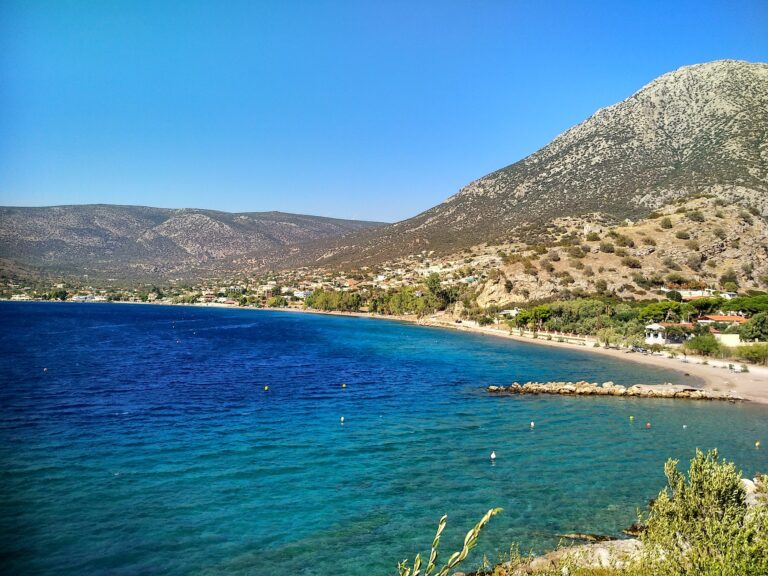
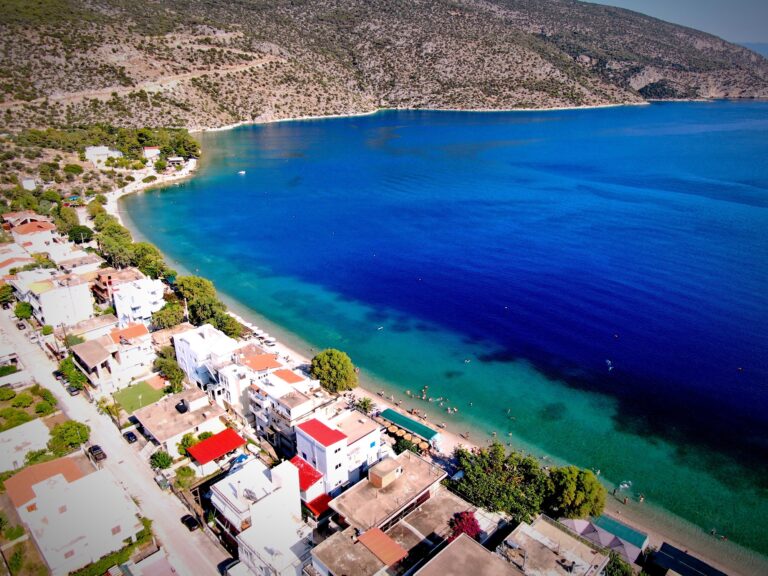
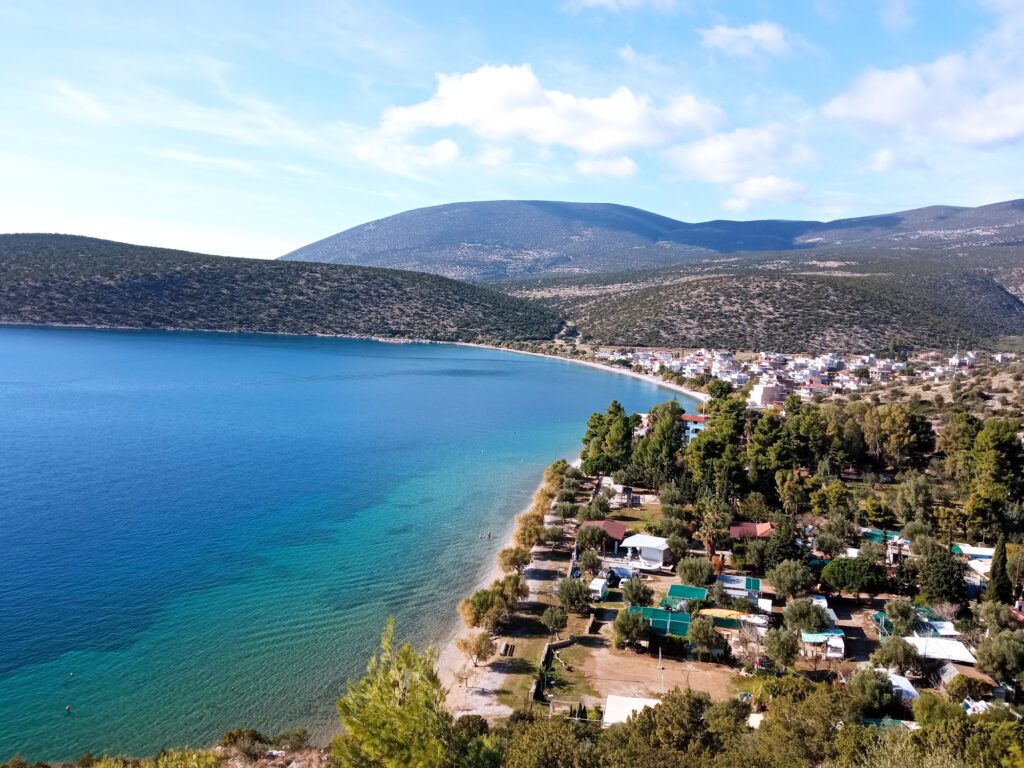
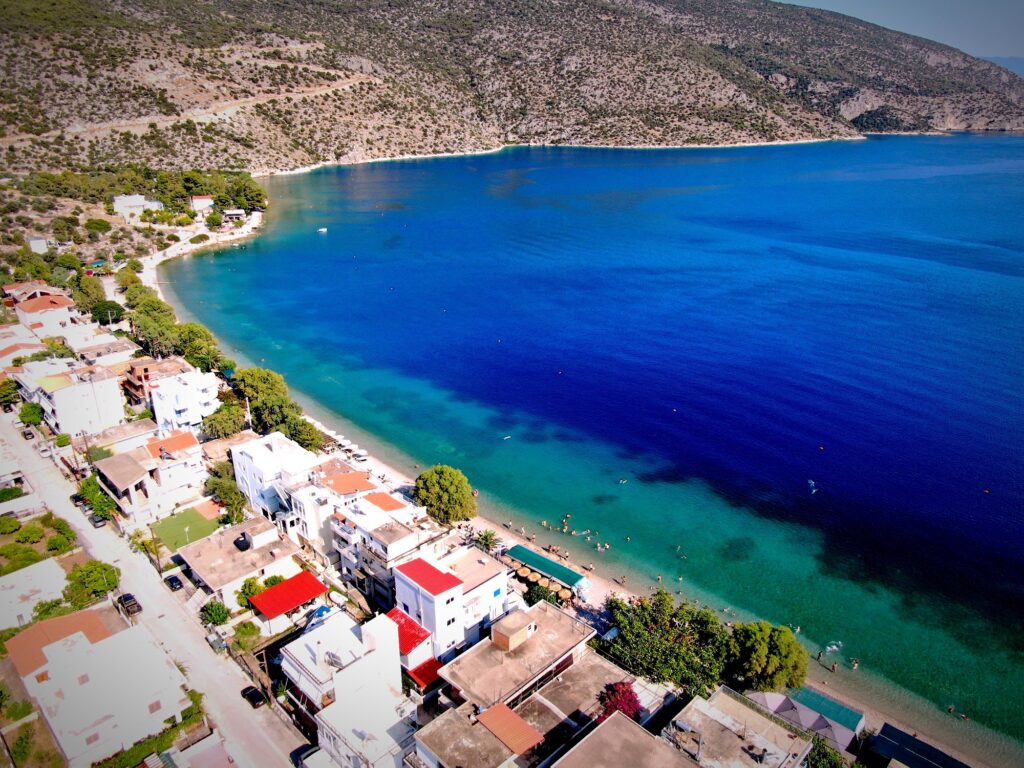
The description that comes up most consistently about Paralia Saranti is that it looks nothing like mainland Greece — that standing on the pebble shore with the protected bay curving around and the mountains of Boeotia framing the gulf behind, it has the specific quality of an island beach rather than a continental one. I do not think that comparison survives close examination, since the particular greenness of the slopes, the scale of the hills, and the absence of the bleached limestone character of the Cyclades are all distinctly mainland. But I understand what people mean. The bay encloses the water tightly enough that the Gulf of Alkyonides here behaves more like a sheltered lagoon than an open sea, the light bouncing differently off calm water than it does off the choppier surfaces further along the coast.
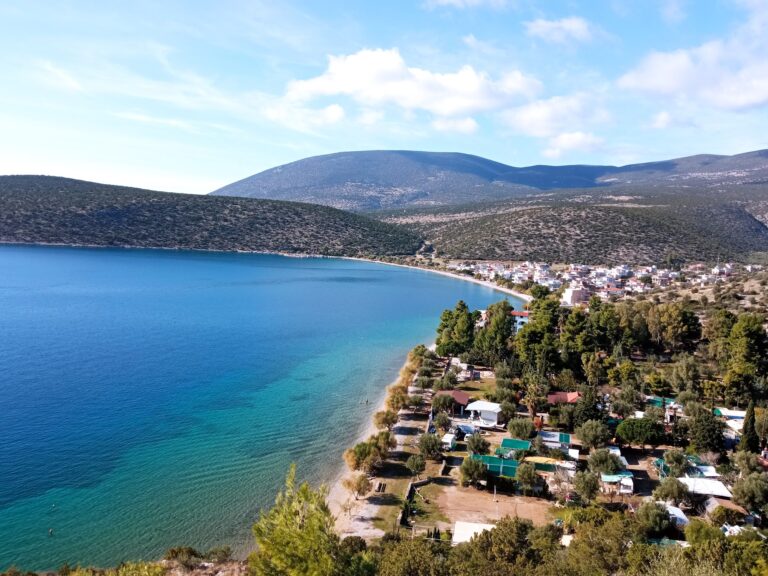
The settlement of Saranti itself is car-free within the beach zone, which removes from it the specific texture — the noise and smell of vehicles, the narrow negotiation of parking — that defines many small Greek coastal resorts. The access road delivers you to a parking area, from which the beachfront runs pedestrian from there inward. Children cycle the seafront strip, which has a working use rather than being a purely scenic gesture.
Getting to Paralia Saranti Beach Boeotia Greece: Via Thebes and the Thisvi Road
The drive from Athens covers roughly 115 kilometres — north on the A1 toward Lamia, exit at Thiva, then following signs through the Boeotian plain past Ellopia toward Thisvi and the coast. The road descends from the agricultural interior toward the Corinthian Gulf in the final approach, the mountains of Helicon visible to the north as you drop down through the last section of hills. The full journey runs an hour and a half to an hour and forty-five minutes depending on Athens traffic.
Saranti sits roughly 16 kilometres from Thisvi, the nearest substantial village, and the coastal strip it occupies is part of the wider municipality of Thisvi whose other settlements — Ellopia, Domvraina, Xironomi — are scattered inland through the same Boeotian plain traversed on the approach. KTEL Thivas runs bus services from the Liosion Street Station in Athens to Thiva, from which connecting local buses serve the coastal settlements, though the frequency of those connections makes a car the more practical option for a day visit.
Free parking is available in the designated areas near the settlement entrance. Arriving before midday on a summer weekend is necessary rather than optional — the beach draws Athenian day-trippers precisely because the drive is manageable and the beach quality is high, and the free parking fills.
Paralia Saranti Beach Boeotia Greece: Pebble and Shade, Calm Water, the Rocks on Either Side
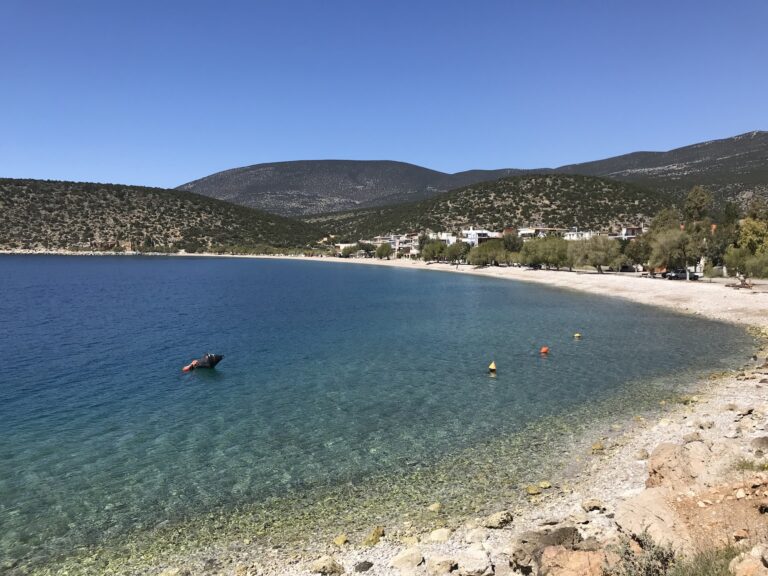
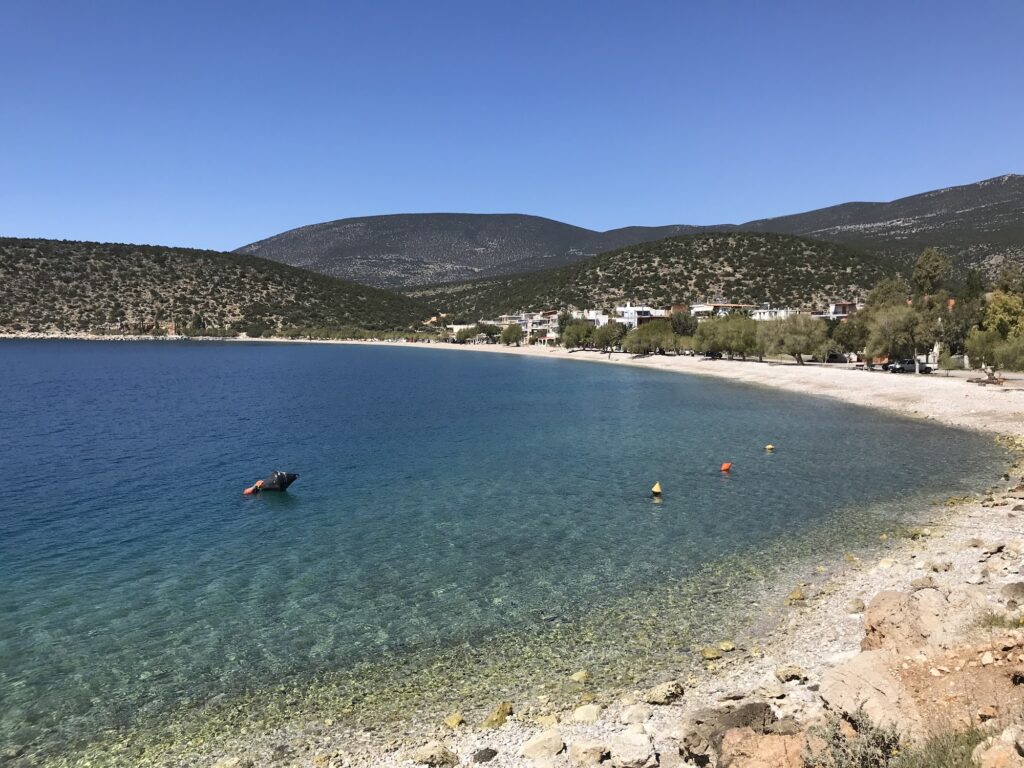
The beach runs about 0.9 kilometres along the bay, composed entirely of small, smooth pebbles rather than sand. Water shoes are recommended given the pebble underfoot, and the descent into the water is gradual enough that the entry is comfortable for most swimmers. The trees along the back of the beach provide genuine natural shade across enough of the pebble to allow shade-seeking without renting an umbrella, which is an uncommon provision along a beach this well-used. Sunbeds and umbrellas are available through the café-bars managing sections of the beach, alongside showers and changing facilities.
The rocks on both sides of the bay do two things simultaneously. They protect the enclosed water from the winds that affect the more exposed stretches of the Corinthian Gulf to the west, maintaining the mirror-still surface that makes this bay appropriate for young children. And they provide four cliff-jumping platforms, the highest of which reaches 16 metres above the water — a specific and measurable feature rather than a vague “ideal for diving” claim. The four spots are used through the season by swimmers who came for exactly that purpose, and the existence of them gives the beach a dual character that few similarly calm, family-oriented bays can claim.
The Gulf of Alkyonides: Between Helicon and the Peloponnesian Shore
The Gulf of Alkyonides is the name for the sheltered inner section of the Corinthian Gulf on the Boeotian side, named for the Halcyon — the mythological kingfisher said to nest on calm winter seas. Mount Helicon, 20 kilometres to the northeast, was in antiquity the home of the Muses, the mountain where Hesiod wrote from the village of Ascra at its foot. The spring of Hippocrene on Helicon, struck from the rock by the hoof of Pegasus, was where poets drank for inspiration. Several kilometres inland from the coast lies the area of Donakes, where mythology placed the spring of the nymph in which Narcissus saw his reflection. None of this is directly visible from Saranti beach, but the geography of the hinterland — mountains with millennia of accumulated mythology, the agricultural plain between them and the sea — is part of the specific texture of swimming in the Gulf of Alkyonides rather than somewhere more obviously touristic.
Alyki Beach Boeotia Greece, further along the same coastal strip to the east, sits directly on the site of the ancient city of Siphae, whose 4th-century BC fortification walls are still visible. The two beaches are part of the same municipality and the same drive from Athens, and spending time at both in sequence gives a sense of the full Boeotian coast rather than a single point on it. Continuing northwest from Saranti, the sandy beach of Agios Nikolaos is visible from the later sections of that road, with the Alkyonides islands in the middle distance.
What the Settlement Provides: Tavernas, Camping, and the Pedestrian Front
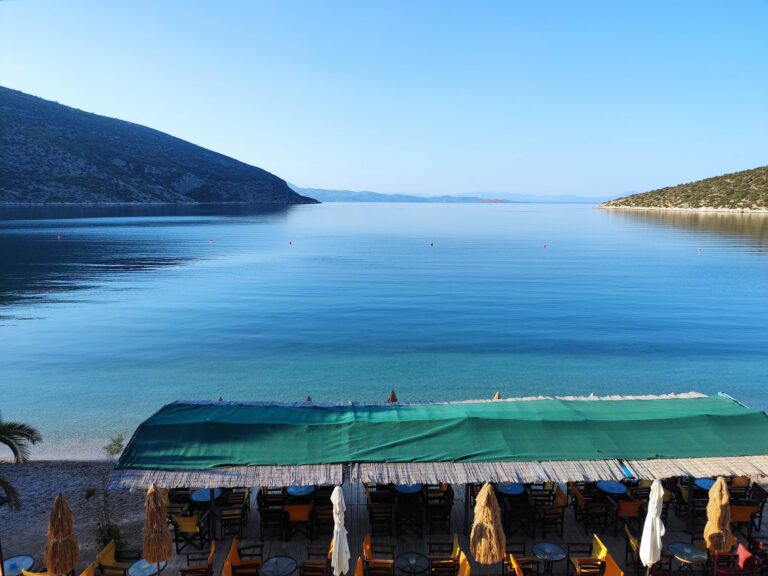
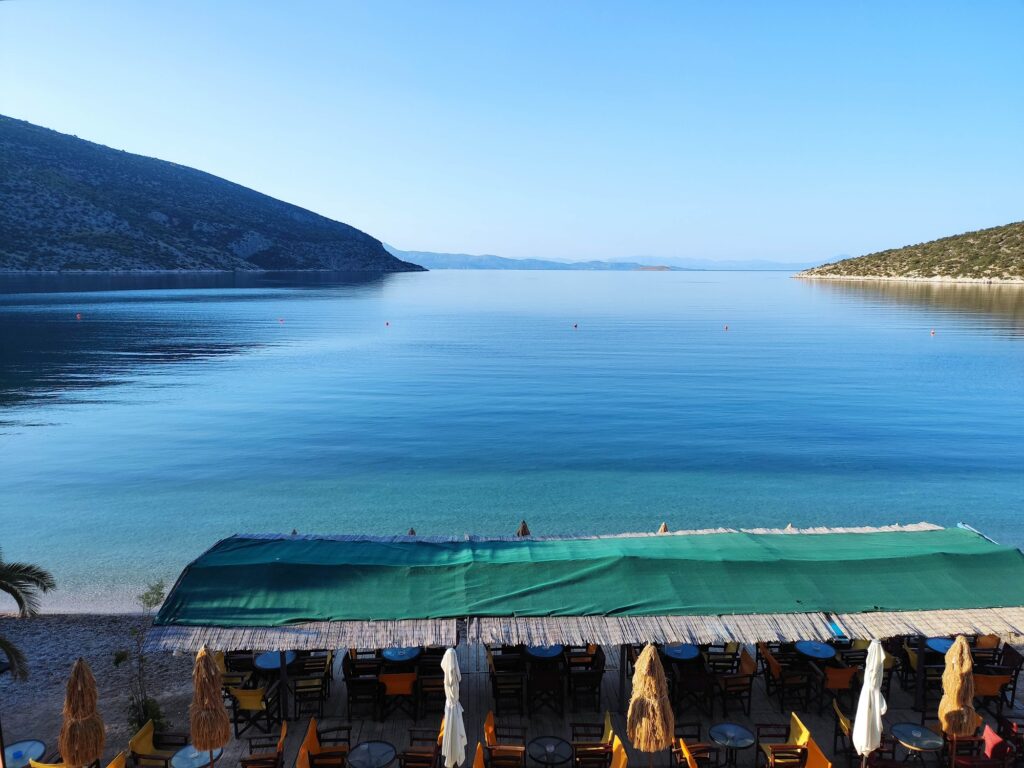
The small settlement of Saranti runs immediately behind the beach and contains within a compact footprint the practical range of what a summer day requires: fish tavernas and ouzeries with tables close to the water, café-bars managing sections of the beach, a children’s playground and a football pitch in the adjacent space, rooms to rent and a handful of apartment buildings for longer stays. Camping Akti operates a protected camping area nearby for anyone who wants an overnight without permanent accommodation.
The food on this coast leans heavily toward whatever the Corinthian Gulf produces — the fisheries here benefit from the nutrient-rich waters fed by the mountain streams draining off Helicon and the surrounding massif, and the tavernas are drawing on a local supply rather than a trucked-in catch. Alongside fresh fish, the Boeotian hinterland contributes its own specific larder: local cheeses including formaela from Arachova, olive oil from the groves of Xironomi, wines from the Askri vineyards.
A Note on Timing for Paralia Saranti Beach Boeotia Greece
The peak of the summer season at Saranti runs June through early September, with July and August bringing the largest day-trip crowds from Athens. The shoulder months — May and September — offer the beach at a quality that most July visitors never see: the water remains warm well into September, the parking is straightforward, and the bay holds its characteristic calm. The drive is the same length regardless of season, and the specific combination of cliff-jumping rocks and flat, protected swimming water does not change with the calendar.
Map
Sorry, no records were found. Please adjust your search criteria and try again.
Sorry, unable to load the Maps API.
Near by places: