Rethymno Beach Crete: City Shore Below the Fortezza
Profile
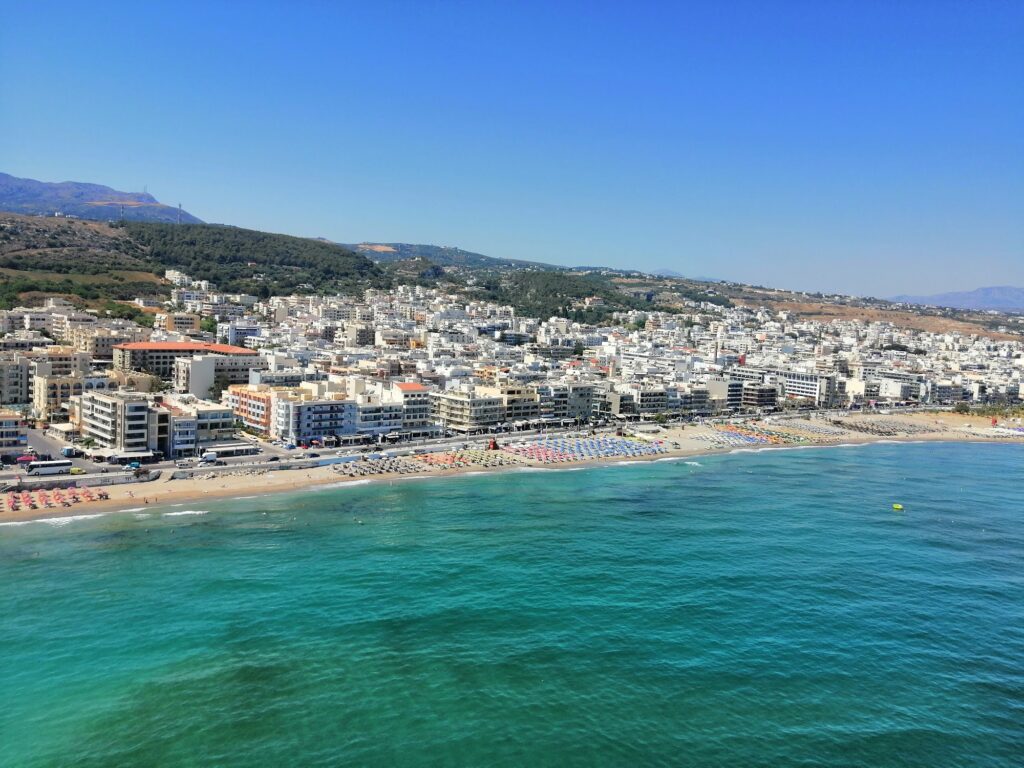
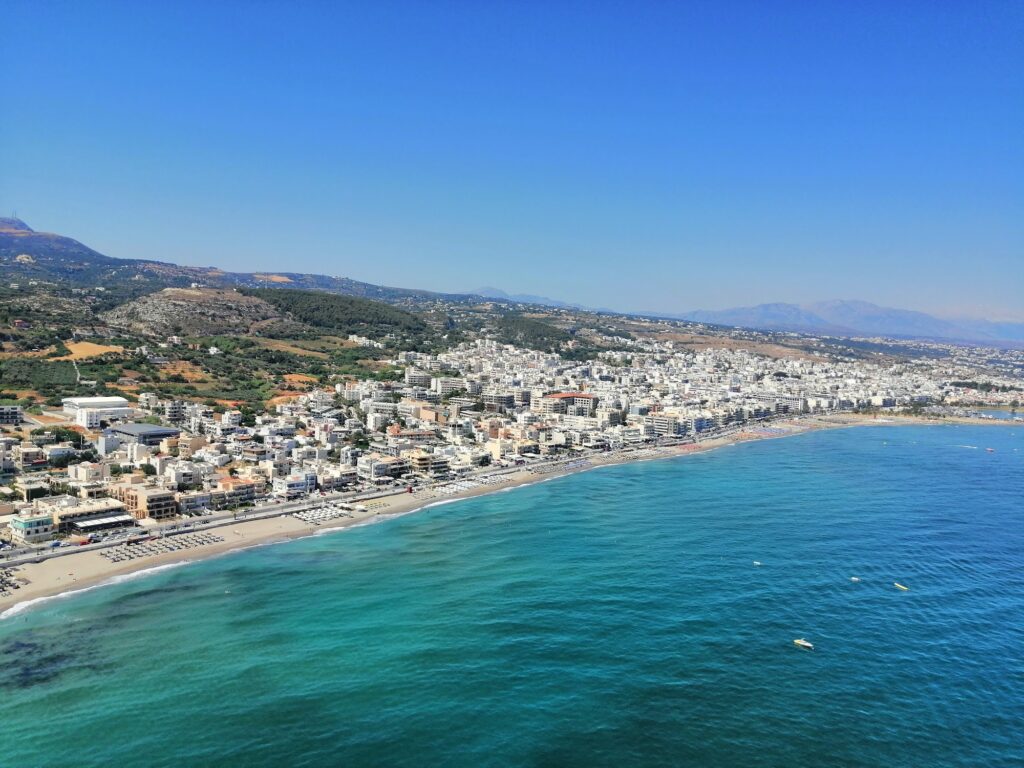
Rethymno Beach, Crete: The City Beach That Starts Immediately East of the 1830 Egyptian Lighthouse and Runs 12km to Skaleta, Alongside the Best-Preserved Medieval Town in Greece
Greece | Rethymno | Rethymno Municipality, North Crete
The lighthouse at the entrance to the old Venetian harbour was built in 1830 by the Egyptians — not the ancient Egyptians but the Khedivate of Egypt, which administered Crete for a period under Ottoman rule. It is 9 metres tall, made of honey-coloured stone, and has intricate carved symbols near the top that visitors standing at the base can see if they look up. It is the western marker of the beach. The sand begins on the other side of the harbour and runs east.
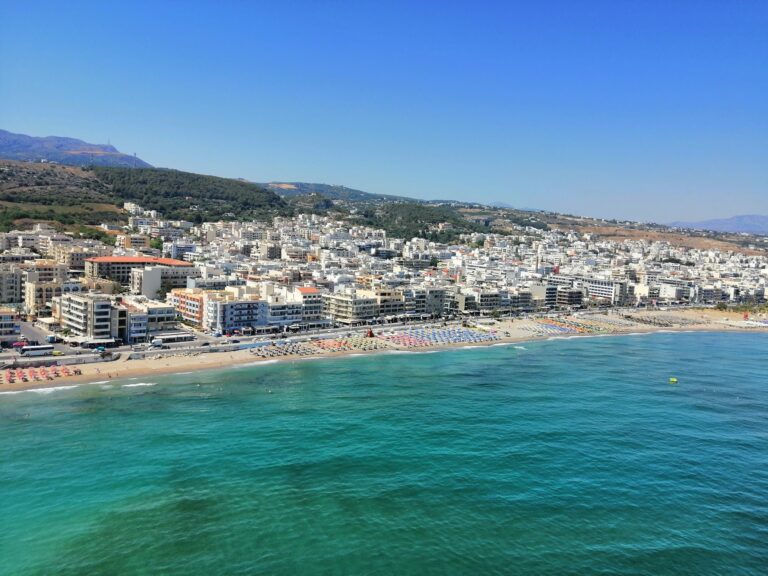
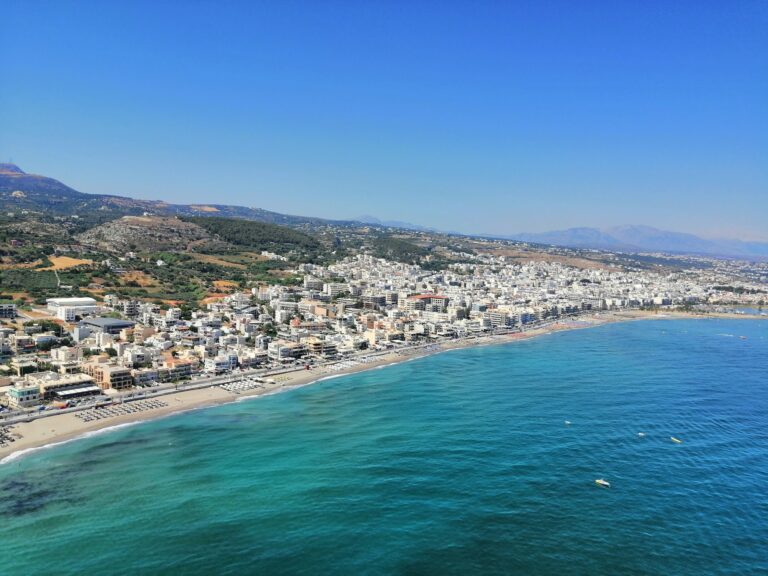
Rethymno is described as the best-preserved medieval town in Greece, which makes the beach that sits immediately beside it slightly unusual in its context. Most city beaches belong to modern resort towns. Rethymno’s belongs to a city with a Venetian fortress, a 16th-century harbour, an old town of narrow cobbled alleys and Renaissance mansions, and an active fishing fleet that moors in the same harbour the lighthouse marks. Walking from the Venetian quarter to the sand takes 10 minutes or fewer from any central point.
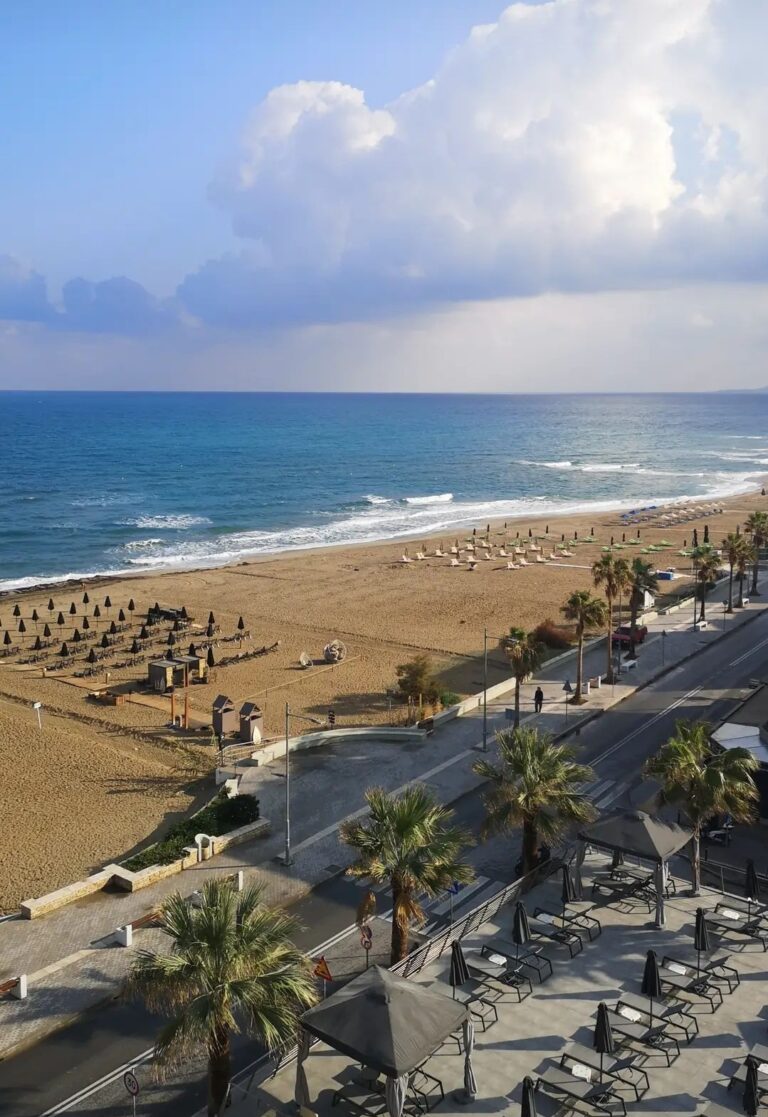
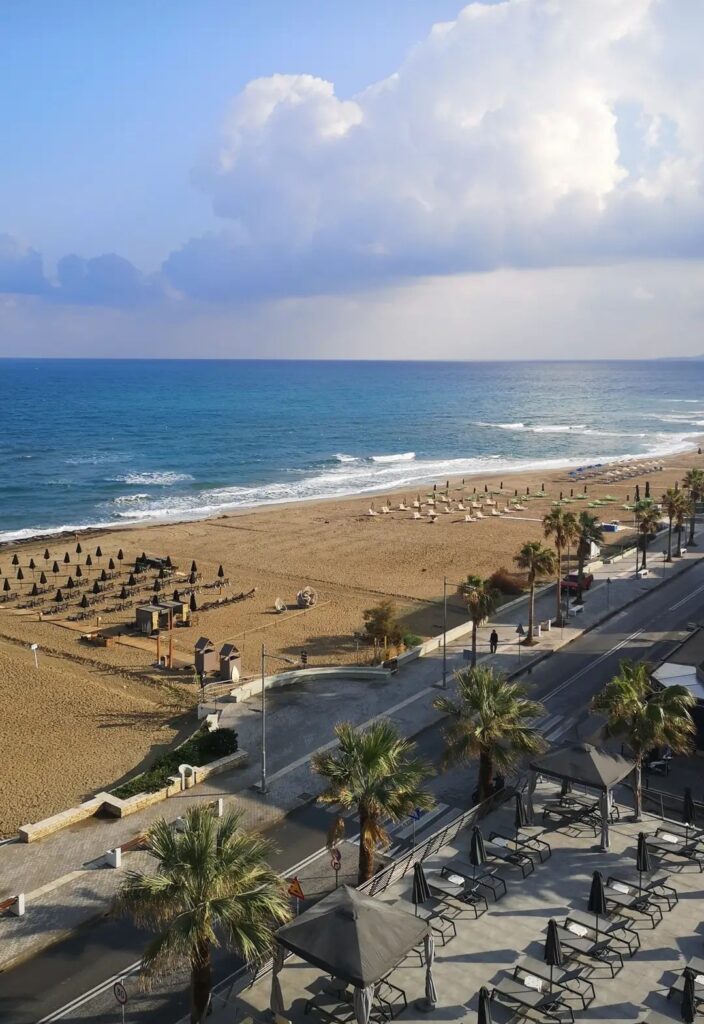
The beach itself starts where the marina ends, running east along the promenade of Sofokli Venizelou Street — a flat, palm-lined seafront road that connects the old town to the long hotel and restaurant strip of the newer city. For the first few kilometres the old town is immediately behind you. After that, the suburbs take over and eventually the beach becomes the section covered in the Platanes article, continuing east all the way to Skaleta 13 kilometres from the harbour.
Getting There: 5 Minutes on Foot From the Old Town, 1 Hour From Chania by Car, 1 Hour 15 Minutes From Heraklion
If you are staying anywhere in Rethymno old town or the adjacent newer centre, the beach is a 5 to 15-minute walk heading north to the sea and then east along the promenade. The route is entirely flat. The lighthouse and the harbour are the navigation landmark — from there, turn east and the beach is in front of you.
By car from Chania: approximately 1 hour on the E75 coastal highway. From Heraklion: 1 hour 15 minutes. Rethymno sits at the midpoint of the northern Cretan coast and is one of the most naturally convenient stops on the island.
Parking is available in large public lots near the marina and in side streets parallel to the coast.
The Beach: Golden Sand, Blue Flag, Shallow and Occasionally Wavy, Part of the Same Turtle Nesting Ground as Platanes
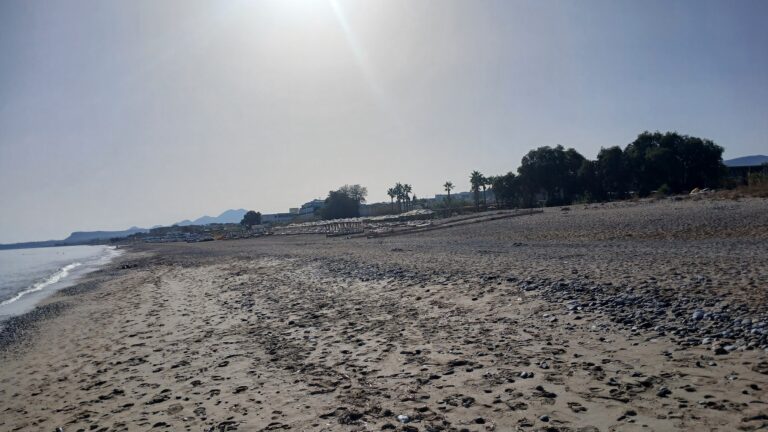
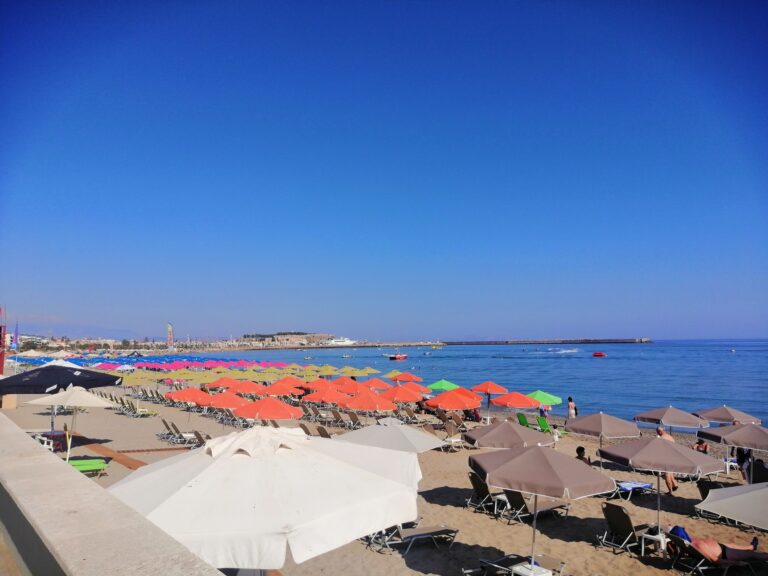
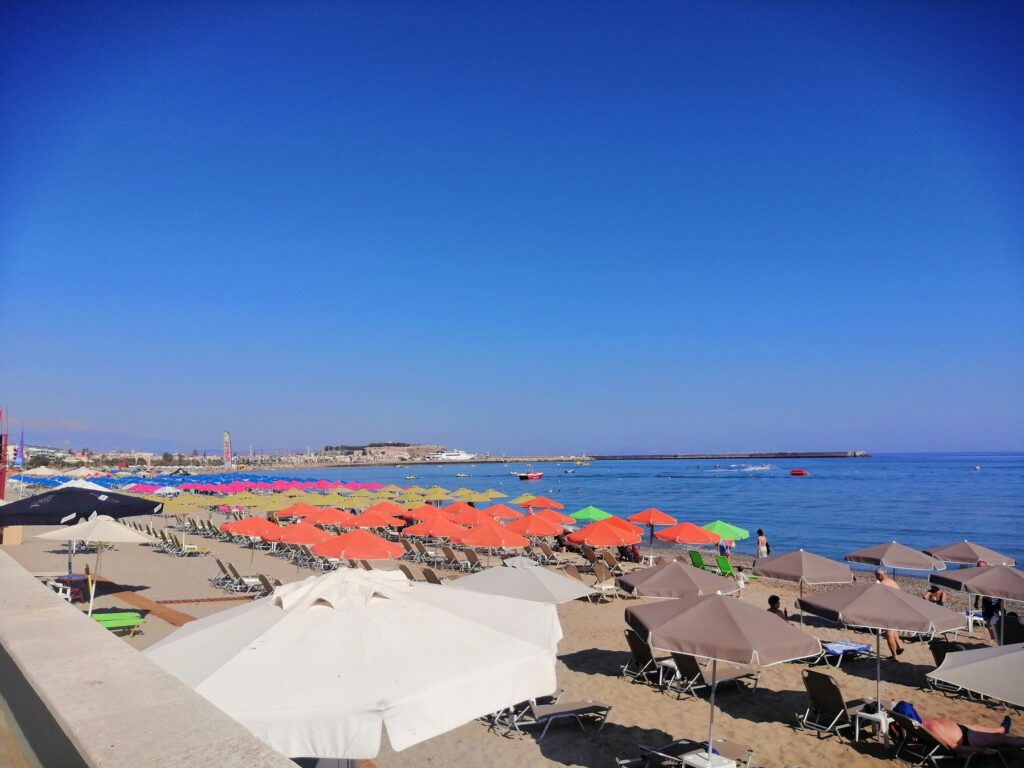
The sand is fine and golden throughout the town beach stretch. The water is shallow with a gradual entry — excellent for young children on calm days. Because the beach faces open sea to the north, it catches whatever wind is blowing, and the Meltemi in summer produces the same choppy surface that characterises all the north Cretan open beaches. Not dangerous, but noticeable.
The beach shares the same Caretta caretta loggerhead turtle nesting designation as the broader Rethymno Bay stretch — marked nests visible in summer, no night access during nesting season. Lifeguards are stationed in towers during peak season; sunbeds and umbrellas are managed by the beach bars and hotels.
The Promenade: Palm Trees, Cafes, Tavernas, the Transition Between Old Town and Resort Strip
The promenade along the beach is the social corridor between the historic quarter and the resort hotels. The western end, closest to the old town, has the character of a working Cretan city — the restaurants serve to a local clientele as much as a tourist one, and the prices reflect that. As you walk east, the ratio shifts progressively toward the hotel strip economy.
The Venetian harbour restaurants immediately beside the lighthouse are the expensive end; the promenade tavernas behind the sand are the middle ground; the side streets of the old town are where the best prices and most authentic food tend to be found.
The Fortezza and the Old Town: What the Beach Looks Back At
The Fortezza — the massive Venetian fortress built in the late 16th century on the promontory above the city — is visible from the beach. It is the dominant feature of the Rethymno skyline when you are lying on the sand looking west. The Fortezza is open to visitors and the panoramic view from its walls over the harbour and the bay is the specific elevated perspective that puts the beach’s scale in context.
The old town itself — the Rimondi Fountain, the Venetian Loggia, the minarets that remained from the Ottoman period, the Porta Guora gate, the narrow alleys of Renaissance architecture — is all accessible on foot from the beach in 15 minutes.
Rethymno Beach in Crete starts east of the 1830 Egyptian lighthouse and runs 12 kilometres to Skaleta — the city beach alongside what is described as the best-preserved medieval town in Greece, the Fortezza fortress visible on the skyline from the sand, golden fine-grained sand with Blue Flag standard, shallow and occasionally wavy, part of the same Caretta caretta nesting ground as Platanes, the palm-lined promenade connecting old town to hotel strip, 1 hour from Chania, 5 minutes on foot from the Venetian harbour.
Walk east from the lighthouse. The old town is behind you. The promenade is in front.
Map
Sorry, no records were found. Please adjust your search criteria and try again.
Sorry, unable to load the Maps API.
Near by places: