Platanes Beach Rethymno: 8km Shore With Turtle Nests
Profile
Platanes Beach, Rethymno, Crete: The 8km Blue Flag Shore West of the Town, a Caretta caretta Nesting Site Where Roped-Off Nests Appear Along the Sand Each Summer
Greece | Platanes | Rethymno Municipality, North Crete
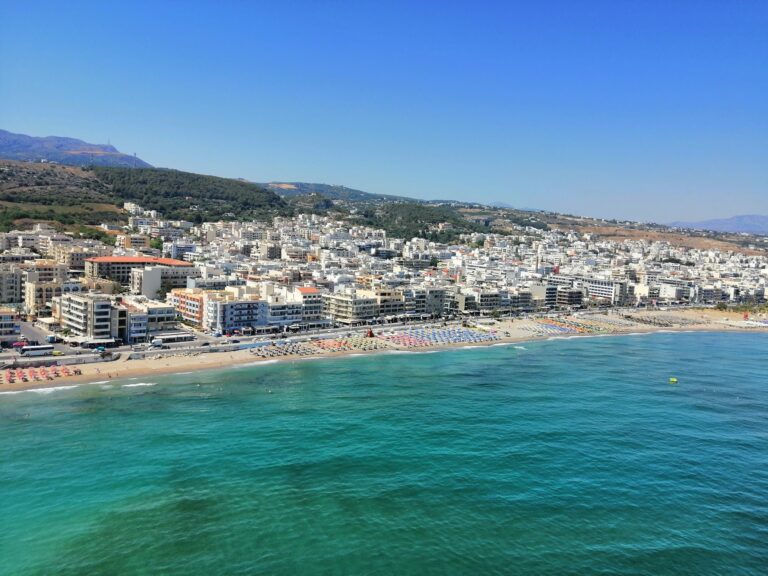
Platanes — also spelled Platanias — is a western suburb of Rethymno, the third largest city of Crete, sitting 3 to 5 kilometres from the historic centre. The beach in front of it is part of the vast Rethymno Bay shoreline that begins at the town harbour and runs east for 13 kilometres all the way to Skaleta. The Platanes section accounts for roughly 8 kilometres of that total, making it one of the longest continuous organised beach stretches on the island.
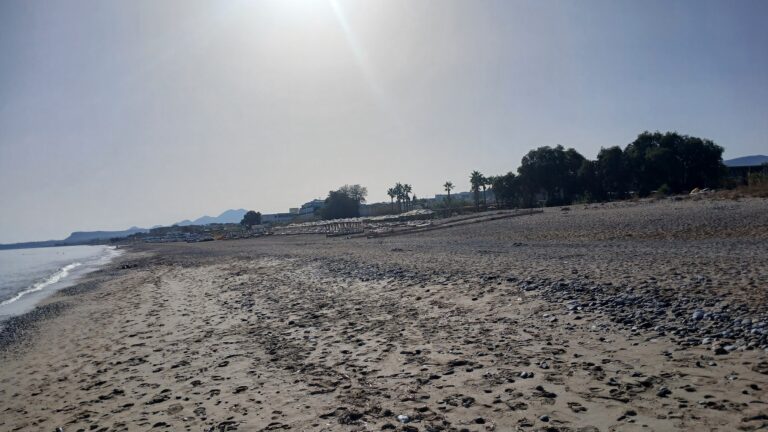
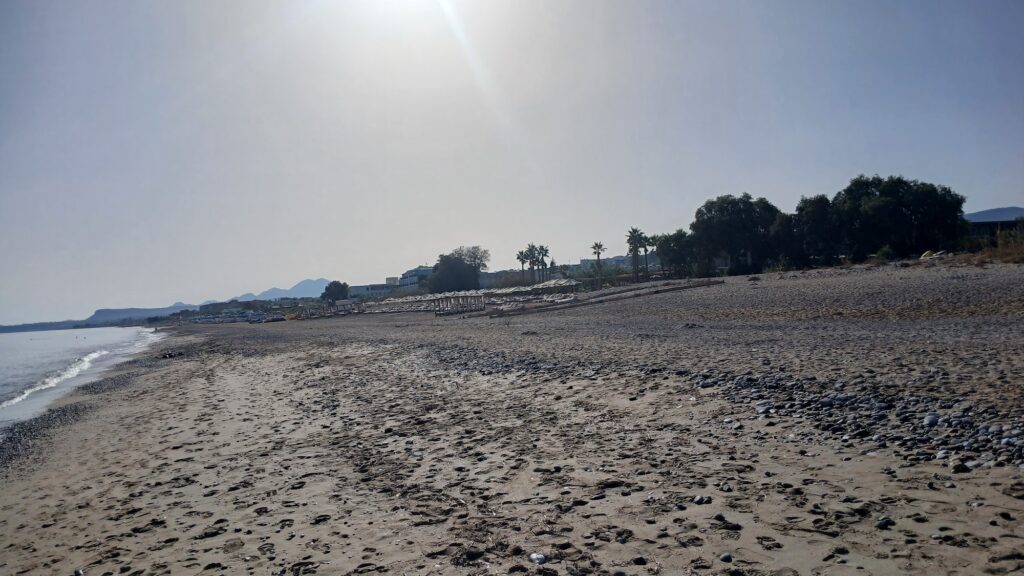
Every summer, marked nests protected by ropes and signboards appear along the sand. Rethymno Bay is one of the three most important Caretta caretta loggerhead sea turtle nesting sites in Greece, with more than 400 nests reported here annually. The beach is closed at night during summer to avoid disturbing the hatching process — this is municipal policy, not a suggestion. The roped nests are the specific feature that a morning walk along the shore makes visible in a way that a midday beach arrival doesn’t.
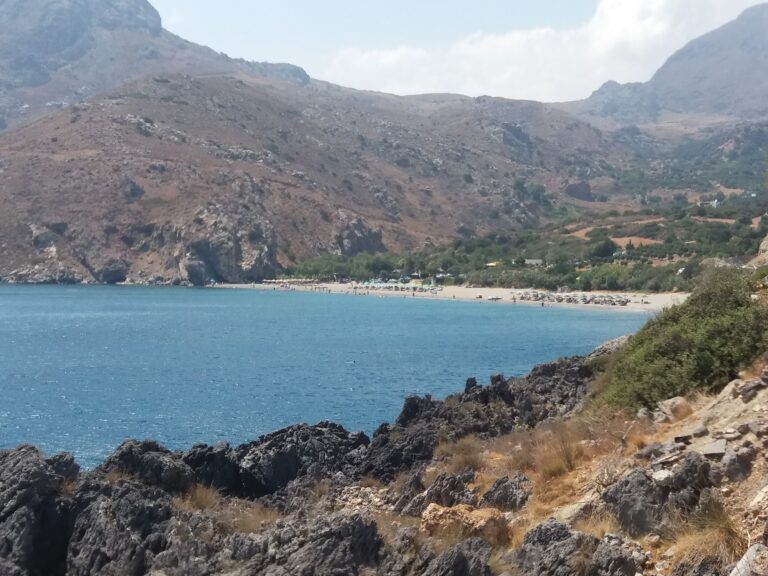
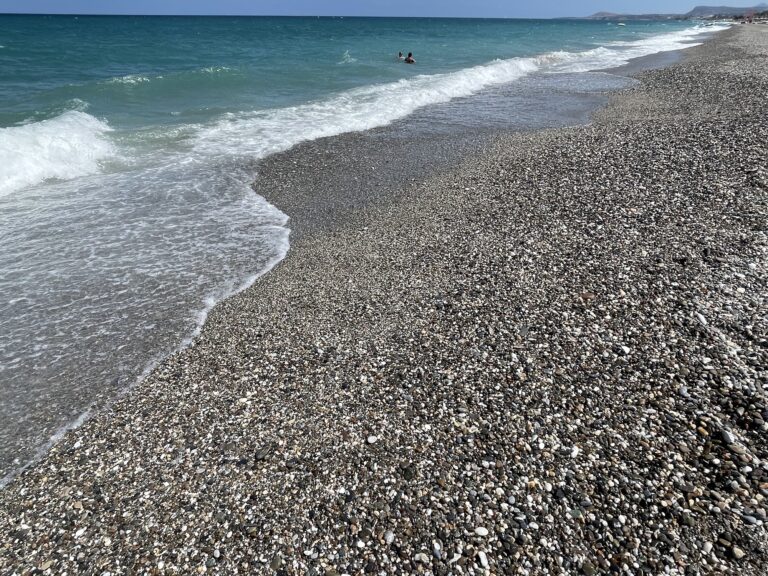
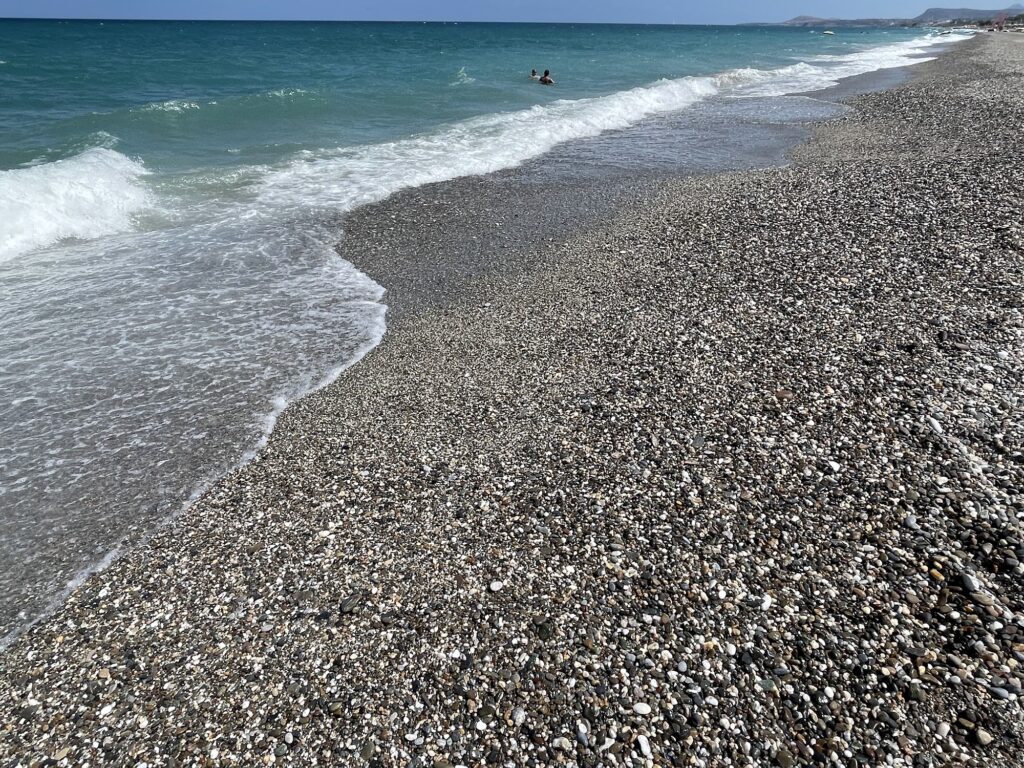
The beach faces north into the Cretan Sea. On still days the water is shallow and calm, the sandy bottom giving it a light turquoise tone. When the Meltemi blows from the north the surface can become choppy and wavy — this is simply the character of any open north-facing beach in the northern Aegean. The waves are not dangerous, but they are present in a way that the south coast beaches of Crete are not.
Getting There: 5km West of Rethymno Town, Bus Every 20 Minutes, Street Parking Behind the Hotel Strip
From Rethymno town centre, the drive takes about 10 minutes heading west along the coastal road. The bus from Rethymno runs to Platanes every 15 to 20 minutes throughout the day — one of the most frequent local bus services in the Rethymno area, which reflects the suburb’s residential character. The stop is close to the sand.
Street parking and dedicated hotel lots are available behind the main beach strip. In peak August the parking along the main road fills by mid-morning. The most practical approach from Rethymno without a car is the bus.
The Beach: Sandy, Organised Throughout, Shallow at the Edges, Wavy on Wind Days, Hotels Along its Length
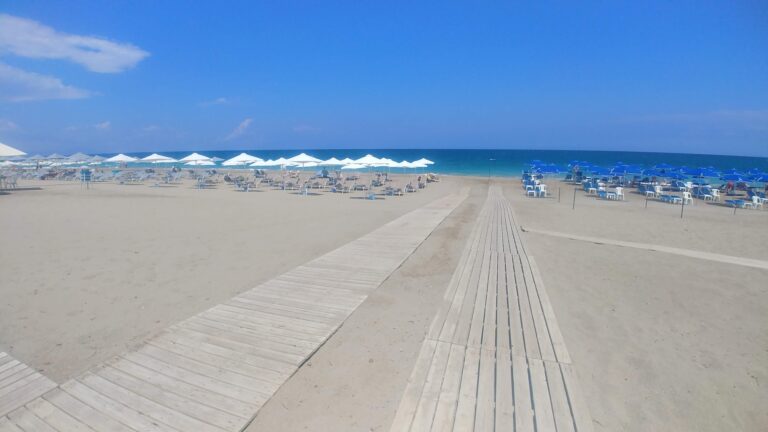
The sand is fine and golden, the seabed predominantly sandy with a gentle slope that keeps the water shallow for a good distance from the shore. This makes it well-suited for families with young children when the sea is calm. On Meltemi days the wave pattern shifts and the same beach becomes better for confident swimmers and water sports.
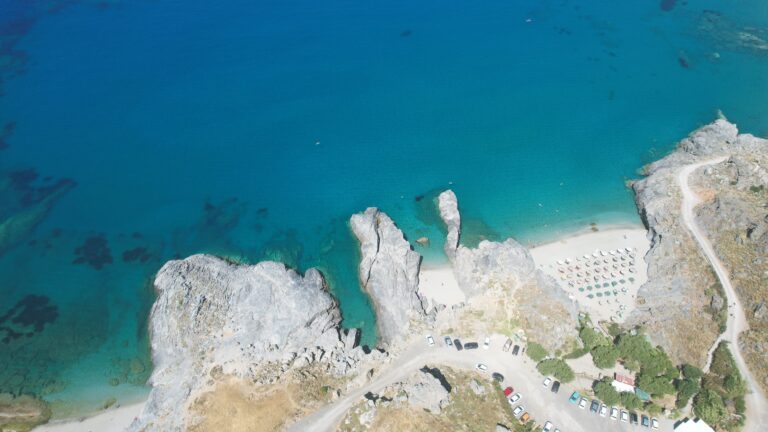
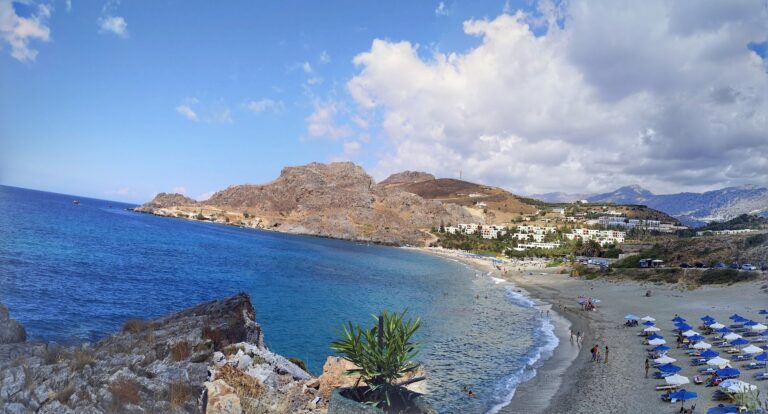
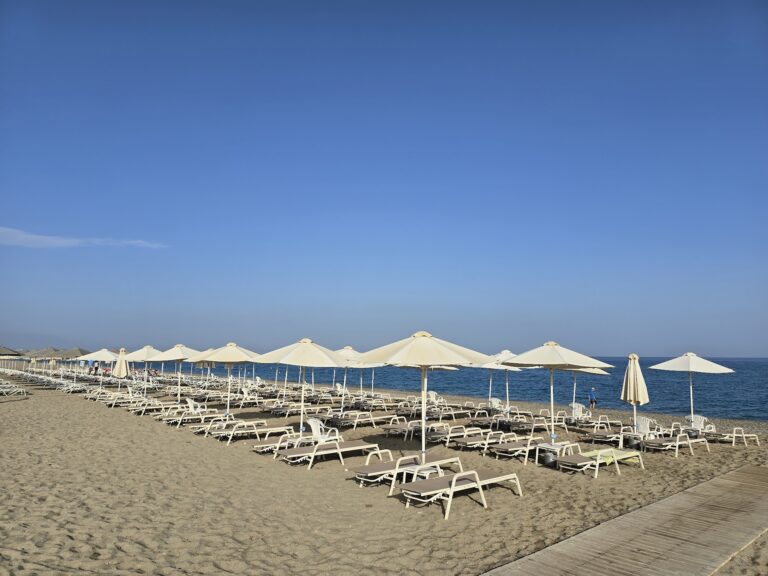
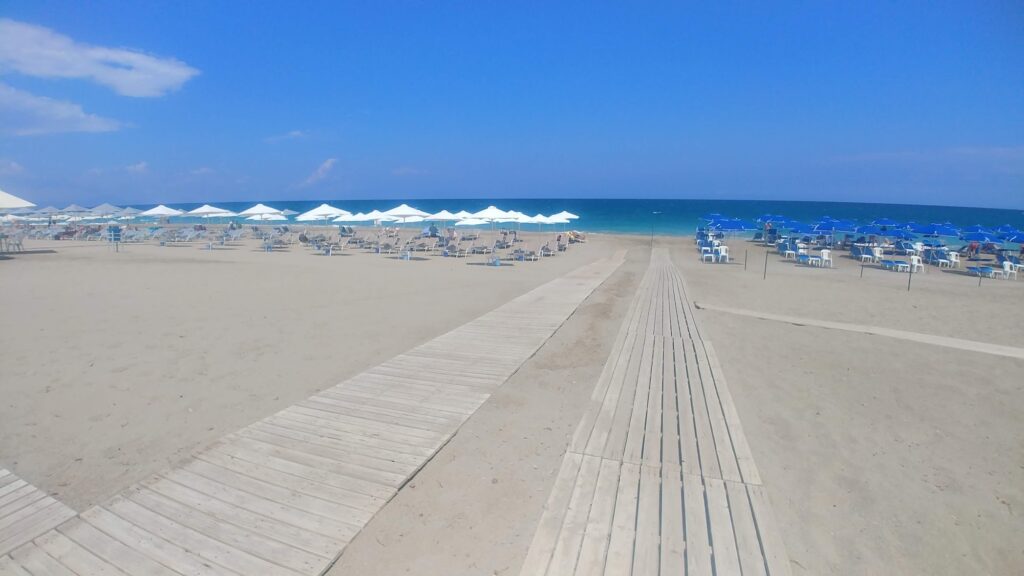
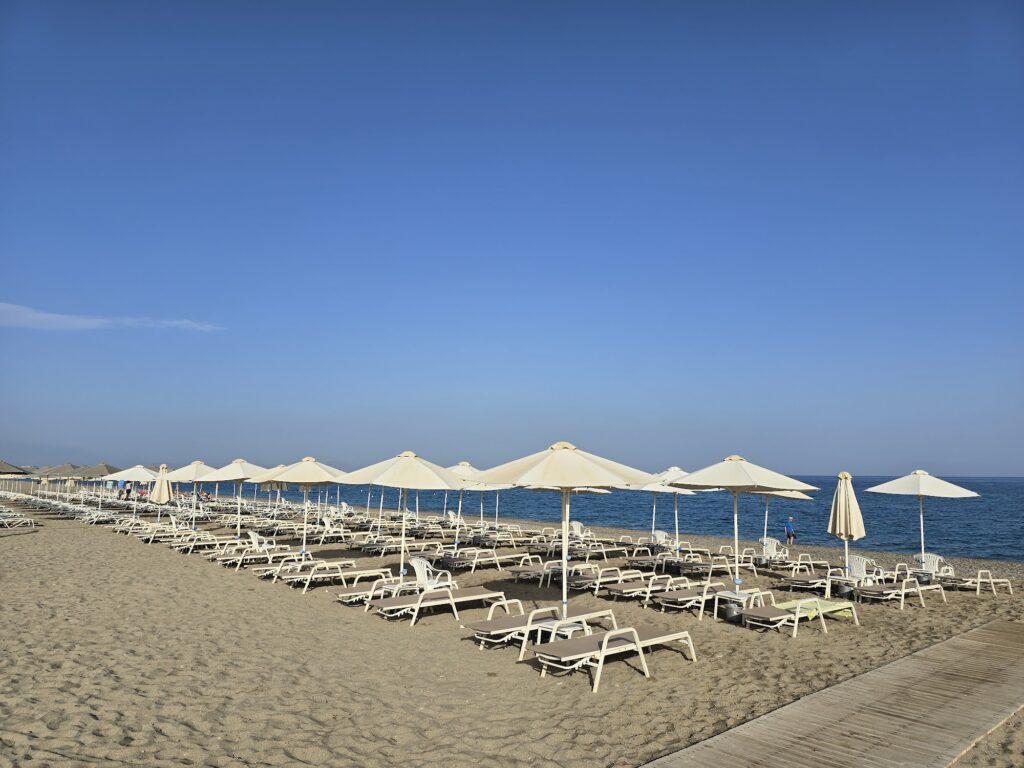
The hotel strip is continuous along the beach length — this is a resort suburb, not a village. Sunbeds and umbrellas are managed by the hotels and beach bars, with waiter service the standard operating model. The level of organisation is high; this is not a wild beach. Free sections exist at the western and eastern ends of the built-up stretch.
Water sports centres operate along the beach offering jet skiing, parasailing, banana boats, paddleboarding, and kayaking.
The Caretta caretta Nesting Season: May to October, No Night Access, Roped Nests Visible
Rethymno Bay sees over 400 loggerhead turtle nests annually — the turtles come ashore at night between May and October to lay eggs in the sand above the waterline. The nests are marked with stakes and rope by conservation volunteers the morning after laying, and the signboards explain the hatching timeline. The hatchlings emerge at night and navigate to the sea by moonlight. This is why the beach closes after dark — artificial light confuses the hatchlings’ navigation.
Walking the Platanes stretch in the early morning during summer means walking past visible turtle nests at regular intervals. It is an unusual thing to see on an otherwise conventional organised beach.
Rethymno Old Town: 10 Minutes by Car, the Fortezza, the Venetian Port, the Old Town Lanes
Rethymno’s old town — the Fortezza castle on the promontory, the Venetian lighthouse, the old harbour, the narrow lanes of the historic centre with their Ottoman minarets and Venetian doorways — is 10 minutes by car from Platanes. It is the specific cultural base that makes Platanes worth considering as a resort location: the beach is large and well-organised, the old town is close, and the bus connects them consistently.
Platanes Beach west of Rethymno, Crete is the 8-kilometre Blue Flag sandy shore that is part of the longer Rethymno Bay beachfront — a Caretta caretta loggerhead nesting site with roped nests visible along the sand each summer, beach closed at night during nesting season, shallow water on calm days and choppy waves when the Meltemi blows from the north, fully organised hotel strip with waiter service to the sunbeds, bus every 20 minutes from Rethymno town, 10 minutes by car from the Fortezza and the old town lanes.
Take the bus from Rethymno. Walk east in the morning to see the turtle nests. Come back for the beach.
Map
Sorry, no records were found. Please adjust your search criteria and try again.
Sorry, unable to load the Maps API.
Near by places: