Kommos Beach Crete: Minoan Harbour and the Cyclops Rock
Profile
Kommos Beach, Crete: The Minoan Harbour Town, the Cyclops Rock, the Naturist North, and No Hotels — By Law
Greece | Crete | Heraklion Prefecture
The reason there are no hotels on one of the most beautiful beaches in Crete is archaeological. Because of the ongoing excavations at the Kommos site, which began in 1967, Greek authorities have not issued hotel building permits for this beach. The fenced-off excavation site sits immediately adjacent to the sand, visible through cyclone fencing. It is not open to the public. The archaeological significance — the beach was the port of the Minoan palace of Phaistos from approximately 2000 BC, and includes the earliest known shipyards in Crete, an olive oil press factory, warehouses, and a sequence of temples spanning from the Subminoan period through the Archaic era — is the reason the construction permits have not been granted and the specific legal mechanism that has kept the beach undeveloped.
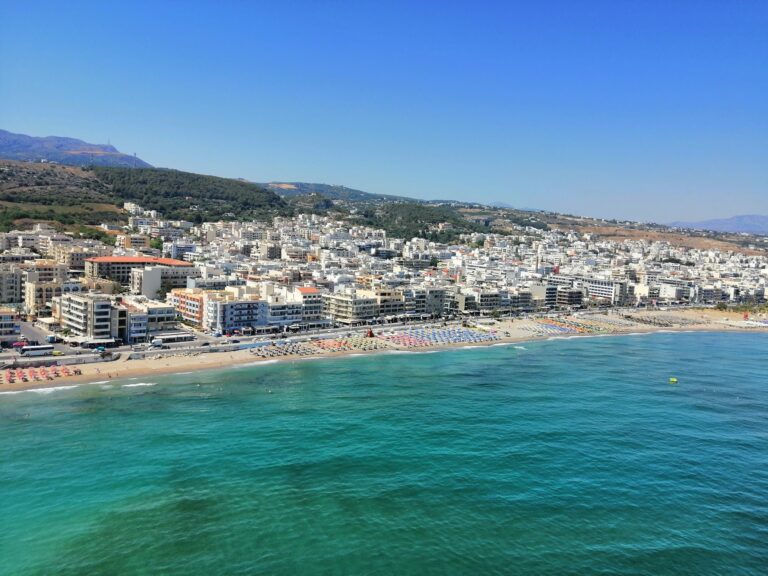
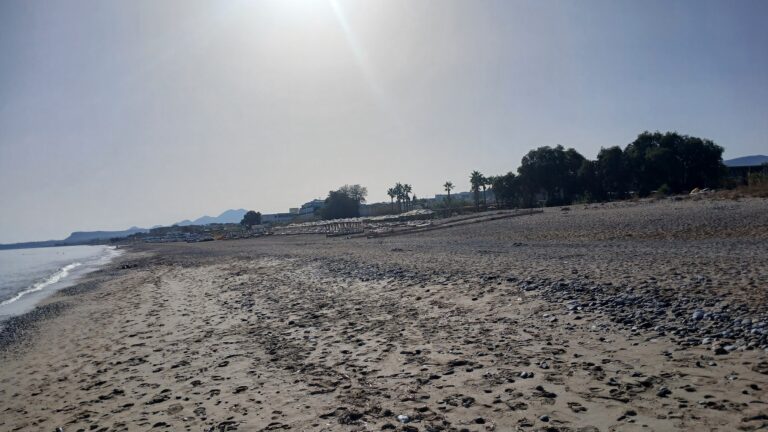
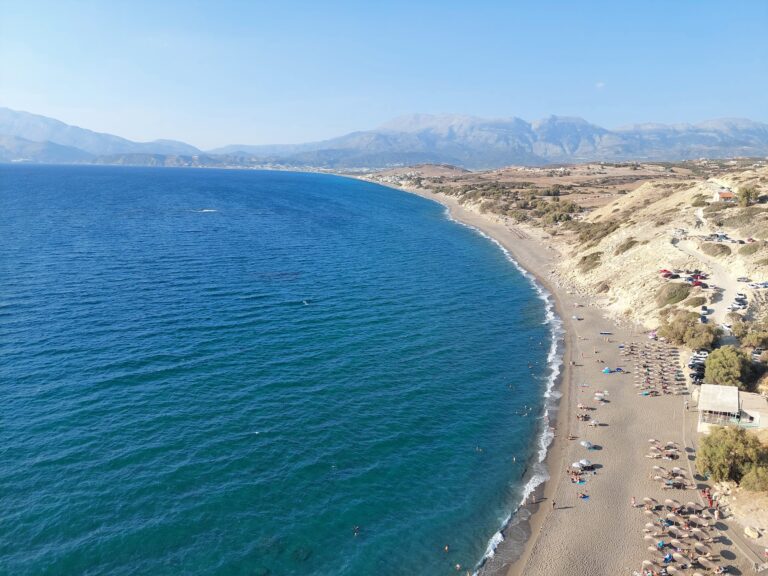
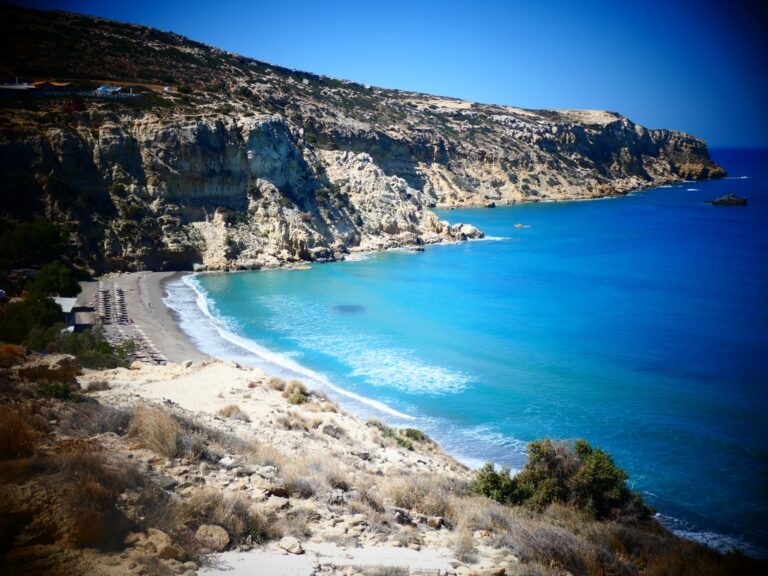
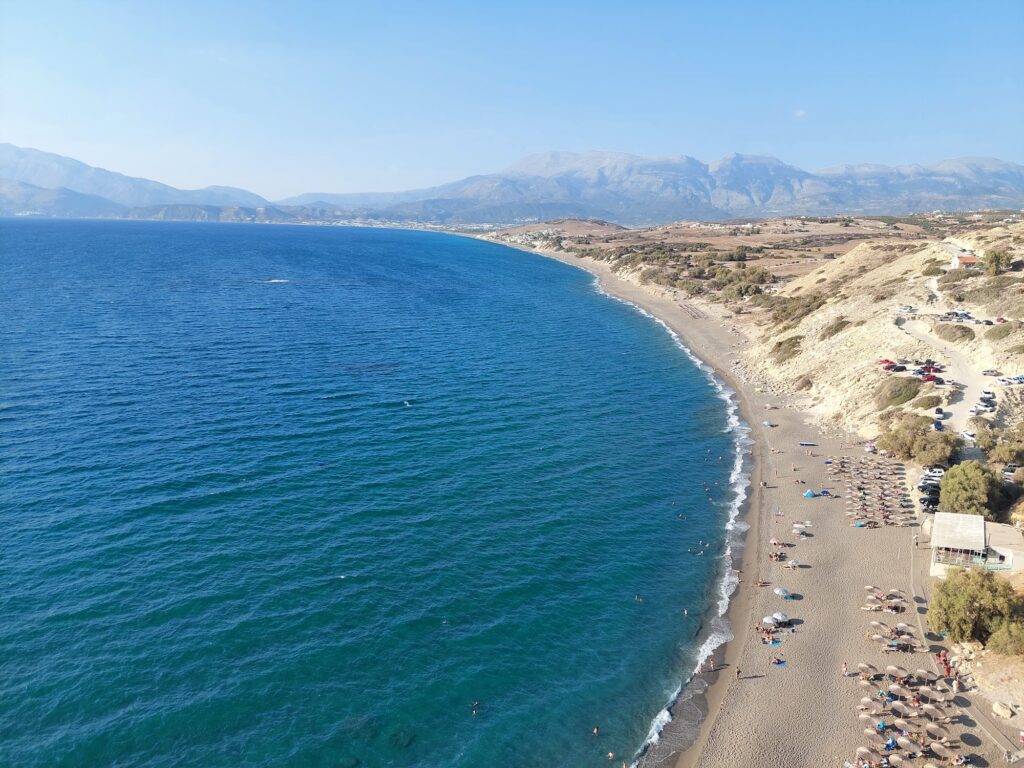
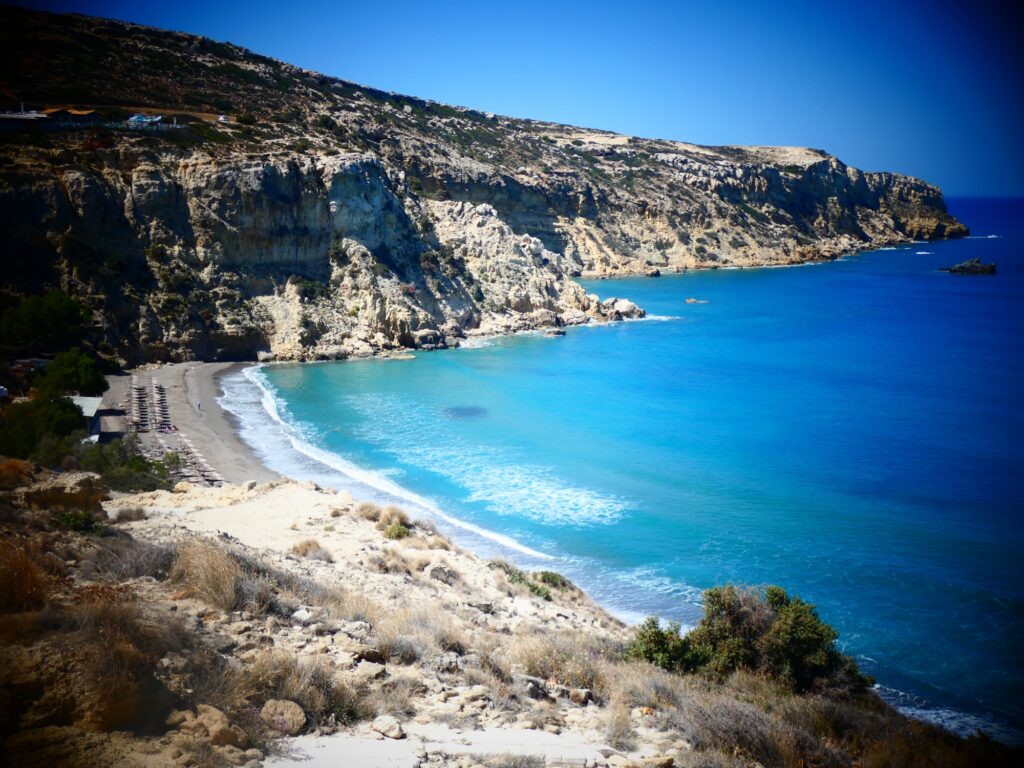
Kommos is the southernmost and the most isolated part of the long beachfront of Messara Bay, approximately 66 kilometres southwest of Heraklion and 5 kilometres north of Matala. The beach is large — kilometres of sand — divided into two functionally distinct sections by the archaeological site: the southern section, organised with sunbeds, umbrellas, toilets, showers, a canteen, and a lifeguard; and the northern section (Potamos or Potamoserma), popular with naturists since the hippie era, devoid of buildings, devoid of facilities, dotted with sparse tamarisk trees, and home to the turtle nesting grounds that ARCHELON monitors from May to September.
Getting There: 66km from Heraklion via Moires and Pitsidia, by KTEL Bus to Pitsidia then Walk, or by Car
From Heraklion, the drive to Kommos Beach follows the main road toward Moires and then continues toward Pitsidia and Matala. After passing through Pitsidia, follow the sign to the Kommos archaeological site — a road through olive groves leads to the free parking area directly above the beach and next to the site fence.
By KTEL bus, the route from Heraklion to Pitsidia drops passengers in the village centre, from which the beach is a 20 to 30-minute walk through olive groves, or a short taxi ride. There is no accommodation on the beach itself — the nearest options are in Pitsidia (2km inland) or Kalamaki (1.5km north along the coast).
From Rethymnon, the drive via Agia Galini and Tymbaki takes approximately 1.5 hours. From Chania, allow 2.5 hours.
The Archaeological Site: Earliest Shipyards in Crete, Phoenician Shrine, Egyptian Figurines — Visible From Outside Only
The Kommos archaeological site, visible through cyclone fencing from the beach, includes the Minoan harbour, public buildings, warehouses, oil presses, the earliest known shipyards in Crete, and a sequence of temples. The site is not open to visitors.
What the excavations have revealed about the Kommos harbour is specific and significant: the site has yielded more evidence for intercultural trade than any other Bronze Age site in the Aegean. Archaeologists have found Egyptian figurines including a small faience figurine dedicated to the Egyptian goddess Sekhmet, deposited at Temple B. The temple also included a Phoenician tripillar shrine around which were found imported faience figurines. Canaanite jars, transport vessels from the Nile Delta, and ceramic evidence of trade connections across the Eastern Mediterranean document a port that was genuinely international in the Bronze Age sense.
The finds are housed in the Archaeological Museum of Heraklion — the specific destination for visitors who want to see the objects that the Kommos excavations produced, since the site itself is visible only from the fence.
The North-South Division: Organised South, Naturist North, Turtles Throughout
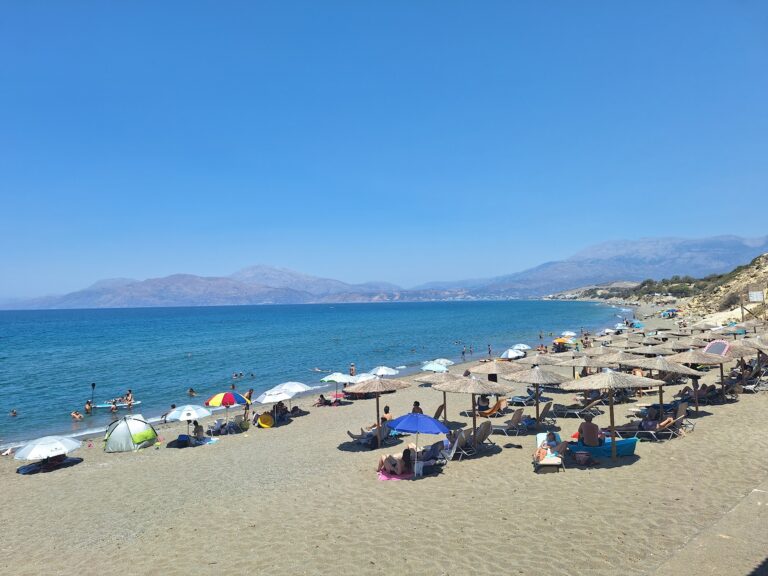
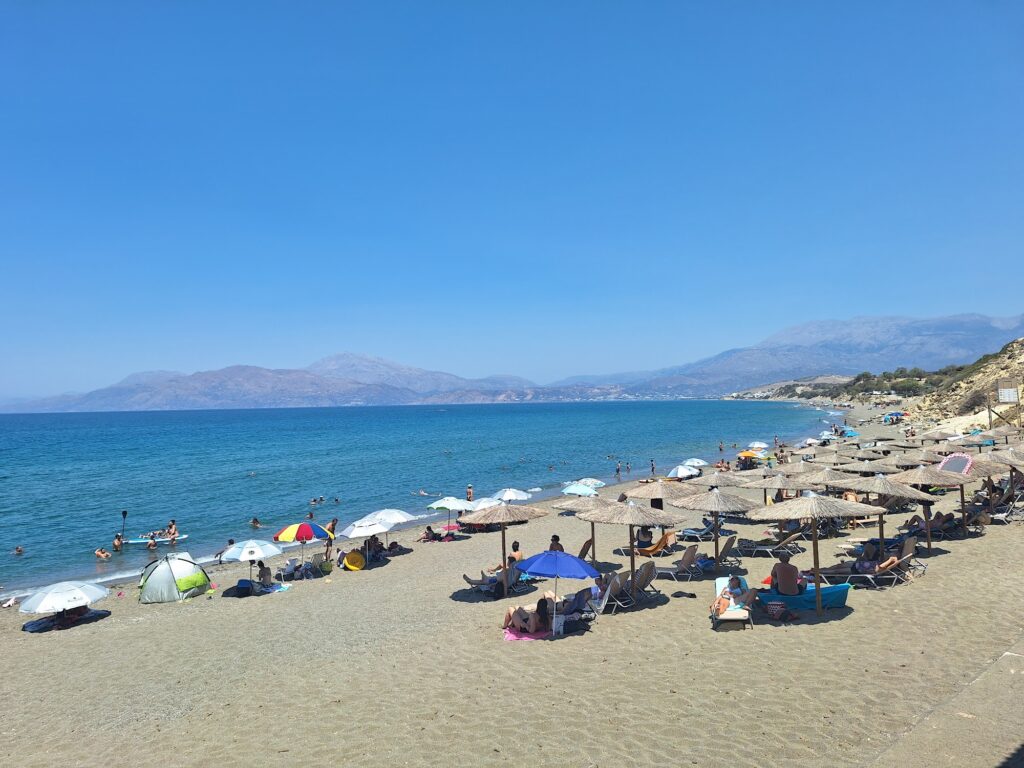
The southern section of Kommos is equipped with sunbeds and umbrellas, toilets and showers, a canteen, and a lifeguard. This is where the organisation is concentrated, adjacent to the archaeological site and accessible from the parking lot.
The northern section — Potamos (River) or Potamoserma — has been popular with naturists since the days when hundreds of hippies flooded the area in the 1970s, drawn to Matala’s cave accommodation and the free coastal strip between the two settlements. The tamarisk trees run down almost to the sea. There are no buildings. The Natura 2000 protected status covers the full beach and the adjacent habitats, and the loggerhead turtle nests — marked with wire protection frames throughout the summer — are distributed across both sections.
The turtle nests and the naturist section occupy the same physical space in the northern section, which creates the specific dynamic: the ARCHELON society volunteers who monitor and protect the nests are present on the beach from May to September. Visitors are asked not to roam the beach in dark areas during summer nights (turtles orient by moonlight and are confused by artificial light), not to pick up hatchlings encountered during the day (they must find their own way to the sea for developmental reasons), and to keep the beach clean.
Volakas: The Cyclops Rock, 300 Metres Offshore
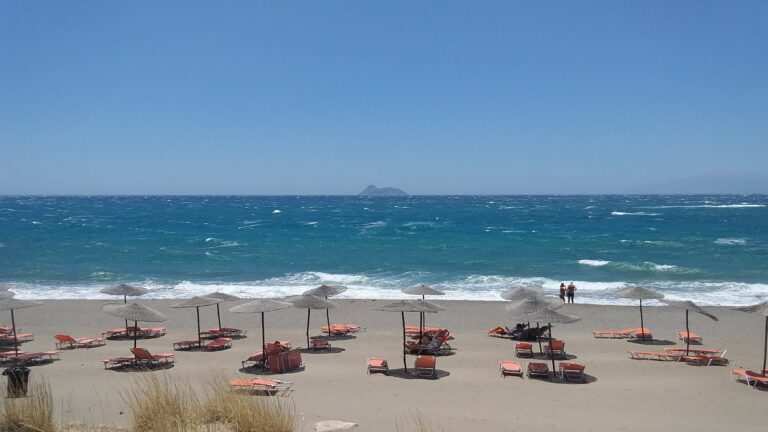
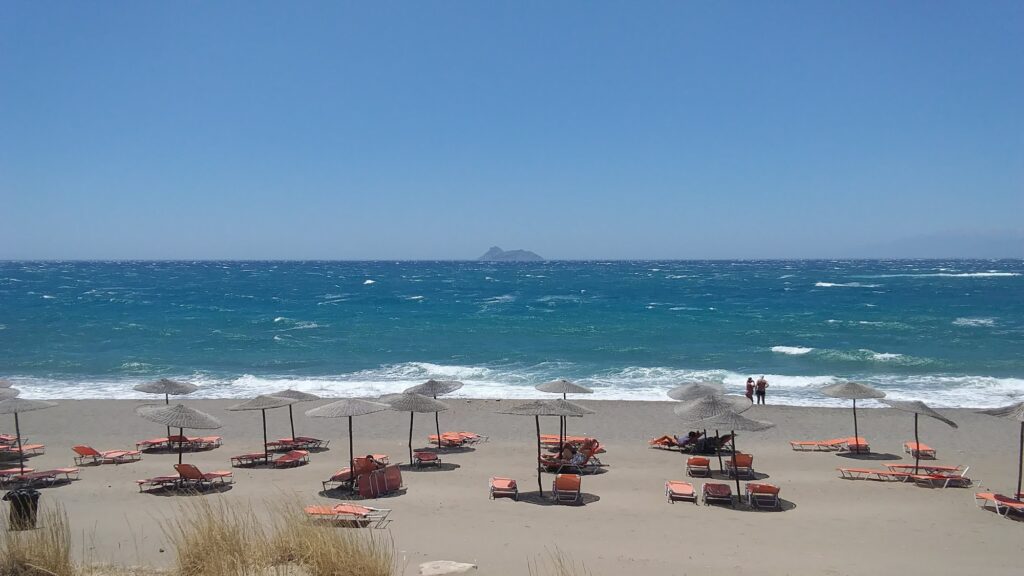
The Volakas rock stands 300 metres offshore, directly opposite the archaeological site — a large isolated rock rising from the sea that the local mythology has attached to the Odyssey. According to the legend, this is the top of the boulder that the blinded Cyclops Polyphemus threw at Odysseus’s ship to prevent him escaping after Odysseus had blinded the giant with a sharpened stake. The name derives from the same root as Vólos — the stone that flies.
The Odyssey myth places the Cyclops encounter on an island near a coast where a harbour existed — the combination of the Minoan harbour, the offshore rock, and the Paximadia islands on the western horizon provides the specific coastal geography that the Kommos locality uses to claim its Homeric connection. Whether Homer had a specific location in mind is not a question that the mythology answers.
The Sand Lilies: Pancratium Maritimum, End-of-Summer Signal
In the sand dunes that back the beach and in the dune spaces between the beach and the archaeological site fence, the white sand lily (Pancratium maritimum) flowers in late summer — a large, white, fragrant Amaryllidaceae species that grows exclusively in coastal dune systems and whose flowering is the specific botanical signal that marks the end of the swimming season in southern Crete. The flowers appear in August and September, and the dune system at Kommos is one of the better-preserved coastal dune environments in the Heraklion prefecture because the construction prohibition that protects the site has also protected the dune.
The Meltemi Wind Warning: Exposed, Rough, Rocky Seabed
The entire beachfront of Messara Bay is exposed to westerly and northwesterly winds. The beach is exposed to the strong Meltemi winds, making the sea very rough and dangerous on windy days. Be careful on windy days not to slip on the large slabs going into the sea, and note that the seabed in some places is rocky.
The Meltemi warning for Kommos is more serious than for enclosed bay beaches because the beach faces west-southwest toward the open Libyan Sea without the headland protection that the more enclosed Messara Bay coves provide. On days when the flag at the lifeguard station is red, the sea at Kommos can be genuinely rough and unsafe.
Phaistos, Hagia Triada, and the Minoan Triangle
Kommos is at the southwestern corner of what archaeologists have called “a great Minoan triangle” — Phaistos palace (8km northeast, one of the two major Minoan palace complexes on Crete, with its famous Phaistos Disc), Hagia Triada (a secondary Minoan palatial site 7km north), and Kommos itself. The day combining the Kommos beach and the Phaistos palace visit is the standard southern Crete cultural-and-beach programme — 8 kilometres between the two, accessible by car.
Matala (5km south) is the third beach in the local sequence — with its Neolithic and Roman-era rock-cut caves that the 1970s hippies occupied, and with Red Beach (the beach with reddish sand) accessible by a 5-kilometre coastal walk.
Kommos Beach in southern Crete is the Minoan harbour town, the Cyclops rock 300 metres offshore, the naturist north section since the hippie era, the loggerhead turtle nests from May to September, the sand lilies in August, the Phaistos Disc 8 kilometres away, no hotels by archaeological law, the Meltemi wind warning, and the Phoenician shrine and Egyptian goddess figurines in the excavation fence you cannot enter.
Drive from Heraklion via Moires and Pitsidia. Park at the archaeology fence. Arrive before 10:30am.
Check the wind flag before you swim.
Map
Sorry, no records were found. Please adjust your search criteria and try again.
Sorry, unable to load the Maps API.
Near by places: