Monolithi Beach Preveza: EU's Longest Sandy Shore
Profile
Monolithi Beach, Preveza: The Longest Sandy Beach in the European Union — 25km From Mytikas to Kastrosykia, Named After a Rock German and Italian Soldiers Destroyed With Mortar Fire in 1942
Greece | Preveza | Epirus, Western Greece
The rock that gave Monolithi its name was approximately 10 metres high and 10 metres wide, standing near the shore at the southern end of the beach. In 1942, German and Italian occupation forces used mortar fire to destroy it. The rock no longer stands above the water. It exists today as an undersea reef approximately 10 centimetres below the surface — visible in clear conditions from a boat, invisible from the shore. The name survived the mortar fire. Monolithi — from the Greek monos (single) and lithos (stone) — is what the beach has been called for centuries because of a specific object that was here until a specific act of wartime violence removed it.
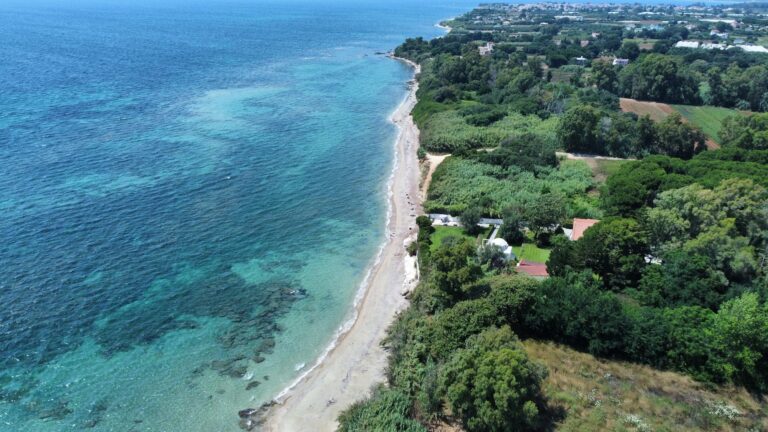
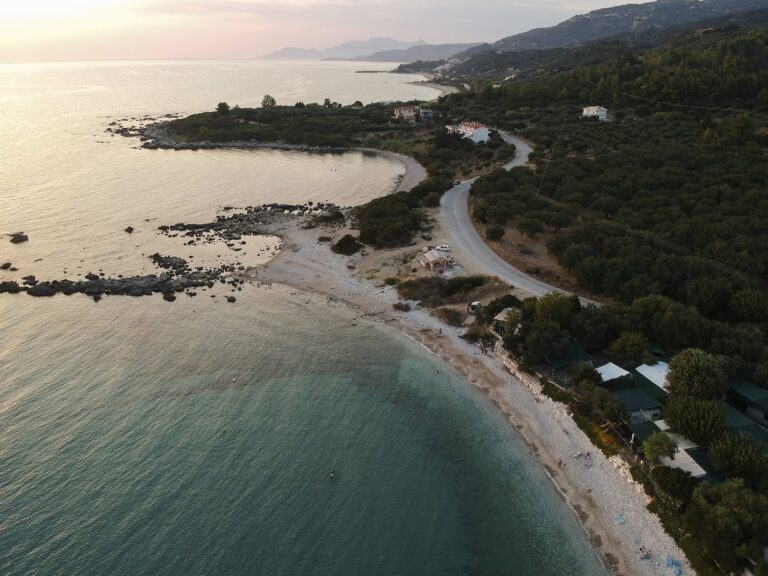
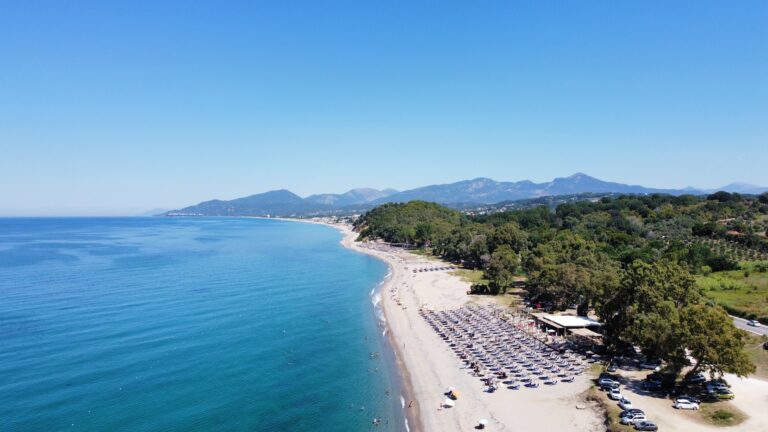
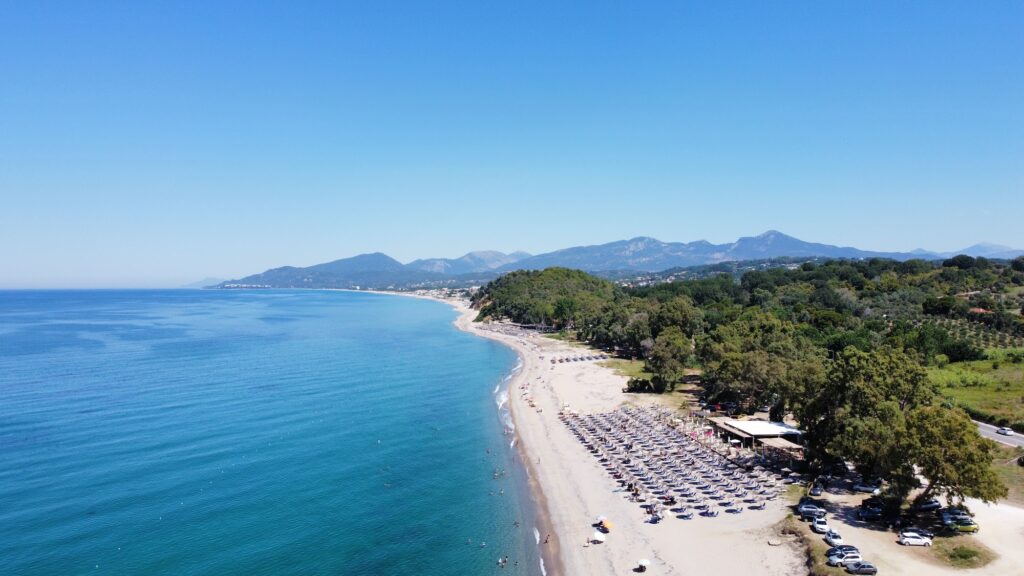
Monolithi Beach extends along the west coast of Preveza regional unit for approximately 22 to 25 kilometres, from the village of Mytikas at Cape Komarus in the south to the village of Kastrosykia in the north. The length varies by source — 22 kilometres in the Wikipedia article, 25 kilometres in most travel guides — because the northern extension into the Kastrosykia area adds several kilometres to the southern core. The operational statement is straightforward: it is the longest continuous sandy beach in the European Union, and the distinction stands regardless of whether the precise figure is 22 or 25.
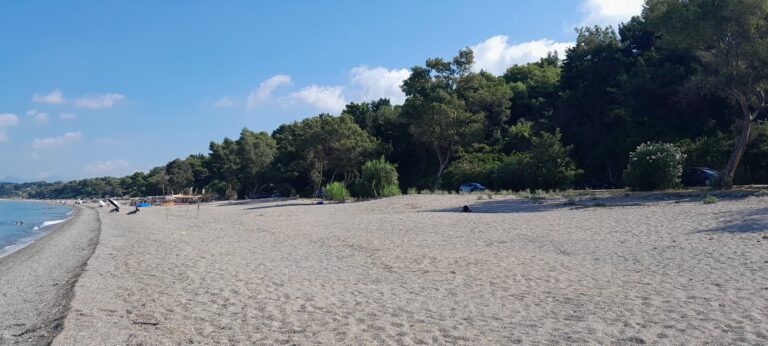
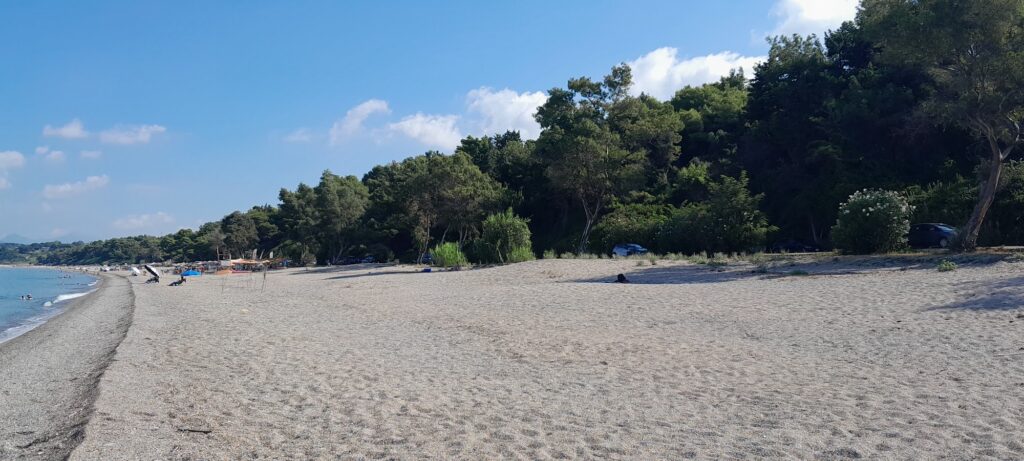
The Monolithi Forest — a protected aesthetic forest — runs parallel to the beach along its entire length, providing the pine-scented backdrop and the hiking trails that the beach geography makes available. The pine scent, the clean open Ionian horizon, and the scale of the empty beach together produce the specific atmosphere that distinguishes Monolithi from every organised beach section in the region.
Getting There: 10 Minutes North of Preveza on the National Road, 20 Minutes From Aktio Airport, Free Roadside Parking Along the Entire Length
From Preveza city, drive north on the national road toward Igoumenitsa. The beach begins approximately 10 minutes north of the city and the road runs parallel to it for the full length. Free parking is available along the coastal road in the shade of the pine trees at intervals throughout the 25-kilometre stretch.
Aktion National Airport (PVK) serves international flights from major European hubs in summer and is approximately 20 minutes from the main beach sections. The Aktio–Preveza underwater tunnel — one of only three underwater road tunnels in Greece — connects the airport side of the bay to Preveza city, making the connection from the airport to the beach particularly straightforward.
From Lefkada, the drive via the tunnel takes approximately 25 minutes. From Igoumenitsa, follow the national road south toward Preveza for approximately 75 kilometres.
The Length: What 25 Kilometres of Beach Actually Means
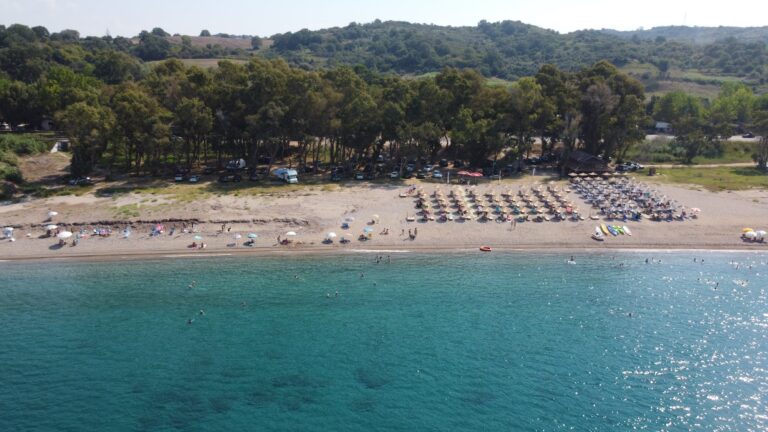
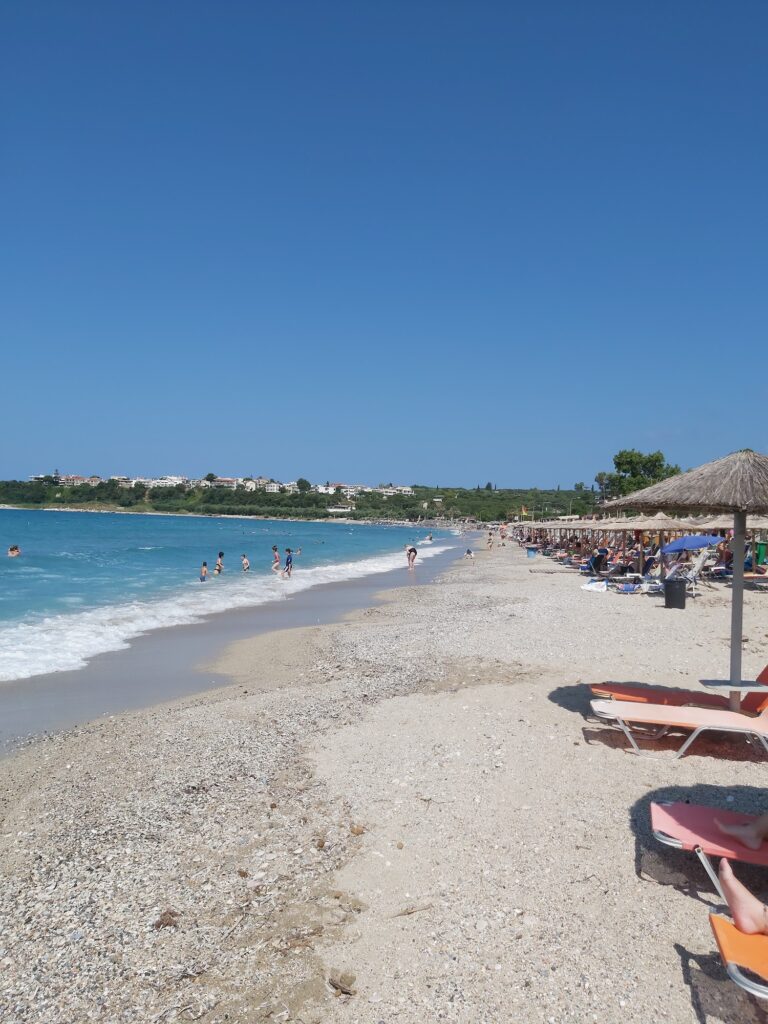
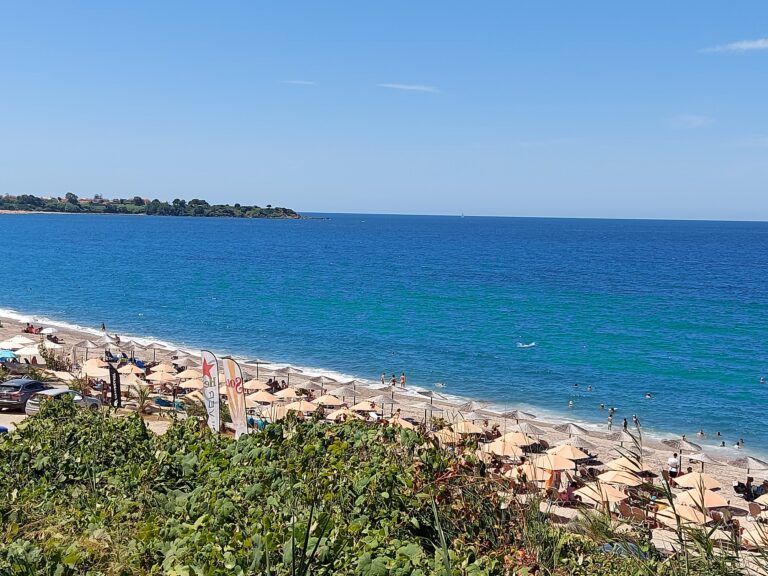
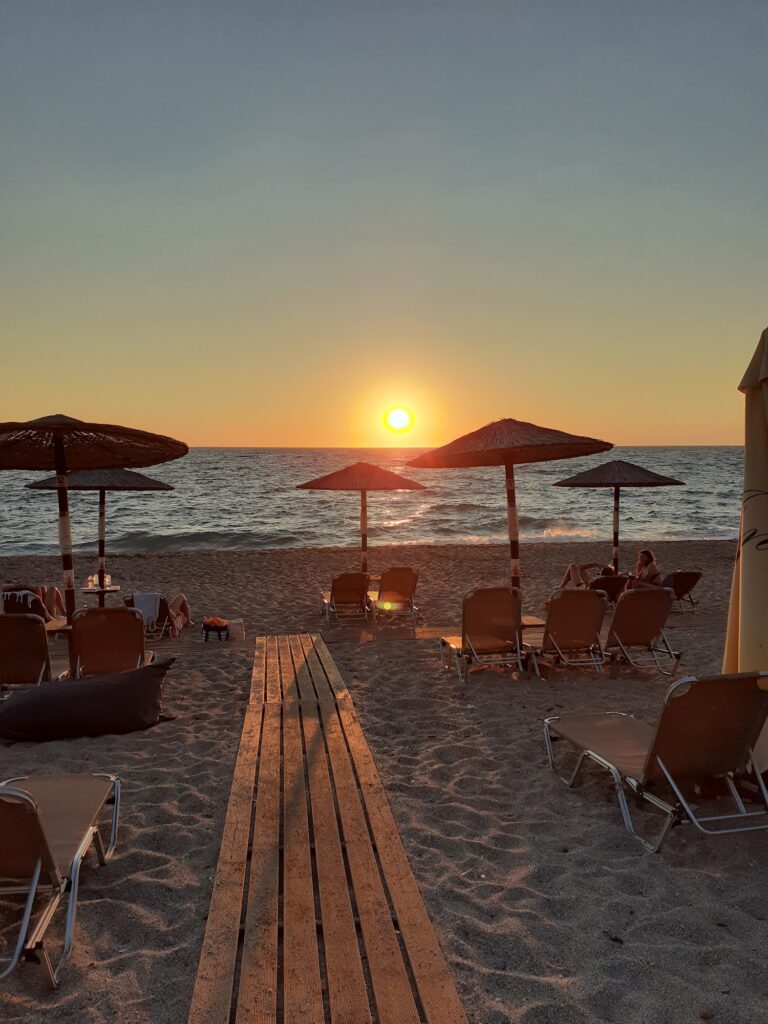
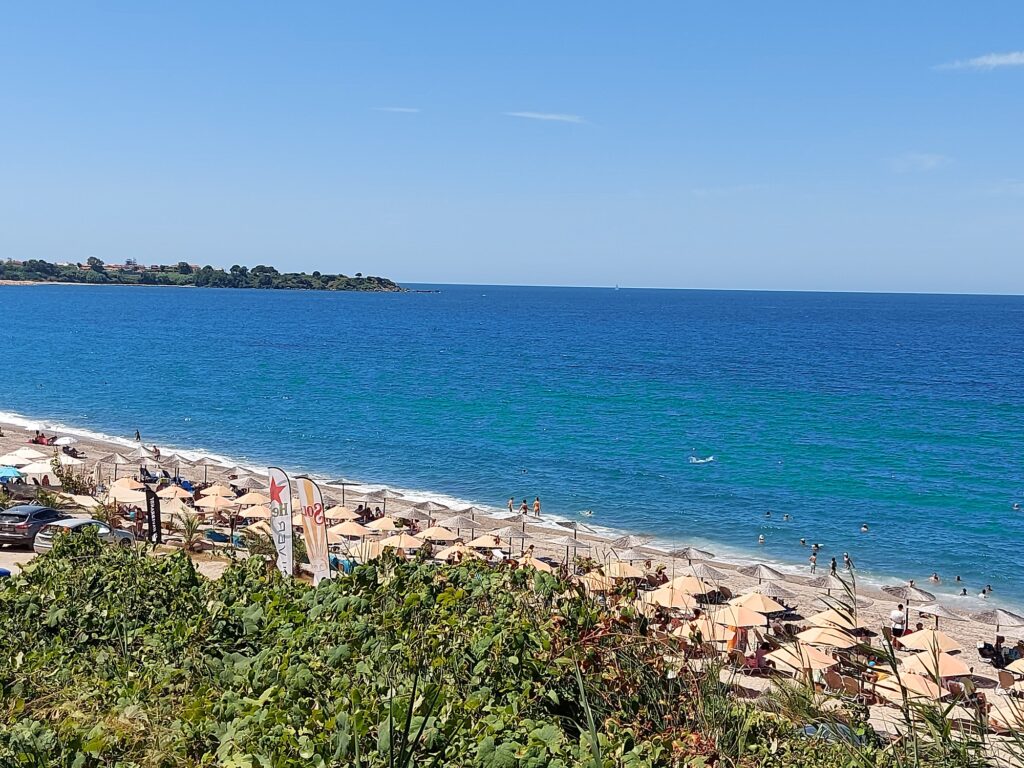
Walking Monolithi from end to end at a comfortable pace takes approximately 5 to 6 hours. Most visitors choose a section and stay — the organised beach bars and sunbed areas are concentrated near the village centres along the road, with the stretches between them progressively quieter and more natural. The vast majority of the 25 kilometres is not organised. The sections near Kastrosykia and near the southern villages have beach bars; the middle sections and the northern extension toward Kastrosykia are increasingly wild.
The scale creates a specific freedom that most Greek beaches cannot offer: no matter how many visitors arrive on a given day, the beach is long enough that uncrowded space always exists. The specific quality of Monolithi that return visitors describe is finding a completely empty kilometre of fine sand between two occupied sections — the natural consequence of length.
The Honest Water Note: Deepens Quickly, Not a Shallow Lagoon, Water Shoes Useful for the Sandy Entry
The water at Monolithi deepens relatively quickly. One source specifically states “swimmers should note that the water gets very deep shortly after stepping in” and warns it may not be ideal for bringing young children unsupervised into the water. This is the honest counterweight to the source article’s suggestion of shallow lagoon conditions throughout.
The water quality itself is excellent — clean, clear, and consistently well-rated. The sandy bottom and the lack of shells make entry comfortable. The depth increase from the shoreline is the specific condition that requires attention, particularly for non-swimmers and families with very young children. Lifeguards are present at the busier organised sections in peak season; the remote stretches are unmonitored.
The Monolithi Forest: Protected, Pine-Scented, With Hiking Trails
The forest behind Monolithi beach is officially classified as a protected aesthetic forest — a designation that limits development and preserves the tree cover. Pine trees dominate, with some oak. The forest floor trails connect along the length of the beach and extend into the Koukos hills behind it. Hiking through the forest while the sea is visible between the trees to the west is the specific inland activity that the beach geography provides. The pine scent that reaches the beach on warm days is one of the atmospheric qualities that repeat visitors specifically mention.
Nicopolis: The Roman City 10km Away, Founded by Augustus After Actium
Nicopolis — “City of Victory” — was founded by the Roman Emperor Augustus after his decisive victory over Mark Antony and Cleopatra at the Battle of Actium in 31 BC. The battle took place in the strait between the Ionian Sea and the Ambracian Gulf — visible from the higher ground near the beach. Augustus founded the city on the spot where his army camped before the battle, and populated it by synoikismos — forcing the populations of surrounding cities to move to the new capital. Nicopolis became one of the most important cities of the Roman western empire and is now one of the most significant archaeological sites in western Greece, with the city walls, theatres, and an exceptional museum, 10 kilometres from the beach. The combination of a Monolithi beach morning and a Nicopolis afternoon is the natural Preveza day programme that every available guide recommends.
The Necromanteion of Acheron: The Oracle of the Dead, 45 Minutes North
The Necromanteion of Acheron — the ancient oracle dedicated to the dead, where the Greeks believed the Acheron river (one of the rivers of the underworld) reached the surface — is approximately 45 minutes north of Monolithi near the village of Mesopotamos. Excavations revealed an underground chamber where ancient suppliants were conducted through labyrinths before meeting the oracle, and a hoist system suggesting theatrical manipulation of the experience. Whether the site is the actual location described by Homer in the Odyssey — where Odysseus descends to consult the dead — is disputed by archaeologists, but the local tradition is specific and the site is genuinely atmospheric. The beach connection to the underworld oracle is one of the more unusual combinations in this series.
Vasiliki Beach on Lefkada — accessible from Monolithi via the Aktio tunnel in approximately 25 minutes — and Pasha Beach Lefkada Greece near Nydri on the same island, giving Monolithi a natural internal link to the series’ Ionian island coverage. Lakka Beach Lefkada Greece is the enclosed boat-only cove further down the east coast of Lefkada, reached the same way.
The Zalongo Monument and Cassope: More Regional History Within Range
The Zalongo Monument — a clifftop sculpture commemorating the women of Souli who threw themselves and their children off the cliff in 1803 rather than surrender to Ali Pasha of Ioannina — is approximately 30 kilometres north. The Archaeological Site of Cassope — a Hellenistic city from the 4th century BC — is nearby. The density of historically significant sites within an hour of Monolithi beach is one of the specific qualities of the Preveza region that makes it more rewarding than the distance from major tourist circuits suggests.
Monolithi Beach near Preveza is the longest sandy beach in the European Union — 25 kilometres of fine sand from Mytikas to Kastrosykia, named after a rock German and Italian soldiers destroyed with mortar fire in 1942 (now an undersea reef 10cm below the surface), backed by a protected pine forest with hiking trails, water that deepens quickly from the shore (not a shallow lagoon — supervise children and non-swimmers), organised sections near the village centres with free sunbed consumption-model beach bars, completely empty stretches between them, Nicopolis Roman ruins 10 kilometres away, the Necromanteion of Acheron 45 minutes north, Aktio Airport 20 minutes, and Preveza city 10 minutes south.
Drive north from Preveza. Park under the pines. Walk in either direction until the beach empties.
Map
Sorry, no records were found. Please adjust your search criteria and try again.
Sorry, unable to load the Maps API.
Near by places: