Agios Nikolaos Beach: Kassandra's Ancient Chapel
Profile
Agios Nikolaos Beach: The Chapel Built From a Pagan Temple
Greece | Halkidiki | Kassandra | Toroneos Gulf
A single Ionic column capital, salvaged from the ancient Temple of Apollo Kanastreos that once stood at nearby Cape Kanistro, is built directly into the wall of the small chapel of Agios Nikolaos, the modest church that gives this beach its name. I found that detail almost impossible to look past once I knew it was there, an actual fragment of a pagan sanctuary quietly holding up part of a Christian chapel’s wall, centuries of religious change compressed into a single piece of carved stone. The temple itself once served the ancient city of Theramvos, a settlement Herodotus mentions and that Xerxes reportedly seized by force during his invasion of Greece, an event so disruptive that later historians largely stopped writing about the place afterward, its exact fate left uncertain except for the archaeological finds still turning up in the bay here.
Agios Nikolaos marks the southernmost point on Kassandra’s shore reachable by car, a modest pebble beach at the end of the road from Paliouri, a village whose own name likely traces back through centuries of linguistic drift from an old word meaning something close to watch or guard, fittingly enough for a stretch of coast that’s spent so much of its history being fought over.
Small, Pebbly, and Genuinely Unadorned
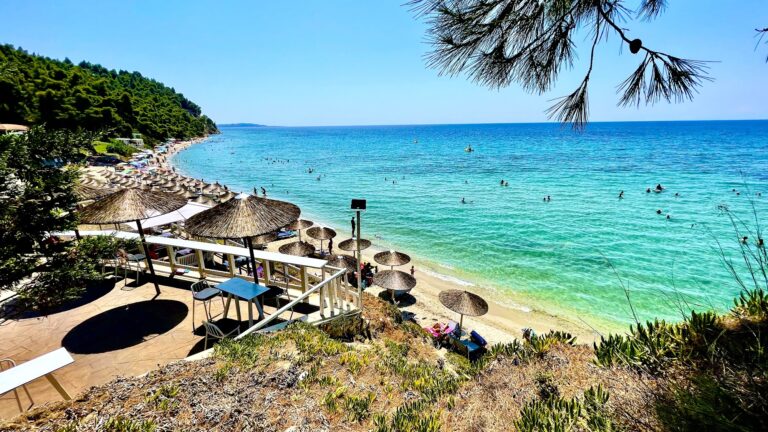
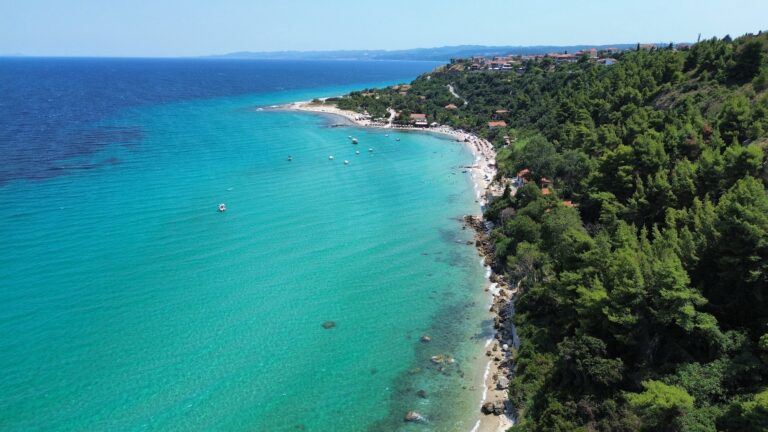
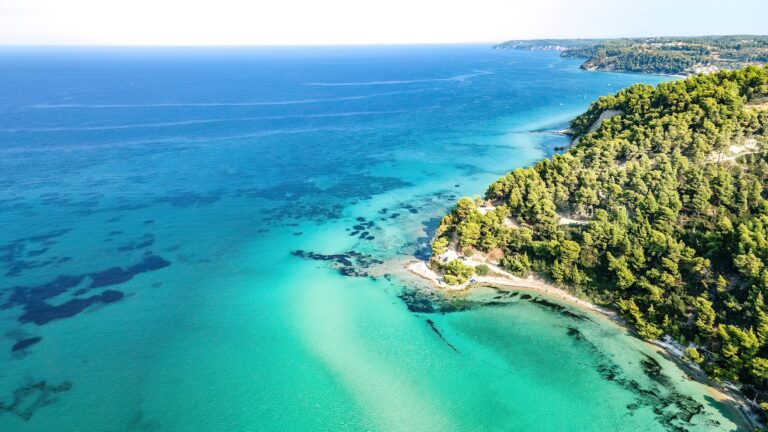
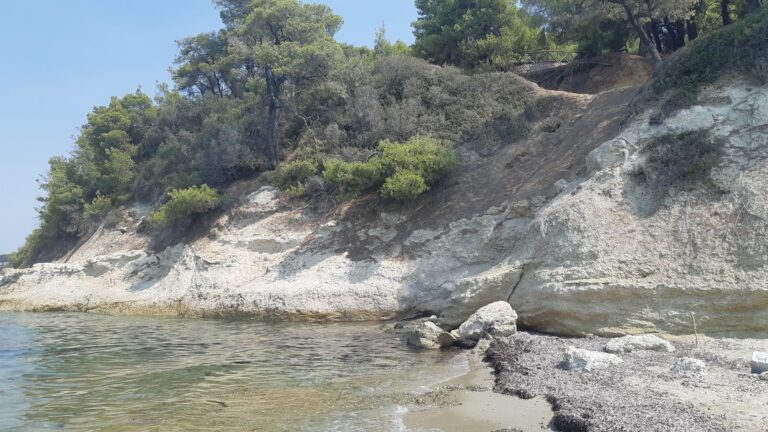
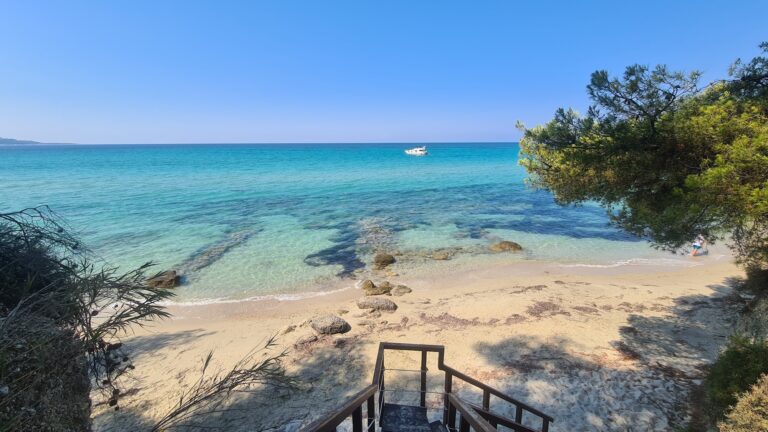
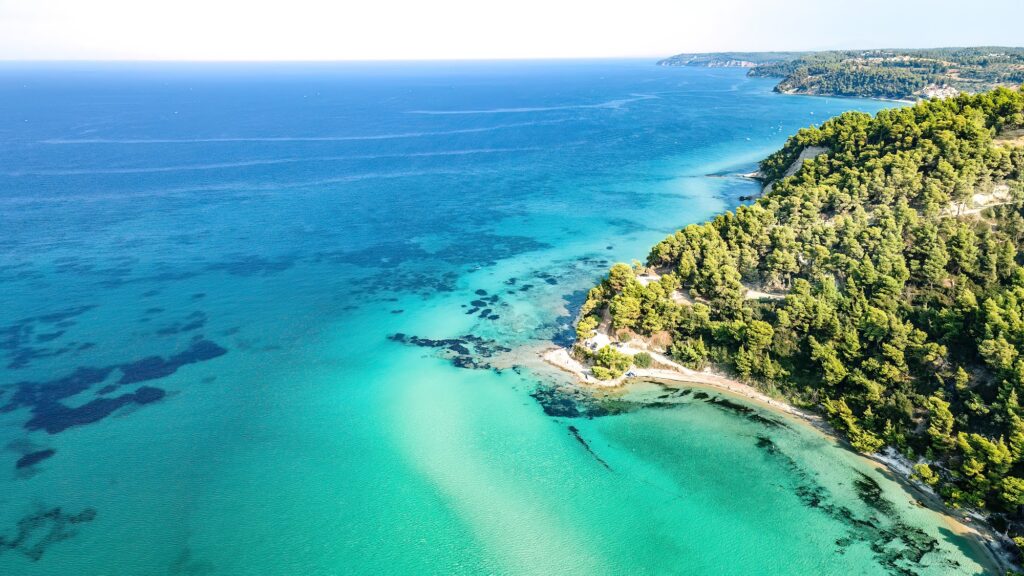
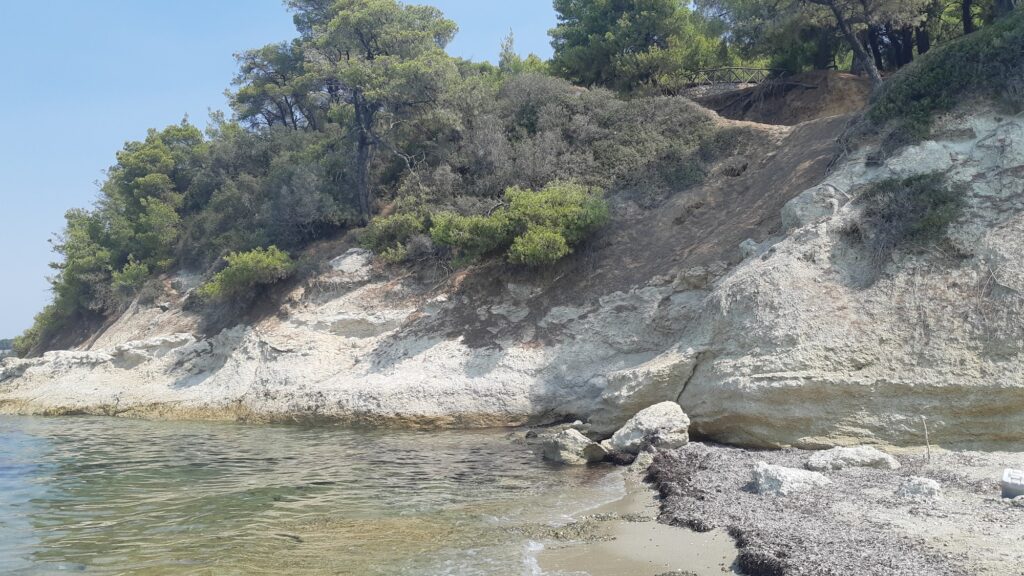
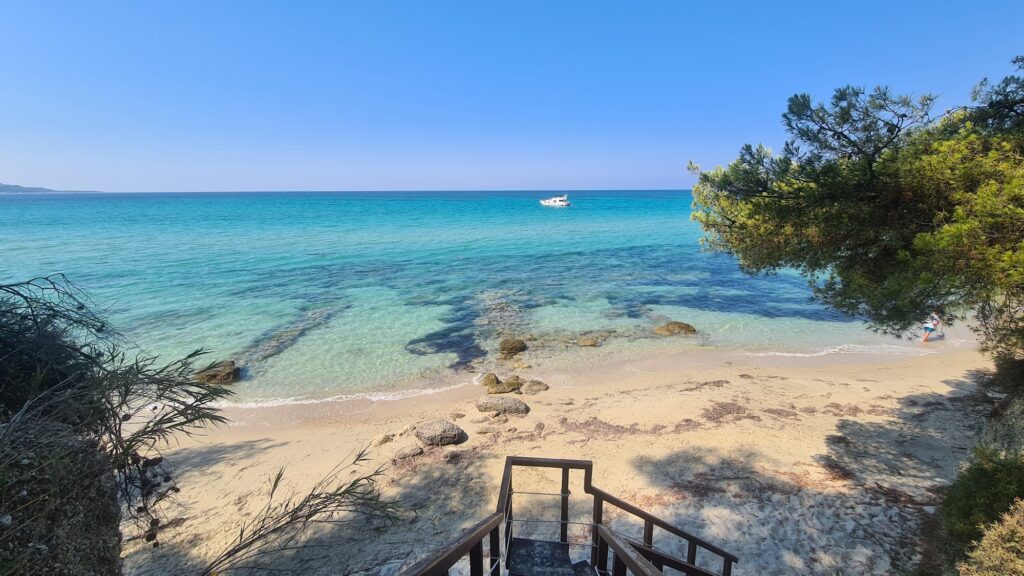
The beach itself is compact and lined with smooth, round pebbles, comfortable enough to walk on barefoot, though I’d recommend aqua shoes for swimming given how many sea urchins cling to the rocks just beneath the surface here. The water runs exceptionally transparent, and I found the whole setting refreshingly unadorned, no beach bars, no rented sunbeds, nothing beyond the sand, the water, and the small chapel watching over both. Given the complete absence of any organized facilities, I’d call this a beach best suited to older children and confident swimmers rather than families needing amenities close at hand, and dogs would likely be fine here on a leash following the standard rule for Greek beaches with no managed sections to require separate permission.
A Peninsula That Was Once Burned to the Ground
Kassandra’s more recent history carries its own weight worth knowing before treating this coastline as simply scenic. After the 1821 uprising against Ottoman rule, the entire peninsula was burned from edge to edge in retaliation, and refugees fled by fishing boat to Skiathos, Skopelos, Alonissos, and Evia, leaving Kassandra essentially uninhabited for more than three decades afterward. Standing at a beach this quiet and remote today, it was strange to think that the emptiness here once had nothing to do with tourism’s absence and everything to do with a peninsula still recovering from having been deliberately erased.
A Landscape of Pine Forest and Honey Production
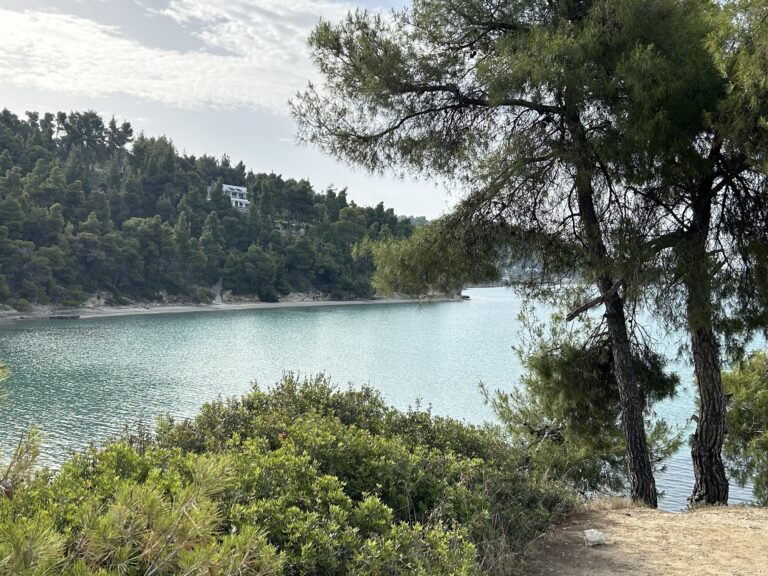
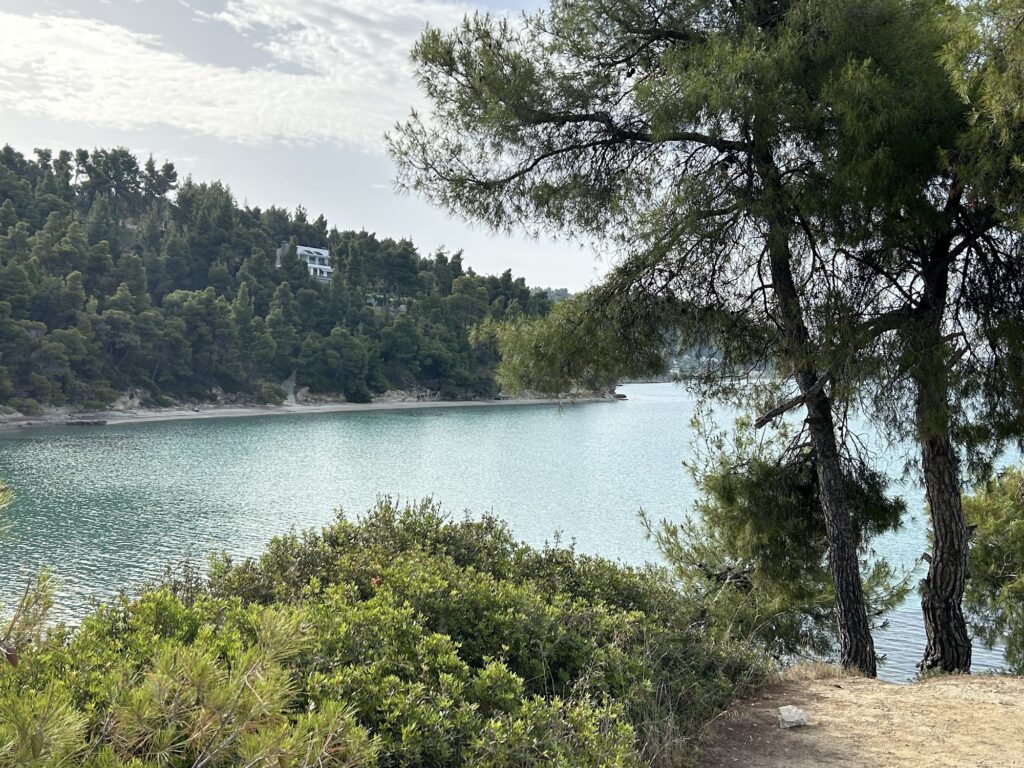
Paliouri and the surrounding area remain known for olive oil and honey production, and the drive out to Agios Nikolaos passes through genuine pine forest rather than resort development, a six-kilometer stretch of road offering steady views across Kassandra’s coastline in both directions. I found the approach itself part of the appeal, the beach feeling earned rather than simply arrived at.
Getting There and Settling In
Reaching Agios Nikolaos means driving south from Paliouri along a road that passes Kanistro beach before ending at the small chapel and the pebbled shore beyond it; the route from Kassandra’s main road takes roughly the same time as reaching any of the peninsula’s other southern beaches, and I found a standard rental car entirely sufficient for the drive, with informal parking available near the chapel itself. Anyone touring this stretch of Kassandra will find Golden Beach Paliouri Halkidiki Greece, just up the coast, a considerably more organized and family-friendly alternative, while Skala Fourkas Beach Kassandra Halkidiki, further north along the peninsula, offers a useful sense of how differently this coastline behaves village to village.
Standing Where a Temple Became a Chapel
By the time I left Agios Nikolaos on my last visit, the light had dropped low enough to catch that single salvaged column capital in the chapel wall at an angle that made it briefly, genuinely visible for what it was, and I found myself thinking about how much history this modest, unassuming stretch of pebble and pine has absorbed, a temple to Apollo, a city seized by a Persian king, an entire peninsula burned and left empty, all of it settling eventually into nothing louder than the sound of water over smooth stones.
Map
Sorry, no records were found. Please adjust your search criteria and try again.
Sorry, unable to load the Maps API.
Near by places: