Plaka Beach Naxos: 4km of Gold That Gets Wilder South
Profile
Plaka Beach, Naxos: Four Kilometres of Golden Sand That Gets Wilder as You Walk South
Greece | Naxos | Cyclades
Plaka Beach started as a nudist bay in the 1960s and 1970s. Plaka began as a naturist-friendly beach during the 60s and 70s and grew over subsequent decades to become one of the island’s most popular seashores, visited by families, young people, couples, and virtually everyone spending their holidays on the island. The transition from counterculture nudist retreat to mainstream Cyclades family beach was completed by the restaurant owners, beach bar operators, and studios that moved in behind the dunes through the 1980s and 1990s, transforming the northern section of the beach into the organised coastal strip it is today. The southern end has not changed as much. It is still mostly free, still mostly without sunbeds, still naturist-friendly in the section furthest from the road, and still the destination for visitors who walk south from the organised north end until the bar music fades and the dunes and the open sand take over.
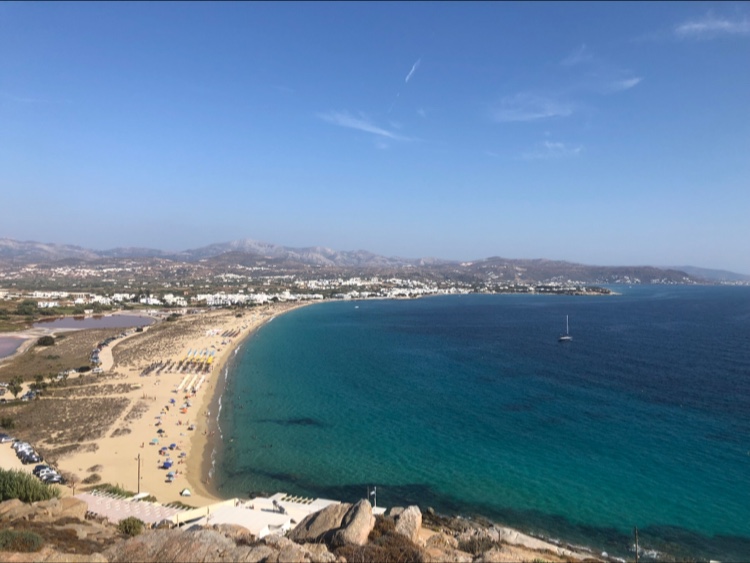
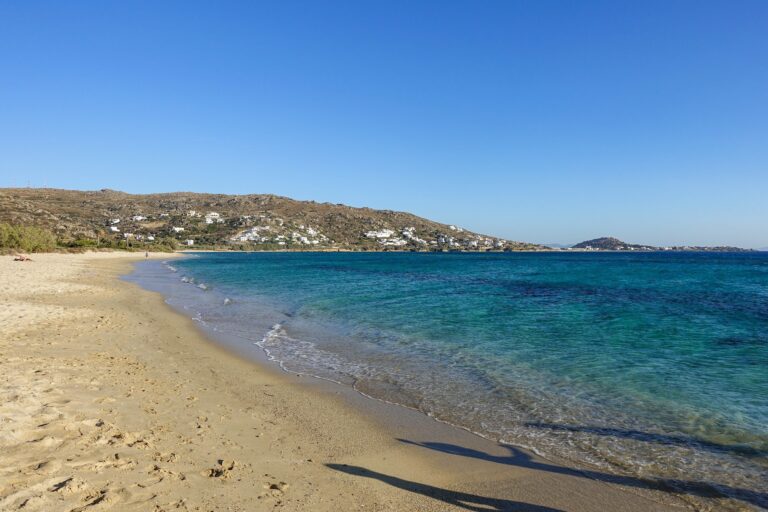
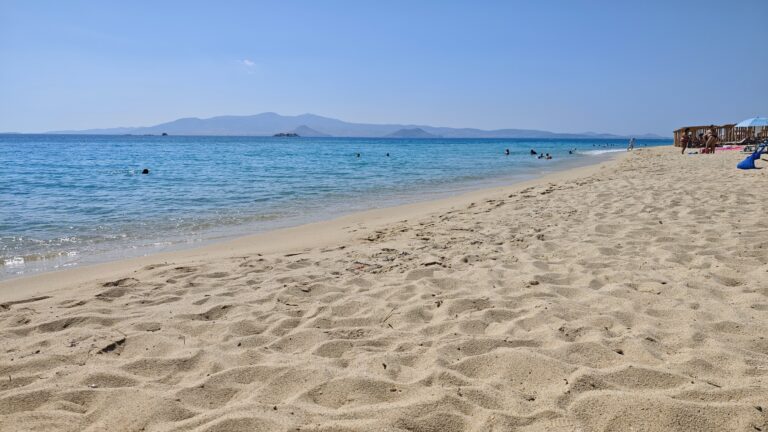
The 4km seashore of Plaka is a natural continuation of Agia Anna Beach on the western side of the island, 8km from Naxos Town. It stretches from Plaka all the way to Agia Anna, with golden sand and crystal clear water that is notably softer than other beaches in Naxos. The beach faces west, which gives it the afternoon and evening sun and the sunset position — the specific attribute that makes the beachfront taverna dinner at Plaka the evening activity that visitor accounts consistently recommend over the busier restaurants of Chora.
Getting There: KTEL Bus from Chora for €2, by Car or Scooter on the Coastal Road
The KTEL bus from the central bus station at Naxos Port to Plaka runs approximately every 30 minutes in high season, takes 30 to 35 minutes, and costs approximately €2. The bus stops at multiple points along the Plaka shoreline, including at the northern end near the main restaurant strip. It is one of the more affordable and convenient public transport beach connections in the Cyclades, and for visitors staying in Chora without a vehicle it is the practical first choice.
By car or scooter, the road from Chora runs south through Agios Prokopios and Agia Anna — asphalt the full way to Agia Anna, then transitioning to a well-maintained but dusty dirt road that runs parallel to the beach for the remaining Plaka length. There are also routes of approximately 9.6km via Agios Arsenios, and 12.1km via Glinado and Vivlos from Naxos Town. Parking is available along the entire length of the beach in the natural lots behind the dunes — not always in shade, but plentiful by the standards of popular Cyclades beaches. A practical visitor note: the Google Maps pin for Plaka Beach sometimes directs to the wrong access point; using the parking lots near the beach bars as the navigation target produces a more reliable result.
The North-to-South Gradient: Organised, Then Mixed, Then Wild
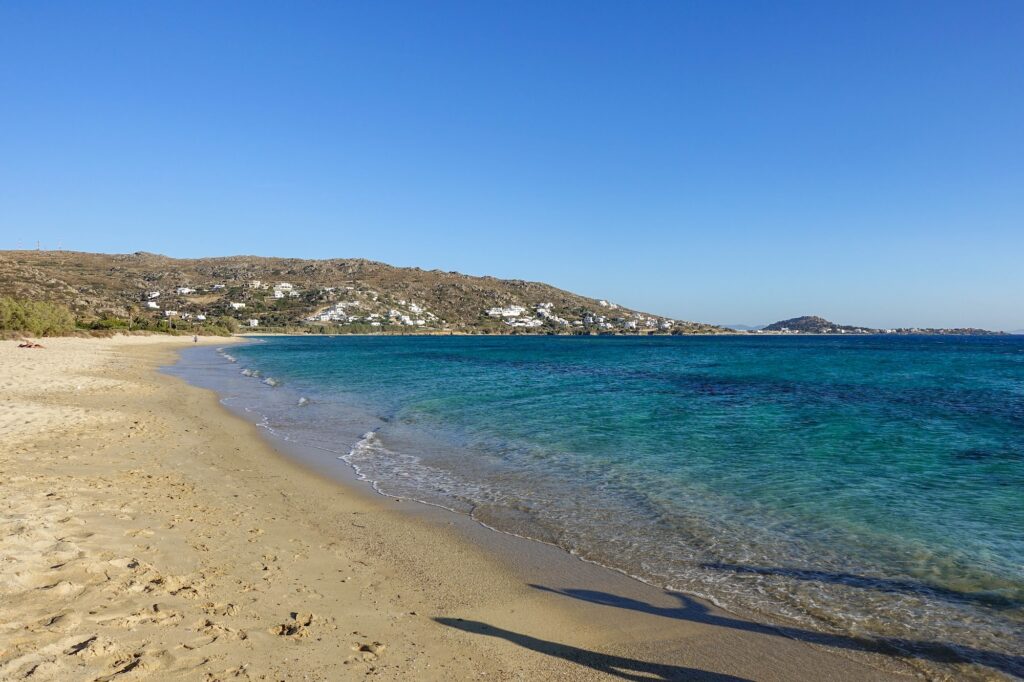
The defining quality of Plaka as a beach experience is that it changes character as you walk south — the north-to-south gradient from organised resort beach to wild dune coast is the specific thing that makes it more interesting than a single-character beach.
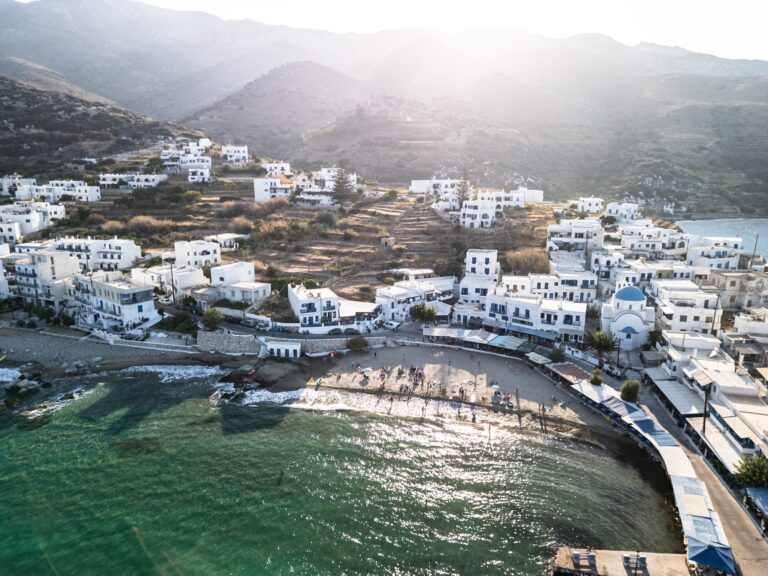
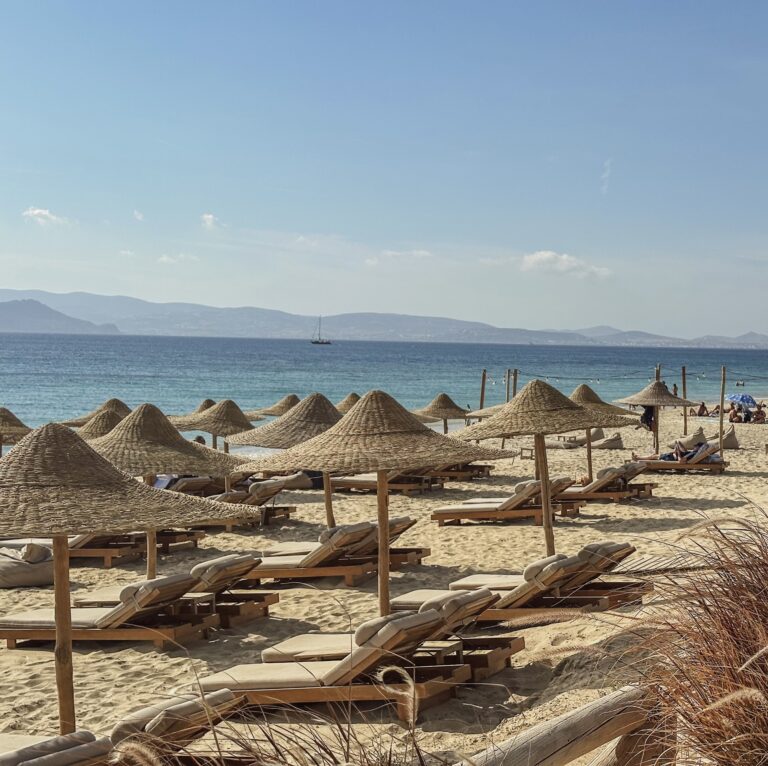
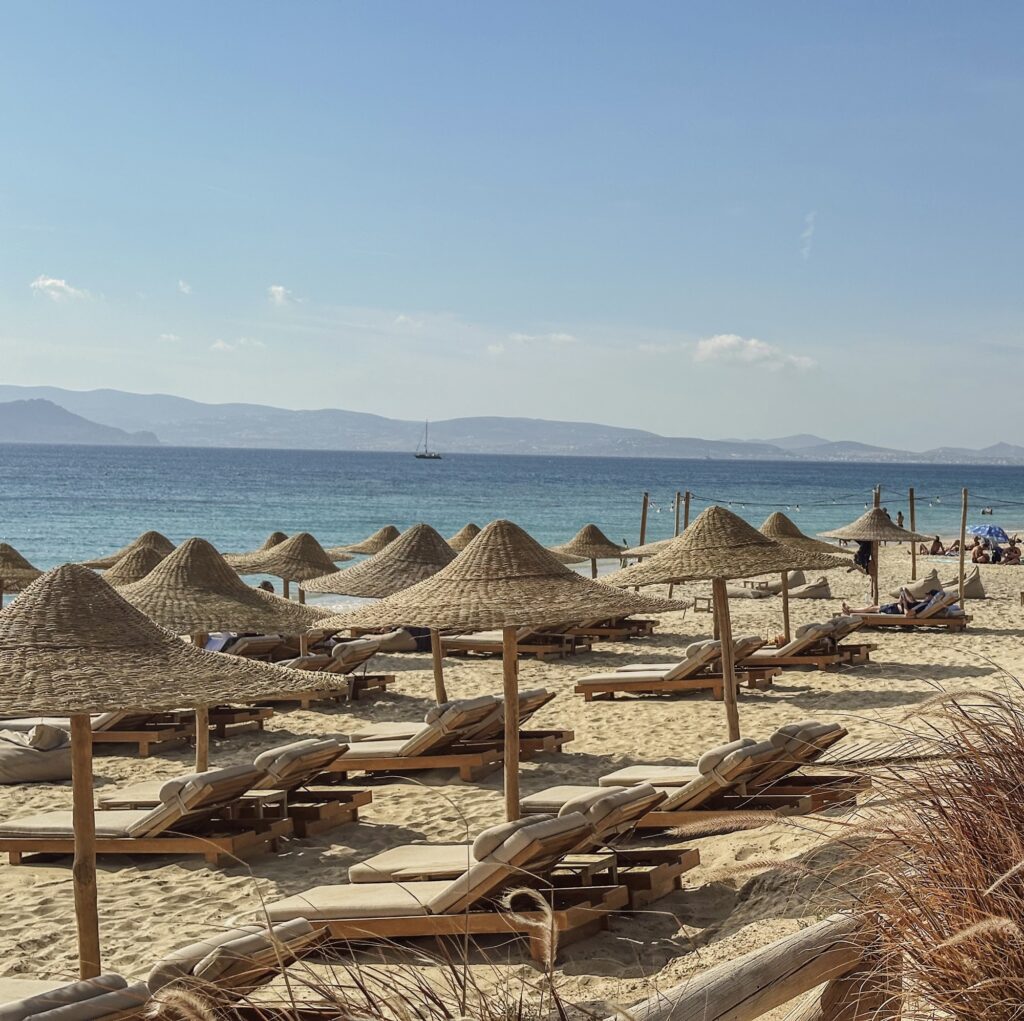
The northern section, where the asphalt road arrives and the restaurants and beach bars cluster, is the most fully organised: sunbeds at €20 to €30 for two with umbrella, table service from the restaurants behind the dunes, windsurfing and kitesurfing equipment hire, jet ski, banana boat, and the beach bar scene that runs through the afternoon. The water here is busy but the beach is wide enough that the sunbed rows do not dominate the full width.
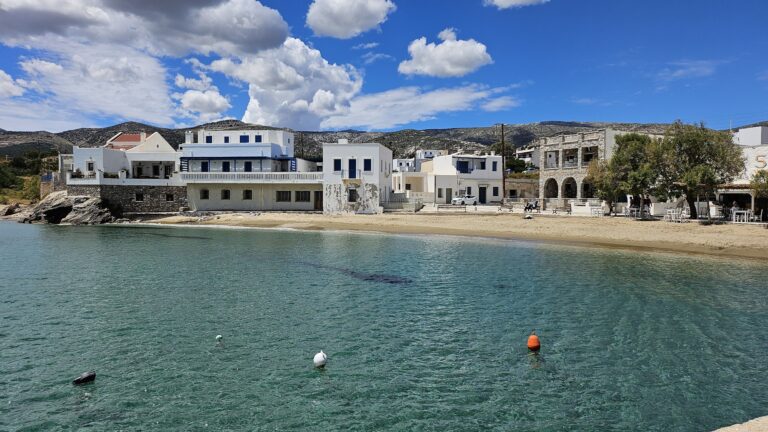
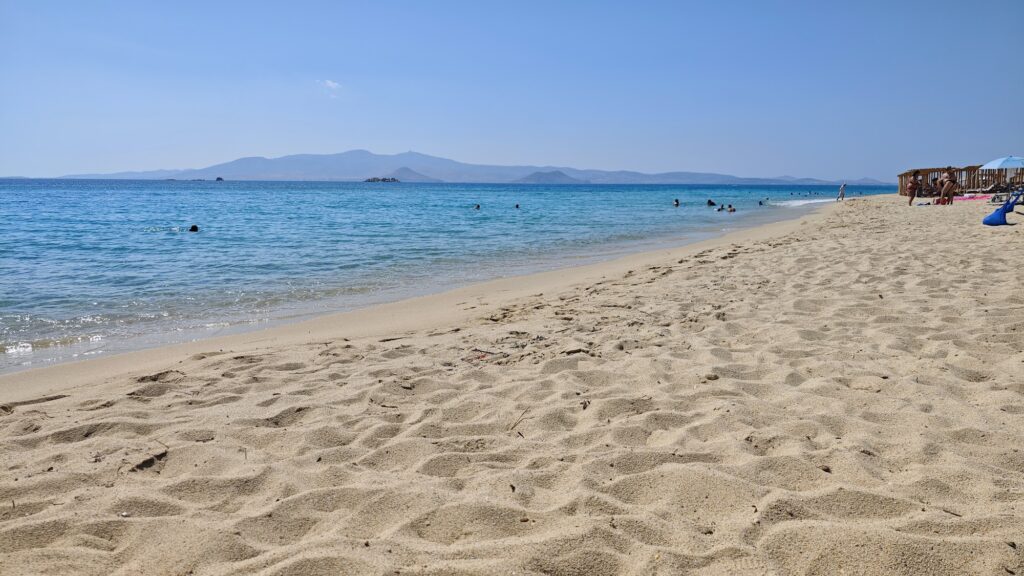
In the northern part the beach is very well equipped with sunbeds, umbrellas, bars and tavernas, and a sports centre where you can rent equipment for kitesurfing, windsurfing, and jet skis. Heading south, the beach becomes increasingly free — you can spread out your towel and enjoy in peace. Near the southern end there are small kiosks with very few beds at very low cost, and beyond that a completely free and wild stretch appreciated by lovers of naturism.
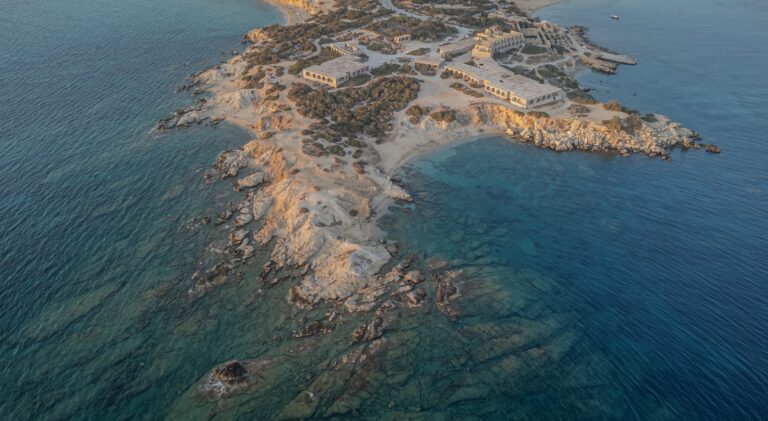
The dusty dirt road that parallels the southern section is the navigation route for visitors who want to arrive directly at the quieter end — driving the dirt road until the last parking spaces and walking a short distance to the dunes, rather than parking at the north and walking the full 4 kilometres.
The Wind Warning: Sand Can Blow
The Meltemi — the strong northerly summer wind of the Aegean — hits the western coast of Naxos with enough force to make beach days uncomfortable during peak gusts in July and August. Visitor accounts are consistent that on windy days, sand blows across the Plaka surface in quantities that reach sunbeds, food, and open drinks. The beach’s exposure on the western coast makes it more wind-vulnerable than the enclosed coves of Chora‘s immediate beaches. Checking the daily wind forecast before committing to the drive or bus journey is the standard advice from experienced visitors. The early morning and evening hours are typically calmer than the midday period.
The wind also makes Plaka one of the better locations on Naxos for kitesurfing and windsurfing — the same exposure that creates the sand-blowing problem on still-air beach days provides the reliable breeze that the wind sports community uses. The sports centre in the northern section has the equipment hire for both, and the beach’s width and the relatively clean wind angle make it a recognised kite and wind spot on the Cyclades circuit.
The Seabed: Rocks in Some Sections
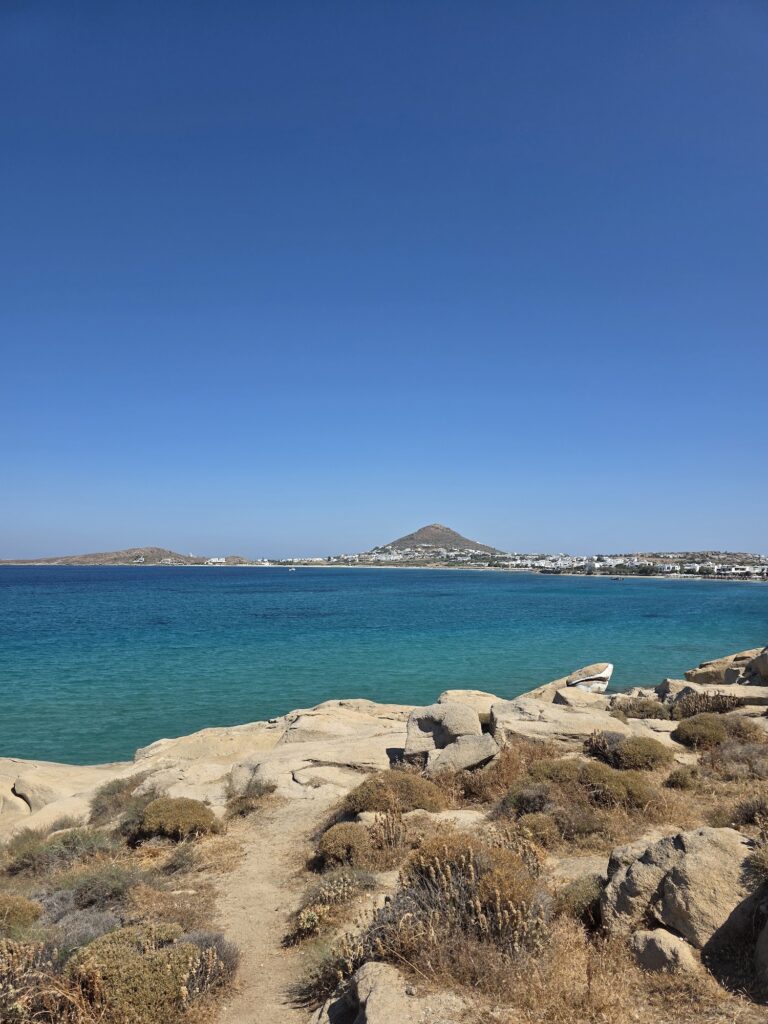
The seabed at Plaka is not uniformly clear sand. The transparent sea has some stretches of small rocks flush with the water, which create an effect similar to a coral reef. The rocks are present in specific sections rather than throughout the full beach, and the sandy sections are the majority, but water shoes are worth having for first-time visitors who are not yet familiar with the specific entry points. The gradual seabed slope in the sandy sections is the property that makes the beach accessible and family-suitable — the water stays shallow for a considerable distance from the shore.
The Glaronissia Rocks and the Paros View
From the water at Plaka, the Glaronissia — a small islet group off the northern coast of Naxos — is occasionally visible to the north, and the profile of Paros Island is the western horizon, approximately 15 kilometres across the strait. Relaxing in its endless area you can observe Glaronissia and Paros. The Paros silhouette as the background to the sunset is the specific visual that the west-facing beach orientation produces at the end of the day, and which the beachfront taverna dinner is positioned to frame.
The Portara and Naxos Beyond the Beach
Naxos is the largest island in the Cyclades and the most agriculturally self-sufficient — the fertile valleys of the interior produce the Naxian potatoes (celebrated as the best in Greece), olive oil, citrus, and Kitron liqueur from citron trees that only grow on this island. The Portara — the massive marble doorway of the unfinished Temple of Apollo on the islet of Palatia, connected to the port by a causeway — is the image that defines Chora from the sea, visible from the ferry approach and from the waterfront of the old town. The combination of the Portara at sunset from the causeway and the Plaka beach day forms the standard two-activity Naxos day programme.
Plaka Beach on Naxos is the 4-kilometre golden sand beach 8 kilometres from Chora — organised with sunbeds and beach bars in the north, progressively wilder and free in the south, naturist at the far end, windy on bad days, dusty road alongside it, €2 bus from the port, and the Paros profile on the western horizon as the sun drops.
Walk south until the sunbed rows stop.
The beach continues. The wind will tell you how far.
Map
Sorry, no records were found. Please adjust your search criteria and try again.
Sorry, unable to load the Maps API.
Near by places: