Mikri Vigla Beach Naxos: Kite North, Family South
Profile
Mikri Vigla Beach, Naxos: The Frankish Pirate Lookout That Split Into a Kite Mecca and a 4km Family Sanctuary
Greece | Naxos | Cyclades
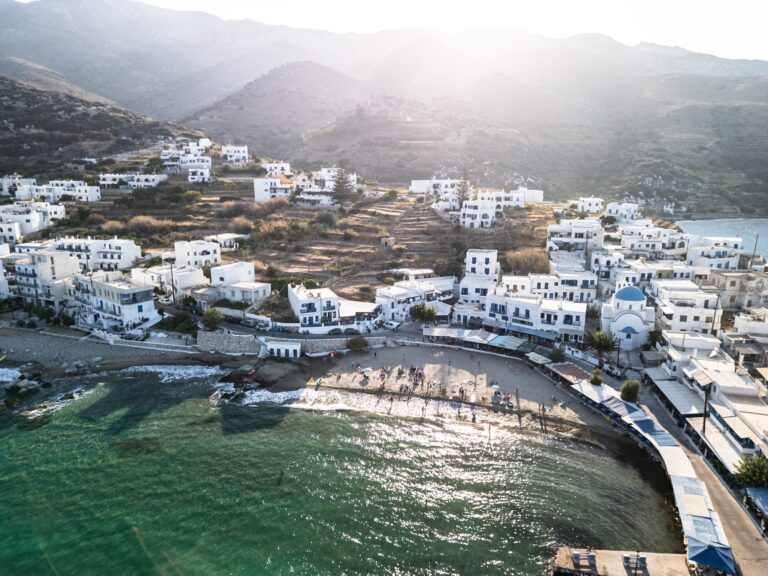
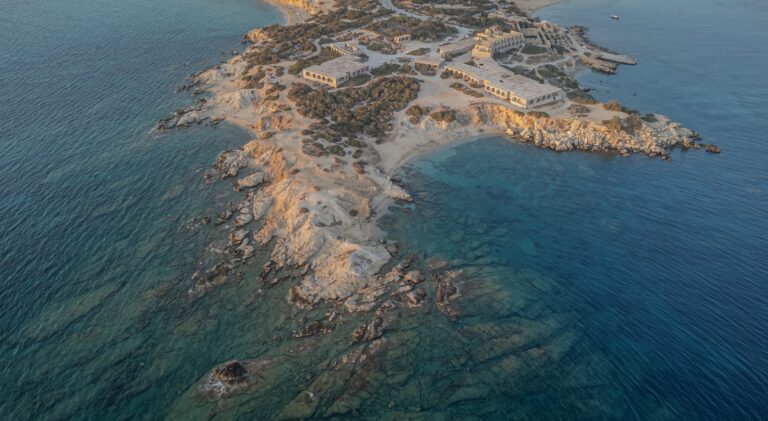
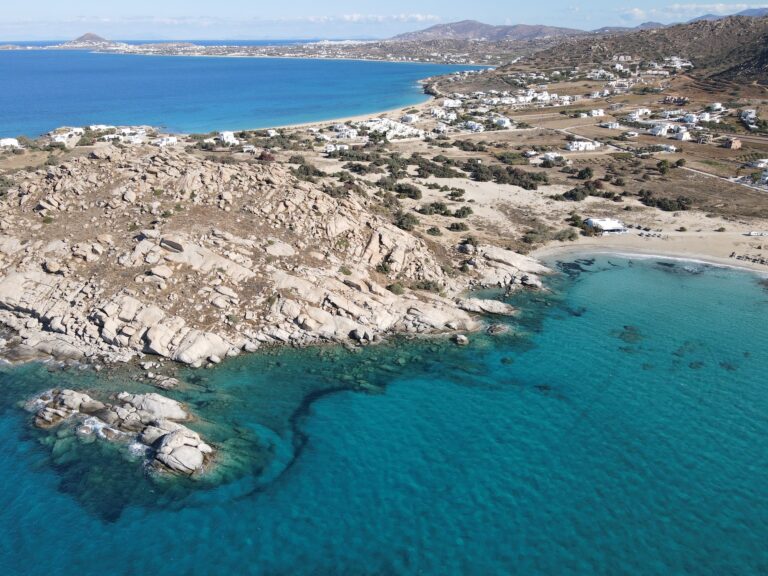
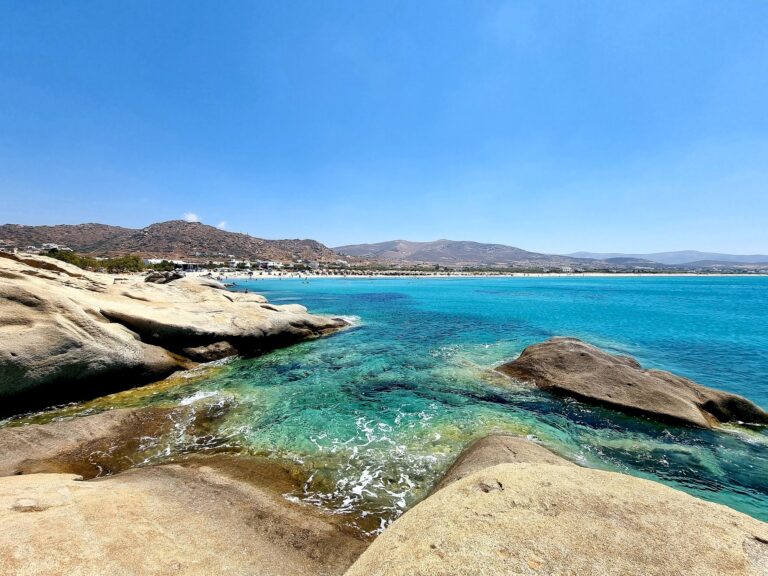
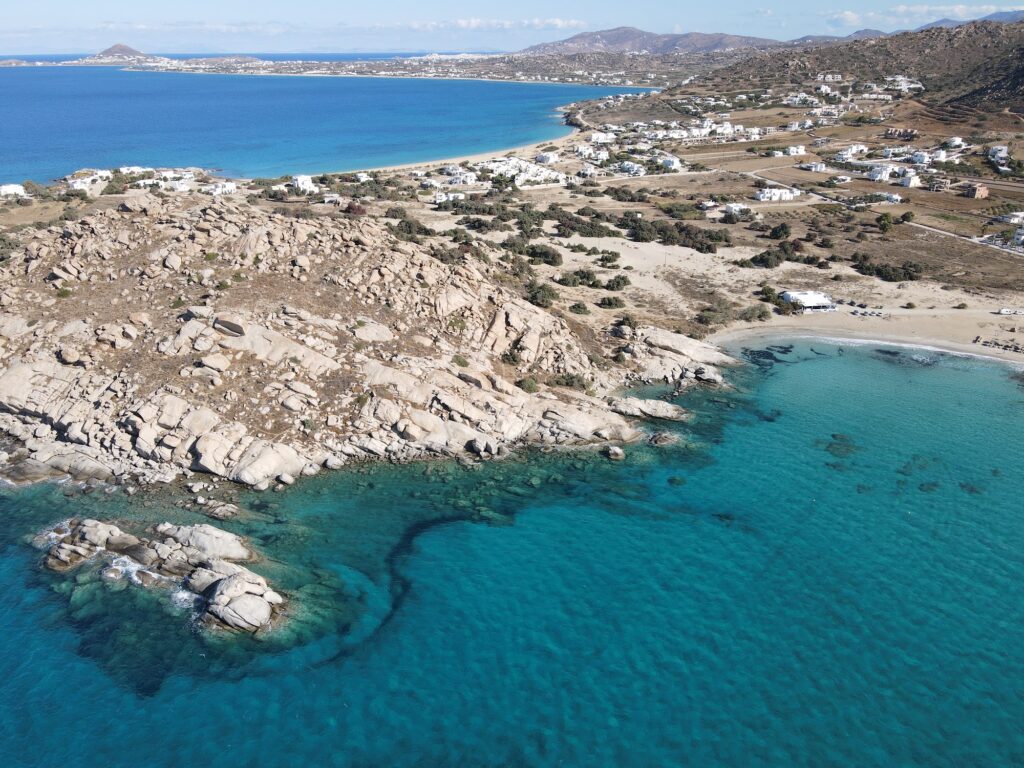
Mikri Vigla on Naxos island was used as an observation point during Frankish rule, designed to provide advance warning against pirates approaching the island. The headland that the medieval lookout occupied is the same headland that divides the beach today — the granite rock that forces the coastline into two completely different experiences on either side. A rock divides the beach into two parts, nicknamed “Limanaki” on the north side and “Sahara” on the south side.
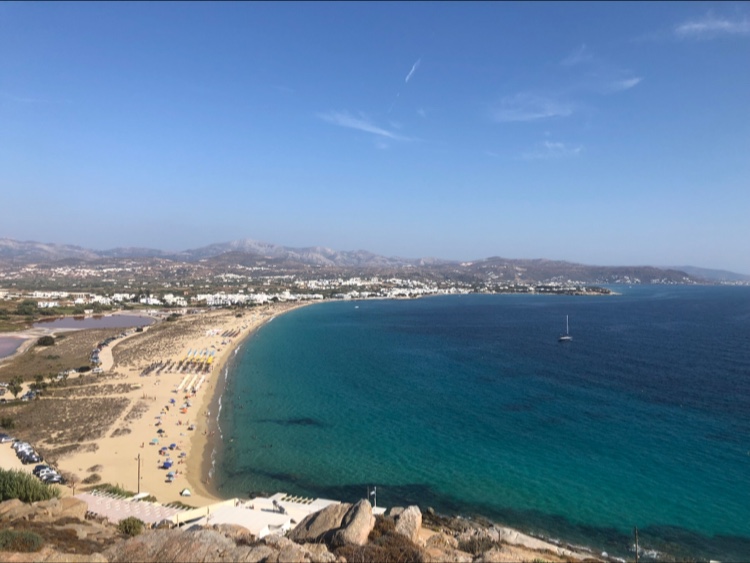
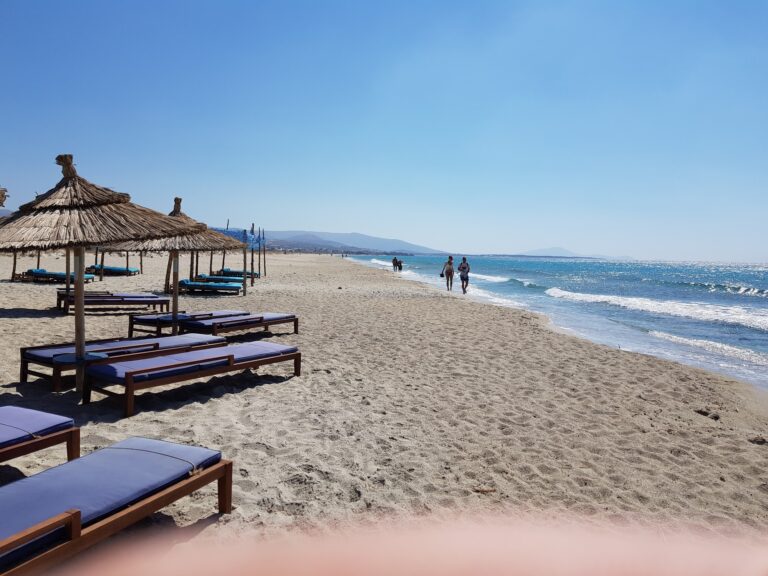
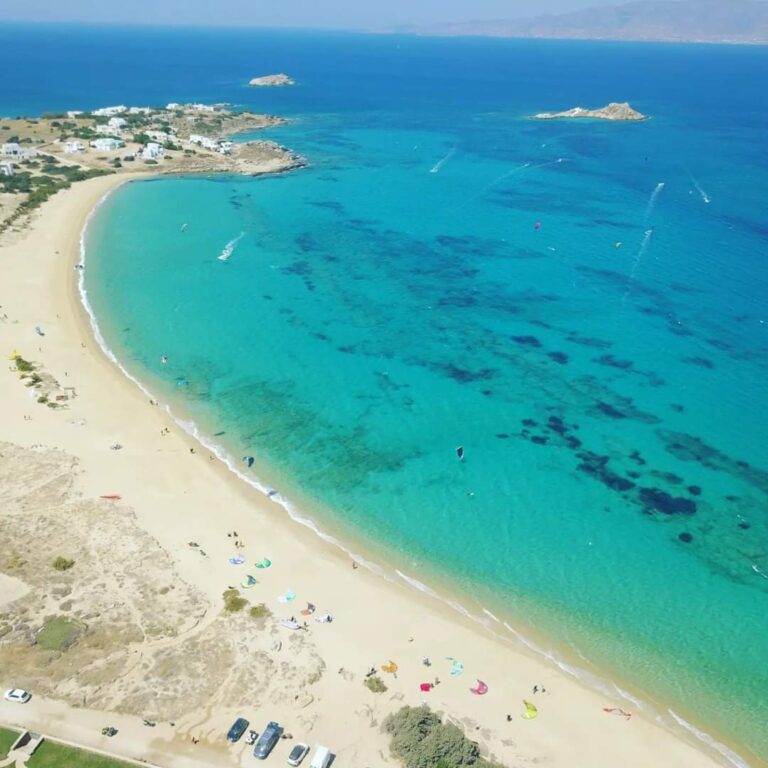
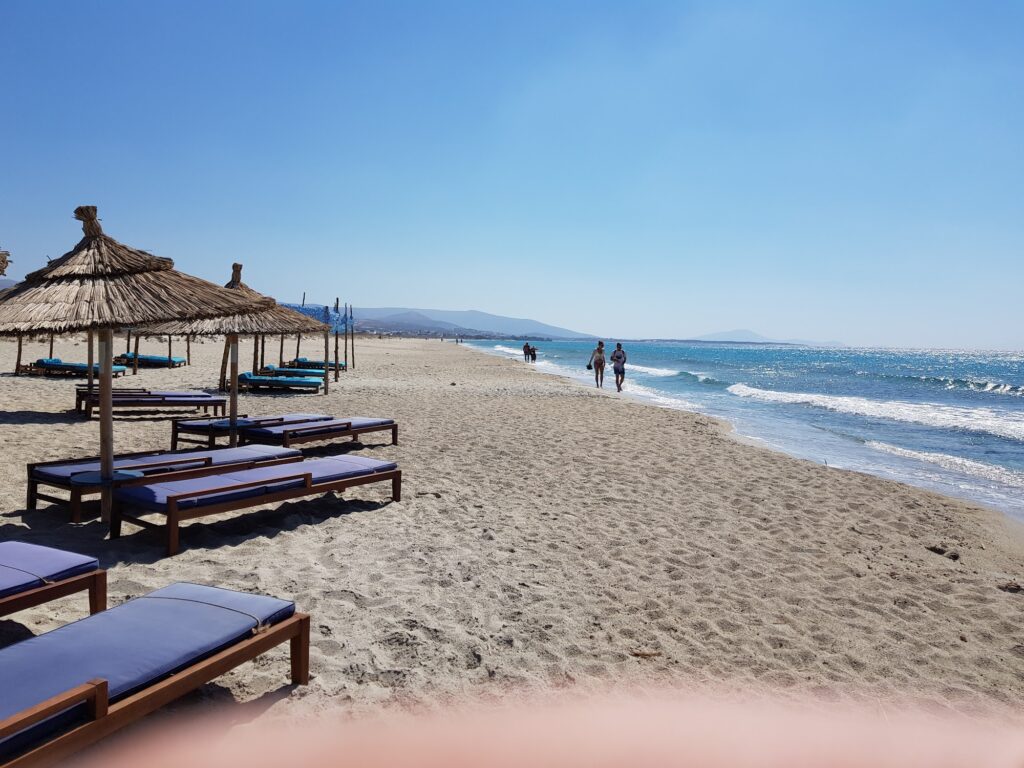
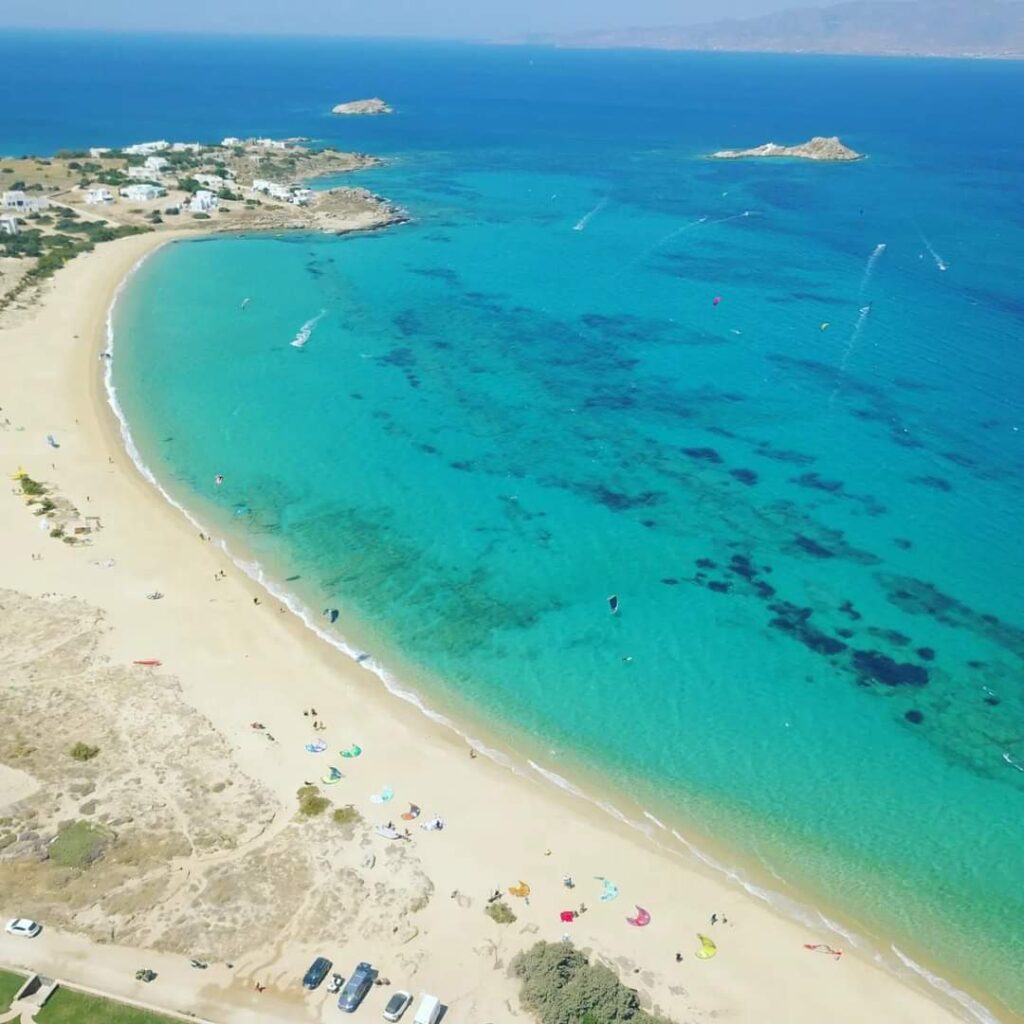
The northern side — Parthena or Limanaki — is the wind side. Mikri Vigla on the west coast is a masterclass of nature, an artist’s paradise and an action photographer’s best choice since this is a famous wind and kite surfers’ beach. Parthena to the north is ideal for swimming and windsurfing. Sahara towards the south is a 4-kilometre long beach of white sand and a veritable magnet for bathers.
The same Meltemi that gives Parthena its world-famous kite conditions makes the headland lookout comprehensible as a medieval defence choice: the winds that the lookout monitors are the same winds that the kitesurfers ride today, and the narrow strait between the headland and the small island of Parthena just offshore is the passage that the pirate watchers were assigned to observe.
Getting There: 12km from Naxos Town, KTEL Bus Lines 1 and 3, Road Partly Unpaved
From Naxos Town (Chora), the drive to Mikri Vigla follows the road south through the villages of Galanado and Tripodes (Vivlos) — approximately 12 kilometres, 20 to 25 minutes. An alternative route passes through Agios Prokopios and along the coast road past Plaka Beach, which is slightly longer but provides the coastal views.
The KTEL Naxos bus lines 1 and 3 reach Mikri Vigla from Naxos Port, with the central bus station at the port as the departure point. Several daily services run in summer. The bus stops are near both the northern (Parthena) and southern (Sahara) beach access points.
The road to the beach has unpaved sections in the final approach. The track is passable by a standard car, though a jeep or high-clearance vehicle is more comfortable on the rough sections. Parking is generally free and ample, though the spaces closest to the beach fill by mid-morning in peak season.
Parthena (North Bay): 600 Metres, 20–55 km/h Wind, Two Kite Schools, Rocks in the Water
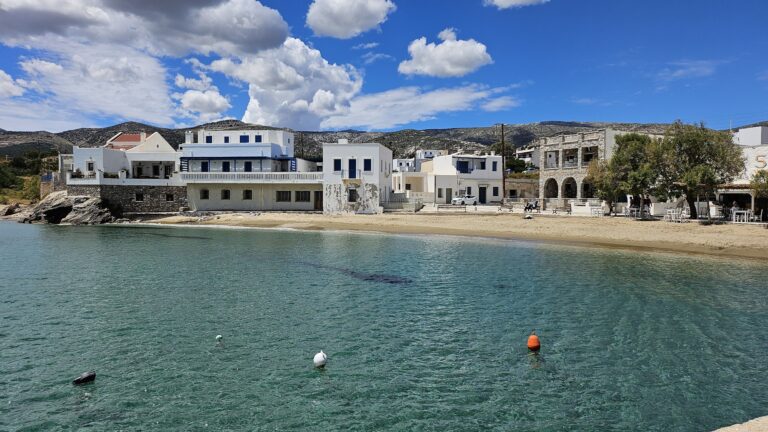
Parthena Beach stretches for 600 metres in length. The sand is soft and golden, contrasting dramatically with the sparkling waters. The main draw is the northerly wind that makes it world-famous for windsurfing and kitesurfing. There are two clubs on the beach hiring quality equipment and offering classes, as well as sunbeds and umbrellas for hire from neighbouring businesses.
The Meltemi winds are strong and dry, north and northeast winds of the Aegean Sea, which blow from May to September. The wind speed varies from 20 to 55 km/h close to the beach but at the open sea can reach 75 km/h, creating long and smooth waves ideal for windsurf and kitesurf riding.
Thalasea Sports (established 1997, IKO-affiliated since 2004) and Flisvos Kite Centre are the two established kite and windsurf operations on Parthena Beach. Both offer equipment hire and instruction for all levels, from beginner supervised sessions to advanced equipment rental. The bay’s sheltered position despite the wind — the wind blows toward the shore most of the time — makes it considered a safe spot for beginners.
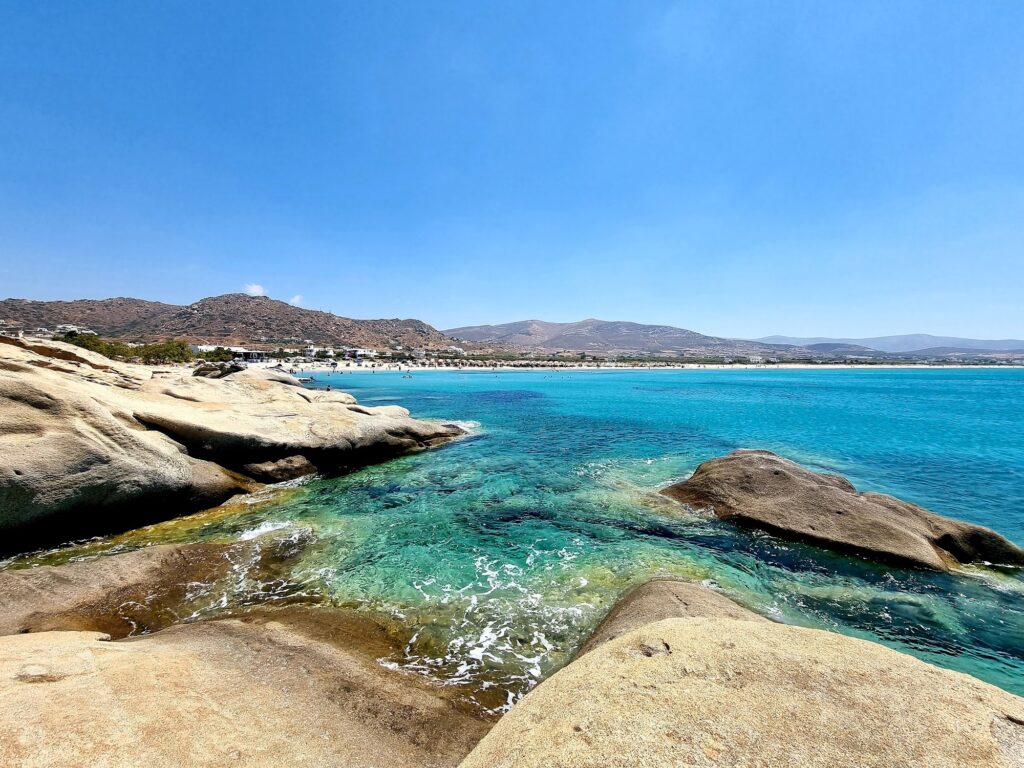
The rocks in the water are a specific practical note: there are reports of rocks in the sea that can be difficult to see. Water shoes are recommended for entry.
Sahara (South Bay): 4km, Wind-Sheltered, Shallow Clear Water, Some Nudity, Water Shoes Still Advised
Sahara Beach — also called Limanaki — is the 4-kilometre southern bay protected from the Meltemi by the granite headland. The water is mirror-still and shallow, the sand white, and the character family-oriented. The contrast with the northern 600-metre wind beach is complete: the same granite rock that channels the kite wind into Parthena blocks it entirely from Sahara.
There are some nudist bathers on the Sahara side — the more remote character of the southern bay and the lower beach club density make it the section that naturist visitors tend to use. It is not a designated naturist beach.
The rocks in the water are also present on the Sahara side — the organised sunbed sections are positioned to avoid the main rock concentrations, but the visitor who arrives without water shoes and explores the bay edges finds them. The shallow sandy sections are the standard swimming entry; the rock areas are the snorkelling and climbing zones.
The Kite Wind Physics: Why Parthena Specifically
Mikri Vigla is considered a safe spot for beginners since winds blow toward the seashore most of the time.
The specific wind character at Parthena is the result of the coastal geometry: the headland channels the northerly Meltemi into the bay at a side-onshore angle that is the optimal configuration for kitesurfing — the wind pushes the kite and the rider sideways across the water rather than directly offshore or directly onshore. Side-onshore wind means the rider naturally returns toward shore rather than being pushed further out to sea, which is the safety characteristic that makes the beach suitable for beginners and the reputation that has made it an internationally known kite destination.
The cedar trees behind the dunes — the specific vegetation that the source article identifies as the natural shade and photographic backdrop — are the Juniperus species that grow in coastal dune systems throughout the Cyclades and that the Mikri Vigla dune ecosystem has sustained.
The Mikri Vigla Taverna and the Food Context
Several reviewers praised the Mikri Vigla Taverna, located near the beach, for its good food, friendly staff, and convenient location.
The tavernas at Mikri Vigla serve the Naxian produce that the island’s agricultural reputation produces: the Naxian potatoes (considered the best in Greece, grown in the island’s fertile valleys and exported throughout the Aegean), the local cheeses including arseniko and graviera, and the fresh seafood from the west coast waters. The specific combination of the kite school energy and the taverna evening is the Mikri Vigla programme that accounts consistently describe as the best version of a Naxos beach day.
Plaka, Orkos, and the Surrounding Beach Context
The nearest beaches to Mikri Vigla are Kastraki to the south and Orkos and Plaka to the north.
Plaka Beach — 3 to 4 kilometres north on the same coastal road — is the long sandy beach that Mikri Vigla visitors with children who want the same west-coast water quality without the wind element use as the calm-day alternative. Orkos — between Plaka and Mikri Vigla — is a small wild beach described as a disarming beauty spot, little known but worth the stop.
Mikri Vigla Beach on Naxos is the granite headland that divided a Frankish pirate lookout into two completely different beaches — Parthena (600m, 20–55 km/h kite wind, two IKO-certified schools, rocks in the water) and Sahara (4km, wind-sheltered, shallow, some nudity, still rocks at the margins) — 12 kilometres from Naxos Town, the road partly unpaved, KTEL bus lines 1 and 3, the Naxian potatoes and graviera cheese at the taverna, and the specific side-onshore wind angle that makes it safe for beginner kiters.
Drive south from Chora. Take a car or scooter for the final unpaved section.
Decide at the headland which side you want.
Map
Sorry, no records were found. Please adjust your search criteria and try again.
Sorry, unable to load the Maps API.
Near by places: