
Tourlida Beach Messolonghi: Stilt Houses, Sunset, Caviar
Profile
Tourlida Beach, Messolonghi: The Island Reached by the 1885 Trikoupis Causeway, Named After a Bird, Where the Salt Museum Won the 2024 European Museum of the Year and Lord Byron’s Statue Looks Out From the Garden of Heroes 5km Away
Greece | Tourlida Island | Messolonghi, Aetolia-Acarnania, Western Greece
Lord Byron arrived at Messolonghi in January 1824, having crossed from Kefalonia. He came to participate in the Greek War of Independence — a war he had been financing from his own considerable fortune and that he had been publicly advocating for in England since 1821. He was 36 years old. He died in Messolonghi on 19 April 1824 from fever, compounded by the bloodletting that the physicians of the era applied. His death turned him from a celebrated poet into a martyr for Greek liberty and sent hundreds of Philhellenes from Europe and America to join the cause. Dionysios Solomos, the national poet of Greece, wrote an epic poem about the subsequent Siege of Messolonghi. The Garden of Heroes in the town’s centre contains the graves of the defenders, a mausoleum for Byron’s heart (his body was returned to England), and his statue looking out over the flat lagoon landscape.
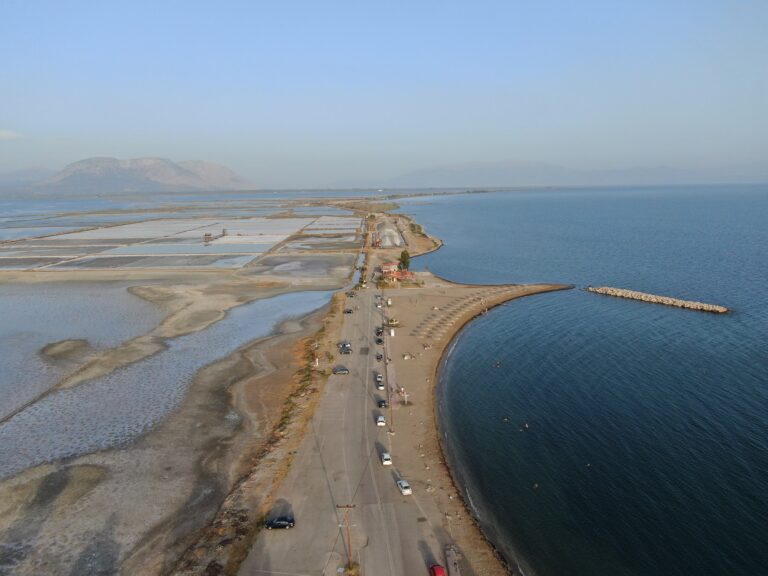
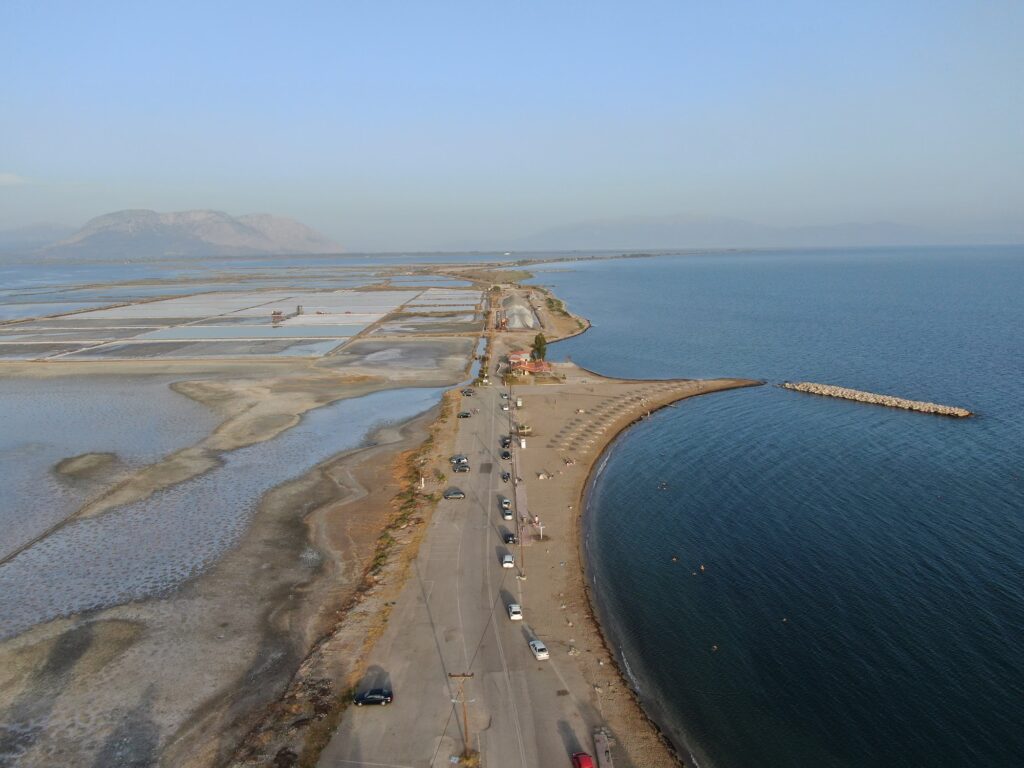
Five kilometres south of the Garden of Heroes, across the water, the island of Tourlida sits at the point where the Messolonghi Lagoon joins the Ionian Sea. The road connecting it to the mainland was built in 1885 by Prime Minister Charilaos Trikoupis — the same statesman who initiated the Rio-Antirrio crossing infrastructure, the Corinth Canal, and a programme of modernisation that transformed Greece’s physical infrastructure in the late 19th century. The causeway divided the lagoon into two parts, creating the enclosed Kleisova Lagoon on one side and leaving the main lagoon on the other.
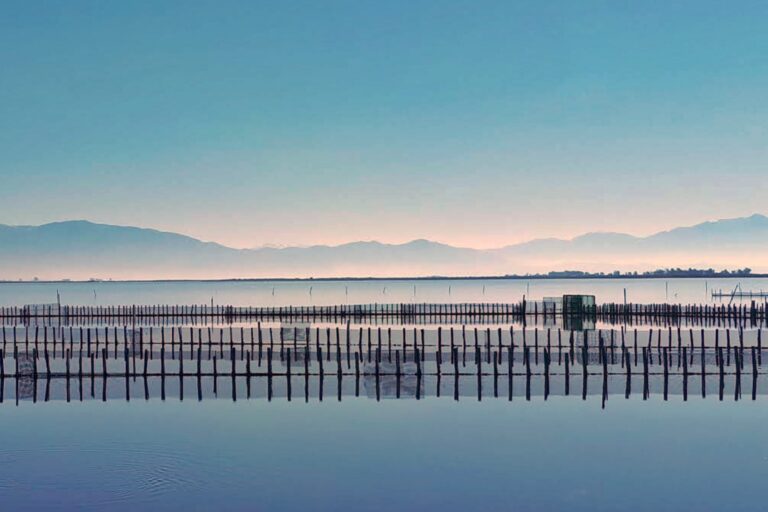
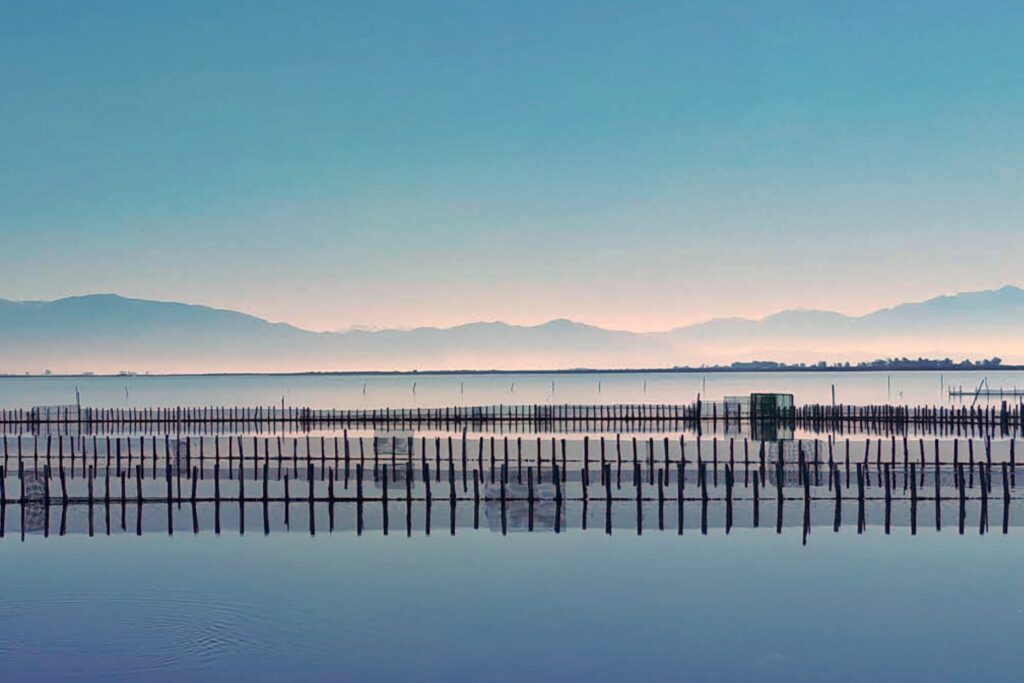
The island is named after the Eurasian curlew (tourlida in Greek) — a wading bird with a long curved bill, common in the lagoon. The island’s population was 15 in the 2011 census. The most common activities are fishing and salt gathering. The pelades — wooden stilt houses built over the water by fishermen — are the visual icon of Tourlida, reproduced in every photograph of Messolonghi taken from the lagoon side.
Getting There: 5km Causeway From Messolonghi Built in 1885, Cycling Path Parallel to the Road, Parking at the Island End
From Messolonghi town centre, follow the signs for Tourlida. The paved causeway runs 5 kilometres across the lagoon — the drive takes 7 to 10 minutes, the cycle on the parallel dedicated cycling path takes approximately 20 minutes on flat terrain, and walking takes approximately 50 minutes. The causeway is described consistently as one of the most atmospheric drives or rides in western Greece — the water on both sides, the fishing huts on stilts, the birds, the flat horizon.
From Nafpaktos (covered in this series), Messolonghi is approximately 45 minutes east via the Rio-Antirrio Bridge and the national road. The city of Agrinion is 40 kilometres north.
Aktio Airport (PVK) near Preveza is approximately 1 hour 15 minutes north.
The Beach: Fine Golden Sand, Shallow for a Long Distance, Dual Character (Lagoon Side and Open Sea Side), Sunset the Most Photographed
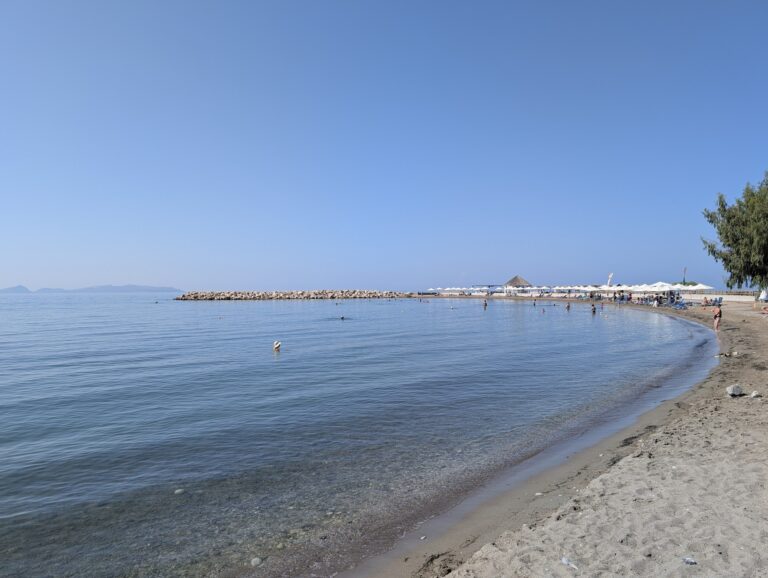
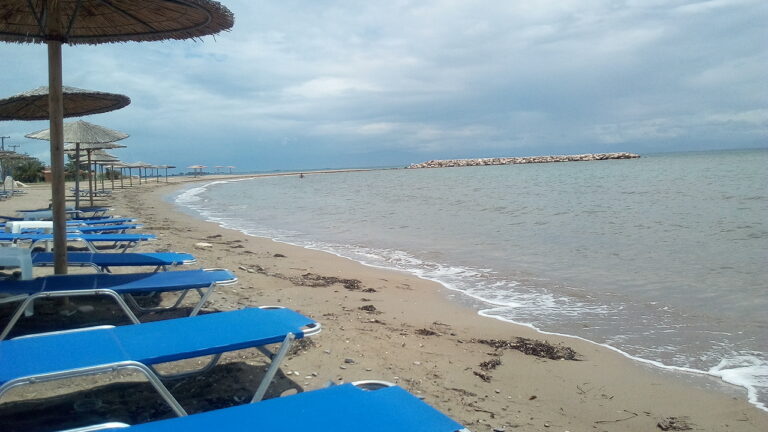
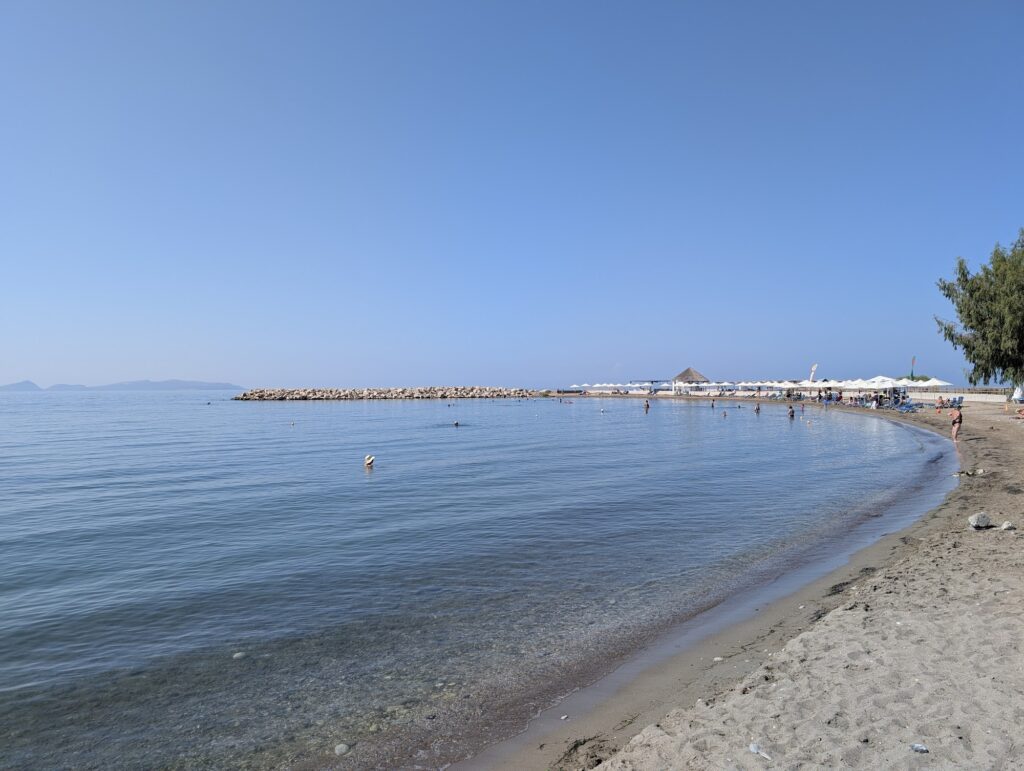
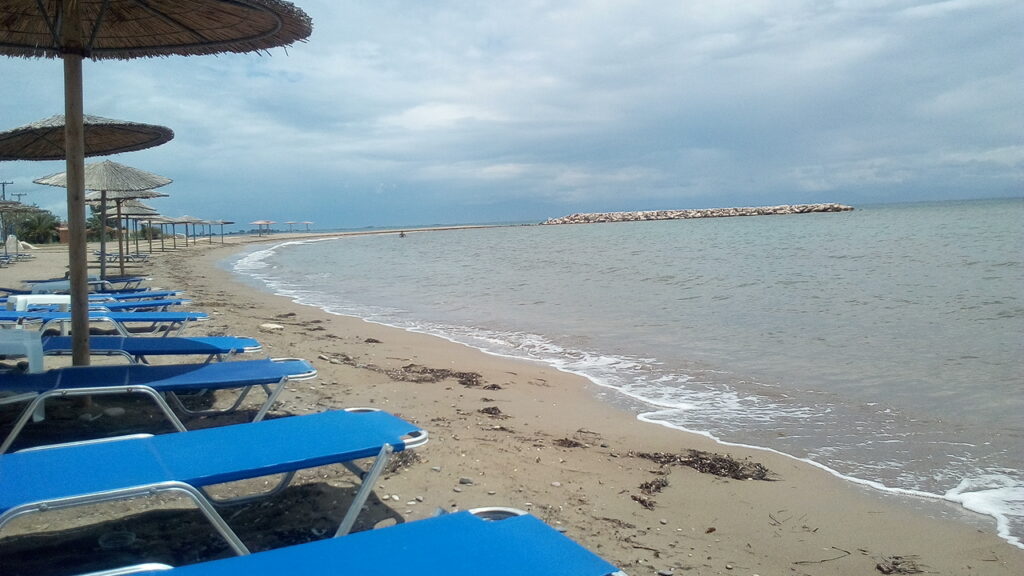
The beach is at the open sea end of the island — the point where the lagoon meets the Gulf of Patras. The sand is fine and golden, takes on an orange hue at sunset, and the shallow water extends for a long distance before any significant depth. Two bars and a cafeteria serve the beach. Sunbeds and umbrellas are available. Changing cabins and showers are on site.
The sunset at Tourlida is specifically and repeatedly described as one of the most beautiful in Greece — the flat lagoon landscape, the still water, the golden light catching the pelades and the fishing boats, the silhouette of the stilt houses against the orange sky. No photography filters are needed to produce the images that circulate from this location. The conditions are specific: the flat, reflective water surface, the absence of hills on the horizon, and the specific atmospheric quality of salt air over a wetland at the end of the day.
The Salt Museum: Winner of the 2024 European Museum of the Year Award
The Salt Museum at Tourlida won the 2024 European Museum of the Year Award — one of the most prestigious museum prizes in Europe. It was created without public funding, by the people of Tourlida and the wider Messolonghi community, to tell the story of salt as a product, an industry, and a cultural identity for this lagoon settlement. The museum is housed in a former dormitory for salt workers. Displays cover traditional salt production techniques, antique tools, and a collection of salt shakers from across centuries.
The European Museum of the Year Award is not a minor distinction. It has previously been awarded to the British Museum, the Rijksmuseum, and Museum of Art Kochi among others. The Tourlida Salt Museum winning it in 2024 reflects the quality and community investment of a place that most outside visitors had never heard of before the announcement.
Avgotaraho: Greek Caviar Once Supplied Exclusively to the Ottoman Empire
Avgotaraho (also avgotaracho or bottarga) is the salt-cured dried roe of grey mullet (Mugil cephalus), produced from the lagoon’s mullet harvest. Messolonghi avgotaraho carries a Protected Designation of Origin. It was once supplied exclusively to the Ottoman Imperial court and traded across the Eastern Mediterranean. It is served sliced thin, with lemon, on the tavernas of Tourlida alongside eel, salted fish, shrimp, and the specific lagoon seafood that the fishermen bring in daily from the enclosed waters.
Eating avgotaraho at a waterfront taverna in Tourlida while the pelades catch the late afternoon light is the most specific Messolonghi dining experience available. The series has covered the Ambracian Gulf shrimp at Katergaki as a PDO product — Katergaki Beach Amfilochia Greece is approximately 90 minutes north by car, and its gulf shrimp and the Tourlida avgotaraho together represent the two most regionally distinct seafood products in western Greece. The Gribovo Beach Nafpaktos Greece article describes the Nafpaktos setting visible from both sides of the Rio-Antirrio Bridge — the same bridge that connects the Messolonghi area to Patras and the Peloponnese.
The Messolonghi Lagoon: Greece’s Largest Natural Wetland, Ramsar Designated, Flamingos and Pelicans
The Messolonghi Lagoon is the largest natural wetland in Greece and a Ramsar Convention designated wetland. Flamingos are visible from the causeway on most visits in the appropriate season. Herons, pelicans, egrets, cormorants, and dozens of migratory species use the lagoon as habitat and resting ground. The lagoon’s shallow depth — most sections are 2 to 8 metres deep — creates the nutrient-rich conditions that support both the bird life and the fish production that Messolonghi’s economy has been built on for centuries.
Flat-bottomed boats (gaites) are used for fishing in the lagoon. Boat tours from Tourlida travel through the narrow channels between the pelades and across the open lagoon — the best way to understand the scale and atmosphere of the wetland.
Tourlida Beach at Messolonghi is the island reached by the 1885 Trikoupis causeway — named after the Eurasian curlew, population 15, the pelades stilt houses over the water, the Salt Museum winner of the 2024 European Museum of the Year Award, avgotaraho (Greek caviar, PDO, once exclusively for the Ottoman court) at the waterfront tavernas, the best sunset in Greece when the lagoon goes orange, flamingos and pelicans on the causeway drive, the Garden of Heroes with Byron’s heart 5km north in Messolonghi town, the largest natural wetland in Greece, and the cycling path making the 5km causeway one of the most atmospheric rides in western Greece.
Drive or cycle the causeway. Stay for the sunset. Order the avgotaraho.
Map
Sorry, no records were found. Please adjust your search criteria and try again.
Sorry, unable to load the Maps API.