Episkopi Beach Kythnos: Shade, Sunset, Ruins
Profile
Episkopi Beach: Sand Beneath an Unlooted Temple
Greece | Kythnos | Cyclades | Aegean Coast
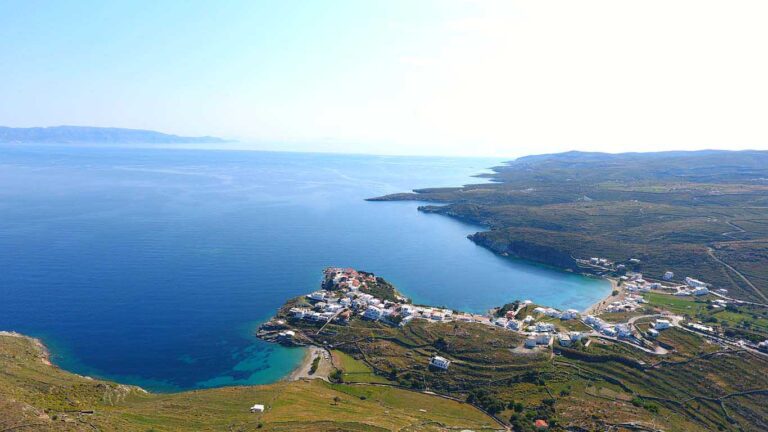
In December of 2002, archaeologists working the hill above Episkopi Beach announced they had found something unusual: the inner sanctum of an ancient temple, completely intact and never plundered, a rarity anywhere in the Aegean given how thoroughly most ancient sites have been picked over across the centuries. That temple sits within Vryokastro, the settlement that served as Kythnos’ capital from roughly the tenth century BC until the seventh century AD, its ruins spread across the hill directly above the bay where I spent most of my visit simply swimming, entirely unaware at first of what was sitting quietly above me.
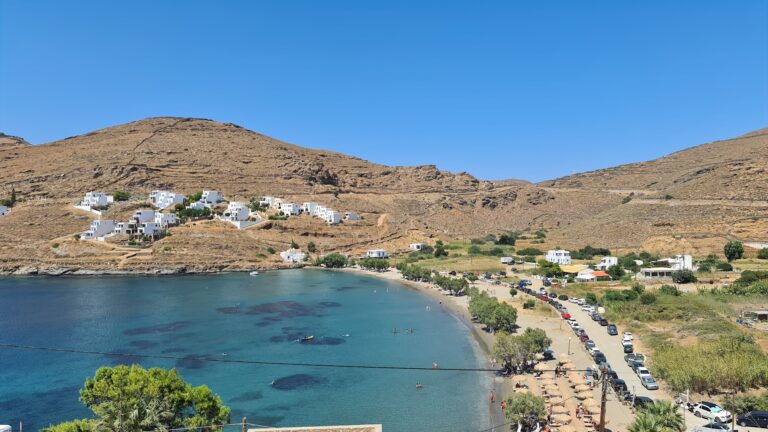
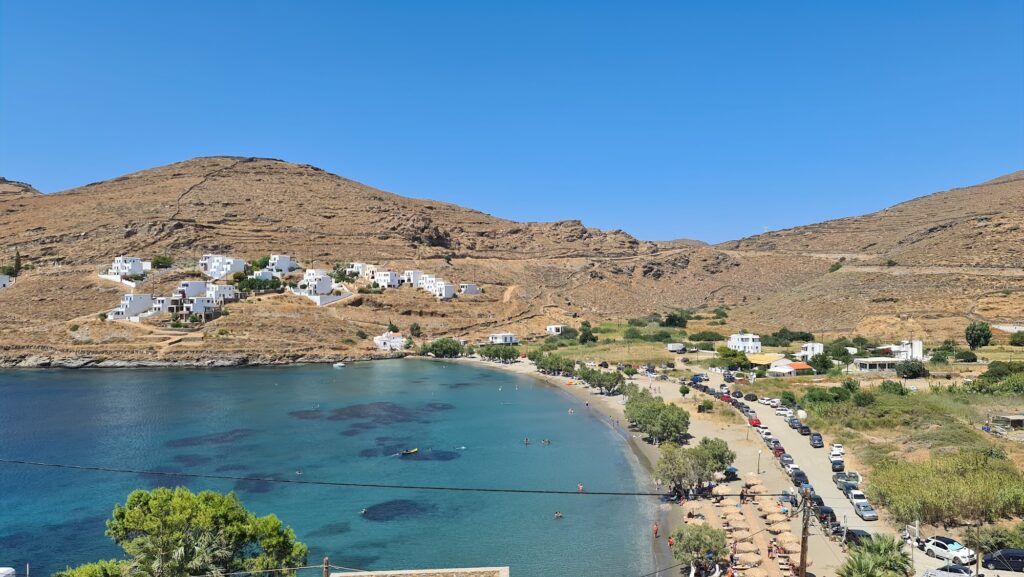
Episkopi itself is a modest, sheltered stretch just two kilometers from Merichas, the island’s main port, and it has built a reputation as one of Kythnos’ more social beaches without losing the kind of natural shelter that makes it genuinely pleasant to swim at regardless of what the wind is doing elsewhere.
Calm Water Protected From the Meltemi
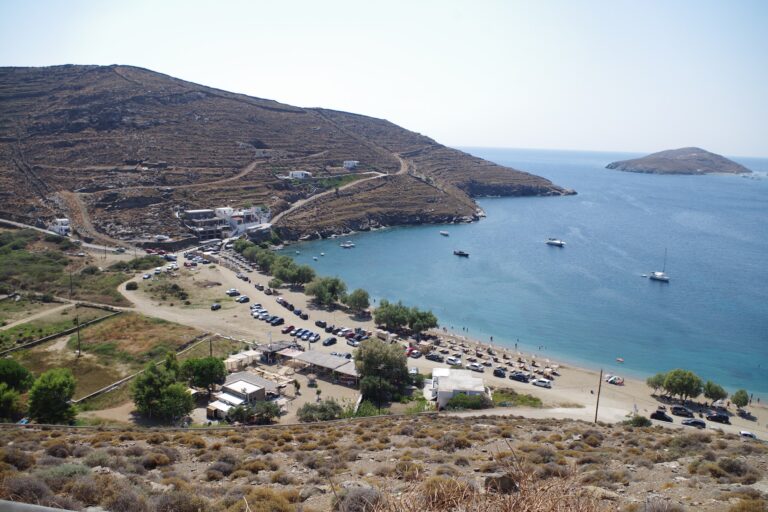
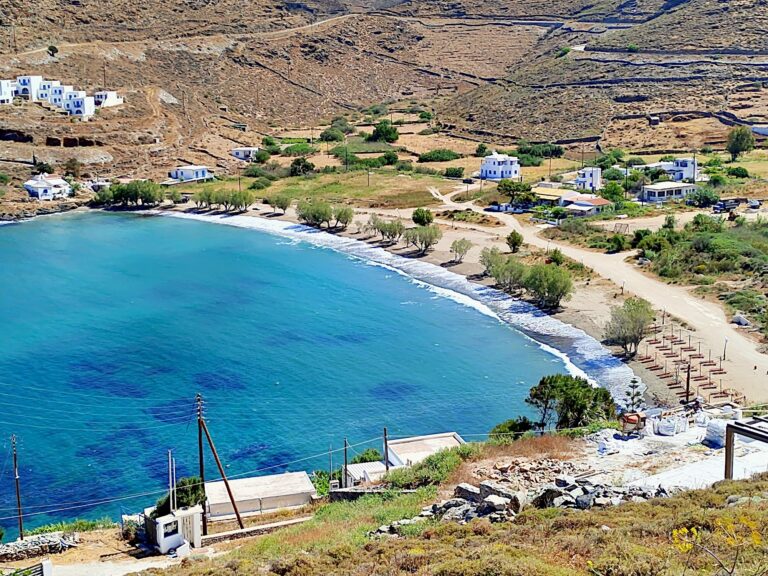
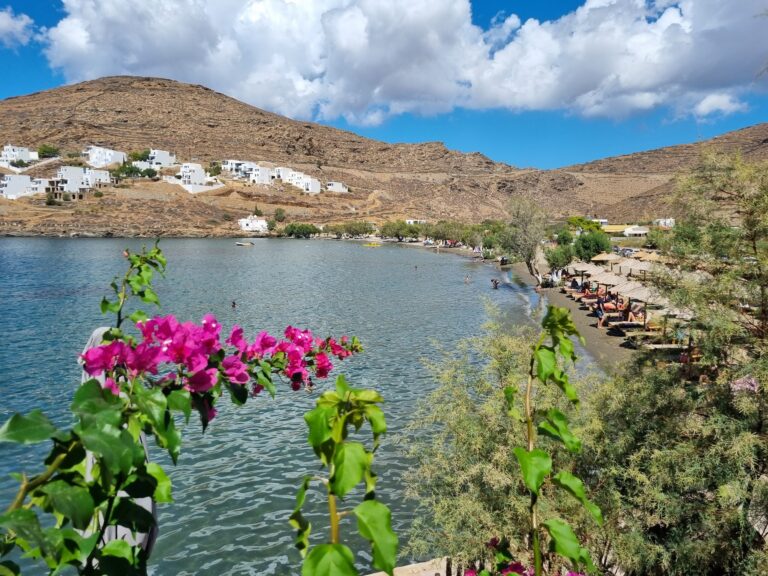
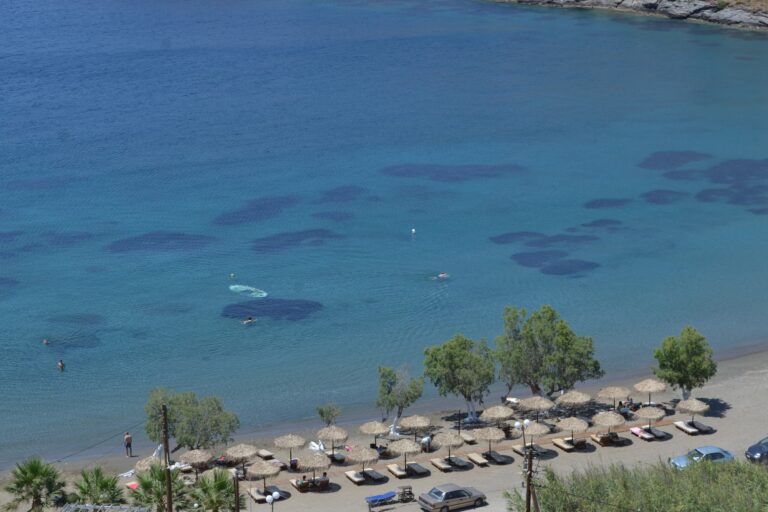
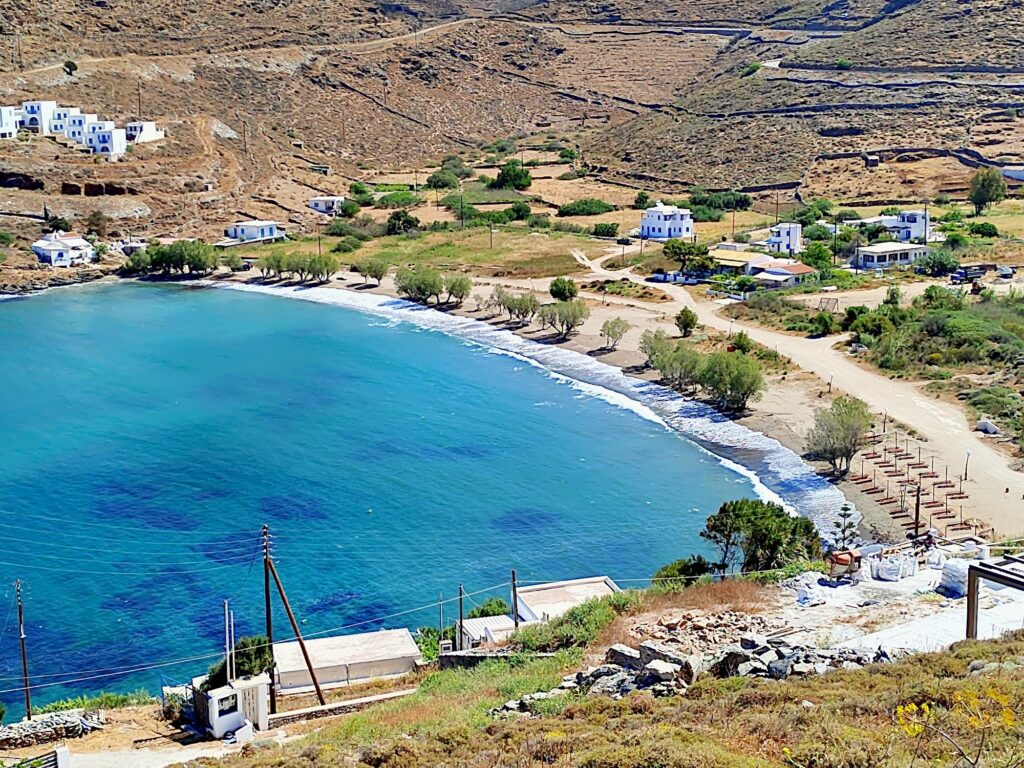
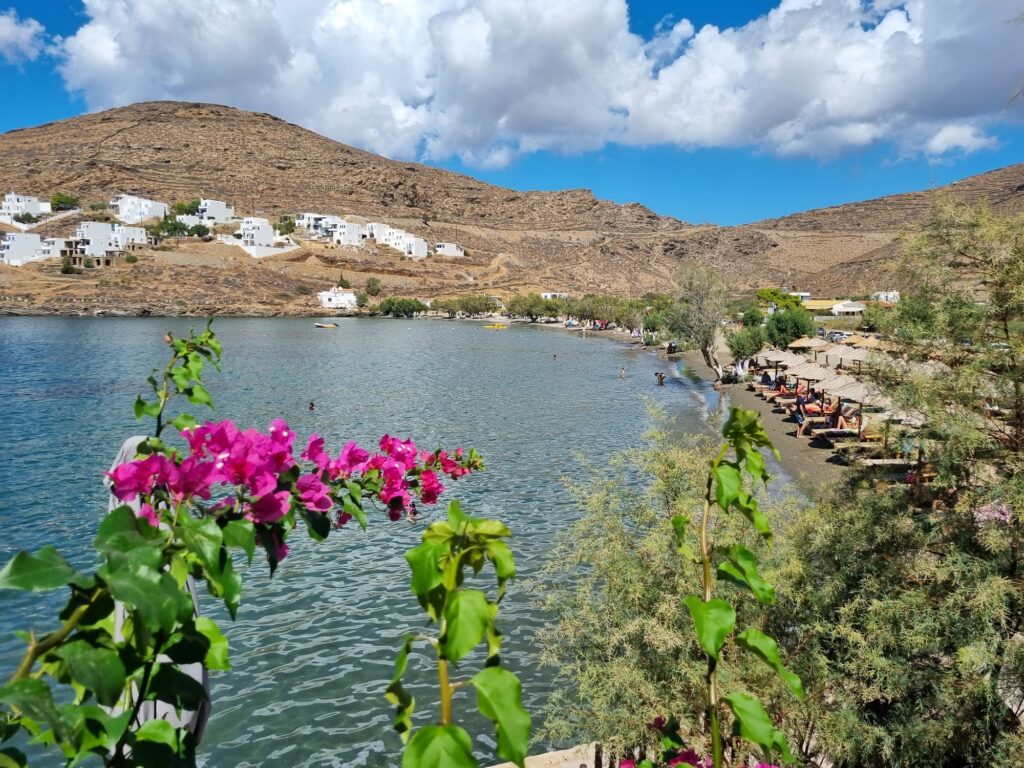
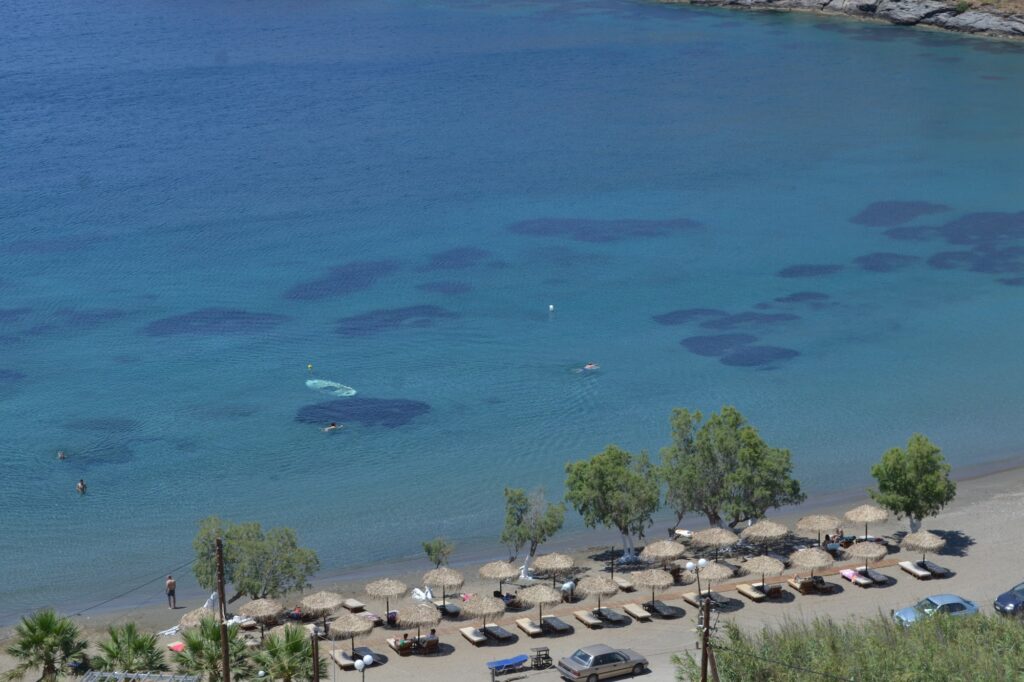
What struck me first about Episkopi was how still the water stayed even on a day when the Meltemi was clearly active elsewhere on Kythnos. The bay’s position gives it real shelter from the northern wind that can make swimming elsewhere on the island considerably less pleasant, and I found the water here consistently calm across every visit, clear enough for casual snorkeling near the shore. The beach itself runs about 500 meters, fine sand transitioning into shallow turquoise water that stays gentle for a good distance from shore, and I’d call this one of the more reassuring beaches on Kythnos for supervised swimming with young children, the depth building gradually rather than dropping away.
Tamarisk Shade Along the Full Stretch
A line of mature tamarisk trees frames the sand, and I relied on this shade heavily during the hottest part of the day, the canopy genuinely effective at cutting the glare without blocking the sea breeze entirely. For visitors with mobility needs, I noticed SEATRAC equipment available at points along the beach, a detail that made the calm water here accessible in a way I haven’t found consistently at other Cycladic beaches of this size.
Pountaki and the Weekend Beach Party Scene
Toward the southern end of Episkopi, beach bars including Pountaki anchor a livelier scene, sunbeds and umbrellas with attentive service through the week, shifting into a genuine party atmosphere with DJ sets on weekends. I found the contrast between this end of the beach and the quieter northern stretch, near the chapel, pronounced enough that Episkopi effectively offers two different beach experiences depending on which direction you walk from the parking area. Given the organized nature of the beach bar sections, I’d expect dogs to require explicit permission near the sunbeds themselves, though the quieter stretches further from Pountaki likely follow the standard Greek rule allowing leashed dogs outside the water.
The Chapel of Agios Vlassis on the Rocks
At the northern edge of the bay, the small whitewashed chapel of Agios Vlassis sits enclosed by stone walls, and I made the short walk out to it mainly for the view back across the beach, which turned out to be worth the detour on its own, the whole curve of Episkopi and the surrounding Cycladic hills visible from that slightly elevated vantage point.
Hiking Up to Vryokastro’s Ancient Ruins
From the northern end of Episkopi, a path climbs toward Vryokastro, rising to a modest height before reaching the ruins themselves, walls, tower foundations, and the remains of sanctuaries dedicated to Apollo, Artemis, Aphrodite, and Demeter scattered across the hilltop. I made this climb on a cooler morning and found the site considerably more extensive than I’d expected from a beach-level glance up at the hill, evidence of a settlement that mattered to this island for well over a thousand years before it was finally abandoned. The path continues beyond Vryokastro for another kilometer down to Apokrousi, a beach I didn’t have time to reach on this particular visit, though the connection between the two makes for an obvious extension if time allows.
Fresh Snacks and Cocktails Behind the Sand
Facilities behind Episkopi’s organized section maintain a solid standard, freddo espressos and fruit platters through the morning shifting into contemporary Mediterranean snacks and cocktails by afternoon. Changing cabins, showers, and restroom facilities are all clean and well kept, consistent with a beach that draws a steady flow of both day-trippers from Merichas and visitors staying nearby.
Getting There: Five Minutes From the Port of Merichas
Episkopi sits just 2 kilometers from Merichas along the main road toward Chora, a comfortable five-minute drive on well-paved tarmac. I found this one of the easiest beaches on the island to reach without much planning, close enough to the port that it works as a first stop straight off the ferry.
Buses Along the Merichas-Chora-Loutra Route
Regional buses running between Merichas, Chora, and Loutra stop at Episkopi, and I’d recommend telling the driver in advance that you want to get off at the beach, since the stop isn’t always obvious without asking. I used this option once and found it a straightforward, low-effort way to reach the sand without a rental vehicle.
Arriving by Water Taxi Across the Bay
For a quicker, more scenic option, water taxis run frequently between Merichas and Episkopi, covering the short distance in about five minutes. I took this route on one occasion and found the brief crossing a pleasant way to see the coastline from the water before arriving at the beach itself.
Parking Behind the Tamarisk Trees
Free parking is available in a large unpaved lot directly behind the beach bar and the tamarisk trees, and I never had trouble finding space even during a busier weekend visit, the lot large enough to absorb the crowd that Pountaki’s weekend parties tend to draw.
Comparing Episkopi to Other Cycladic Beaches
For a similarly calm, shallow entry suited to families elsewhere in the Cyclades, Agioi Anargyroi Beach Paros offers a comparable sheltered bay, though Episkopi’s direct connection to an ancient capital gives it a layer of history that beach doesn’t carry. For visitors curious how Cycladic beach scale can vary, Kalo Livadi Beach Mykonos provides a useful contrast, considerably larger and busier than Episkopi’s more modest, two-sided character.
Watching the Sunset From Beneath the Tamarisks
By the time the sun began dropping toward the western horizon on my last evening, the whole bay had taken on the warm orange glow Episkopi is known for locally, and I stayed under the tamarisks a while longer, thinking about that unplundered temple sitting quietly on the hill above me, having survived whatever it needed to survive for over two thousand years just to still be there the one afternoon I happened to look up and ask what it was.
Map
Sorry, no records were found. Please adjust your search criteria and try again.
Sorry, unable to load the Maps API.
Near by places: