Rapsani Beach Kavala: City-Centre Blue Flag, Free Entry
Profile
Rapsani Beach, Kavala: The City-Centre Municipal Blue Flag Beach Nicknamed “Child of the City”, Where the Byzantine Castle Is Visible Above and a Stone Line 3–4 Metres In Requires Water Shoes
Greece | Rapsani | Kavala, Eastern Macedonia and Thrace
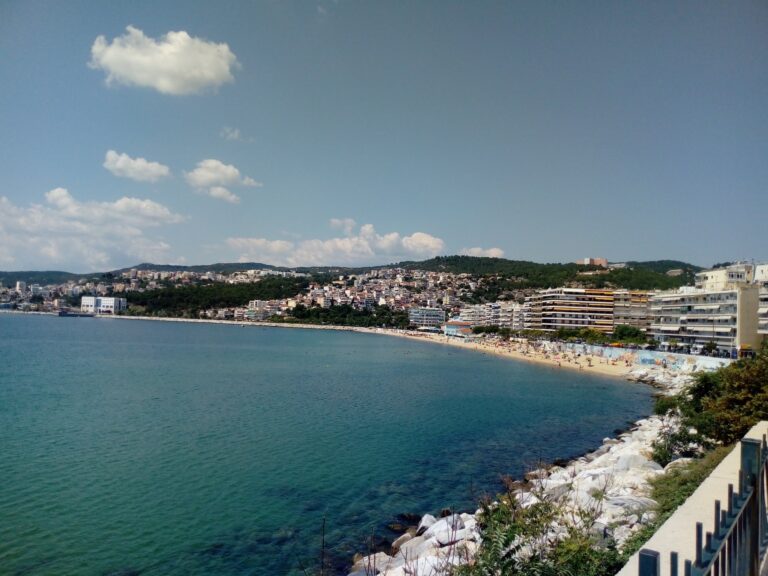
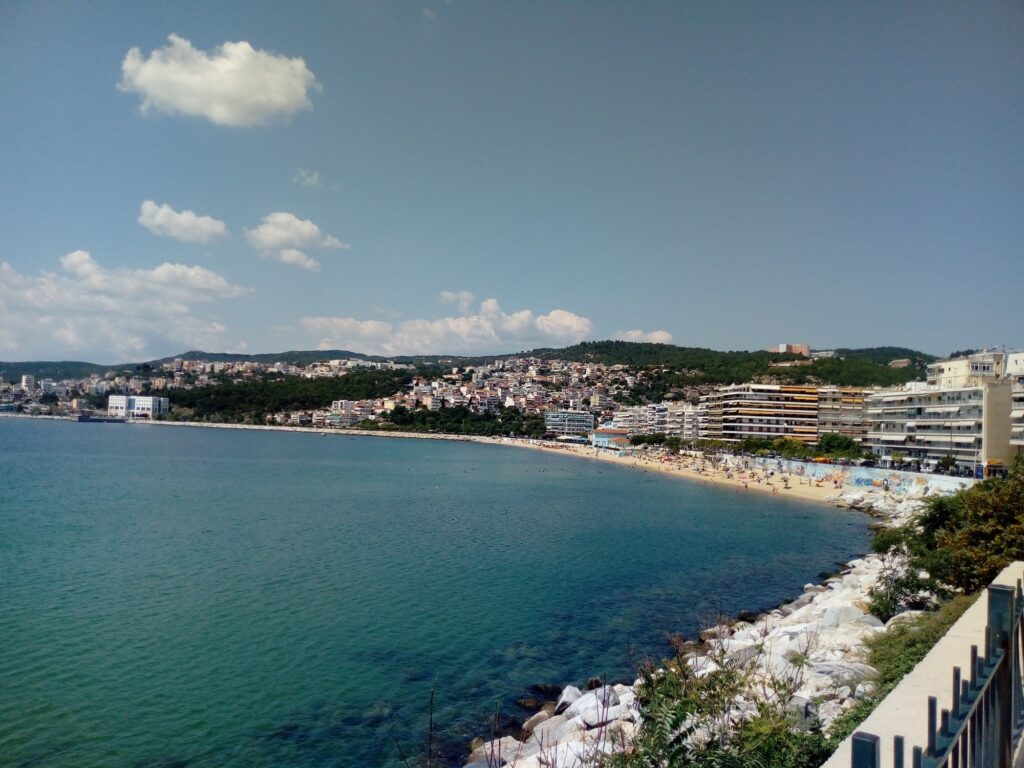
Rapsani beach is nicknamed the “child of the city”. Located near Faliro Park, almost in the centre of Kavala, it is ideal for those who prefer to stay in the city. This municipal beach is organised, has free access and has been awarded the Blue Flag every year since 2009.
The “child of the city” nickname is not promotional language — it is the specific local description of a beach whose identity is inseparable from the city that contains it. Rapsani is not a destination beach in the way that Ammoglossa at Keramoti or Kalamitsa are destinations. It is the beach that the residents of Kavala use when they want to swim without leaving the city. That is its character and its specific value: urban accessibility in a city that has enough to justify staying in it rather than driving out to the peripheral beaches.
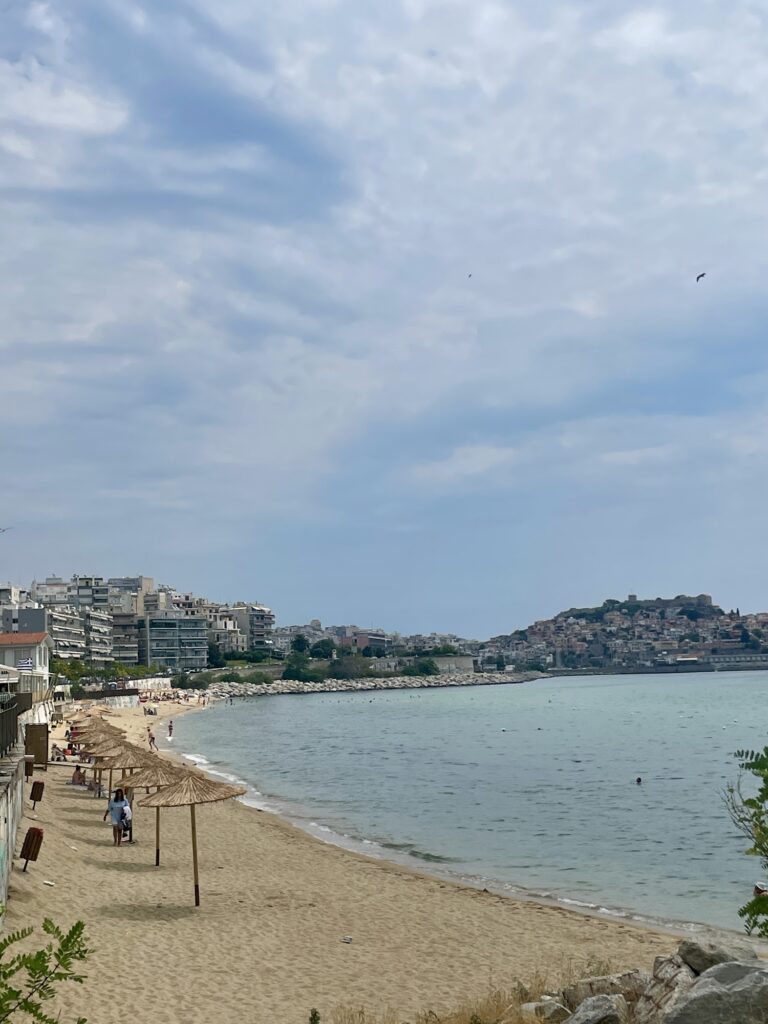
The Byzantine fortress of Kavala — the Kastro — is visible above the old city from Rapsani beach. The medieval walls on the promontory, the aqueduct arches visible from multiple points in the city, and the specific elevated cityscape that the Panagia quarter creates looking down toward the harbour and the beach are the visual context of Rapsani that no other Kavala beach has. The beach is inside the city; the city is above the beach.
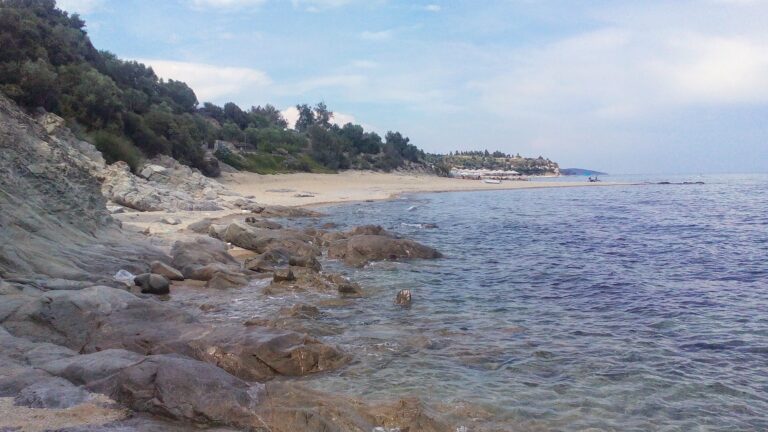
Visitors should be cautious of a line of stones about 3–4 metres into the sea, beyond which the seabed returns to sand. The beach also has large rocks and spikes in the water which can pose a risk to swimmers. Water shoes are the practical recommendation for Rapsani — not essential for every swimmer but strongly advisable for the initial entry and for anyone who plans to wade slowly into the water rather than dive in from a pontoon.
Getting There: 5 Buses From the City Centre (No. 1, 4, 5, 8, 10), 15-Minute Walk, Free Admission
For those who don’t want to go far from the town, Rapsani is an ideal choice for a dip, since it is centrally located, right next to the Municipal Park of Faliro. Sand, shallow waters, showers and changing rooms — and one taverna just two steps away, in case you want to nibble something without having to move.
It can be reached by bus routes No. 1, 4, 5, 8, and 10. Five bus lines serving the same beach is the specific indicator of how central Rapsani is in the Kavala public transport network. From the city centre, the walk takes approximately 15 minutes along the palm-lined promenade. By car, parking is in the surrounding streets and public lots near Faliro Park. There is no entrance fee.
Kavala is reached from Thessaloniki on the A2/E90 motorway — approximately 1 hour 40 minutes. The nearest airport is Kavala International Airport (Alexander the Great) at Chrysoupoli, approximately 30 kilometres east.
The Beach: Narrow, Elongated, Golden Sand, Clear Water With Fish, Stone Line 3–4m In — Water Shoes
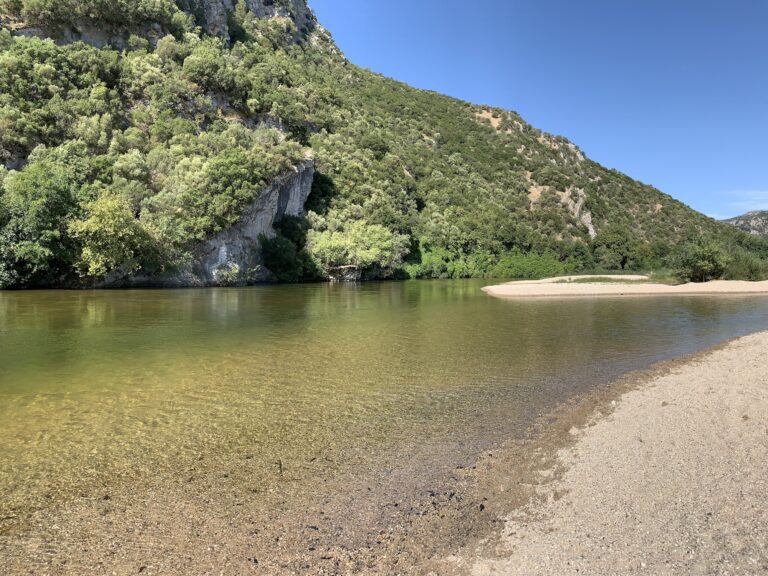
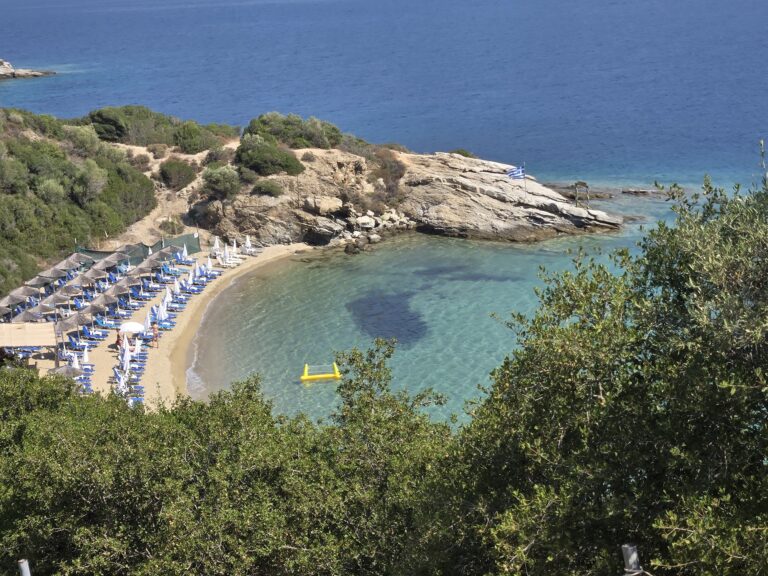
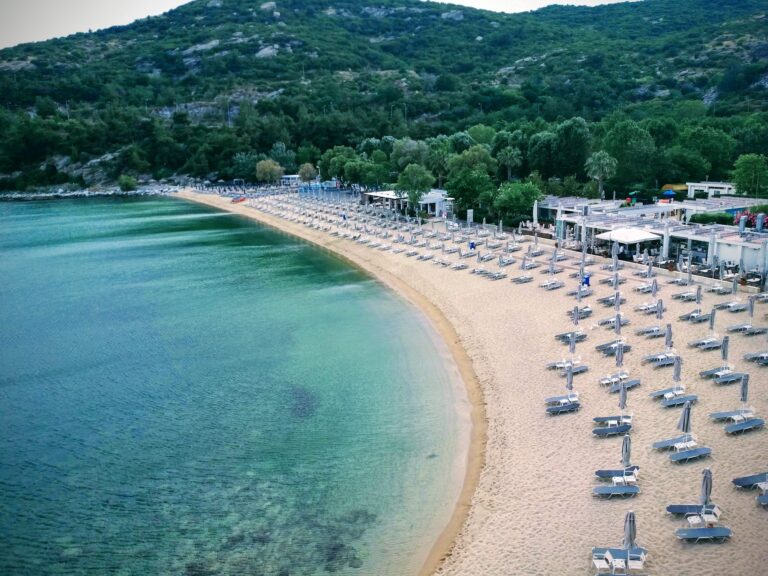
The beach is narrow and elongated. It is covered with golden sand interspersed occasionally with pebbles. The water is clear with many fish and almost no seaweed. The narrow character reflects the urban geography — Rapsani is contained between the coastal road above it and the sea, with limited space to expand. The elongated shape compensates: the beach is longer than it appears from any single point.
The water entrance is gentle, making it suitable for families with young children. The stone line at 3–4 metres — a natural feature of the seabed — is the specific honest caveat that distinguishes good advice from promotional description. Beyond the stone line the seabed returns to sand. Entering with water shoes and swimming beyond the stones is straightforward; entering barefoot and being surprised by the rocks is the visitor experience that generates negative reviews.
The beach is not typically crowded, offering a more relaxed experience. The best time to visit is the end of spring or the beginning of summer, or in September–October.
The Kavala Castle and the Byzantine Aqueduct: Visible From the Beach
The Kavala Kastro — the Byzantine fortress built on the promontory of the Panagia quarter — is visible from Rapsani beach looking north toward the old city. The castle was built in the late Byzantine period, expanded by the Ottomans, and remained in use until the 19th century. The walls along the promontory are the most dramatic visible element of Kavala’s medieval heritage.
The Kamares aqueduct — the 16th-century Ottoman structure built on the ruins of a Roman aqueduct — is the second major visible heritage element. Its multi-arch stone construction is visible from multiple points in the city and appears in the background of photographs taken from the beach toward the Panagia quarter.
Both structures are within walking distance of the beach. The combination of the morning swim at Rapsani and a walk through the Panagia quarter, the Mehmet Ali house, and the Kamares aqueduct is the Kavala cultural day programme that the beach’s central position facilitates.
The Municipal Park of Faliro: Adjacent to the Beach, Tree Shade, Playground
Faliro Park — the municipal park next to Rapsani beach — provides the specific family infrastructure that urban beaches require: tree shade, benches, and a playground adjacent to the sand. The park transition between city, park, and beach is the specific character of the Rapsani area that makes it a functional all-day option for families who want to alternate between swimming and shade.
The Kavala Beach Sequence: Where Rapsani Fits
Rapsani is the beach closest to the city centre. Kalamitsa beach is on the west entrance of the city, awarded with the Blue Flag and accommodating a large number of bathers during the summer months. No entrance fee. Batis beach is 4km from Kavala, organised, Blue Flag, with a campsite. Toska is 5km, Blue Flag. Perigiali Beach Kavala Greece is at the east exit, semi-organised, Blue Flag, with oak shade and fish tavernas next to the sea.
The choice between them is largely about distance tolerance: Rapsani for no-distance-at-all, Kalamitsa for west-of-centre, Perigiali for east exit, and Ammoglossa Beach Keramoti Greece for the full 40km peninsula experience with the Thassos view and the consumption-model sunbeds.
Kavala for More Than the Beach: Mehmet Ali, Apostle Paul, Philippi
Kavala warrants more than a beach day. The Mehmet Ali house in the Panagia quarter is open to visitors — the founder of modern Egypt was born here in 1769, and the house preserves the specific domestic architecture of an 18th-century Macedonian port family. The Imaret — the Ottoman charitable complex he funded for the city in 1817 — is now a hotel and one of the finest examples of Ottoman architecture in Greece. The Apostle Paul first landed in Europe at the Kavala harbour in 50 CE — the commemorative plaque marks the spot.
Philippi, 17 kilometres away, is the UNESCO World Heritage Site where Paul preached his first European sermon. The amphitheatre hosts the Philippi Festival each summer.
Rapsani Beach at Kavala is the free municipal Blue Flag beach nicknamed the “child of the city” — located next to Faliro Park in the city centre, Blue Flag every year since 2009, narrow elongated golden sand, stone line 3–4 metres in (water shoes strongly recommended), clear water with many fish, not crowded, buses No. 1/4/5/8/10 from the city, one taverna directly at the beach, the Byzantine Kavala Kastro visible above, the Kamares aqueduct visible from the park, Mehmet Ali house and Imaret 15 minutes’ walk, free admission.
Walk from the city centre. Bring water shoes for the stone line. Swim beyond it.
Map
Sorry, no records were found. Please adjust your search criteria and try again.
Sorry, unable to load the Maps API.
Near by places: