Nisiotissa Beach Evia: A Tower of Uncertain Purpose
Profile
Nisiotissa Beach, Neos Pyrgos: Nobody Is Entirely Sure What the Tower on the Islet Was Actually For
Greece | Neos Pyrgos | Istiaia-Aidipsos, Northern Evia
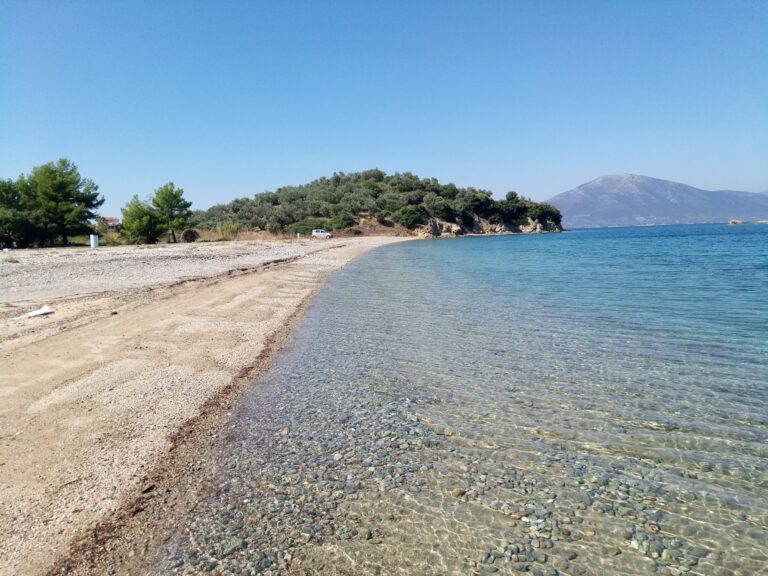
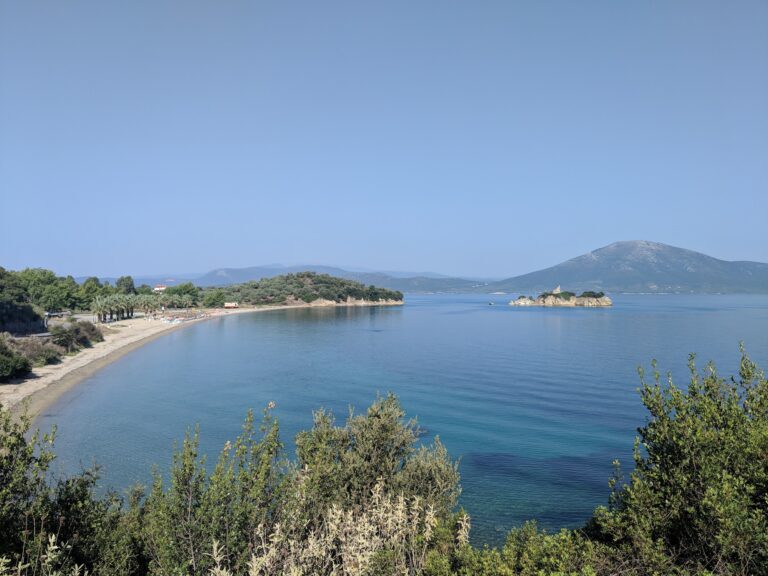
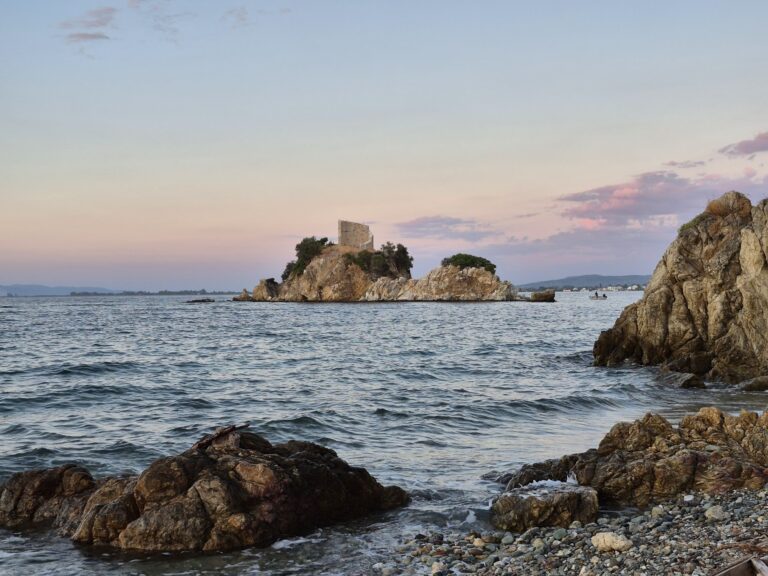
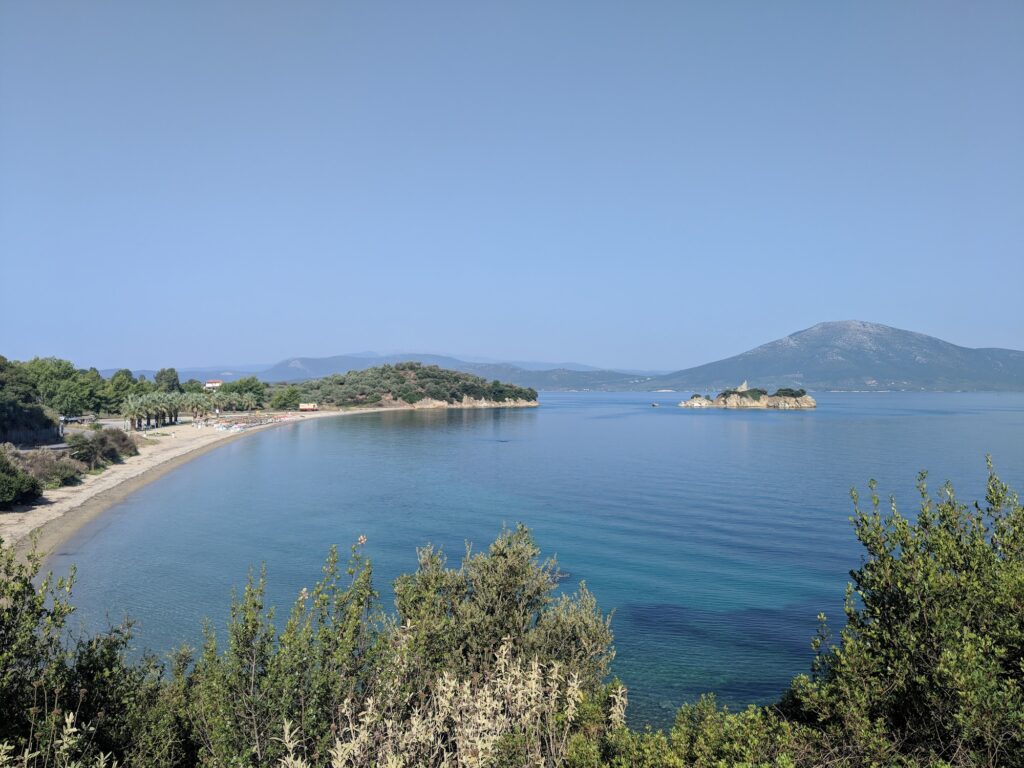
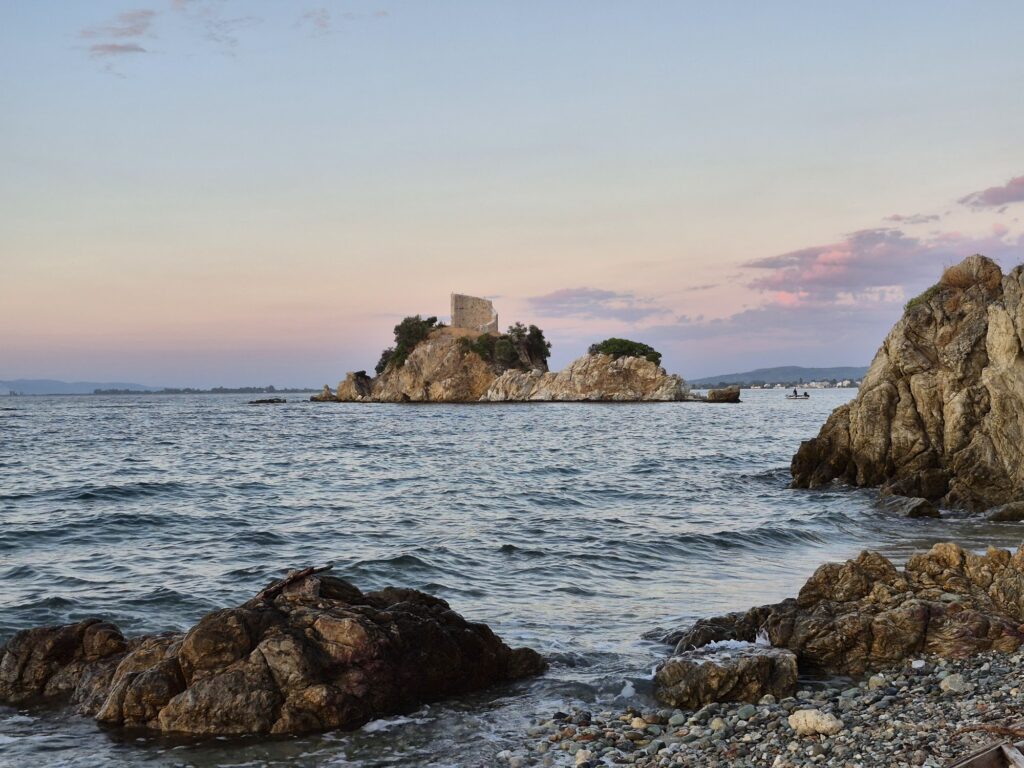
The islet opposite Nisiotissa beach carries the local name Monastiri, and on its highest point stand the ruins of a small construction generally dated to the Frankish period, the 13th or 14th century. What that construction was actually built for remains genuinely unresolved. A specialist archive devoted to Greek fortifications states the position would make sense for a watchtower, but notes there are also indications the ruin may instead have been a mill, or a Frankish or Venetian chapel. Other sources describe the remains more loosely as a tower, or as the combined ruins of a church from the Frankish period and a tower added later under Ottoman rule. I would treat the watchtower description, which has become the default in most popular accounts, as the most visually plausible reading of the site rather than a settled archaeological conclusion, since the underlying scholarship itself stops short of certainty.
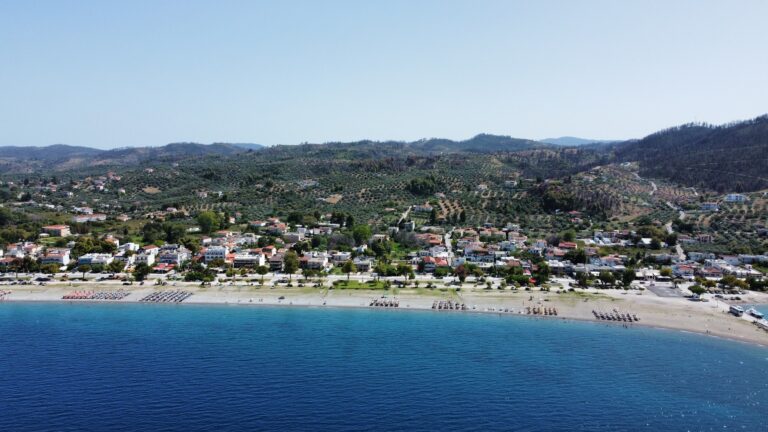
The beach takes its name directly from the islet — Nisiotissa derives from the Greek word for islet — and sits a kilometre or so west of the village of Neos Pyrgos, itself a settlement with its own specific origin. Neos Pyrgos was founded in 1924 by Greek refugees from Asia Minor, following the population exchange after the Greco-Turkish War, a pattern of resettlement I have encountered at several other points along the Greek coast in this series, including at Palaia Fokaia and Nea Makri in Attica. The fishing tradition the original refugees carried with them remains visible in the village’s tavernas and ouzeries today.
Getting There: Eleven Kilometres From Istiaia, a Ferry Crossing or a Longer Drive From Athens
From Istiaia, the regional centre and one of the oldest towns on Evia, the beach is approximately ten to eleven kilometres away by road, a drive of around ten minutes. The most direct route from Athens uses the Arkitsa–Edipsos ferry crossing, taking roughly forty-five minutes, after which Nisiotissa is a further fifteen-minute drive north. The alternative overland route, via the bridge at Chalkida and the mountain pass through Prokopi, takes closer to three hours but passes through forested terrain along the way.
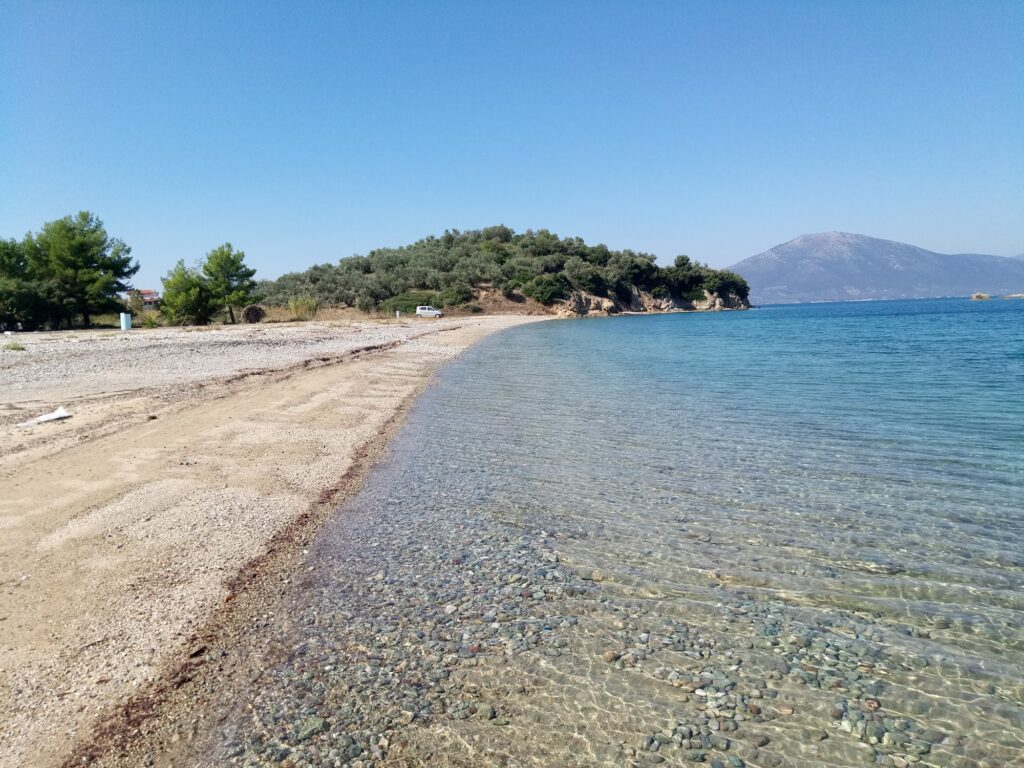
A paved road connects to a short stretch of dirt track just before the coast, leading to a large unpaved parking area directly behind the beach, with only a few flat steps separating the parking from the sand itself.
The Beach: Sand and Pebble, Wadeable to the Islet at Low Tide, Sheltered Bay
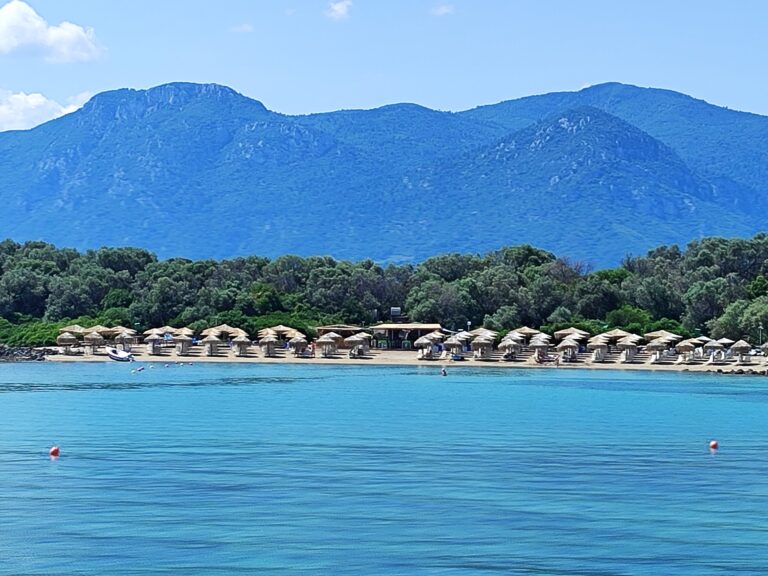
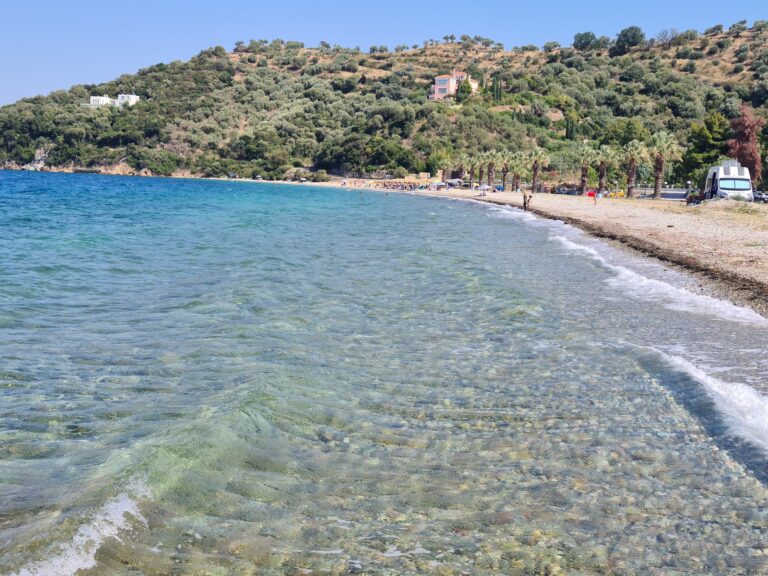
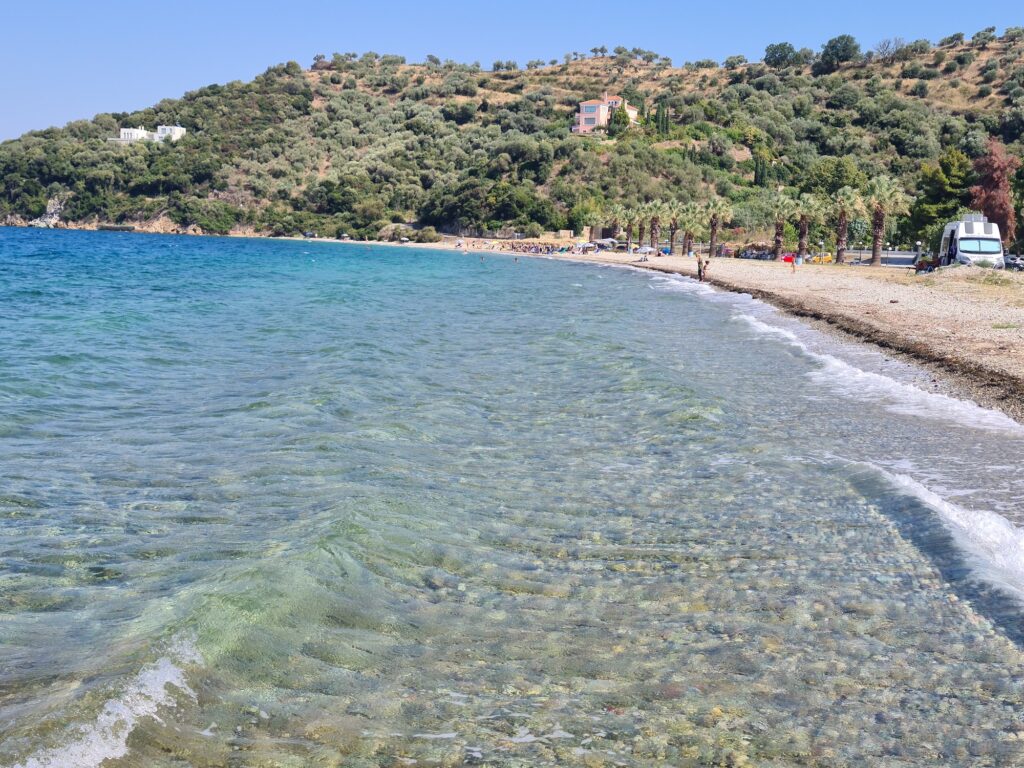
The shore combines fine golden sand with small, smooth pebbles along a sheltered curve of the North Euboean Gulf, the water remaining clear and cool owing to its open exposure to the gulf’s currents. At low tide, the water between the shore and Monastiri islet becomes shallow enough to wade across, allowing visitors to reach the ruins directly and explore the rocky perimeter, with the underwater visibility around the submerged stones noted as particularly good for casual snorkelling.
A portion of the beach is organised with sunbeds and umbrellas from the local beach bars, while the considerable remaining space stays unorganised, suiting visitors who prefer to bring their own gear or simply find a quieter stretch away from the central section.
Neos Pyrgos, Oreoi, and the Wider North Evia Coast
Neos Pyrgos itself offers traditional tavernas and ouzeries serving fresh fish, octopus, and calamari, along with a fig production cooperative producing local jam. A short distance away, the harbour village of Oreoi hosts an annual sailing regatta and displays a substantial fourth-century BC marble bull statue, raised from its harbour in 1965. The thermal springs of Aidipsos, known since antiquity and referenced by Aristotle and Strabo among others, lie roughly nine kilometres away, and the Lichadonisia islets, sometimes described as the Seychelles of Evia, are reachable by boat for those extending the visit into a longer day trip.
Nisiotissa Beach near Neos Pyrgos in northern Evia faces the small islet of Monastiri, where ruins generally dated to the 13th or 14th century Frankish period stand of genuinely uncertain original purpose — watchtower, mill, or chapel remain open possibilities rather than a settled identification. Neos Pyrgos itself was founded in 1924 by refugees from Asia Minor. Sand and pebble shore, wadeable to the islet at low tide, partly organised with the remainder left open, eleven kilometres from Istiaia, reachable from Athens via the Arkitsa–Edipsos ferry or a longer overland route through Chalkida and Prokopi, with the thermal springs of Aidipsos and the Lichadonisia islets within reach for a longer stay.
Take the ferry from Arkitsa. Wade to the islet at low tide. Decide for yourself what the ruin was actually for.
Map
Sorry, no records were found. Please adjust your search criteria and try again.
Sorry, unable to load the Maps API.
Near by places: