Monolia Beach: Greek Seychelles With a WWII Shipwreck
Profile
Monolia Beach, Lichadonisia, Greece: The “Greek Seychelles” Accessible Only by Boat, With One of Only Two Concrete Shipwrecks in the World at 10m Depth
Greece | Lichadonisia | North Evia / Phthiotis, Central Greece
The name comes from the olive trees. Monolia means olive — the island is named after the numerous olive oil trees present on it. At around 80 acres it is the largest of the seven Lichadonisia islets, and the only one that was ever inhabited. The Lichadonisia are now uninhabited, but until the early 1960s they were a permanent home to dozens of people.
The mythology is more dramatic than the geography. According to myth, the name came from Lichas, the servant of Hercules, who was responsible for delivering the poisoned tunic from Deianeira to Hercules. When the demigod put on the tunic he experienced intense pain and accused Lichas of betrayal. In his rage, he seized him and hurled him from the top of Mount Oiti into the sea. Poseidon transformed these into small islands.
The geology is interesting too. The creation of these islands is linked to a strong seismic tremor that occurred in 426 BC. Historical sources indicate that this tremor “swallowed up” parts of the land while simultaneously creating the islets we now know as Lichadonisia.
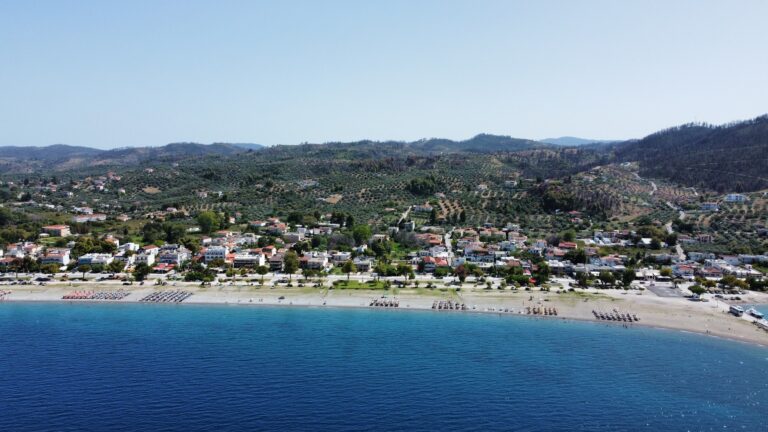
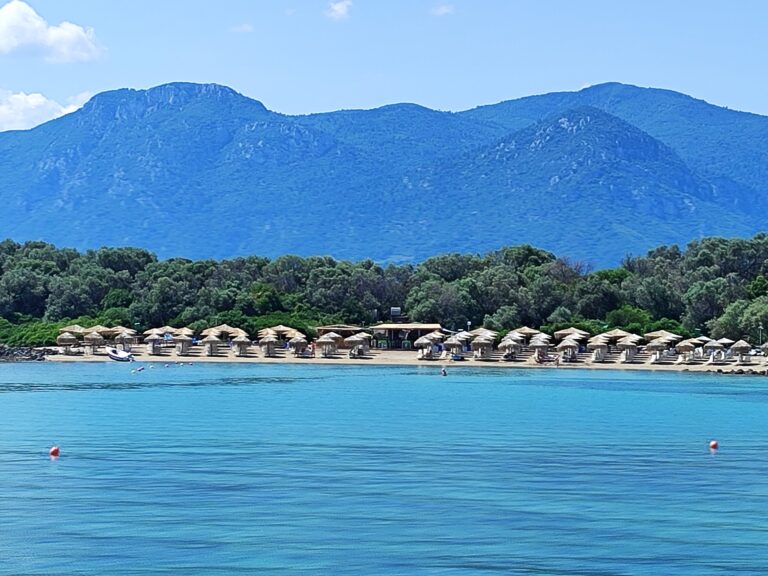
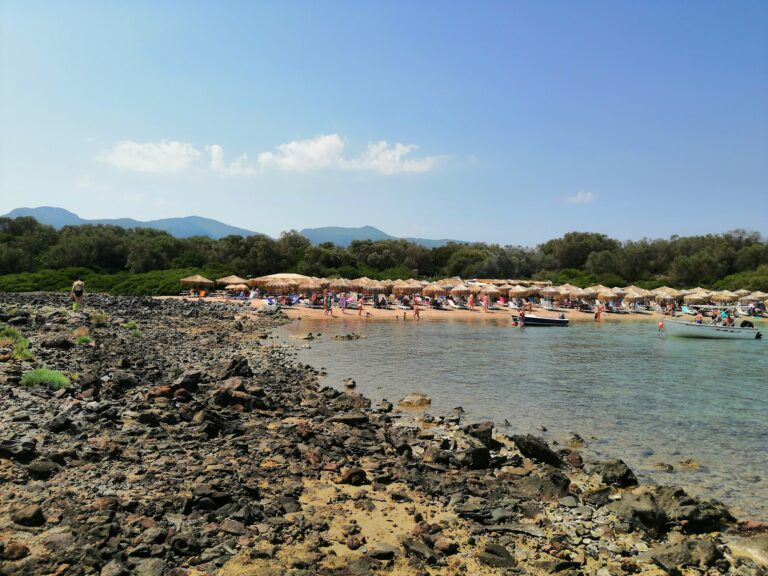
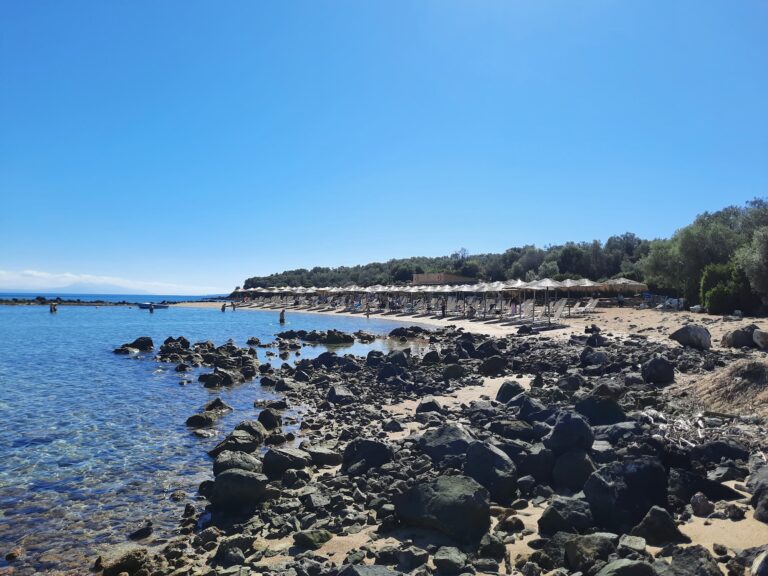
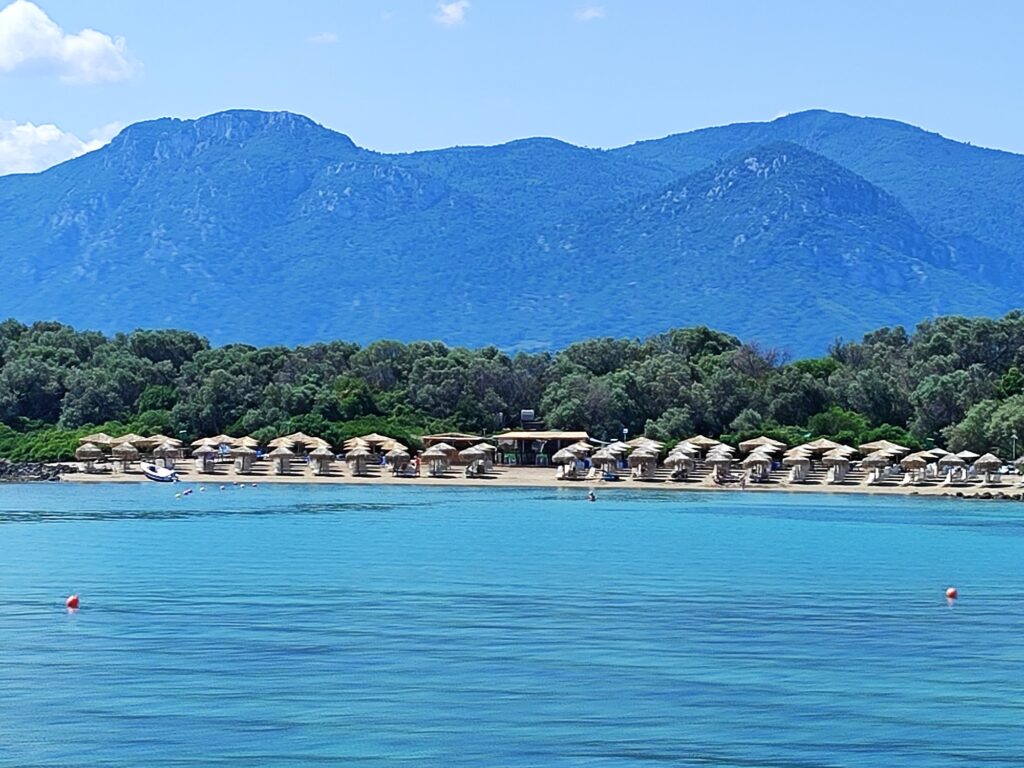
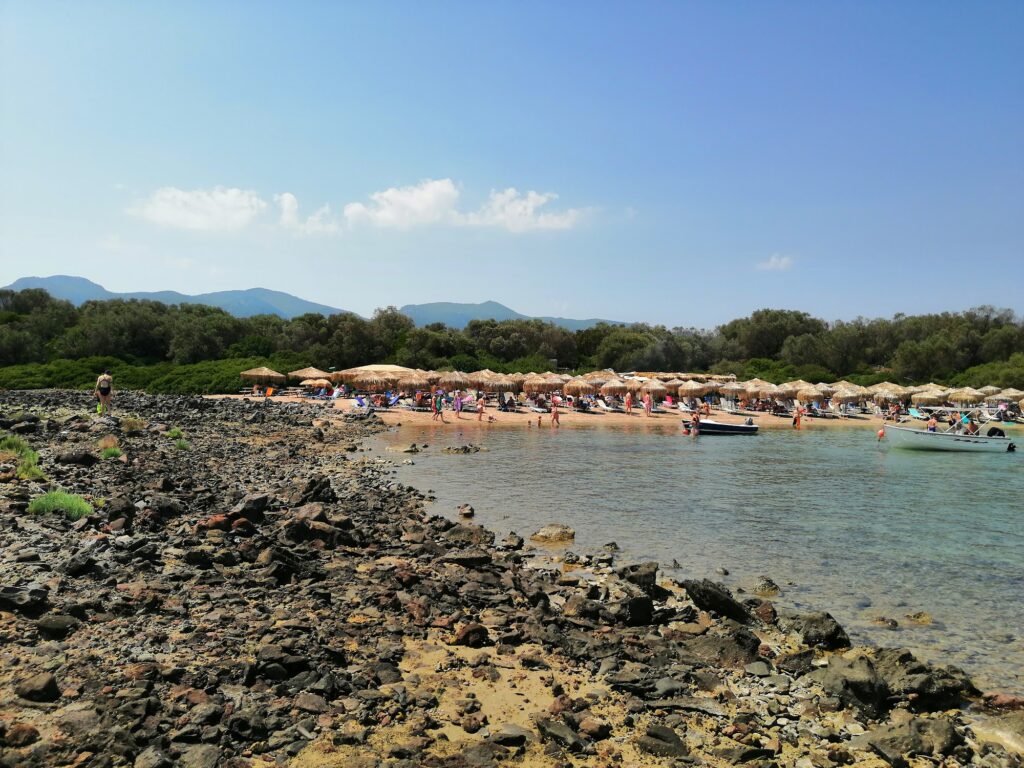
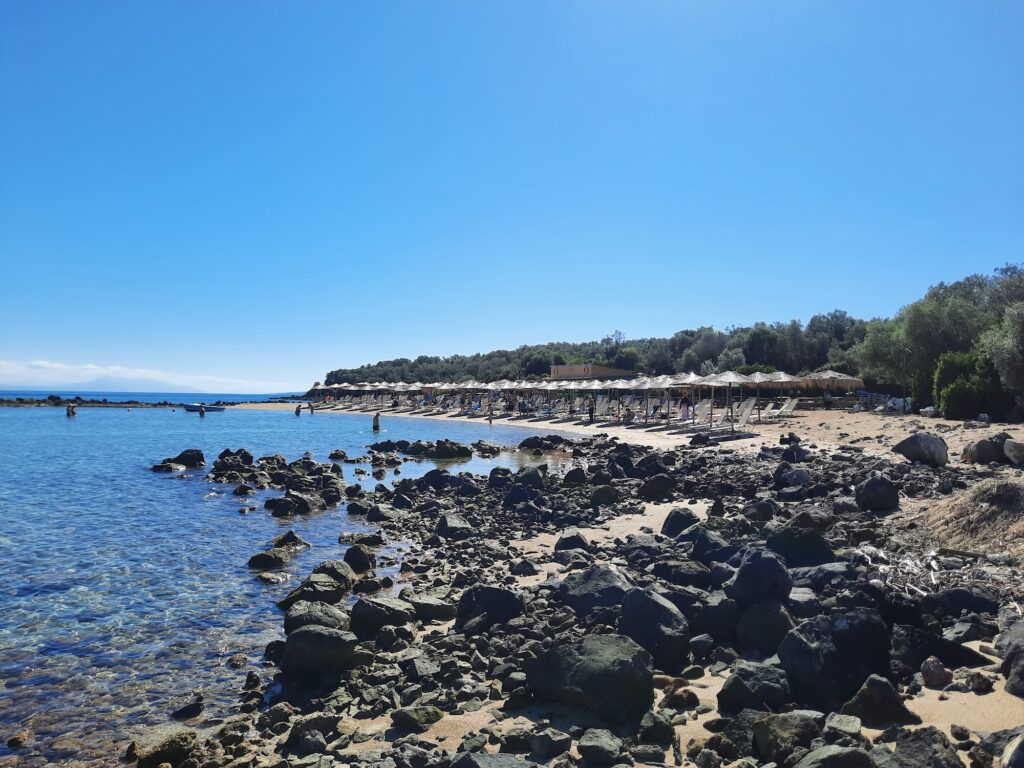
The beach itself is small, organised, heavily visited in August, and genuinely beautiful. The main beach of Monolia comes equipped with a lively beach bar, sunbeds, cold drinks, and a canteen for food. Because most boats arrive here, this is the least exciting option for bathing if you prefer quiet. However, it suits those who prefer a lively atmosphere.
Getting There: Boat From Kamena Vourla (30 Minutes) or From Kavos, Evia (10 Minutes), No Other Option
There is no road to Monolia. Daily boats depart from Kamena Vourla towards Lichadonisia at 11:00 and 12:00 (with some seasonal changes) and return at 16:00, 17:00, and 18:00. The route takes about half an hour to get to the islands, with small stops to discuss the history of the area, spot the shipwreck from the glass bottom, and try to find the seals.
The shorter route: from Evia via Kavos, the boat takes you to the islands for €10 per person round trip, including a sunbed at Monolia beach. The first tour lasted 25 minutes with a tour around the islands, visiting the shipwreck and spotting monk seals.
From Athens, follow the main E75 motorway north towards Kamena Vourla — you arrive in under 2 hours.
By private boat, anchoring in the turquoise channel between Monolia and the neighbouring islets is the option for anyone who wants the colour without the crowds.
The Beach: Small, Sandy, Organised, Overcrowded in August, Strong Currents Outside the Beacons
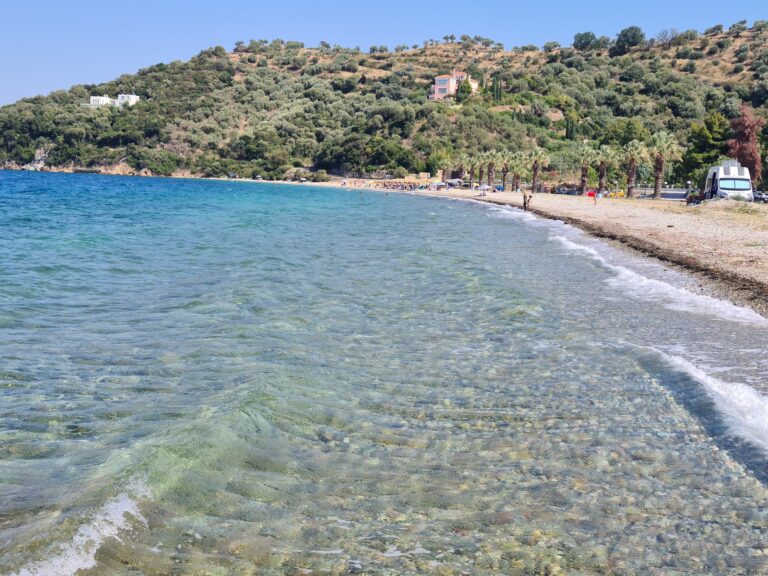
The beach is the specific thing to calibrate expectations about. We found the main beach the least exciting option for bathing. The beach is small, shallow, and when full of people there is little space. The volcanic soil makes it difficult to set an umbrella in the smallest space.
The current warning is the critical safety point. There are insidious and strong sea currents that start outside the rocks that close the small bay of Monolia. If you make the mistake of swimming outside the beacons but outside the rocks that close the little bay, the consequences are serious. Stay inside the buoys. The currents between the islets are strong enough that swimming between the islets would be dangerous.
The beauty of the water inside the bay is not in question. The turquoise colour from the shallow sandy bottom and the clear water is the specific quality that earns every comparison to the Seychelles.
The Pioneer I Shipwreck: One of Only Two Concrete Ships Ever Wrecked in the World
The Pioneer I was the first concrete ship to be built and launched in Greece. It is located between Monolia and Megali Stroggyli islands at 10m depth, sitting upright on a sandy seabed with its bow heading northwest.
It was the German cement ship Pioneer I, which carried supplies and war material. However, the Pioneer I was bombed in 1943 and sank to a depth of 9 to 16 metres. The ship sank immediately as it had been built of cement by the German military during World War II, as other materials such as steel were quite expensive. There are only 2 cement ships wrecked in the world.
The specific detail: according to records, the ship was attacked while carrying 200 tons of coal for the army, occupied by Greek rebels, and then sunk. The glass-bottom boat tours stop directly above it — the outline of the vessel is visible from the surface without diving. Divers can explore it fully; the seabed depth and the upright position make it one of the more accessible wrecks in Greece.
The Abandoned Village, the Church, and the Monk Seals
A small white and blue building is located in the southern part of Monolia, near the abandoned fishermen’s settlements. From the main beach bar, there is a small footpath marked with white stones that will lead you straight there in under 2 minutes.
The church of Agios Georgios is in good condition and still performs weddings. The ruined houses alongside it create the contrast that visitor accounts describe: the organised beach bar sunbeds 2 minutes’ walk from stone walls that haven’t been inhabited since the 1960s.
The monk seals are not guaranteed but are frequent. Monk seals have become permanent residents of the area in recent years. The boat tour is the most reliable way to see them — the captain knows where they tend to be and the glass-bottom boats approach at low speed.
The Other Islets: Strongyli, Mikri Stroggyli, and the Lighthouse Since 1910
Strongyli is the second largest island; atop it stands a large lighthouse that has been in operation since 1910. It is owned by the Hellenic Navy. Mikri Stroggyli has its own smaller organised beach, an alternative to Monolia for visitors who want the turquoise water without the main beach crowd.
Monolia Beach on Lichadonisia is the boat-access-only turquoise sand beach on the largest Greek Seychelles islet — 10 minutes from Kavos on Evia or 30 minutes from Kamena Vourla on the mainland, the Pioneer I concrete shipwreck at 10 metres visible from the glass-bottom boat (one of only two such wrecks in the world), strong currents outside the bay beacons (stay inside them), the abandoned village and the still-functioning wedding church 2 minutes from the sunbeds, and monk seals in the surrounding waters.
Take the boat. Stay inside the buoys. Walk to the church.
Map
Sorry, no records were found. Please adjust your search criteria and try again.
Sorry, unable to load the Maps API.
Near by places: