Kato Gouves: A Beach Named for a Hollow in the Land
Profile
Kato Gouves: Named for a Hollow in the Ground, Split Between Hill and Shore
Greece | Kato Gouves | Hersonissos, Crete
The village’s name comes from gouva, the Greek word for a hollow in the earth, a description of the land’s natural shape rather than anything more poetic. Gouves is technically a split village, the way several settlements on this coast turn out to be once you look closely: Pano Gouves, sometimes called Ano Gouves, sits up in the hills, the traditional centre with narrow streets and old stone houses; Kato Gouves, the beach resort most visitors actually mean when they say the name, sits down on the coast itself, eighteen kilometres east of Heraklion at the foot of Mount Ederi.
A small church, dedicated to Saints Constantine and Helen, stands within a pine grove right by the sea, and it’s become a popular wedding and christening venue for families from Heraklion — turn up on a Saturday afternoon, and there’s a real chance you’ll stumble across a wedding in progress, or a christening on a Sunday morning. I find something quietly nice about a beach town where a stranger’s family celebration might be happening just steps from the sand while everyone else carries on with their swim.
The valley below Pano Gouves was farmed for generations, the land producing vegetables, olives, and cereals before tourism took over entirely; today, that same fertile ground holds hotels and apartment blocks rather than crops, though the older village above still carries the slower pace its farming history left behind.
Getting There: 18 to 20 Minutes East of Heraklion
I followed the New National Road (E75) east toward Agios Nikolaos, taking the Gouves exit and continuing down toward the coast — the beach sits directly along the main waterfront road once you arrive. The drive from central Heraklion took me a little under twenty minutes.
The KTEL bus toward Hersonissos or Malia departs Heraklion’s central station roughly every thirty minutes and stops directly in Kato Gouves, a short walk from the sand. From Heraklion International Airport, the drive runs about fifteen minutes — close enough to make this a realistic stop right after landing. Free parking exists both in organised lots and along the coastal road, and I didn’t find competing for a space here especially difficult, even in peak season.
The Beach: Fine Sand, Small Artificial Piers, Coves Sheltered From the Wind
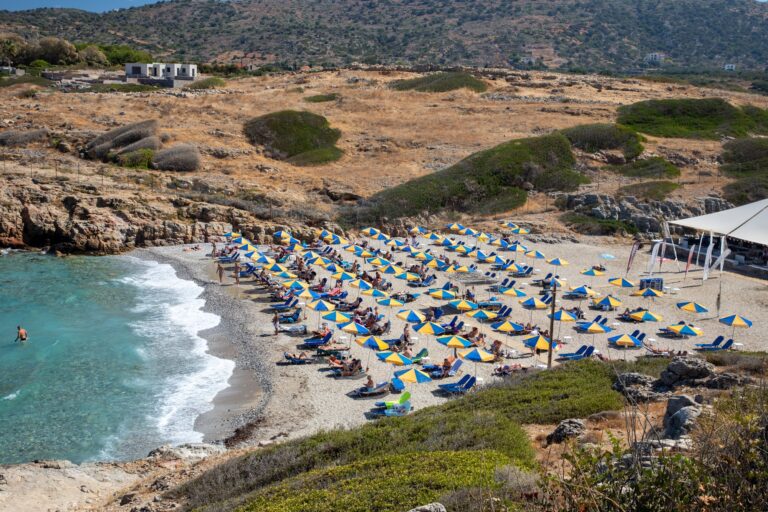
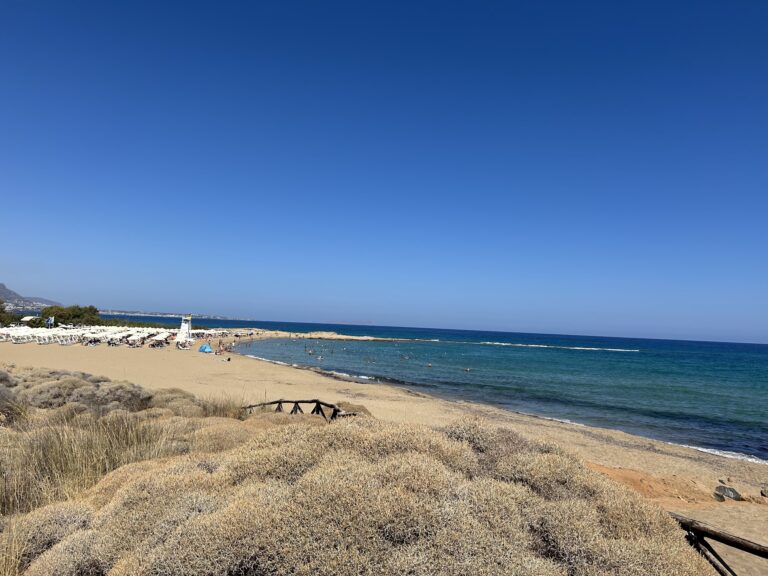
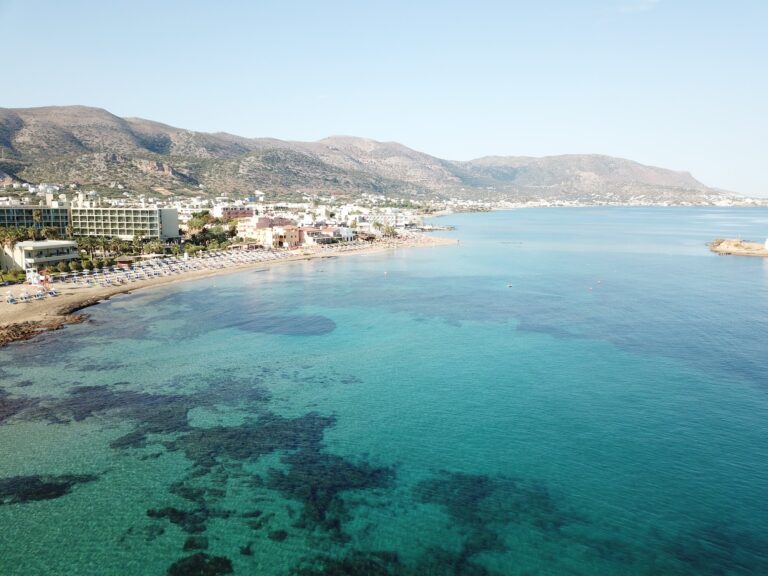
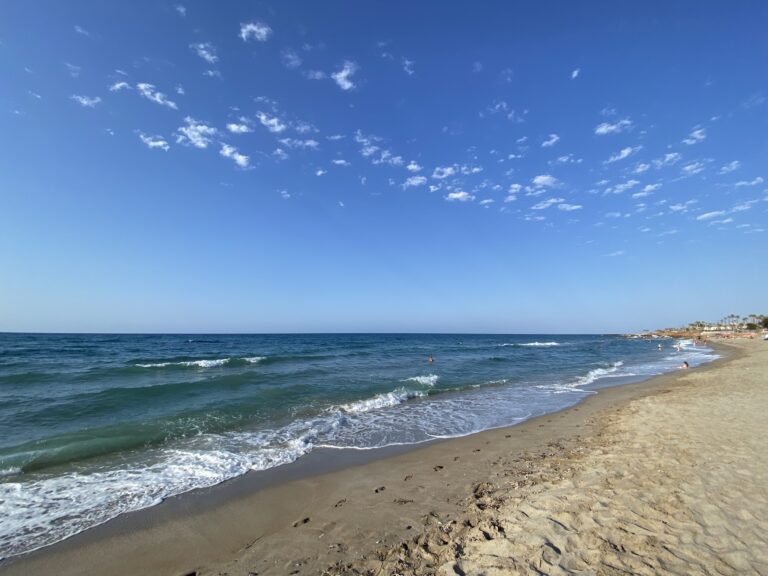
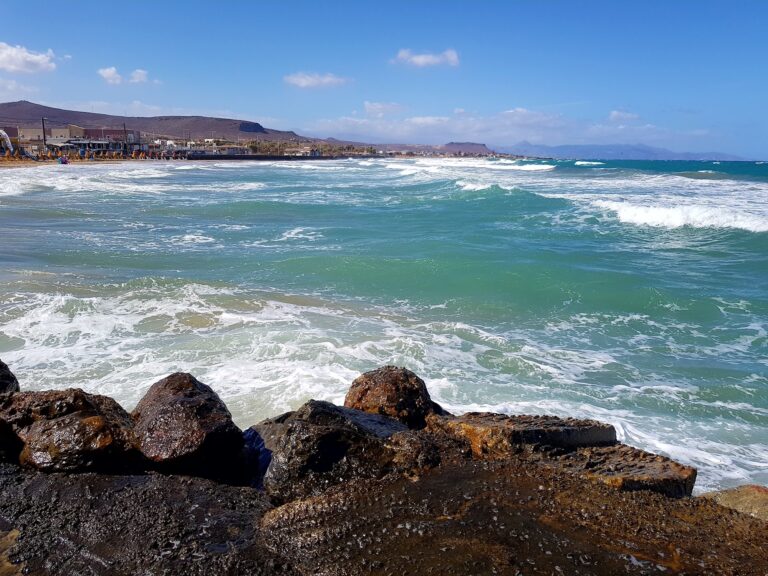
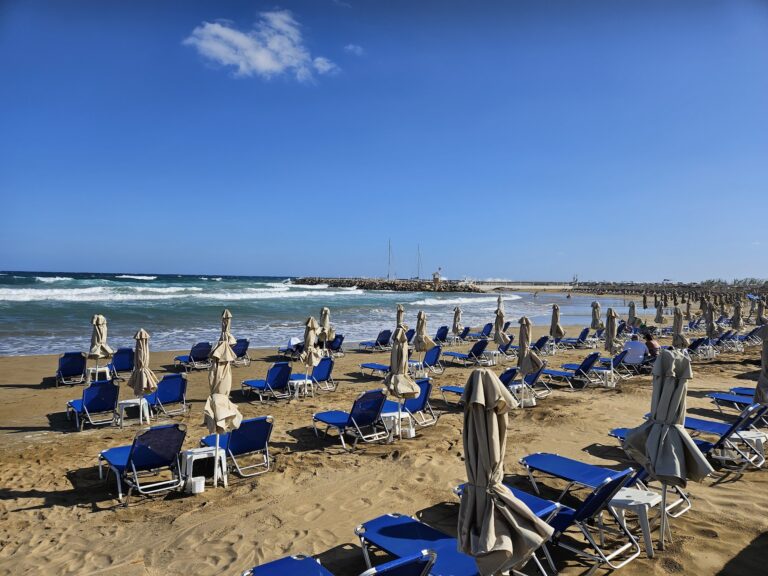
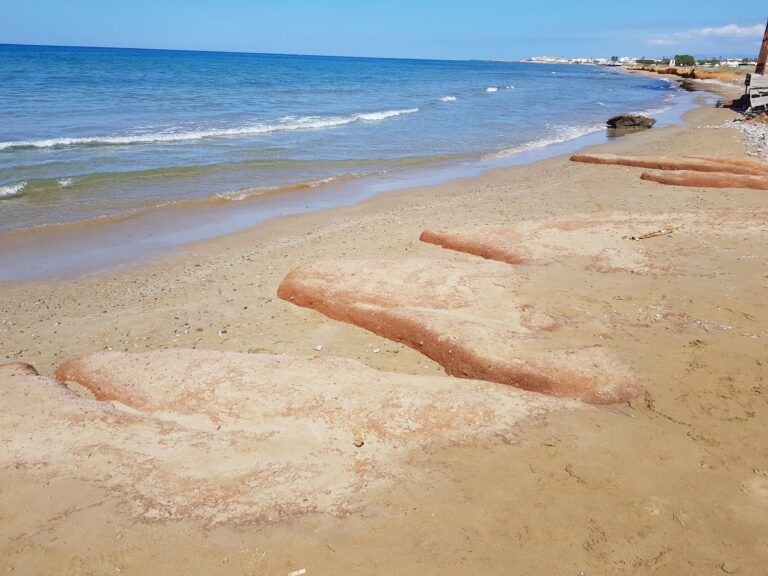
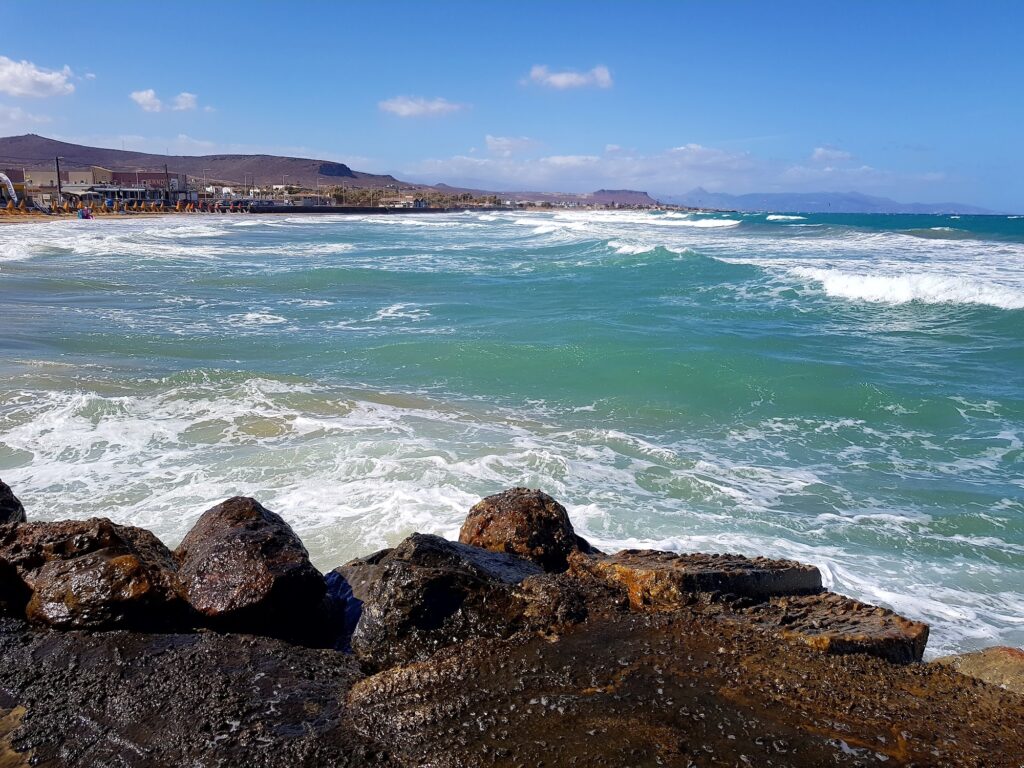
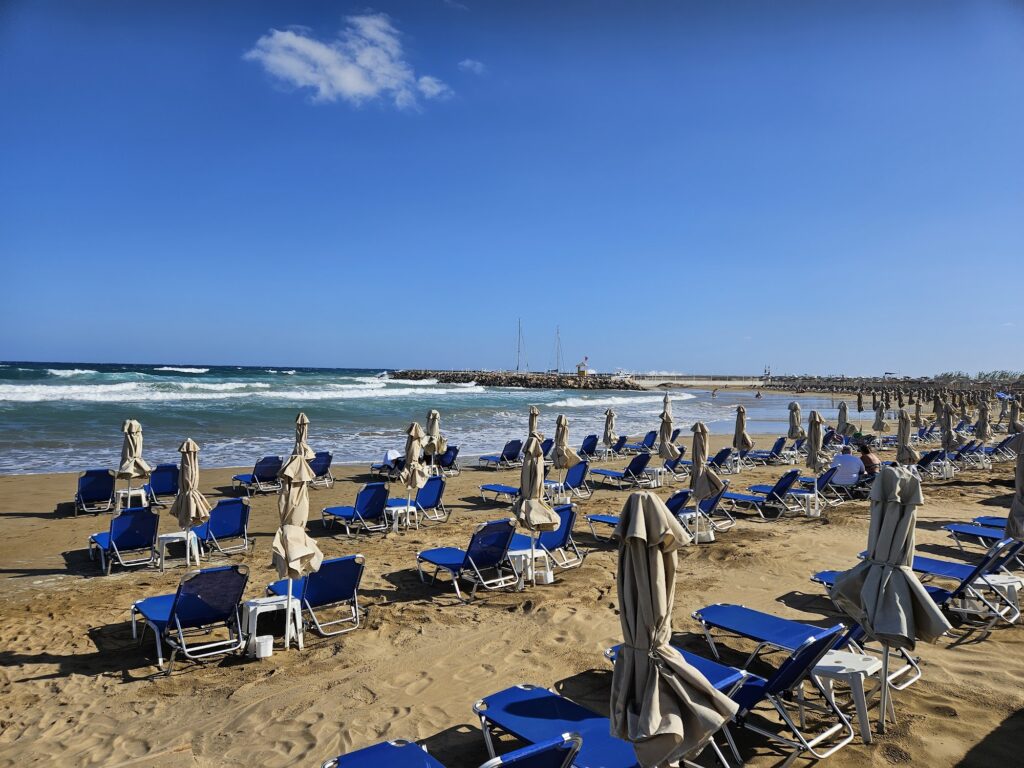
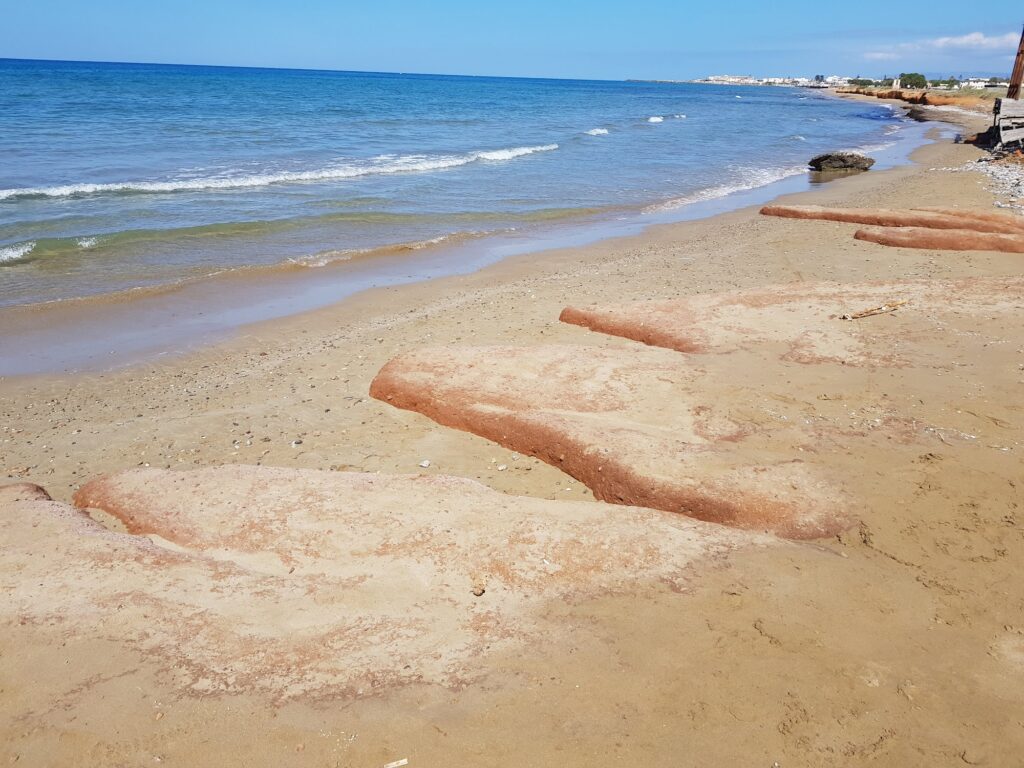
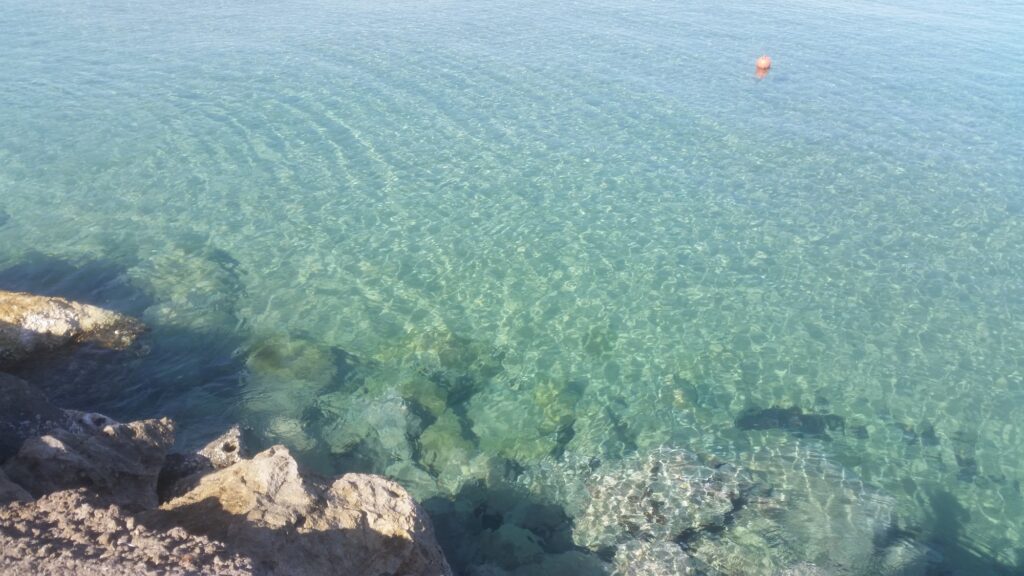
The shore is fine sand with a gradual, gentle slope, well suited to families and the kind of long, relaxed wade I’ve found at several beaches along this stretch. The genuinely distinctive feature here is a series of small artificial piers and breakwaters built along the shoreline specifically to absorb wave impact and protect the sand — the result is a string of smaller, sheltered coves rather than one continuous open beach, each one staying calmer than the open water just beyond the piers even when the north wind picks up elsewhere on this coast.
A roughly three-kilometre paved promenade, Possidonos Street, runs along the waterfront from the Creta Sun Hotel at one end to the municipal beach and the Gouves campsite at the other, lined with ornate street lamps every ten metres — a genuinely pleasant evening walk regardless of whether you’ve spent the day swimming. Sunbeds, umbrellas, showers, changing facilities, and lifeguards cover the organised stretches, and diving centres and water sports operators offer jet skiing, paddleboarding, waterskiing, and paragliding for anyone wanting more than a straightforward swim.
What Sits Nearby
The CRETAquarium, one of the larger aquariums in Europe, sits a short drive away in neighbouring Gournes, and the Skotino Cave, also called Agia Paraskevi’s Cave, lies inland near the village of Skotino — one of the largest caves on Crete, with a documented history of worship tied to the Minoan deity Britomartis, later identified with Artemis and then Diana. Pano Gouves itself, just up the hill, rewards a slower visit with its old churches and narrow streets, and the wider area carries several Minoan tombs alongside the Minoan-era villa I covered separately at Karteros Beach Heraklion Crete Greece, a short drive west along the same general stretch of coast that also includes Arina Beach Kokkini Hani Crete Greece.
Kato Gouves, eighteen kilometres east of Heraklion, takes its name from gouva, a hollow in the earth, and forms one half of a split village whose older, traditional centre, Pano Gouves, sits up in the hills above the coast. The beach itself is fine sand, gently sloping, broken into sheltered coves by small artificial piers that protect the water from the region’s frequent north wind. A seafront church popular for weddings, a three-kilometre lamplit promenade, and full water sports facilities round out a resort that’s noticeably calmer and more family-oriented than its busier neighbours, Malia and Hersonissos, further along the same coast. Eighteen to twenty minutes from Heraklion, fifteen from the airport.
Take the Gouves exit off the E75, or the bus toward Hersonissos. Walk the Possidonos promenade at sunset. Visit Pano Gouves up the hill, or the CRETAquarium and Skotino Cave, if you want to extend the day beyond the beach itself.
Map
Sorry, no records were found. Please adjust your search criteria and try again.
Sorry, unable to load the Maps API.
Near by places: