Ipsos Beach Corfu: The Golden Mile and the Mountain
Profile
Ipsos Beach Corfu Greece: The Golden Mile at the Foot of the Island’s Highest Mountain
Greece | Ipsos | Corfu, Ionian Islands
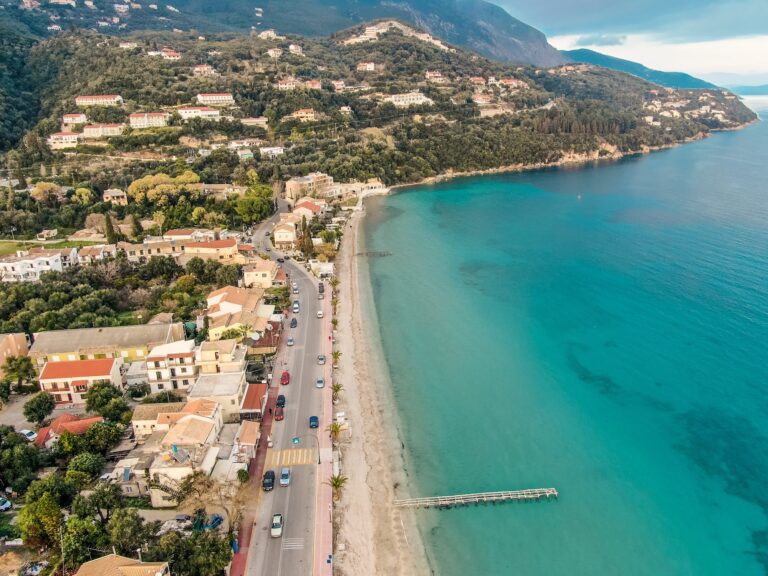
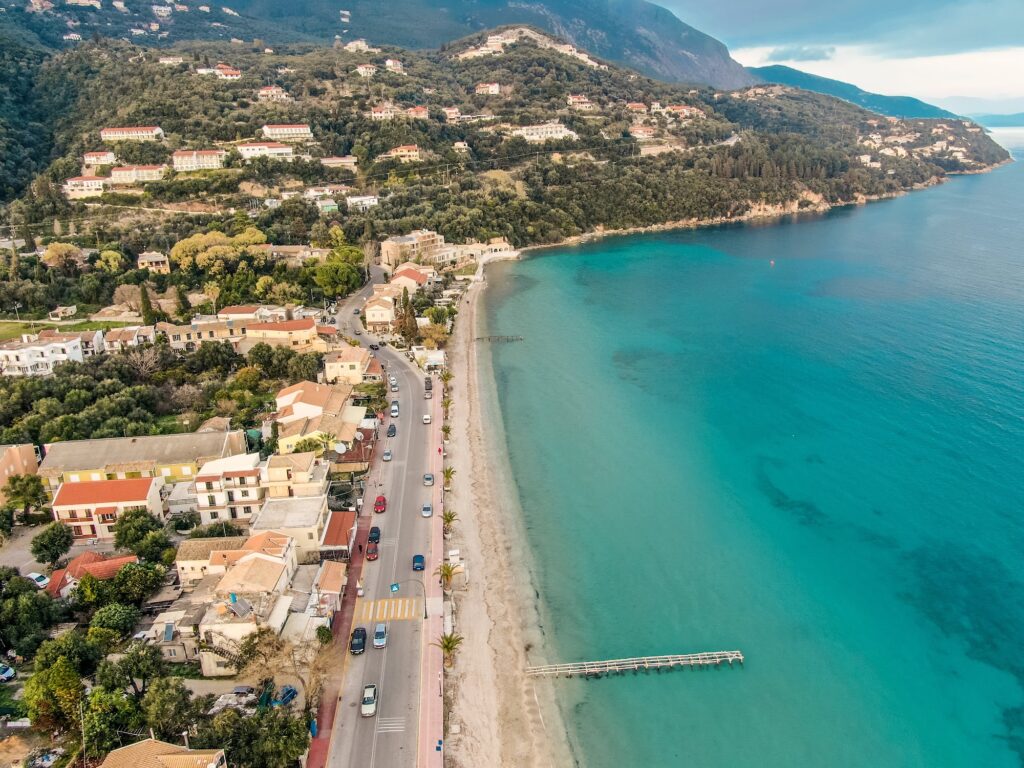
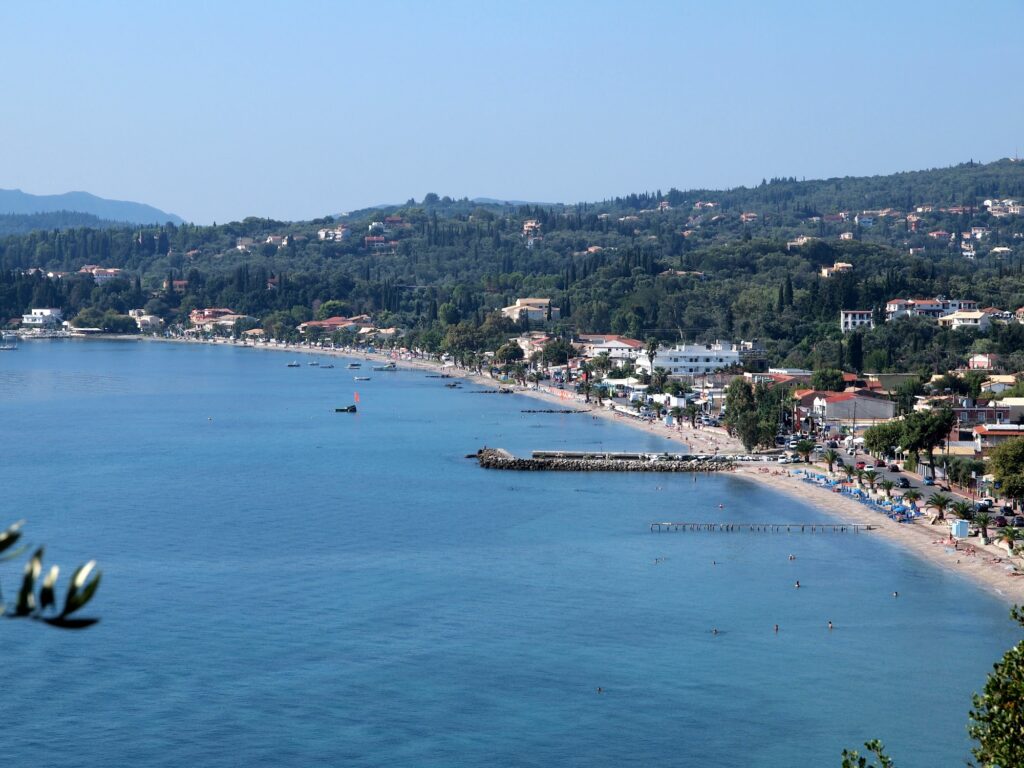
Mount Pantokrator rises to 906 metres directly behind Ipsos, and the relationship between the beach and the mountain is one of those specific geographic combinations that makes a place feel more substantial than its tourist reputation suggests. The mountain is the highest point on Corfu, and from the beach looking inland, its forested slopes fill the view entirely — olive trees, then pine, then the bare limestone of the upper slopes, all of it dropping steeply enough to the shore that the village feels compressed between the mountain and the sea rather than simply existing on flat coastal land. The Albanian coast, across the Ionian Channel to the east, is visible on clear mornings from the beach itself, close enough to read as a presence rather than an abstraction.
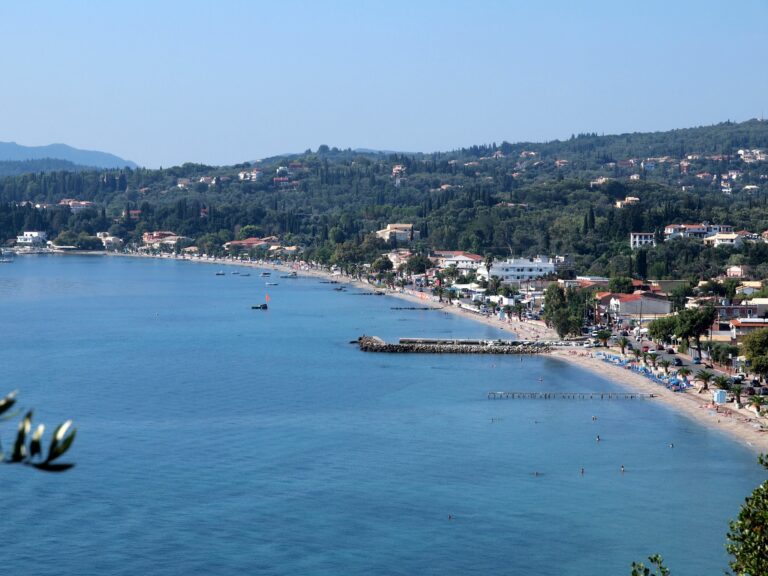
The beach is sometimes called the Golden Mile, sometimes Ypsos (the alternate spelling that appears on older maps and signage), and is divided partway along its length by a small working harbour where fishing boats dock and supply the tavernas on the promenade. That harbour is one of the qualities that distinguishes Ipsos from the resort strips to its south: the boats are there because local fishermen still use them, and the fish on the taverna menus is genuinely local rather than shipped in. The division of the beach by the harbour also provides an organisational reference point — the southern section, closer to Dassia, is quieter; the northern section, toward Pyrgi, is where most of the water sports operators and beach bars concentrate.
Getting to Ipsos Beach Corfu Greece: 14 Kilometres North of Town on the Coastal Road
The drive from Corfu Town covers 14 kilometres on the coastal road heading north, passing Kontokali, Gouvia, and Dassia before Ipsos itself comes into view — the crescent-shaped bay opening ahead with Pantokrator as the immediate backdrop. The journey takes 20 to 25 minutes by car and is straightforward rather than scenic in the sense that more remote parts of the island are scenic, since the road runs through continuous resort development for much of its length.
The Blue Bus service from San Rocco Square in Corfu Town runs every 30 minutes to Ipsos, making this one of the more reliably connected beaches on the island for anyone without a car. The bus stop is directly at the beachfront rather than requiring a walk from a junction, which matters at the end of a long day. Parking exists in lots at the northern end of the beach near the small harbour and along the side streets, though the summer demand for spaces is real enough that arriving before midday on a July or August weekend is worthwhile rather than merely advisable.
Ipsos Beach Corfu Greece: Pebble and Sand, a Working Harbour, No Lifeguards
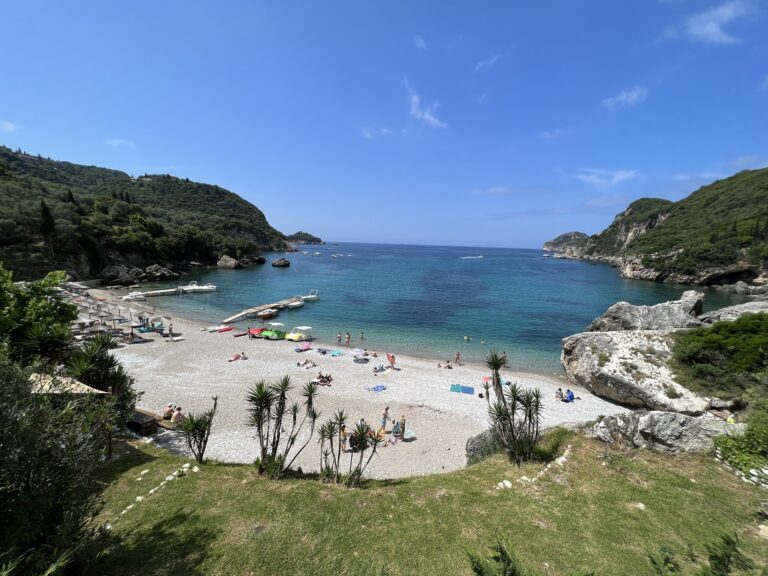
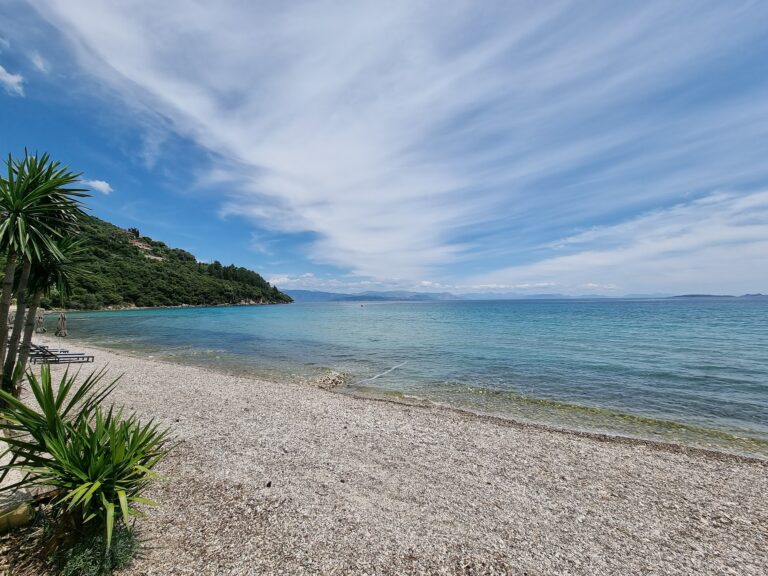
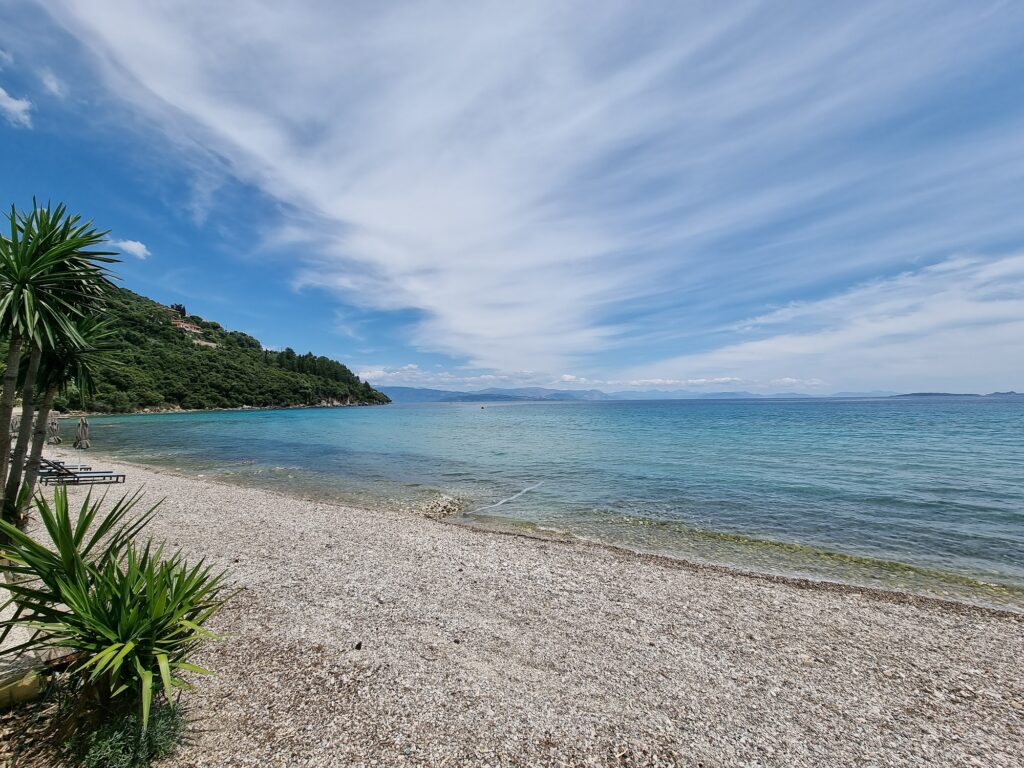
The beach surface mixes pebbles with some sand, the proportions shifting across different sections. The seabed is described consistently as having rocks beneath the shallow zone, which makes water shoes a reasonable precaution for anyone prone to minding such things. The swimming is good — the water is clean, the clarity decent even on busy days — and the bay’s natural curvature provides enough enclosure that conditions stay manageable rather than rough in the moderate winds that move along this coast in summer afternoons.
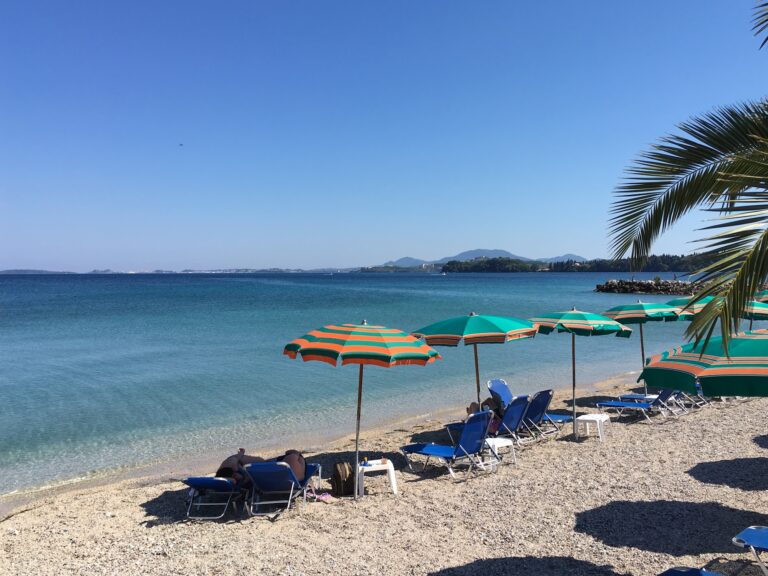
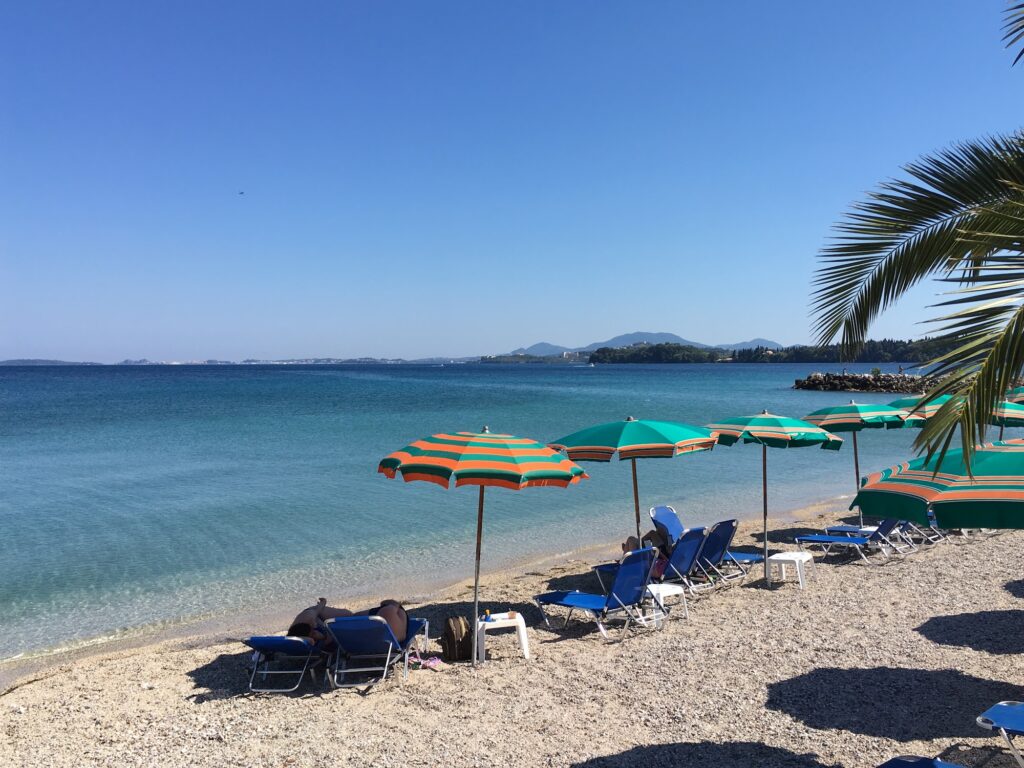
I should mention plainly that Ipsos does not have lifeguards stationed on the beach. Multiple independent accounts confirm this, and it is worth knowing before arriving with young children or nervous swimmers who rely on that presence as reassurance. The organised sections of the beach offer sunbeds and umbrellas at rates consistent with the rest of northeastern Corfu, some establishments providing them free with a food or drink purchase, others charging directly.
The Waterhoppers Diving Club, one of the most established diving operations on the island, works out of Ipsos and runs courses for beginners alongside more advanced dives for certified swimmers. The bay’s clear water and relatively accessible depths make it a workable base for this kind of operation, and day excursions to more remote dive sites on the island depart from the same location.
The Nightlife Dimension: Second Only to Kavos
The beach at Ipsos functions entirely differently after dark. The resort has been building its nightlife reputation since at least the 1980s, drawing a predominantly young British clientele to a strip of pubs, cocktail bars, and clubs that by most accounts operates until dawn through the peak summer weeks. Dirty Nellies, the Hideaway Pub, and several clubs with more generic names constitute the historic core of this scene, and the promenade between them carries the social character of a place that knows exactly what it is offering and makes no apologies for it.
For anyone who values sleep, the northern section of the bay toward the harbour and Pyrgi is quieter than the central and southern parts of the main strip, and accommodation in Pyrgi itself offers a useful distance from the main noise while keeping the beach accessible on foot. The daytime beach and the nighttime resort are genuinely different registers of the same place, and treating Ipsos as one or the other rather than both simultaneously produces a cleaner experience of whichever you came for.
Mount Pantokrator: The Hiking Route From the Beach
The trail from Ipsos up Mount Pantokrator is one of the specific reasons to stay in this part of the island rather than treating the mountain purely as a backdrop. The ascent is possible on foot from the village, passing through olive groves and then pine forest before reaching the monastery of Pantokrator near the summit, where the views extend across Corfu, the Ionian Channel, Albania, and on clear days across to Italy. The round trip takes most walkers between four and six hours depending on pace, and the descent returns to the coast at Ipsos itself rather than requiring a vehicle for the return.
The small village of Pyrgi, at the northern end of the Ipsos bay, is the other walking option — a ten-minute flat walk from the beach that leads to a more traditional settlement with a small harbour and a pace noticeably different from the resort strip immediately south of it.
The Northeastern Corfu Coast: Barbati, Nissaki, and What Lies North
Ipsos sits at roughly the midpoint of the northeastern coast’s resort stretch, with Barbati Beach Corfu Greece immediately to the north offering a longer, pebbly bay backed by pine and cypress trees, and a quieter atmosphere that appeals to those who find Ipsos too busy. Nissaki Beach Corfu Greece lies further north still, smaller and more intimate, with extraordinarily clear water that makes it one of the more photographed spots on the island’s northeastern side. Both are within fifteen minutes by car from Ipsos, making day excursions between them straightforward.
South along the same coast, Dassia and the resort infrastructure approaching Corfu Town represent a similar but more family-oriented version of the same general model — organised beaches, easy bus connections, and a promenade where the noise is lower and the pace slower than at Ipsos in its full summer form.
The fishing boats in the harbour at the centre of the beach are there every morning. The fish on the menus at the tavernas facing the beach is what came off those boats the previous day. That specific connection between the harbour and the kitchens is one of the things that makes eating in Ipsos worth doing rather than merely convenient. Order whatever the taverna says came in that morning rather than whatever you had planned to eat.
Map
Sorry, no records were found. Please adjust your search criteria and try again.
Sorry, unable to load the Maps API.
Near by places: