Glyka Nera, Sfakia: You Can Drink the Sea Here
Profile
Glyka Nera, Sfakia: You Can Drink Straight Out of the Sea Here
Greece | Sfakia | South Coast, Chania, Crete
I dug a small pit in the pebbles at Glyka Nera the way I’d seen other people do, and within a minute it filled with water that was genuinely cold and genuinely drinkable — fresh, not salt, coming straight up from underground springs beneath the beach. That’s the whole story behind the name, sweet water, and it’s the rare case where a beach’s nickname turns out to be a literal, checkable fact rather than marketing. The same springs keep the sea itself noticeably cooler than anywhere else I swam on this coast, even in the middle of August, which I found genuinely startling the first time I waded in expecting the usual bath-warm Libyan Sea.
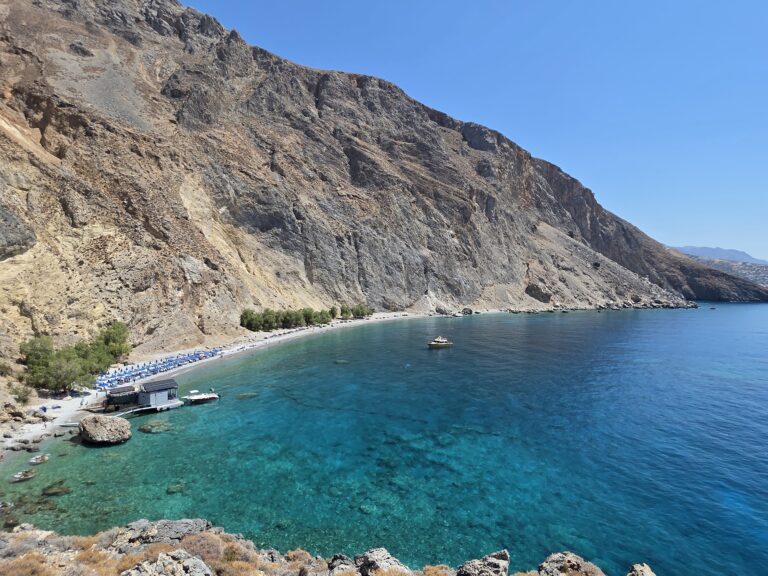
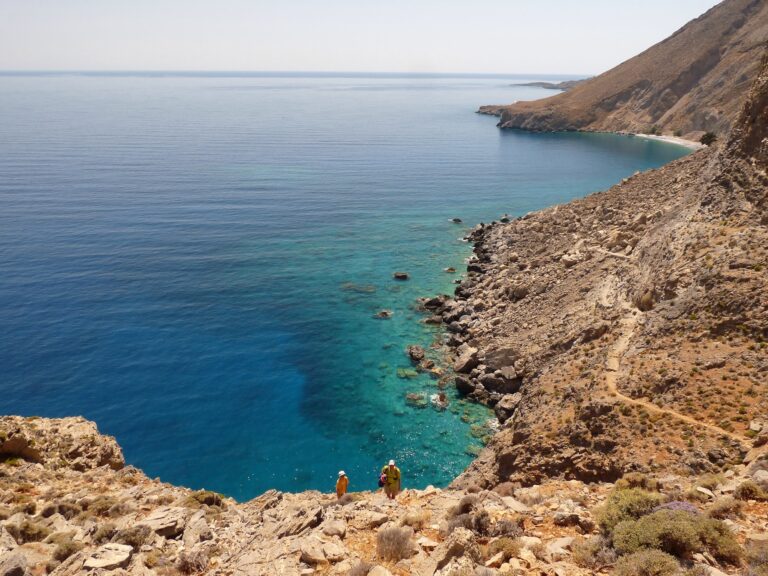
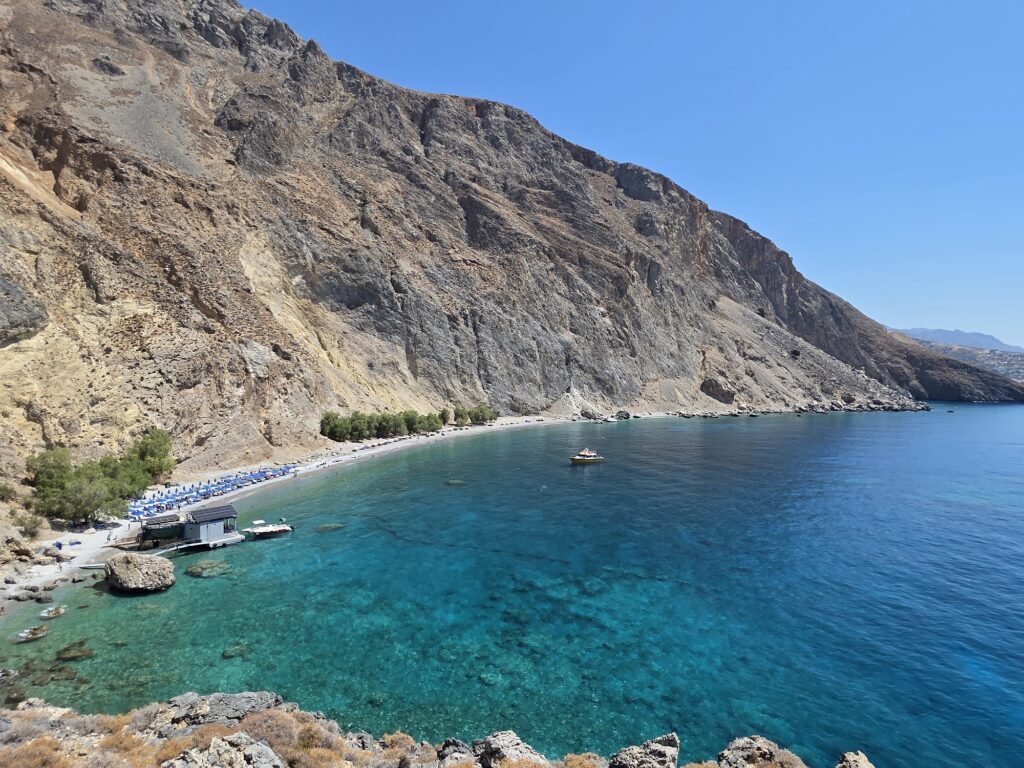
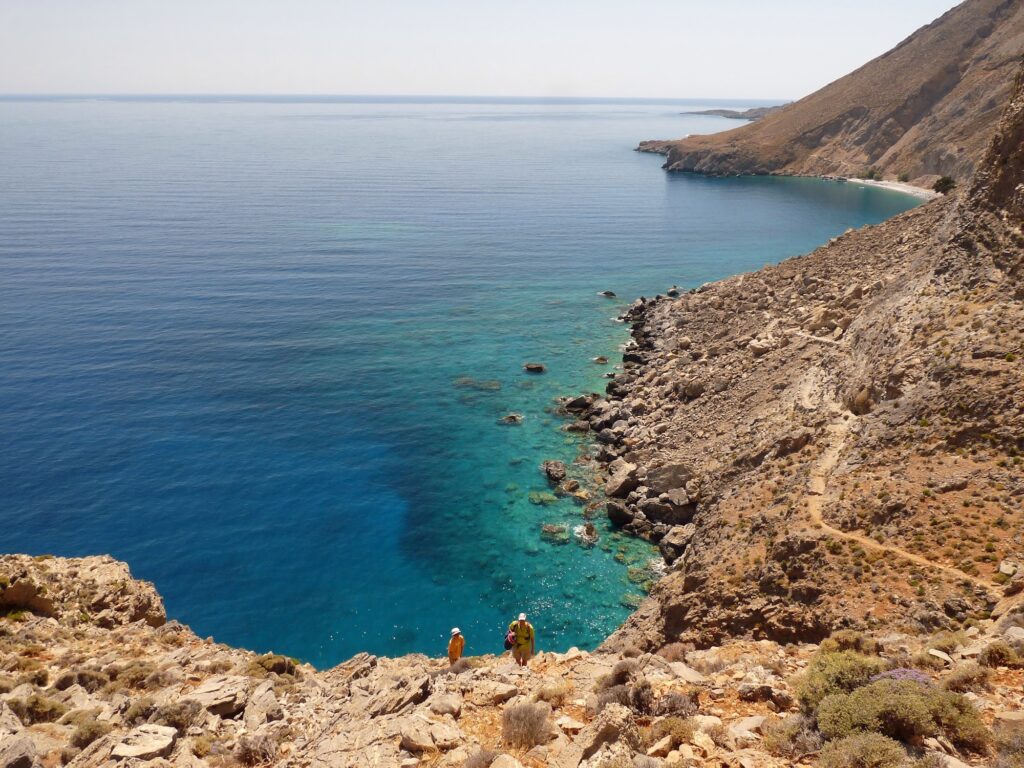
There’s no road here. None. The cliffs behind the beach run as high as 500 to 600 metres in places, and the only ways in are by boat from Chora Sfakion or Loutro, or on foot along a stretch of the E4 European trail that runs right along the cliff edge for parts of the walk. I came in by boat the first time, a short, easy ten-to-fifteen-minute ride that cost me a few euros each way, and walked out on the second visit along the path from Loutro, which took closer to an hour and genuinely tested my comfort with heights in a couple of spots. Both are worth doing once if you have the time; I wouldn’t want to rely on the hike alone if I were carrying much gear, though.
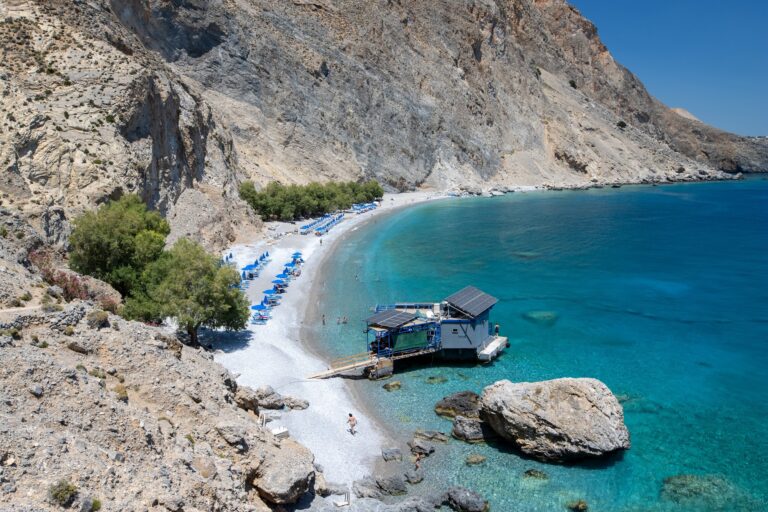
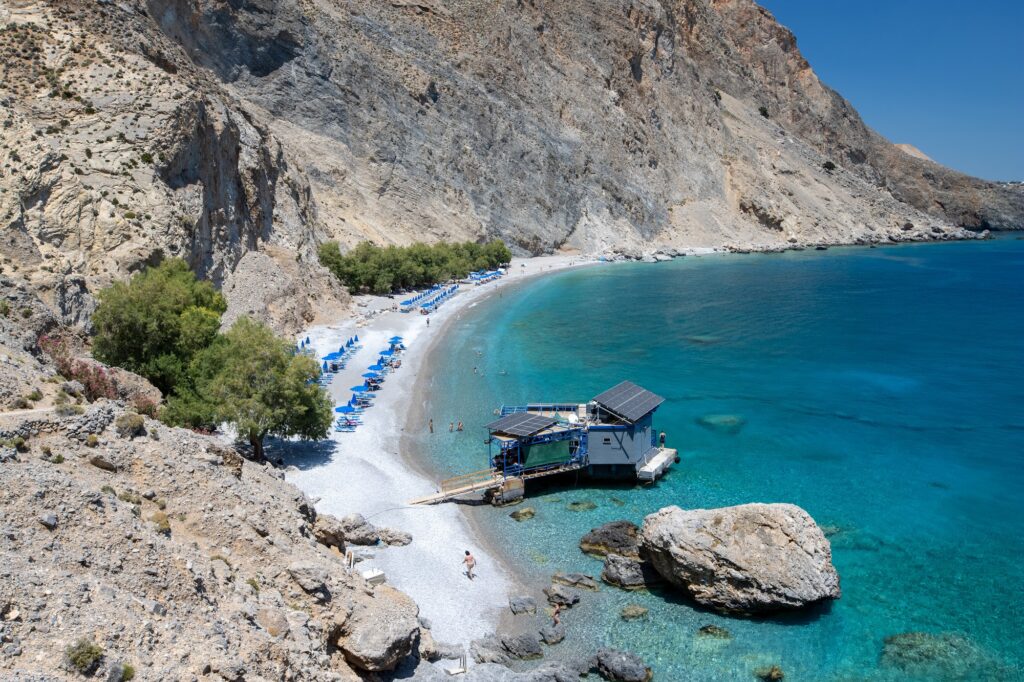
A small taverna sits built directly onto a rock just offshore, reached by a short pier, serving simple Greek food and cold drinks at prices a bit higher than you’d find inland — fair enough, given everything has to arrive here by boat too. I had a decent lunch there and a beer that, on a good day, comes from a small Cretan craft brewery and is worth asking about specifically. Sunbeds and umbrellas are available to rent on the section nearest the taverna, while tamarisk trees provide real, proper shade further along for anyone who’d rather not pay. The eastern end of the beach is unofficially but openly nudist, and nobody pays it much attention either way — locals and regular visitors treat it as simply one more part of the same beach.
I camped here once, under the tamarisk trees with a handful of other people doing the same thing, and nobody stopped any of us. It’s free, it’s allowed, and the spring water means you genuinely don’t need to carry much in beyond food. I’d still bring water shoes or a decent pair of sandals regardless of how you arrive — the pebbles shift underfoot in places, and a few patches are sharp enough that bare feet aren’t much fun.
Getting There: By Boat From Sfakia or Loutro, or on Foot Along the E4
From Chora Sfakion, small taxi boats run regularly through the day, the crossing taking ten to fifteen minutes and costing somewhere around three to four euros each way depending on the season and who’s running the boat that day. From Loutro, the same kind of boat covers the distance just as quickly. If you’re driving from Chania, you’ll park in Chora Sfakion and finish the trip by boat or on foot — there’s no way to drive any closer.
The hike from Chora Sfakion runs around 30 to 45 minutes along the E4 trail, steep and rocky in stretches; from Loutro, plan on closer to an hour, with a section that runs right along a cliff edge narrow enough that I wouldn’t recommend it if heights genuinely bother you. Both paths are well maintained as part of the wider E4 network, and neither is technically dangerous if you take your time and wear proper shoes.
The Beach: Pebbles and Smooth Stones, Cold Clear Water, Three Smaller Coves Close By
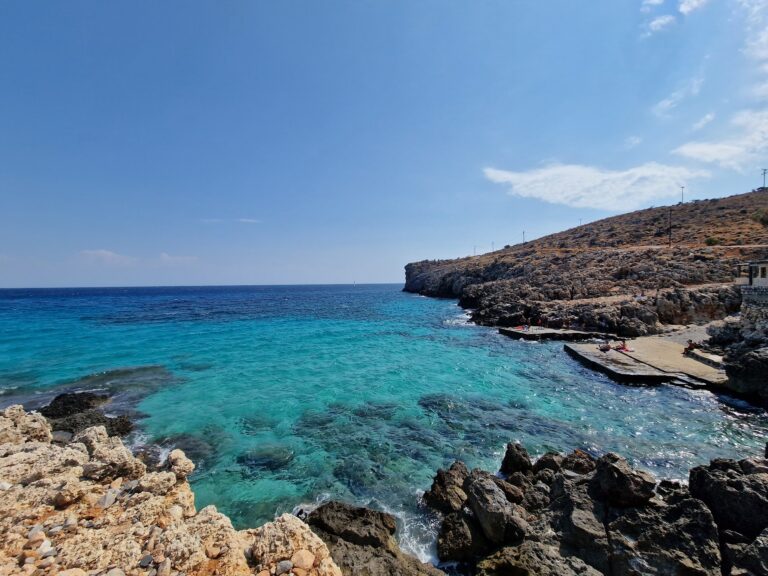
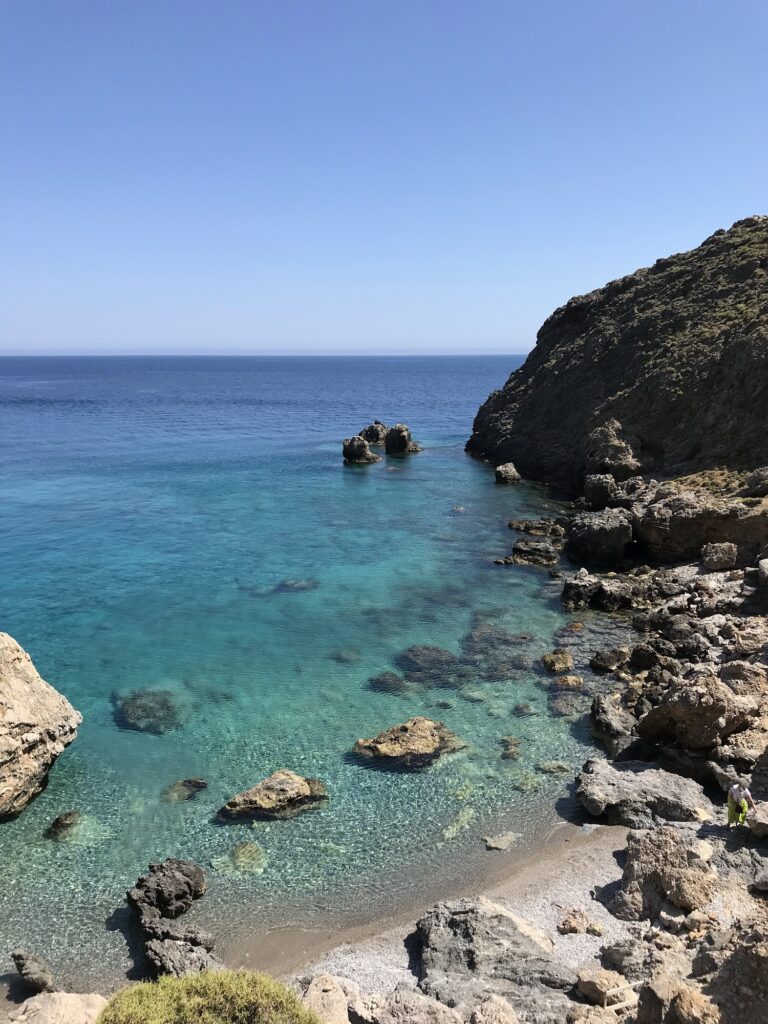
The beach itself runs around 400 metres, pebbles and larger smooth stones rather than sand, the water some of the clearest I found anywhere on Crete — clear enough that snorkelling along the rocky margins turned up fish and underwater rock formations without much effort on my part. The seabed deepens quickly in places, so I’d keep a closer eye on less confident swimmers than I might at a gentler, sandier beach.
A trio of smaller, even quieter coves — Small Perivolaki, Large Perivolaki, and Timios Stavros — sit further west along the same trail toward Loutro, popular with naturists and snorkellers specifically because they’re harder to reach and carry no facilities at all. I walked through all three on my way back from Glyka Nera one afternoon and found each one almost entirely empty, which felt like its own small reward for the extra effort.
Glyka Nera, between Chora Sfakion and Loutro on Crete’s south coast, earns its name honestly: freshwater springs bubble straight up through the pebbles, cold enough to keep the sea noticeably cooler here than anywhere nearby, and clean enough to drink directly from a hand-dug pit in the sand. No road reaches it — boat or a cliffside hike are the only ways in. A rock-top taverna, rented sunbeds near it, tamarisk shade further along, an open and unbothered nudist stretch toward the east end, and camping that’s both free and genuinely common. Three smaller, quieter coves sit a short walk further along the same trail toward Loutro for anyone wanting even more solitude.
Take the boat from Sfakia or Loutro for the easy way in, or walk the E4 trail if you want the harder, more memorable route. Bring water shoes. Dig your own small pit in the pebbles and try the spring water — it’s genuinely worth doing once.
Map
Sorry, no records were found. Please adjust your search criteria and try again.
Sorry, unable to load the Maps API.
Near by places: