Marathounda Bay Symi: Goats, Pebbles, Quiet Water
Profile
Marathounda Bay: The Cove Where the Goats Outnumber the Visitors
Greece | Symi | Dodecanese | Aegean Coast
The goats got my attention before the water did, which says something about how remote the southern end of Symi actually feels once you’ve made the drive down. Two of them were standing at the edge of the pebbles when I arrived, entirely unbothered by the handful of swimmers already in the bay, and I later learned they’re something of a local fixture here rather than a one-off encounter. Symi’s harbor town, with its stacked neoclassical houses in Gialos, is a genuinely different island experience from this quiet southern cove, and the distance between the two matters more than the kilometers on a map suggest.
A Bay Narrow and Deep Enough to Stay Calm
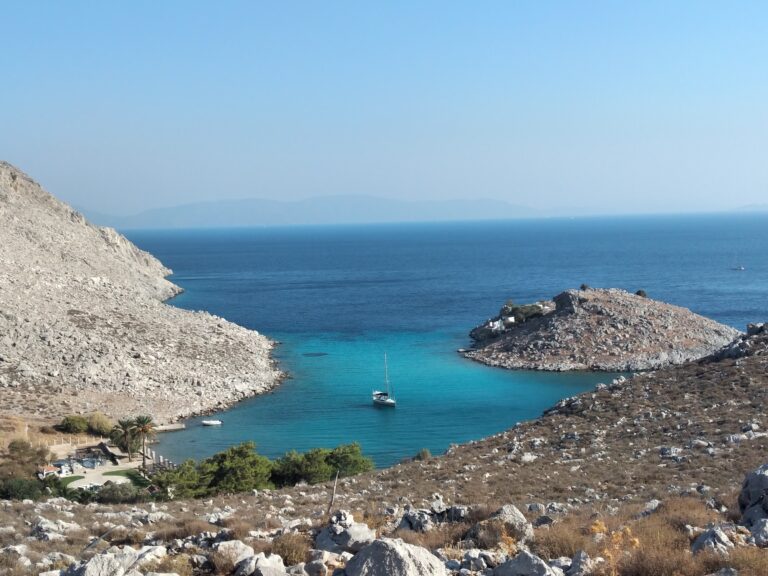
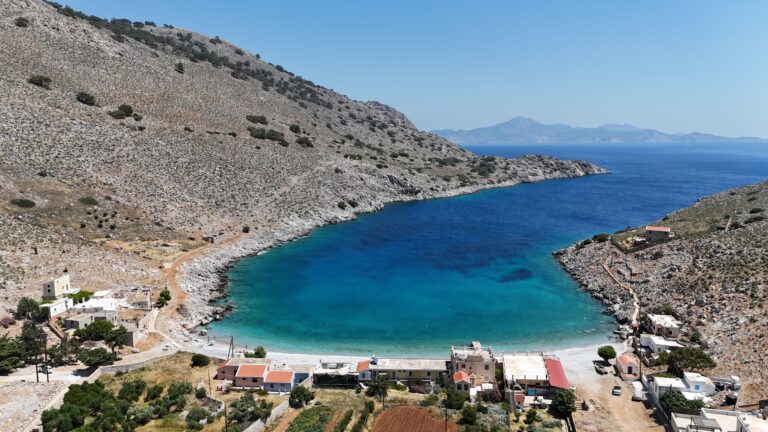
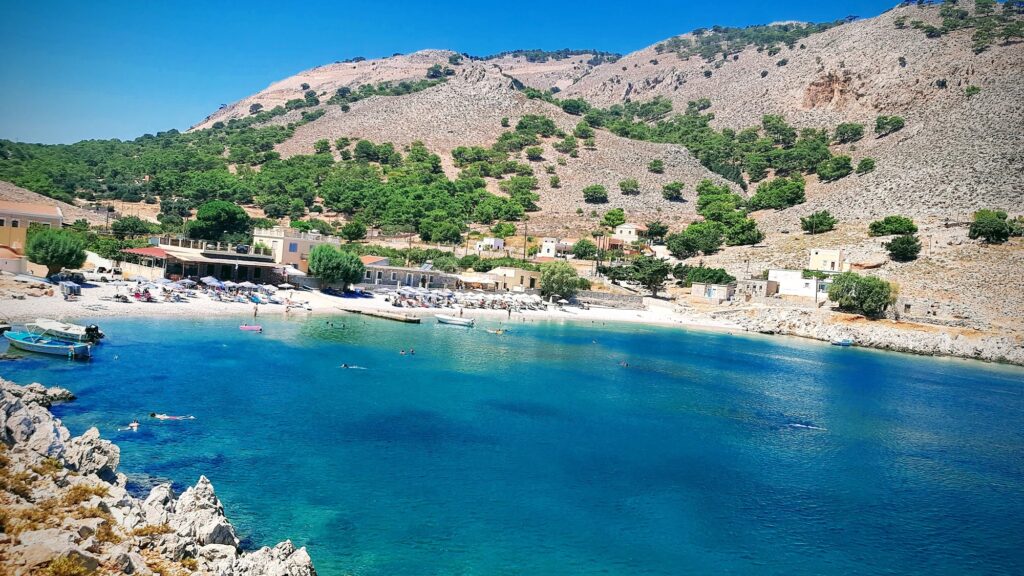
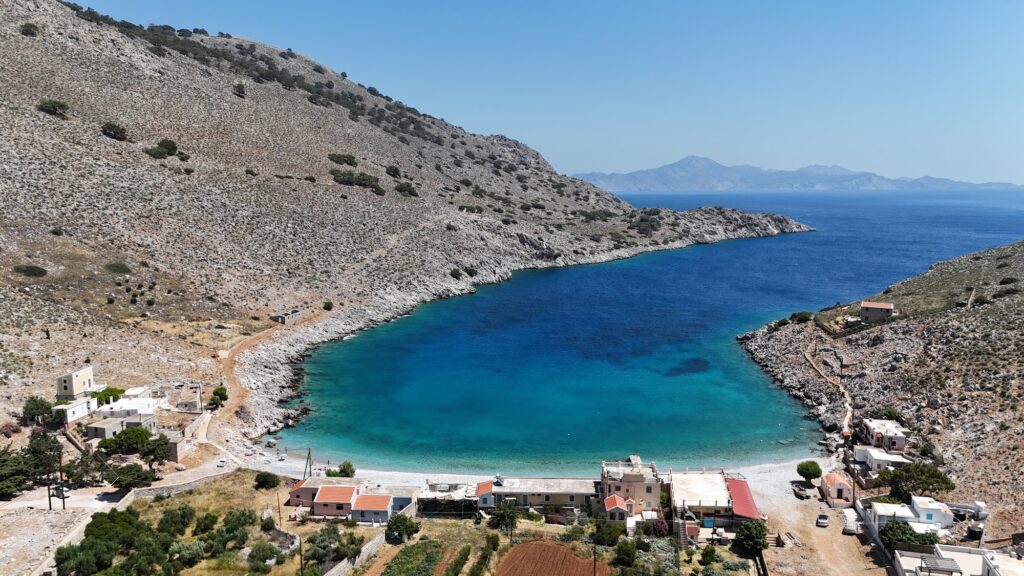
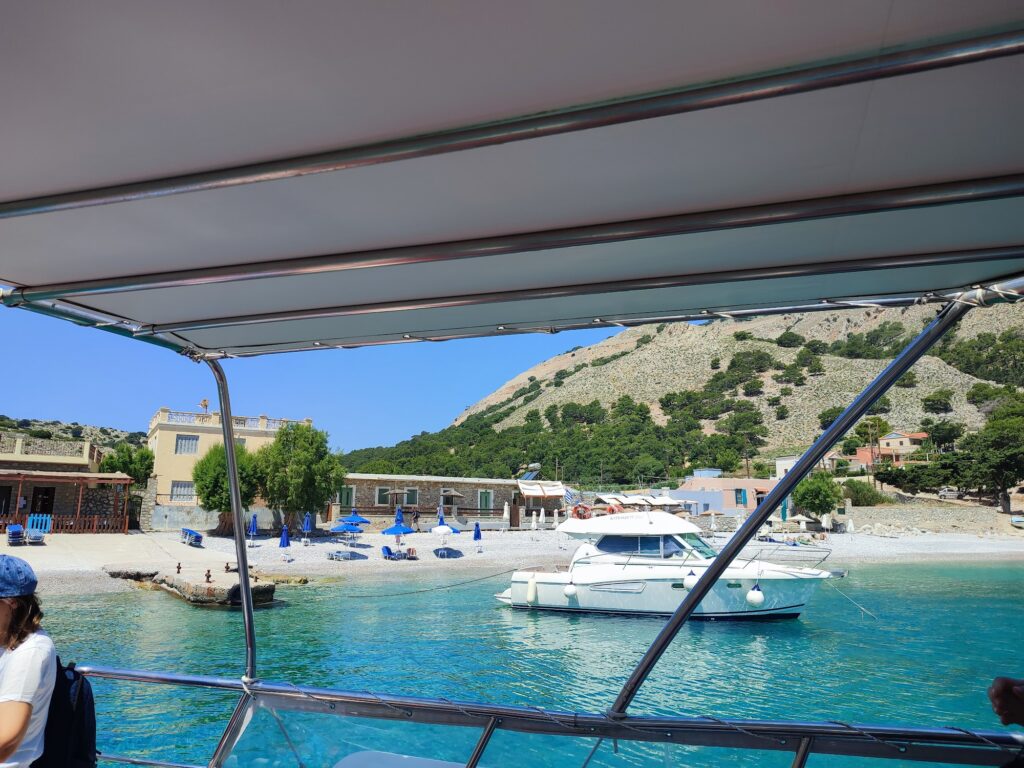
Marathounda Bay cuts into Symi’s southern coast as a long, narrow inlet, and that shape does most of the work in keeping the water still. I’ve swum at plenty of Aegean beaches where wind or open exposure churned the surface within an hour of arriving, and Marathounda simply doesn’t behave that way. The bay’s depth and narrowness shelter it almost entirely, and I found the water calm enough on every visit that swimming without fighting a current or a chop felt like the default rather than a lucky exception.
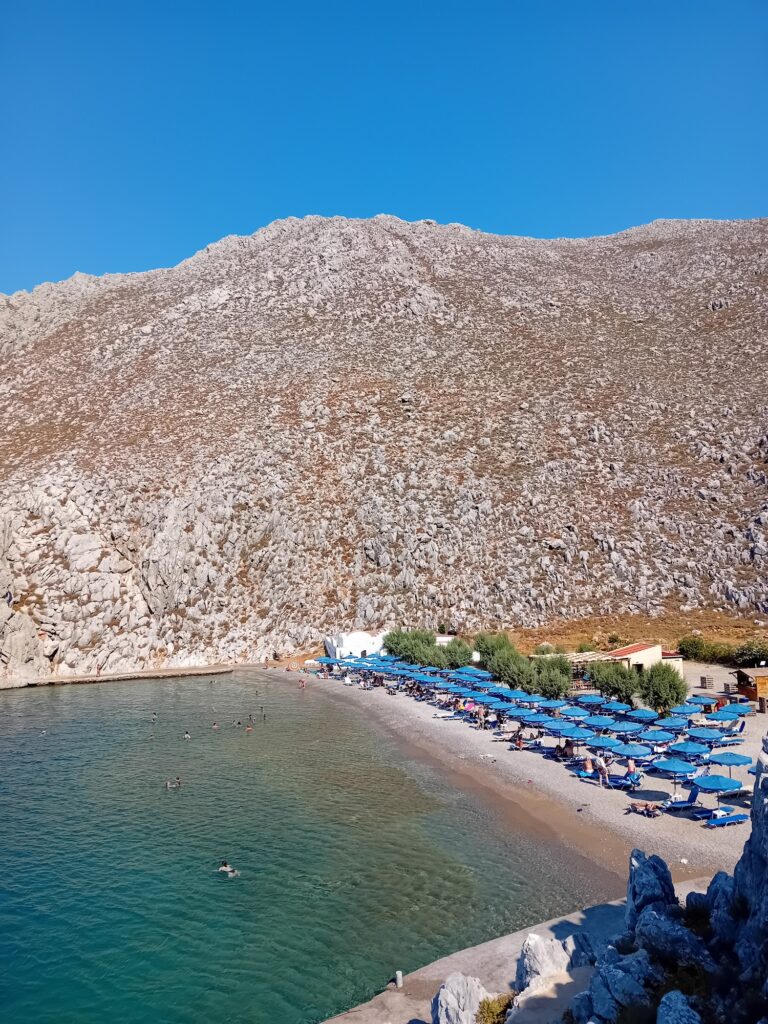
The shore itself is made up of large, sun-bleached white pebbles, smooth enough underfoot that I didn’t bother with water shoes the way I have at rockier beaches elsewhere in the Dodecanese. The entry into the water stays gradual for the first few meters before dropping off into a deeper turquoise-to-emerald gradient, cold enough near the drop-off to wake me up properly on a morning swim.
The Goats That Wander Down to the Shoreline
I asked about the goats at the taverna, and the answer was simple: they’ve always been here, part of the landscape as much as the pebbles or the pine-covered hills behind the bay. Symi is known across the Dodecanese for its wild goat population, and Marathounda is one of the places where they come down close enough to the water that I watched one pick its way along the rocks at the bay’s edge while I ate lunch. It’s not a managed attraction or anything staged for visitors. It’s simply what this particular stretch of coast looks like on an ordinary afternoon, and I found it added a specific, slightly wild character that most organized beaches don’t have.
A Single Taverna Growing Its Own Vegetables
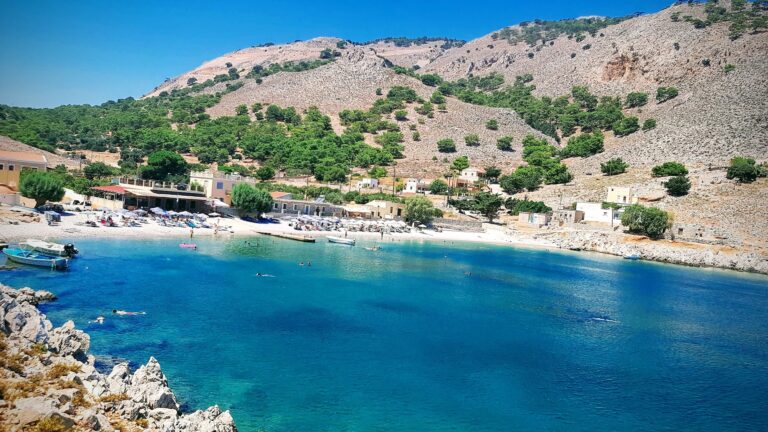
The taverna overlooking Marathounda’s sand is the only real amenity here, and it earns its reputation. The family running it grows much of what ends up on the plate, and I had a lunch built around home-grown vegetables, local goat cheese, and fresh Aegean seafood that stood out even against a trip full of good tavernas elsewhere on this coast. There’s no menu of shortcuts here, no imported ingredients dressed up as local, and the pace of service matched the food, unhurried in a way that suited a beach this far from anywhere else.
Changing cabins, outdoor showers, and restroom facilities are all provided by the same family operation, and the whole area stays noticeably well kept given how remote it is from any real infrastructure.
Driving Past the Panormitis Monastery on the Way South
Getting to Marathounda by car or scooter from Gialos takes around thirty-five minutes, covering roughly 18 kilometers on a fully paved road that climbs through Symi’s mountainous interior before dropping back down toward the coast. The drive itself is part of the experience. Partway along the route, the road opens onto views of the Panormitis Monastery below, a working pilgrimage site dedicated to the Archangel Michael that’s stood in one form or another since at least the fourteenth century, rebuilt after damage in 1783 and still drawing visitors from across the island by ferry and local bus. I didn’t stop on my way to the beach, but the view from the mountain pass was enough to register how much history sits along this otherwise quiet southern road.
Taking the Water Taxi Instead of Driving
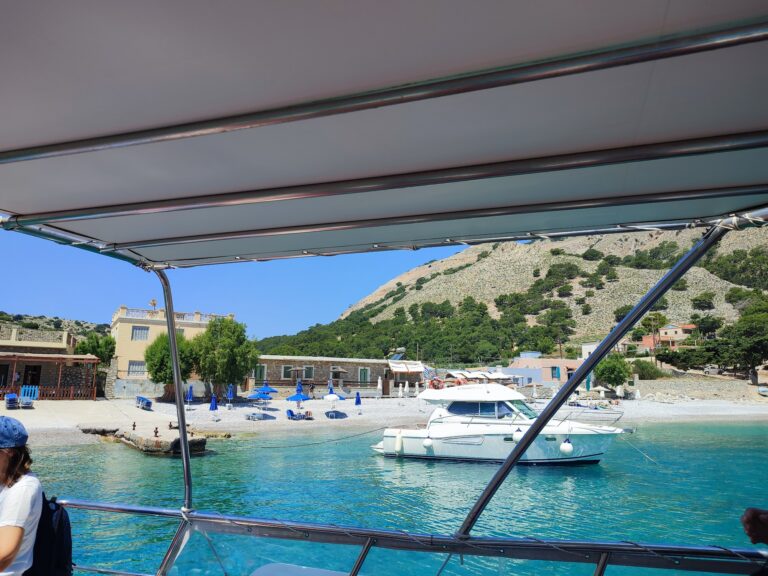
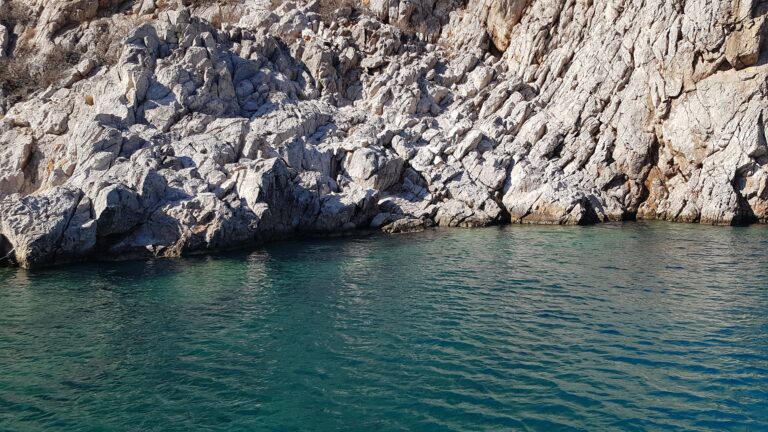
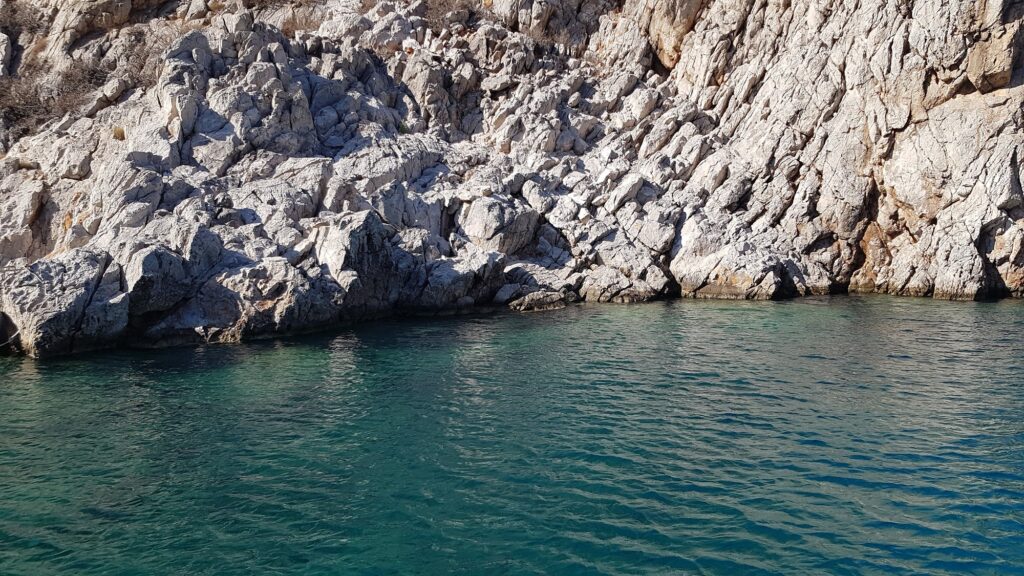
On a second visit, I skipped the drive entirely and took a water taxi from Gialos harbor instead, a route that runs frequently during the season and gives a completely different view of the island, tracing the base of Symi’s limestone cliffs from the water rather than looking down at them from above. I’d recommend doing the trip both ways at least once if your schedule allows it, since the boat and the road show you genuinely different sides of the same coastline.
Parking Before the Boats Start Arriving
Parking sits in open lots directly behind the beach and the taverna, and I never struggled to find space on the days I drove down, though arriving before eleven still made a real difference in avoiding the small crowd that builds once the first water taxis start unloading passengers from Gialos. The bay stays quietest in these early hours, goats included, before the taverna’s tables fill and the pebbles start to see real foot traffic.
Comparing Marathounda to Other Remote Dodecanese Coves
Marathounda belongs to a category of beach I’ve come to recognize across several Dodecanese islands now, coves defined as much by their distance from a main town as by anything happening at the water’s edge. Damatria Beach Karpathos fits a similar mold, another remote southern cove built around a single taverna and a sense of having deliberately stepped away from the busier northern coast. Vlychadia Beach Kalymnos shares the emphasis on a family-run operation supplying most of what visitors eat, though its identity leans on sponge-diving history rather than farm produce and wandering goats.
What sets Marathounda apart within that group is the specific combination of the narrow, sheltered bay and the working farm behind the taverna, a pairing I haven’t quite found matched elsewhere on this stretch of coast.
Settling Into a Slow Afternoon at the Edge of the Island
By the time I’d finished lunch on my second visit, the goats had moved further along the shoreline, the water taxi crowd had thinned back out toward Gialos, and the bay had returned to something close to silence, just the pebbles shifting under the last few swimmers and the pine-covered hills holding the heat of the afternoon. Leaving Marathounda always felt less like ending a beach day and more like turning back toward the rest of the island, which had been waiting patiently the whole time at the other end of that mountain road.
Map
Sorry, no records were found. Please adjust your search criteria and try again.
Sorry, unable to load the Maps API.
Near by places: