Kleftiko Milos: The Pirate Bay Only Reachable by Boat
Profile
Kleftiko, Milos: The Pirate Bay That Is Only Reachable by Water
Greece | Milos | Cyclades
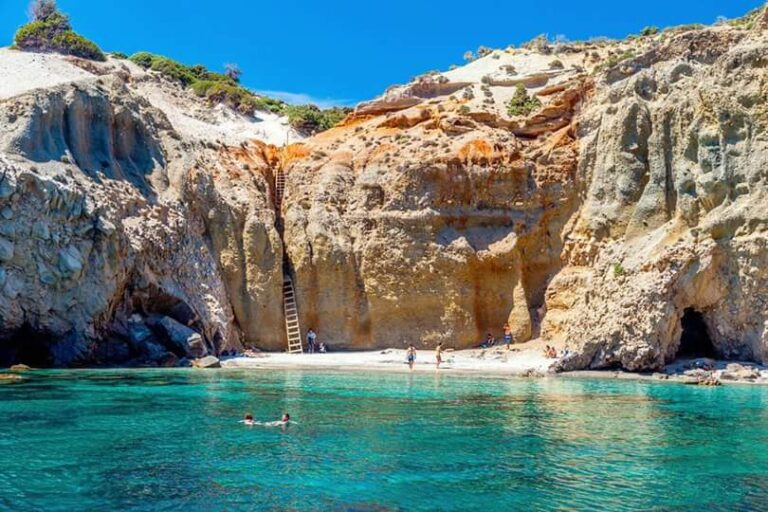
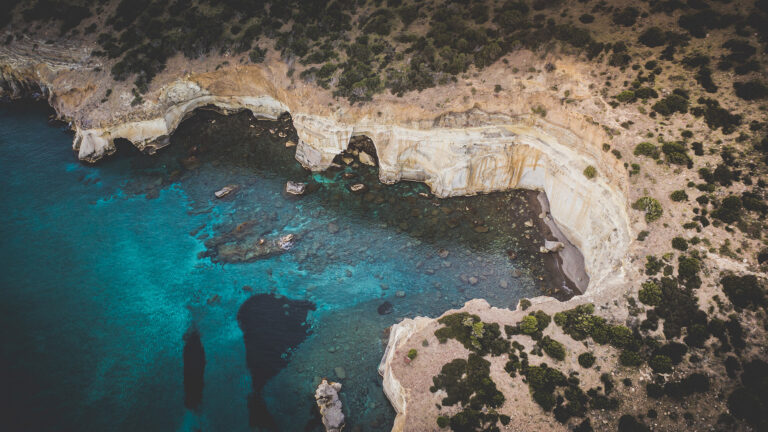
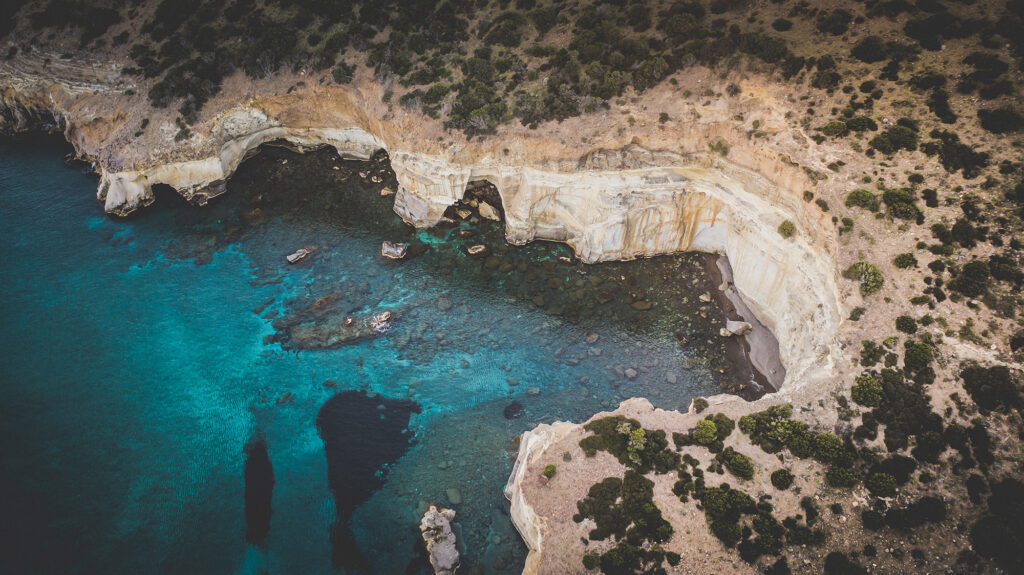
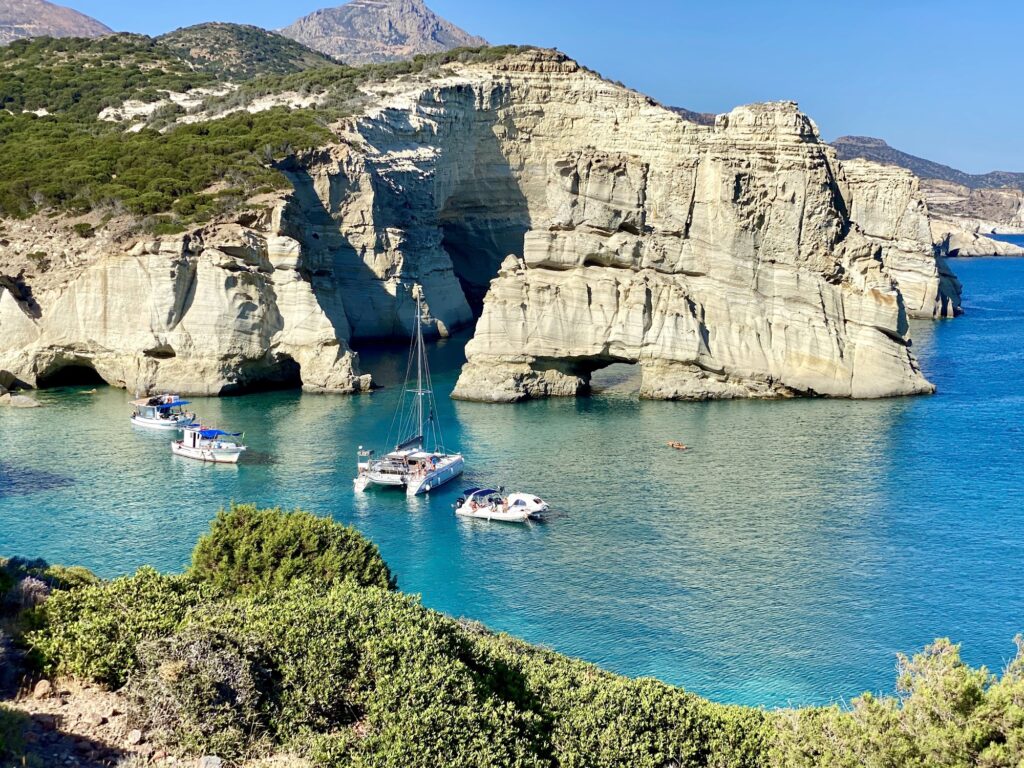
Kleftiko has no beach. There is no sand, no sunbed, no café, no toilet, no path to walk down. There are no lounge chairs, no beach bar, no toilets — Kleftiko is solely a swimming spot. What it has is a series of volcanic white and grey limestone rock formations on the southwestern tip of Milos Island, sculpted over centuries by the wind and sea into arches, tunnels, and caves that descend into some of the clearest water in the Aegean. The only way to reach it is by boat — either on one of the daily excursions from the island’s main port of Adamas, or on a privately rented vessel. There is no road to the water’s edge, and the land approach ends well above the rocks.
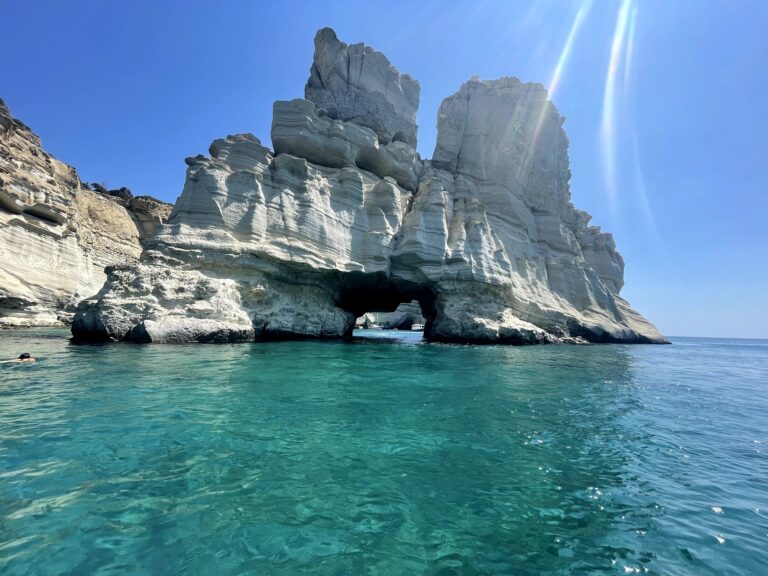
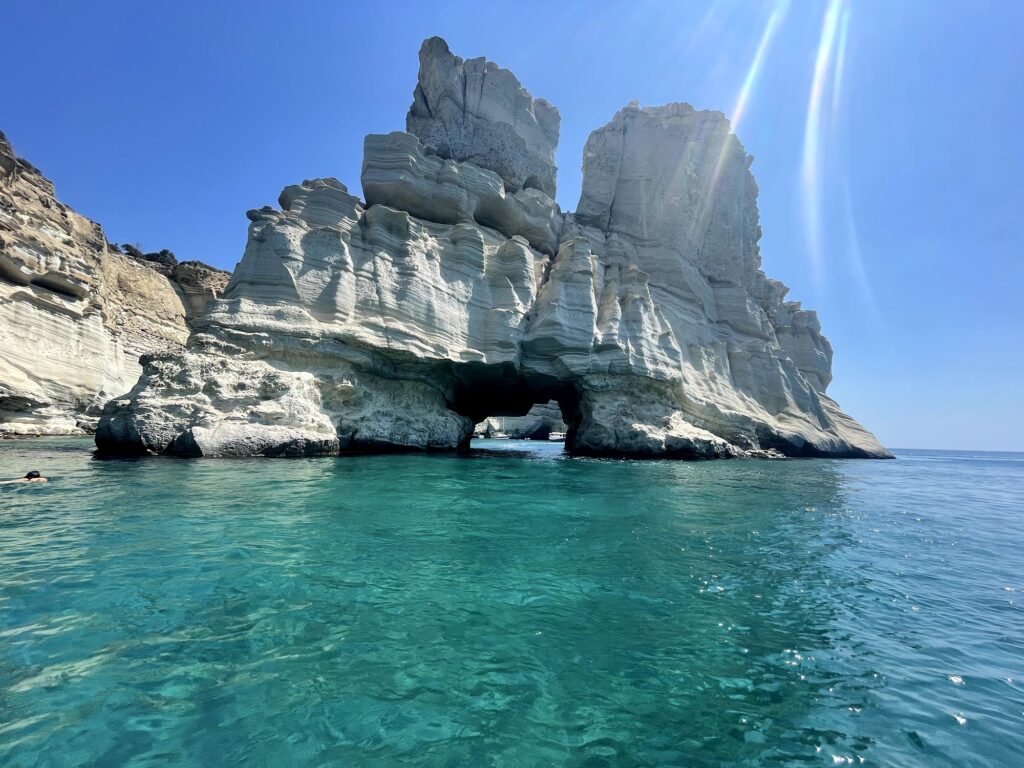
Kleftiko Milos, also known as Thalassina Meteora — Underwater Meteora — is a stunning landscape of grey and white rocks with extraordinary shapes. The name comes from the Greek word kleftis, meaning thief. The location was once a secret hideaway for pirate ships whose crews would lie in wait within the caves, ready to ambush passing merchant vessels. The labyrinthine cave structure that made it strategically valuable to pirates in the 18th and 19th centuries is the same structure that makes it extraordinary for swimming and snorkelling today — the maze of passages and flooded chambers where the seabed is visible from the surface, where the light enters through collapsed roof sections and underwater apertures, and where the volcanic white rock above the water continues below it in the same architectural register.
Getting There: Boat Tour from Adamas, 7 Hours, from €110 Per Person
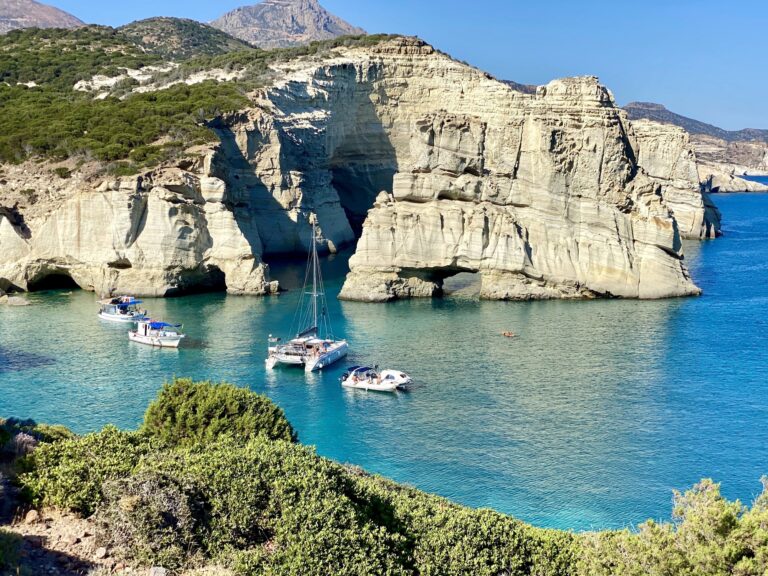
Kleftiko is located on the southwest coast of the island and is only accessible by boat — either by joining a boat tour or by renting a private boat for the day. The organised tours depart from Adamas, the main port town of Milos, at approximately 09:30 to 10:00 and return around 17:00 — a full day on the water covering the island’s western and southwestern coastline. Prices start from approximately €110 per person, with the tour operating from May through October. Most full-day tours include buffet lunch, snacks, wine, beer, water, and snorkelling equipment for all passengers.
The tours typically stop at multiple locations before reaching Kleftiko: the bay of Kalogries for an early swimming stop, the Sykia Cave (the largest cave on Milos, with a collapsed roof revealing a patch of open sky above a hidden beach), and then Kleftiko itself as the headline destination, where boats anchor for several hours of swimming and cave exploration. The sequence means that Kleftiko is typically reached around midday.
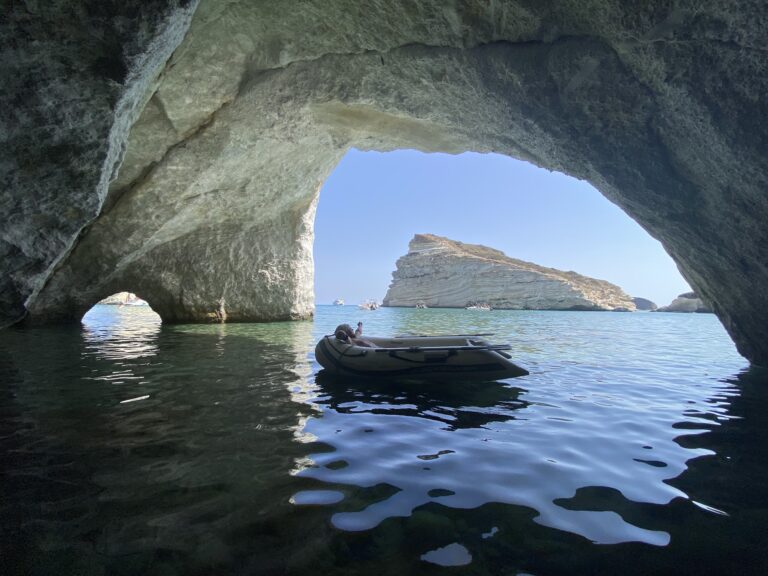
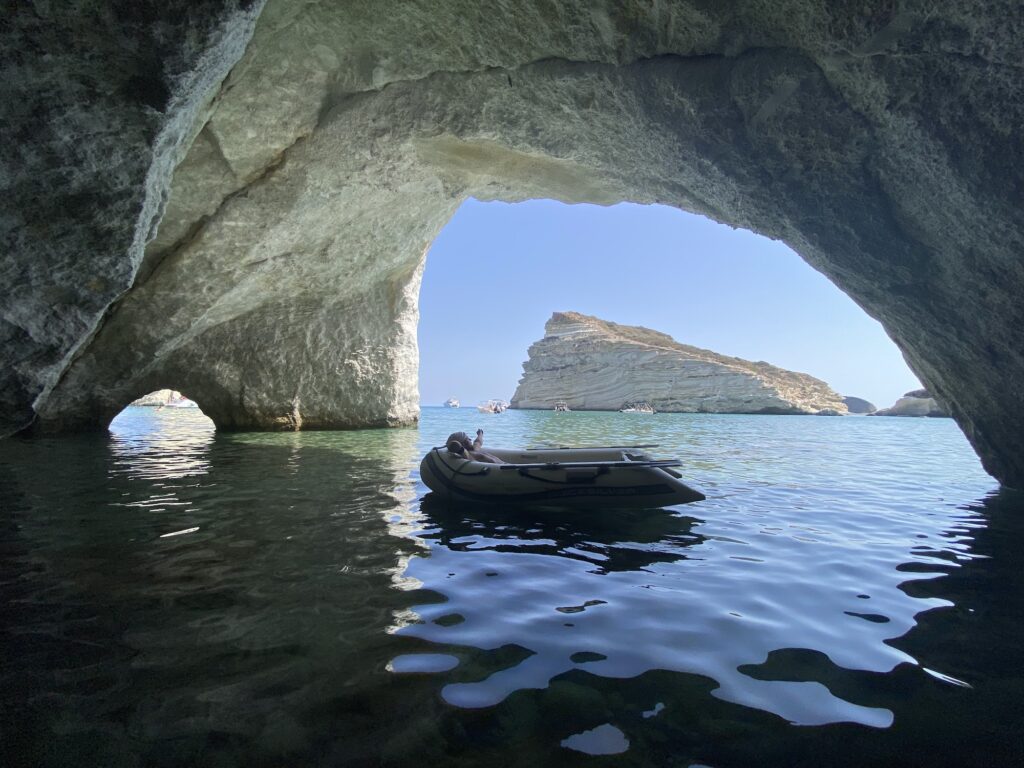
Large tour boats carry a smaller rubber dinghy or Zodiac for the final cave entry — the main vessels are too large for the narrowest cave passages, and guests transfer to the smaller boat for the 15-minute cave tour through the interior passages. This is the specific experience that visitor accounts consistently identify as the most memorable part of the day: entering the caves from the sea in a small boat, the walls close on either side, the water colour shifting from turquoise to deep blue in the deeper sections.
Half-day speedboat tours also operate from Adamas — typically 4 to 4.5 hours, covering Sykia Cave and Kleftiko, arriving mid-morning and returning before the full-day tours have anchored. The speedboat allows less time at each location but reaches the sites before the main crowd.
Booking in advance is essential. Visitor accounts are consistent on this point: boats sell out completely in July and August, sometimes weeks ahead. Arriving in Milos without a boat tour booking and expecting to join one the same day is a significant risk.
The Geology: Volcanic Rock, White Limestone, and the Thalassina Meteora Name
The comparison embedded in Kleftiko’s alternative name — Thalassina Meteora, Underwater Meteora — is a reference to the Meteora complex in Thessaly, where monasteries perch on top of dramatic vertical rock pillars. The analogy is visual rather than geological: the same quality of verticality and drama, but here expressed in white volcanic limestone at sea level rather than grey sandstone above a plain.
Milos is a volcanic island — part of the South Aegean Volcanic Arc that also includes Santorini and Nisyros — and its coastal geology is the product of eruptions, lava flows, and the subsequent weathering of volcanic material over millions of years. The white and grey coloration of the Kleftiko rocks reflects the specific mineral composition of the volcanic pumice and rhyolite, lightened by salt and sun exposure. The arches and tunnels are the result of differential weathering where softer sections of the rock were removed by wave action while harder sections remained — the geological process that produces the arch and cave formations characteristic of volcanic coastlines throughout the Aegean and Mediterranean.
The Pirate History: Hiding Among the Caves
The pirate history of Kleftiko is both documented and embellished in the tour operator accounts — the basic historical fact that the cave system was used as a hiding place by Aegean pirates in the 18th and 19th centuries is consistent across sources, while the more specific narrative details (the captain who married a woman from Milos, the sharing of wealth with island residents) belong to the local oral tradition. What is architecturally true is that the cave structure would have made the location genuinely useful for concealment: the entrance from the open sea is not obvious from distance, and the interior passages provide the hiding depth that the open coastline does not.
The Kyklades in the 18th and early 19th century were genuinely active piracy zones — the period of Ottoman administrative weakness and the Greek independence movement produced the conditions in which armed maritime activity, both piracy and privateering, was common in the island waters. Kleftiko in that context is not a romanticised myth but a plausible operational history.
Arriving by Land: The 4×4 Route and the Monastery Hike
For visitors who want to reach Kleftiko without a boat tour, a land approach exists but is difficult. A 4×4 vehicle is required for the unpaved track from Adamas toward the southwestern tip of the island — approximately 50 minutes on rough terrain. The road ends near the Monastery of Saint John, from which a marked but strenuous 45-minute downhill hike leads to the rock formations above the water. The path has no shade and no facilities, and descending to swimming level at the water still requires navigating the rock face.
The land approach is best attempted before 9am to arrive before the boat tours anchor, and in cooler months when the midday sun is less severe. Water shoes are essential. The view of Kleftiko from the cliff edge above the water — the white rock formations, the arches, the turquoise sea visible through the cave apertures — is available from the land approach even if the swimming is not.
Milos Beyond Kleftiko: Sarakiniko, Klima, and the Volcanic Coast
Milos has approximately 75 beaches, ranging in colour from brilliant white to black, red, grey, and golden sands. The island’s coastline is also a sanctuary for monk seals, sea turtles, and dolphins. Sarakiniko — the lunar white pumice landscape on the northern coast — is the other image that defines Milos in travel photography, and the contrast between the two: the white lunar bay of Sarakiniko accessible by road and crowded in summer, and the boat-only pirate cave of Kleftiko accessible only by sea, represents the range of what makes the island distinctive within the Cyclades.
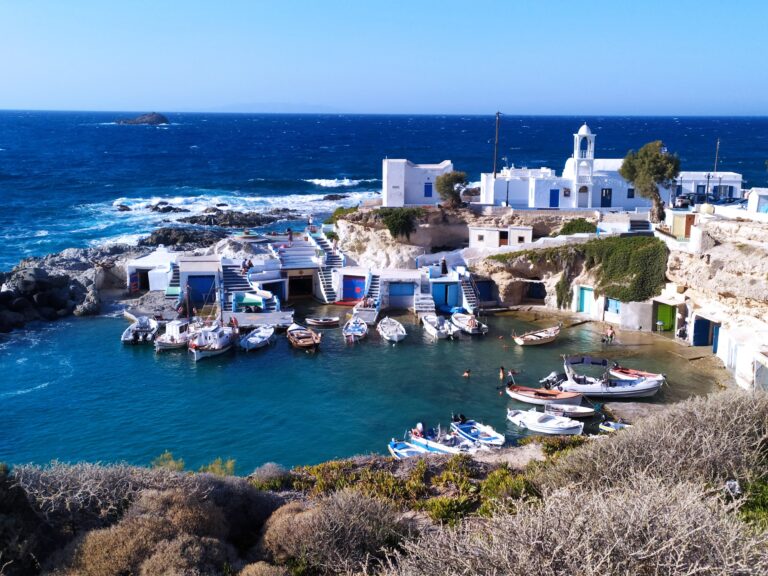
The fishing village of Klima — with its characteristic syrmata (boat garages built into the base of the cliff, with the fisher’s residence above) — is passed by the Kleftiko boat tour route, and its painted doorways and the specific Milos vernacular architecture of the inhabited boat houses are visible from the water in a way that they are not from the road above.
Kleftiko on Milos is the volcanic white rock formation on the southwestern tip of the island — only reachable by boat, no facilities of any kind, sea caves that pirates used as a hiding place, snorkelling through underwater passages in some of the clearest Aegean water, and a Zodiac dinghy taking you into the cave interior while the main boat waits outside.
Book the tour before you book your ferry to Milos. The boats sell out.
The water colour is not the turquoise you will have seen in photographs of other Greek islands. It is different. Visitor accounts consistently struggle to name it accurately — intense aqua, neon, electric blue-green — and it remains accurate to say simply that it is the colour the water makes when volcanic white limestone is the seabed material and the Aegean light is directly overhead.
Map
Sorry, no records were found. Please adjust your search criteria and try again.
Sorry, unable to load the Maps API.
Near by places: