Plaža Bilotinjak Privlaka: Wild Sandy Shore Near Zaton
Profile
Plaža Bilotinjak, Privlaka: Natural Sandy Shore Behind the Cliffs Between Zaton and Privlaka
Croatia | Privlaka | Zadar Riviera
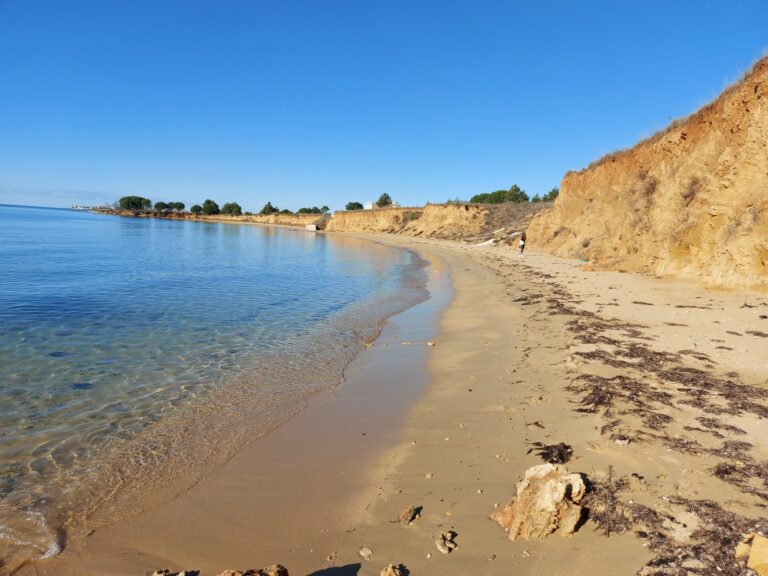
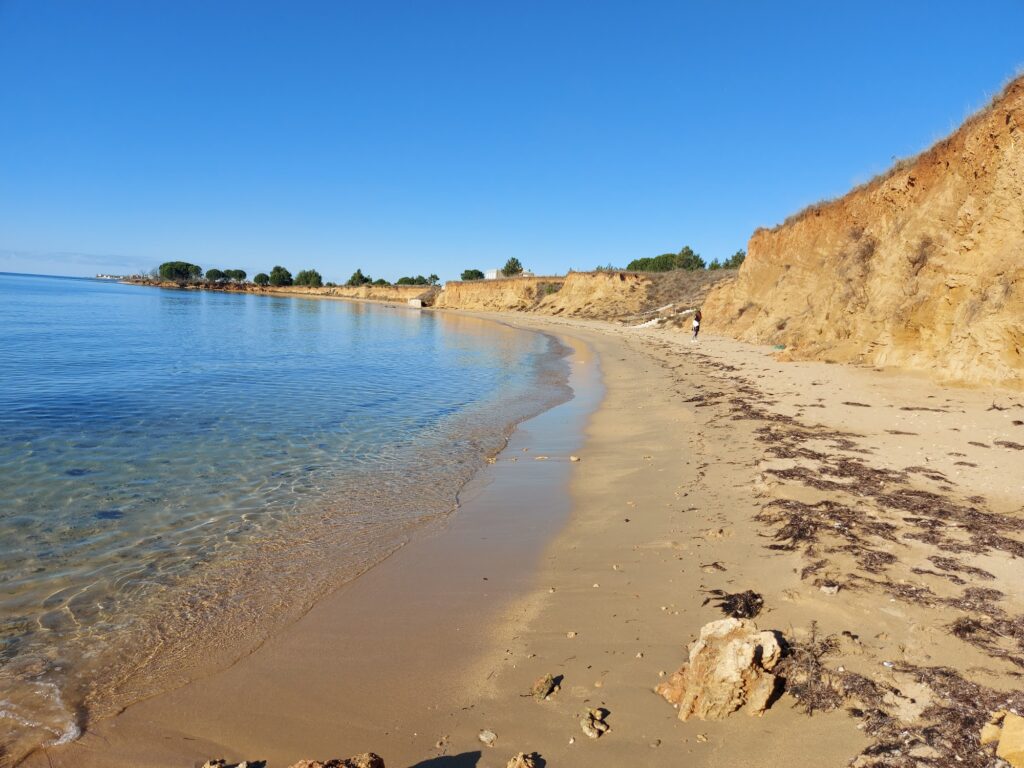
The character of Plaža Bilotinjak is defined by one fact before any other: it has no facilities. No sunbeds, no umbrella rental, no showers, no toilets, no beach bar, no lifeguard. The sandy hill several metres high that rises behind the shore and the steep clay cliffs that protect the northern edge of the bay from the bura wind are the extent of the infrastructure. Everything else — shade, food, water, comfort — comes with the visitor or is found in the nearby settlements of Zaton and Privlaka a short drive away. That absence of development is the reason the beach is what it is: a 500-metre stretch of fine sand between two of the most heavily facilitated resort zones on the northern Dalmatian coast, preserved in something close to its natural state precisely because no one has built anything on it.
Plaža Bilotinjak lies approximately 2 kilometres west of Zaton on the Zadar Channel coast, between Privlaka to the northwest and the Zaton Holiday Resort complex to the southeast. The beach is within the broader sandy zone that extends along this section of the Zadar Riviera — the same shallow, warm, lagoon-influenced shoreline that includes the sandy beaches of Privlaka to the north and connects southward toward the Nin lagoon. Within that zone, Bilotinjak occupies the position of the unorganised option between organised neighbours: the resort infrastructure of Zaton Holiday Resort on one side, the village beaches of Privlaka on the other.
Getting There: West from Zaton or South from Privlaka by Car or Bicycle
The approach to Plaža Bilotinjak requires some navigation. From Zaton, the beach is approximately 2 kilometres west along the coastal road — a drive of a few minutes that ends where the road gives way to a rough track and the beach becomes accessible on foot. Parking is extremely limited and fills early on summer mornings; the practical reality confirmed by visitor accounts is that arriving before eight in the morning is the only reliable way to secure a roadside parking space within reasonable walking distance of the shore. Arriving by mid-morning in July or August means walking from wherever a space can be found, which may be some distance back toward Zaton.
From Privlaka, the beach is reachable along the coastal path that runs southeast through the sandy bay system. The cycling route that connects Zaton and Privlaka passes within reach of the beach entrance, and arriving by bicycle removes the parking difficulty entirely while adding a route that covers the broader character of the Zadar Riviera northern shore.
From Zadar, the beach is approximately 20 kilometres to the northwest — a drive of 25 to 30 minutes. The Liburnija bus to Zaton provides public transport access to within walking distance of the beach for those without a car. The self-sufficient nature of a Bilotinjak visit means packing everything needed for the day before leaving accommodation, since no supplies are available at or near the beach itself.
The Shore: Sandy Bay, Clay Cliffs, and a Protective Sandy Hill
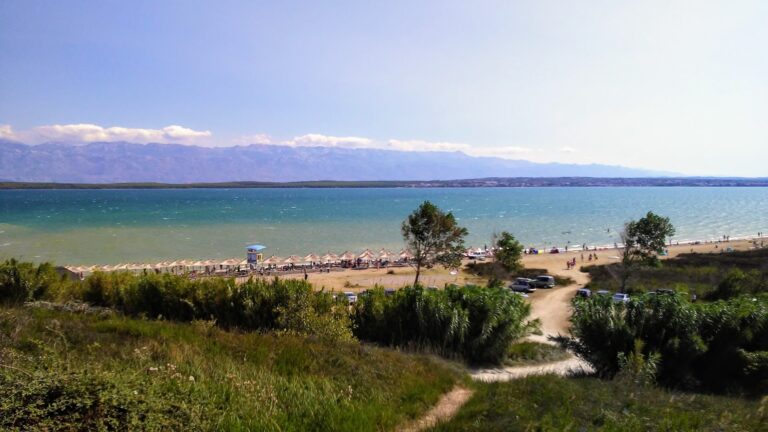
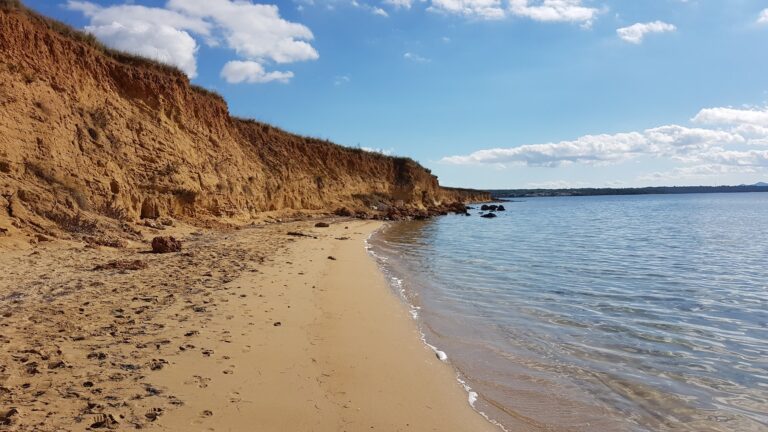
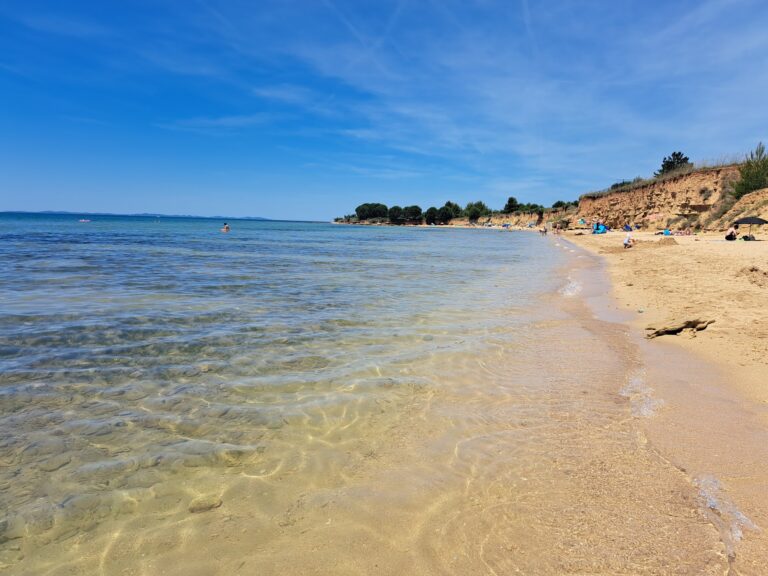
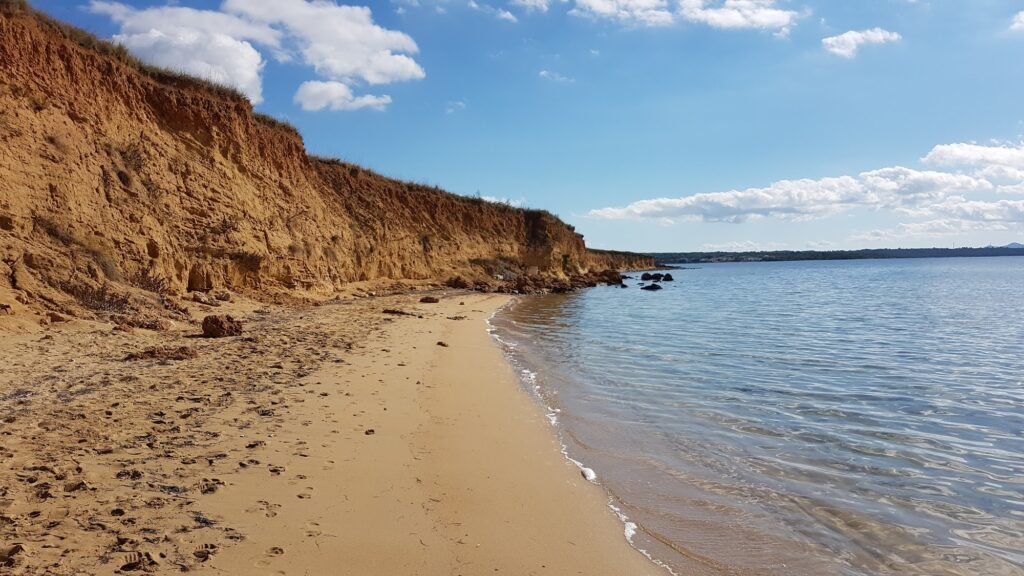
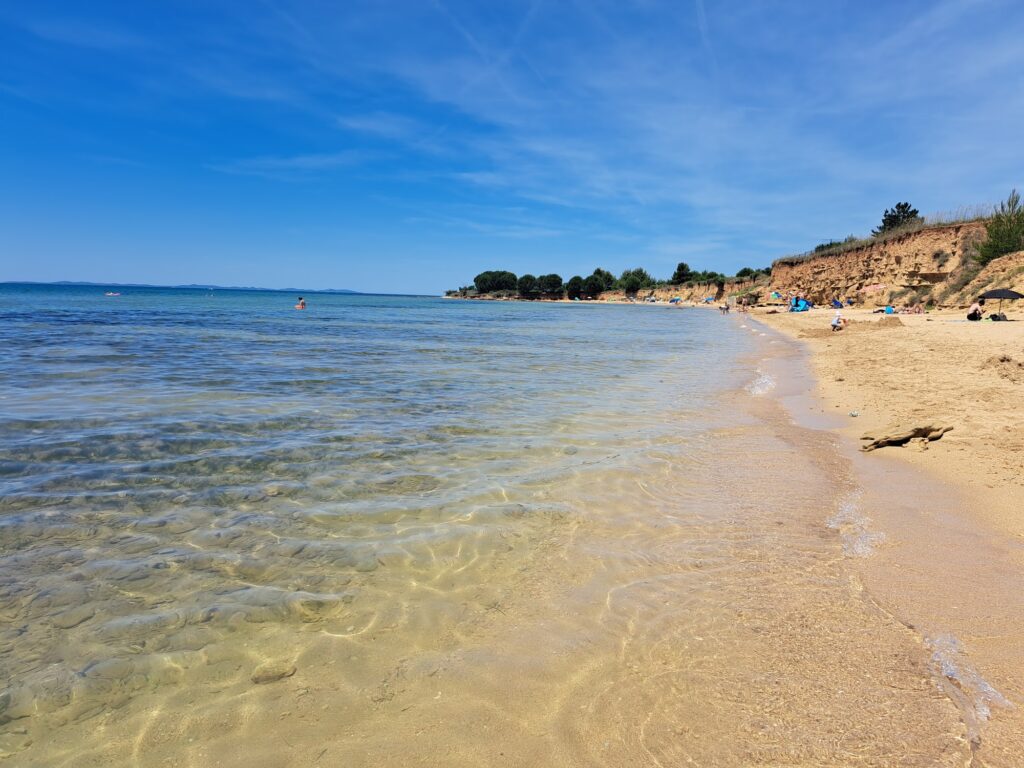
The shore at Plaža Bilotinjak is fine sand along its full accessible length — the same rare quality on this coast that makes the nearby Kraljičina Plaža Nin the most visited destination in the region, here in a smaller, wilder, entirely unmanaged form. The sand continues into the water, producing the sandy seabed ripples that visitors describe as pleasant underfoot — no stones to navigate, no sea urchins in the main swimming area, the bottom clearly visible through the shallow clear water column above it.
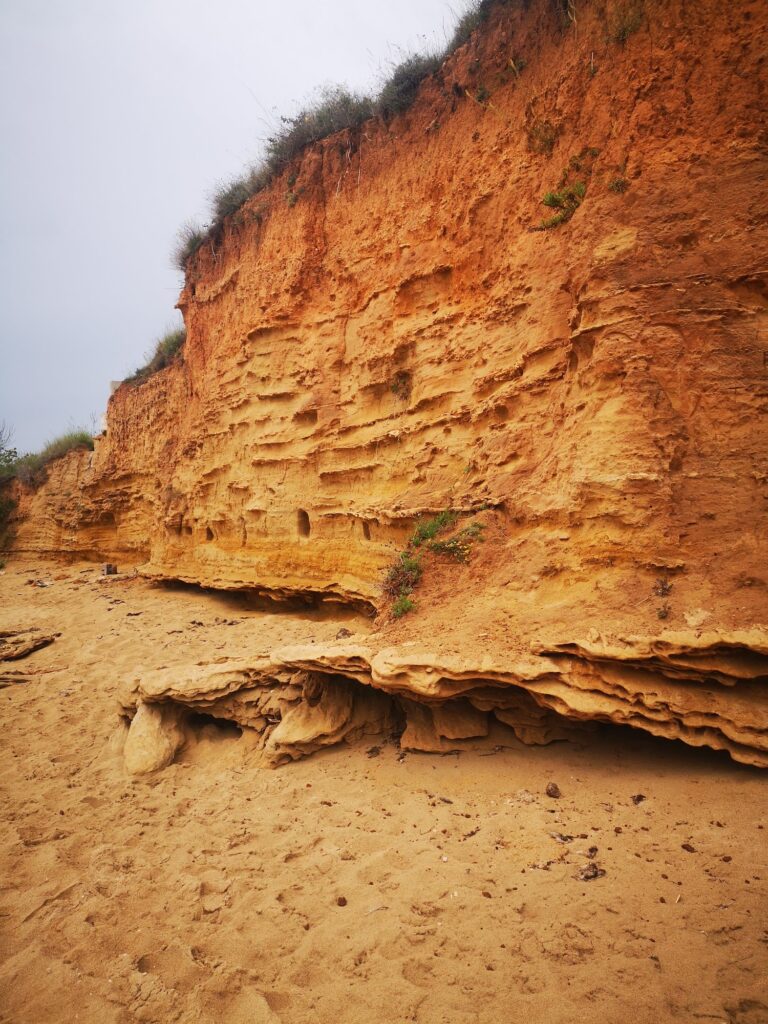
The sandy hill behind the shore — several metres high — provides the seclusion that gives the beach its quality of isolation. From the water, the cliffs and the hill create an enclosure that makes the bay feel more remote than its proximity to the Zaton Holiday Resort complex would suggest. From the road, the beach is not visible, which is partly why it remains less crowded than its quality warrants. The clay cliffs on the northern edge of the bay, reddish in tone and steep, block the bura wind that drives across this section of the coast from the northeast in the stronger months — leaving the bay open to the maestral, the mild summer sea breeze from the southwest that provides the natural ventilation the beach needs without the force that makes swimming difficult.
The island of Pag is visible on the western horizon across the Zadar Channel from the shore — the long, pale limestone ridge that forms the backdrop of this section of the northern Dalmatian coast, here seen from the mainland perspective across the open water.
Water Quality and Swimming at Plaža Bilotinjak
The water quality at Plaža Bilotinjak reflects the beach’s unmanaged status in a positive rather than negative sense: the absence of boat moorings, beach facilities, and concentrated visitor infrastructure within the bay itself contributes to water that is consistently clear and clean. The shallow sandy seabed warms quickly through the summer months, producing the warm, shallow conditions that the source article correctly identifies as ideal for young children — the water remains accessible and comfortable at low depth for a generous distance from the shore.
The sandy bottom extends offshore with the sand ripple formations visible through the clear water, and the snorkelling at the rocky margins of the bay — where the cliff base meets the water on the northern edge — provides productive underwater exploration in the sections where the sandy floor gives way to the submerged rock and weed that support marine life. The central sandy section of the bay is better suited to swimming and wading than snorkelling given the uniform depth and bottom type, but the transition zones at the bay’s edges reward the swimmer who moves along the shore rather than directly offshore.
The bura wind, when it blows strongly from the northeast in the autumn and spring seasons, is blocked by the clay cliffs on the northern bay edge — a geographic protection that makes the bay swimmable in conditions that make the more exposed beaches of the immediate coast unpleasant. In summer, the maestral that the bay remains open to is the benign daily sea breeze rather than a swimming deterrent.
No Facilities: What to Bring and What to Expect
This section exists to state clearly what the research confirms and what the source article misrepresents: Plaža Bilotinjak has no facilities of any kind. There are no freshwater showers, no changing rooms, no public toilets, no sunbed rental, no umbrella hire, no beach bar, and no lifeguard. The beach is entirely natural and unmanaged in its infrastructure. Visitor accounts note that even basic waste management has been inconsistent, which means the beach’s pristine quality is dependent on the behaviour of visitors rather than on active maintenance.
What this means practically: everything needed for the day must arrive with the visitor. Water, food, sun protection, shade if required, a first aid kit for families with young children, and a plan for returning to facilities in Zaton or Privlaka for anything the day requires. The nearest restaurant and toilet provision is a drive away in either direction. The beach is suitable for a self-sufficient half-day or full day visit; it is not suitable for visitors who assume facilities will be available on arrival.
Parking, as noted above, is limited to a small number of informal roadside spaces that fill very early. The practical advice from multiple visitor accounts is consistent: arrive before eight in the morning or accept a walk from wherever parking can be found.
Plaža Bilotinjak with Families and Children
For families who arrive prepared — with shade, water, food, and a first aid kit — Plaža Bilotinjak offers the shallow, sandy, warm conditions that are ideal for young children on a coast that rarely provides all three together. The absence of sea urchins in the sandy sections removes one of the standard hazards of Dalmatian rocky beach swimming for bare-footed toddlers. The gradual depth increase keeps the wading zone safely shallow for a useful distance. The fine sand on the shore and in the shallow water provides the sandcastle and play surface that pebble beaches cannot.
The absence of facilities is the honest qualification that parents need to weigh. For families who want a sandy beach with on-site lifeguard supervision, toilet access, and food provision, Plaža Bilotinjak is not the right choice. The organised sandy beaches of Privlaka — a few kilometres to the northwest — offer comparable water quality and sand character with proper infrastructure, including showers, changing booths, and a beach bar. Bilotinjak is the right choice for families who are prepared to be self-sufficient in exchange for a quieter, more natural beach experience than the resort zone beaches on either side of it provide.
Zaton and Privlaka: Where to Eat and Resupply
The Zaton Holiday Resort complex 2 kilometres to the southeast carries the full range of resort facilities — restaurants, bars, shops, and access to its own beaches — and is accessible to non-guests for food and drink even if the beach facilities require entry payment. Zaton village itself has restaurants serving the Dalmatian coastal kitchen: fresh Adriatic fish, calamari, and the seafood preparations typical of the Zadar Riviera settlements along this section of the coast.
Privlaka to the northwest is a quieter village option with a smaller restaurant offer but the same Dalmatian food character. For the full range of Zadar region dining options, the city of Zadar is 20 kilometres to the southeast — far enough to require a deliberate decision to return there, close enough to make it practical for an evening meal after a Bilotinjak beach day.
The combination of a morning or afternoon at Bilotinjak with a visit to Kraljičina Plaža Nin — 10 kilometres to the east and the region’s most famous sandy beach, with the healing peloid mud and the Nin old town behind it — constitutes a complete northern Dalmatia sandy beach day that covers both the wild and the visited ends of what this coastline offers.
Seasonal Timing at Plaža Bilotinjak
The parking and crowd situation at Bilotinjak follows the standard peak season pattern of the Zadar Riviera but with the amplification that a beach with no capacity management produces — no sunbed allocation, no entry control, no physical limit on the number of people on the shore. In July and August the beach can reach an uncomfortable density during the middle of the day despite its distance from the nearest resort. The morning hours before ten and the late afternoon after five offer the beach in its more natural, quieter state.
June and September are the ideal months for Bilotinjak in terms of the visitor-to-space ratio — the water is warm enough for swimming through both months, and the absence of the July-August resort crowd density allows the unmanaged natural character of the beach to be appreciated without the waste management problems and space competition that peak season brings. The clay cliffs and the sandy hill provide shade in the morning and late afternoon regardless of season, and the maestral wind keeps the bay comfortable through the summer heat hours.
Final Thoughts
Plaža Bilotinjak between Privlaka and Zaton is a beach that rewards preparation and punishes assumption. Arrive with everything you need, arrive early, and it delivers a natural sandy shore of genuine quality on a coast where natural sandy shores are rare. Arrive expecting facilities and a parking space at eleven in the morning, and it delivers neither.
Drive west from Zaton. Park where you can. Walk to the sandy hill.
Everything after that is what you brought with you.
Map
Sorry, no records were found. Please adjust your search criteria and try again.
Sorry, unable to load the Maps API.
Near by places: