Pupnatska Luka Beach Korčula: Southern Cove Lastovo View
Profile
Pupnatska Luka Beach, Korčula Island: The Olive Grove Descent to the Southern Coast’s Finest Cove
Croatia | Dalmatia | Korčula Island
The road from Pupnat village to the sea descends through olive groves and Mediterranean forest for approximately fifteen kilometres from Korčula Town, the groves pressing close to the road on both sides and the southern coastline visible in brief glimpses through the vegetation before the bay appears fully at the bottom of the final descent. The transition from the shaded road through the olives to the sudden, open brightness of Pupnatska Luka — the white pebbles, the turquoise water, the Lastovo island visible on the southern horizon — is one of the more abrupt and more effective geographical transitions available on the Korčula coast.
I arrived by car on my second day on the island, following the clearly marked road from Pupnat village down to the organised parking area above the bay. The descent takes perhaps ten minutes from the village and arrives at a cove that is simultaneously more remote in character and more practically provided for than its position on the southern coast suggests — two konobas built into the hillside, showers and changing cabins at the beach edge, sunbed rental available, and an organised parking area that makes the logistics of visiting straightforward despite the bay’s wild appearance.
Pupnatska Luka is on the same southern Korčula coast as Bačva Beach — covered earlier in this series — but is a larger, more sheltered bay with a more complete on-site food and drink offer. The two beaches share the same general coastal territory and the same island wine tradition, but serve different types of visitors and produce different types of day.
Getting There: The Descent from Pupnat
How to get to Pupnatska Luka Beach from Korčula Town involves driving approximately fifteen kilometres west to the village of Pupnat and then following the clearly marked steep paved road down to the sea.
The drive from Korčula Town to Pupnat takes approximately twenty minutes through the island’s interior — the vineyards and olive groves that constitute the Korčula agricultural landscape visible on either side of the road, the island’s central ridge providing the elevation that the southern coast descent then reverses. From Pupnat village, the road to Pupnatska Luka is clearly signposted, the descent steep and narrow but well-maintained, and the organised paid parking area above the bay provides the practical convenience that genuinely secluded southern Korčula bays rarely offer.
By scooter from Korčula Town, the same route provides a more physically engaged version of the same journey — the road to Pupnat offering the panoramic views that the car’s cabin window reduces, and the descent to the bay providing the specific pleasure of a narrow mountain road above a visible and vivid destination. The scooter is the approach that several konoba owners on the island recommend to visitors asking for the best way to experience the southern coast.
By boat from Lumbarda or Korčula Town, the approach from the sea delivers the bay’s white pebble shore and the hillside konobas visible from the water — the southern Korčula coastline approached from the open water facing Lastovo providing a perspective on the island’s geography that the inland road approach does not.
The Bay: Olive Grove Descent, White Pebbles, Lastovo Horizon
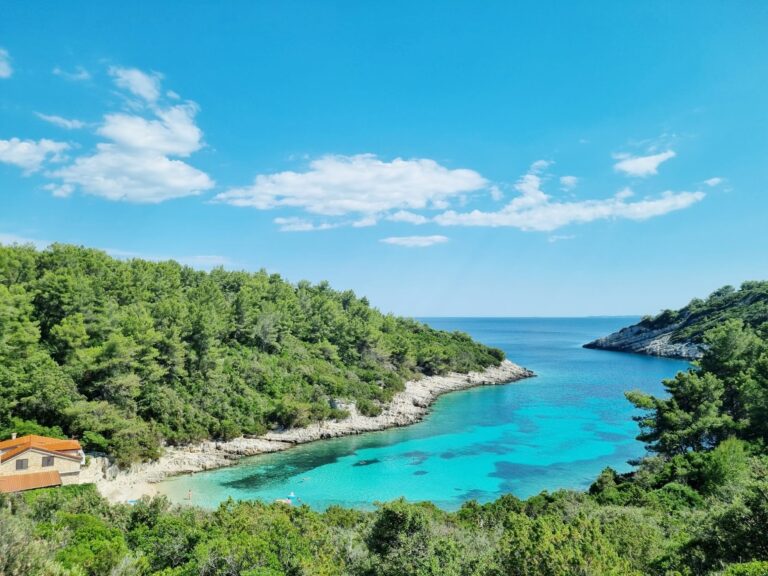
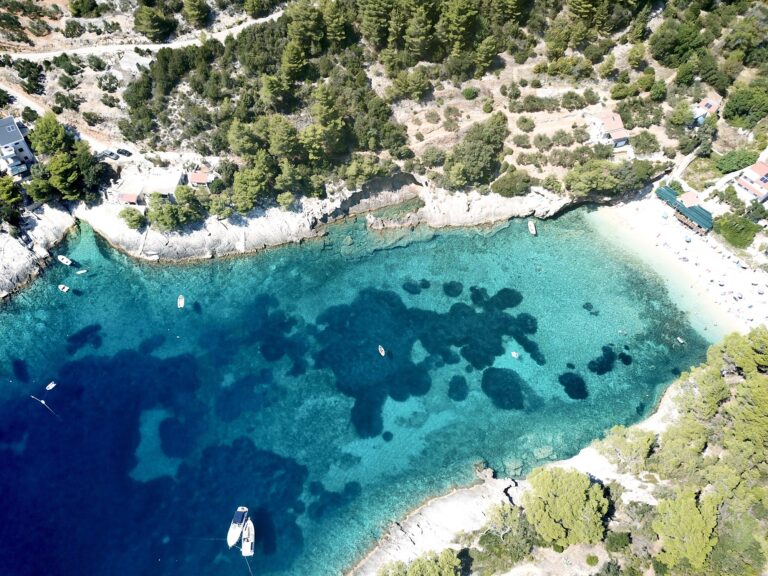
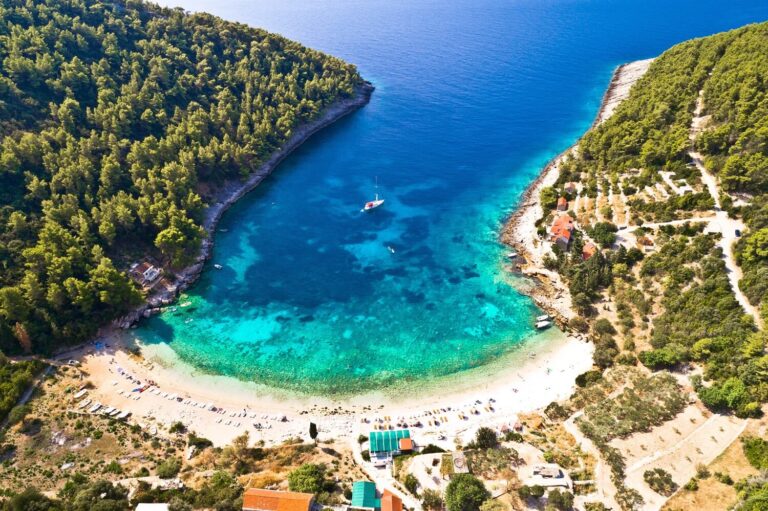
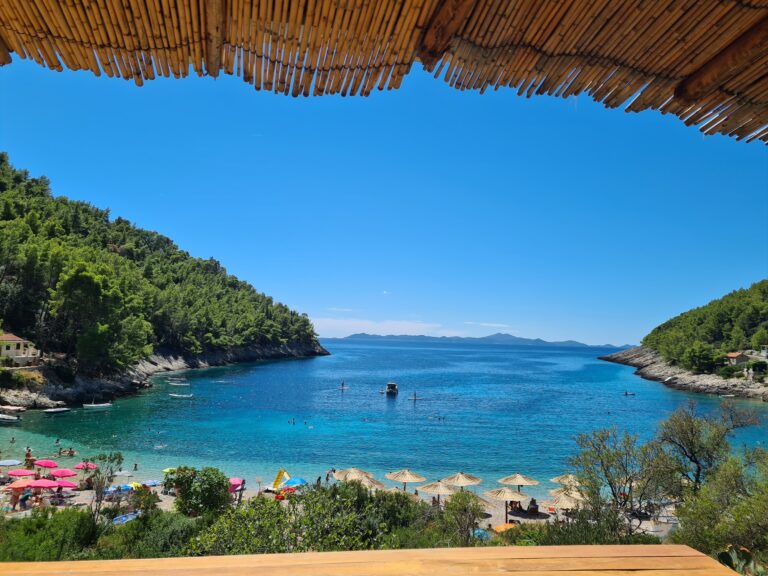
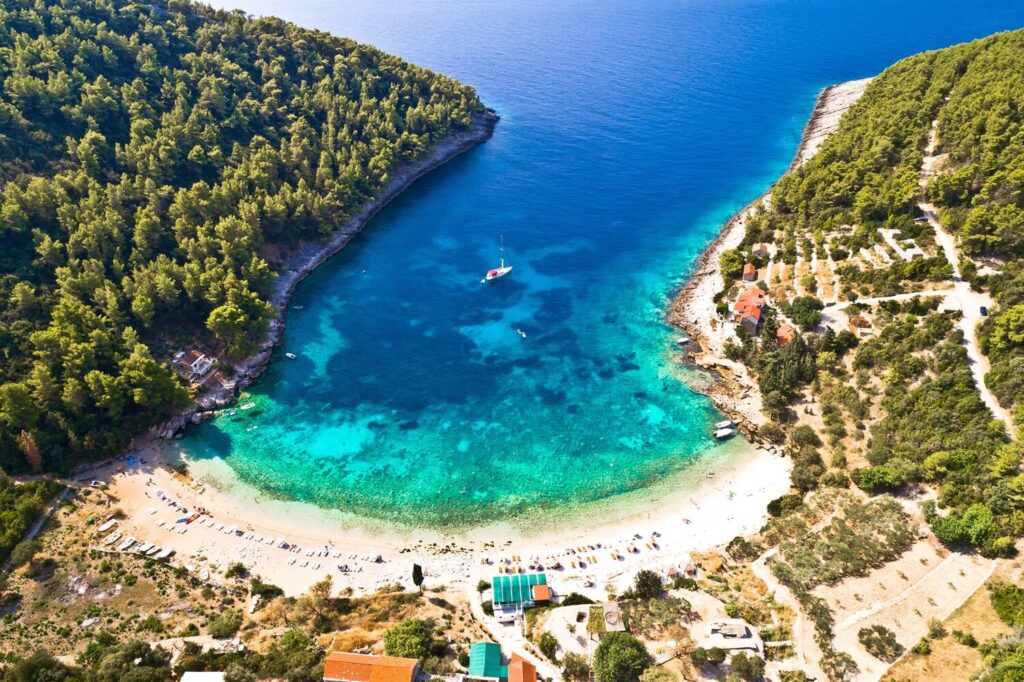
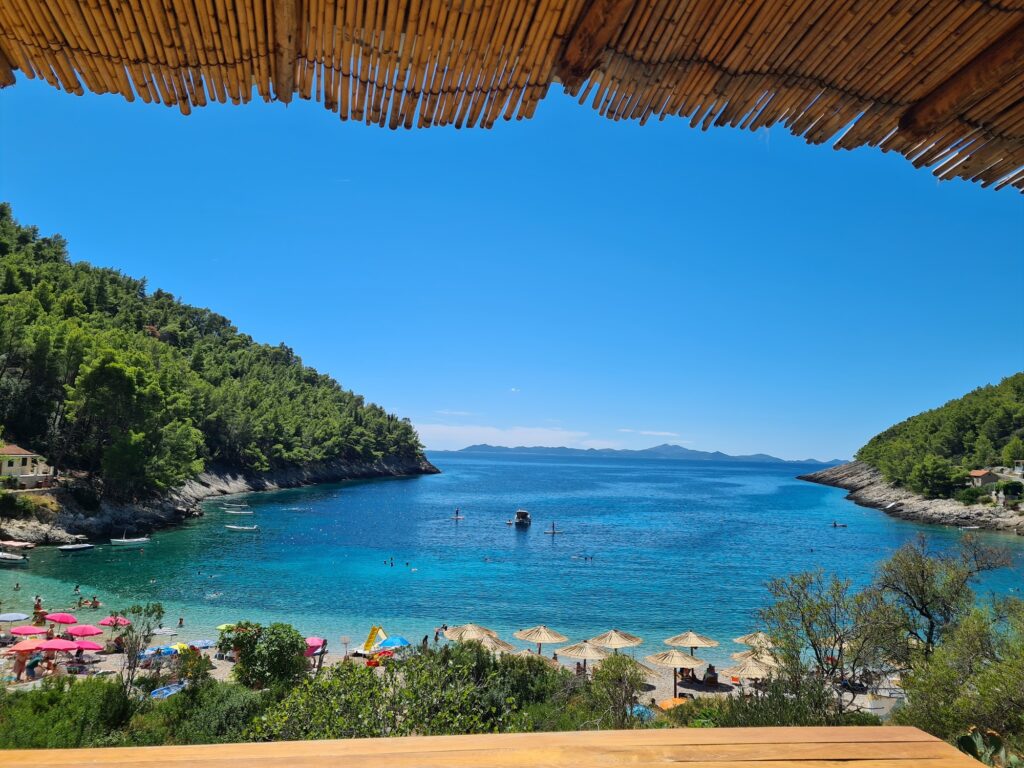
Pupnatska Luka is a sheltered bay on the southern Korčula coast — the headlands on either side reducing the wave energy from the open water between the island and Lastovo to the south, and the white pebble bottom and the overhead light combining to produce the vivid turquoise colour that the bay’s photographs consistently and accurately represent.
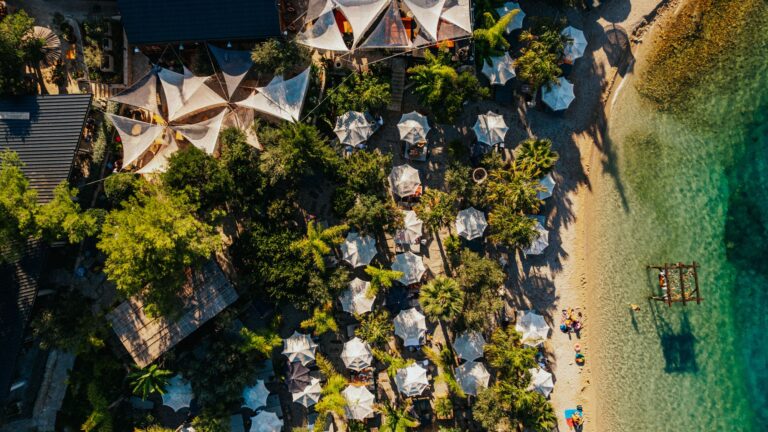
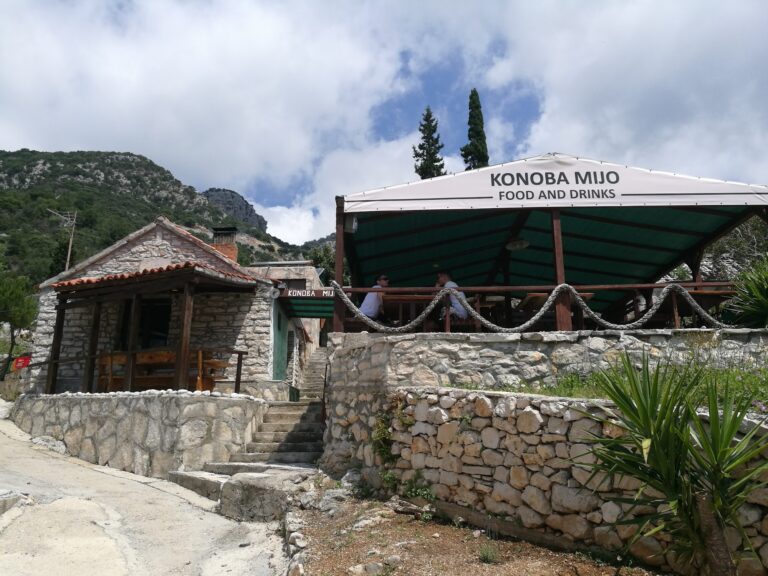
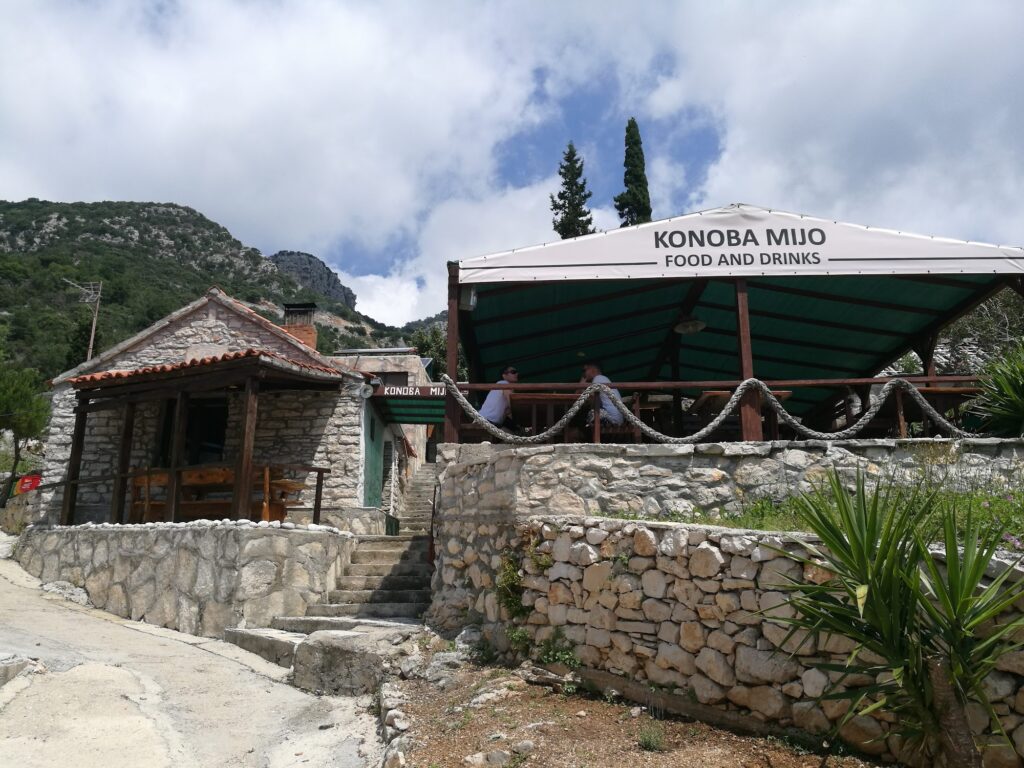
The two konobas — Miral Beach Bar and the second establishment built into the hillside — are the physical infrastructure that distinguishes Pupnatska Luka from the island’s truly wild coves. Both are built into the slope above the beach rather than placed on the shore, and their terraces provide the elevated view over the bay and the Lastovo horizon that makes the food and the drinks at these establishments something more than merely practical.
The olive groves visible on the hillside above the bay — the same groves the road from Pupnat passes through on the descent — are the specific agricultural context that gives the setting its Korčula character. The island’s olive oil production is one of the foundations of its culinary identity, and the presence of those groves above the bay connects the beach to the island’s productive landscape in the direct way that the Bačva vineyard approach connects that cove to the island’s wine production. The two beaches, separated by the headland that divides their respective approaches from Pupnat village, each have a specific inland-to-sea relationship that makes them worth understanding as a pair rather than as alternatives.
The Shore and Water Quality
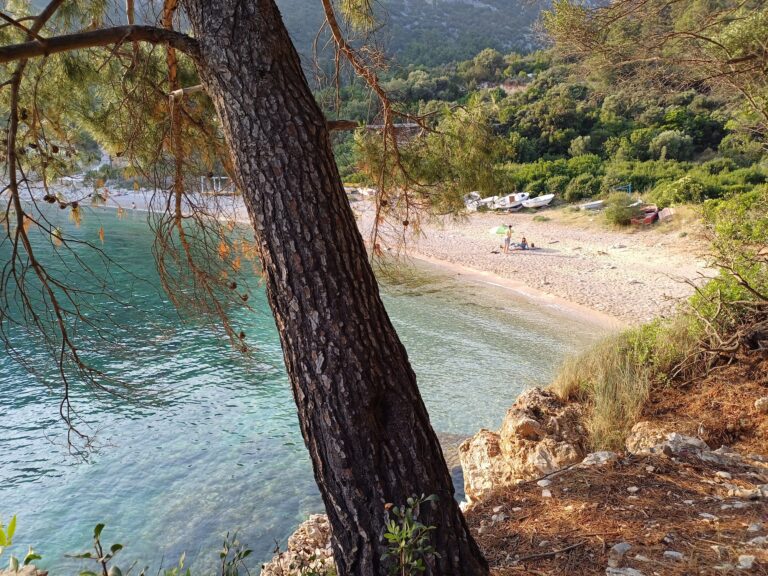
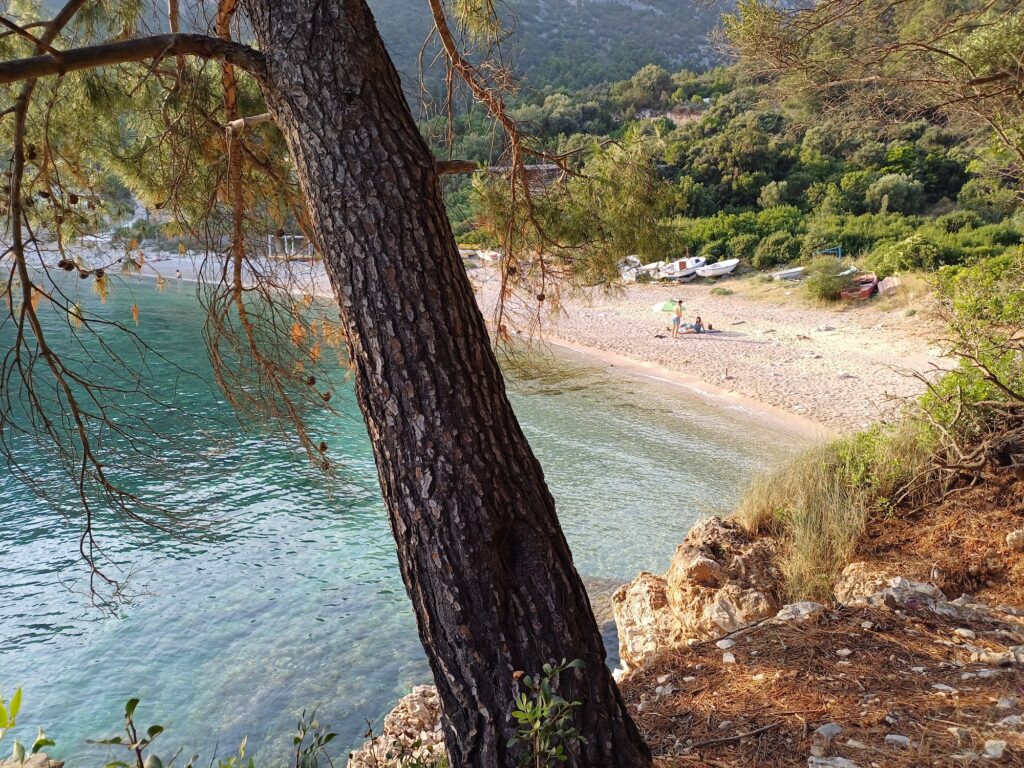
The shoreline at Pupnatska Luka is smooth, sun-bleached white pebbles — rounded to the consistent finish that years of gentle wave action on limestone produces, comfortable to lie on once settled, and giving the water above them the luminous quality that pale pebble shores achieve when the light conditions are right.
The water quality at Pupnatska Luka Beach benefits from the open-water exposure toward Lastovo — the island visible approximately forty kilometres to the southwest across the open Adriatic — which provides the circulation that keeps the bay’s water clean and well-oxygenated. The transparency is exceptional throughout the bay, the seabed clearly readable from the surface, the colour shifting from pale turquoise in the shallows to a deep cobalt in the central section where the depth increases.
Snorkeling at Pupnatska Luka near the rocky edges of the bay on both sides is the underwater activity that the water quality most directly rewards. The rocky cliff base formations at the bay’s margins provide the structural complexity that supports varied marine life — sea bream, the occasional octopus in a crevice, the underwater flora colonising the shaded sections of the rock. The visibility through the water makes the detail of those formations clearly readable from the surface, and the undisturbed character of the southern Korčula coast sustains a marine environment healthier than the more intensively visited bays of the island’s northern shore tend to support.
Visitors who have snorkeled at Bačva Beach Korčula Island — the smaller enclosed cove on the same southern coast, reachable from the same Pupnat village — will find the snorkeling at Pupnatska Luka comparable in water quality while operating in a slightly larger and more open bay environment that gives the underwater exploration more spatial range.
Sea kayaking and SUP from Pupnatska Luka along the southern Korčula cliff coast provide access to the hidden grottoes and smaller coves between the bay and the surrounding headlands — the morning conditions, before any wind develops on the open water between Korčula and Lastovo, being the optimal time for the paddle.
Facilities
Pupnatska Luka Beach facilities are well-considered for a bay of this character — present and sufficient without the commercial infrastructure that would alter the cove’s wild appearance.
Modern freshwater showers and changing cabins are positioned at the beach edge — sufficient for the practical requirements of a beach day without the facility density of a resort beach. Sunbed and umbrella rental is available for visitors who want organised comfort. There is no permanent lifeguard. The bay’s naturally sheltered position keeps swimming conditions predictable and safe through most conditions, but the unmonitored status requires the personal judgment appropriate to an unsupervised swimming environment.
The organised paid parking area above the bay is, as the source text notes, a genuinely unusual provision for a cove of this remoteness — a practical convenience that makes visiting by car straightforward and that distinguishes Pupnatska Luka from the truly access-limited beaches of the southern Dalmatian island coast.
For Families
Pupnatska Luka with children works well for families with children across a range of ages, with the specific practical requirements varying by age and swimming confidence.
The sheltered bay water is calm and warm — the enclosed geometry reducing wave action to near zero in most summer conditions and the southern exposure warming the water through the season to the temperatures that families with young children value. The central section of the beach provides a gradual entry that is accessible for toddlers, and the shallow zone extends far enough from the shoreline to give very young swimmers meaningful freedom of movement. Water shoes are advisable for children navigating the pebble shore and the rocky margins.
The konobas above the beach provide the food and drink infrastructure that makes a full family day at the bay practical without requiring departure from the immediate beach environment — cold drinks and snacks available through the day, proper meals available at the terrace restaurants for the midday and early evening hours.
For families with older children and teenagers, the snorkeling along the rocky edges and the kayak and SUP rental provide the active water options that extend the day’s range beyond conventional swimming. The absence of a lifeguard is the practical consideration for families whose children require formal supervision.
Food and Drink: Žrnovski Makaruni and the Hillside Terraces
The two konobas at Pupnatska Luka — Miral Beach Bar and its hillside neighbour — are the specific and entirely appropriate food and drink infrastructure for the bay, built into the slope above the beach and serving from terraces that face the cove and the Lastovo horizon.
The cooking is Korčula Island cooking in its most specific and most characterful form. Žrnovski makaruni — the handmade pasta specific to the Korčula village of Žrnovska and to the broader island tradition, made by hand-rolling dough over a knitting needle to produce the characteristic hollow form — is the dish that most directly represents the island’s culinary identity and that the konobas at Pupnatska Luka prepare with the confidence of kitchens that serve it regularly and take it seriously. Fresh Adriatic calamari finished with the island’s olive oil — the same oil from the groves visible on the hillside above the bay — is the seafood counterpart that completes the meal.
Pošip or Grk white wine from the island’s vineyards is the drink that accompanies all of this with the regional appropriateness that the setting demands. Sitting on the Miral terrace in the late afternoon with the bay below, the white pebbles catching the last of the direct sun, the Lastovo horizon visible through the late Adriatic haze, with the wine and the pasta that both come from within a few kilometres of where you are sitting — this is the specific and entirely satisfying experience that the Pupnat descent delivers at its most complete.
Pupnatska Luka Beach on Korčula Island is the southern coast bay that rewards the fifteen-kilometre drive from the town with a completeness of experience — the extraordinary water, the hillside konobas, the island pasta and the island wine, the Lastovo horizon, the olive grove descent — that the island’s more accessible northern coast beaches do not assemble in the same way.
It is not the most remote beach on the Korčula coast. Bačva to the east is smaller and wilder. What Pupnatska Luka offers is the southern coast experience with full practical provision — the parking, the konobas, the sunbeds — and without the resort infrastructure that would compromise the bay’s character.
Follow the road from Pupnat down to the sea. The parking area is organised. The pasta will be handmade. The Lastovo will be on the horizon.
Map
Sorry, no records were found. Please adjust your search criteria and try again.
Sorry, unable to load the Maps API.
Near by places: