Bačva Beach Korčula Island: Southern Cove Pošip Wine
Profile
Bačva Beach, Korčula Island: The Southern Cove Where the Vineyard Road Ends at the Sea
Croatia | Dalmatia | Korčula Island
The road from Pupnat to Bačva descends through the interior of Korčula Island in a sequence of tight bends through dense Mediterranean scrub and vineyard — the same island terrain that produces Pošip, the white wine that Korčula makes with more distinction than any other Dalmatian island, and that appears on the menu of the konoba waiting at the bottom of the road. The descent takes perhaps ten minutes by car from Pupnat village and arrives at a small parking area near the shore with the bay already visible through the last of the vegetation.
Bačva Beach sits on the southern coast of Korčula Island, facing the Pelješac Channel — the body of water between the island and the Pelješac peninsula that provides the open-sea circulation keeping the bay’s water at the standard of transparency the cove’s reputation is built on. It is a small, enclosed pebble beach with a family-run konoba directly on the shore, no lifeguard, sunbed rental available, and water quality that the Pelješac Channel currents maintain at an exceptional standard.
I spent a full day at Bačva on my second visit to Korčula — having made the mistake of not stopping there on my first — and left with the specific conviction that the southern coast of the island has been quietly offering something that the ferry port and the old town, for all their quality, cannot match.
Getting There: The Vineyard Road from Pupnat
How to get to Bačva Beach from Korčula Town involves driving toward the village of Pupnat in the island’s interior and following the sign for Bačva down a steep paved road to the sea.
From Korčula Town, the drive to Pupnat takes approximately twenty minutes through the island’s central vineyard landscape — the Pošip and Grk grape varieties visible in the terraced rows on either side of the road, the island’s interior characterised by the dense Mediterranean green that the southern Dalmatian islands produce when the soil and the rainfall combine correctly. From Pupnat, the Bačva sign appears at the turn-off for the descent road, and the paved route to the shore takes approximately ten minutes.
A small organised parking area sits near the bottom of the road, close enough to the beach to make carrying equipment manageable. The parking is limited and fills early on peak summer days — arriving before mid-morning is the practical advice that applies to most of the southern Korčula coast’s less accessible beaches.
By boat, renting from Pupnatska Luka or Lumbarda harbour and approaching the bay from the Pelješac Channel provides the sea-level introduction to the cove’s cliff enclosure and the colour of the water that the road approach does not.
The Bay: Pelješac Channel, White Pebbles, Limestone Enclosure
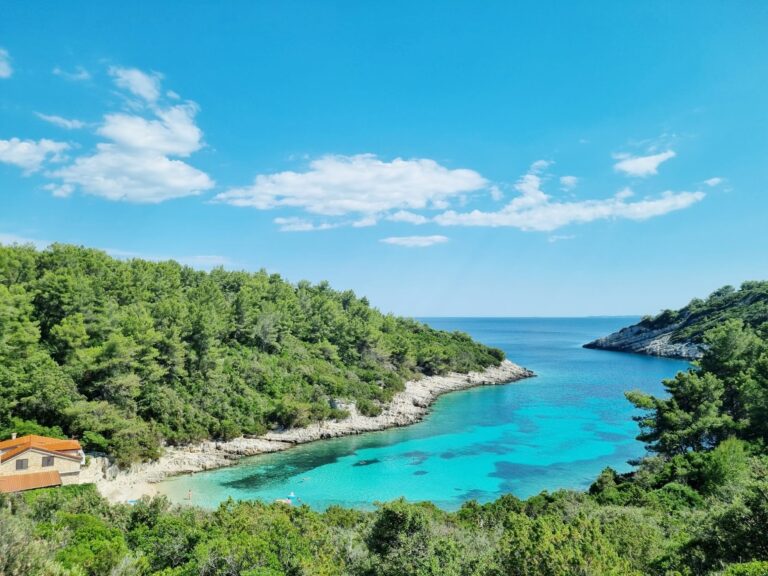
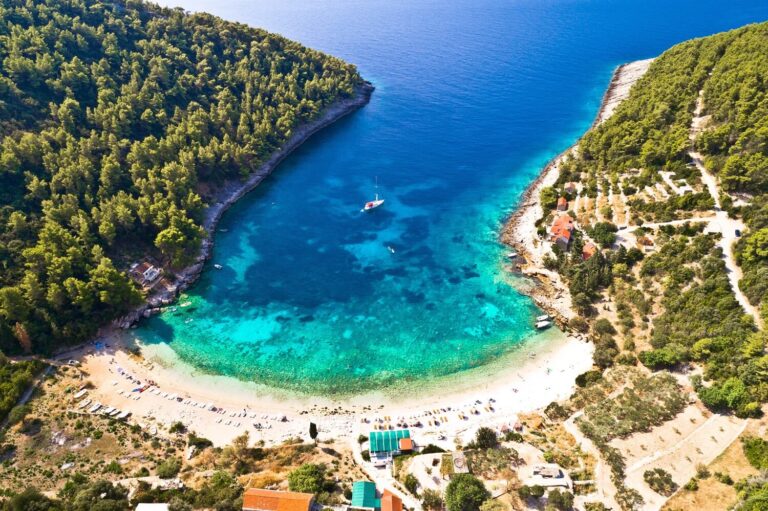
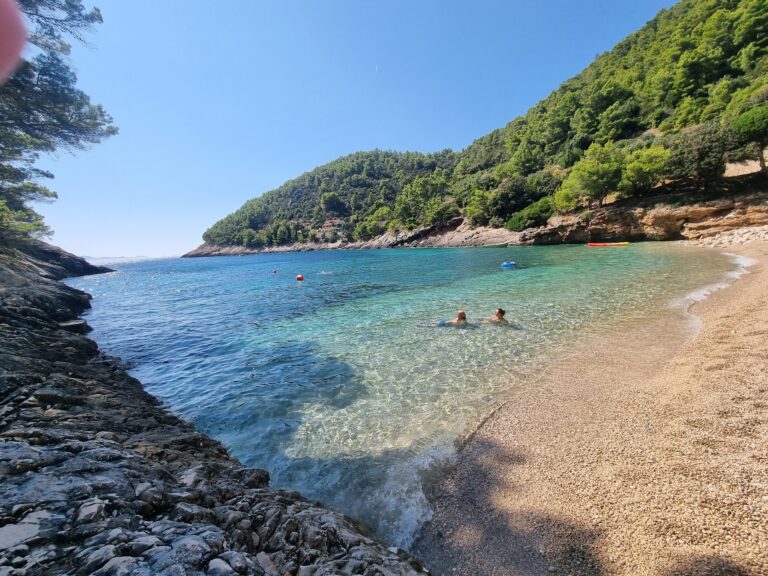
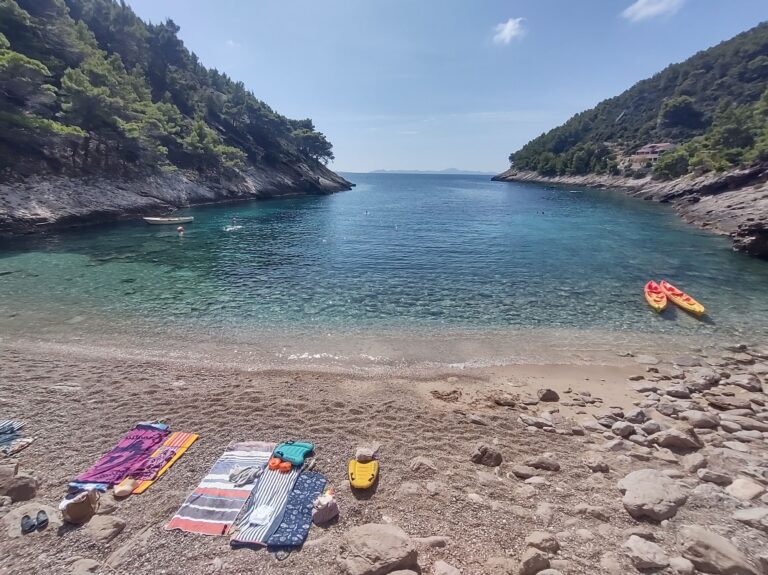
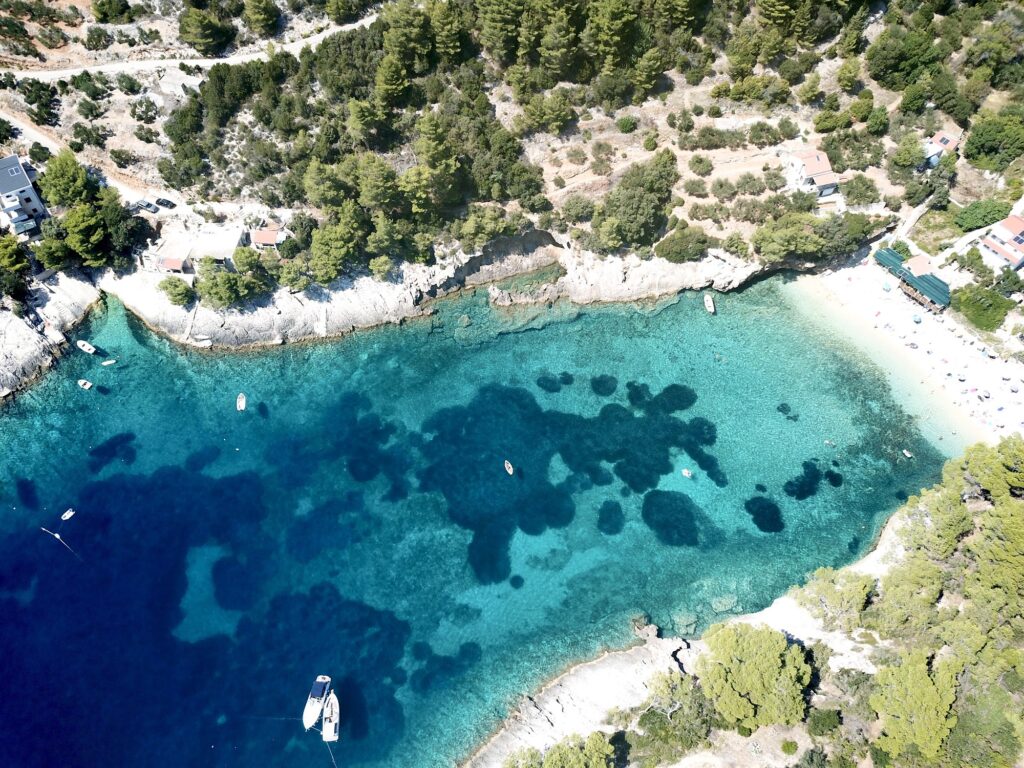
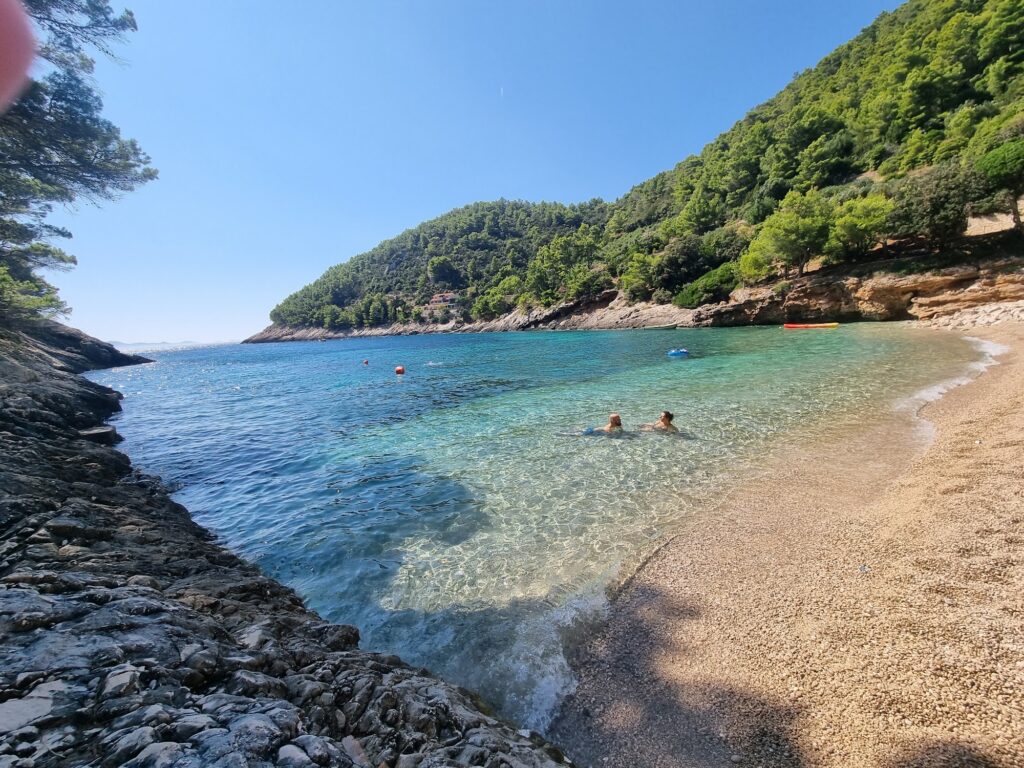
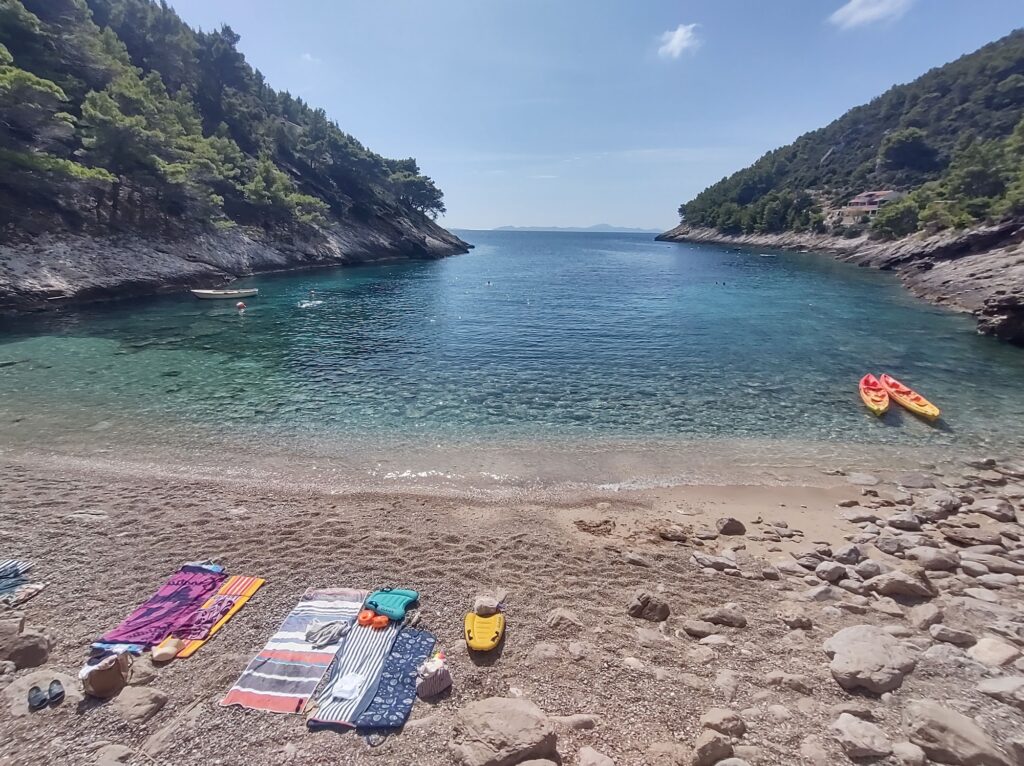
Bačva is an enclosed pebble cove on the southern Korčula coast — the limestone cliff faces that frame the bay on either side dropping to the waterline and creating an intimacy of scale that larger, more open beaches do not produce. The shore is smooth white pebbles, pale enough to reflect the Mediterranean light with the intensity that gives the shallow water above them the vivid turquoise quality that the bay photographs consistently and accurately.
The Pelješac Channel is visible beyond the bay entrance — the open water between Korčula and the peninsula on the horizon, and the source of the current that flushes the bay with fresh, oxygenated water. The channel provides the ecological basis for the water quality at Bačva in the same way that open-sea channels provide it at beaches throughout the Dalmatian island coast.
The air at Bačva carries wild sage alongside the sea salt — the aromatic scrubland vegetation of the Korčula interior reaching the cliff edge above the bay and the coastal breeze distributing it across the cove. It is a specific and immediately recognisable scent combination that returns with particular immediacy when the beach is remembered afterward.
The Shore and Water Quality
The white pebbles at Bačva are smooth and well-rounded — the natural product of years of coastal action on the limestone that comprises the cliff faces above and the seabed below. They are comfortable to lie on once settled, require water shoes for the entry and the rocky margins, and produce that characteristic luminosity under direct sun that pale pebble beaches achieve when the stone and the light quality are both right.
The water quality at Bačva Beach Korčula is the quality that the beach’s reputation rests on and that the Pelješac Channel circulation maintains without requiring significant management intervention. The transparency is exceptional — the seabed clearly visible in detail from the surface, the colour in the shallows a vivid pale turquoise deepening to cobalt within a short distance of the shore where the depth increases. The bay’s enclosed geometry keeps the water calm through most conditions, the cliff walls reducing the wave energy from the open channel and producing the pool-like stillness that the pebble bottom and the transparency make particularly visible.
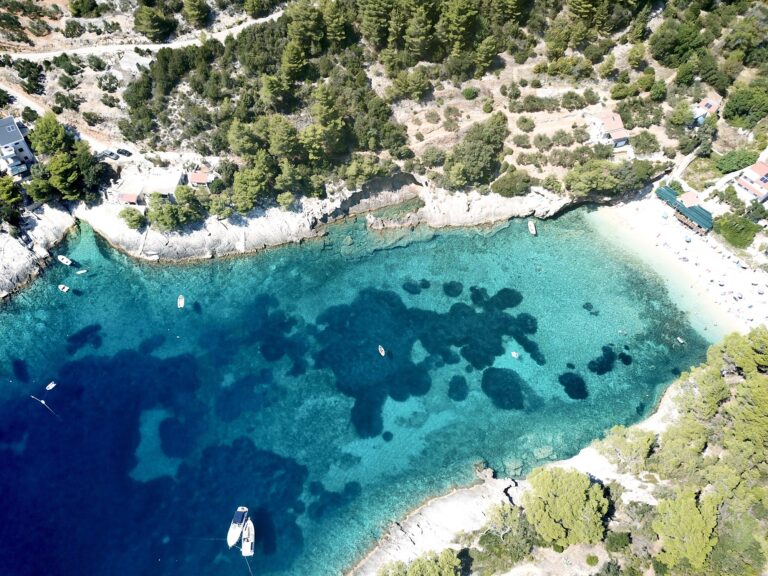
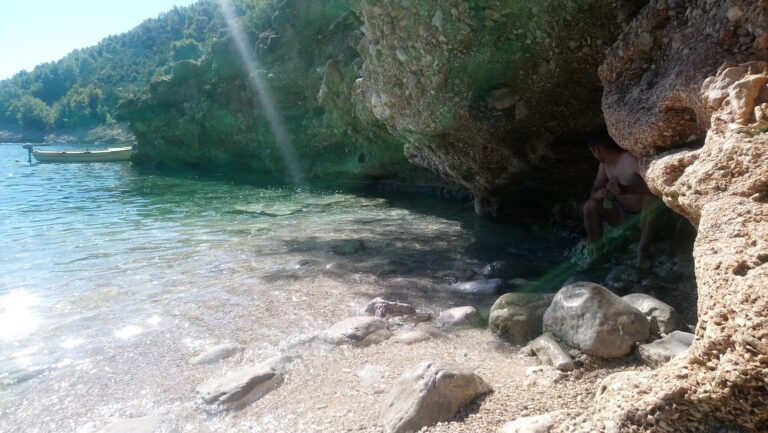
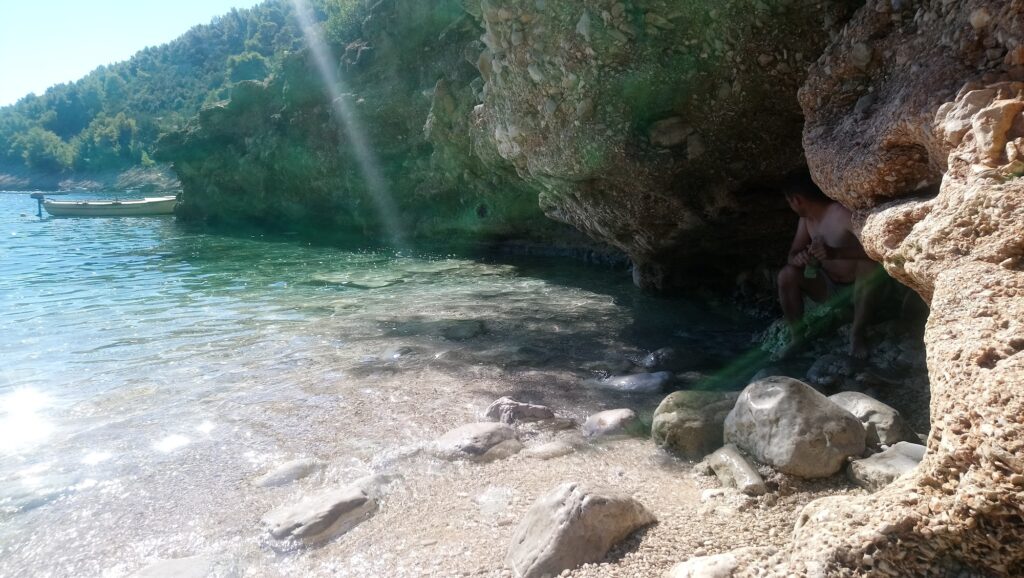
Snorkeling at Bačva Beach along the rocky edges of the bay is the underwater activity the water quality most richly supports. The cliff base formations provide the habitat complexity that supports the fish populations and the underwater flora that the clear water makes clearly visible from the surface. Silver fish move through the shallows with the ease of a genuinely undisturbed marine environment, and the rocky crevices and formations along the cliff base on both sides of the bay reward careful exploration with a mask.
Visitors who have snorkeled at Plaža Dubovica on Hvar Island — another enclosed southern Dalmatian cove with cliff-base snorkeling and exceptional water clarity — will find the underwater character of Bačva comparable in quality, though the setting and the approach to each are distinct.
Sea kayaking from Bačva along the southern Korčula cliff coast is the surface activity that the bay’s position and the channel conditions most naturally accommodate. The cliff faces immediately adjacent to the cove — visible from the beach and accessible by paddle — have the vertical and varied character of the southern Korčula limestone that the sea has worked over centuries, and the perspective from the water is entirely different from anything the shore provides.
Facilities
Bačva Beach facilities are minimal in the way that is appropriate to a cove managed primarily by the family running the konoba rather than by a municipal beach authority.
Freshwater showers are available on site for rinsing after swimming. Sunbed and umbrella rental is available — a provision that the absence of natural shade during the midday hours makes practically significant for visitors planning a full day at the beach. There is no lifeguard. The bay’s sheltered character keeps swimming conditions predictable and generally safe, but the unmonitored status is worth noting for less confident swimmers and for families whose children require supervised conditions.
The konoba family maintains the beach’s cleanliness directly — a model that produces a consistently well-cared-for shore because the operators have an immediate practical stake in its condition. Sea kayak rental is available for those who want to explore the cliff coast outside the immediate bay area.
For Families
Bačva Beach with children is well-suited to families with older children and teenagers who are confident swimmers, comfortable on pebble shores, and interested in snorkeling and kayaking.
The calm, sheltered bay water provides safe swimming conditions for children who can handle the pebble entry and the rocky margins. The exceptional water clarity — the seabed clearly visible throughout — provides the kind of visual engagement underwater that children with a snorkel find genuinely absorbing. The kayak rental provides the active water option for older children who want to explore beyond the immediate swimming area.
Water shoes are essential for children navigating the pebble shore and the rocky sections of the entry. The absence of a lifeguard is the practical consideration for families whose children require formal supervision.
For families looking for a comparable wild island cove experience with more dramatic cliff access, Murvica Beach on Brač Island offers a similar character — a secluded pebble cove below a village accessible by cliff road, with snorkeling and a local taverna, and the added cultural dimension of the nearby Dragon’s Cave. The two beaches share a similar register while belonging to entirely different island landscapes.
For families with very young children who require sandy entry, shade infrastructure, and supervised swimming, the organised beaches near Korčula Town and Lumbarda provide those conditions more completely.
Food and Drink: The Konoba at the Water’s Edge
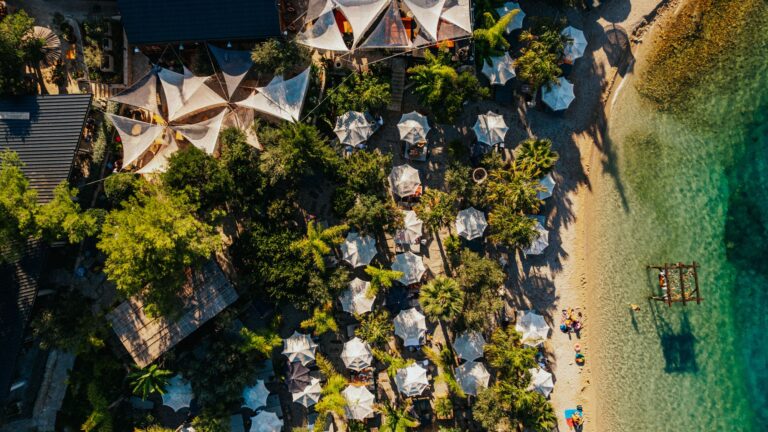
The family-run konoba at Bačva Beach is the specific quality that elevates the cove from a very good wild beach to a complete and self-contained day destination. It sits directly on the shore — the terrace a few steps from the water’s edge, shaded sufficiently to make the midday hours comfortable, and facing the bay with the direct view of the water and the cliff faces that the cove’s enclosed geometry provides from every point on the shore.
The cooking is the specific and honest product of a family kitchen sourcing from the island and the channel around it. Grilled sardines from the Pelješac Channel — fresh enough to make the simplicity of their preparation entirely appropriate — are the thing to order before anything else. Meat dishes prepared under the peka — the traditional Dalmatian bell that produces a slow, sealed cooking environment for lamb or veal — appear on the menu and reflect the same principle of quality ingredients prepared without elaboration.
Pošip wine from Korčula Island is the accompaniment that the konoba’s menu and the setting most naturally call for. Pošip is the indigenous white variety of Korčula — produced from grapes grown in the island’s limestone vineyard terrain, with a mineral quality and a specific flavour profile that reflects that origin directly. Drinking it on the Bačva konoba terrace as the afternoon sun moves west and the light on the Pelješac Channel shifts toward the warmer register of the late afternoon is the experience that the drive through the vineyards above the bay, the swim, and the meal all build toward naturally.
Bačva Beach on Korčula Island is the kind of cove that rewards visitors who take the southern road from Pupnat and follow the sign down the descent rather than remaining on the main coast road to the ferry port and the old town. The water is extraordinary. The konoba is honest and good. The Pošip wine is specific to the island you are on and to the vineyards you drove through to get there.
The pebbles require water shoes. The parking fills early. The lifeguard is not present.
None of those facts diminish what the bay offers. All of them are worth knowing before the descent.
Map
Sorry, no records were found. Please adjust your search criteria and try again.
Sorry, unable to load the Maps API.
Near by places: