Plazhi i Golemit: Albania's 5km Pine-Backed Sandy Beach
Profile
Plazhi i Golemit, Albania: The 5km Pine-Backed Beach South of Durrës Where Wild Rabbits Live in the 205-Hectare Forest
Albania | Golem | Kavajë Municipality
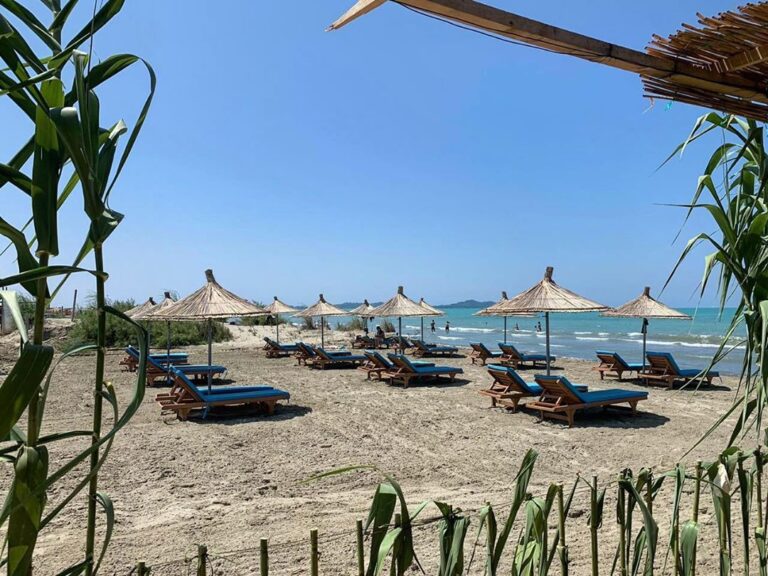
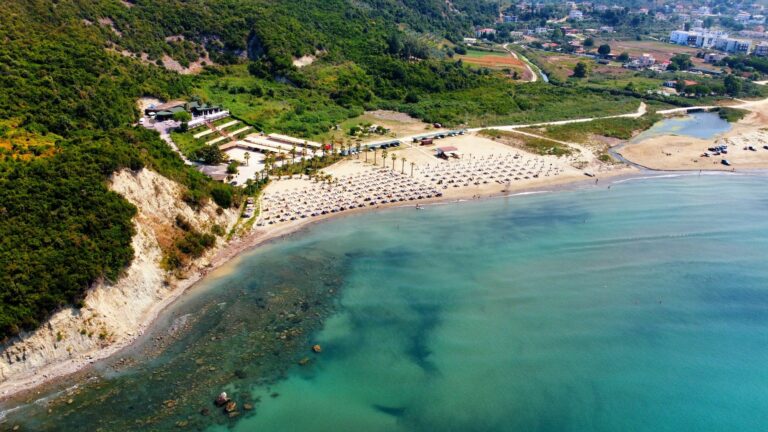
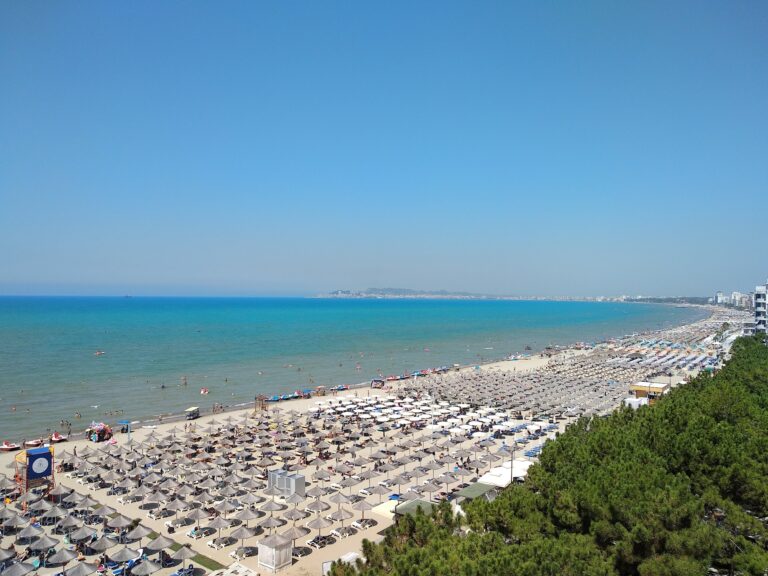
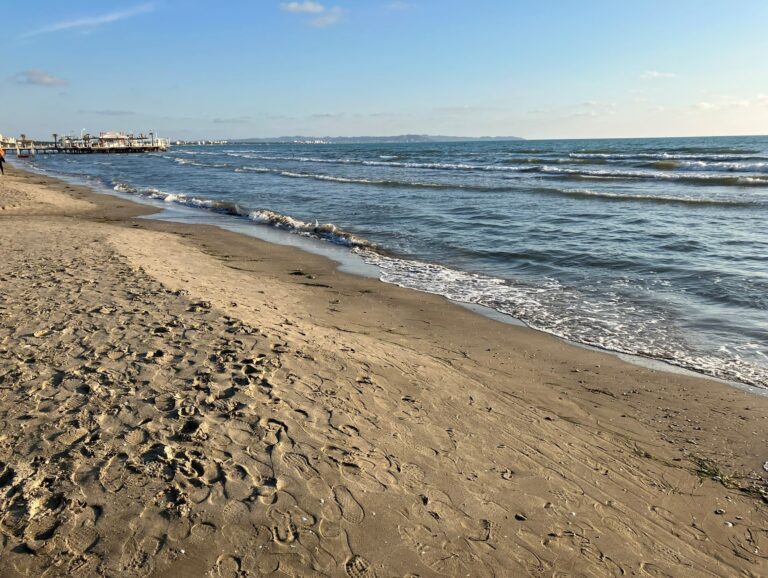
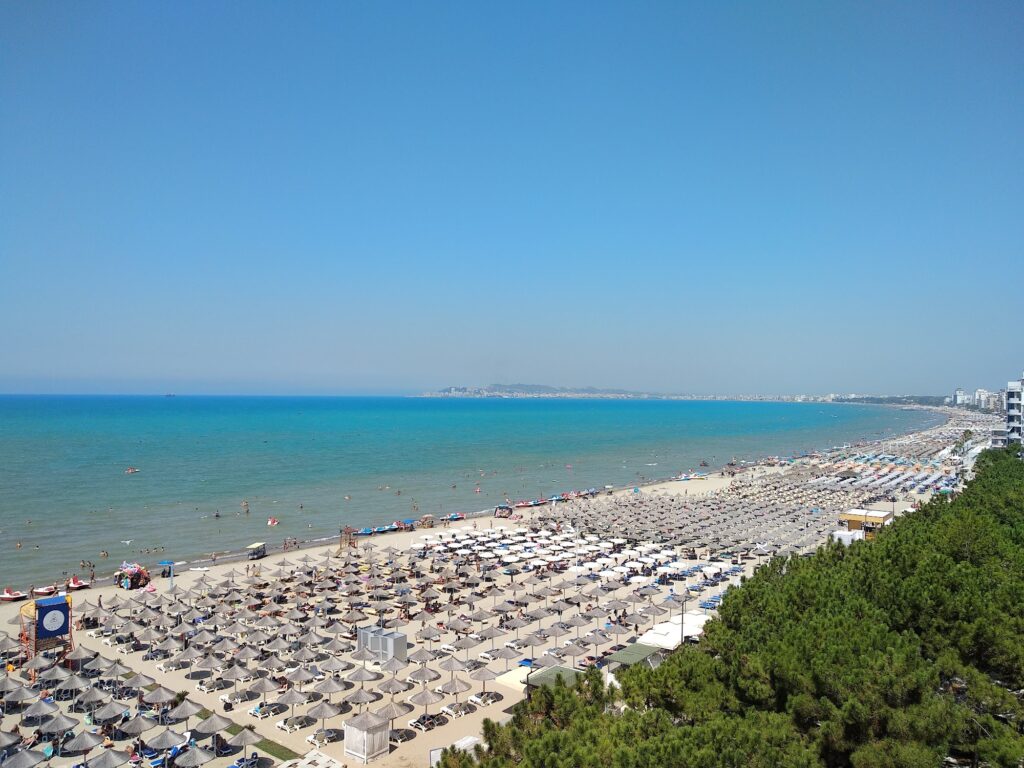
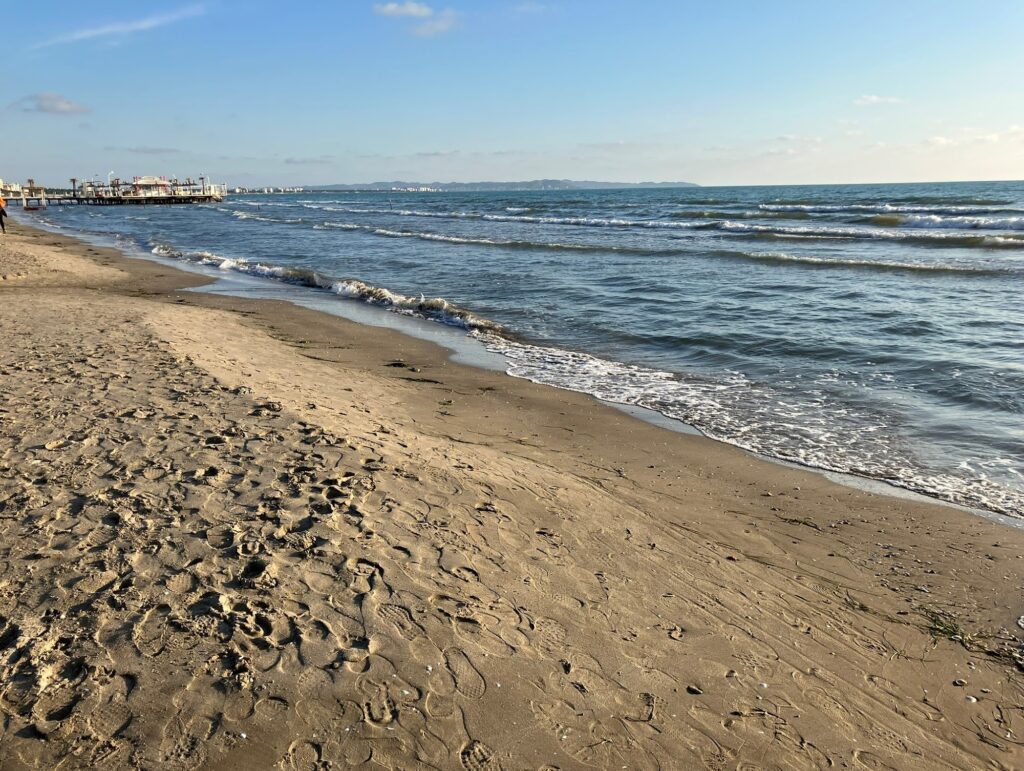
Golem Beach begins at the foot of the characteristic Kavajë Rock and extends over nearly 5 kilometres in length. It is surrounded by dunes and a pine forest. You can find wild rabbits, turtles and woodpeckers.
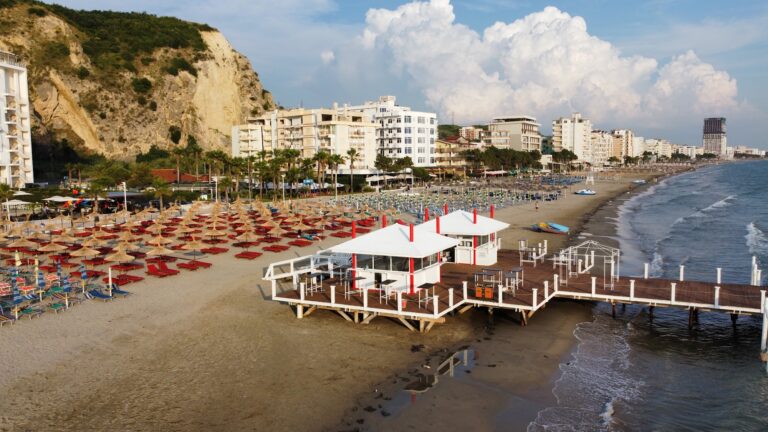
Golem is a southern suburb of Durrës resort town. It is almost the same as Durrës but not so crowded. The place is still very popular — especially in August.
The pine forest behind the beach is not incidental — the protective belt of man-planted pine forest has created a highly functional forest environment of 205 hectares, which greatly enhances the values of this beach. Fauna enlivens this area, with elements of dunes and forest. Among those most mentioned are: wild hare, common frog, common turtle.
The 205-hectare planted pine forest is the specific quality that distinguishes the Golem beach from the flat, exposed coastal development at Durrës city centre. The forest was planted as a windbreak and a dune stabiliser, but it has become a wildlife habitat, a source of shade, and the visual character that makes the beach feel different from the fully urbanised sections to the north.
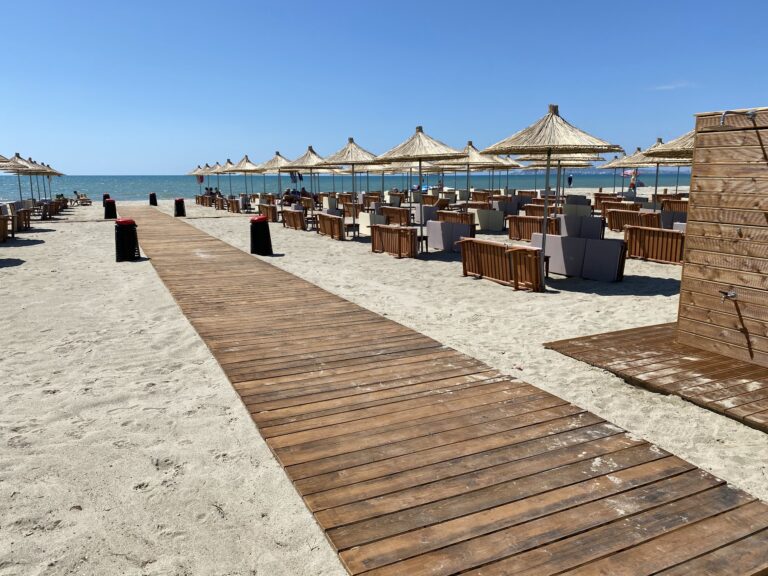
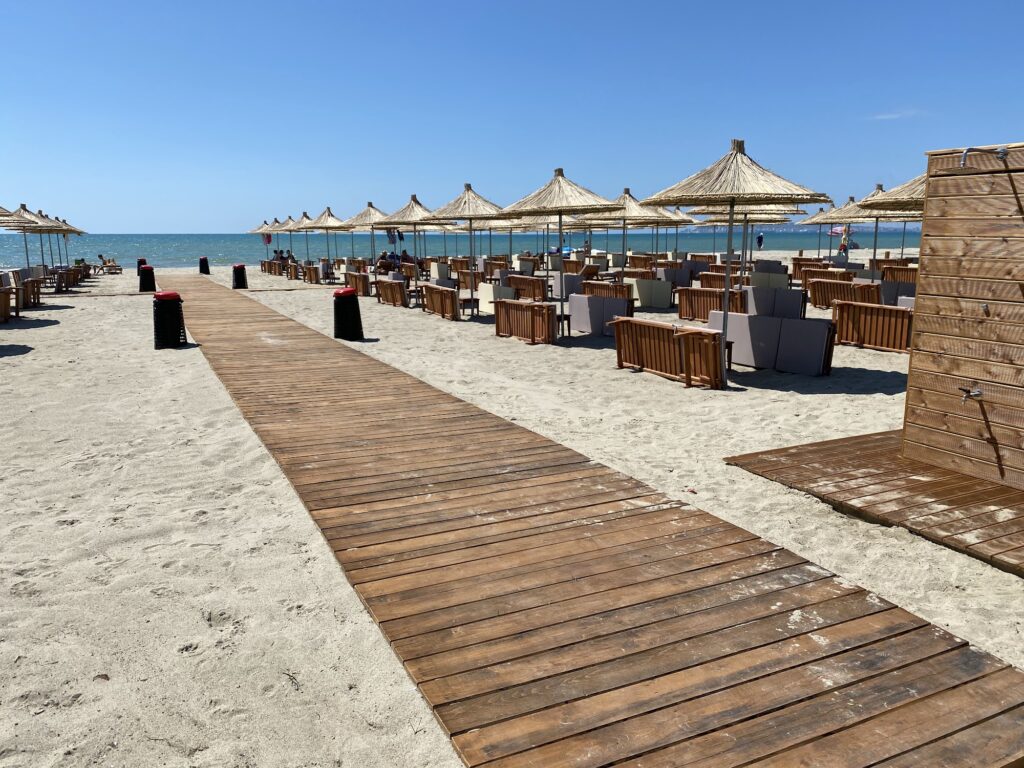
The honest counterpoint: complaints have been made about the beach being over-commercialised with paid umbrellas covering the area, and the water being murky with floating garbage and seaweed. The lack of depth for swimmers and the presence of jellyfish were noted as downsides.
Getting There: 45 Minutes from Tirana by Car, Bus from Durrës Station, or Local Train
From Tirana, the drive to Golem follows the SH2 highway to Durrës and then the SH4 south to the Golem area — approximately 45 minutes from the city. Golem is the coastal settlement approximately 5 kilometres south of Durrës city centre.
By bus, services from Durrës main station to Kavajë pass through Golem — ask for the Golem stop and the beach is a short walk. The journey takes approximately 10 to 15 minutes from Durrës.
By the Albanian Railways service, the Durrës–Rrogozhinë line has a stop in the Golem area. The train is the specific mode that the source article characterises as a “vintage experience” — the Albanian railway system is not the fastest or most modern but it operates and the coastal approach gives the specific view of the pine forest belt and the sea that the road approach does not.
Parking is available along the beach road, largely free and directly in front of the beach.
The Beach: 5km, Sandy, Shallow, Pine Shade Behind, Qerret the Best Section
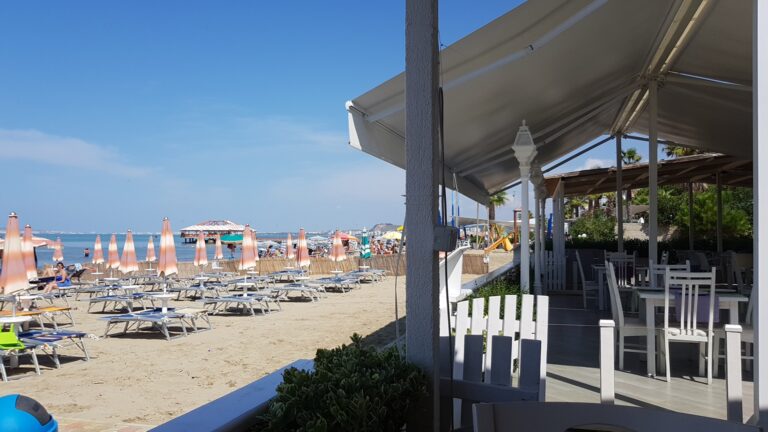
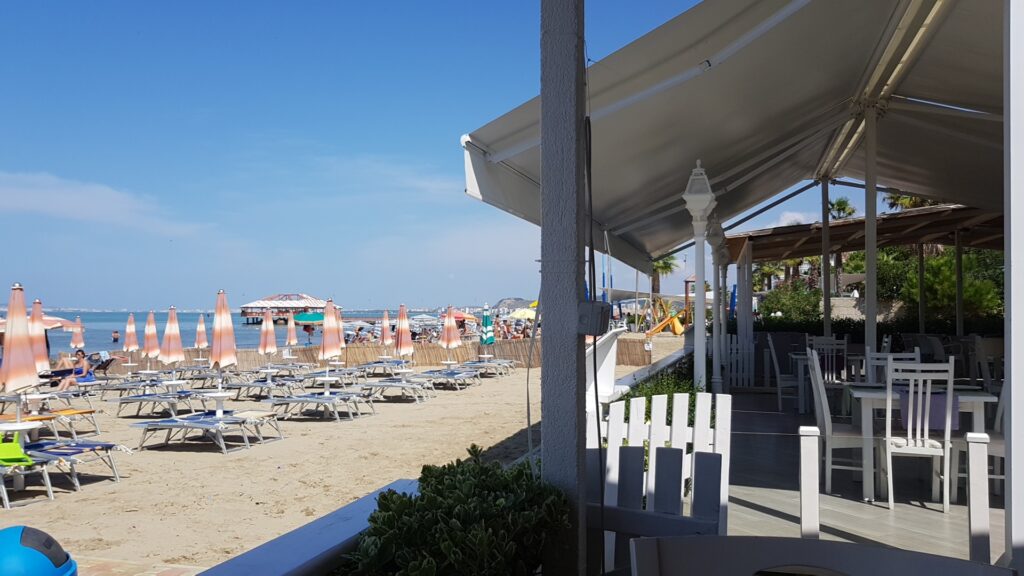
Plazhi i Golemit is several kilometres long and on the widest part around 100 metres wide. The water entry is very nice and the point of swim is at around 30 metres. Because this place is very popular among tourists, there are a lot of beach services available.
The beach is entirely sandy — fine golden sand on the shore and a sandy seabed throughout. The water is notably shallow, with swimming depth reached only after 30 metres from the waterline. This is the specific family advantage — the extended wading zone, the lack of sudden depth, and the soft sand seabed are the qualities that make Golem consistently recommended for families with young children by domestic Albanian tourism and by the wider Balkan tourist market.
Central Qerret Beach is the greenest section with pine forest and almost without buildings. The best choice is to select a hotel near this spot.
The Qerret section — the central portion of the Golem beach where the pine forest is thickest and the building density is lowest — is the specific section that accounts consistently prefer over the developed sections at either end. The natural shade from the forest, the cleaner water away from the discharge points, and the lower sunbed density make it the best version of the beach.
The 205-Hectare Pine Forest: Wildlife, Shade, and a Walk Through a Human-Made Habitat
The pine forest at Golem is not native — it was planted by human intervention as a protective and functional belt. The pine forest has created a highly functional forest environment of 205 hectares. In the forest grow: woodpecker, nightingale and other bird species.
The result of this planting programme is a genuinely productive ecological habitat that has developed over decades. The wildlife population — wild hares, common frogs, common turtles, woodpeckers, nightingales — is the fauna that a 205-hectare forest with dune and wetland edges naturally produces.
The afternoon walk through the pine forest — after the beach session, when the heat has peaked and the shade of the trees is the preferable environment — is the specific activity that the forest enables and that no other beach in the Durrës area can replicate. The resin scent of the pine trees and the sea salt from the beach combine in the way that the source article’s “quintessential Golem experience” accurately describes.
The Water Quality Honesty: Murky Possible, Jellyfish Seasonal, Better Than Central Durrës
Visitor reviews highlight the mesmerising colour changes of the water and the beauty of the sandy beach, with some appreciating the adjacent forested area. However, complaints were made about the beach being over-commercialised with paid umbrellas covering the area, and the water being murky with floating garbage and seaweed. The presence of jellyfish was noted as a downside.
The water quality at Golem is better than the central Durrës city beaches that the previous article in this series covered — the distance from the main urban drainage system and the slightly better circulation in the southern bay reduce the pollution load. The murky water and occasional seaweed reported in visitor accounts are the specific conditions that occur in calm, windless weather when the natural processes of a sandy-bottom, shallow beach concentrate material at the shoreline.
Jellyfish are seasonal — August and September tend to produce the most jellyfish activity along the central Albanian Adriatic coast. Checking conditions on arrival and with local beach operators is the practical approach.
The Kavajë Rock and the Southern Boundary
The Kavajë Rock — the limestone formation at the northern end of the Golem beach sequence that marks the boundary between the Durrës bay and the Golem bay — is the distinctive geological marker visible from the beach. The rock is the feature that gives the beach its bounded character from the north; the Leshniqe stream discharge point marks the southern end of the 5-kilometre length.
The stream outflow is the specific point where water quality is most variable — the stream carries runoff from the Kavajë agricultural hinterland and its discharge point is the location visitors are generally advised to avoid for swimming.
Golem in the Adriatic Central Albania Beach Context
Golem belongs to the same central Albanian Adriatic beach sequence as Durrës Beach Albania to the north and Lalez Beach Lalzi Bay Albania further north — the three beaches together covering the full 30-kilometre stretch of Albanian Adriatic coast between the Durrës port and the Rodoni Cape. Golem is the middle option in the quality and character hierarchy: quieter than Durrës city beach, better maintained than the most-visited sections, but with the same water quality variability that the central Albanian Adriatic position produces.
Plazhi i Golemit south of Durrës is the 5-kilometre sandy beach backed by a 205-hectare man-planted pine forest with wild rabbits, turtles, and woodpeckers — shallow water for families, the Qerret section the least developed and greenest, the water murky in calm conditions, jellyfish in August and September, 45 minutes from Tirana, parking along the beach road, and the pine forest afternoon walk the specific activity that no other beach in the area provides.
Drive 5 kilometres south from Durrës. Go to the Qerret section.
Walk through the forest in the afternoon when the shade arrives.
Map
Sorry, no records were found. Please adjust your search criteria and try again.
Sorry, unable to load the Maps API.
Near by places: