Durrës Beach Albania: 10km City Shore With History
Profile
Durrës Beach, Albania: The 10km Adriatic City Beach With the Roman Amphitheatre Above and the Water Quality Warning Below
Albania | Durrës | Central Albanian Adriatic
Durrës is Albania’s second city and oldest port — founded by Greek colonists from Corinth and Corcyra in 627 BC as Epidamnos, renamed Dyrrachium by the Romans, who made it the eastern terminus of the Via Egnatia, the Roman military road connecting the Adriatic to Byzantium. The city’s harbour received Julius Caesar in 48 BC during his pursuit of Pompey. The Byzantine walls that still ring the old city were built by Emperor Anastasius I, who was born here in 430 AD. The Roman Amphitheatre — one of the largest in the Balkans, with a capacity of 15,000 to 20,000 spectators, partially buried beneath the modern city and partially excavated — sits within walking distance of the beach.
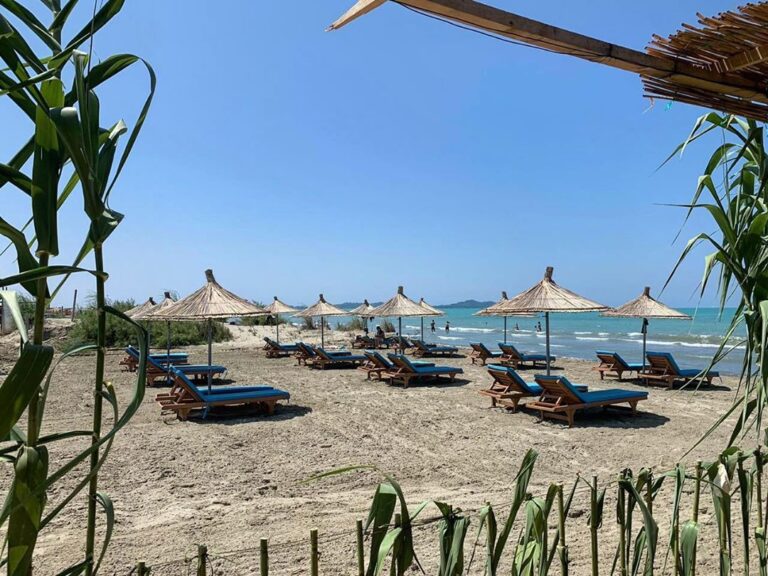
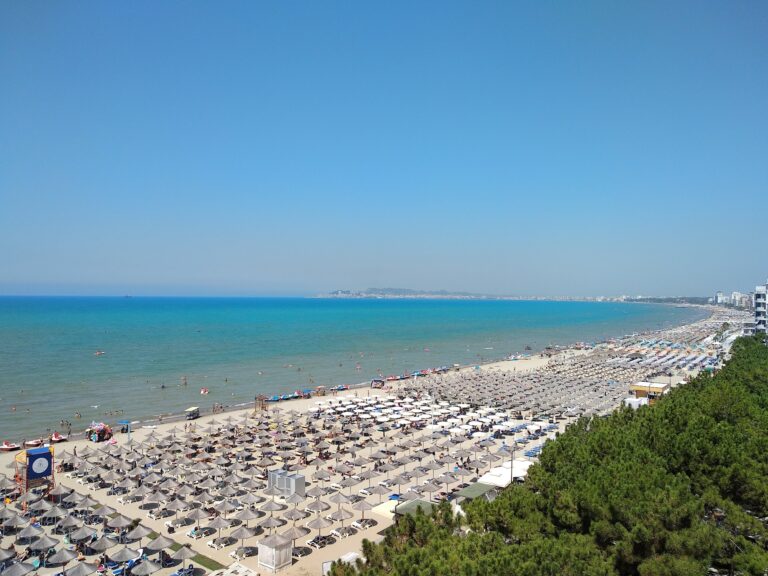
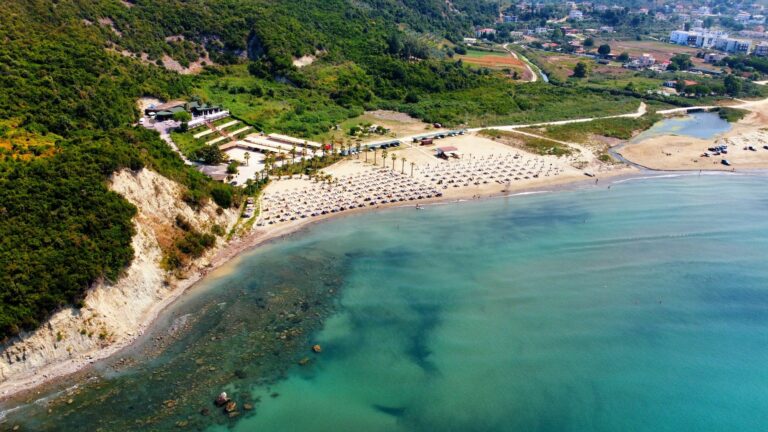
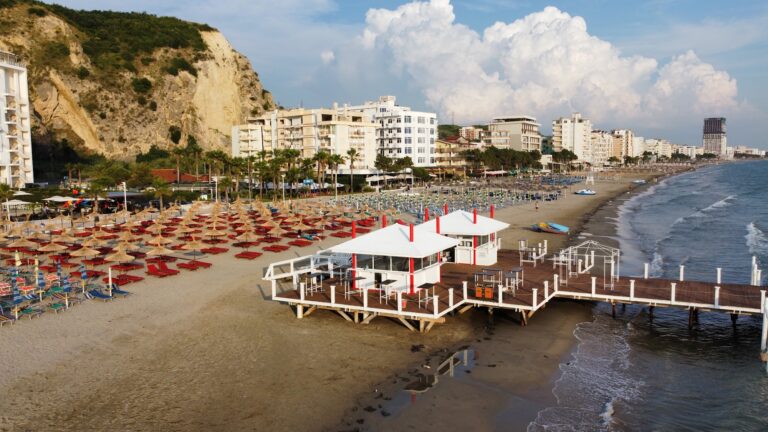
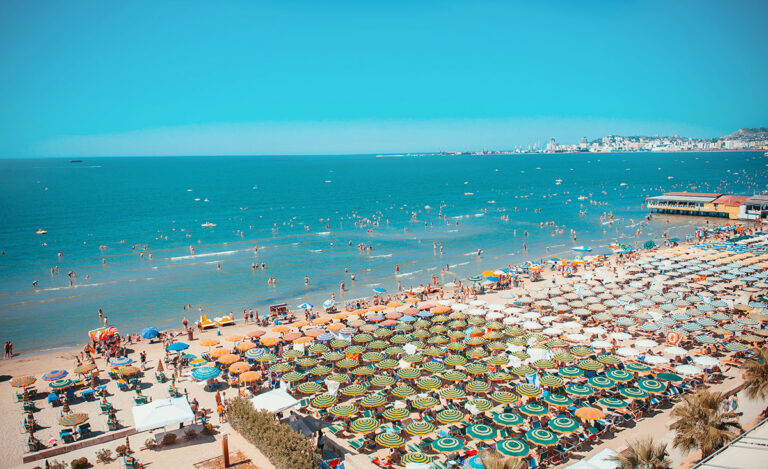
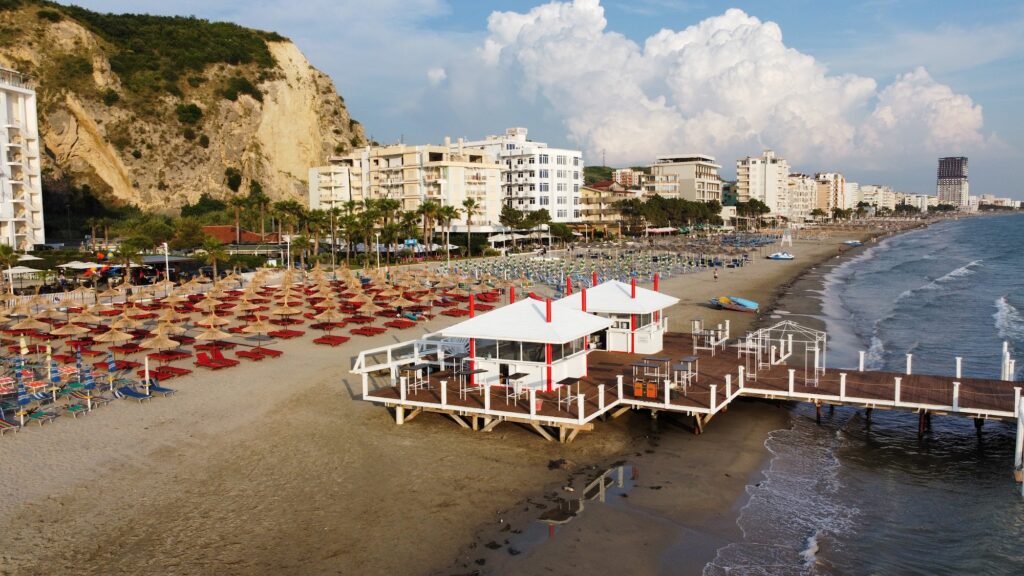
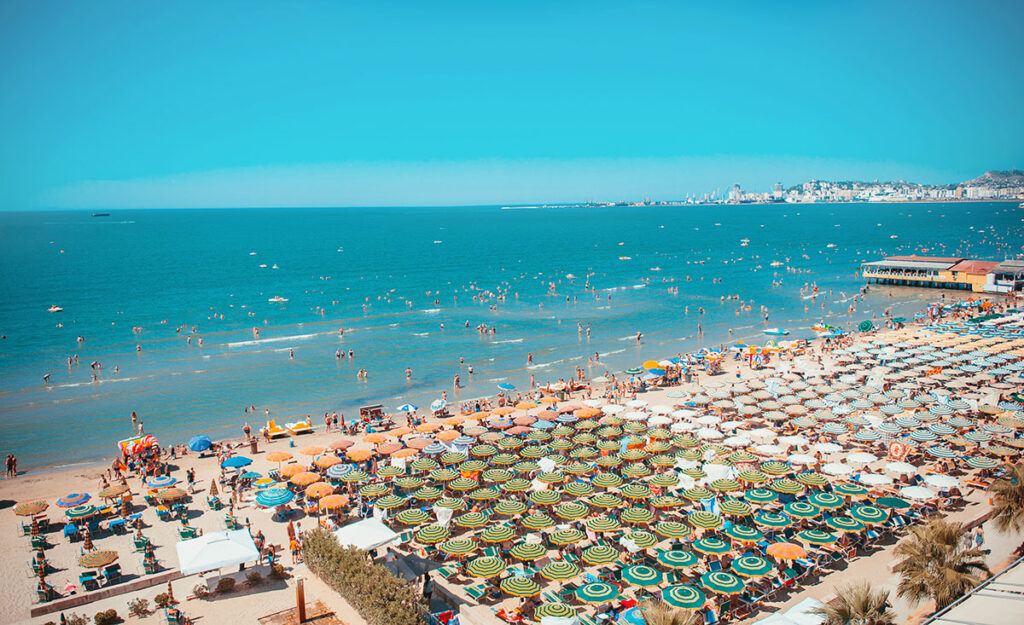
Durrës Beach stretches over 10 kilometres along the Adriatic south and north of the port — the broad, flat, sandy, warm-water city beach that serves as the primary beach destination for the Albanian domestic tourism market. Hundreds of private beach operators have laid out sunbeds and umbrellas across the full length. The Vollga promenade, running alongside the central section, is the social spine of the Albanian beach summer — the strip of bars, restaurants, ice cream kiosks, and seafood restaurants that the domestic tourist crowd fills from late June through August.
The beach is the most affordable, the most accessible, and the most visited beach in Albania. It is also, by the data available, among the most polluted in the country.
The Water Quality Data: 53% Poor Ratings, Sewage Overflow, Check Before Swimming
Government data shows Durrës city beaches deteriorated from 14% to 53% poor quality ratings in a single year. Out of 21 monitored points in Durrës, 11 resulted in Category D — the stations with bad quality include Zhiron Beach, Dajlani Bridge, Filadelfia Beach, Tropical Complex, Behind the Canal (Plepa), and others along the central city stretch.
The mechanism is documented: local authorities attribute water quality issues primarily to sewage overflow during heavy rainfall, according to the Durrës Water Supply and Sewerage authority. The city uses combined sewer systems that overflow during storms, discharging untreated urban water directly onto beaches. Albania ranks last in Europe for bathing water quality, with 22.7% of designated bathing sites rated poor quality — over 10 times higher than the European average of 1.5%.
The practical visitor advice is not to avoid Durrës Beach entirely — the city’s history, promenade, and overall experience have genuine value — but to check the water quality at the specific section before swimming. The southern sections of the bay and the areas away from the main drainage canal outflows receive better quality ratings than the central city sections. The Albanian national environment agency (KTA) publishes periodic water quality assessments. After heavy rain, avoid swimming for 24 to 48 hours.
€111 million has been invested in new wastewater treatment facilities, and the situation is improving year on year. The problem is not static — it is a work in progress, and the trajectory is positive. It is not yet resolved.
Getting There: 45 Minutes from Tirana by Bus for €2, by Car on the SH2, or by Ferry from Italy
From Tirana, the bus from the Southern and Northern Bus Terminal to Durrës runs every 15 to 30 minutes, takes approximately 45 minutes, and costs approximately €2. This is the most practical transport for visitors arriving in Tirana who want a beach day at Durrës without a hired car.
By car, the SH2 dual-carriageway connects Tirana directly to Durrës in approximately 38 kilometres — a 30 to 40-minute drive in normal traffic. Parking is available along the beach promenade road.
By ferry from Italy, Adriatic Lines, Ventouris, and Tirrenia operate services from Bari, Ancona, and Brindisi to Durrës port. The crossing from Bari takes approximately 9 hours overnight. The beach is a 5-minute taxi or 15-minute walk south from the main ferry terminal.
The Beach: 10km, Sandy, Shallow, Warm, Hundreds of Beach Operators, €5–€15 Sunbeds
The beach is fine golden sand throughout — no pebbles, no rocks, shallow entry extending far from the shore. The water warms quickly because the Adriatic is shallower in this part of the sea than in most of the Mediterranean, and the large shallow bay retains the summer heat effectively. Wading 50 metres from the shore in waist-deep water is the experience that the source article accurately describes.
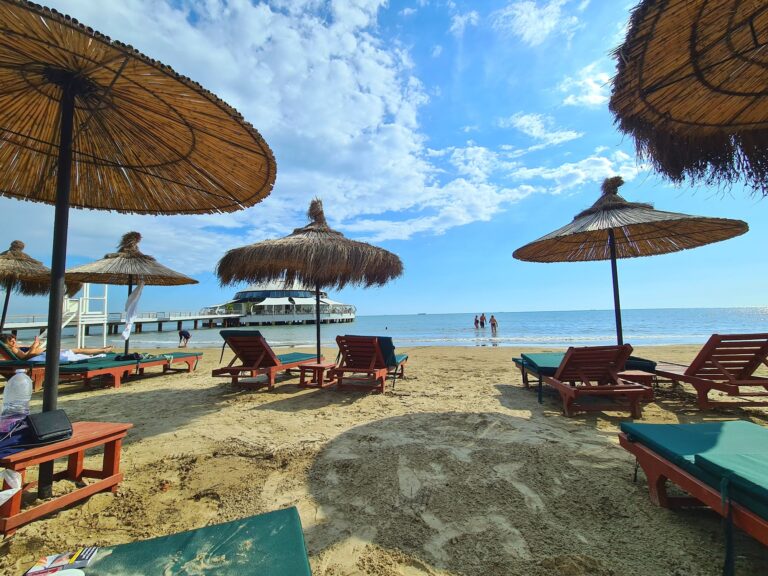
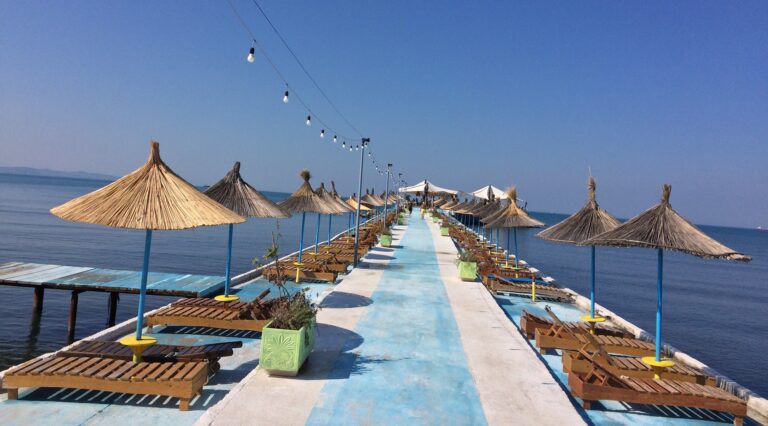
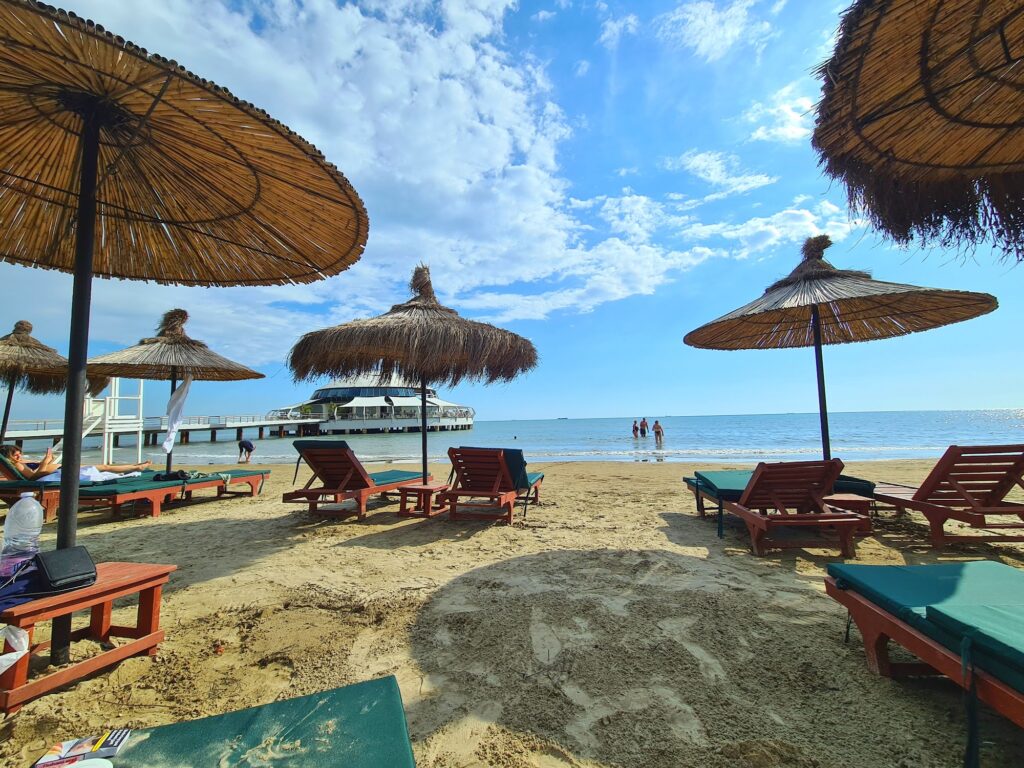
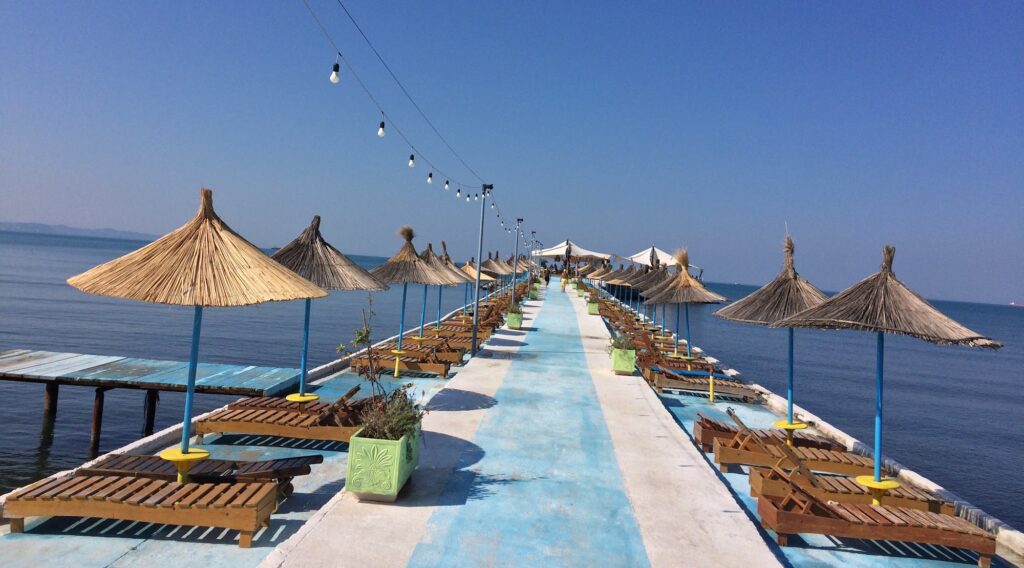
Sunbeds and umbrellas are available across hundreds of private sections at approximately €5 to €15 per set — the most affordable beach club pricing in Albania by a significant margin, reflecting the domestic rather than international tourist market. Waiter service at the sunbeds is standard. The beach bars and restaurants are numerous, fast-paced, and priced for the Albanian domestic budget.
The central beach section near the Vollga promenade is the busiest and most developed. Moving north or south toward the outer edges of the bay, the crowd thins and the sections become less organised. The character of the beach shifts from resort-at-capacity in the centre to quieter in the peripheries.
The Roman Amphitheatre: One of the Balkans’ Largest, Discovered in 1966
The Roman Amphitheatre of Durrës was discovered accidentally in 1966 during construction of a private house that broke through the top of the buried structure. It is one of the largest amphitheatres in the Balkans, with a capacity estimated at 15,000 to 20,000 spectators, dating from the 2nd century AD. It was in continuous use — as theatre, then as quarry, then as housing — until parts of the modern city were built over it. The sections that have been excavated are open to visitors; the unexcavated sections remain beneath the residential buildings above.
The specific quality of the amphitheatre visit is the visibility of the layers: the Roman seating and corridors, the Byzantine chapel with its mosaic floor built inside one of the arched vaults during the Medieval period, and the modern neighbourhood directly adjacent to the excavation edge. The walk from the beach to the amphitheatre takes approximately 15 to 20 minutes through the city centre.
The Vollga Promenade and the Seafood Market
The Vollga promenade running alongside the central section of Durrës Beach is the specific social infrastructure that makes the city beach experience different from the Albanian Riviera’s more isolated coves. The seafood restaurants along the promenade serve fresh Adriatic shrimp, grilled fish, and Albanian coastal cuisine at prices calibrated to the domestic market — significantly lower than the equivalent meal in Dhërmi or Ksamil. The city’s main fish market operates in the morning near the port, and the day’s catch is on the promenade restaurant menus by lunch.
The Via Egnatia Starting Point: Where Rome Connected Europe to Asia
The Via Egnatia — the Roman military road built from 146 BC that connected Dyrrachium on the Adriatic coast to Byzantium (later Constantinople) on the Bosphorus — began approximately where the Durrës ferry terminal now stands. The 1,120-kilometre road was the primary overland route connecting the Western Roman Empire to the Eastern Mediterranean for five centuries, and the port of Dyrrachium was its western anchor. Swimming at Durrës Beach and looking across the Adriatic toward Brindisi (the port where Roman travellers embarked for the crossing) is the specific experience of standing at the hinge point of the ancient world’s longest road.
Durrës Beach is Albania’s biggest city beach — 10 kilometres of sandy, shallow, warm Adriatic shoreline, €5 to €15 sunbeds, buses from Tirana every 15 minutes for €2, the Roman Amphitheatre 15 minutes’ walk from the sand, the Vollga promenade with affordable seafood, and water quality that ranges from acceptable to poor depending on location and recent rainfall.
Check the water quality before swimming. Avoid the sections near drainage canals.
The amphitheatre is worth the walk regardless of conditions.
Map
Sorry, no records were found. Please adjust your search criteria and try again.
Sorry, unable to load the Maps API.
Near by places: