Skaloma Beach Nafpaktos: Best on the Fokida Coast
Profile
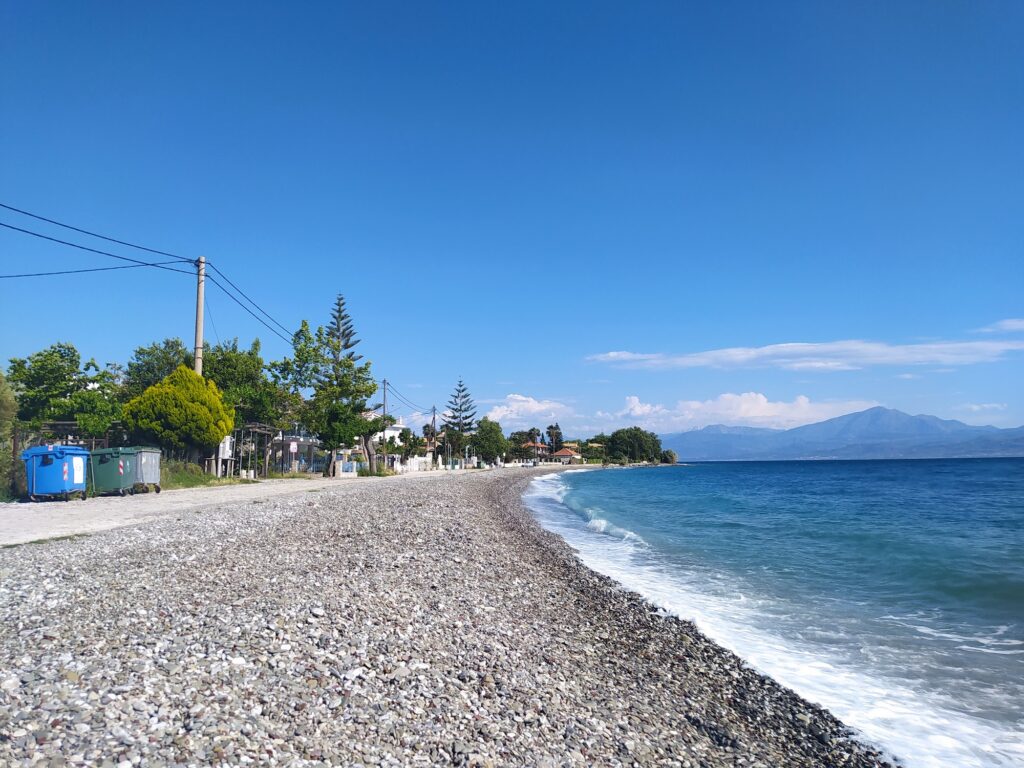
Skaloma Beach Nafpaktos Greece: The Short Pebbly Bay That Gets Called the Best on This Coast
Greece | Skaloma | Fokida, Central Greece
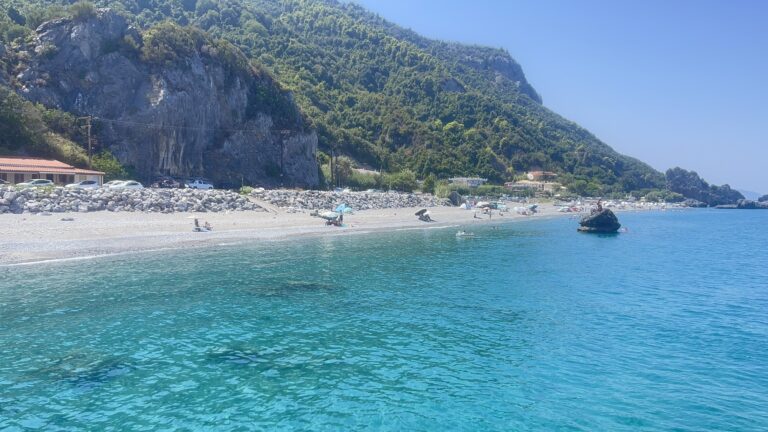
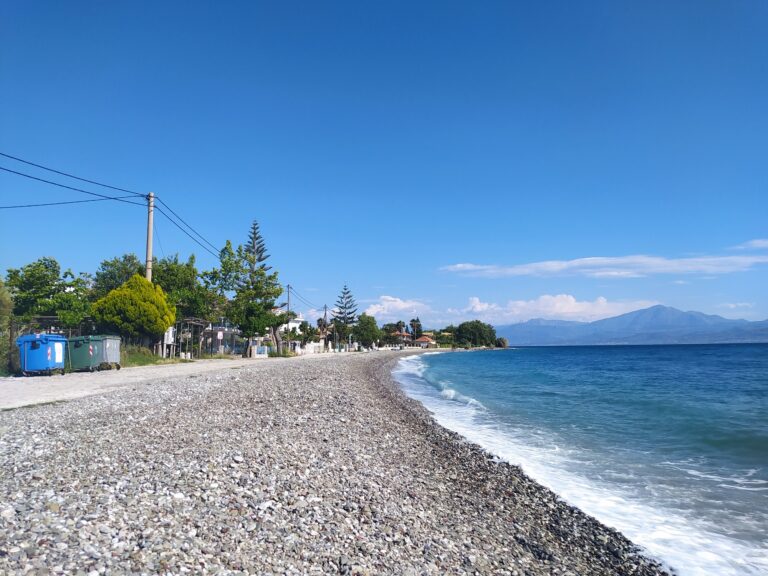
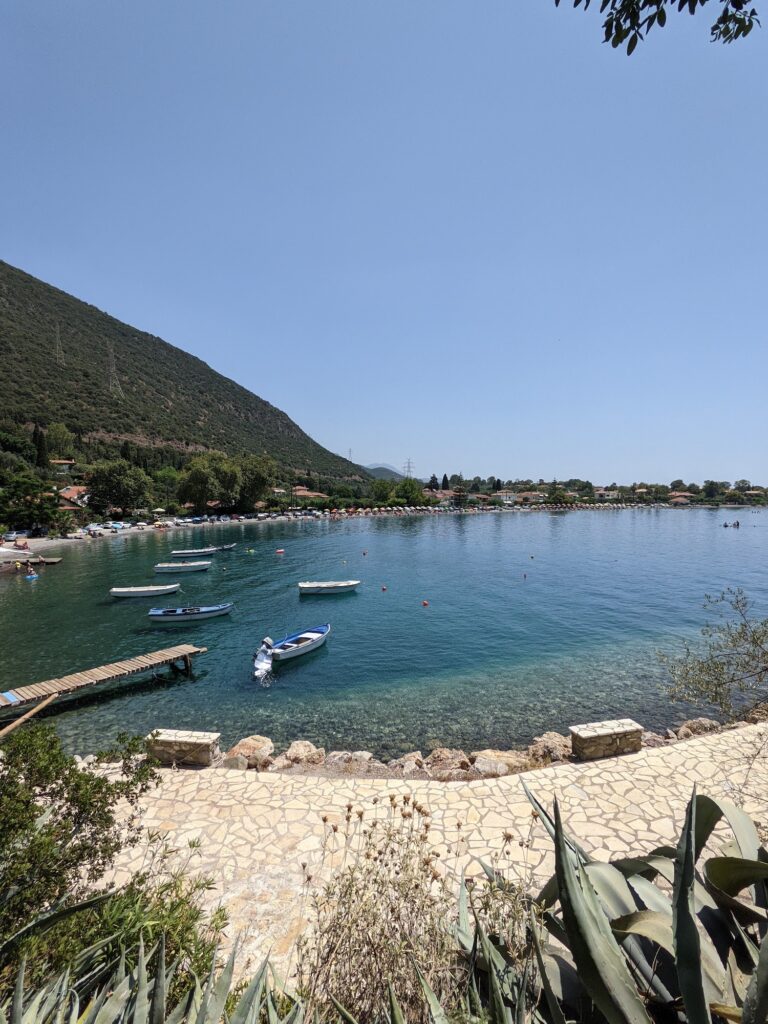
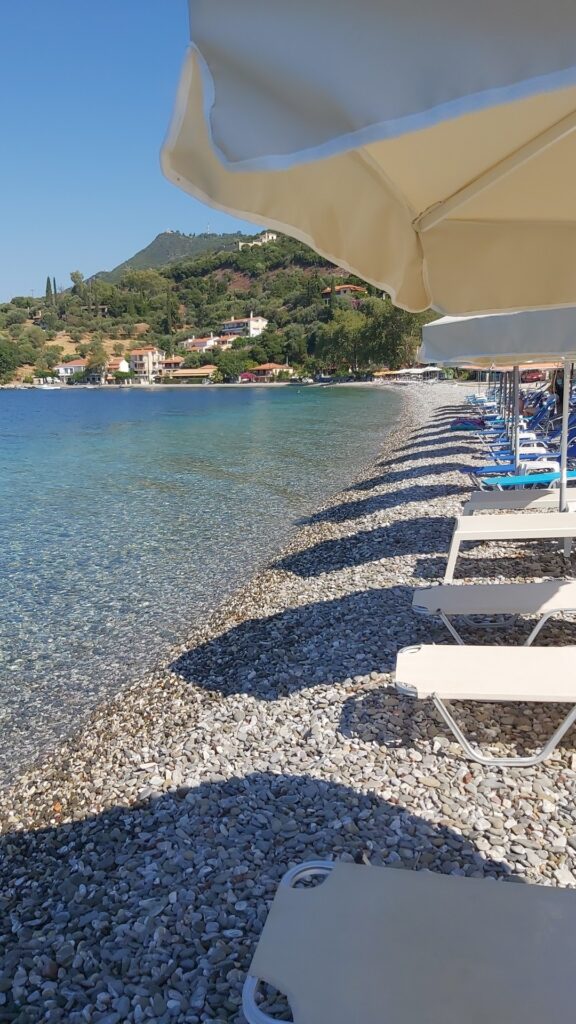
The description that comes up most reliably when Skaloma is compared to the other beaches on the Fokida coast east of Nafpaktos is simply “the best in the area” — a flat, comparative judgment that sits alongside descriptions of a beach that is three hundred metres long and does not immediately suggest the most spectacular geography. But the specific combination here — the wide, smooth pebbles, the tall plane trees whose canopy extends over the shoreline rather than sitting behind it, the deep and clear water in a small bay enclosed by hills — produces something that adds up to more than the individual parts suggest.
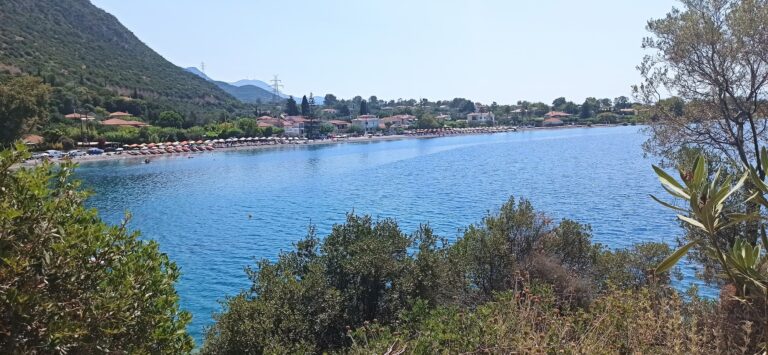
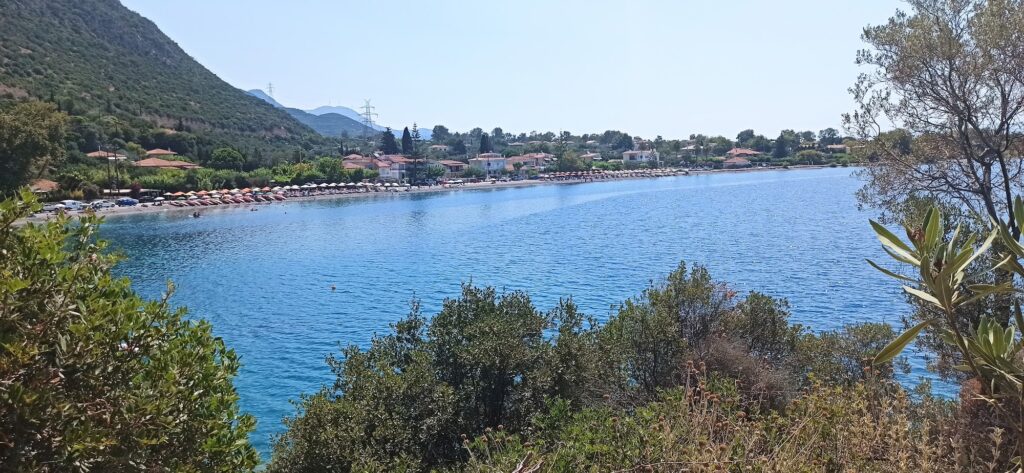
Skaloma sits between Monastiraki to the west and Marathias to the east, both small coastal villages on the same stretch of provincial road that runs from Nafpaktos toward Itea and eventually to Delphi. The village itself is modest: few permanent residents in winter, the population swelling with summer visitors who come from Nafpaktos and from further afield specifically for the beach rather than for any secondary reason. The bay is small enough that it remains enclosed and distinct rather than blending into a continuous coastal strip, and its southward orientation — looking across the Corinthian Gulf toward the Peloponnesian mountains on the opposite shore — gives it the specific quality of facing directly into the afternoon sun.
Getting to Skaloma Beach Nafpaktos Greece: East from Town on the Fokida Road
The drive from Nafpaktos covers approximately 15 to 17 kilometres on the coastal provincial road toward Itea, taking around 15 to 20 minutes. The road passes through the coastal villages sequentially — Chiliadou, Monastiraki, then Skaloma — and each settlement is clearly marked. From Athens, the Rio-Antirrio Bridge puts the journey at roughly two and a half hours via the Athens-Patras motorway, crossing the bridge and heading east from Nafpaktos rather than west; the same route that serves Delphi passes through this coast, which makes Skaloma a natural stop for anyone combining an archaeological visit with a swim.
Parking is available in the lots behind the beach bars and along the coastal side streets, and the small scale of the village means that even at capacity, the distances involved are manageable. Arriving before eleven in the morning is the practical advice for peak summer weekends, when the beach fills steadily through the late morning.
Skaloma Beach Nafpaktos Greece: Pebbles, Plane Trees, Deep Clear Water
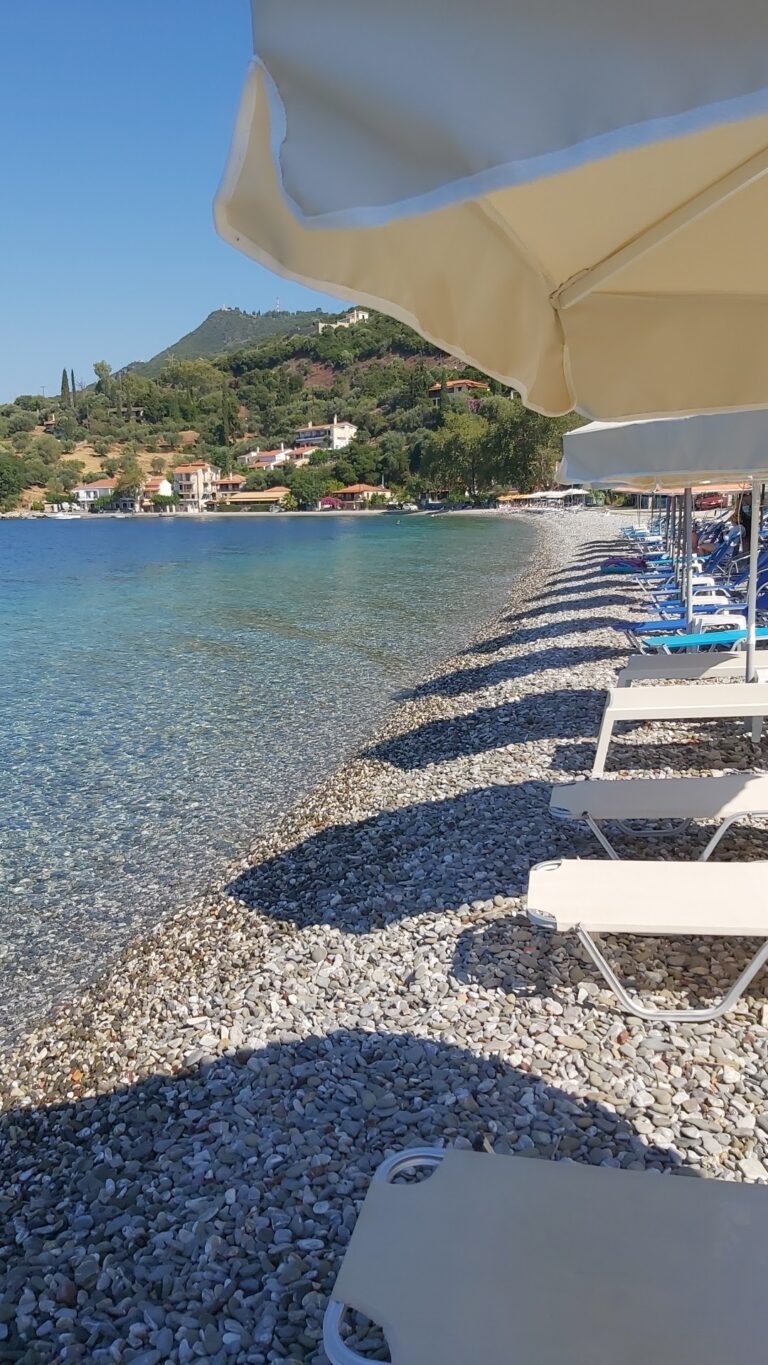
The pebbles at Skaloma are wide and smooth rather than sharp, sitting on a beach floor that declines gradually enough at first before the water deepens. The plane trees that frame the back of the beach are the feature most often mentioned alongside the water quality — they provide real overhead shade rather than the partial cover of smaller trees, and they extend close enough to the water’s edge that the transition from shade to swimming is a short walk rather than a trek across open, unshaded pebble. For anyone who prefers not to pay for a rented umbrella or chooses not to carry their own, this makes Skaloma genuinely more comfortable through the middle of the day than beaches where the only shade is behind the beach rather than on it.
The water here is described consistently as both clear and deep, a combination that suits confident swimmers and snorkellers more than families with very young children looking for an extended shallow entry. The bay’s enclosure gives it some protection from the winds that affect more exposed stretches of the Corinthian Gulf coast, but the depth close to shore means that the water behaves more like open sea than a sheltered lagoon. Sunbeds and umbrellas are available from the beach bars working the organised section, and the tavernas and bars provide food and cold drinks through the season.
Skaloma and the Fokida Coastal Strip: Monastiraki, Marathias, and the Road to Delphi
The Fokida coast between Nafpaktos and Itea is best understood as a continuous sequence of small beach settlements rather than a single destination, each with its own character. Monastiraki, twelve kilometres from Nafpaktos, is the one most associated with fish tavernas rather than organised beach infrastructure; a narrow strip of land with the sea on one side and a small lake on the other gives it a specific geomorphology that the other beaches lack. Marathias, immediately east of Skaloma, has fruit trees — oranges, lemons, loquat — decorating the area behind the beach, a quality that distinguishes it from its neighbours’ more typically pine-and-pebble settings. Sergoula, further east still, runs close to a kilometre in length and is the largest beach on this stretch.
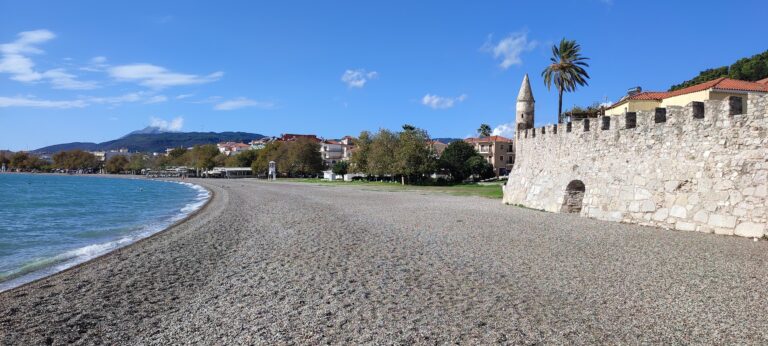
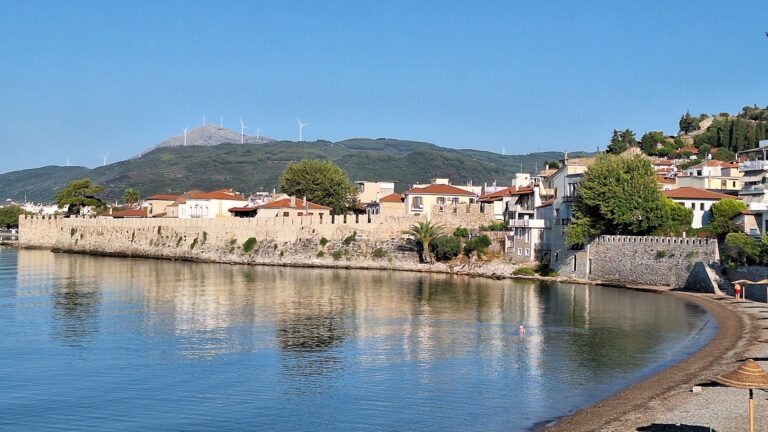
Chiliadou Beach Nafpaktos Greece, the sandy beach at the western end of this same coastal sequence, presents a noticeably different experience from Skaloma — wider, sandier, wind-exposed enough to draw kite and windsurfers, and larger in scale. The contrast between the two, roughly six kilometres apart on the same road, reflects how varied this coast becomes across a short distance despite its consistent Corinthian Gulf setting. Gribovo Beach Nafpaktos Greece and Psani Beach Nafpaktos Greece, the organised town beaches of Nafpaktos itself, are in walking distance of the Venetian harbour and carry a more urban character than any of the Fokida coast beaches that require a drive.
Delphi and What Sits Inland From Skaloma
Delphi sits roughly 40 kilometres inland on the road that runs north from Itea past Galaxidi. The connection is not only geographical: Itea was the ancient sacred port from which pilgrims arrived for the oracle at Delphi, arriving by sea before making the inland journey. The modern road traces approximately that same corridor, and the combination of a morning at Skaloma followed by an afternoon at the Delphi archaeological site and museum is one of the more naturally structured day itineraries in this part of Central Greece, the two experiences belonging to entirely different registers of the same landscape.
Monastiraki, between Skaloma and Nafpaktos, has its own direct visual relationship with the Corinthian Gulf geography: the fishing boats whose catch supplies the tavernas on the harbour front are working the same waters whose opposite shore, the Peloponnese, is visible from the beach at Skaloma on clear days.
The plane trees are the practical reason to visit Skaloma before any of its neighbours on a hot afternoon. The shade they provide over the actual beach — not behind it, not behind a road, but over the pebbles where you would be sitting — is specific to this beach in a way that the water quality, excellent as it is, is not. The small bay, the enclosed feel, the consistent depth of the water, and the shade that arrives naturally from the trees: these are the elements that produce the reputation.
Map
Sorry, no records were found. Please adjust your search criteria and try again.
Sorry, unable to load the Maps API.
Near by places: