Karteros, Heraklion: Named For a General Who Lost
Profile
Karteros, Heraklion: Named After a General Who Lost
Greece | Karteros | Heraklion, Crete
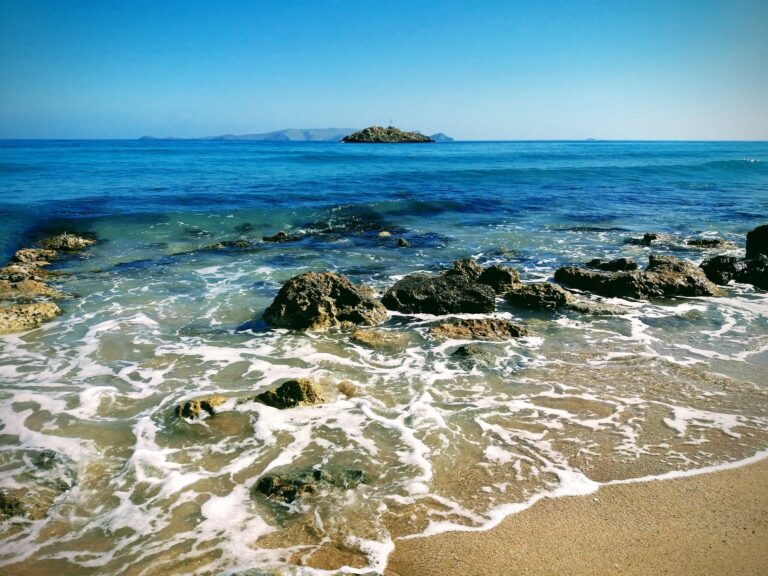
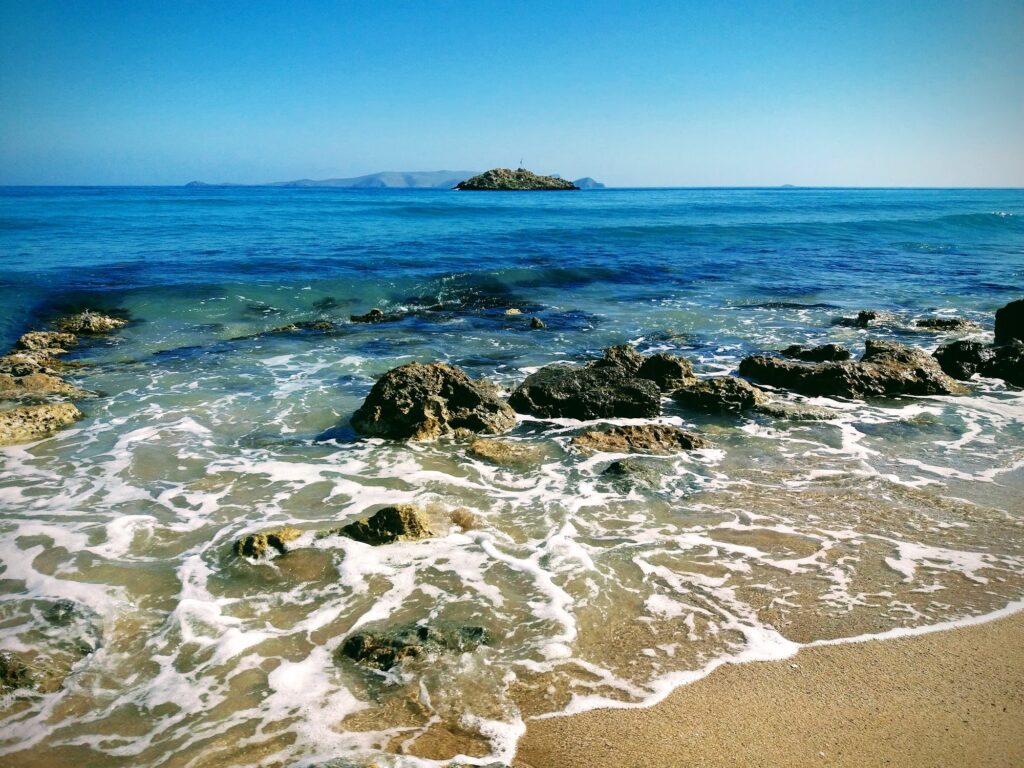
Karteros takes its name from a Byzantine General, Krateros, who landed his ships here in 824 AD attempting to retake Crete from the Saracens and was defeated. Most place names I’ve encountered on this coast celebrate victories or saints; this one quietly commemorates a failed military campaign, and I find that strangely more honest than the alternative. Local legend offers a far more colourful, considerably less historical story about the small islet just offshore — that it’s the last visible remnant of a once-powerful city ruled by a King Kourkoumelis, who boasted that no god could destroy “such a Great Kourkoumelis,” at which point the city promptly sank. I wouldn’t repeat that as documented fact, but it’s a good story, and I enjoyed hearing it from a local rather than reading it on a sign.
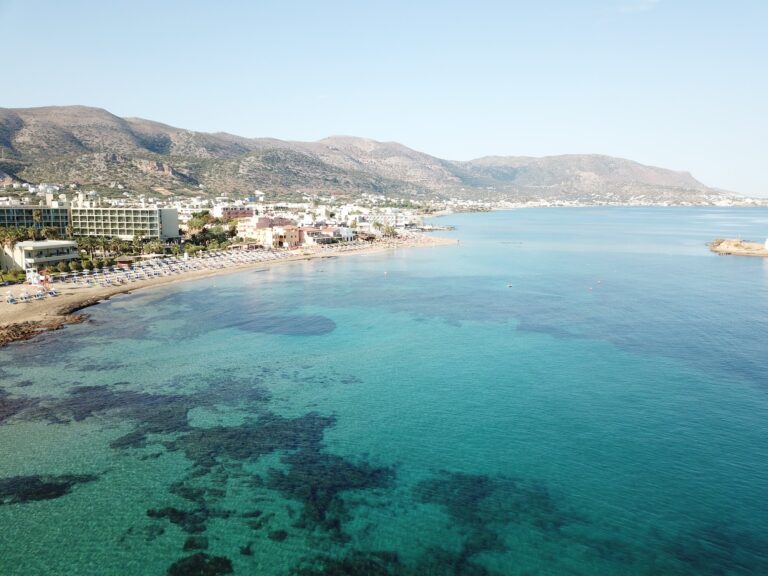
The bay stretches roughly three to three and a half kilometres, and the area has genuine ancient weight beneath its modern resort character. Amnisos, the ancient settlement at the western end of the bay, served as the harbour for Knossos during the Minoan period, and Strabo himself described it as a suitable shelter for the Minoan fleet. Homer places King Idomeneus departing from this exact spot for the Trojan War, and Odysseus stopping here briefly on his way home — claims later given some archaeological weight by Linear B tablets. Excavations beginning in 1929 under Spyridon Marinatos uncovered the House of Lilies, a Minoan villa with frescoes depicting white lilies, damaged further during the Second World War and now held at the Heraklion Archaeological Museum.
Getting There: Ten to Fifteen Minutes East of Heraklion
I followed the Old National Road east from Heraklion toward the airport and Lasithi, the beach clearly signposted and a large free parking area, often shaded by trees, sitting directly behind the sand. The drive took me under fifteen minutes from the city centre.
The blue Line 7 bus runs from the central station or the port every twenty to thirty minutes, dropping passengers a short walk from the shore. From Heraklion International Airport, the beach sits close enough — about five to six kilometres — that I’d genuinely consider it as a first stop straight off a flight, the drive or taxi taking well under fifteen minutes.
The Beach: Golden Sand and Pebbles, Open to the Wind, Planes Overhead
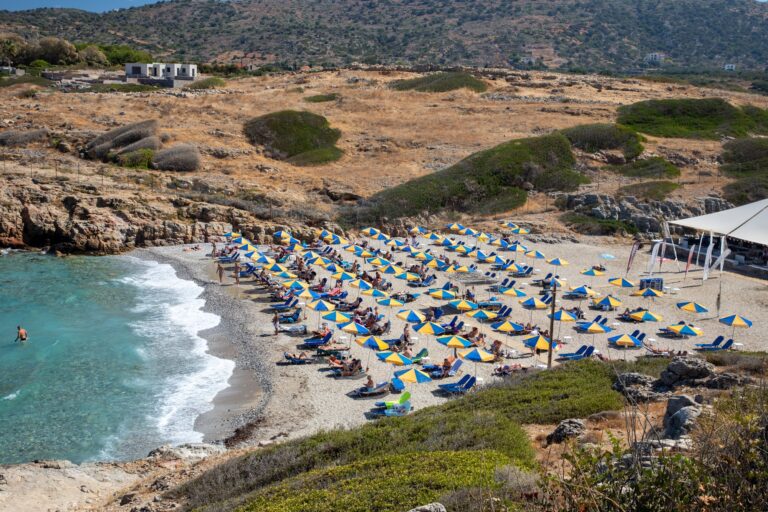
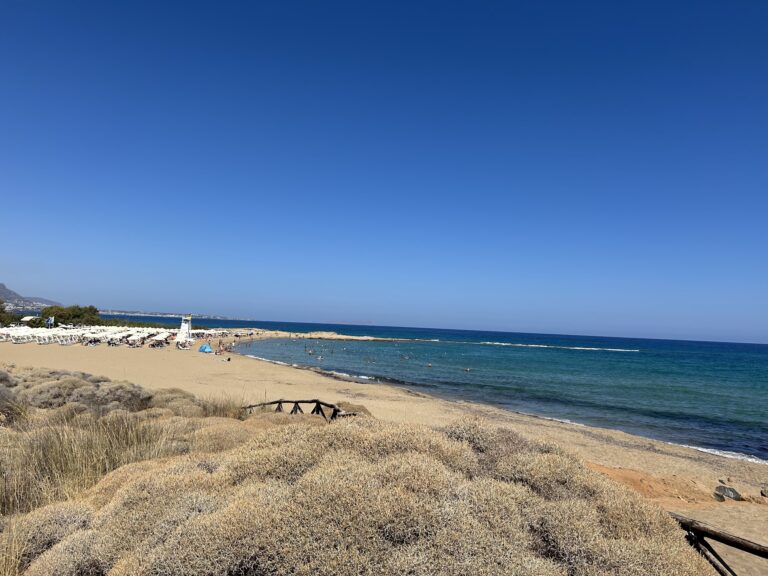
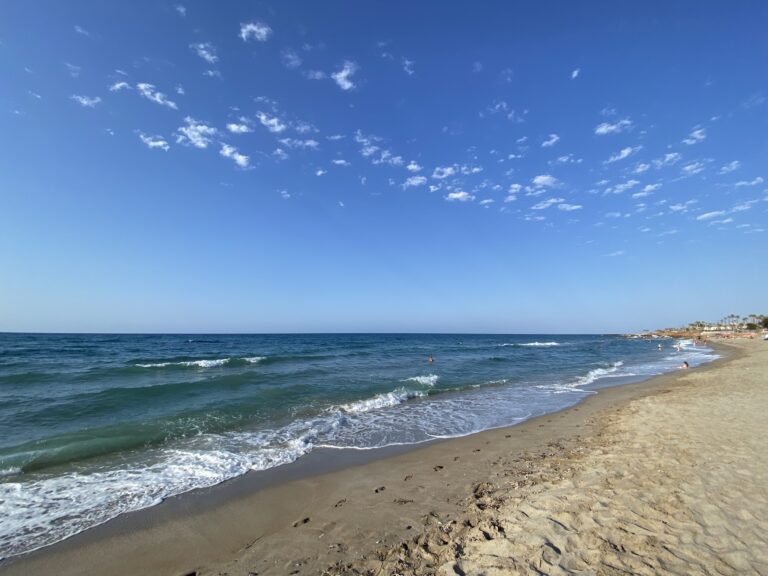
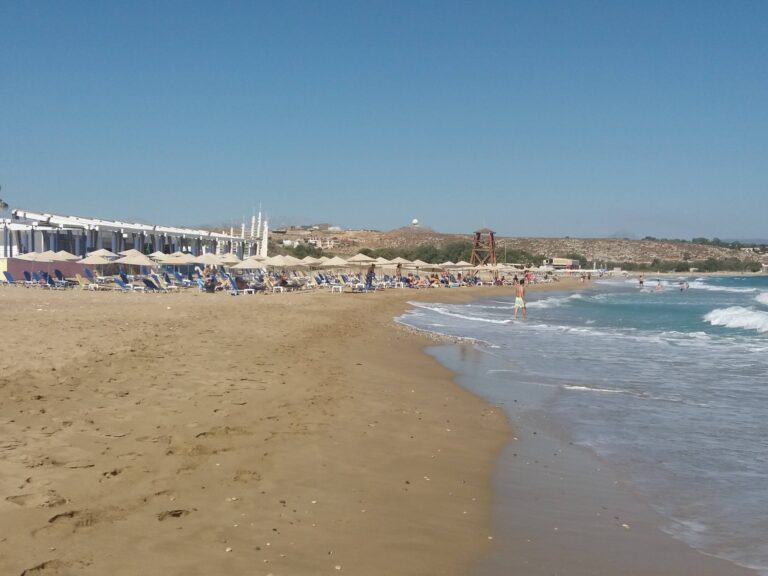
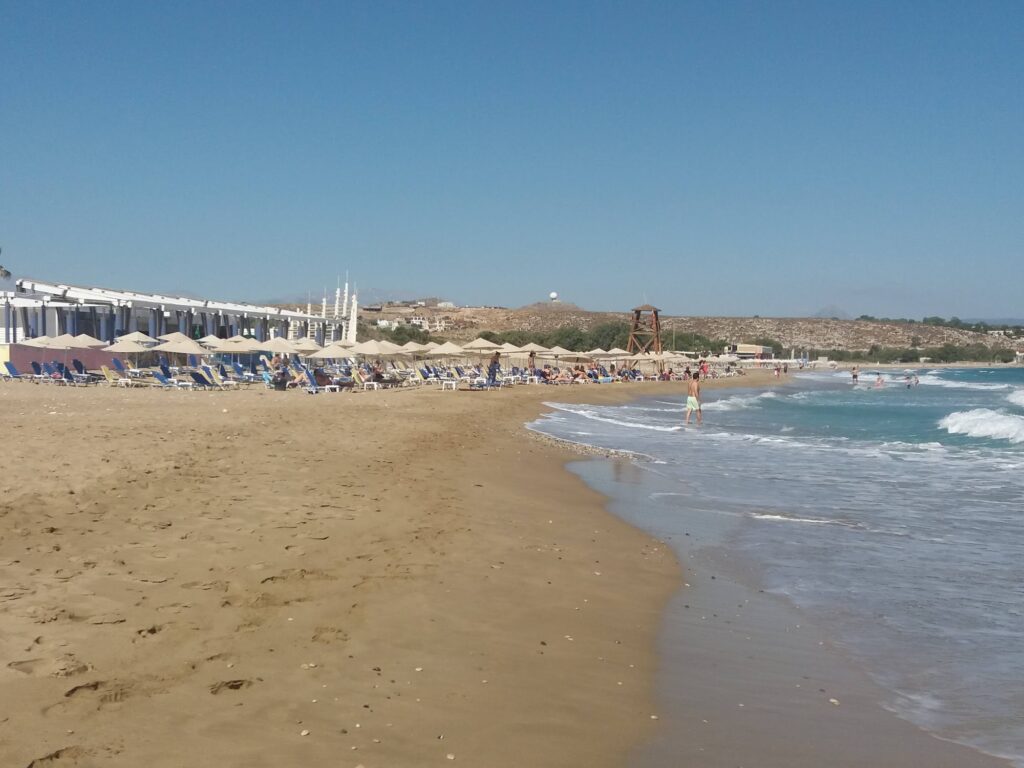
The shore mixes fine golden sand with small pebbles, the seabed sloping gently and shallow enough for a long stretch out from shore, well suited to families. The bay opens north, which means it catches genuine wind and the water can run wavy on a breezy day — I’d check conditions before assuming a calm swim, since this isn’t one of the more sheltered beaches I’ve covered.
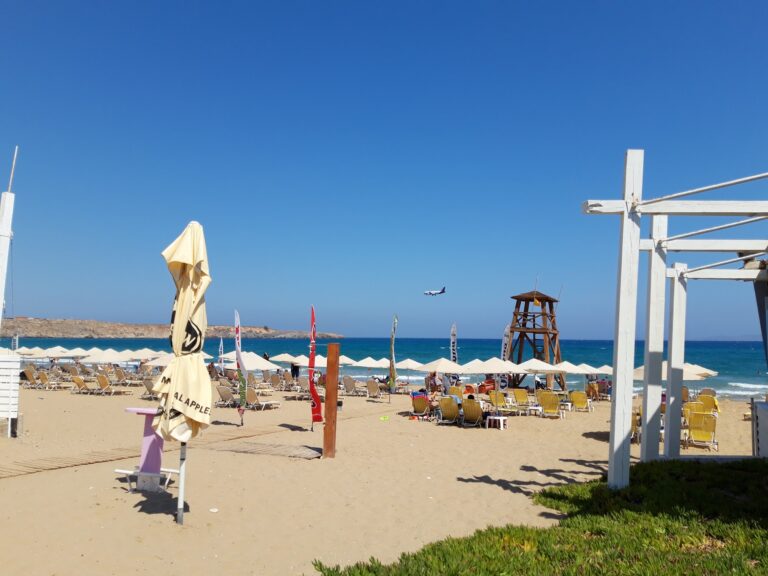
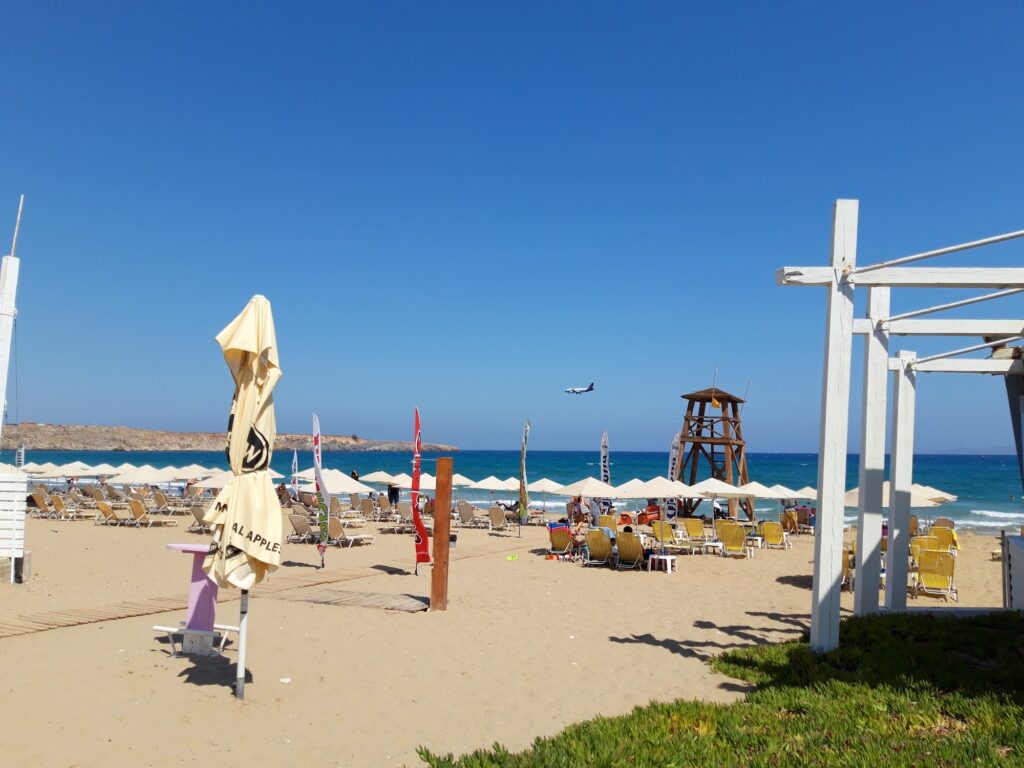
The genuinely unusual feature here is the aviation. Karteros sits directly beside Heraklion International Airport, and planes pass low overhead on final approach close enough to watch in real detail — an odd but oddly compelling thing to witness from a beach towel, and not something I found described quite this vividly anywhere else on the island. The bay also now hosts the Karteros Sports Centre, established in 2022 and described as the largest beach sports facility in the Balkans, hosting international tournaments in beach volleyball, beach tennis, beach soccer, beach handball, and even beach karate and wrestling.
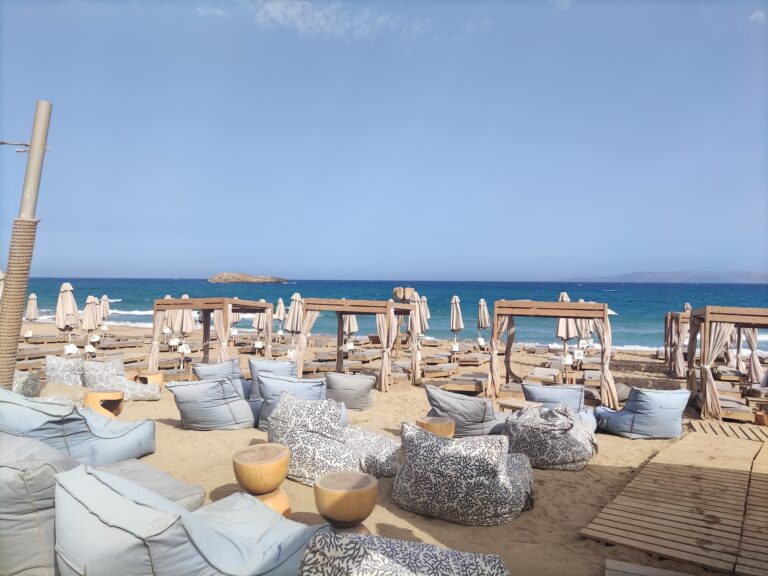
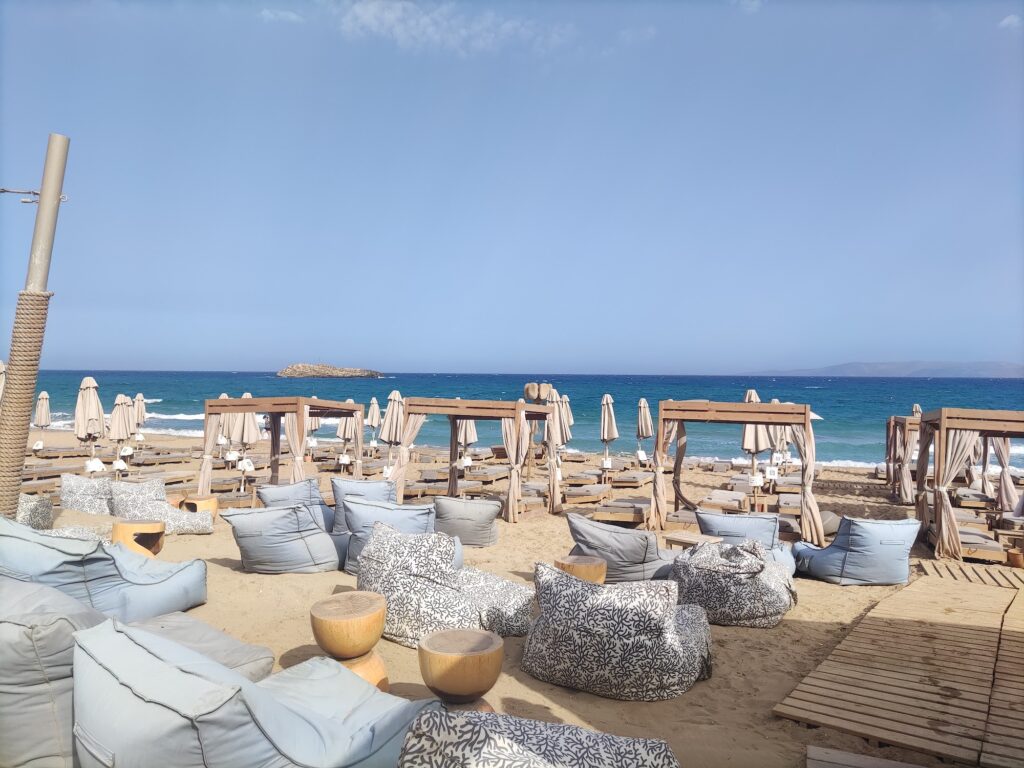
Sunbeds and umbrellas line organised sections run by beach bars and cafés, with showers, changing facilities, and lifeguards present along the developed stretch. Windsurfing and other water sports operators take advantage of the reliable wind, and I’d recommend trying at least one if conditions look right on the day.
Amnisos, Monocharako, and the Church in the Cave
A short distance west, the Amnisos site and the House of Lilies ruins sit on the Paleohora hill, with an outdoor ancient temple where Zeus Thenatas was once worshipped. The small islet of Monocharako, about 200 to 300 metres offshore, is reachable by swimming or by renting a sea pedaller from Amnisos beach — though I’d genuinely watch your footing if you make the swim, since the rocks around it carry a fair population of sea urchins. Just across the National Road, the Church of Saint John and Saint Nikon Metanoite sits built directly into a cave in the rock face, worth the short detour if you’re already in the area.
Karteros, east of Heraklion, takes its name from the Byzantine General Krateros, defeated here in 824 AD attempting to retake Crete from the Saracens — a rare beach named for a loss rather than a victory. The bay carries genuine Minoan weight too, serving as the ancient harbour for Knossos at Amnisos, with the House of Lilies villa and its frescoes excavated nearby. The beach itself is golden sand and pebble, open to the wind, with planes passing low overhead from the adjacent airport and the largest beach sports facility in the Balkans now operating on the same stretch. The small islet of Monocharako sits just offshore, watch for urchins if you swim out. Ten to fifteen minutes east of Heraklion, even closer to the airport.
Drive the Old National Road or take Line 7 from central Heraklion. Check the wind before assuming calm water. Visit Amnisos and the House of Lilies site if Minoan history interests you, and swim out to Monocharako carefully if you want to add the islet to your day.
Map
Sorry, no records were found. Please adjust your search criteria and try again.
Sorry, unable to load the Maps API.
Near by places: