Pontiki Beach Akti Nireos: Named for a God Before Poseidon
Profile
Pontiki Beach, Akti Nireos: Named for a Sea God Older Than Poseidon
Greece | Akti Nireos | Aliveri, Central Evia
The coastal stretch where Pontiki sits, Akti Nireos, takes its name from Nireus, a sea divinity in Greek mythology who predates his far more famous counterpart Poseidon — a genuinely obscure piece of religious history attached to twelve kilometres of otherwise unremarkable coastline between Amarynthos and Aliveri. I find a particular satisfaction in place names that quietly preserve a forgotten deity this way, long after the worship itself has vanished entirely from living memory.
Aliveri itself, the nearest town, carries its own layered and somewhat unusual character: a working industrial centre, historically built on lignite mining and now home to the island’s largest electricity plant, sitting directly beside genuine antiquity that the industry has partly swallowed. The ancient port city of Porthmos once stood where Aliveri’s power plant now does, and what survives — a partially visible Roman bathhouse, an excavated necropolis — exists today mostly buried beneath the modern infrastructure that succeeded it. A short distance away, Rizokastro, a Frankish fortress from the 13th or 14th century, stands on a 170-metre hill between Aliveri’s two major industrial sites, its walls and central tower still well preserved; during the 1821 Greek War of Independence, fighters under Nikolaos Kriezotis used the fortress to hold Ottoman prisoners. Among the industrial chimneys themselves, the Venetian Tower of Matsoukela stands as a further, smaller reminder of how many centuries of contested history this otherwise ordinary working town actually carries.
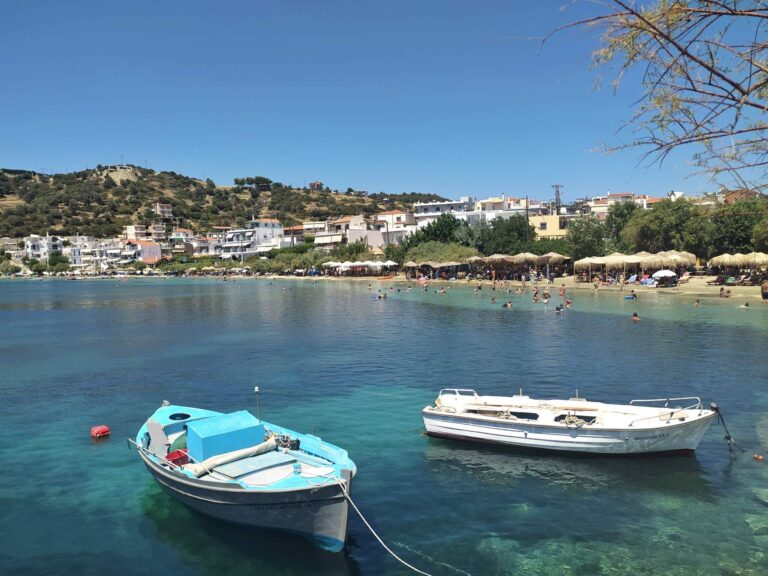
Within the wider Akti Nireos area, Pontiki is one of several named coves — alongside Kampos and Kalami — generally recommended over the more central, taverna-lined Karavos beach for visitors specifically wanting clearer water and a more secluded swim rather than a waterfront stroll among cafés.
Getting There: Roughly Two to Two and a Half Hours From Athens, via Chalkida or the Oropos-Eretria Ferry
The most direct overland route follows the Athens-Chalkida national road, crossing into Evia and continuing south via the Chalkida-Aliveri highway, the full journey taking around an hour and a half to Aliveri itself, with Akti Nireos and Pontiki a short further drive west. The faster alternative uses the Oropos-Eretria ferry crossing, followed by roughly forty minutes of driving eastward — a route that trades some road time for a sea crossing, similar to the ferry shortcuts I’ve described reaching other points on this same stretch of Evia’s southern coast.
KTEL buses run from Athens’s Liosion station to Aliveri, the journey taking approximately two hours, with a short taxi ride covering the remaining distance to the beach itself.
The Beach: Sand and Fine Pebble, Calm Water, Genuinely Secluded Relative to Karavos
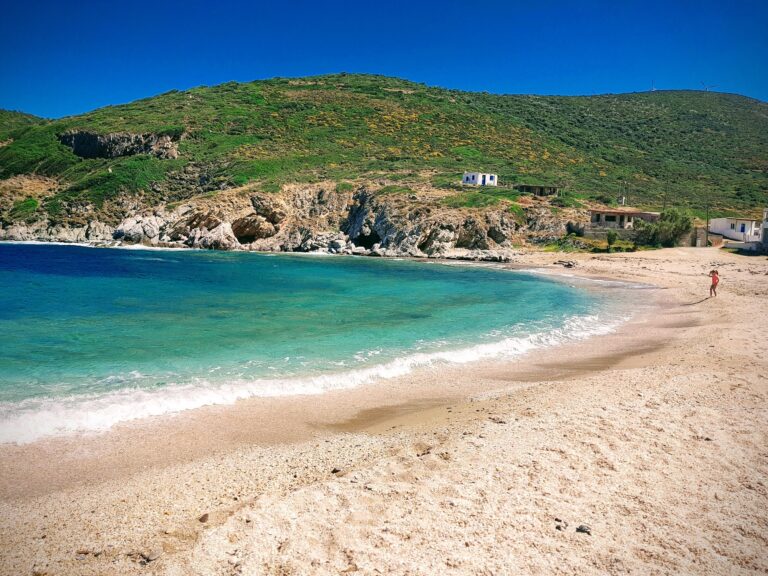
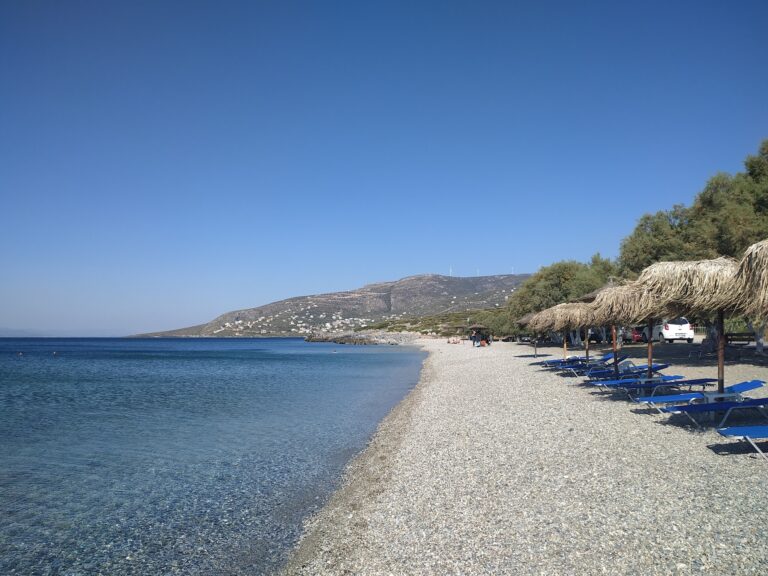
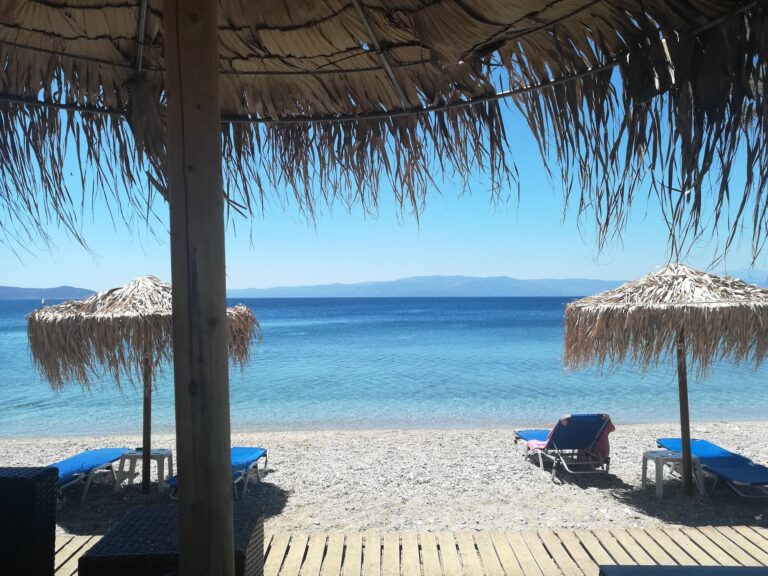
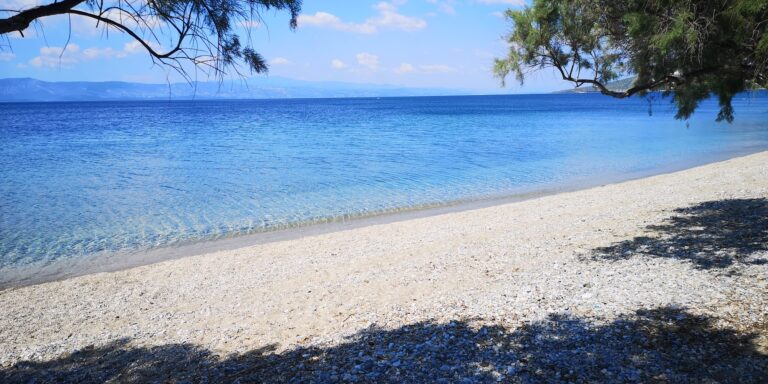
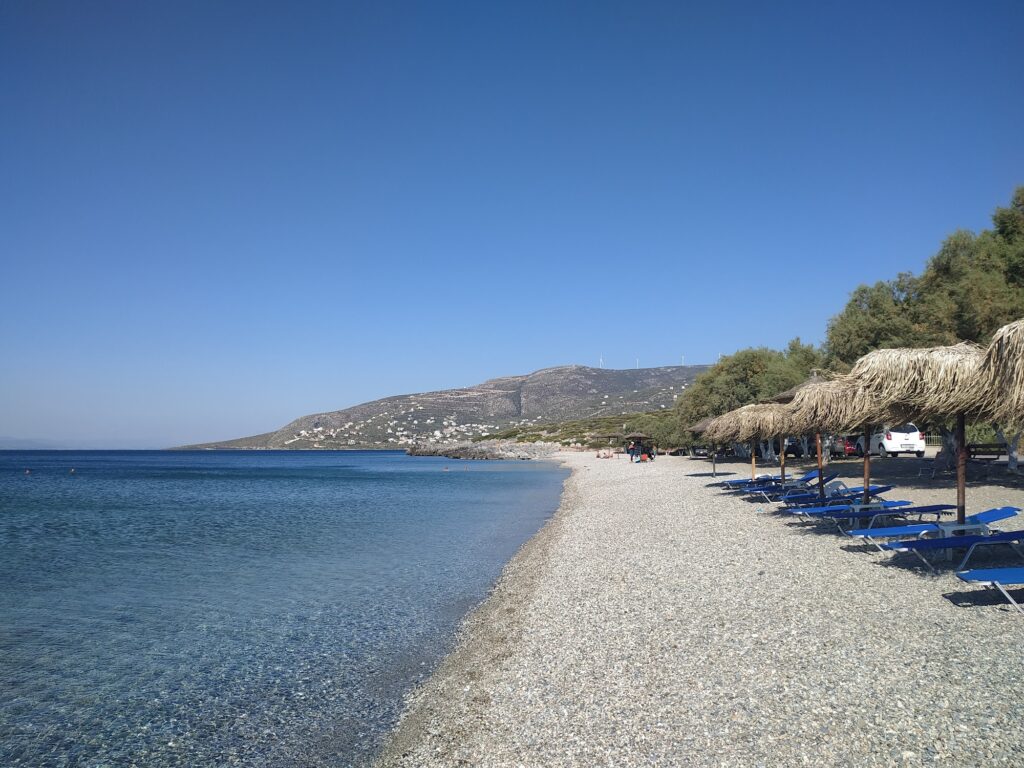
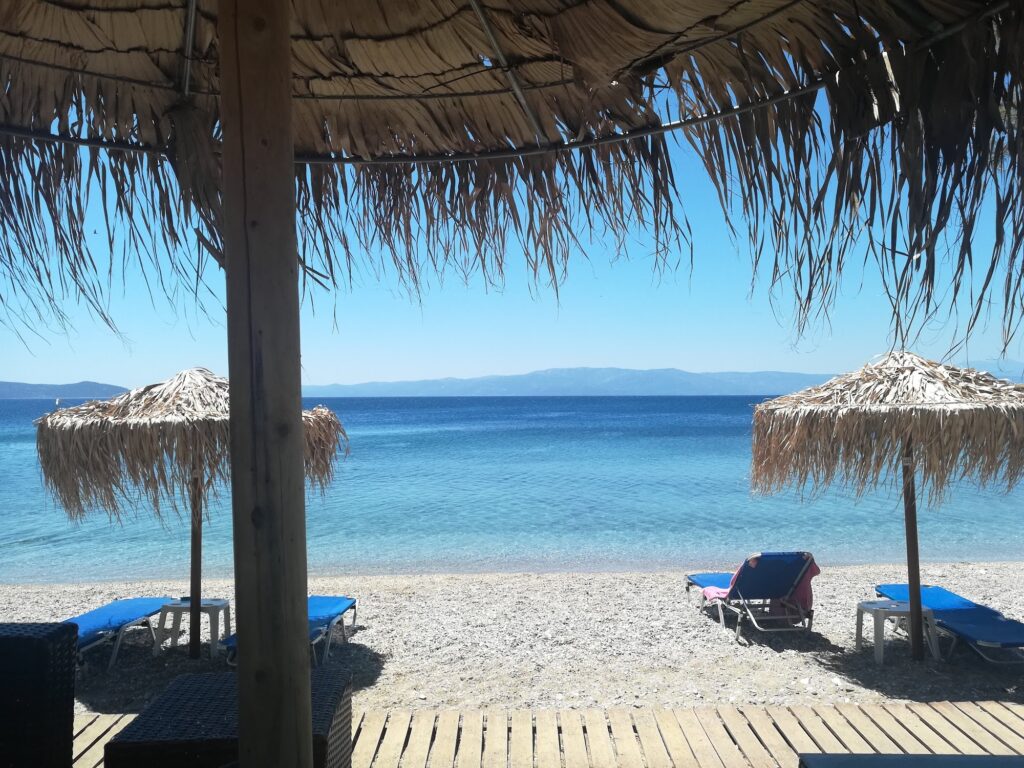
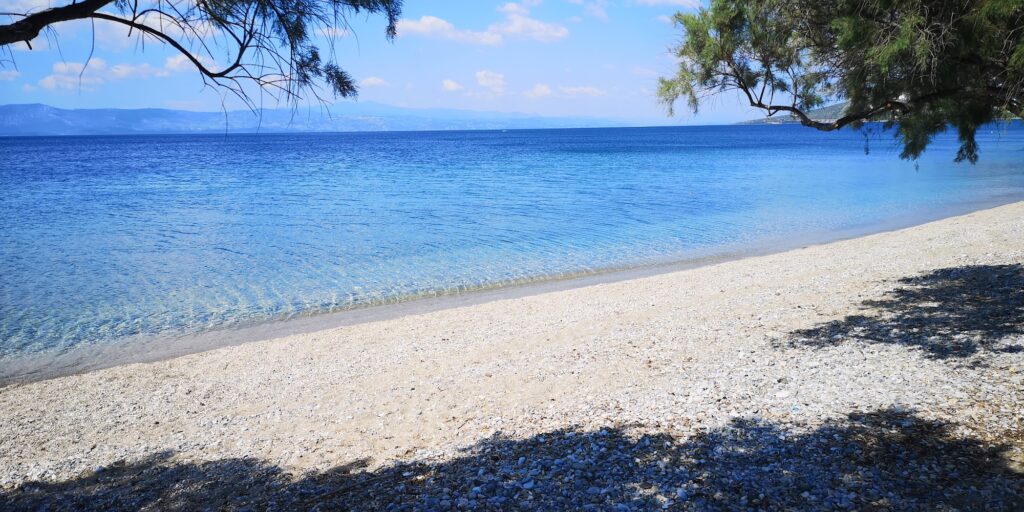
Pontiki, like most of the beaches along this stretch, mixes sand with fine gravel or small pebbles, the water clear and the bay sheltered enough to stay calm under most conditions. Compared to Karavos, Aliveri’s main coastal district with its cafés and waterfront tavernas, Pontiki and its neighbours offer the clearer, quieter swimming spot, with minimal amenities — a handful of sunbeds and umbrellas in season rather than anything resembling a developed resort.
The character of the wider area reflects Aliveri’s own identity: relaxed, distinctly local rather than tourist-oriented, the kind of place where weekday visits in particular deliver genuine quiet. Water shoes are worth bringing given the mixed sand-and-pebble seabed common across this part of the coast.
Pontiki Beach sits on Akti Nireos, the twelve-kilometre stretch of coast between Amarynthos and Aliveri named for Nireus, a sea divinity predating Poseidon. Nearby, the Frankish fortress of Rizokastro held Ottoman prisoners during the 1821 revolution, and the ancient port city of Porthmos lies mostly buried beneath Aliveri’s modern power plant. Sand and fine pebble shore, calm clear water, genuinely more secluded than the central Karavos beach, minimal amenities. Roughly two to two and a half hours from Athens by road or via the Oropos-Eretria ferry. For the wider southern Evia coast, Agioi Apostoloi Petries Beach Evia Greece and Kalamos Beach Avlonari Evia Greece, both are within reasonable reach of the same region.
Drive via Chalkida or take the Oropos-Eretria ferry. Choose Pontiki over Karavos for clearer, quieter water. Visit Rizokastro if the layered history of the area interests you.
Map
Sorry, no records were found. Please adjust your search criteria and try again.
Sorry, unable to load the Maps API.
Near by places: