Paralia Zarakon, Evia: An Abandoned Village Nearby
Profile
Paralia Zarakon, Evia: An Abandoned Stone Quarter and a Cave Discovered Only in 2014
Greece | Zarakes | Dystos, Southern Evia
The village serving this beach was called Zarka until 1953, and the older spelling still circulates locally even now. An ancient fortress nearby has been identified by historians with Zaretra, the Eretrian stronghold mentioned by Plutarch — a detail that places this quiet corner of southern Evia within recorded classical history rather than leaving it as simply a pleasant modern village with a beach attached.
What struck me more directly, walking through the area, was Mahala — the old stone quarter of Zarakes, its name borrowed from the Turkish word for marketplace. Between 1900 and 1950, residents abandoned Mahala entirely as a new road was built outside the old settlement, and the modern village of Zarakes grew up around that road instead, leaving the original stone houses to crumble in a valley about a kilometre away. Sheep and goats shelter in some of them now. The quarter is officially designated as a protected heritage site, and a handful of the stone houses have been restored, standing alongside others left exactly as they were when the last residents walked out.
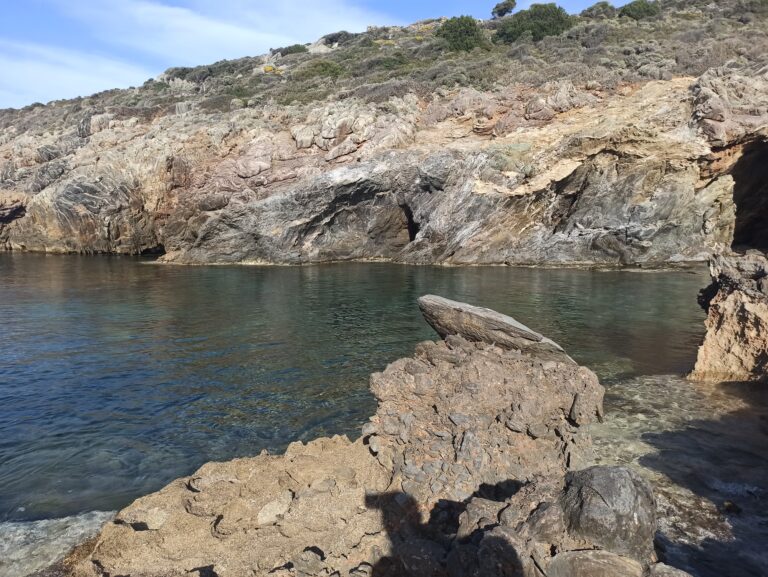
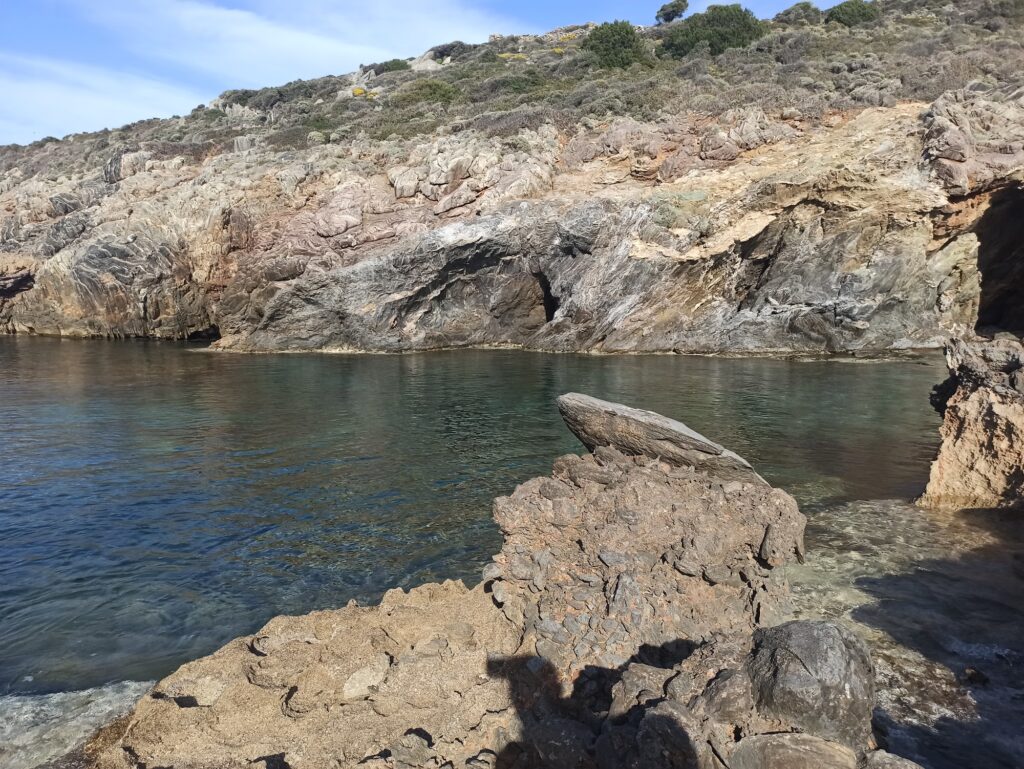
A short distance from the beach, the Purple Cave was discovered only in 2014 — found, by most accounts, almost by accident, and named for the purple marine plants that cling to its interior walls. It is reachable either by boat or by a long hiking trail, and I would treat either approach as a proper outing rather than a casual stop, given how recently the cave entered the public record at all.
Getting There: Twenty-Five Minutes From Aliveri, or via the Agia Marina-Nea Styra Ferry
From Aliveri, the drive to Zarakes and then down to the beach takes roughly twenty minutes, the road winding down from the village centre toward the coast with the Aegean opening into view partway through the descent. From Athens, the more direct route crosses the bridge at Chalkida and continues south, the full journey taking two to two and a half hours.
The ferry from Agia Marina, near Marathon, to Nea Styra offers an alternative that trades road time for a sea crossing; from Nea Styra, Paralia Zarakon is a further twenty-five minutes by car heading north along the coast.
The Beach: Sand and Fine Pebble, a Wind-Exposed Bay
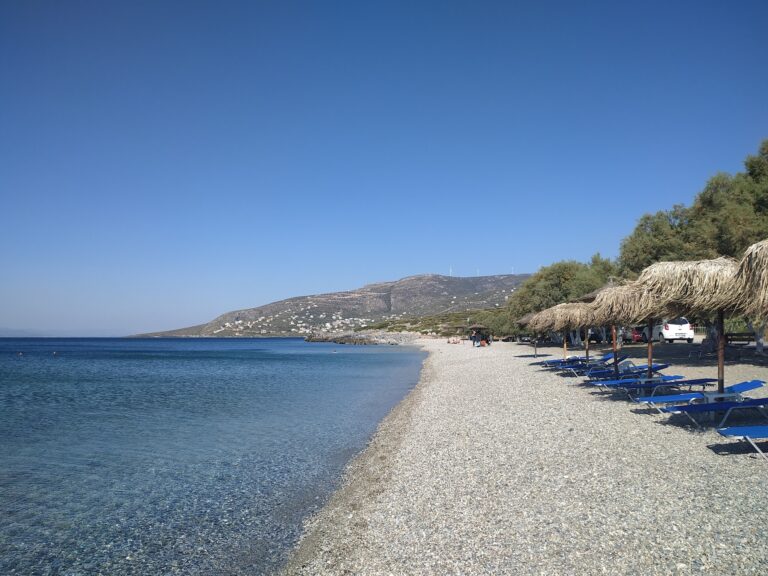
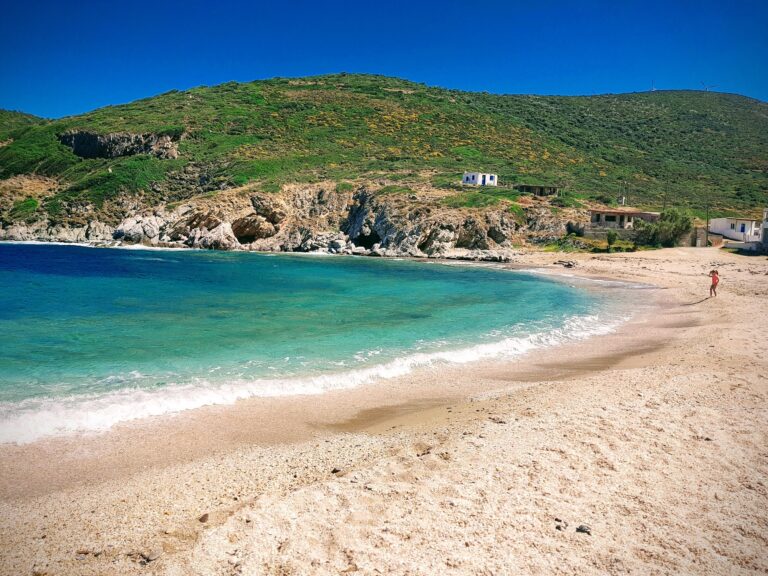
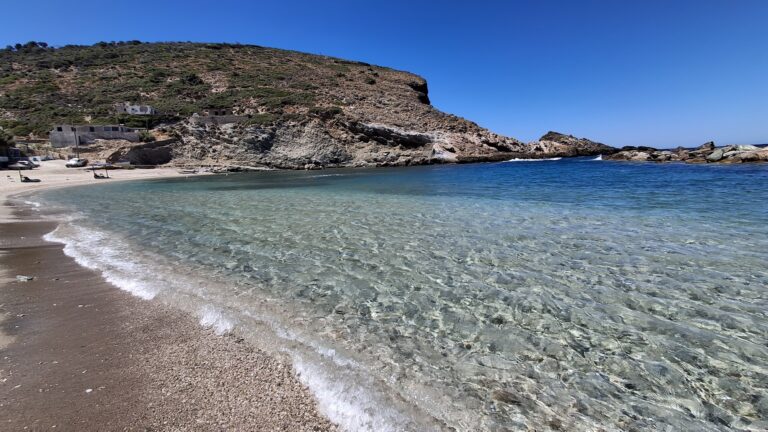
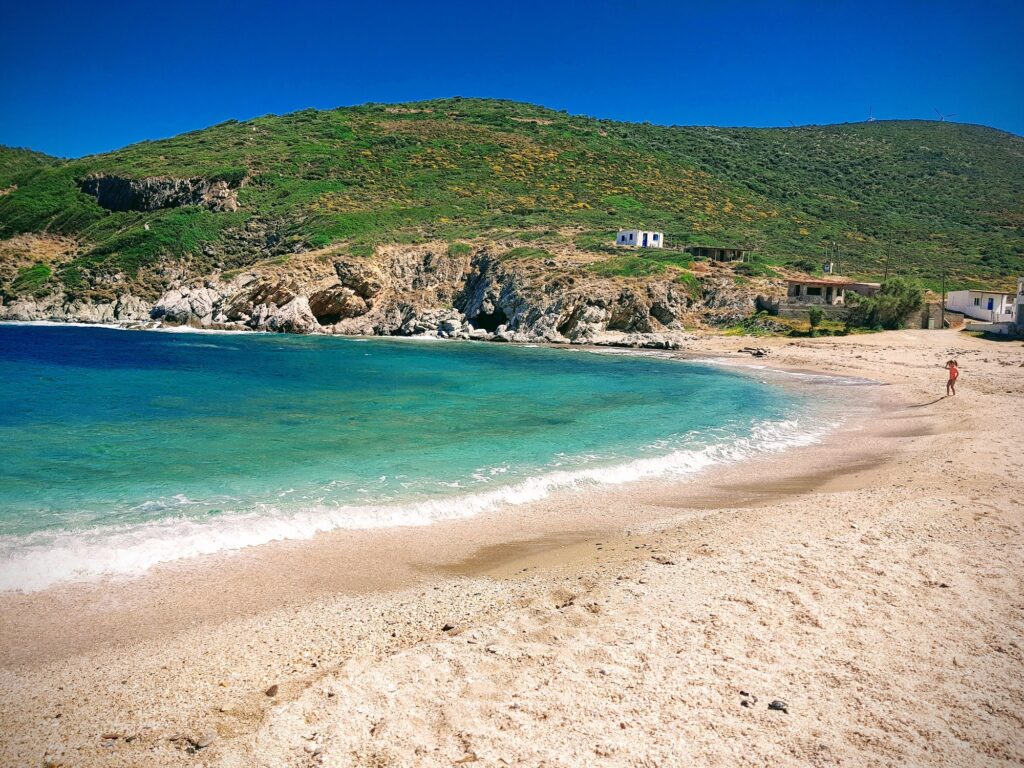
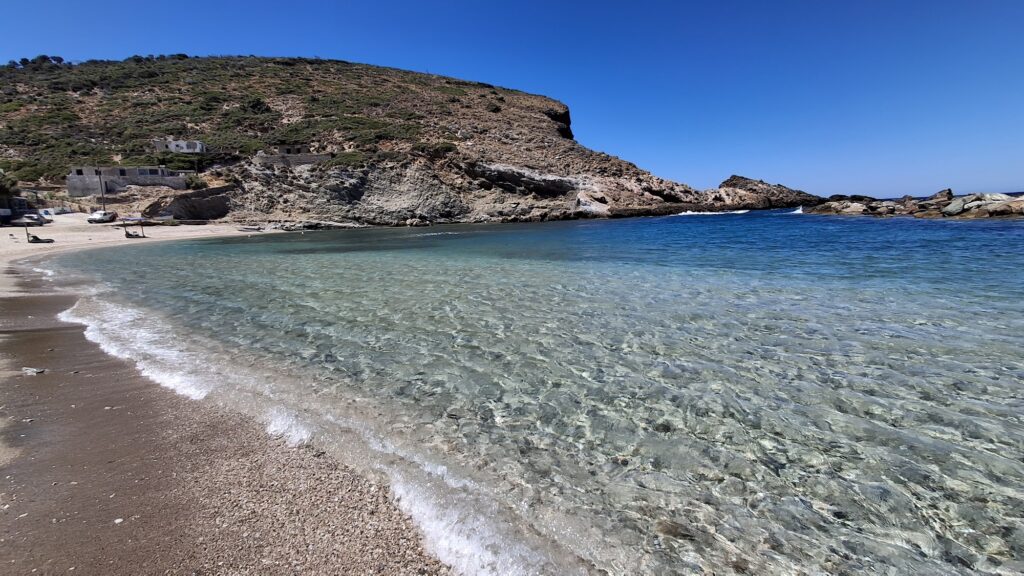
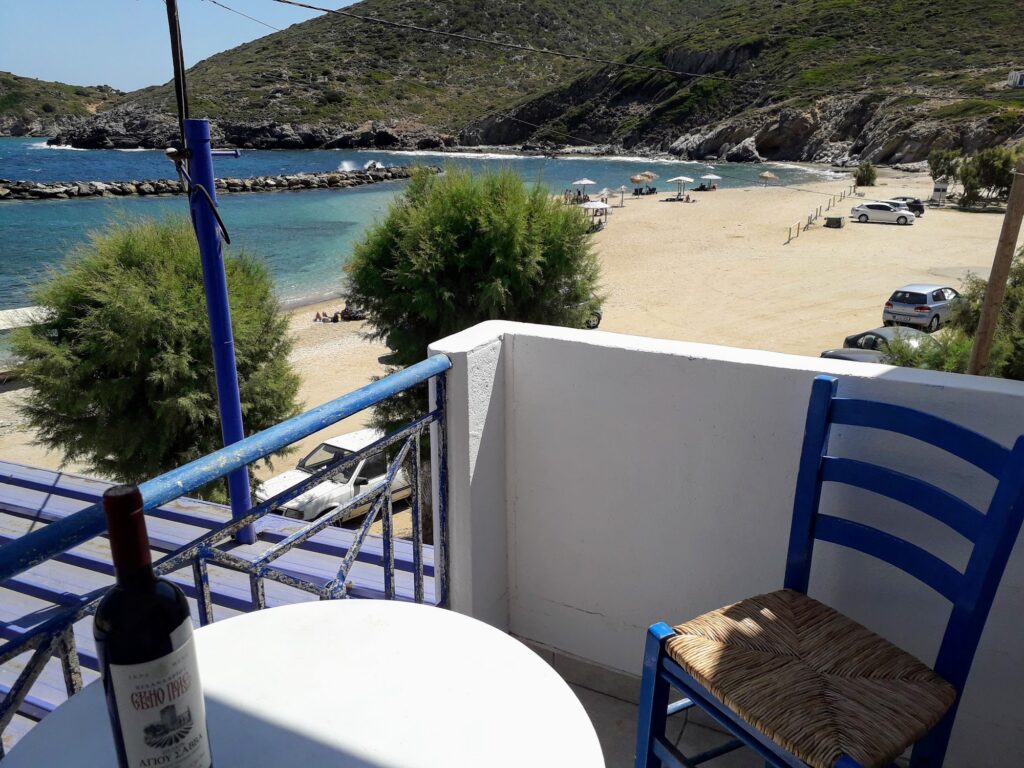
The beach mixes sand with fine pebbles, warm enough underfoot in peak summer that the rented sunbeds along the shore are more than a convenience. Some local sources refer to this stretch as Fryniakos as well as Zarakon, a name tied to the wind that regularly moves through the bay — worth knowing before assuming a still, glassy sea on every visit. The rocky edges of the bay support a reasonable variety of marine life, and the water’s clarity makes for decent snorkelling on calmer days.
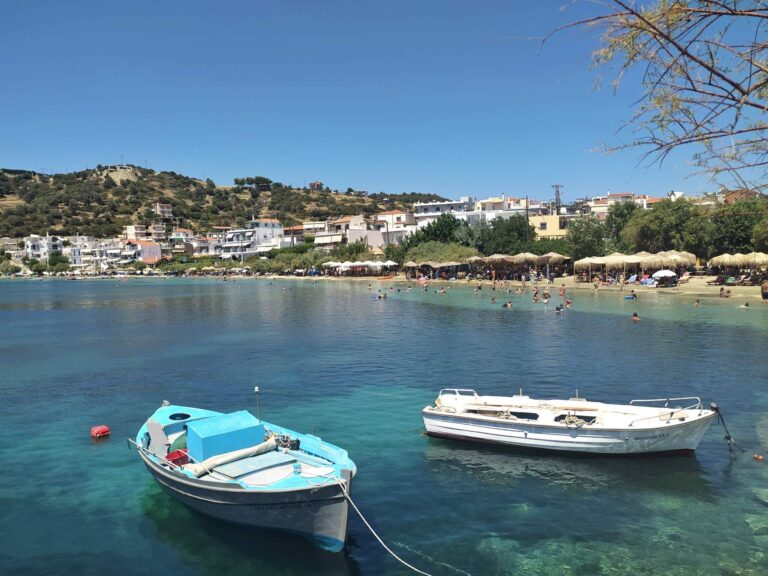
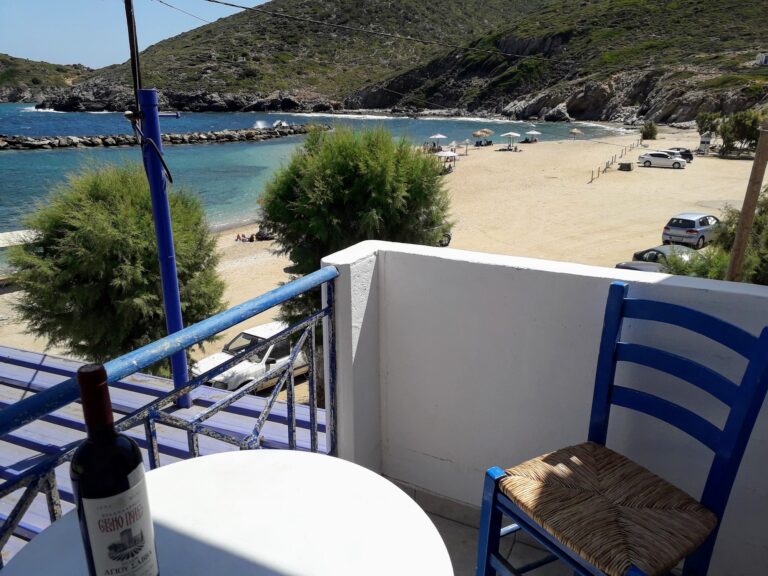
Tavernas and café-bars line the shore, serving fresh seafood and the standard range of Mediterranean dishes, and a large free parking area sits close enough to the sand that carrying gear and coolers is no real effort.
Paralia Zarakon serves the village of Zarakes, called Zarka until 1953 and identified by historians with the ancient Eretrian fortress of Zaretra. The abandoned stone quarter of Mahala, vacated between 1900 and 1950 and now a protected heritage site, sits a short walk inland, and the Purple Cave, discovered only in 2014, lies nearby by boat or hiking trail. The beach itself mixes sand and fine pebble in a bay genuinely exposed to wind, with tavernas, free parking, and decent snorkelling along the rocky edges. Roughly twenty-five minutes from Aliveri, or via the Agia Marina-Nea Styra ferry.
Drive down from Zarakes village. Walk the kilometre to Mahala and see the stone houses for yourself. Ask locally about reaching the Purple Cave before attempting it alone.
Map
Sorry, no records were found. Please adjust your search criteria and try again.
Sorry, unable to load the Maps API.
Near by places: