Agia Marina Beach Chania: The Goat Island Off the Sand
Profile
Agia Marina Beach, Chania: A Sunken German Aircraft Lies Off an Island That Opens to the Public Exactly One Day a Year
Greece | Agia Marina | Platanias Municipality, Chania, Crete
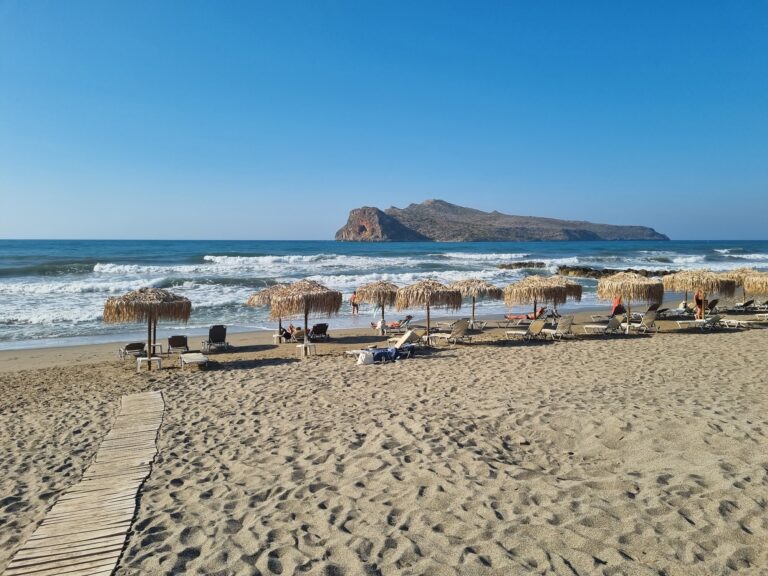
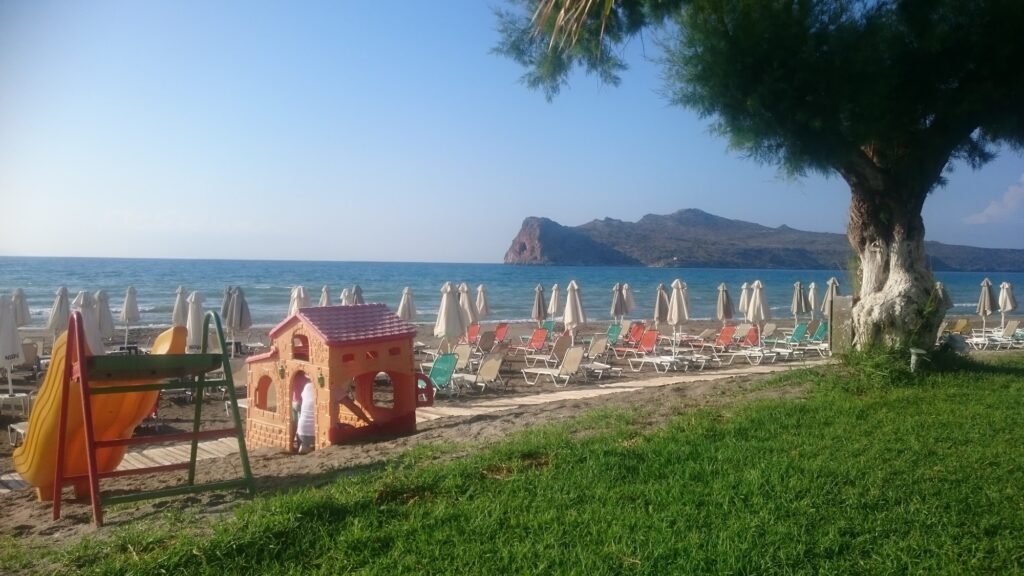
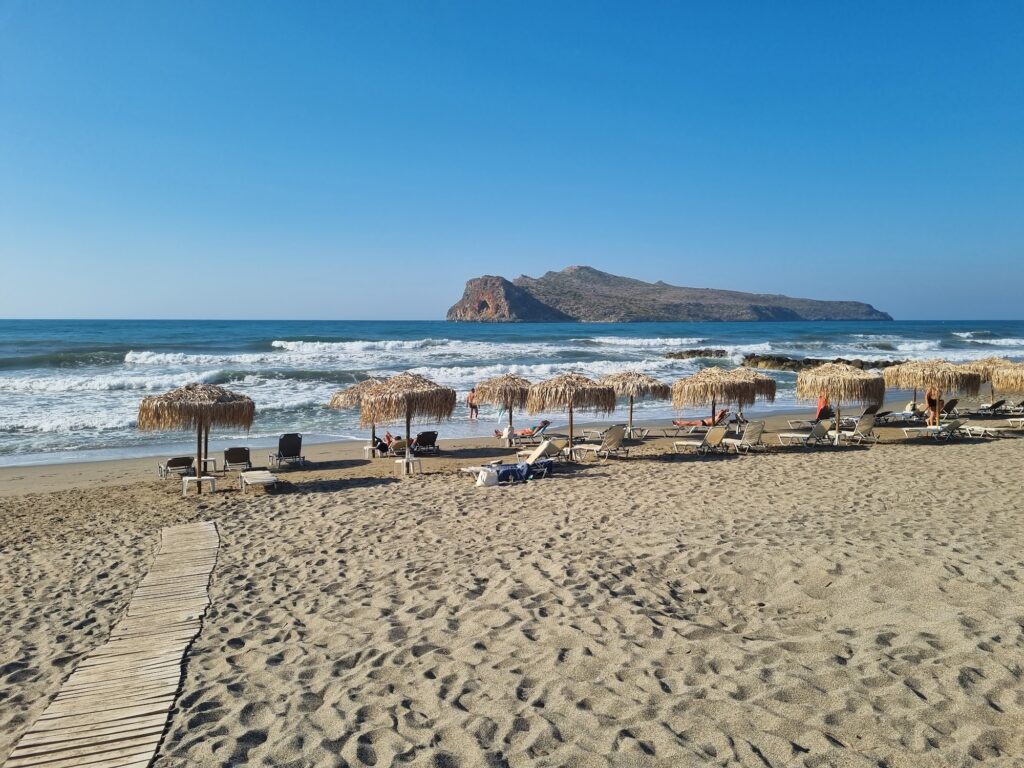
Roughly a kilometre offshore from Agia Marina, the island of Thodorou — officially Agioi Theodoroi — sits visible from almost every point on the beach, close enough to seem within easy reach and entirely inaccessible for all but one day of the year. The Venetians built two fortresses there in 1574 to guard the coast against Ottoman raids; in 1645, the defenders of one fortress reportedly chose to detonate it rather than surrender. The ruins remain. In 1930, the municipality of Agia Marina and the Chania hunting association agreed to designate the island a nature reserve, and in 1935 a local man named Theodoros Viglis released one male and two female kri-kri — the wild Cretan goat, then under serious threat from hunting, particularly during the German occupation — onto the island, where the absence of predators and human presence allowed the population to recover. The island today holds roughly a hundred of the animals on a few hundred square metres of land, and also serves as a recognised breeding ground for Eleonora’s falcons, with BirdLife International designating it an Important Bird Area.
Access is restricted accordingly. The single exception falls on 8 June, the feast day of Agios Theodoros, when small boats depart from the second breakwater at Agia Marina from early morning, charging a modest fixed fare, to allow visitors a few hours on the island before the last departure in the early afternoon. For the remaining 364 days, the island is visible but closed, and the only legal approach is by boat around its perimeter — several glass-bottomed tour operators run trips from Agia Marina and neighbouring Platanias that circle the coastline without landing.
One additional detail attached to the island is worth recording. During the 1941 Battle of Crete, a German Junkers Ju 52 transport aircraft was shot down off Thodorou’s coast. The wreck still lies in shallow water nearby and has since become a recognised site for snorkelling and diving, a quiet wartime remnant a short boat ride from one of the busiest beaches in Crete.
Getting There: Fifteen to Twenty Minutes From Chania, the Green Bus Every Fifteen to Thirty Minutes
The drive from Chania city centre covers approximately nine kilometres along the old coastal road and takes fifteen to twenty minutes under ordinary traffic. The KTEL Green Bus runs the same route from the central station at intervals of fifteen to thirty minutes, with stops directly on the main road a short walk from the beach entrances — among the more straightforward bus connections to any beach in western Crete.
Parking exists in both free and paid lots behind the principal beach clubs, supplemented by street parking along the coastal road, though in July and August the available space is reduced considerably by the volume of visitors.
The Beach: Fine Sand, Shallow Entry, Sheltered by the Island Opposite
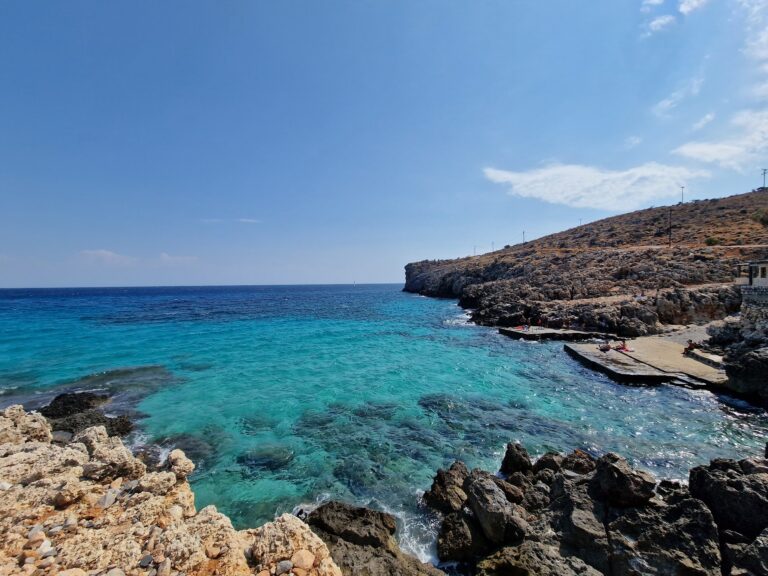
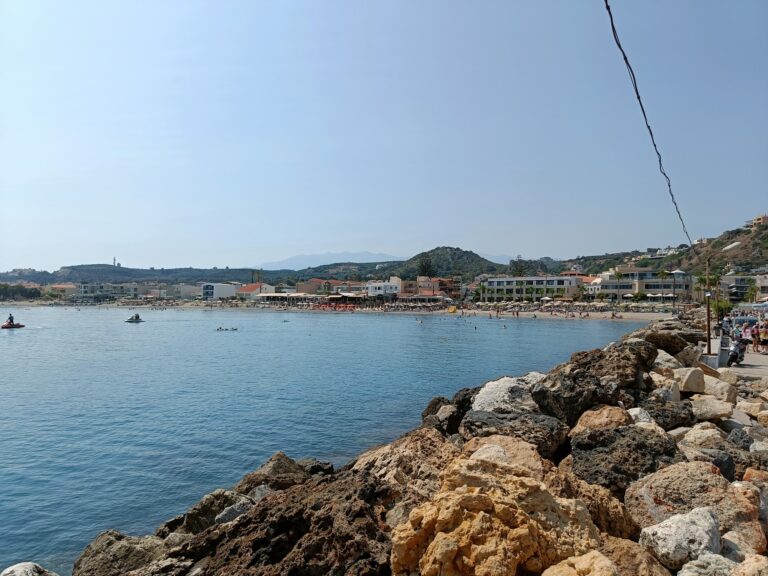
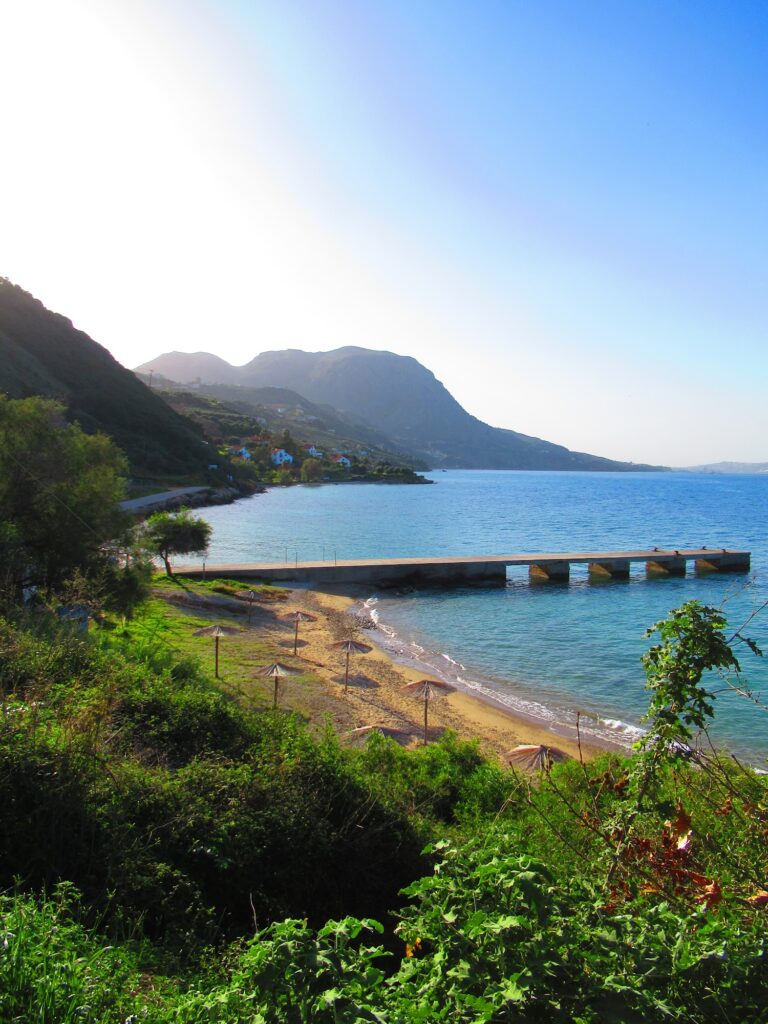
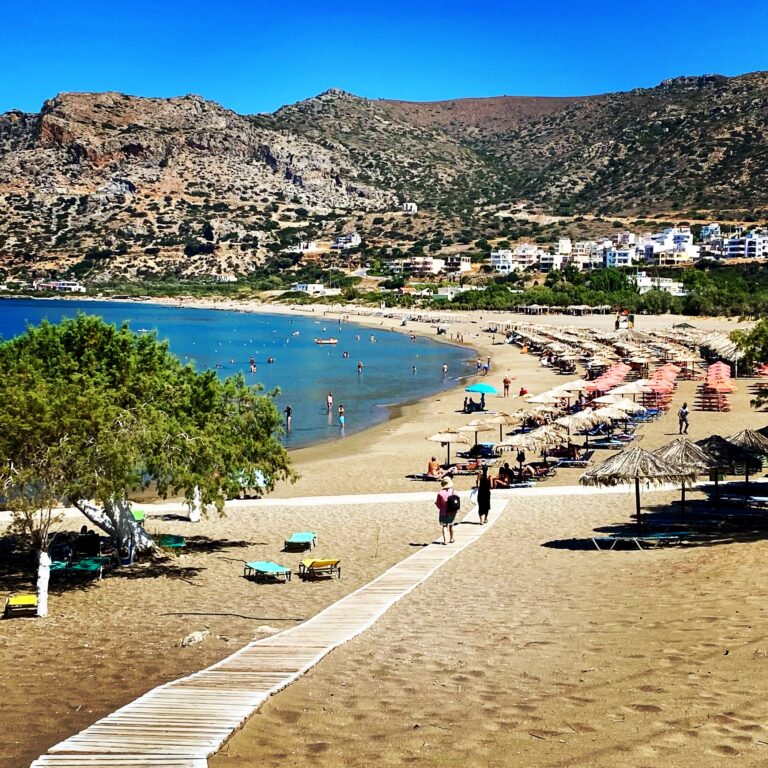
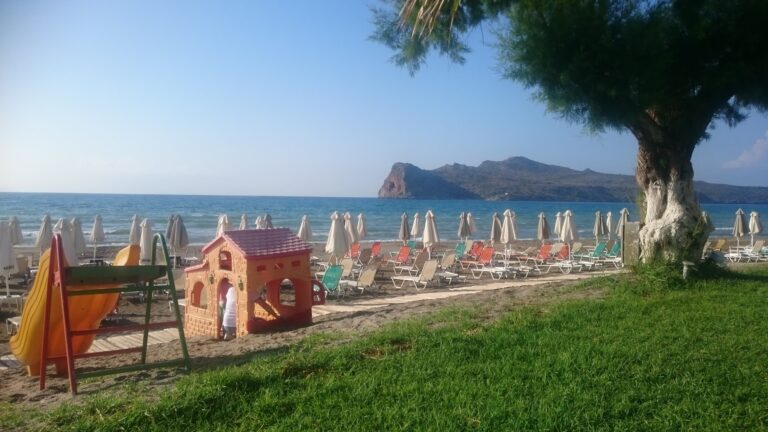
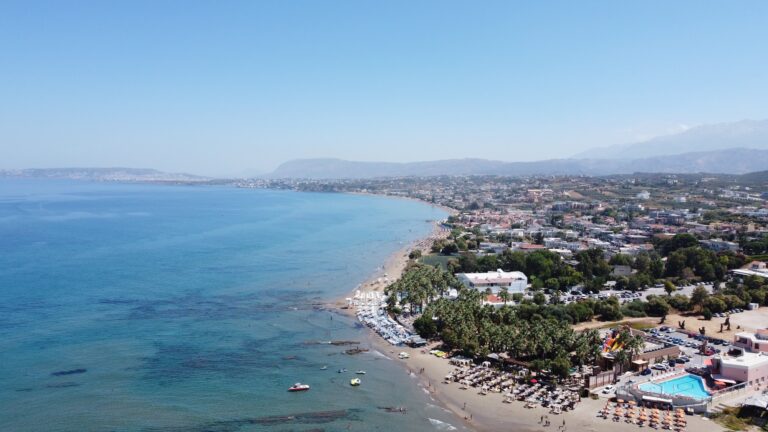
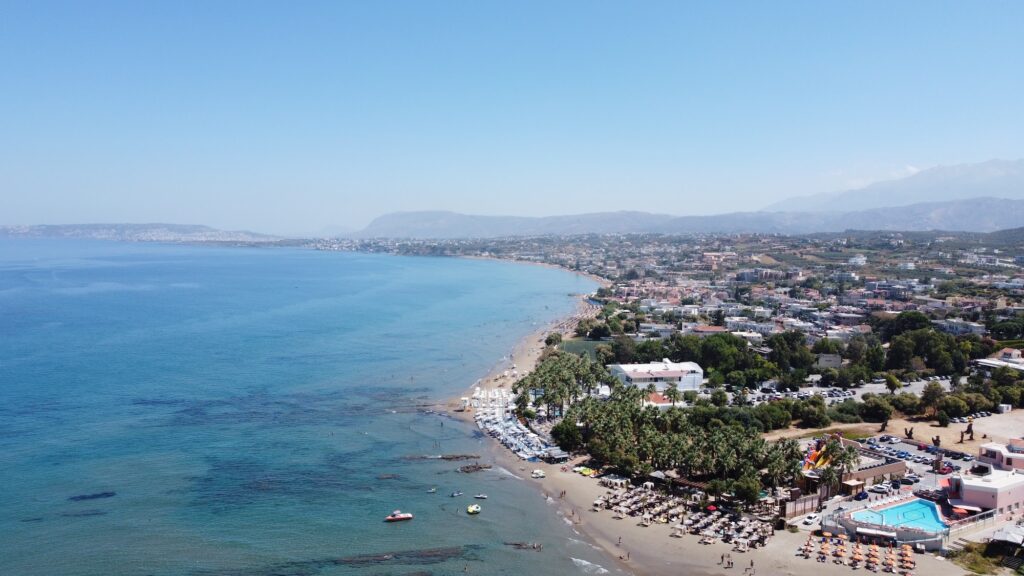
The sand is fine and pale, extending without interruption into the sea, which removes any need for water shoes and accounts for the beach’s reputation as one of the more comfortable family destinations in the region. The presence of Thodorou roughly a kilometre offshore reduces the swell that would otherwise reach this stretch of coast directly, producing the calm, consistently clear water for which the beach holds Blue Flag certification.
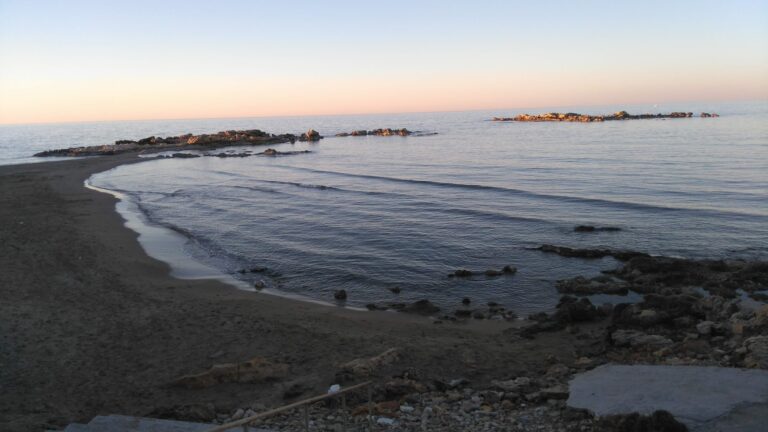
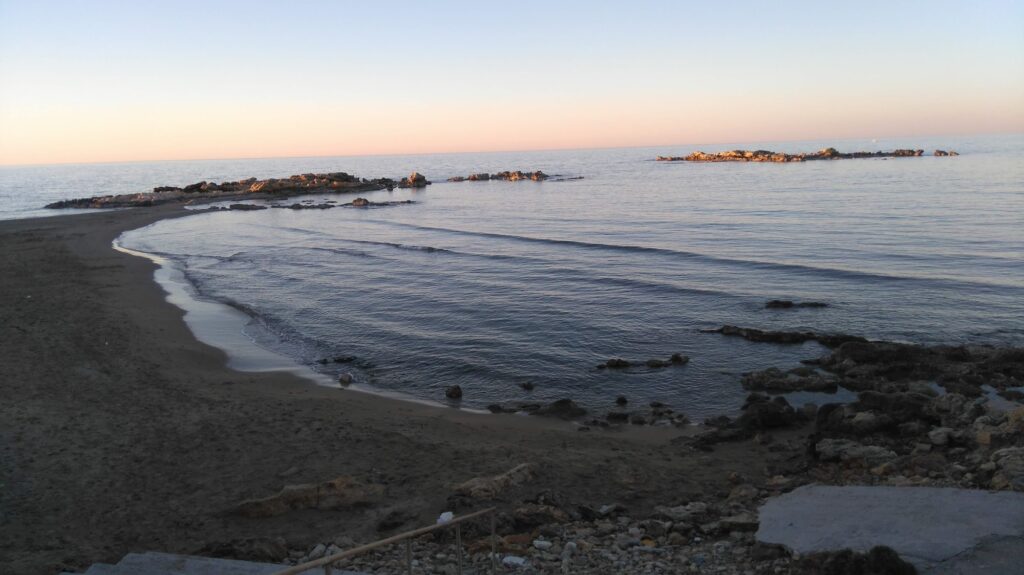
Organised sections run the length of the shore, supplied by adjacent beach clubs and resorts with sunbeds, cabanas, and full service. Lifeguards are stationed at intervals through the summer season. Towards the boundary with neighbouring Stalos, rockier outcroppings provide the better conditions for snorkelling, though the central stretch of sand remains the dominant feature of the beach.
Agia Marina Beach at Chania is defined as much by what lies offshore as by the sand itself. Thodorou Island, visible across roughly a kilometre of water, has carried fortifications since the Venetian period, a tragic episode of resistance in 1645, and since 1935 a protected population of the Cretan wild goat, accessible to the public on a single day each year — 8 June — and otherwise observable only by boat. A sunken German transport aircraft from the 1941 Battle of Crete lies in the shallow water nearby. The beach itself offers fine sand, a shallow gradual entry, organised facilities, and a direct fifteen-to-twenty-minute connection to Chania by road or by the Green Bus.
Drive or take the bus from Chania. Book the 8 June crossing in advance if the date aligns with a visit. Otherwise, take a boat tour around the island’s perimeter and look for the wreck in the shallows.
Map
Sorry, no records were found. Please adjust your search criteria and try again.
Sorry, unable to load the Maps API.
Near by places: