
Itilo Beach Neo Oitylo: Homer, Corsica, Jules Verne, Castle
Profile
Itilo Beach (Neo Oitylo), West Mani: The 2km Sandy Bay Below the Village Homer Named, Where the Stefanopoulos Family Left for Corsica, Jules Verne Named a Pirate Hero, and the Ottoman Castle of Kelefa Was Built to Control the Maniots in 1679
Greece | Neo Oitylo | West Mani Municipality, Laconia, Peloponnese
Homer mentions Oitylos — the mythological hero after whom the village of Oitylo above the bay is named — in the Iliad, where the village is listed among those that sent ships to Troy. The village perched on the cliff above has been continuously inhabited since that antiquity. Ancient finds include a temple of Serapis — the Egyptian deity — which indicates that the ancient Oetylus traded directly with Egypt, an unusual reach for a small Mani settlement.
Jules Verne included Oitylo in The Archipelago on Fire (1884), naming it Vitlyo and making it the home village of his fictional pirate hero Starcos. This was not far from historical reality: the village was a pirate stronghold at various points in its history, using the sheltered bay and the difficult approach roads as natural advantages.
The Stefanopoulos family from Oitylo migrated to Corsica in the 17th or 18th century. They were influential enough that Maniot names, street names, and churches survive in Corsica today — the specific cultural transplant that a single clan’s migration created. The philosopher Voltaire corresponded with members of the Stefanopoulos family. The connection between the Mani bay and the Mediterranean island where Napoleon Bonaparte was born is one of the more unusual geopolitical coincidences in European history.
Kelefa Castle was built by the Ottomans in 1679, specifically to control the Maniots — one of the few peoples who had never fully submitted to Ottoman rule. The castle is pentagonal with six towers. It stands on the hill opposite Oitylo village, across the gorge that separates the old village from the fortress. The walk from the base takes 90 minutes, is steep, has no shade, and should not be attempted in summer heat without adequate water.
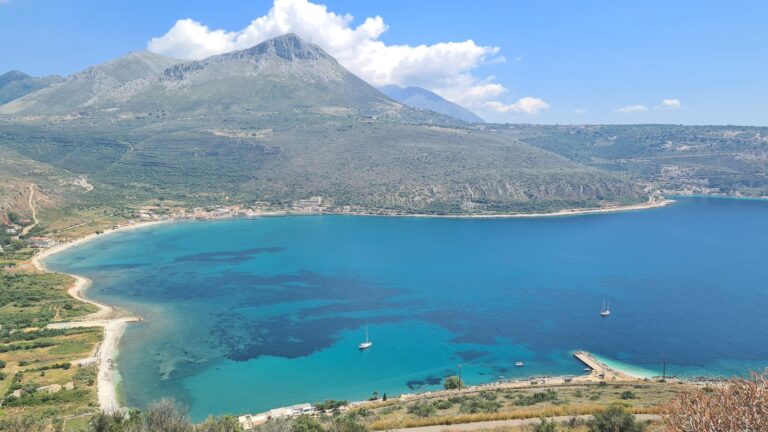
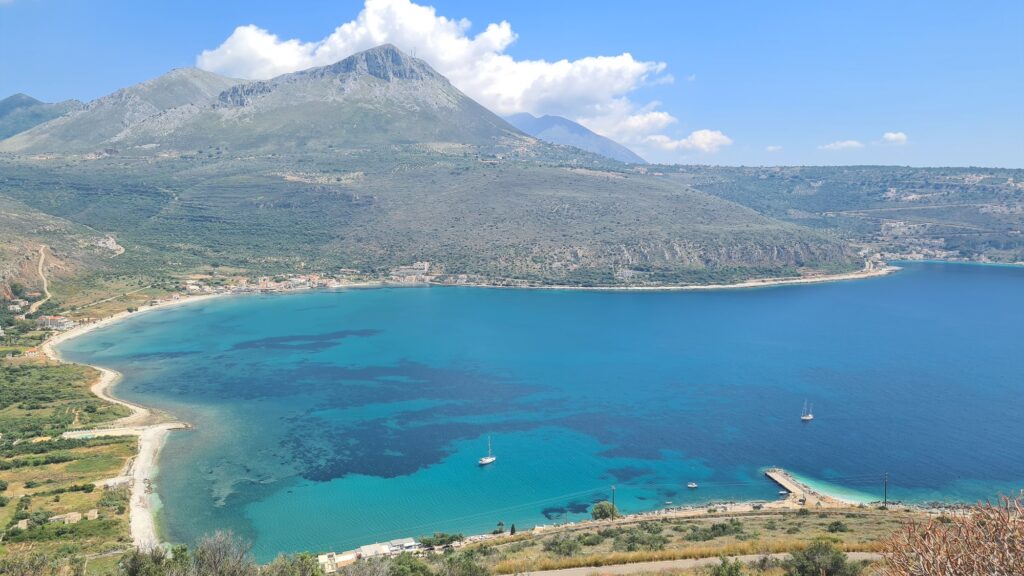
The beach below all this history is the Neo Oitylo sandy shore — 2 kilometres long, calm, protected by the bay geometry, with boutique hotels, fish tavernas, and the specific quiet of a Mani bay that has not been over-developed.
Getting There: 7km North of Areopoli (10–15 Minutes), Karavostasi the Northern Harbour, Neo Oitylo the Central Beach, Limeni 3km South
From Areopoli (the capital of the Deep Mani), drive north approximately 7 kilometres. The descent into Itylo Bay passes the Kelefa Castle ruins on the hillside to the right. Neo Oitylo is in the middle of the 2.5km bay; Karavostasi (the old fishing harbour of Oitylo) is at the northern end. Limeni — where Dexameni Beach and the Mavromichalis tower house are (covered in Dexameni Beach Limeni Greece) — is 3km south on the same coastal road.
We also covered Stoupa Beach Messinia Greece and Ritsa Beach Kardamyli Greece further north on the same coastal approach from Kalamata.
The Beach: 2km Sandy Neo Oitylo Section, Sunbeds From Hotels, Calm and Protected, Ancient Shipwreck Offshore, Karavostasi Pebble Harbour 500m North
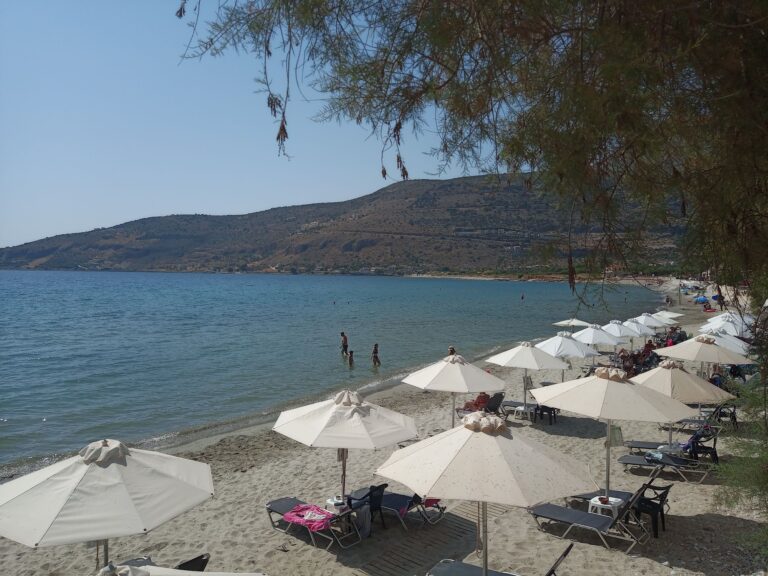
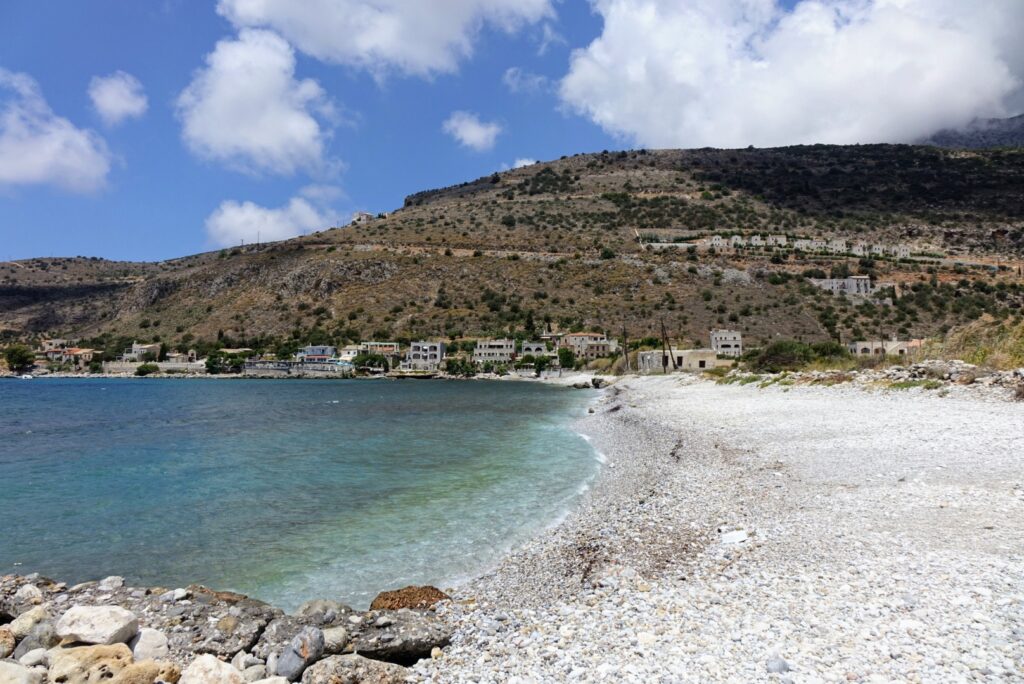
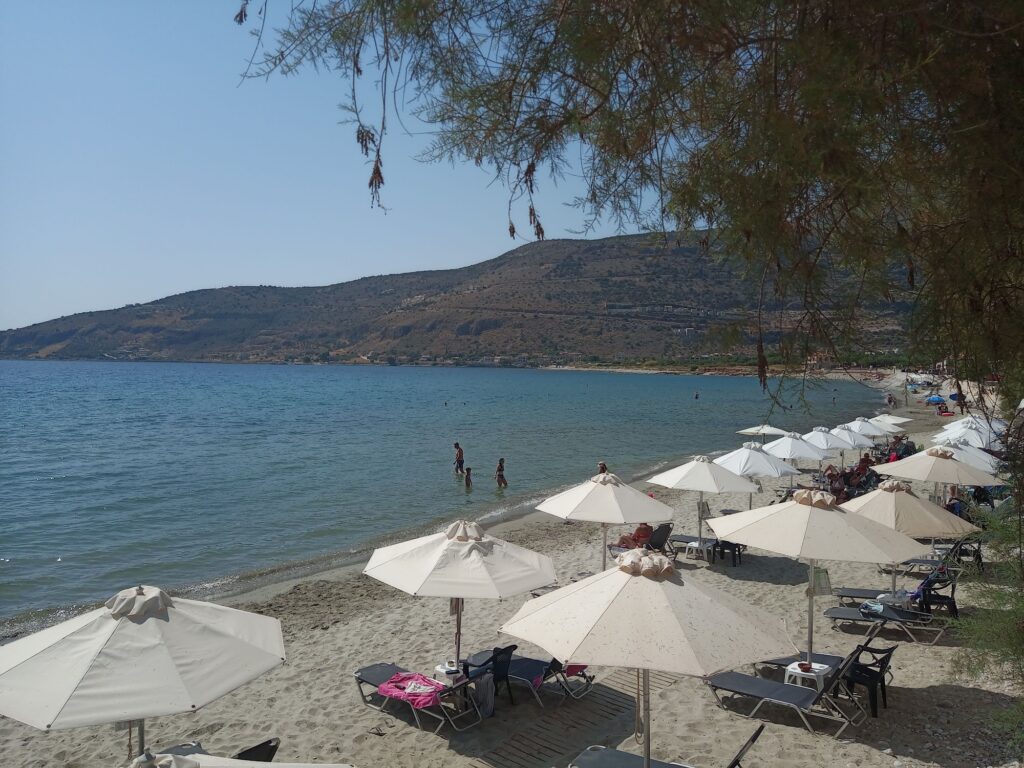
Neo Oitylo has the main sandy beach — 2 kilometres of sheltered bay, calm and warm, with hotels providing sunbeds and parasols along their frontages. The water is clear, the depth gradual in the southern sections.
An ancient 2nd-century BC shipwreck with amphorae has been discovered in the bay waters — an underwater archaeological site that confirms Oitylo’s ancient maritime activity.
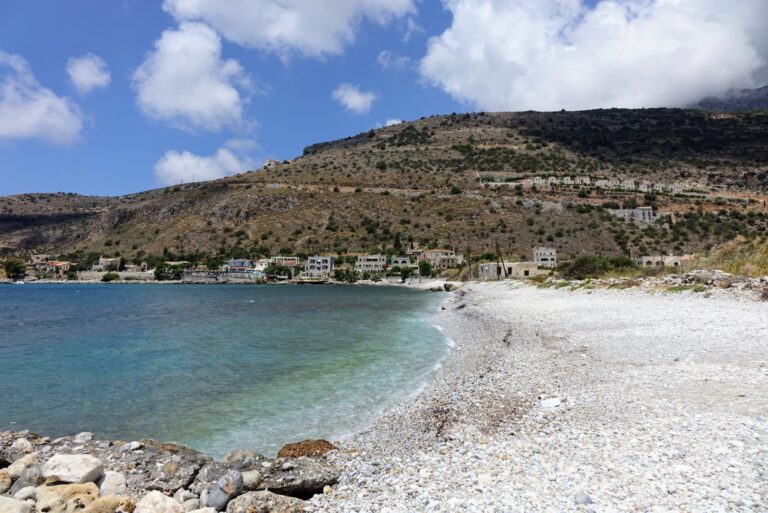
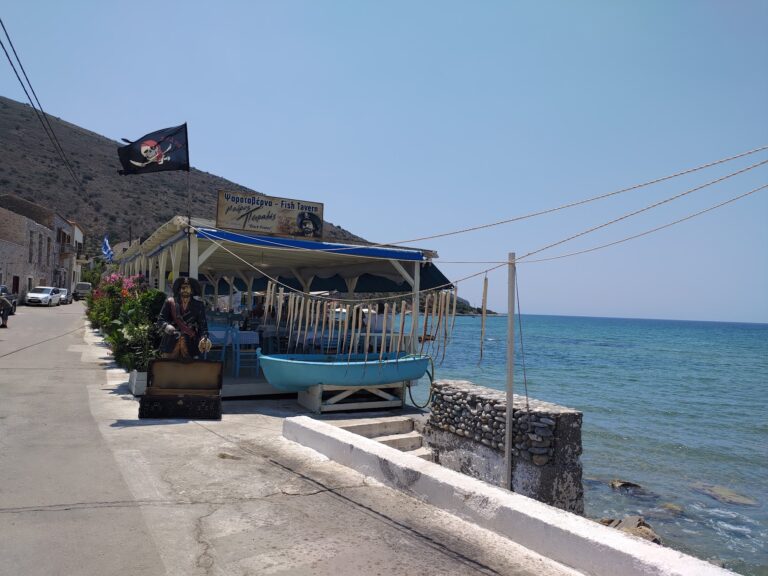
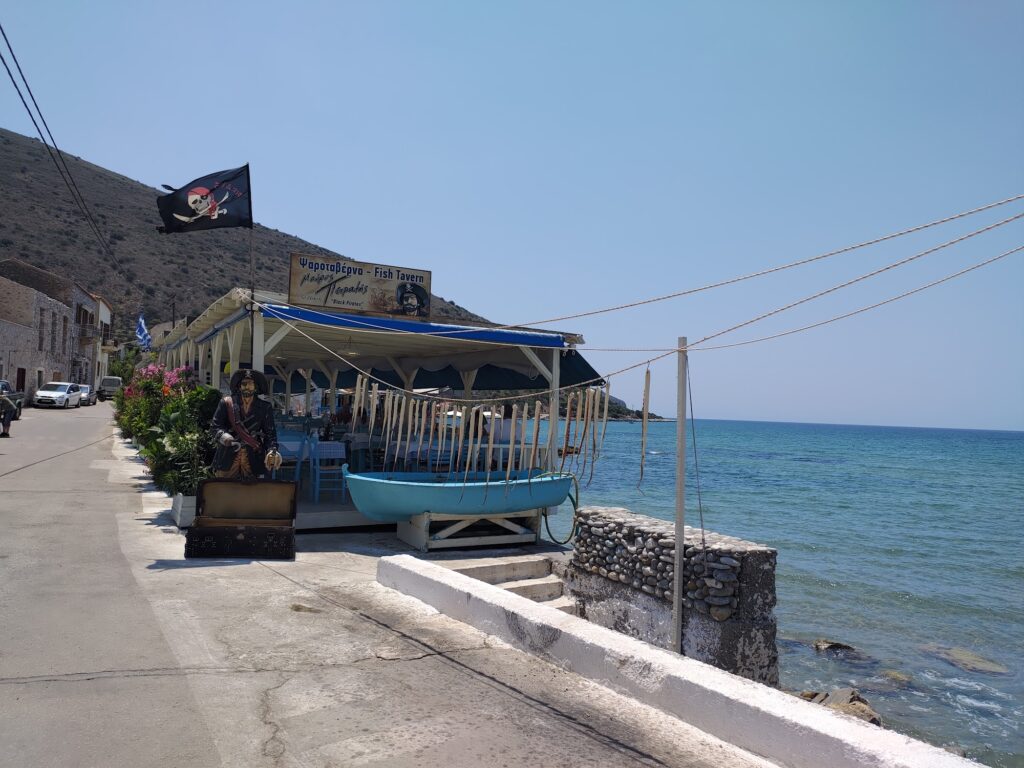
Karavostasi is the northern end of the bay — the small fishing harbour of old Oitylo, now a cluster of boutique hotels with sea views, two tavernas, and a narrow pebble beach with rocks. Boat trips depart from Karavostasi. The atmosphere is quieter than the Neo Oitylo hotel beach.
The Dekoulou Monastery and the Orlov Treaty of 1770
The Dekoulou Monastery (also Dekoulo), 1km south of Oitylo village, is a 16th-century monastery with a carved wooden iconostasis and hagiographies by the Maniot painter Antonis Dimangelos. It is where the Treaty of Oitylo (also called the Orlov Treaty) was signed in 1770 — the agreement by which Russia (under Catherine the Great, through the Orlov brothers) promised to support a Greek uprising against the Ottomans. The uprising failed catastrophically; the Russian fleet withdrew. The Maniots who had revolted were abandoned. The monastery where the treaty was signed survives.
The Paleolithic Cave at Kalamakia and the Open Water Swimming Competitions
At the entrance to the bay, at Kalamakia, a cave with Paleolithic evidence has been identified. Open-water swimming competitions — the Novibet Oceanman Greece series — have been held at Oitylo for several years, using the bay’s calm clear water as the race course and bringing international competitors to one of the quieter corners of the Laconian coast.
Itilo Beach (Neo Oitylo) in West Mani is the 2km sandy bay below the village Homer named, where the Stefanopoulos family left for Corsica, Jules Verne named a pirate hero, and the Ottoman Kelefa Castle was built in 1679 to control the Maniots (pentagonal, 6 towers, 90-min walk, no shade) — 2km sandy beach with hotels and sunbeds (Neo Oitylo), Karavostasi pebble harbour with boutique hotels and boat trips at the north end, ancient 2nd-century BC shipwreck with amphorae in the bay, Serapis temple (ancient trade with Egypt), Dekoulou Monastery and the Orlov Treaty 1770, Paleolithic cave at bay entrance, 7km from Areopoli, Limeni 3km south.
Descend into the bay from Areopoli. Swim in the centre at Neo Oitylo. Walk to Karavostasi for dinner.
Map
Sorry, no records were found. Please adjust your search criteria and try again.
Sorry, unable to load the Maps API.