
Plaka Beach Leonidio: Doric Greek, Eggplant, Balloons
Profile
Plaka Beach, Leonidio: The Ancient Port of Prassies Below the Red Cliffs Where Pausanias Called the Valley the Garden of Dionysus, and the Last August Sunday Belongs to the Eggplant Festival
Greece | Plaka | South Kynouria Municipality, Arcadia, Eastern Peloponnese
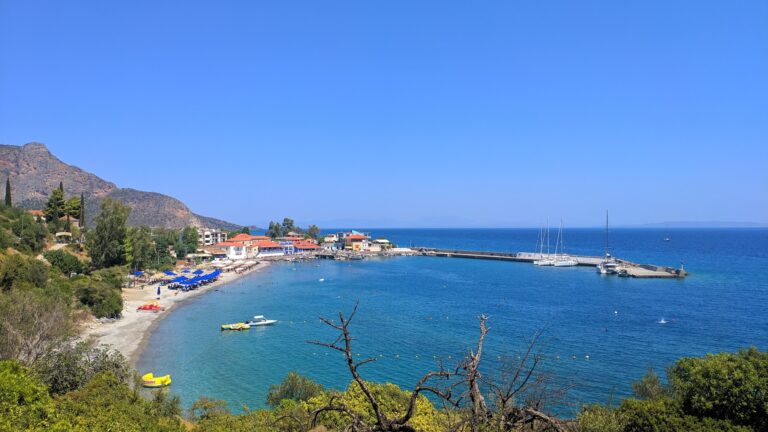
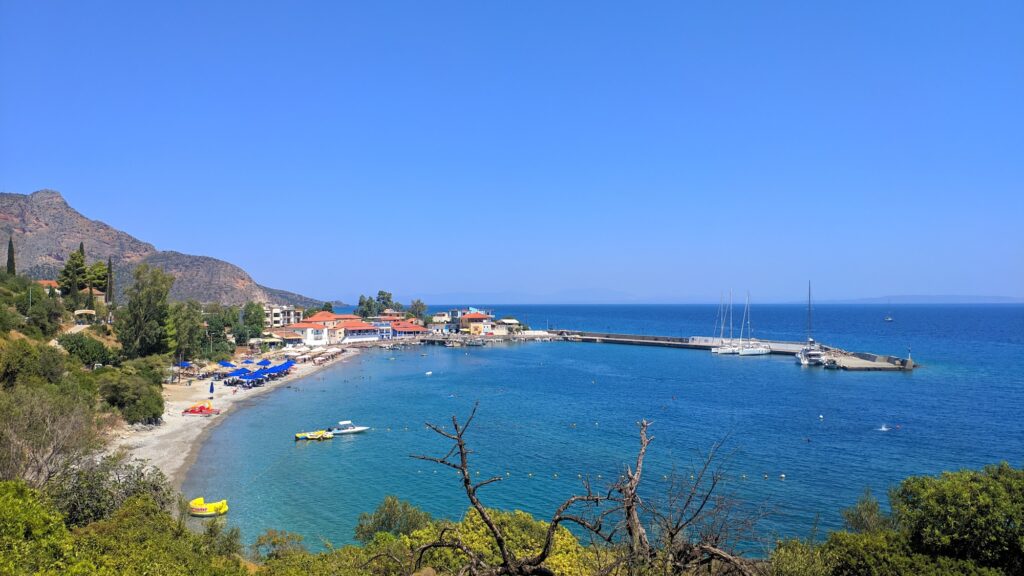
Pausanias called the plain of Leonidio the “garden of Dionysus.” The fertility of the valley floor — citrus, eggplants, olives, tomatoes — was enough in the 2nd century AD to invoke the god of wine and abundance as its patron. In the mythology that he recorded, the infant Dionysus was found on this beach and brought up in a cave that opens from it. The same beach has been the port of the town above it since antiquity: Plaka is the modern name of what was once Prassies, the harbour of Sparta that the Athenians destroyed during the Peloponnesian War. The ruins of the ancient acropolis are on the hill above the village, their foundations still traceable.
The valley is also the microclimate that produces the Tsakonian eggplant — a PDO-protected variety grown exclusively here, sweet-tasting and largely seedless. On the last Sunday of August, the annual Tsakonian Eggplant Festival takes over the Plaka harbour: chefs from across Europe arrive, the harbour tables fill, and the women of the village serve traditional recipes in which the eggplant appears in every combination the Tsakonian kitchen has developed over centuries. The festival is a genuinely gastronomic event of regional significance, attracting food writers and visitors who make the journey specifically for it.
The town behind the beach, Leonidio, is the capital of Tsakonia — the region where the Tsakonian dialect survives. Tsakonian is the only living descendant of ancient Doric Greek, the language of Sparta. It is spoken by a dwindling number of elderly residents in the villages around Leonidio and is classified by UNESCO as severely endangered. A sign at the entrance of Leonidio reads, in Tsakonian: “Our language is Tsakonian — ask them to tell you.”
Getting There: 3 Hours From Athens (215km Via Corinth, Tripolis, Nafplio, Astros), 4km From Leonidio Town, Free Parking at the Harbour
From Athens, take the motorway toward Corinth, exit toward Tripolis, continue to Nafplio, then follow signs for Astros and Leonidio. Total distance: approximately 215 kilometres, approximately 3 hours. The coastal road south from Nafplio toward Leonidio passes some of the finest beaches on the eastern Peloponnese — Karathonas Beach Nafplio Greece is the 3km Blue Flag beach behind Palamidi fortress, and Kondyli Beach Nafplio Greece near Vivari is widely considered the most beautiful beach in the Argolid — before the road climbs through the Kynouria hills toward Leonidio. From Leonidio town the descent to Plaka harbour takes 5 minutes.
Free parking is along the harbour wall and in the lots behind the beach.
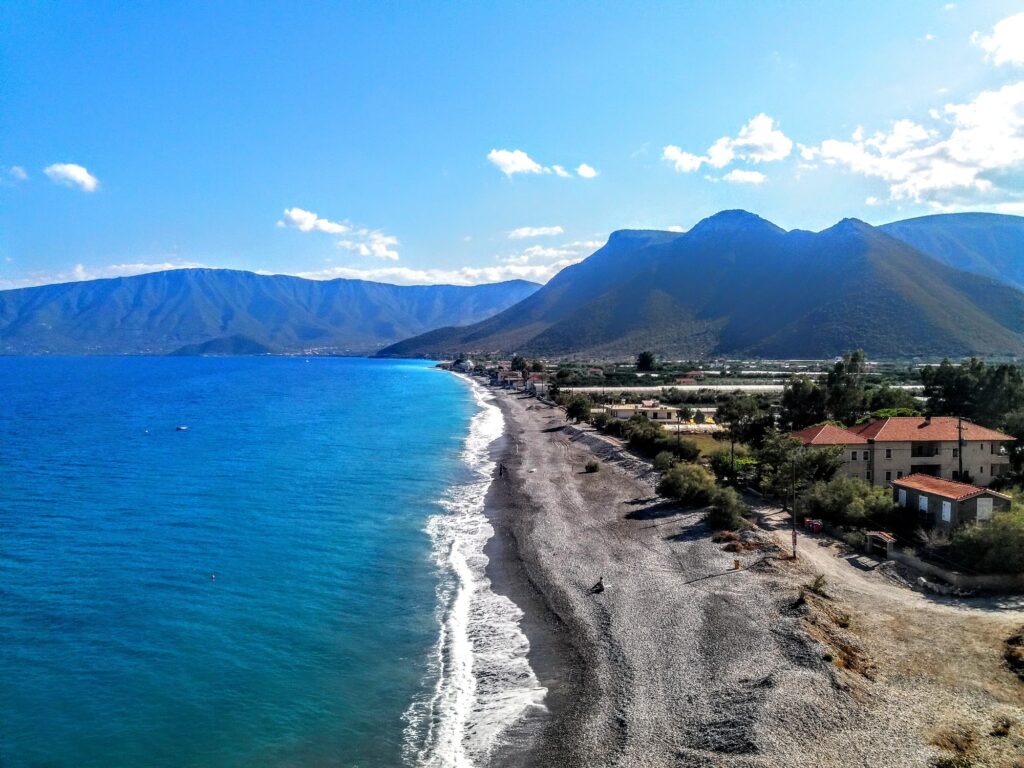
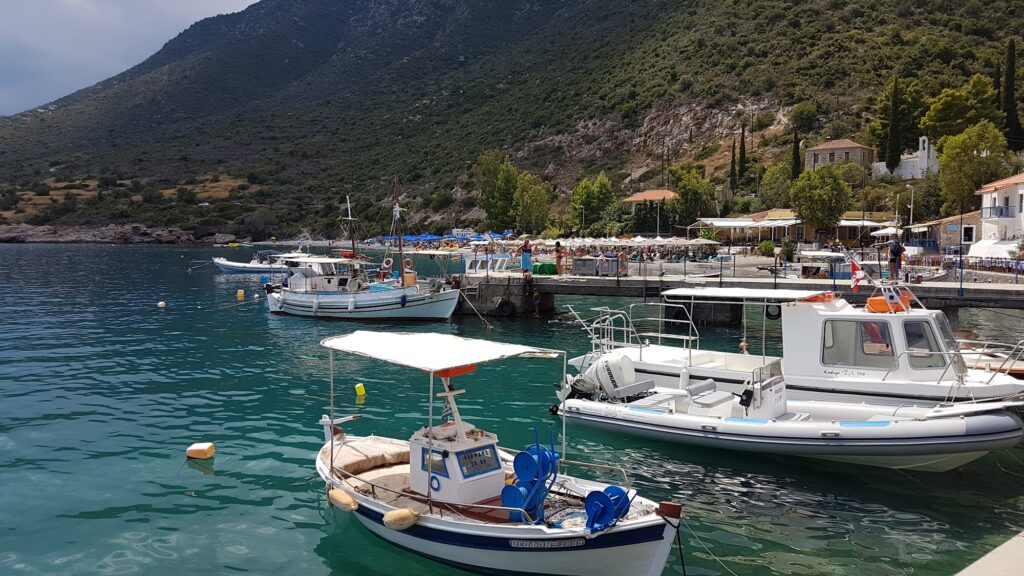
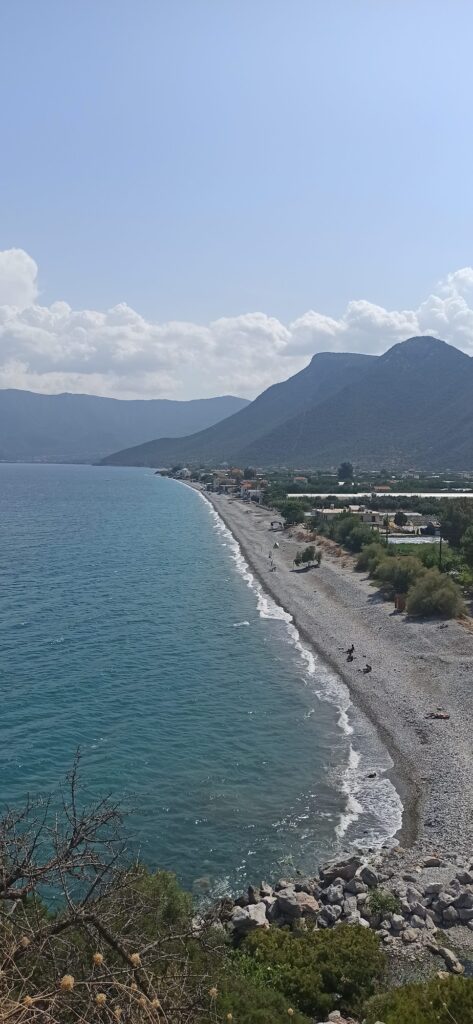
The Beach: 4km Pebble From Plaka to Lakko, Crystal Clear Myrtoan Sea, the Red Cliff Backdrop, Fishing Boats at the Harbour, Snorkelling at the Rocky Edges
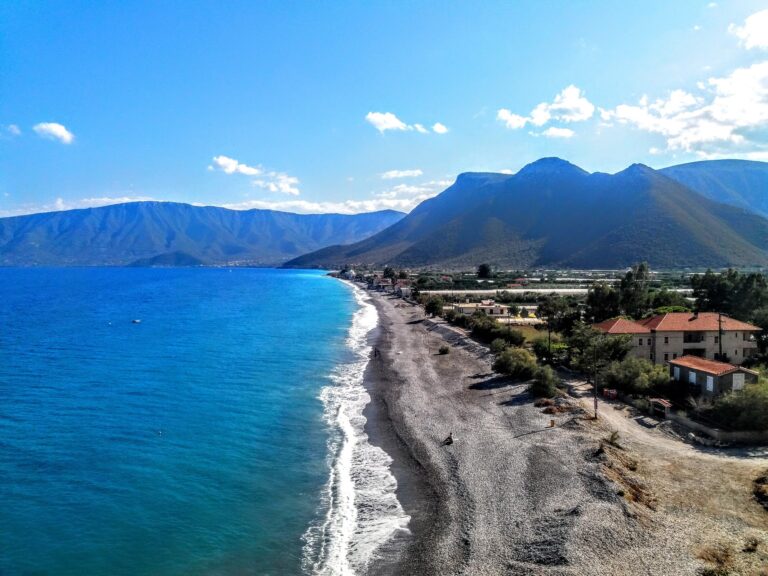
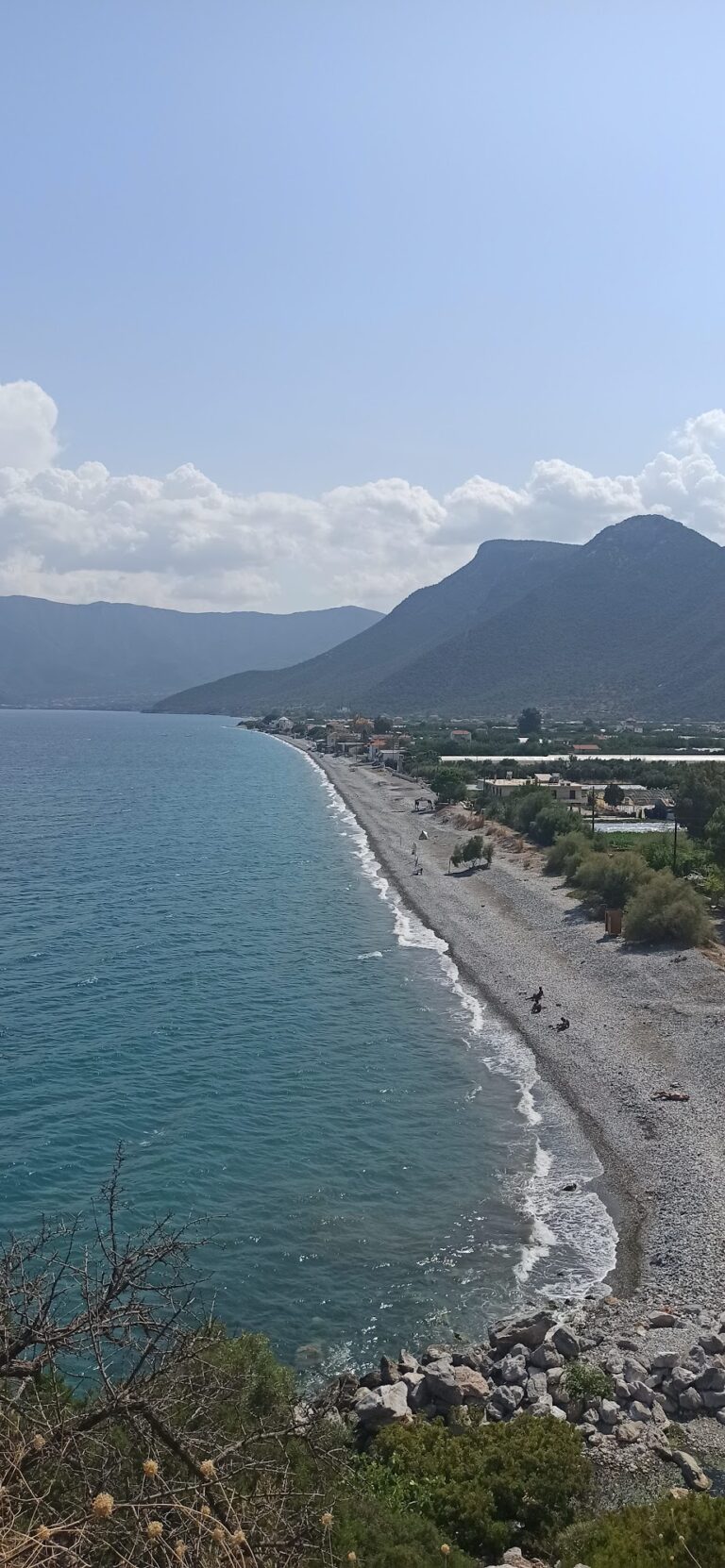
From Plaka harbour, the beach runs 4 kilometres north to the settlement of Lakko — a continuous pebble stretch with the red cliffs of Mount Parnon as the backdrop on the landward side and the Myrtoan Sea to the west. The water is clear and the pebbles round and smooth. Snorkelling at the rocky edges of the harbour reveals the marine life that the clean water of the eastern Peloponnese coast supports. The Myrtoan Sea at Plaka is the same body of water visible from Arvanitia Beach Nafplio Greece to the north, but seen from a coast that receives fewer visitors and carries a quieter character.
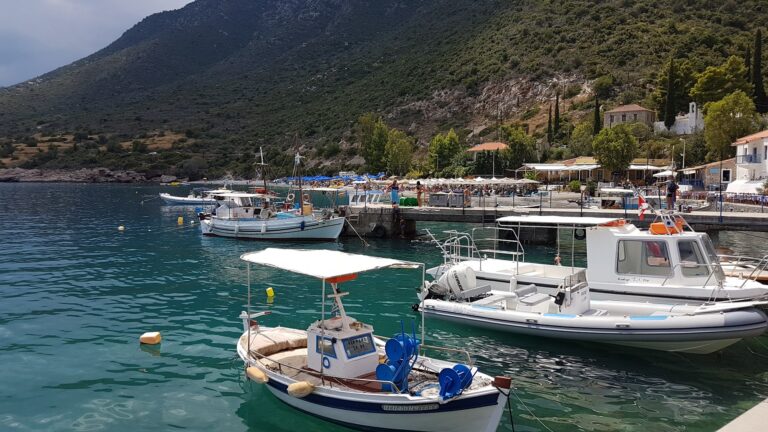
The harbour tavernas have tables directly above the fishing boats. Red mullet from the Myrtoan Sea is the specific fish the harbour kitchens serve, alongside the eggplant dishes that follow visitors here from every menu in Leonidio.
Five kilometres south, Poulithra is a coastal village with its own pebble beach and the character of an Aegean island transplanted to the Peloponnese coast — the next settlement along the same shore, reachable in 10 minutes by car.
The Tsakonian Language: The Last Descendant of Doric Greek
Tsakonian is a direct linguistic descendant of ancient Dorian Greek — the dialect brought by the Dorian Greeks who settled the Peloponnese around 1100 BC and whose most famous city was Sparta. Most ancient Greek dialects merged over centuries into Koine and eventually Modern Greek. Tsakonian did not. Isolated in the mountains around Leonidio until the middle of the 20th century, it preserved forms that Thucydides and Herodotus would have recognised. It is now spoken by a small number of elderly people in the villages of Tsakonia and is classified among the rarest surviving languages in Europe.
The Tsakonian dance — the Geranos — is, according to researchers, probably the same dance Theseus danced at the sanctuary of Apollo on Delos after killing the Minotaur: dancers in a line, one behind another rather than side by side, replicating the way you would exit a labyrinth in single file.
The Easter Hot-Air Balloons, the Melijazz Festival, the Climbing Festival
Leonidio’s Easter is famous across Greece: when the priest sings “Christ is Risen,” hundreds of paper hot-air balloons are released simultaneously from the five parishes, rising into the night sky above the red cliffs. The custom dates to around 1910–1915 and its origin is unknown even locally. The Greek comedy writer Dimitrios Psathas wrote that the ideal Greek year consisted of “carnival in Patras and Easter in Leonidio.”
The Melijazz Festival in July brings Mediterranean music — jazz, Latin, ethnic, rebetika — to Plaka harbour alongside the eggplant dishes. The Leonidio Climbing Festival uses the red cliffs above the town, which have become a significant international sport climbing destination over the past decade.
Elona Monastery: 14km Up the Mountain Road, Embedded in the Cliff Face
The Monastery of Elona is 14 kilometres up the mountain road from Leonidio — a 19th-century monastery that appears to be embedded directly in the cliff face of Mount Parnon, its buildings pressing back into the rock with the cliff as both wall and roof. The road continues another 12 kilometres to the mountain village of Kosmas, 26 kilometres total from Leonidio.
Plaka Beach at Leonidio in Arcadia is the ancient port of Prassies below the red cliffs where Pausanias called the valley the garden of Dionysus — 4km pebble beach to Lakko, the Tsakonian Eggplant Festival on the last Sunday of August at the harbour (PDO variety, chefs from across Europe), Easter hot-air balloons (hundreds released at “Christ is Risen” from five parishes, from around 1910), Tsakonian dialect (only living descendant of Doric Greek, UNESCO severely endangered), the Melijazz Festival in July, the climbing festival on the red cliffs, Elona Monastery 14km up the cliff road, ancient acropolis of Prassies on the hill above the harbour, 3 hours from Athens (215km via Corinth, Tripolis, Nafplio, Astros).
Drive from Athens or Nafplio. Descend 4km to the harbour. Eat the eggplant. Come back for the Easter balloons.
Map
Sorry, no records were found. Please adjust your search criteria and try again.
Sorry, unable to load the Maps API.