Spiaggia di Capo Bianco: The Rock Behind a Myth
Profile
Spiaggia di Capo Bianco: Rock a Real Study Asked About the Argonauts
Italy | Tuscany | Elba Island | Tuscan Archipelago
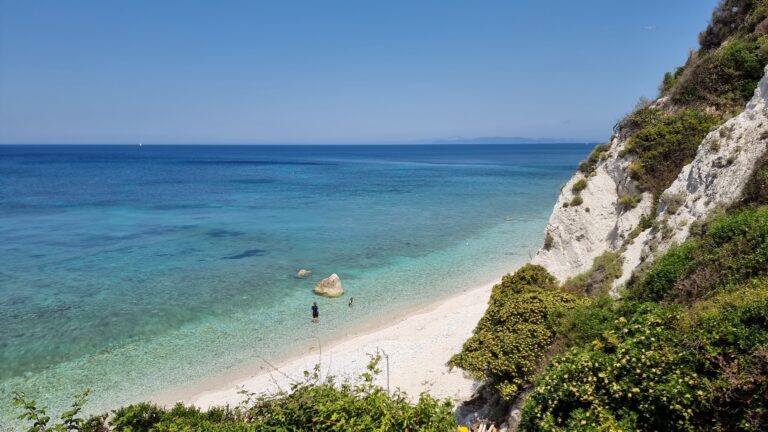
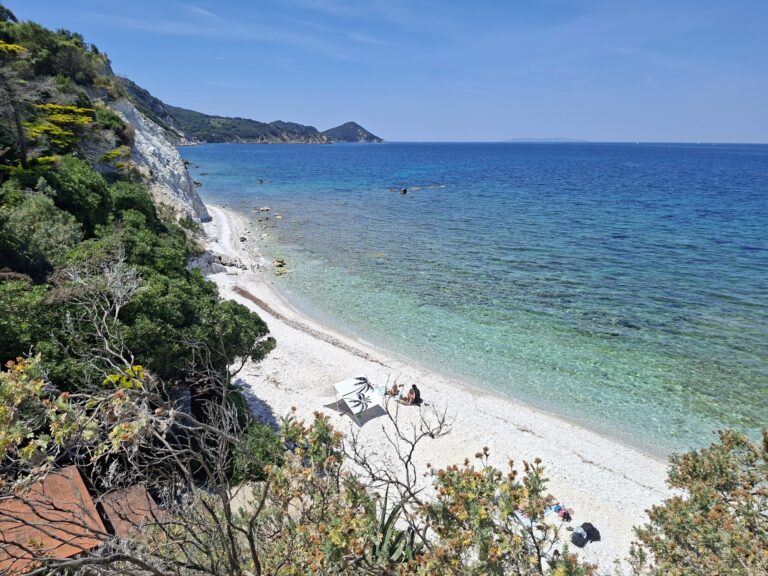
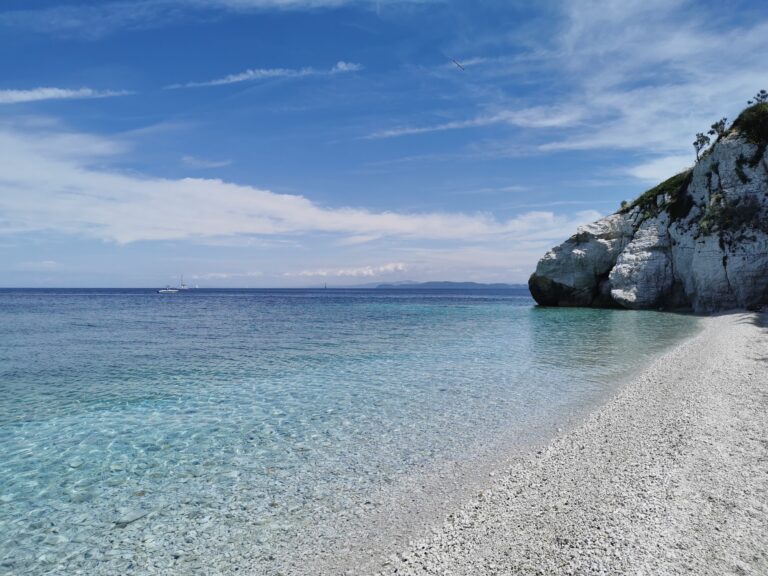
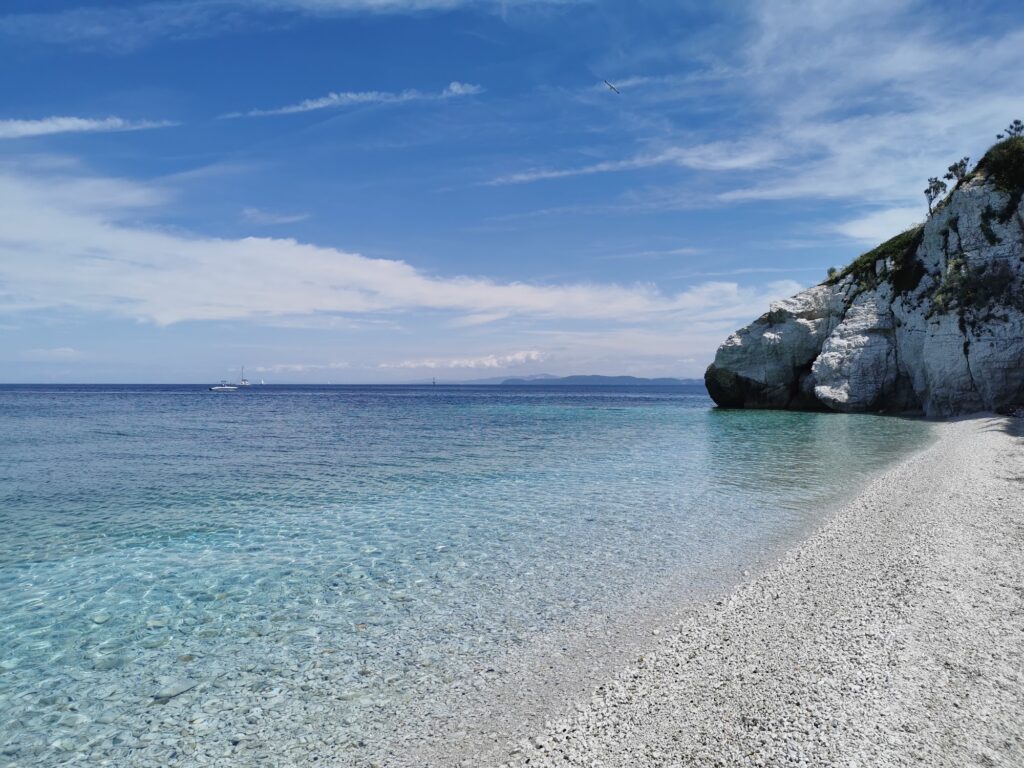
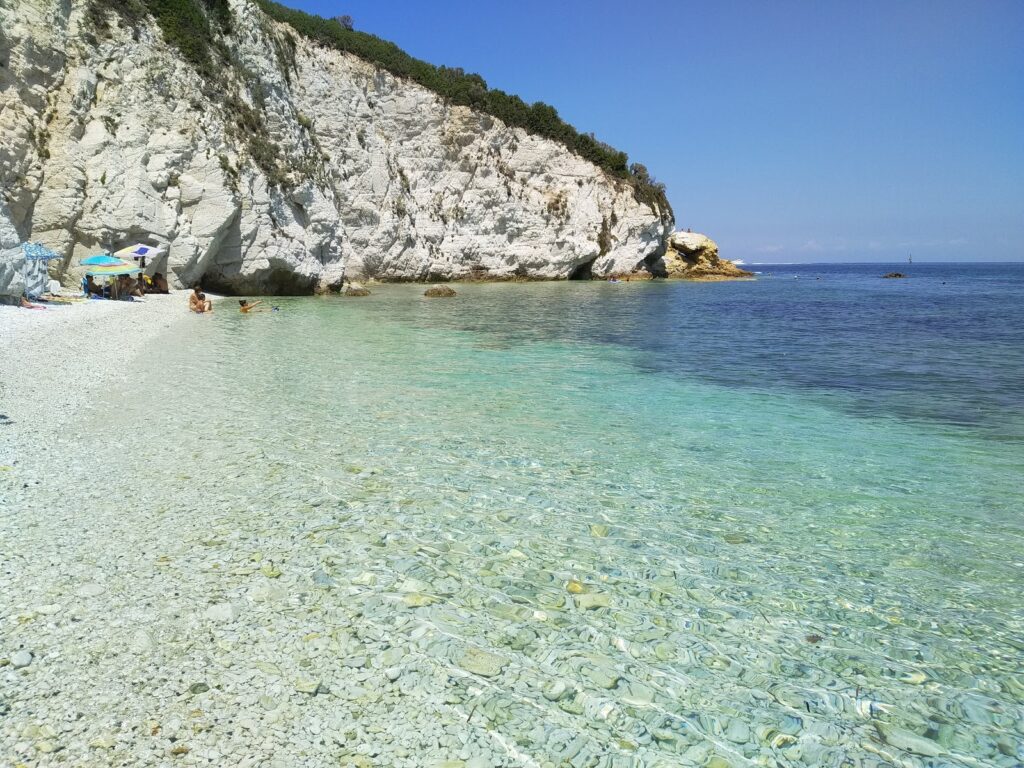
The white cliffs framing Capo Bianco are geologically known as the Capo Bianco Aplite, dated to roughly 8.4 million years old, the oldest intrusive rock unit in Elba’s entire magmatic complex. What makes the formation genuinely remarkable beyond its age is its mineral composition: high boron content produced widespread tourmaline orbicules scattered through the rock, spots ranging from millimeters to many centimeters across. A 2007 paper published by the Geological Society of London carried a title that directly engaged with the same Argonauts legend I’d already heard attached to nearby beaches, asking outright whether the mythical sweat stains sailors supposedly left on Elba’s white stones were, in fact, folk explanations for these genuine tourmaline spots, a real scientific inquiry into whether ancient storytellers were describing actual geology in mythological terms.
I found that question genuinely fascinating to sit with while looking at the cliffs themselves, the spots clearly visible in places, considerably more satisfying to trace back to boron-rich magma cooling nearly ten million years ago than to any literal Bronze Age hero’s perspiration.
A 290-Meter Curve Divided by a Rocky Point
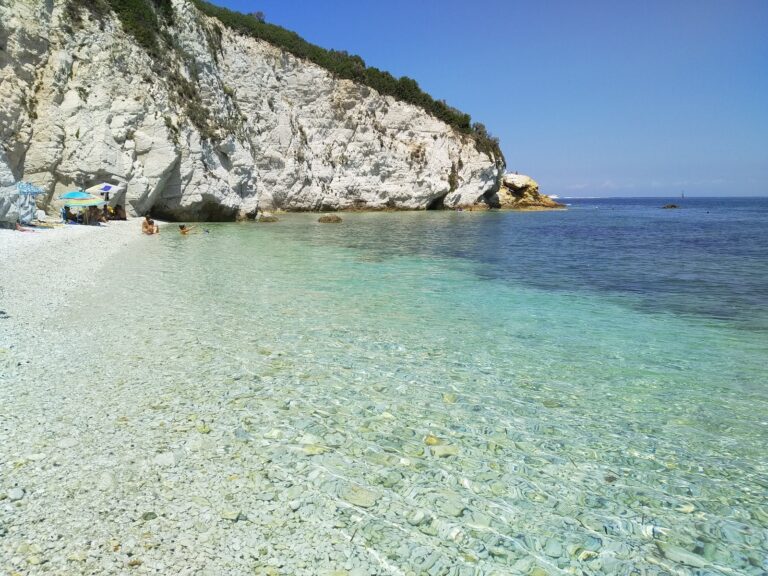
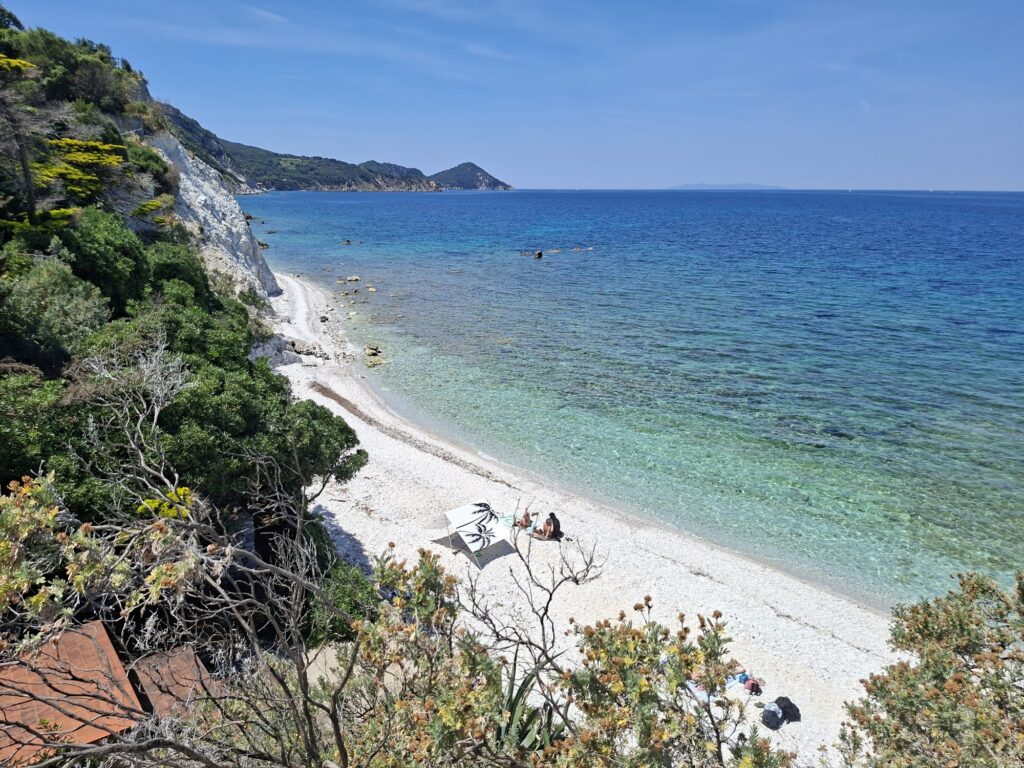
Capo Bianco stretches about 290 meters, its shore composed mainly of smooth white eurite pebbles with some patches of granular sand, and a row of rocks partway along effectively splits the beach into two sections, the second, wider portion extending to a rocky point genuinely excellent for snorkeling. I found sunglasses essential here, the white stone reflecting sunlight intensely enough to make the whole cove feel almost overexposed at midday.
Water That Turns Genuinely Glass-Calm With the Scirocco
Sheltered by the surrounding cliffs, Capo Bianco is specifically recommended locally for days when the Scirocco blows, conditions that keep the sea flat and mirror-clear rather than choppy. I found the seabed dropped away moderately fast after just a few steps in, letting me swim into refreshing depth quickly, and strong swimmers willing to round the eastern headland were rewarded with genuinely striking views back toward Portoferraio’s Medici fortresses.
A Cliffside Bar and Genuine Room to Spread Out
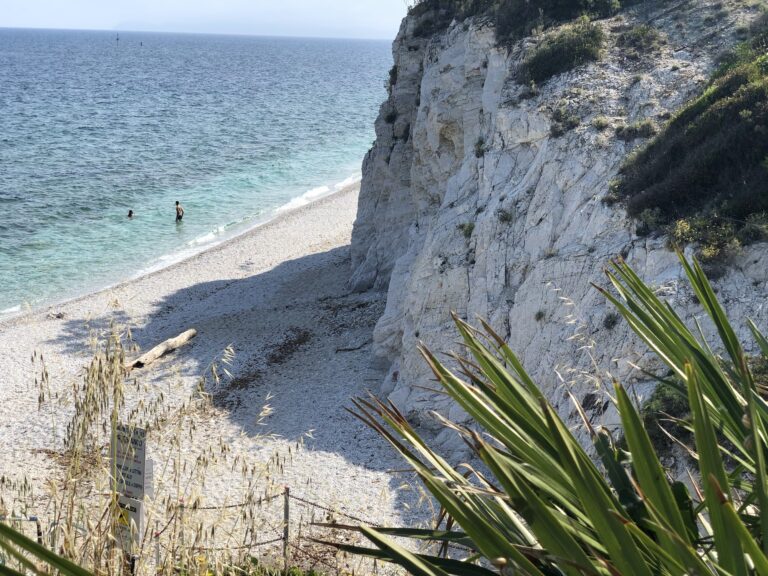
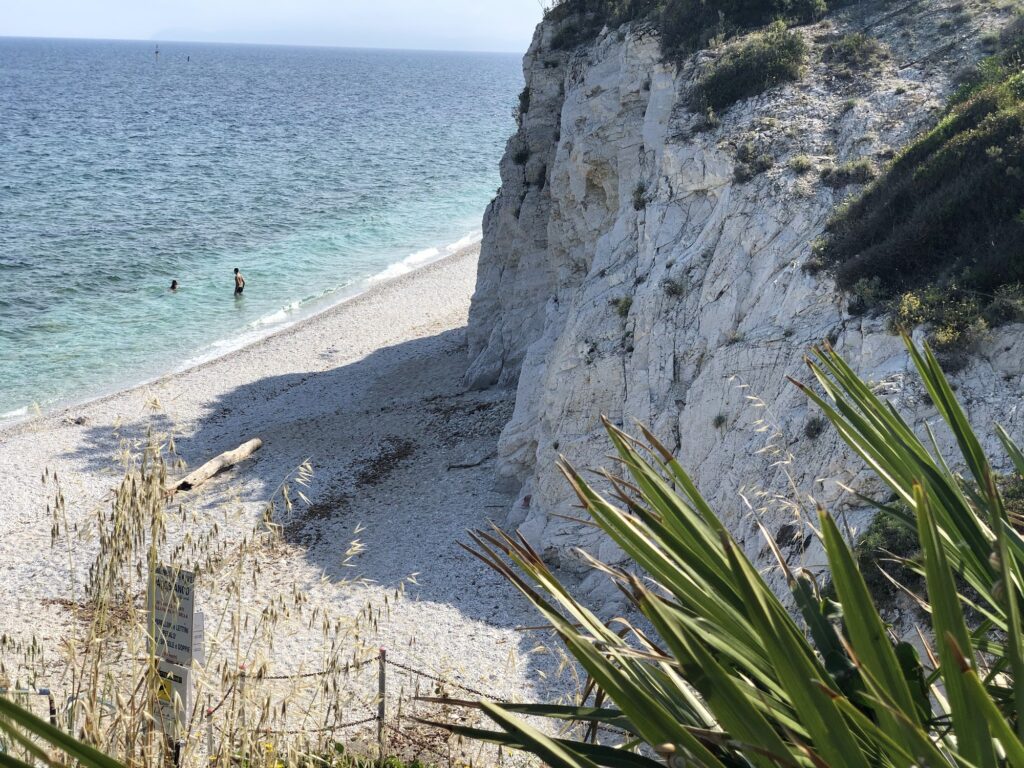
A casual bar and kiosk sits at the top of the access steps, and I found the beach itself offered real room beyond any organized section to find a quieter, more secluded spot. Given the beach’s mixed organized and open character, dogs would likely be fine here on a leash following Italy’s standard rule for public beaches, with any managed sections requiring separate permission.
Getting There and Settling In
Capo Bianco sits about 1.5 kilometers from central Portoferraio along Via Capo Bianco, a five-to-ten-minute drive or scooter ride from the ferry terminal; paid parking sits directly above the cliff with wooden stairs leading down, a seasonal municipal shuttle loops between town center, Le Ghiaie, and the Capo Bianco access road, and the coastal path connecting Spiaggia delle Ghiaie Portoferraio Elba and Padulella Beach Portoferraio Elba offers a genuinely scenic walking approach with elevated views of the white cliffs along the way. Anyone continuing further along this same stretch will find Spiaggia di Sansone Elba and Spiaggia della Biodola Elba both within easy reach of the same Portoferraio coastline.
Standing Where a Myth Might Just Be Good Geology
By the time I left Capo Bianco on my last evening, the tourmaline spots in the cliffs had caught the last light at an angle that made them briefly, genuinely visible, and I found myself siding with the geologists, an ancient story about sweat and heroism turning out, quite possibly, to be nothing more mysterious than people doing their best to explain a beautiful rock formation they had no other framework for understanding.
Map
Sorry, no records were found. Please adjust your search criteria and try again.
Sorry, unable to load the Maps API.
Near by places: