Spiaggia dell'Enfola: A Tuna Fishery's Legacy
Profile
Spiaggia dell’Enfola: Where a Tuna Fishery Fed a Whole Village
Italy | Tuscany | Elba Island | Tuscan Archipelago
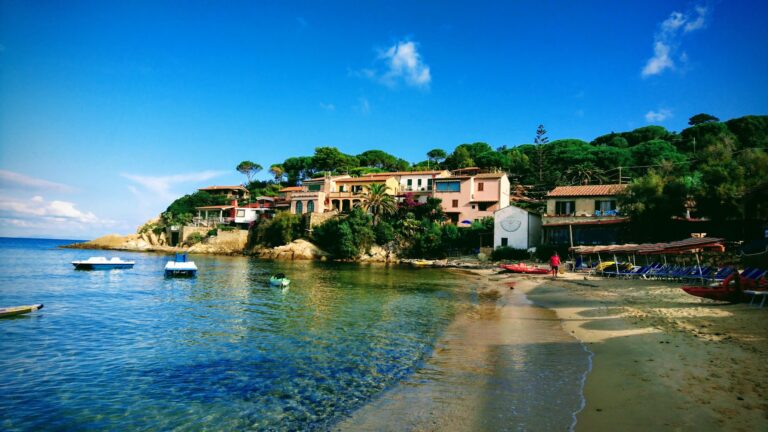
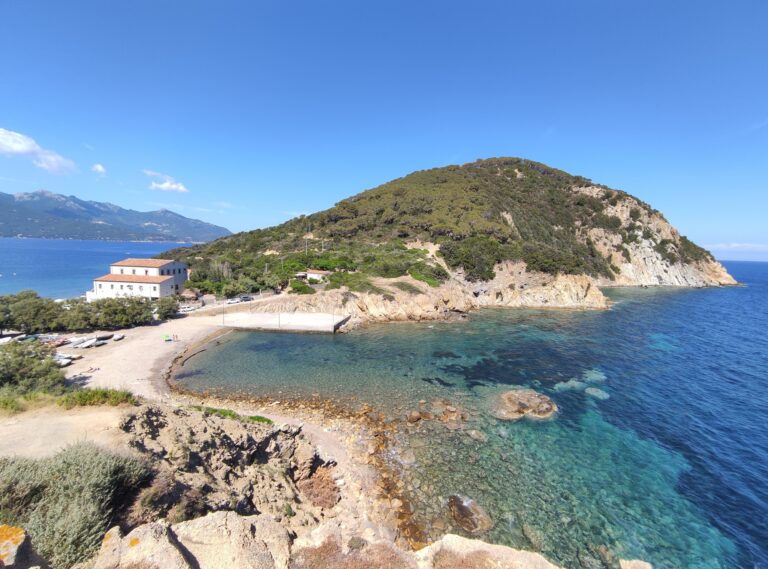
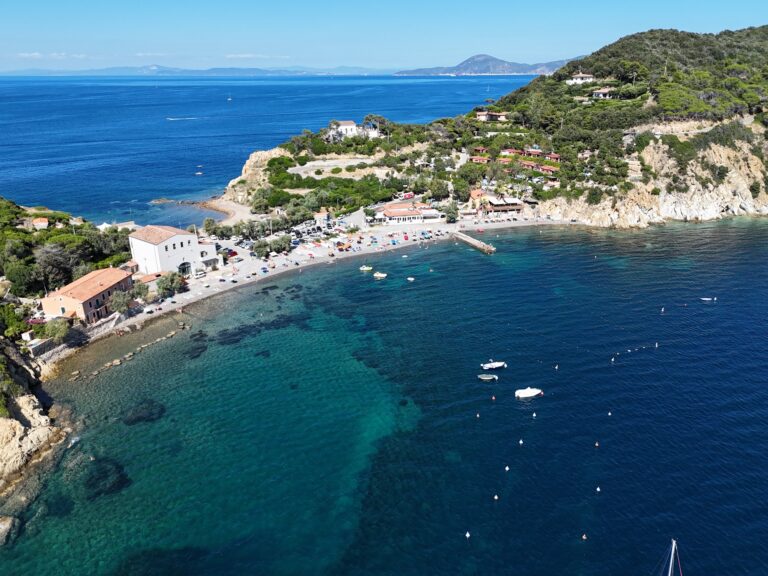
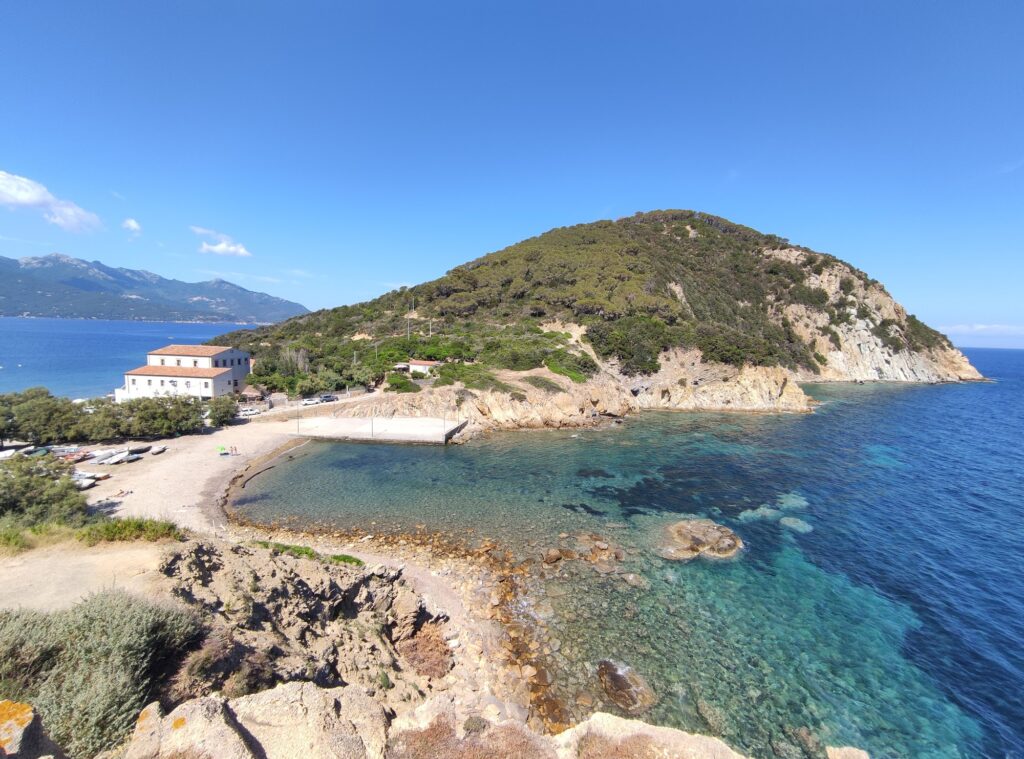
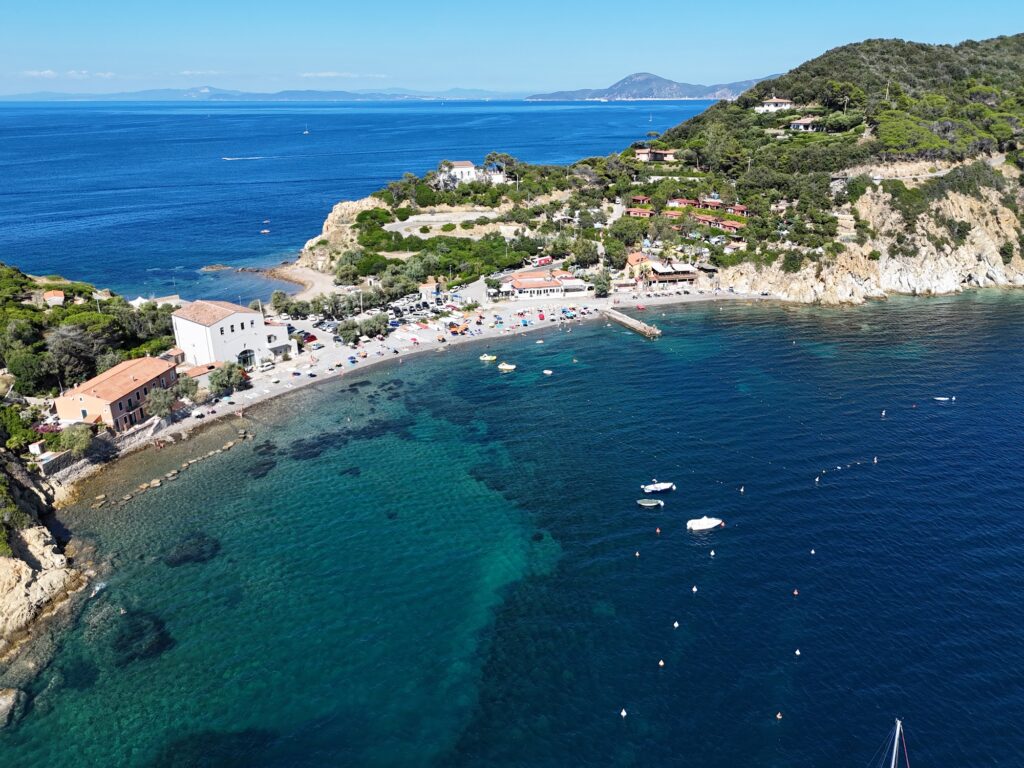
The tonnara at Enfola processed tuna until 1958, cutting and preparing the catch in buildings still standing directly on the isthmus, and I found the local culinary tradition that grew up around that industry genuinely striking in how thoroughly it used every part of the animal. Buzzamaglia, a stew made from tuna entrails and green peas, came directly from fishermen making practical use of what wouldn’t otherwise sell, alongside more familiar products like bottarga and sorra, salted preparations exported off the island once the tonnara was working at full capacity. The building sat quiet for decades after the fishery finally closed before undergoing a genuine restoration, officially reopening on April 3, 2010, as the administrative headquarters of the Tuscan Archipelago National Park, established in 1996 to protect exactly the kind of coastline the tonnara once fished so intensively.
Enfola wasn’t only a fishing site. Hiking the promontory above the beach reveals genuine German-built fortifications from the Second World War, communication trenches, ammunition depots, and bunkers now largely reclaimed by Mediterranean scrub and home mostly to herring gulls rather than anything resembling their original military purpose.
An Isthmus That Gives You Two Beaches for the Price of One
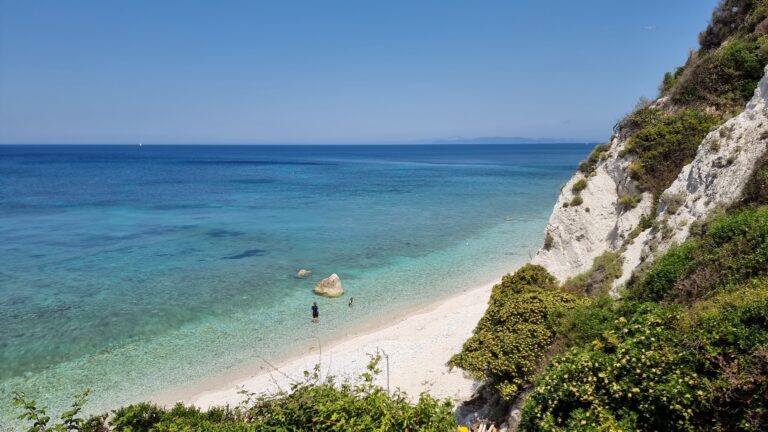
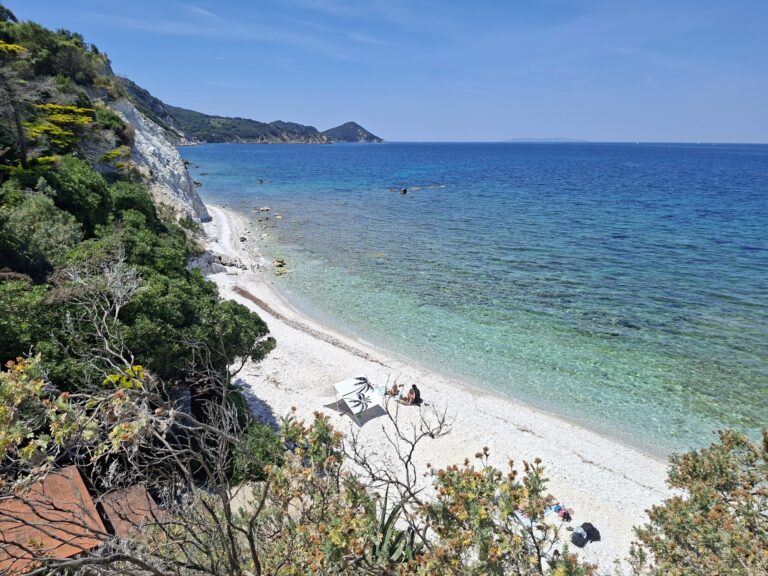
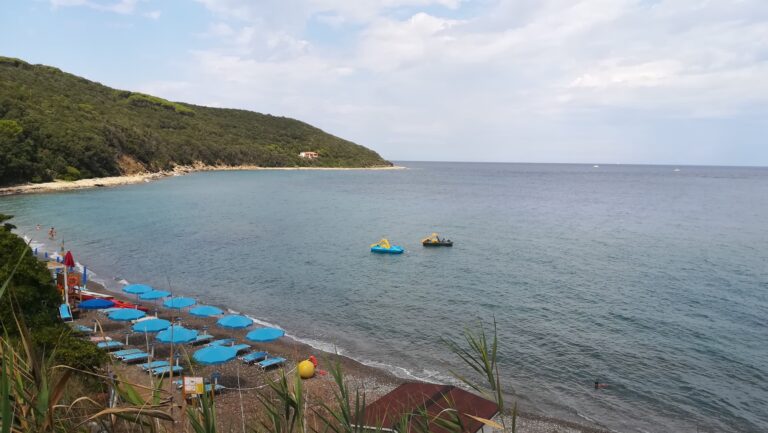
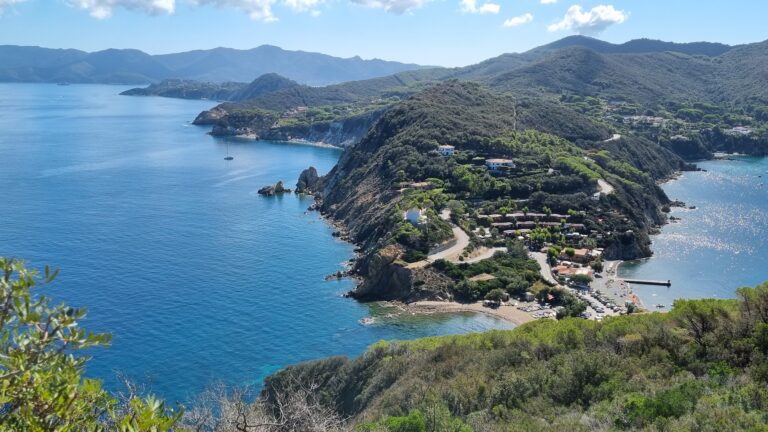
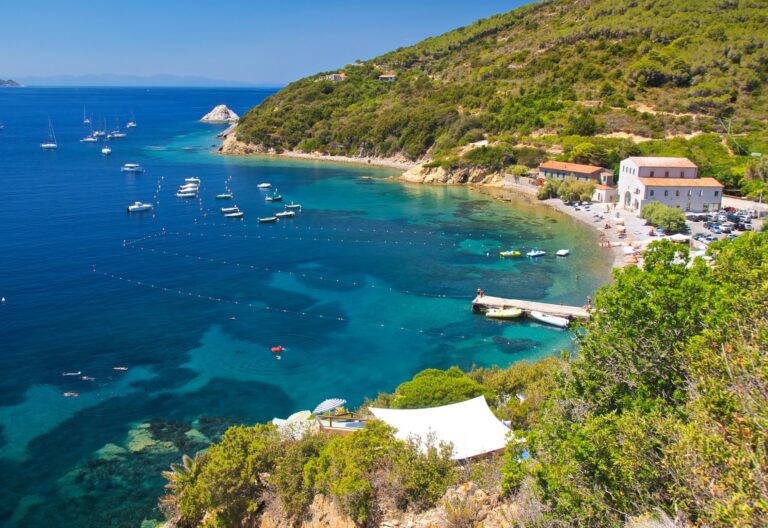
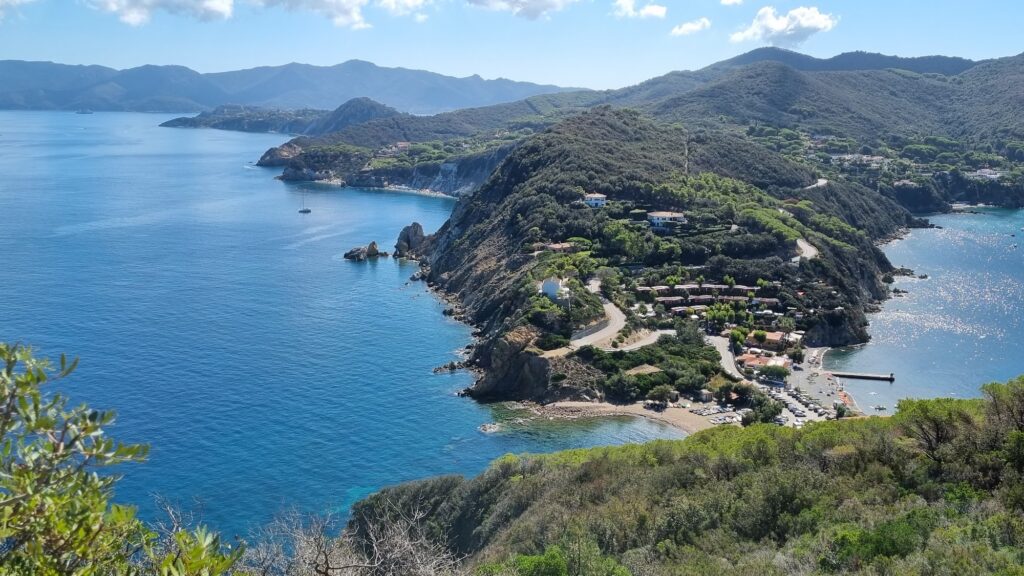
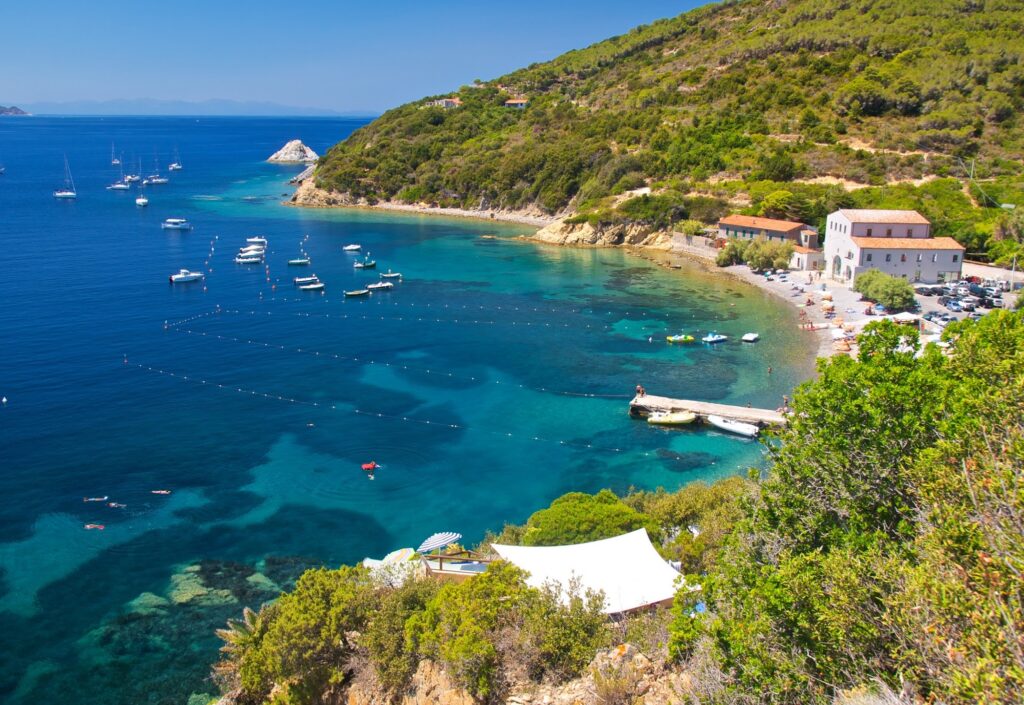
Enfola’s real geographic trick is its narrow isthmus, creating genuinely distinct beaches on either side, the main western shore running about 220 meters of smooth, rounded pebbles and dark stones facing the Gulf of Viticcio, while the smaller eastern cove functions more as a working harbor for local fishing boats than a swimming beach. I found the dual exposure genuinely useful in practice, crossing the narrow neck of land whenever wind picked up on one side to find calm, glass-like water waiting on the other.
Water That Deepens Fast Into Genuine Clarity
The seabed here drops away at a moderate pace into deep, crystal-clear water, and I found snorkeling around the rock walls surrounding the cape genuinely rewarding, sea bream, damselfish, and octopuses settled into crevices near the underwater rock formations. The nearby Grotta dello Sbruffo, reachable by swimming about 500 meters, adds a genuinely dramatic sea cave to the itinerary, a hole in its ceiling casting shifting light and color down into the water below.
A Beach Best Explored With Sturdy Shoes
Given the beach’s rocky, pebbled character and the genuinely demanding coastal trail circling the cape, I’d recommend proper footwear over flip-flops for anyone planning the full hike, and I’d expect dogs to be fine here on a leash following Italy’s standard rule for public beaches, though the terrain makes this a more physically demanding walk than most Elba beaches offer.
Clam Spaghetti Beside the Restored Tonnara
Restaurants and trattorias cluster around the old tonnara plaza, and I found the clam spaghetti and octopus stew genuinely good, eaten with a direct view of the same buildings that once processed the catch this whole tradition was built around.
Getting There and Settling In
Enfola sits about 6 kilometers from Portoferraio along the SP24 toward Viticcio, a ten-to-fifteen-minute drive with a spacious parking area right on the isthmus itself, free and paid depending on the season; Autolinee Toscane’s seasonal municipal bus runs directly from Portoferraio’s station to the Enfola turnaround, and the marked Capo d’Enfola nature trail offers a genuinely scenic hiking approach past the WWII fortifications for anyone arriving on foot. Anyone driving out this way will pass directly by Spiaggia di Sansone Elba, sharing the same coastal road toward Enfola and Viticcio.
Standing Where an Industry Fed on Everything It Caught
By the time I left Enfola on my last evening, the old tonnara building had settled into its quieter modern role, and I thought about that genuinely thorough local economy built around tuna, nothing wasted, entrails turned into a stew still remembered by name, an entire coastal way of life that’s since given way to hikers, snorkelers, and an ordinary evening aperitivo facing the water it once depended on.
Map
Sorry, no records were found. Please adjust your search criteria and try again.
Sorry, unable to load the Maps API.
Near by places: