Spiaggia Cala Seregola: Sand From an Ancient Furnace
Profile
Spiaggia Cala Seregola: Sand Ground From an Etruscan Furnace’s Legacy
Italy | Tuscany | Elba Island | Tuscan Archipelago
The dark, glittering sand at Cala Seregola, also known locally as Capo Pero, isn’t simply scenic, it’s the direct physical residue of an industry that ran on this exact coastline for close to three thousand years. An ancient Etruscan furnace once stood right at Capo Pero, part of a mining operation the Etruscans began working as early as the eighth century BC, drawn to Elba specifically for the purity of its iron ore. The Greeks called the island Aethalia, “the sooty one,” after the columns of smoke visible from the coast whenever ore was being smelted on site, and Elba’s own ancient name, Ilva, translates directly to iron, a fair description of what the entire island meant to whoever controlled it for the better part of three millennia. Rome fought the Etruscans specifically over these mines in 250 BC, and mining here continued in one form or another under Pisan, Medici, Napoleonic, and eventually Italian state control before finally closing for good in 1980.
Standing on sand made partly of hematite and pyrite fragments, glittering like the source text’s own crushed diamonds, I found it genuinely striking to realize the beach’s own texture was, in a real sense, a byproduct of the exact resource that had once made this island worth fighting over.
An Expansive, Mineral-Rich Shore Facing Two Small Islands
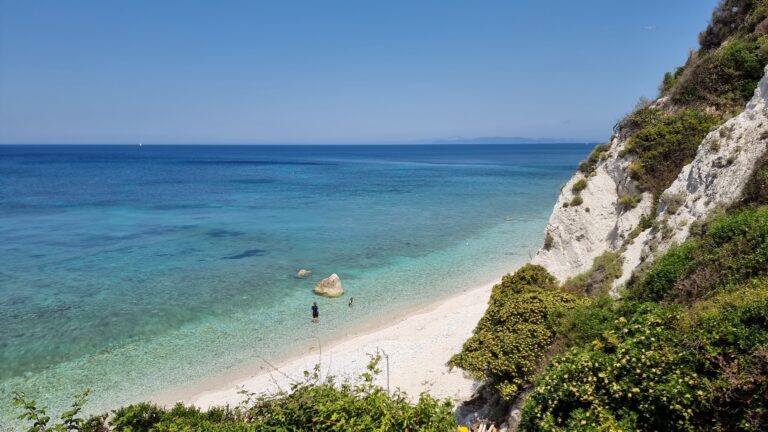
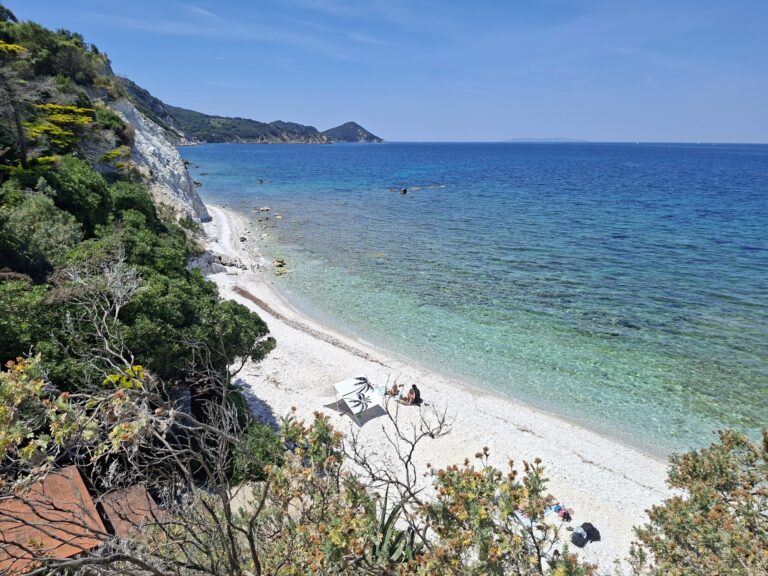
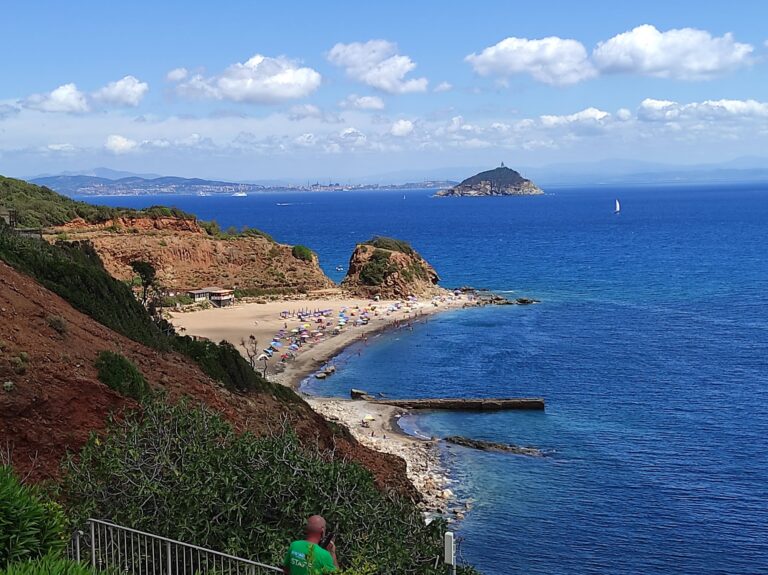
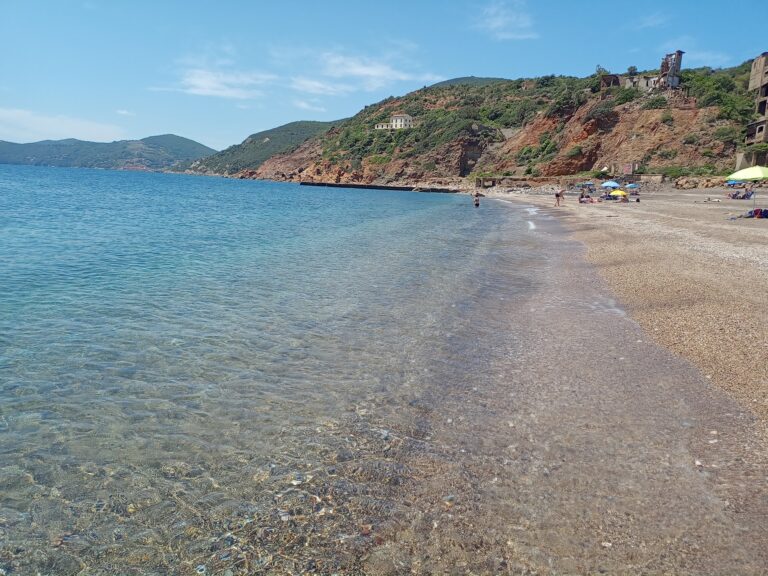
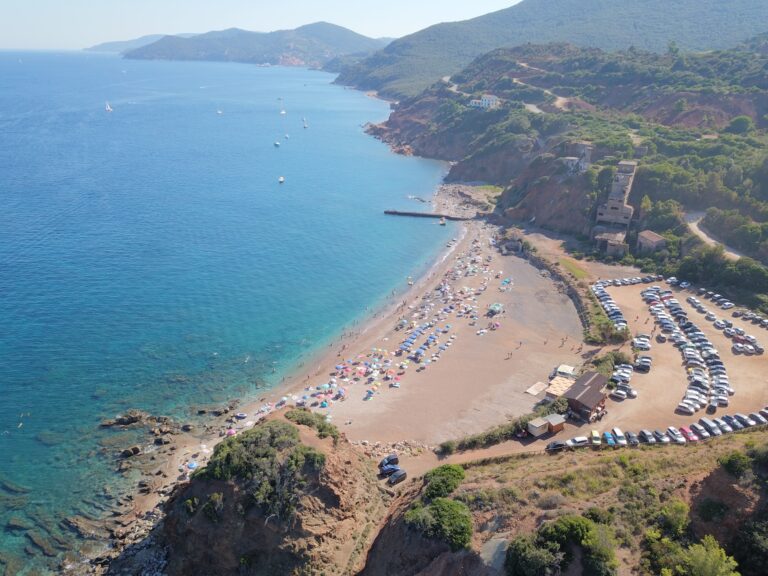
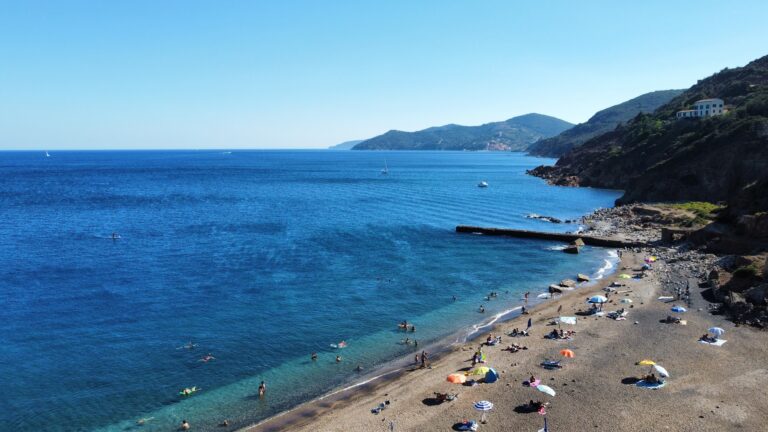
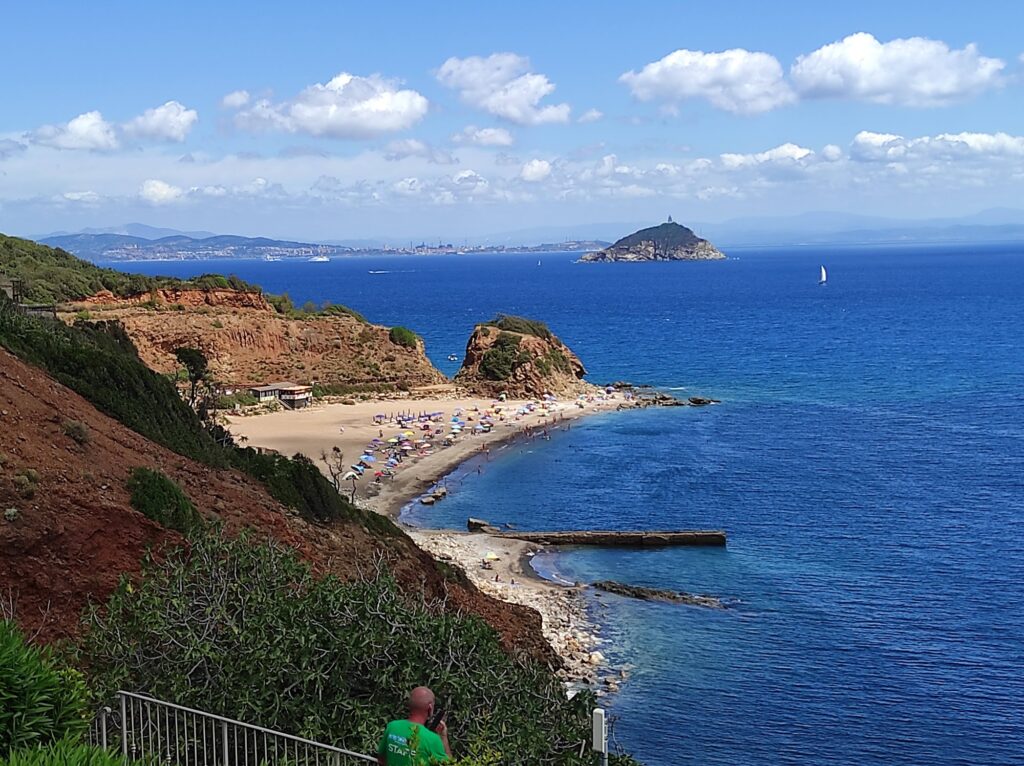
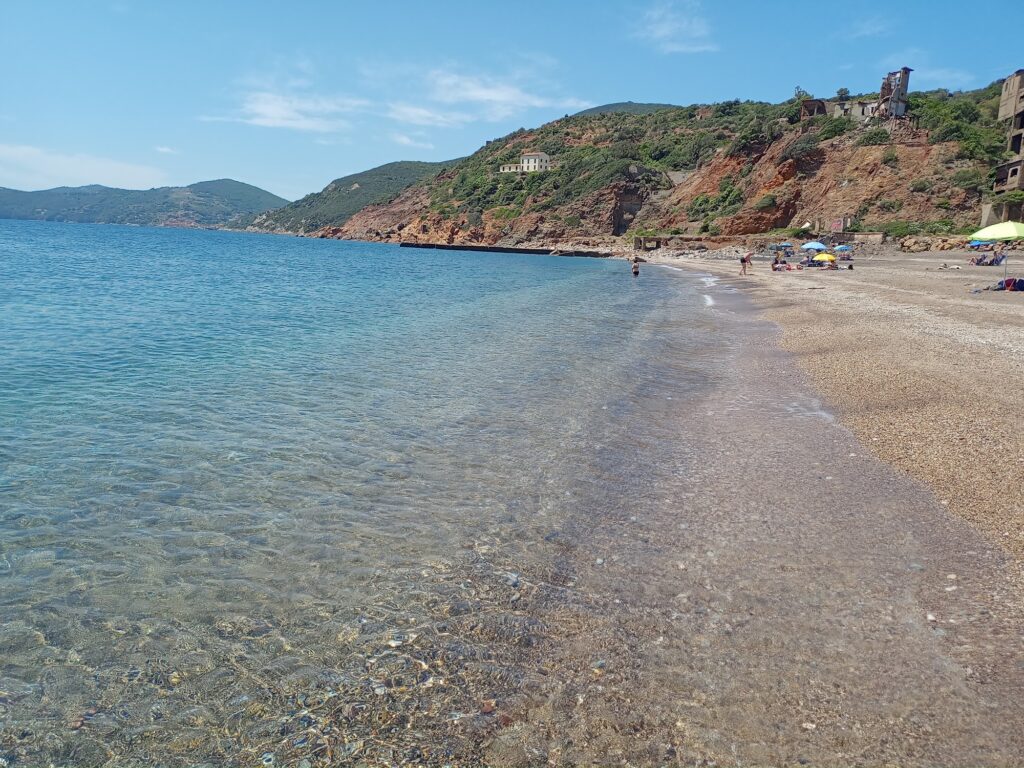
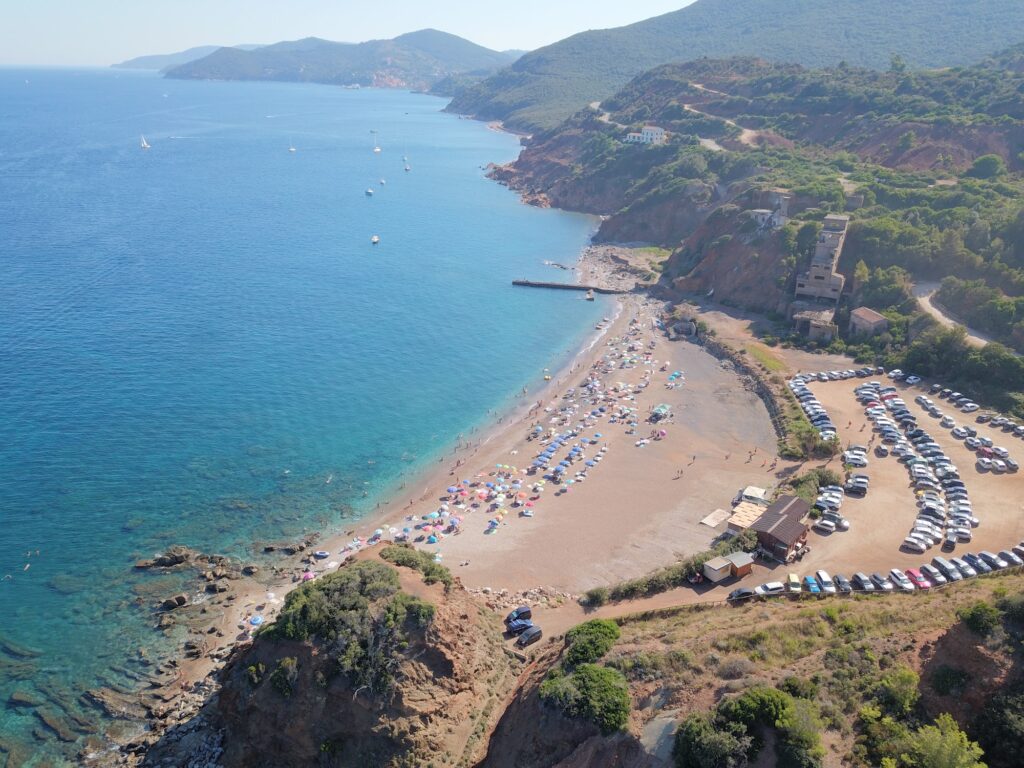
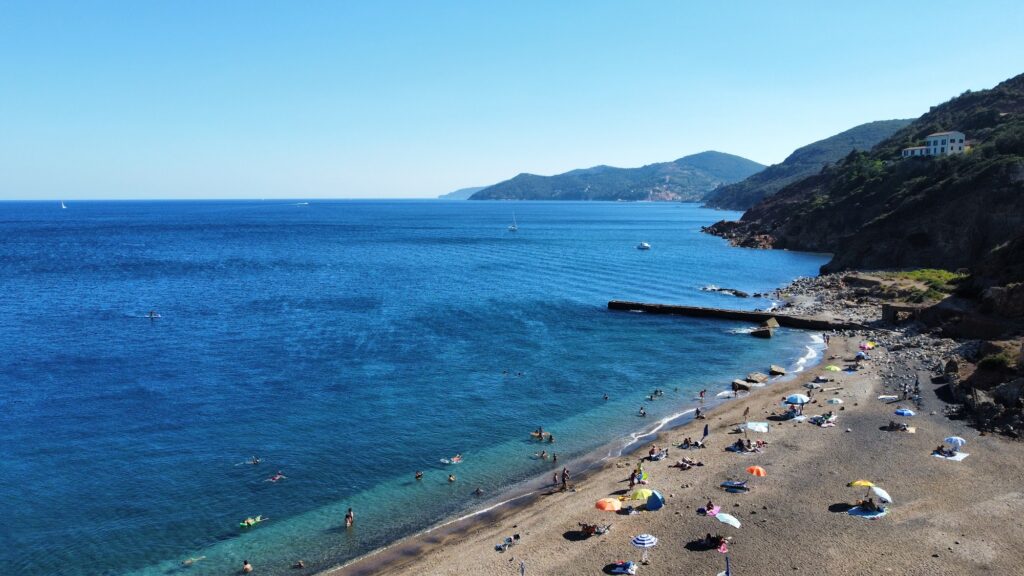
Cala Seregola stretches nearly 190 meters and over 60 meters wide, a genuine cushion of space that rarely felt crowded even in peak summer, the shoreline itself a mosaic of charcoal-colored sand, smooth pebbles, and iron-rich gravel. Looking out across the water, the islets of Palmaiola and Cerboli sat clearly visible on the horizon, with mainland Tuscany stretching further beyond. The water held brilliant aquamarine and cobalt tones against that dark shoreline, and because the cove faces northeast, I found it stayed remarkably calm and clear even when western winds picked up elsewhere on the island.
Snorkeling Among the Old Loading Piers
Rusty relic docks from the mine’s working era still stand near the shore, and snorkeling around the submerged rocks and old concrete piers rewarded the effort with genuinely active marine life, silver sea bream and octopuses settled comfortably into infrastructure that once served an entirely different, considerably noisier purpose.
A Well-Run Lido on an Otherwise Wild Shore
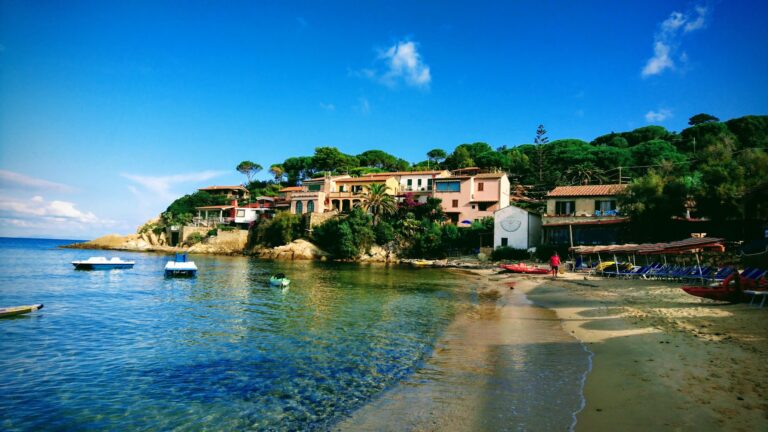
A local beach club provides sunbeds and umbrellas on the dark sand, and I found the overall setting struck a genuine balance between preserved industrial character and real comfort, freshwater showers and lifeguard coverage through peak season alongside kayak and pedal boat rentals for exploring the dramatic red-cliffed coastline further along. Given the beach’s mostly wild, lightly organized character beyond the single lido, dogs would likely be fine here on a leash following Italy’s standard rule for public beaches.
Grilled Octopus With a View of the Old Docks
A wooden beach bar serves clam pasta, grilled octopus, and crispy calamari through the day, and I found the setting genuinely fitting, fresh, simple seafood eaten within sight of the same coastline that once shipped raw ore rather than fish. As afternoon faded, the same bar shifted into aperitivo mode, a chilled Spritz in hand while the red cliffs caught the evening light.
Getting There and Settling In
Cala Seregola sits about 5 kilometers north of Rio Marina along the SP26 toward Cavo, a clearly marked turn leading onto a short unpaved track to a large parking area behind the beach; approaching from Cavo, the same SP26 covers roughly 3 kilometers south before the beach sign appears. A seasonal Marebus shuttle connects Rio Marina to the eastern beaches during peak summer, dropping passengers near the access trail for anyone without a car.
Standing on Sand That Remembers What Built This Island
By the time I left Cala Seregola on my last evening, the old docks had gone dark against the water, and I thought about how strange it is that a beach this beautiful owes its very texture to an industry that once drew Etruscans, Romans, and Medici dukes into open conflict over who controlled it, all of that ambition eventually settling into nothing louder than an ordinary afternoon of sunbathing on ground that used to smoke.
Map
Sorry, no records were found. Please adjust your search criteria and try again.
Sorry, unable to load the Maps API.
Near by places: