Spiaggia di Sant'Andrea: Below an Ancient Village
Profile
Spiaggia di Sant’Andrea: Below a Village Founded in 35 BC
Italy | Tuscany | Elba Island | Tuscan Archipelago
Marciana, the hilltop village governing the small hamlet of Sant’Andrea below it, traces its founding to 35 BC, making it one of the oldest continuously inhabited settlements anywhere on Elba. The Pisans built a fortress here in the twelfth century, later strengthened between 1450 and 1457, and for centuries that fortress served as a genuine refuge for the local population whenever pirate raids threatened the coast, its walls eventually passed to the Appiani family, who chose Marciana specifically as a secure base for administering their interests across the island. I found something fitting about a beach this calm sitting below a village whose entire hilltop position, walls, and narrow, defensible streets were shaped almost entirely by centuries of needing to hide from exactly the kind of visitors who now arrive by ferry for an ordinary swim.
Locals in Marciana are reportedly known for genuinely remarkable longevity, a detail residents attribute to the village’s cool, relaxed, almost mountainous pace of life despite the sea sitting only five kilometers away, and I found the same unhurried rhythm carried down to Sant’Andrea itself, a hamlet that feels considerably calmer than its striking scenery might suggest.
Sand Framed by Massive Flat Granite Slabs
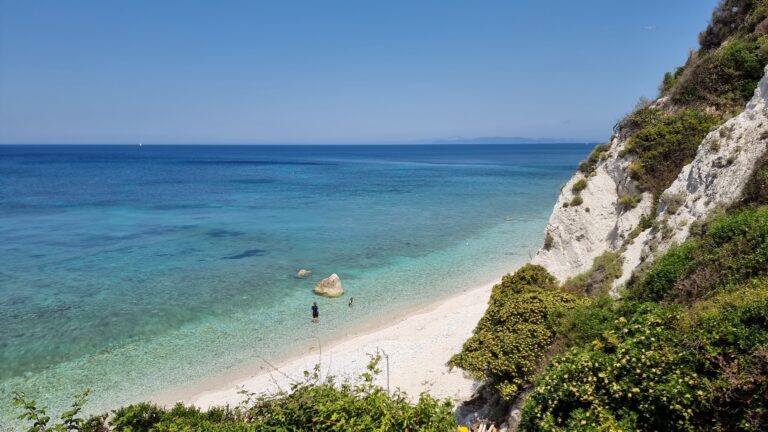
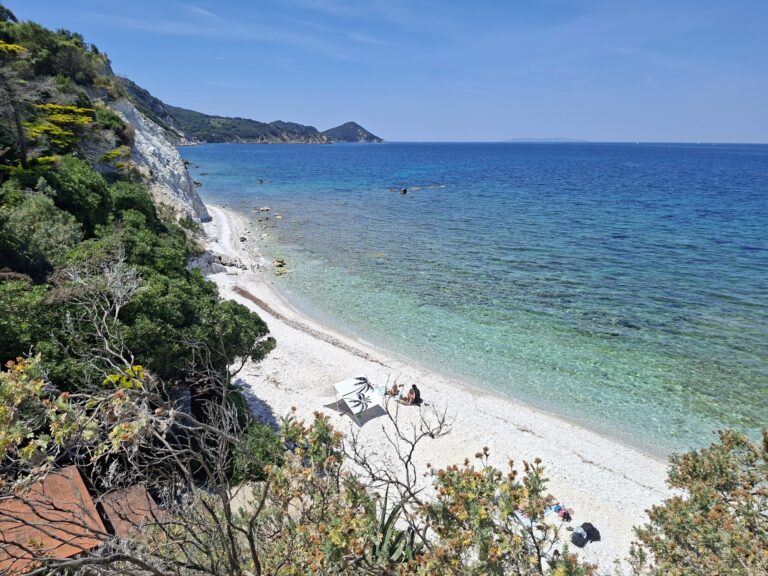
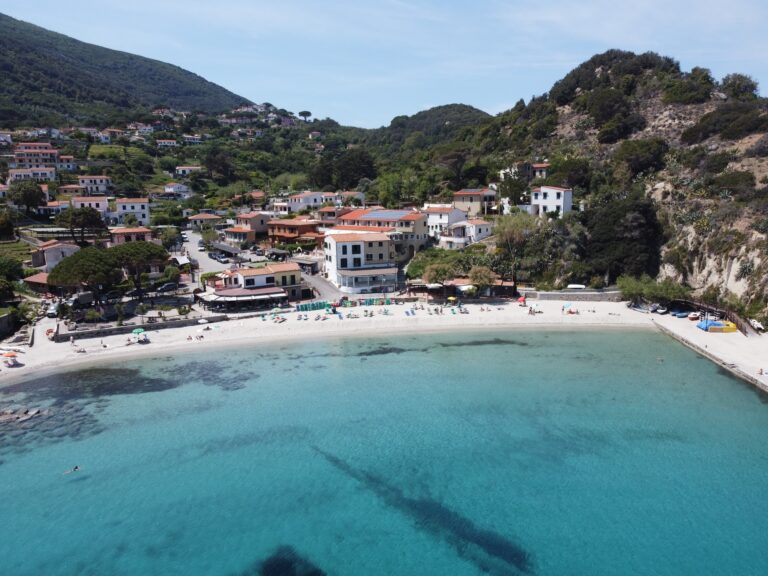
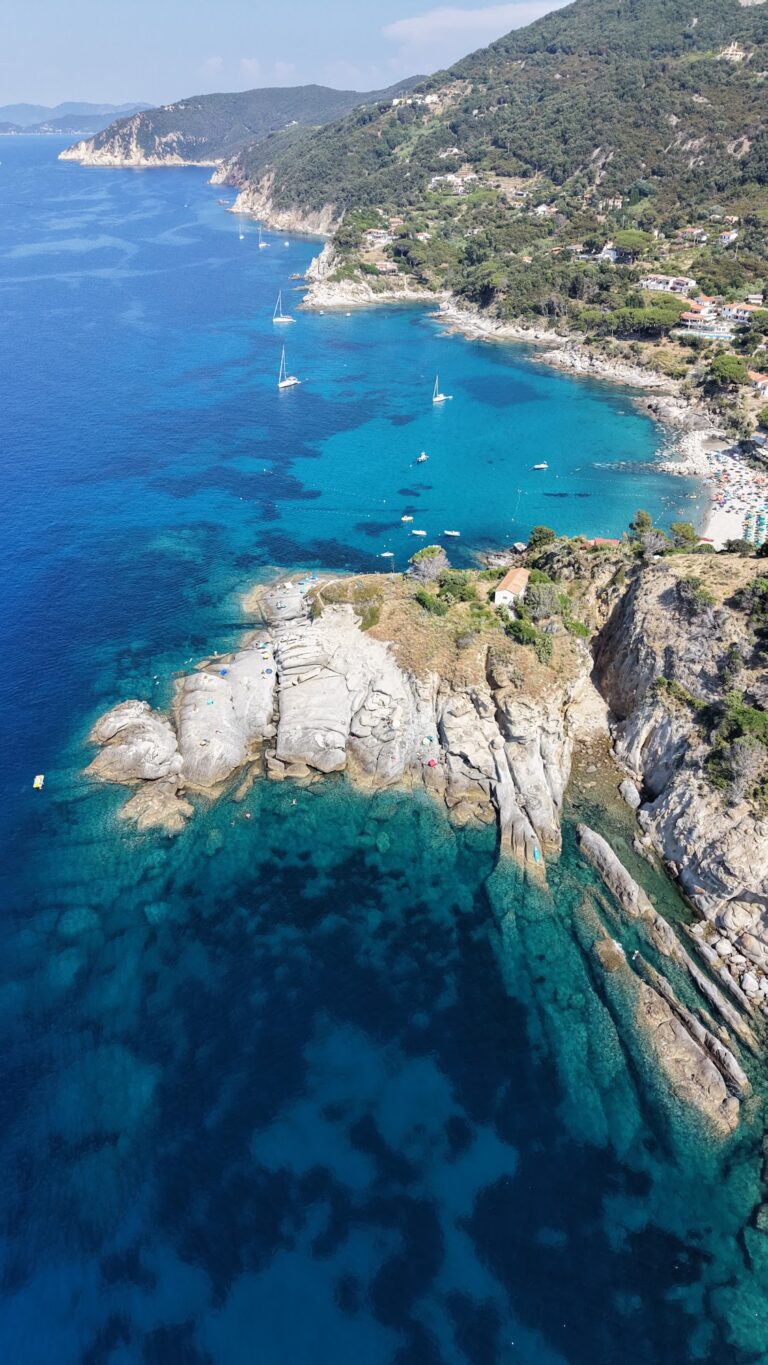
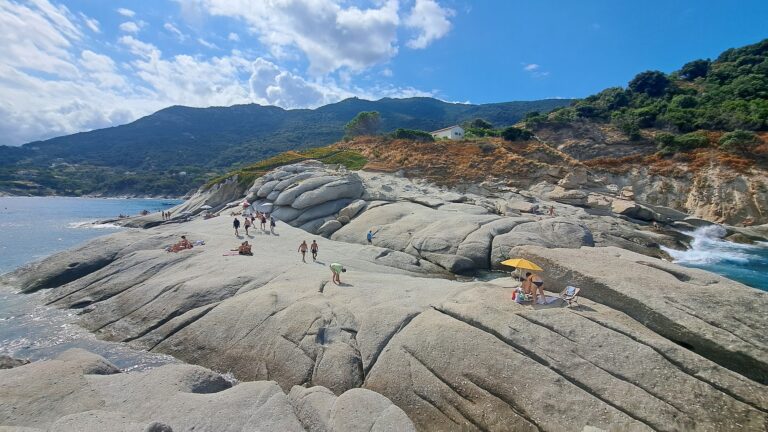
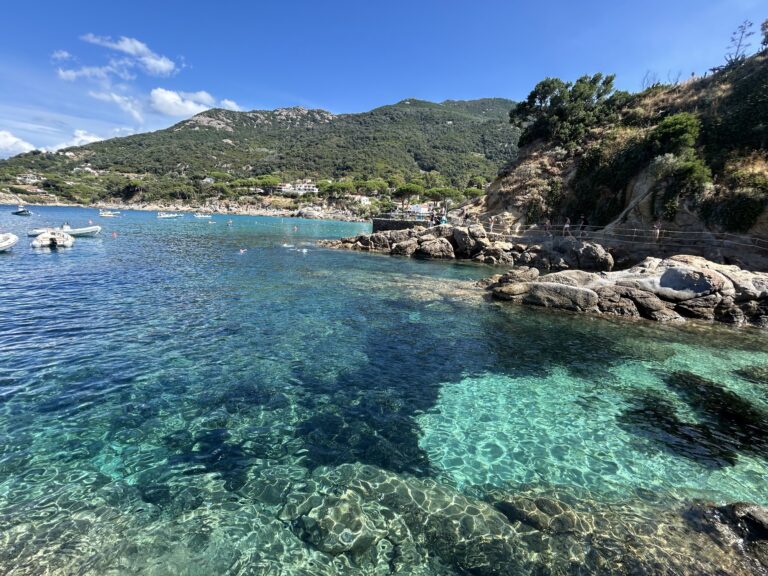
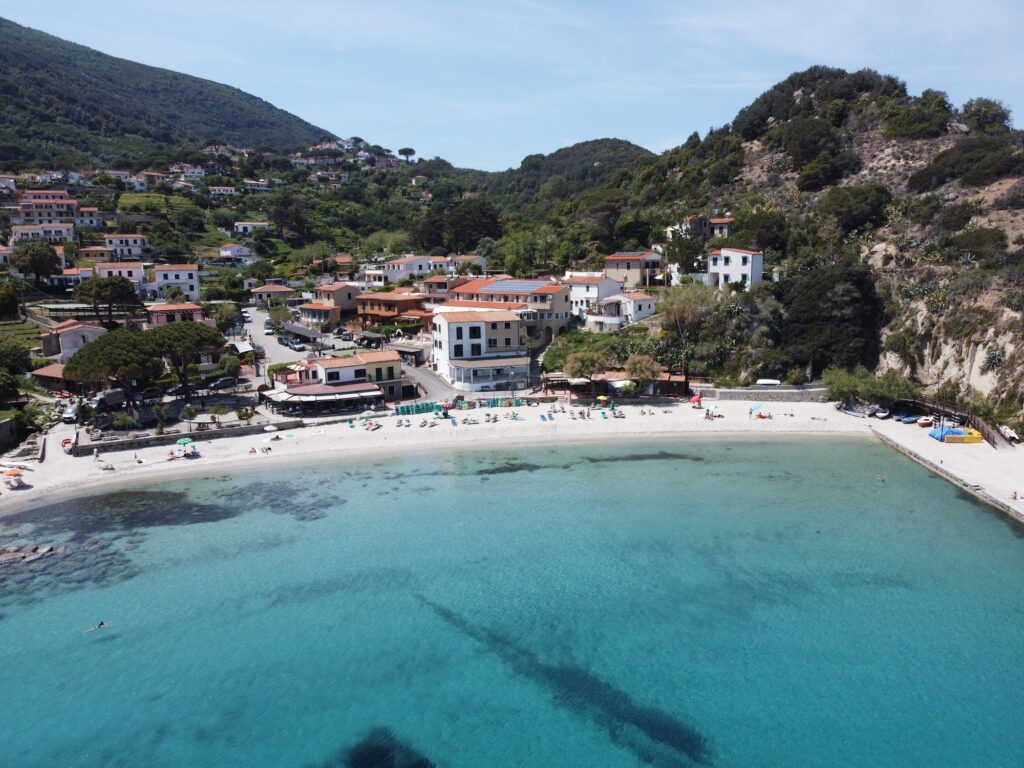
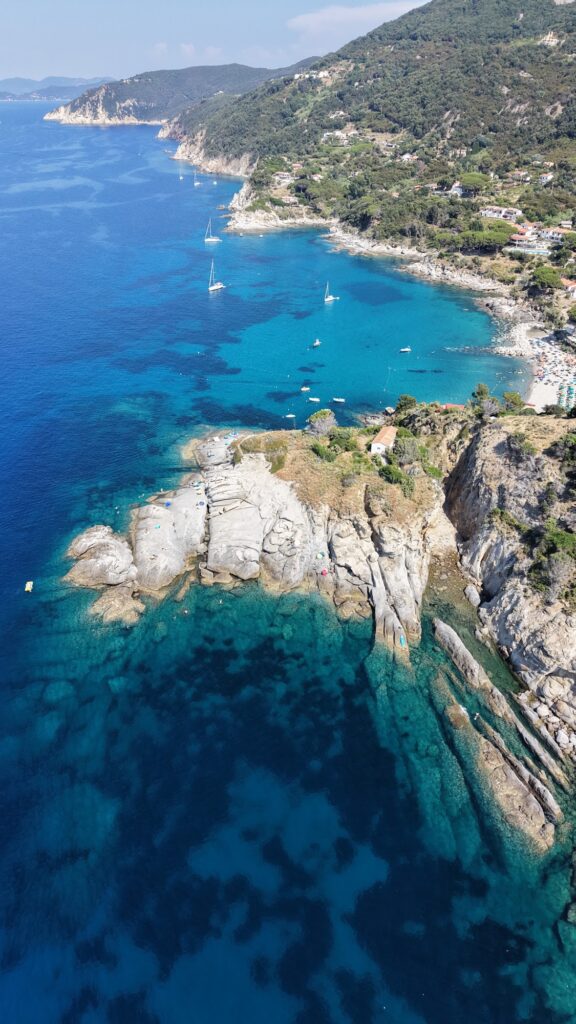
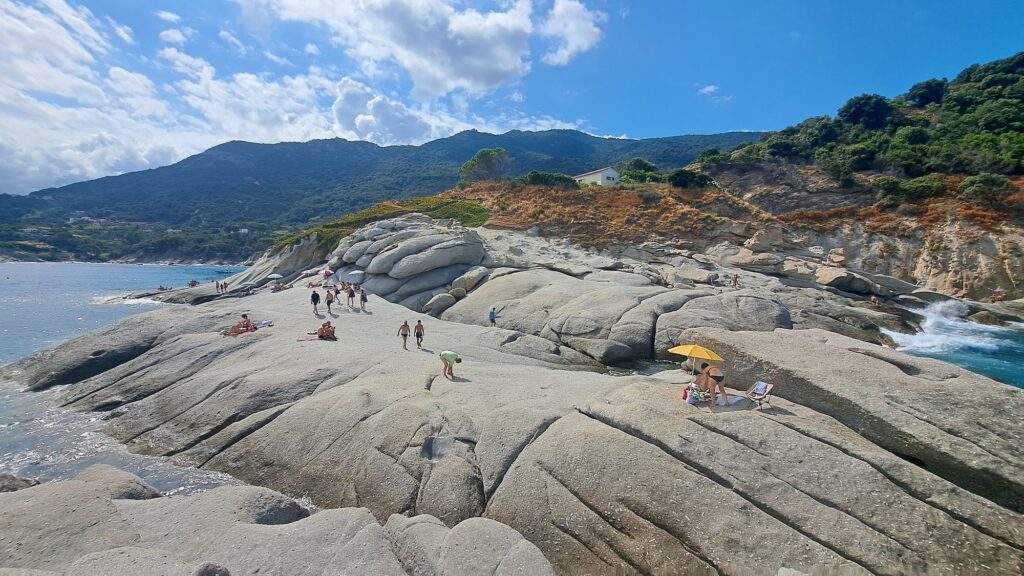
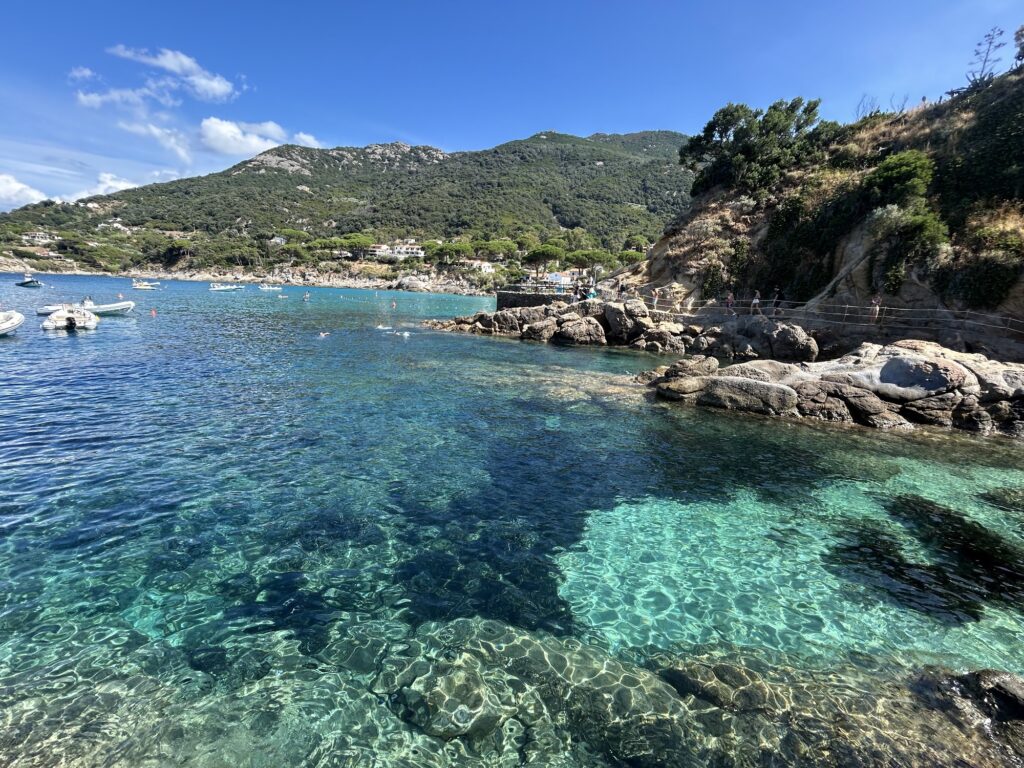
Sant’Andrea’s shore runs roughly 150 meters of fine, pale sand at its center, flanked by the cote piane, expansive granite ledges worn smooth by millennia of wave action into genuine natural sunbathing platforms. I found these rock formations left no dust or silt behind at all, keeping the water exceptionally clean, and the color ran through brilliant aquamarine, emerald, and deep sapphire with flawless visibility straight down to the seabed. The bay’s shelter kept conditions calm on most days, turning the whole cove into something close to a natural open-air pool.
Snorkeling Among Sea Bream and Waving Posidonia
Snorkeling along the submerged granite cliffs rewarded the effort considerably, silver sea bream, colorful wrasse, and even octopuses visible among fields of posidonia oceanica grass swaying gently in the current, genuinely one of the richer underwater scenes I found anywhere along this stretch of Elba’s coast.
A Beach Built Around Its Own Granite Rather Than Rented Loungers
Given how much of Sant’Andrea’s appeal comes from the rock formations themselves rather than organized infrastructure, I found many visitors, myself included, spreading out directly on the warm granite rather than renting a full setup. Given the beach’s relatively lightly organized character compared to Elba’s larger resort beaches, dogs would likely be fine here on a leash following Italy’s standard rule for public beaches, though I’d check locally for any specific seasonal restrictions.
Lobster Spaghetti and a Long Aperitivo
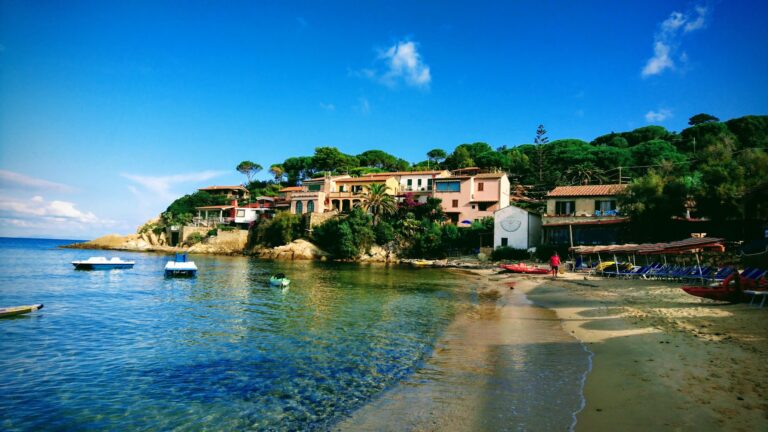
Seaside trattorias and café-bars line the bay, and I found the lobster spaghetti and Elban seafood risotto here genuinely worth a long, unhurried lunch on an open-air deck, paired with a chilled glass of local Vermentino. As the light softened toward evening, the same venues shifted into aperitivo mode, Spritz in hand while the sky turned crimson and gold over the water.
Getting There and Settling In
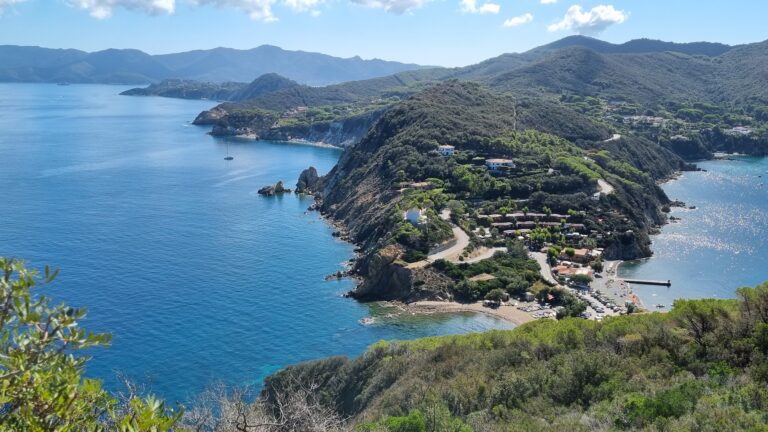
Sant’Andrea sits on Elba’s northwestern coast, reached from Portoferraio via the SP24 toward Procchio before merging onto the SP25 coastal road through Marciana Marina and Colle d’Orano, a winding but well-marked descent to the hamlet with paid municipal parking a short walk from the sand; the CTT Nord island bus connects to Marciana, with a summer sea-shuttle service, Marebus, covering the final stretch to the beach itself, and anyone preferring the water can rent a small motorboat or kayak from Marciana Marina to approach the bay directly, anchoring outside the swim ropes for a clear view of the granite cliffs. Anyone splitting time across Marciana’s own stretch of coast will find Spiaggia di Procchio Elba, administered under the same municipality, a useful comparison, trading Sant’Andrea’s dramatic granite for a considerably longer, softer stretch of sand.
Standing Below Walls Built to Keep People Out
By the time I left Sant’Andrea on my last evening, the granite ledges had cooled from the day’s sun, and I thought about that fortress up in Marciana, its walls raised specifically to keep raiders from this exact coastline, the beach below it now simply welcoming whoever happens to arrive, the danger those stones once guarded against having long since faded into nothing more threatening than a busy August afternoon.
Map
Sorry, no records were found. Please adjust your search criteria and try again.
Sorry, unable to load the Maps API.
Near by places: