Spiaggia dell'Olivo: Le Grazie's Roman Roots
Profile
Spiaggia dell’Olivo: The Beach Named for Rome’s Oldest Olive Press
Italy | Liguria | La Spezia | Gulf of Poets
A short walk from Spiaggia dell’Olivo, the Roman Villa of Varignano still preserves the floors of its original olive oil production area, laid out clearly enough that an on-site archaeological museum now interprets the whole operation for visitors. The beach’s own name, “of the olive,” traces directly back to this working Roman estate, and standing on the sand with olive trees still growing along the shoreline today, I found it genuinely satisfying to realize the connection wasn’t decorative branding but an actual continuation of what this exact stretch of coast has produced for roughly two thousand years.
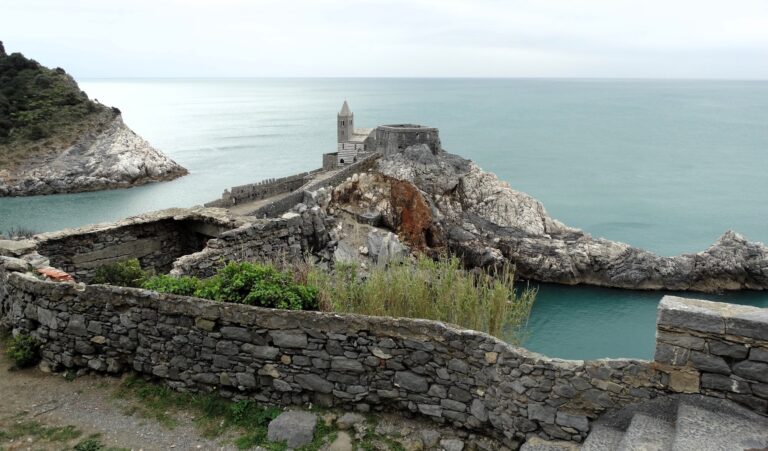
Le Grazie itself, the village behind the beach, takes its own name from a small harbor and hilltop sanctuary nearby, Baia delle Grazie, and the whole settlement sits within the municipality of Porto Venere, a short distance from the more famous pedestrian center most visitors head straight for.
A Shore Split Between Gravel and Concrete Platforms
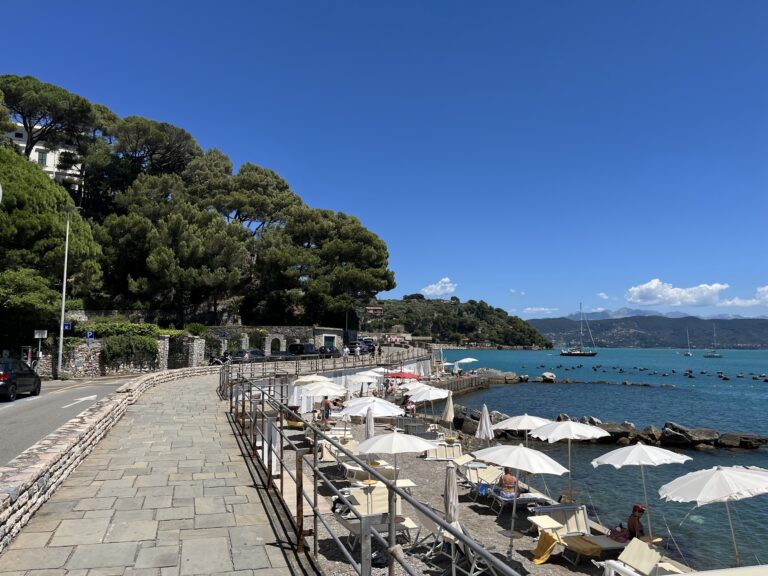
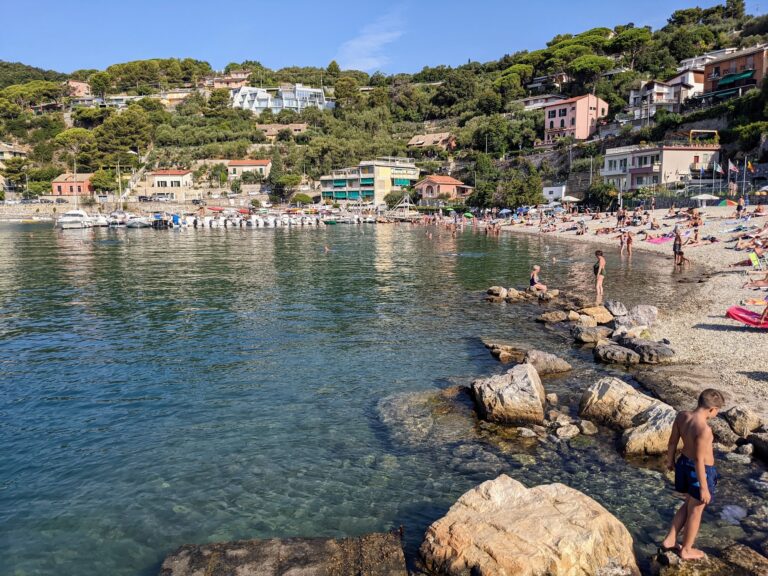
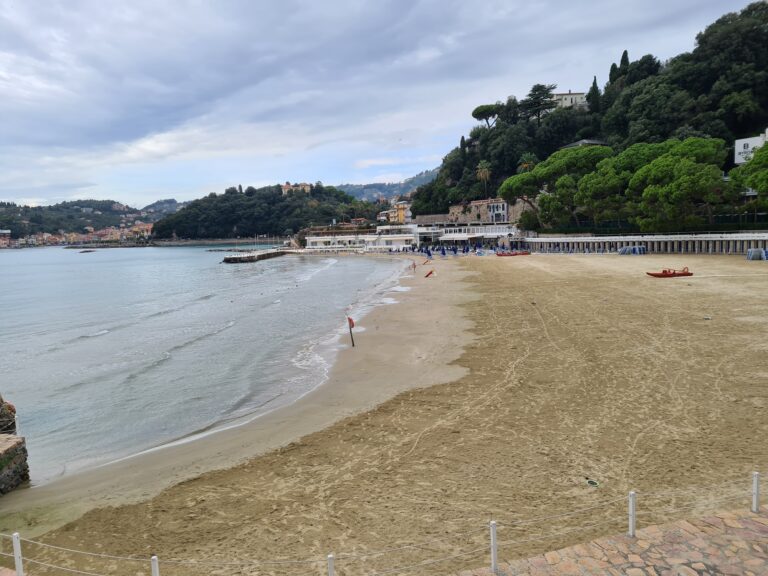
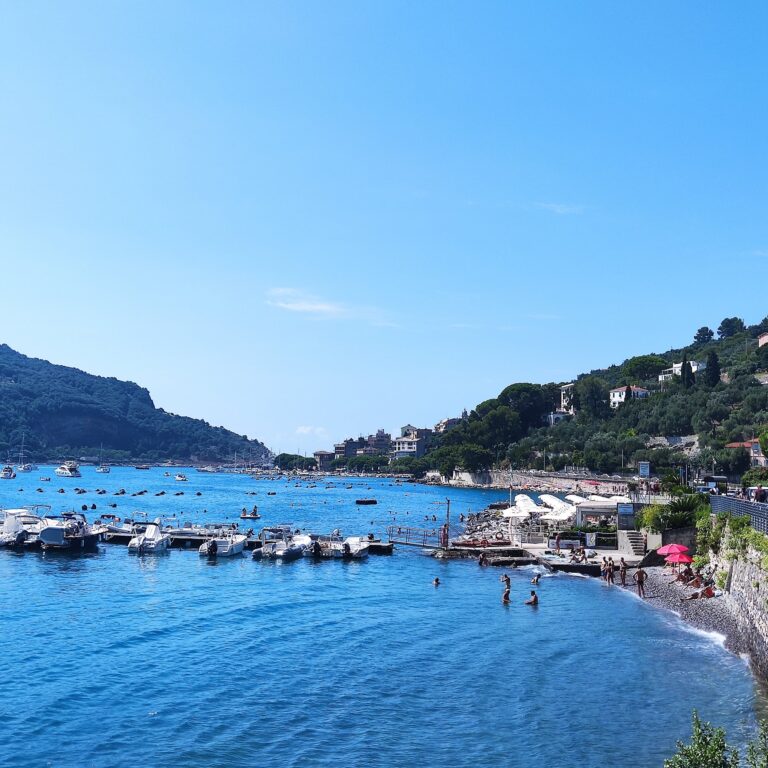
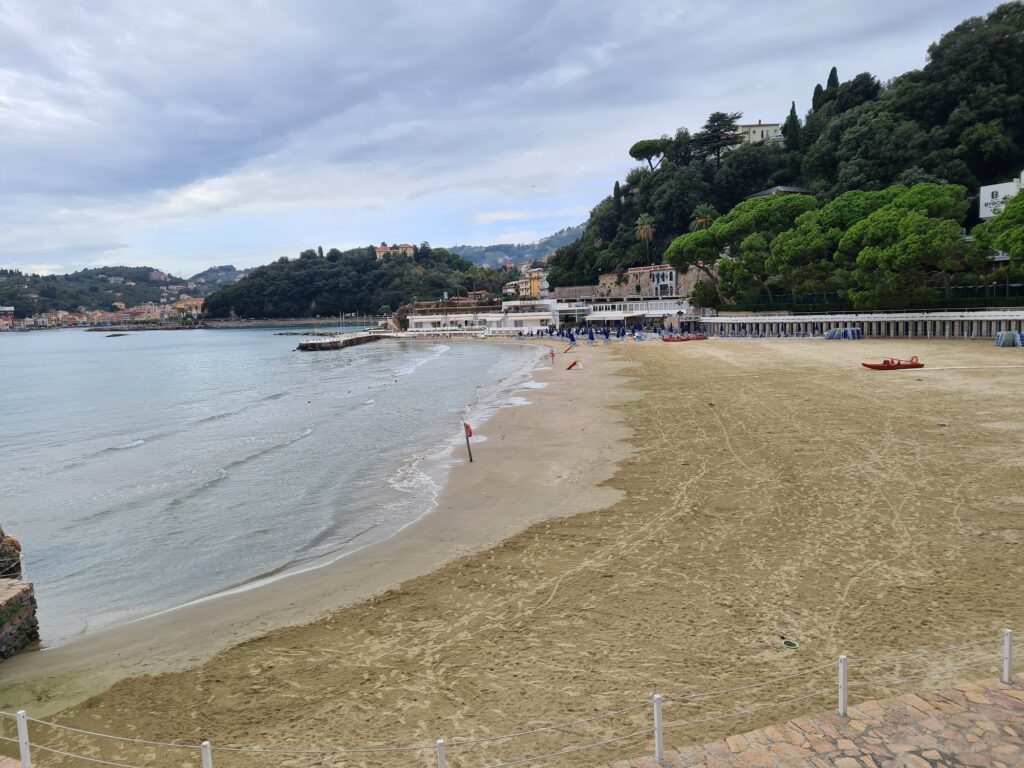
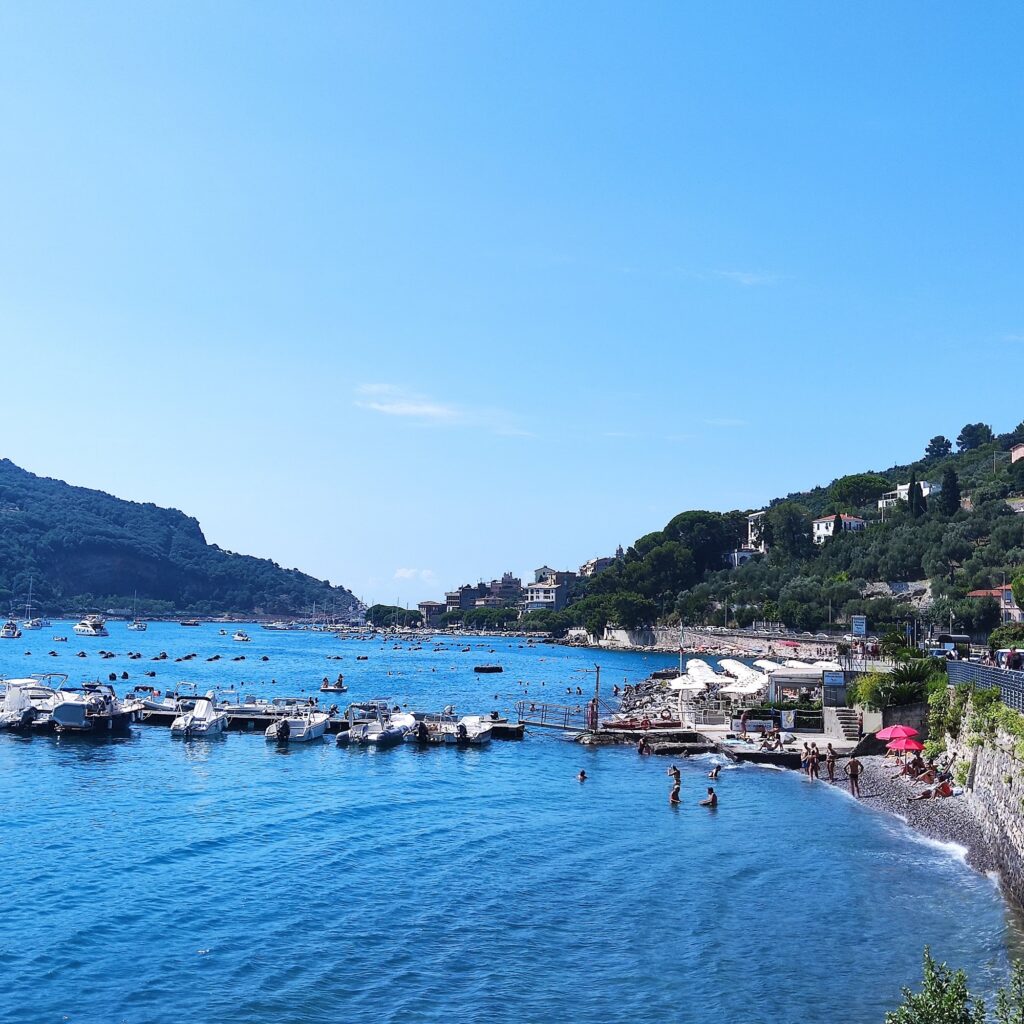
The beach mixes fine gray gravel, smooth pebbles, and patches of soft sand with flat concrete sunbathing platforms built along the seawall, giving visitors a genuine choice between a towel on natural ground or a lounge chair on a level, elevated surface. I found the bay’s sheltering curve kept things noticeably calmer than more exposed stretches of this coast, a warm microclimate holding through even a breezier afternoon. The water itself stays shallow for a considerable distance, genuinely well suited to families with children, and I found the clarity excellent throughout, turquoise and pale emerald shifting into deeper navy further from shore, calm enough that snorkeling around the submerged rocks felt more like floating through an aquarium than open water.
A Beach Club That Doesn’t Skip the Basics
Premium sunbeds and matching umbrellas are available to rent in organized rows, and I found the changing cabins and restrooms genuinely well kept, freshwater showers positioned conveniently along the shore for rinsing off after a swim. A certified lifeguard watches from an elevated chair through the summer season, and wooden and concrete boardwalks run the length of the beach, sparing bare feet from hot pebbles on the walk to the water. Given the organized, managed character of this beach, dogs would likely need explicit permission here, consistent with how staffed Italian beach clubs generally handle pets.
Paddleboards Toward Palmaria and a Roman Villa Worth the Detour
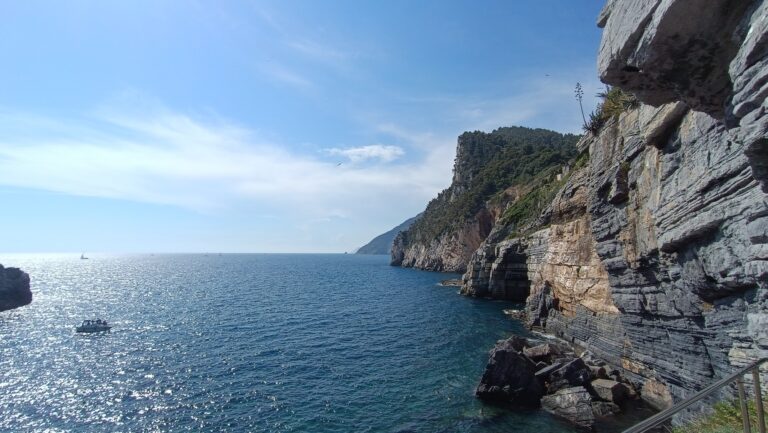
Stand-up paddleboards, sea kayaks, and pedal boats rent directly on the sand, and I used one to explore the coastline toward Palmaria, the water calm enough to make the paddle genuinely relaxing rather than a workout. The detour inland to the Varignano villa is worth building into any longer stay here, a rare chance to see exactly how an ancient Roman estate on this coast actually produced the oil that likely once supplied households considerably further afield than the village itself.
Getting There and Settling In
Spiaggia dell’Olivo sits on Via dell’Olivo in Le Grazie, about 0.7 kilometers from the village center, reachable by exiting the A12 or A15 at Santo Stefano di Magra and following signs toward Porto Venere before branching off for Le Grazie specifically; regional trains stop at La Spezia Centrale, from which local buses or a short taxi ride cover the remaining distance, and paid parking sits at the beach entrance, though I’d note spaces are genuinely limited during peak summer. Anyone continuing on to the main pedestrian center will find Spiaggia Portovenere Libera just around the coast, a useful comparison between Le Grazie’s more organized, family-oriented beach club and Portovenere’s rawer, completely free public shore.
Standing Where an Ancient Harvest Once Happened
By the time I packed up on my last evening, the olive trees along the shore had gone dark against a sky still holding some color, and I found myself thinking less about the beach chairs and paddleboards than about the Roman workers who once pressed oil from these same hills, an industry old enough that the beach in front of me still carries its name, quietly outlasting whatever else has changed here since.
Map
Sorry, no records were found. Please adjust your search criteria and try again.
Sorry, unable to load the Maps API.
Near by places: