Spiaggia Portovenere: Free Beach, Ancient Roots
Profile
Spiaggia Portovenere: The Free Beach Below a Temple to Venus
Italy | Liguria | La Spezia | Gulf of Poets
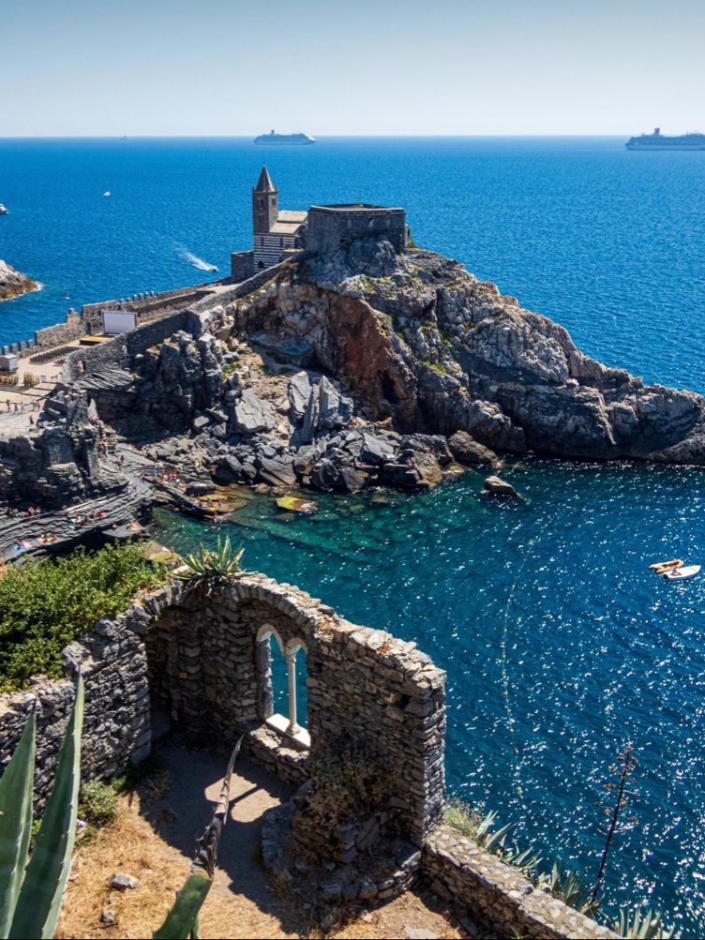
The Church of San Pietro, perched on the rocky promontory above this free beach, stands on ground that once held a Roman temple dedicated to Venus, the goddess whose name the entire town still carries. Ancient Portus Veneris dates back to at least the middle of the first century BC, and after the Roman Empire fell, the settlement briefly served as a Byzantine naval base before Lombard forces destroyed it in 643 AD. Genoa acquired the village in 1113 specifically for its strategic value in the long-running war against Pisa, fortifying it with walls, towers, and the Doria Castle that still dominates the skyline, a structure built to control who could enter the Gulf of La Spezia from the sea.
I found it genuinely striking to sit on smooth pebbles at the base of a promontory that’s shifted allegiance from a Roman fertility goddess to a Christian apostle to a Genoese military stronghold, all without ever losing its hold on this particular stretch of coast.
Smooth Gray Pebbles in a Channel Facing Palmaria
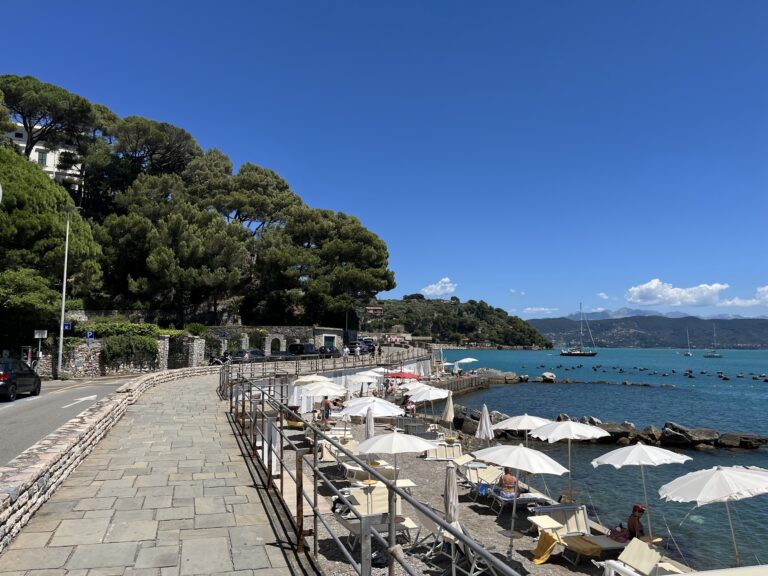
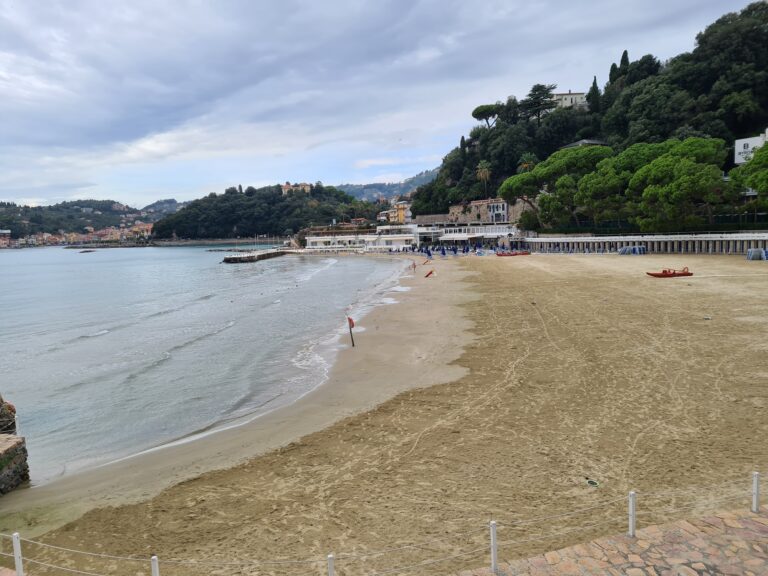
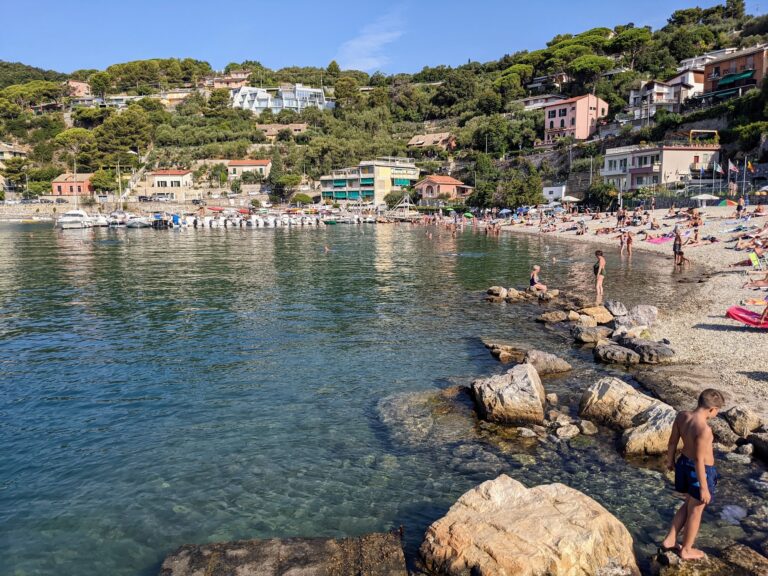
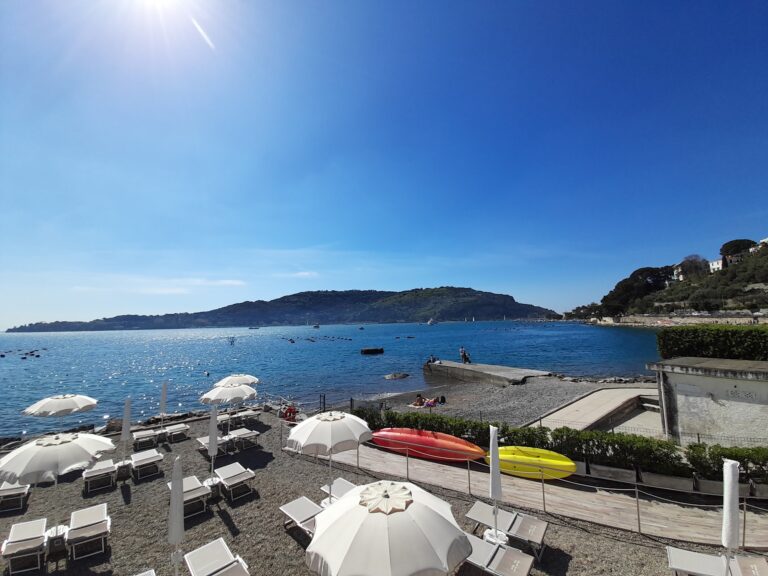
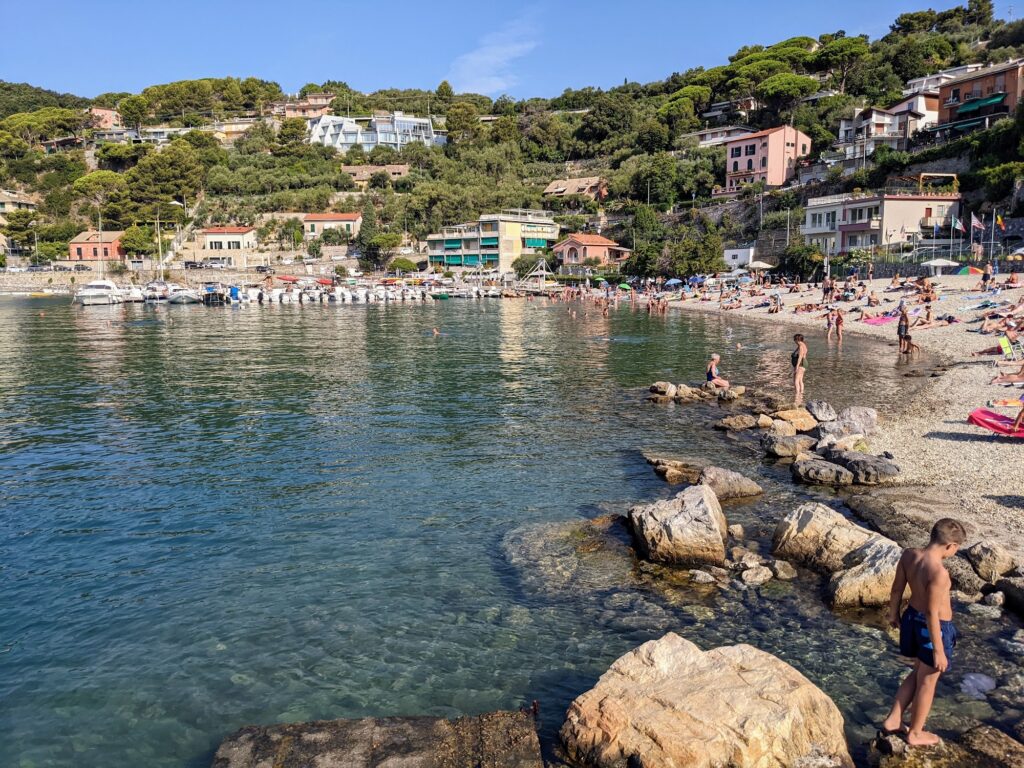
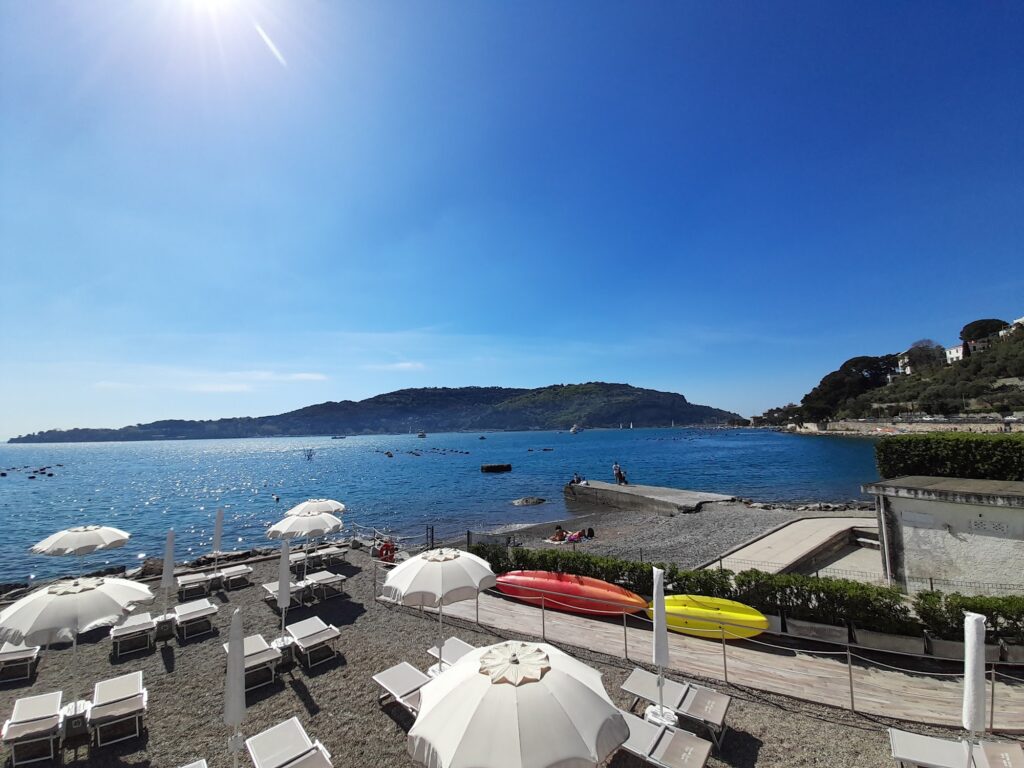
The shore here runs a classic, unmanicured mix of smooth gray sea pebbles, polished gravel, and small patches of coarse golden sand near the seawall, genuinely unpolished in a way I found appealing after visiting some of the more manicured beach clubs elsewhere on this coast. The water benefits from strict protections under the Portovenere Regional Natural Park, and I found the clarity extraordinary, the rocky seabed keeping visibility sharp enough to watch schools of small silver fish moving through the marine flora below. Palmaria Island shelters the channel from open-ocean swells, keeping the water calm and inviting, though I’d note the pebbles themselves make this a better fit for older children and adults with sturdy sandals than for toddlers who’d struggle with the uneven footing. Given how thoroughly this beach operates as free, unmanaged public space, dogs would likely be fine here on a leash following Italy’s standard rule for spiaggia libera.
A Statue That Floated Ashore From Lebanon in 1204
Inside the Romanesque Church of San Lorenzo, built in 1130, sits a wooden statue known as the Madonna Bianca, the White Madonna, which local tradition holds arrived by sea in 1204 after pirates tossed it overboard somewhere off the coast, only for residents to recover it from the harbor and install it permanently in the church. Every August 17th, Portovenere still celebrates the statue with a torchlit procession through flower-decorated streets, a tradition that’s run for centuries and that locals describe with genuine pride when the subject comes up.
A Hermit Who Lit Fires to Save Passing Ships
The nearby island of Tino carries its own legend, tied to Saint Venerius, a hermit monk said to have lit bonfires during stormy nights to guide ships safely through the gulf, a role that eventually made him the patron saint of lighthouse keepers. Byron’s Grotto, a sea cave along the cliffs below San Pietro, adds a considerably more recent layer to the same promontory, one of several spots along this coast where the poet reportedly found inspiration during his time in the Gulf of Poets.
Kayaking Across to Palmaria’s Wild Coves
Water sports kiosks along the neighboring promenade rent kayaks and paddleboards by the hour, and I found paddling across the narrow channel to Palmaria’s uninhabited shoreline one of the more rewarding things I did during my stay, the island’s coves considerably wilder than anything reachable on foot from Portovenere itself.
Getting There and Settling In
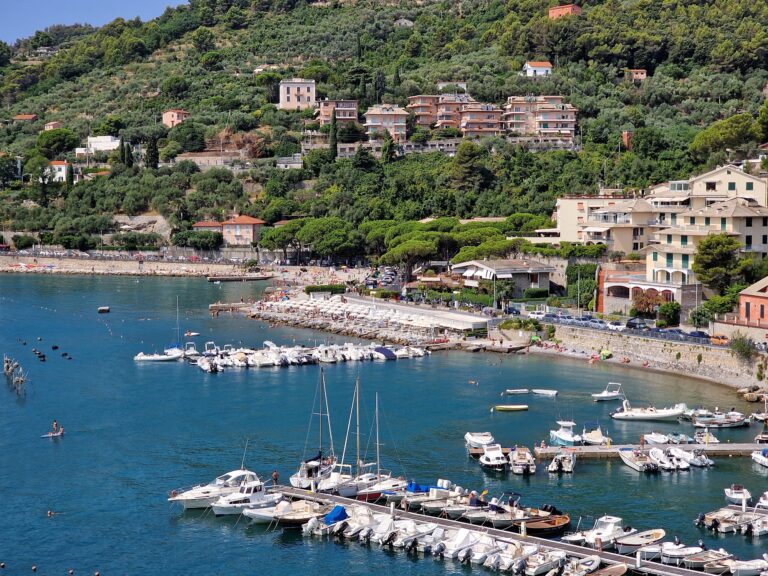
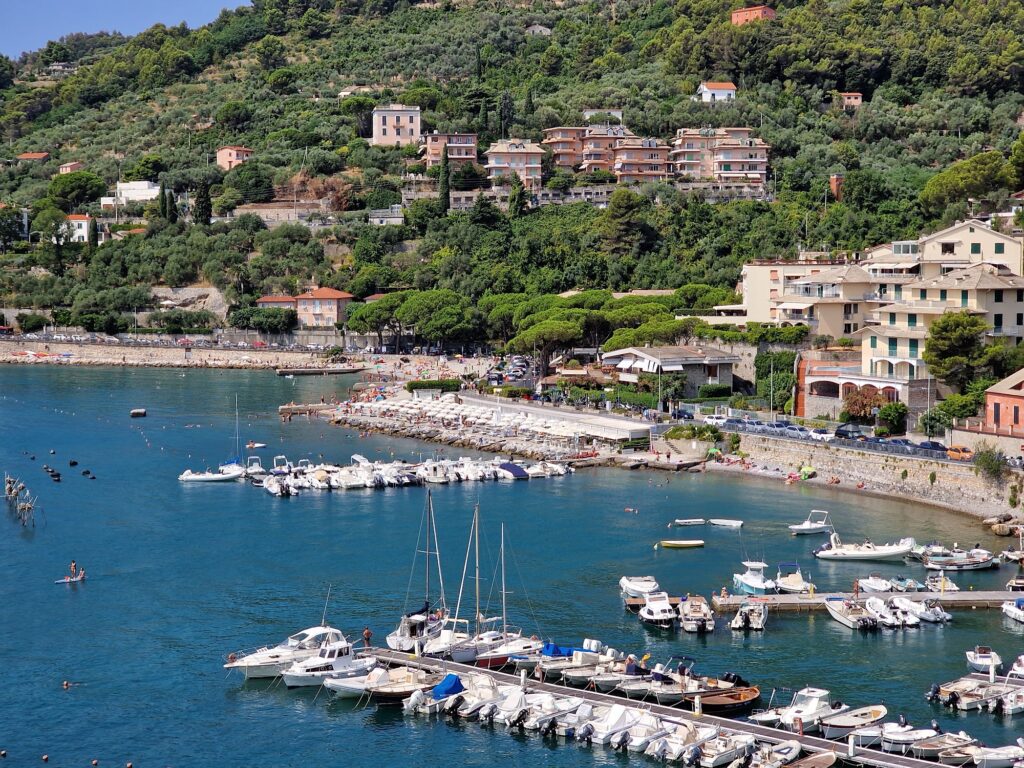
Portovenere sits at the tip of a peninsula west of the Gulf of La Spezia, reachable by exiting the A12 or A15 at Santo Stefano di Magra and following Via Carducci in; the town has no train station of its own, which keeps crowds noticeably thinner than at the nearby Cinque Terre, so arriving by regional train to La Spezia followed by a bus or seasonal ferry along the coast works well, and a municipal shower near the main access ramp along with public restrooms toward the ferry docks cover the basics once you’ve arrived. Anyone touring this stretch of the gulf will find San Terenzo Beach Lerici and Beach Fiascherino 2 Lerici both a reasonable drive or boat ride away, each offering a genuinely different flavor of the same Gulf of Poets coastline.
Standing Where a Goddess Once Had Her Temple
By the time I packed up on my last evening, the light had dropped low enough to catch San Pietro’s striped marble facade in a warm gold, and I thought about how many identities this single promontory has carried, a temple to Venus, a Byzantine outpost, a Genoese fortress against Pisa, now simply the backdrop to an ordinary evening swim in water that’s stayed remarkably clear through all of it.
Map
Sorry, no records were found. Please adjust your search criteria and try again.
Sorry, unable to load the Maps API.
Near by places: