Baia del Silenzio: Sestri Levante's Sandy Bay
Profile
Baia del Silenzio: The Bay a Poet Named, Not Andersen
Italy | Liguria | Genoa | Tigullio Gulf
Sestri Levante sits on a narrow peninsula between two bays, and it’s easy to conflate their stories, since both carry genuine literary weight. The larger one, facing east, took its name, Baia delle Favole, the Bay of Fables, from Hans Christian Andersen, who stayed here briefly in 1833 and left the town so charmed that a television host resurrected the connection on air in the 1950s, cementing a name that now anchors an annual children’s literature prize. Baia del Silenzio, the smaller crescent where I actually spent my time, has its own separate origin: the Ligurian poet Giovanni Descalzo named it the Bay of Silence in 1919, and the two names, similar in spirit but genuinely distinct in authorship, have shaped how visitors talk about this town ever since.
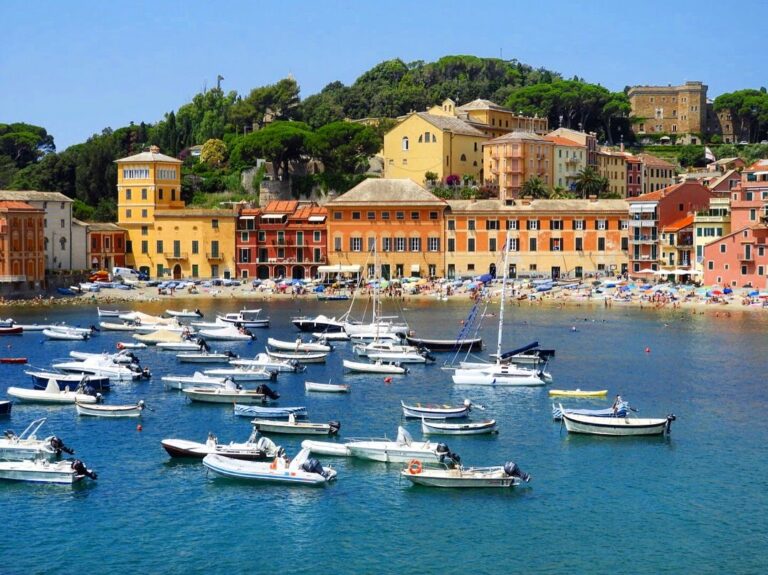
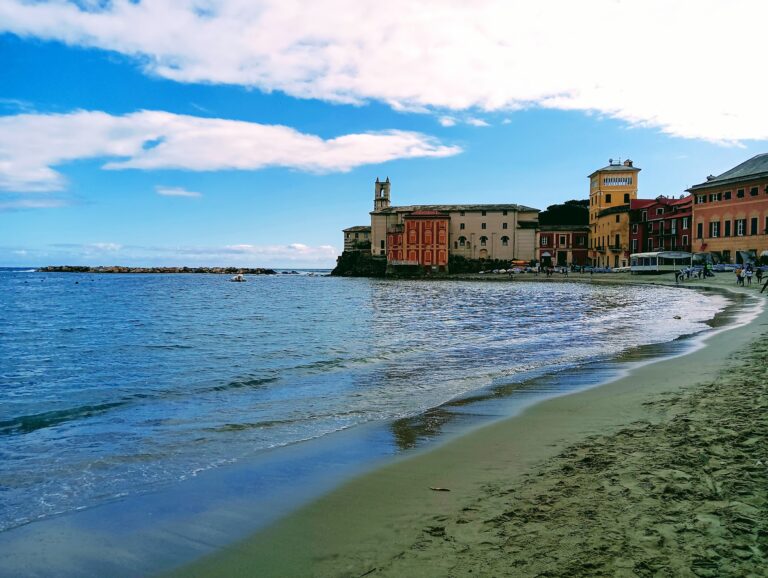
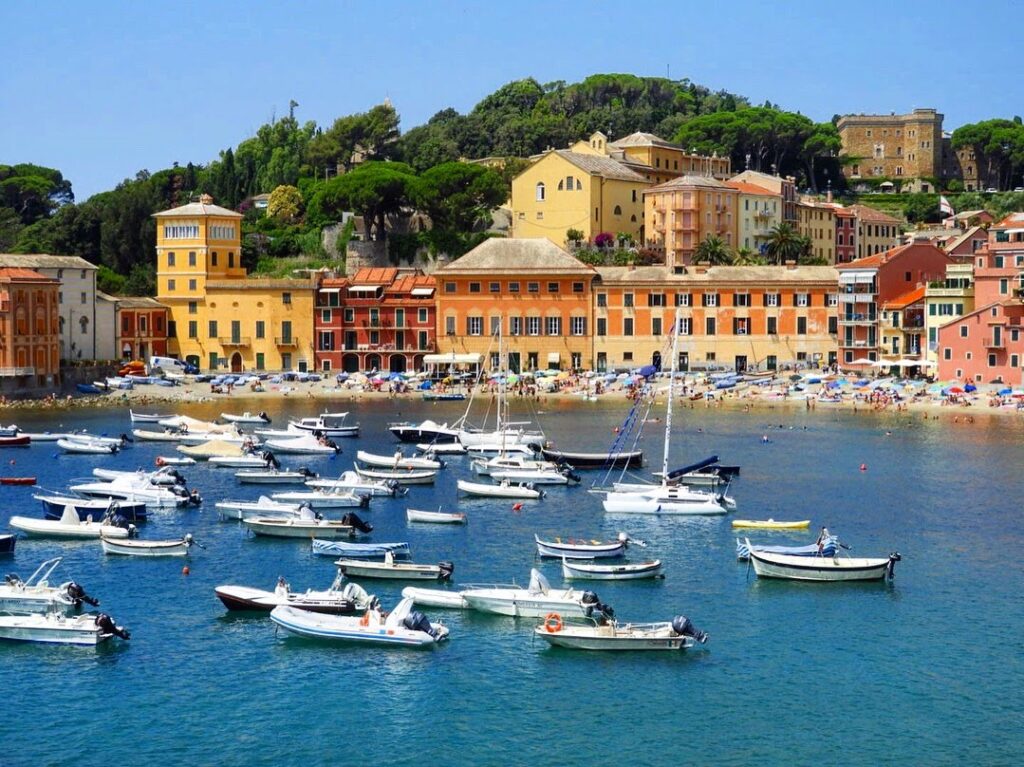
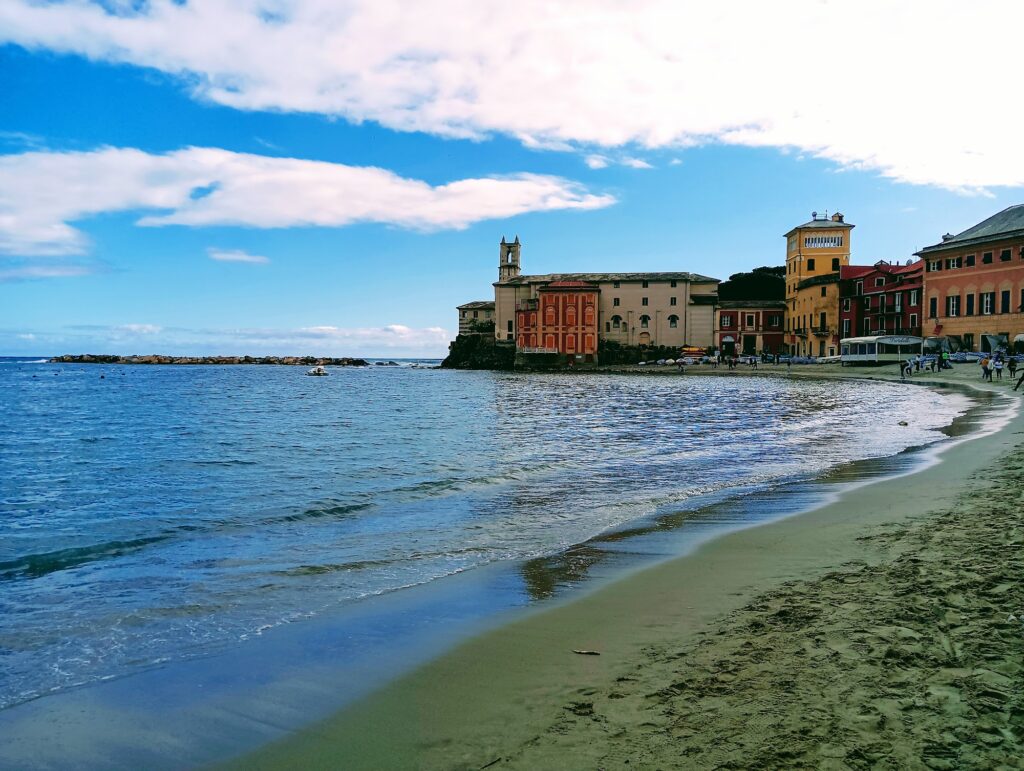
Richard Wagner, the Dutch novelist Arthur Van Schendel, and Guglielmo Marconi, who ran early radio experiments from a tower here still bearing his name, all found their way to this stretch of coast at various points, and standing on the sand watching fishing boats rock gently against pastel-colored houses, I understood why writers and scientists alike kept returning.
Fine Golden Sand, a Genuine Rarity on This Coast
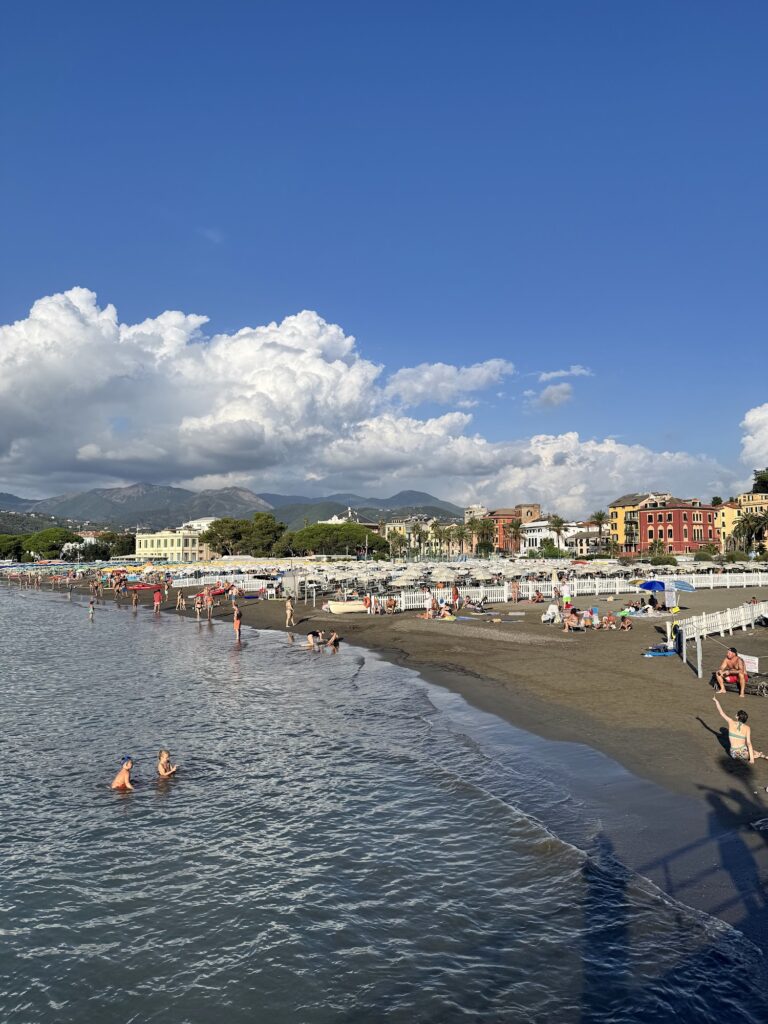
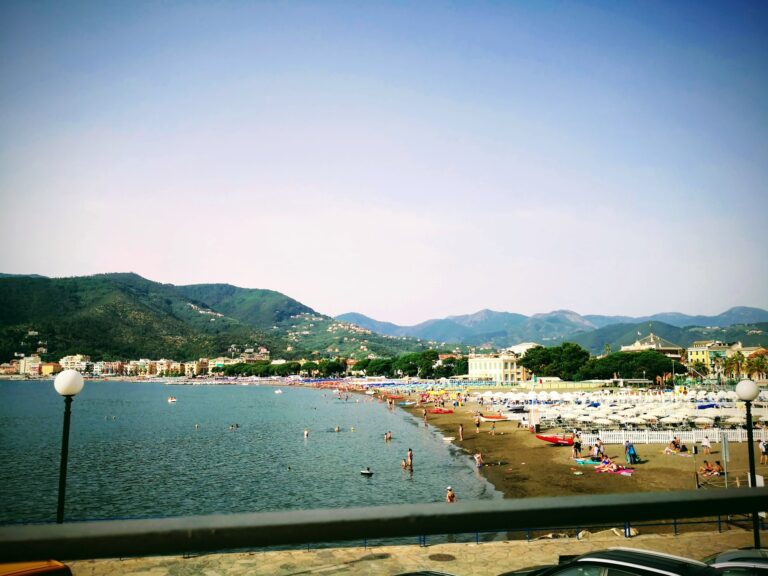
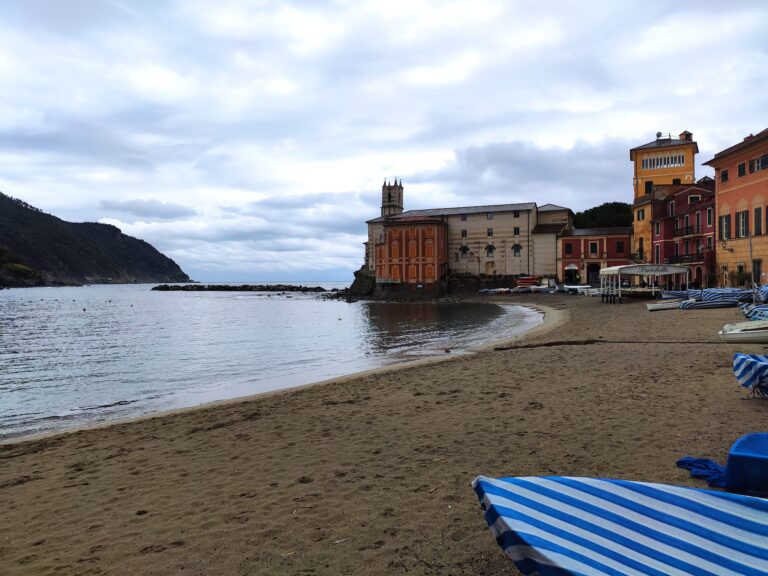
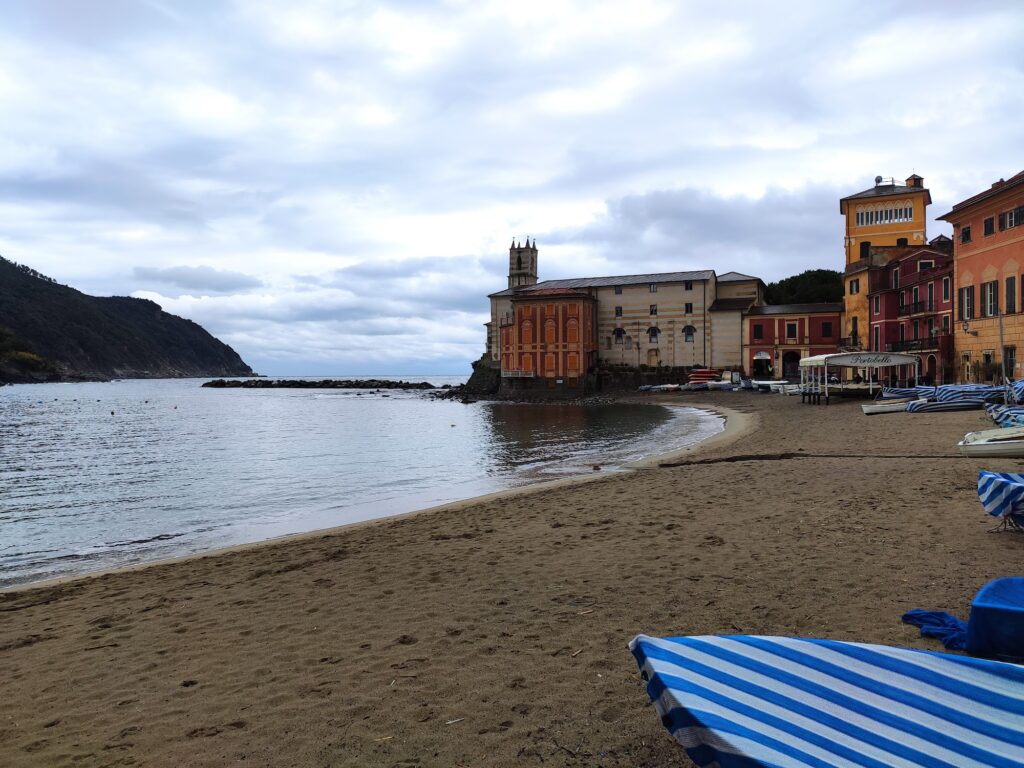
What sets Baia del Silenzio apart physically is its sand, a proper sandy crescent in a region otherwise dominated by pebbles and shingle. The shallow, gentle shoreline requires no water shoes, and traditional gozzi fishing boats parked directly on the upper sand added a working, lived-in quality that kept the whole bay from feeling purely decorative. Sheltered by the promontory of Punta Manara and closed to motorized traffic within the swimming area, the water stayed remarkably clear and calm throughout my visits, shifting from pale turquoise to deep sapphire as the afternoon light changed.
A Genuinely Safe Bay for Families, Sand Included
The gradual, shallow entry here made this one of the more reassuring beaches I’ve found anywhere on the Ligurian coast for supervised swimming with young children, no steep drop-offs or unpredictable currents to manage. The fine sand itself is a real luxury for sandcastle building on a coastline where that’s rarely an option, and because the bay sits directly against Sestri Levante’s flat, car-free old town, I never had to manage a stroller over uneven terrain the way I had at rockier beaches further along this coast.
Limited Commercialization by Design
Local authorities deliberately restrict how much of Baia del Silenzio gets given over to commercial development, and I found most of the beach genuinely free and open, with capacity managed during peak season to keep the bay from feeling overrun. Nearby boutique hotels offer sunbeds and umbrellas for anyone wanting them, public showers sit along the perimeter wall, and seasonal lifeguards watch a buoy-marked swimming area from morning until dusk. Motorized watercraft stay banned inside the bay entirely, which made it a genuinely pleasant spot for paddleboarding and open-water swimming without dodging boat traffic. Given how much of this beach remains free and unmanaged, dogs would likely be fine on a leash outside the designated swimming zones, following the standard rule for Italian public beaches, though the managed hotel sections would need separate permission.
Focaccia col Formaggio and an Aperitivo Front Row to the Sunset
The historic houses ringing the bay hold genuine family-run osterias rather than tourist-facing shops, and I made a habit of grabbing focaccia col formaggio, a double-layered flatbread stuffed with melted stracchino cheese, from a bakery a few steps off the sand. As afternoon shifted into evening, the beach bars filled for aperitivo, Vermentino and Spritz served with olives and pesto appetizers while the light over the gulf did most of the actual work.
Getting There and Making the Walk Count
Sestri Levante sits directly on the Genoa-La Spezia rail line, and from the station it’s a flat, scenic ten-to-fifteen-minute walk through the car-free old town straight onto the bay; seasonal ferries connect from Portofino, Rapallo, and the Cinque Terre during spring and summer, offering a genuinely striking view of the peninsula on arrival, while driving means exiting the A12 at Sestri Levante and parking in the blue-lined structures outside the old town’s traffic-restricted core, since the historic center around the beach itself is closed to vehicles entirely. For anyone continuing south along the coast, a coastal path leads past Spiaggia di Zoagli, roughly three kilometers away, offering a genuinely different, more rugged character than this bay’s gentle sand.
Watching the Fishing Boats Settle In as the Poet’s Bay Goes Quiet
By the time I left on my last evening, the bay had earned its name fully, the crowds thinned, church bells fading, only the soft sound of water against the gozzi left behind, and I understood, finally, why a poet writing in 1919 reached for silence specifically, rather than any grander word, to describe what this small crescent of sand actually offers once the day winds down.
Map
Sorry, no records were found. Please adjust your search criteria and try again.
Sorry, unable to load the Maps API.
Near by places: